As US debates gender roles, some women in male-led faiths dig in on social and political issues
(AP) — Outspoken women from the Catholic Church and the ranks of conservative evangelicals are engaging with gusto in ongoing political and social debates even as their faiths maintain longstanding rules against women serving as priests or senior pastors.
David Crary and Holly Meyer
November 21, 2025
The U.S. feminist movement’s perpetual quest for gender equality has suffered notable setbacks during President Donald Trump’s second term — including the dismantling of various nondiscrimination programs and the ouster of several high-ranking women in the military.
Yet strikingly, outspoken women from the Catholic Church and the ranks of conservative evangelicals are engaging with gusto in ongoing political and social debates even as their faiths maintain longstanding rules against women serving as priests or senior pastors. Many of these women see these ministry barriers as a nonissue.
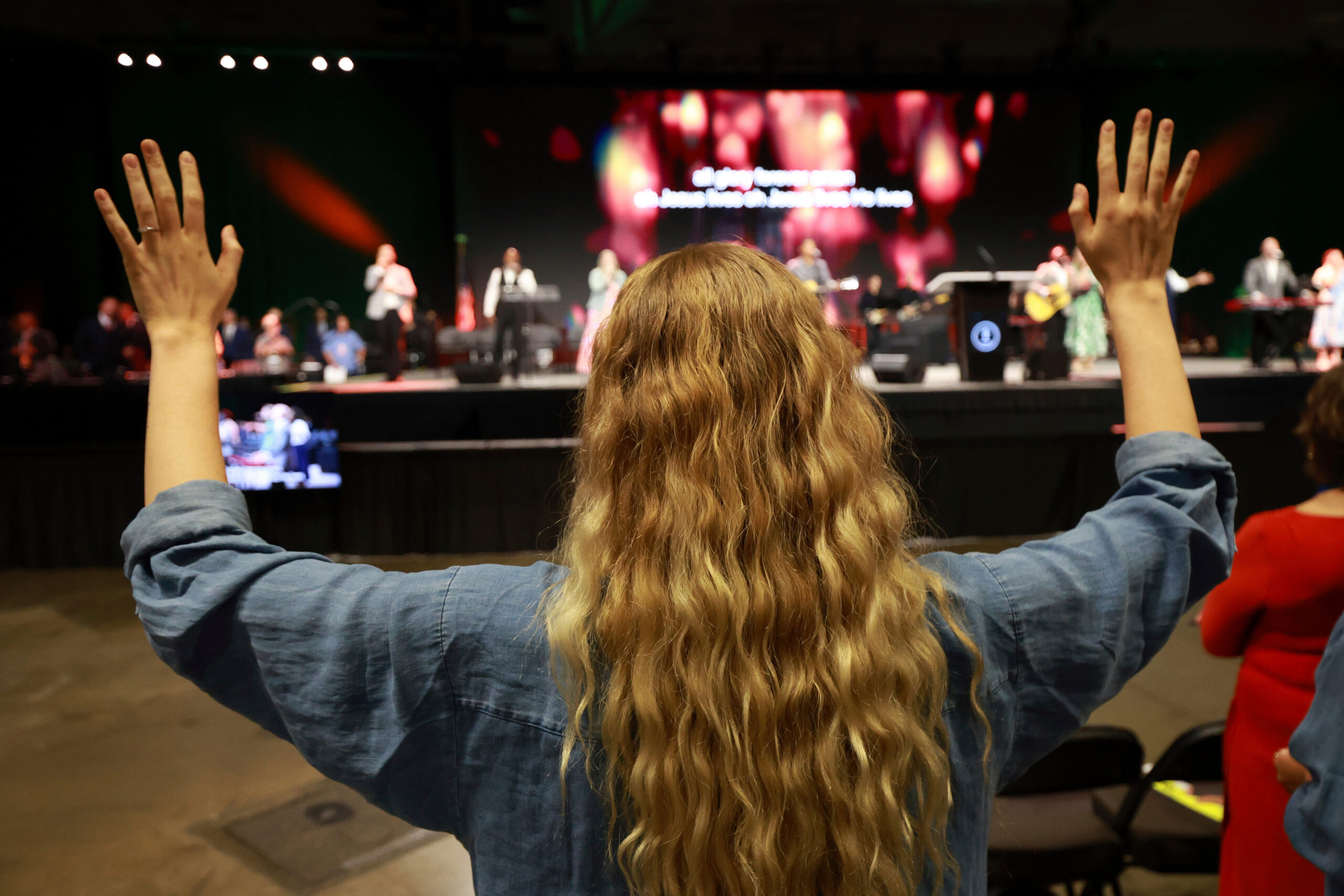
In a Dallas suburb, more than 6,500 conservative Christian women attended an Oct. 11 conference organized by commentator Allie Beth Stuckey. “Welcome to the fight,” was her greeting.
Ahead of the conference, Stuckey evoked the assassination of conservative activist Charlie Kirk, saying she had been inundated with messages from Christian women saying, “We’re done sitting on the sidelines of politics and culture.’’
“We’re not backing down; we’re doubling down,” Stuckey declared. “We’re unapologetically saying no to the lies of feminism and progressivism and yes to God’s Word.”
Some Catholic nuns are on the front lines
Among Catholic women, there is a different kind of passion exhibited by sisters from religious orders who are on the front lines of social-justice advocacy.
A striking example came in September after Cardinal Timothy Dolan, the archbishop of New York, praised Kirk as “a modern-day St. Paul” who was a worthy role model for young people.
Leaders of the Sisters of Charity of New York, an order founded in 1809, issued a public rebuke.
“What Cardinal Dolan may not have known is that many of Mr. Kirk’s words were marked by racist, homophobic, transphobic, and anti-immigrant rhetoric, by violent pro-gun advocacy, and by the promotion of Christian nationalism,” the nuns said. “These prejudicial words do not reflect the qualities of a saint.”
“In this moment,” the nuns added, “we reaffirm our mission: to walk with all people who are poor and marginalized, to welcome immigrants and refugees, to defend the dignity of LGBTQ+ persons, and to labor for peace in a world saturated with violence.”
Another religious sister, Norma Pimentel of the Missionaries of Jesus, is a leading migrant-rights activist along the U.S.-Mexico border. She runs Catholic Charities of the Rio Grande Valley, including a respite center for beleaguered migrants in McAllen, Texas.
At a recent forum in Washington, she recalled visiting immigrant families at a detention center in a “terrible condition,” and being moved to tears.
“I saw Border Patrol agents looking at us, and they, too, were moved and were crying,” she said. “When I walked out of there, the officer turned to me and said, ‘Thank you, sister, for helping us realize they’re human beings.’”
Natalia Imperatori-Lee, a professor in the theology department at Fordham University, praised Pimentel’s advocacy and the Sisters of Charity leadership’s statement as “the model of the way women show up in the public square.”
“Women religious are the face of the church,” she said.
Overall, Imperatori-Lee said she was disheartened by “this moment of very serious backlash to the gains that women and other minorities have made.” Yet she finds reasons to be encouraged.
“A lot of undergrads are passionate about women’s equality in the church,” she said of Fordham, a Jesuit school now with a woman as its president for the first time.
“Even if the headlines about our cultural backsliding are true, the on-the-ground activism that you’re seeing among young people shows they’re are up to the task,” she said.
Conservative evangelical women navigate a patriarchal doctrine
After the Catholic Church, the second largest denomination in the U.S. is the Southern Baptist Convention, whose evangelical doctrine espouses traditional gender roles at home and in the church. That includes barring women from being pastors, a belief that has put the SBC in the spotlight in recent years following high-profile ousting of churches that disobeyed the prohibition.
But this doesn’t mean Southern Baptist men are domineering nor that the women are doormats, said Susie Hawkins, a Bible teacher in Texas and wife of a former denominational leader.
“That’s not what complementarianism is,” said Hawkins, referring to the doctrine that men and women have distinct God-given roles. “The women I know have the freedom to speak their mind to their husbands, and to work through problems in situations with them, within certain boundaries.”
Many embrace being wives, mothers and women in the church, said Hawkins, who has watched Erika Kirk, the wife of the late Charlie Kirk, publicly demonstrate that same satisfaction and joy.
“I think this is really, really important for Christian women,” said Hawkins. “She exemplifies a Christian wife and mom who is not ashamed of her love for her husband and her desire to serve him and love him and their kids.”
Hawkins predicts Erika Kirk, now head of her husband’s Turning Point USA, will be influential: “I think her voice — it will be heard from this point on.”
Stuckey, who grew up Southern Baptist, recently addressed women’s roles in church and society on her “Relatable” podcast, following online blowback from men on the right for giving a speech at a Turning Point college event. Stuckey reiterated her belief that women should not be pastors nor preach from the pulpit on Sundays, and said she has turned down opportunities because of it.
“A gentle and quiet spirit is something that women are told that we should have in Scripture, and we should. But that does not mean silence,” she said. “Women are also called to raise a voice and to be a bastion and refuge of clarity and courage.”
Most Southern Baptist women embrace accepted callings in the church, including in women’s and children’s ministry, said Hawkins, noting a special commissioning service at First Baptist Church of Dallas celebrating these roles.
“I just don’t think you see a lot of malcontent women complaining about not being able to be a pastor,” she said.
The Texas megachurch, which upholds that only men can serve as senior pastor, honored 13 women, said senior pastor, the Rev. Robert Jeffress.
“Instead of focusing on the one ministry women are prohibited from doing (senior pastor) we wanted to recognize and celebrate all the things that women can do in the church,” Jeffress said via email.
Hawkins has encountered a few women who felt called to off-limits roles in Southern Baptist churches. She was straightforward with them.
“Go do what God’s called you to do, but we’re not the denomination for you. You’re just going to get frustrated here. These boundaries were established a long time ago, so go where you can be happy,” said Hawkins.
Advocates of women’s ordination vow to persist
Long-established boundaries remain in the Catholic Church as well.
As Pope Leo XIV — the first American Pope — settles into his papacy, he has made clear he has no immediate interest in advocating for women to be able to serve as deacons, let alone to be ordained as priests.
Yet women continue to serve in high-level administrative jobs at the Vatican and at Catholic institutions in the U.S., such as Catholic Charities and the Catholic Health Association.
“Within the Catholic Church when we look only at priesthood, we fail to look at the primary mission of the church — it’s education, health care, social service agencies,” said Susan Timoney, a professor of pastoral studies at The Catholic University of America.
“We need to tell that part of the story better,” Timoney said.
The largest U.S. organization working to open the priesthood to women is the Women’s Ordination Conference, which will mark its 50th anniversary in late November.
Its executive director, Kate McElwee, said she is alarmed by “anti-women rhetoric and policies being pushed out all over the globe” including in the U.S. She wants her group to function as a “Ministry of Irritation, making our cause as bold and loud and creative as possible.”
“As things get more polarized, we’re seeing more people find their courage in this moment,” she said, citing the Sisters of Charity as an example. “As feminism is under attack more broadly, our movement will become a more important symbol of resistance.”
___
Associated Press religion coverage receives support through the AP’s collaboration with The Conversation US, with funding from Lilly Endowment Inc. The AP is solely responsible for this content.
(AP) — Outspoken women from the Catholic Church and the ranks of conservative evangelicals are engaging with gusto in ongoing political and social debates even as their faiths maintain longstanding rules against women serving as priests or senior pastors.
David Crary and Holly Meyer
November 21, 2025
The U.S. feminist movement’s perpetual quest for gender equality has suffered notable setbacks during President Donald Trump’s second term — including the dismantling of various nondiscrimination programs and the ouster of several high-ranking women in the military.
Yet strikingly, outspoken women from the Catholic Church and the ranks of conservative evangelicals are engaging with gusto in ongoing political and social debates even as their faiths maintain longstanding rules against women serving as priests or senior pastors. Many of these women see these ministry barriers as a nonissue.
In a Dallas suburb, more than 6,500 conservative Christian women attended an Oct. 11 conference organized by commentator Allie Beth Stuckey. “Welcome to the fight,” was her greeting.
Ahead of the conference, Stuckey evoked the assassination of conservative activist Charlie Kirk, saying she had been inundated with messages from Christian women saying, “We’re done sitting on the sidelines of politics and culture.’’
“We’re not backing down; we’re doubling down,” Stuckey declared. “We’re unapologetically saying no to the lies of feminism and progressivism and yes to God’s Word.”
Some Catholic nuns are on the front lines
Among Catholic women, there is a different kind of passion exhibited by sisters from religious orders who are on the front lines of social-justice advocacy.
A striking example came in September after Cardinal Timothy Dolan, the archbishop of New York, praised Kirk as “a modern-day St. Paul” who was a worthy role model for young people.
Leaders of the Sisters of Charity of New York, an order founded in 1809, issued a public rebuke.
“What Cardinal Dolan may not have known is that many of Mr. Kirk’s words were marked by racist, homophobic, transphobic, and anti-immigrant rhetoric, by violent pro-gun advocacy, and by the promotion of Christian nationalism,” the nuns said. “These prejudicial words do not reflect the qualities of a saint.”
“In this moment,” the nuns added, “we reaffirm our mission: to walk with all people who are poor and marginalized, to welcome immigrants and refugees, to defend the dignity of LGBTQ+ persons, and to labor for peace in a world saturated with violence.”
Another religious sister, Norma Pimentel of the Missionaries of Jesus, is a leading migrant-rights activist along the U.S.-Mexico border. She runs Catholic Charities of the Rio Grande Valley, including a respite center for beleaguered migrants in McAllen, Texas.
At a recent forum in Washington, she recalled visiting immigrant families at a detention center in a “terrible condition,” and being moved to tears.
“I saw Border Patrol agents looking at us, and they, too, were moved and were crying,” she said. “When I walked out of there, the officer turned to me and said, ‘Thank you, sister, for helping us realize they’re human beings.’”
Natalia Imperatori-Lee, a professor in the theology department at Fordham University, praised Pimentel’s advocacy and the Sisters of Charity leadership’s statement as “the model of the way women show up in the public square.”
“Women religious are the face of the church,” she said.
Overall, Imperatori-Lee said she was disheartened by “this moment of very serious backlash to the gains that women and other minorities have made.” Yet she finds reasons to be encouraged.
“A lot of undergrads are passionate about women’s equality in the church,” she said of Fordham, a Jesuit school now with a woman as its president for the first time.
“Even if the headlines about our cultural backsliding are true, the on-the-ground activism that you’re seeing among young people shows they’re are up to the task,” she said.
Conservative evangelical women navigate a patriarchal doctrine
After the Catholic Church, the second largest denomination in the U.S. is the Southern Baptist Convention, whose evangelical doctrine espouses traditional gender roles at home and in the church. That includes barring women from being pastors, a belief that has put the SBC in the spotlight in recent years following high-profile ousting of churches that disobeyed the prohibition.
But this doesn’t mean Southern Baptist men are domineering nor that the women are doormats, said Susie Hawkins, a Bible teacher in Texas and wife of a former denominational leader.
“That’s not what complementarianism is,” said Hawkins, referring to the doctrine that men and women have distinct God-given roles. “The women I know have the freedom to speak their mind to their husbands, and to work through problems in situations with them, within certain boundaries.”
Many embrace being wives, mothers and women in the church, said Hawkins, who has watched Erika Kirk, the wife of the late Charlie Kirk, publicly demonstrate that same satisfaction and joy.
“I think this is really, really important for Christian women,” said Hawkins. “She exemplifies a Christian wife and mom who is not ashamed of her love for her husband and her desire to serve him and love him and their kids.”
Hawkins predicts Erika Kirk, now head of her husband’s Turning Point USA, will be influential: “I think her voice — it will be heard from this point on.”
Stuckey, who grew up Southern Baptist, recently addressed women’s roles in church and society on her “Relatable” podcast, following online blowback from men on the right for giving a speech at a Turning Point college event. Stuckey reiterated her belief that women should not be pastors nor preach from the pulpit on Sundays, and said she has turned down opportunities because of it.
“A gentle and quiet spirit is something that women are told that we should have in Scripture, and we should. But that does not mean silence,” she said. “Women are also called to raise a voice and to be a bastion and refuge of clarity and courage.”
Most Southern Baptist women embrace accepted callings in the church, including in women’s and children’s ministry, said Hawkins, noting a special commissioning service at First Baptist Church of Dallas celebrating these roles.
“I just don’t think you see a lot of malcontent women complaining about not being able to be a pastor,” she said.
The Texas megachurch, which upholds that only men can serve as senior pastor, honored 13 women, said senior pastor, the Rev. Robert Jeffress.
“Instead of focusing on the one ministry women are prohibited from doing (senior pastor) we wanted to recognize and celebrate all the things that women can do in the church,” Jeffress said via email.
Hawkins has encountered a few women who felt called to off-limits roles in Southern Baptist churches. She was straightforward with them.
“Go do what God’s called you to do, but we’re not the denomination for you. You’re just going to get frustrated here. These boundaries were established a long time ago, so go where you can be happy,” said Hawkins.
Advocates of women’s ordination vow to persist
Long-established boundaries remain in the Catholic Church as well.
As Pope Leo XIV — the first American Pope — settles into his papacy, he has made clear he has no immediate interest in advocating for women to be able to serve as deacons, let alone to be ordained as priests.
Yet women continue to serve in high-level administrative jobs at the Vatican and at Catholic institutions in the U.S., such as Catholic Charities and the Catholic Health Association.
“Within the Catholic Church when we look only at priesthood, we fail to look at the primary mission of the church — it’s education, health care, social service agencies,” said Susan Timoney, a professor of pastoral studies at The Catholic University of America.
“We need to tell that part of the story better,” Timoney said.
The largest U.S. organization working to open the priesthood to women is the Women’s Ordination Conference, which will mark its 50th anniversary in late November.
Its executive director, Kate McElwee, said she is alarmed by “anti-women rhetoric and policies being pushed out all over the globe” including in the U.S. She wants her group to function as a “Ministry of Irritation, making our cause as bold and loud and creative as possible.”
“As things get more polarized, we’re seeing more people find their courage in this moment,” she said, citing the Sisters of Charity as an example. “As feminism is under attack more broadly, our movement will become a more important symbol of resistance.”
___
Associated Press religion coverage receives support through the AP’s collaboration with The Conversation US, with funding from Lilly Endowment Inc. The AP is solely responsible for this content.
Opinion
In new memoirs, women rabbis wrestle with Judaism's male-centered tradition
(RNS) — Female rabbis have staked a claim to a Judaism that is fully inclusive and respectful of the values of all its adherents.

Recent memoirs by women rabbis. (Courtesy images)
Beth Kissileff
November 19, 2025
RNS
(RNS) — From the days of Miriam, the sister of Moses and Aaron, Jewish women have been leaders-without-portfolio. In the Book of Exodus, Miriam, a “prophetess,” leads the Israelite women in song, but unlike Moses, the main recipient of teaching from God, and Aaron, the chief priest, she has no named role.
Today, women in many denominations of Judaism are able to attend institutions of higher learning to become equipped with the necessary skills to gain credentials to be called rabbi or cantor. What will they do with their newfound titles? A crop of new books and TV shows out this fall gives some answers.
RELATED: Jewish identity doesn’t need a disclaimer
Rabbi Léa Schmoll, the fictional subject of HBO’s new series “Reformed” (which is based on a book by Rabbi Delphine Horvilleur), is filled with doubts as she takes her first pulpit in her hometown of Strasbourg, France. The local Orthodox rabbi, Lea’s teacher and inspiration when she attended his classes as a child, visits at the behest of his congregants, but instead of discouraging her as they wish, he ends up telling her that she will be more valuable as a rabbi who has doubts than one with certainties: What she thinks of as a vulnerability, he says, can be a form of strength.
“We didn’t want the show to sound like Judaism has all the answers,” the producers of “Reformed” said in a recent interview.
Women rarely feel as if they have sufficient answers, social scientists say, an attribute that may keep them from seeking leadership roles. In her new memoir, “Heart of a Stranger,” Rabbi Angela Buchdahl shows how this works. Born in Korea, where her parents met, she eventually becomes the fourth generation of her family to attend the Reform congregation that was founded by her father’s ancestors. After college at Yale University, then cantorial school and rabbinical school, Buchdahl finds her way to her first congregation, in New York’s northern suburbs, before being invited to the staff at Manhattan’s august Central Synagogue, where she began in 2006.
As in “Reformed,” the most affecting parts of Buchdahl’s book have to do with her doubts about her lack of qualifications, starting with her Jewishness. A summer spent in Israel with roommates who are more strictly observant “pegged me in my own mind as a counterfeit Jew,” she writes. Buchdahl calls her Buddhist mother from Jerusalem “using up five expensive long distance minutes in unintelligible heaves of crying” to say: “I’m not sure I want to be a Jew anymore. I don’t have a Jewish name; I don’t have a Jewish face. No one would even notice or care; I could just stop being Jewish right now.” Her mother responds, “Is that really possible, Angela?”
Today she leads a synagogue with 7,000 members, a $30 million endowment and 100 employees, and as the book makes evident, she is a skilled interpreter of sacred texts. Her early discouragement, and her ability to be honest about it, speaks volumes about what it means to be inside (or outside) a community. It also says a lot about how porous Judaism’s borders have become since Buchdahl was young, even as there are still some who don’t consider her a rabbi. Buchdahl writes, “Feeling like a stranger might be the most Jewish thing about me.”
Doubts aren’t the only obstacle for women looking to lead. The day Buchdahl had to decide whether to apply for Central Synagogue’s senior rabbi position, which she has held since 2014, she was also slated to appear on a panel with Anne-Marie Slaughter, on work-life balance, when her daughter ended up in the emergency room. With the help of a nanny, Buchdahl was able to be in the hospital and speak at the event, but she writes about the tension involved. The lessons the rabbi recounts, such as the value of a sparring partner who is willing to argue “in service of something bigger than themselves: getting closer to the truth,” are ones worth learning. That they are taught from a personal stance with a full measure of humility and honesty makes the book so much more accessible.
Not all female rabbis come from the same mold. In her new book, “The Jewish Way to a Good Life: Find Happiness, Build Community, and Embrace Lovingkindness,” Rabbi Shira Stutman, a co-host of the podcast “Chutzpod!,” has many answers, most of them rooted in Jewish sources and traditions. But this guide for the Jewish-curious often suffers from advice that’s obvious (“community doesn’t happen to you, community is something that you build and tend to, or it stagnates, withers, and sometimes dies”) or downright unhelpful: “The best way to think about queerness and Judaism in interaction is not as a problem at all, but as a thrilling opportunity.” Tell that to the queer Yeshiva University students who have fought for years to have their club approved and even won a lawsuit, yet are still blocked by the administration.
What’s most useful is Stutman’s point that Judaism’s answers don’t come just from rules and observances but embedded practices that result in community to share Shabbat dinner with or to help one another mourn. “The best we have to offer when sitting with a mourning friend or family member is not platitudes but presence,” she writes.
One promise of female rabbis is that they can add to the male-centric tradition by reflecting women’s unique perspectives. Rabbi Wendy Zierler, in her new memoir, “Going Out With Knots: My Two Kaddish Years with Hebrew Poetry,” isn’t shy about this point. “The feminist scholarly enterprise to which I had devoted my career,” she writes, “thus entailed three crucial parts: critical readings of male-authored canonical texts to expose this bias; the recovery of alternative feminine literary ‘herstories’ or traditions; and, if extant traditions didn’t suffice, the creation of something new.”
Zierler analyzes the contributions of poets Lea Goldberg, Rachel Morpurgo, Ruhama Weiss and Rachel Bluwstein, examining how these creative voices find their voices to remake a tradition given to them and also withheld. Only a trained literary scholar — Zierler has a Ph.D. in comparative literature from Princeton — and possessor of a rabbi’s knowledge of the Bible, Talmud and later Jewish texts and the prayerbook could explicate these writers’ allusions and wordplay and apply it to her own life, which has been difficult in recent years: She lost her father in a tragic accident, then her mother to illness, and cared for her mother-in-law, a Holocaust survivor, through her dementia.
Zierler uses poetry, in the words of Hebrew poet Yehuda Amichai, like a serum that courses through the veins to effect a cure for the dark times. She also relies on her love for the Jewish tradition, and Jewish community. Friends ask why she continues to attend an Orthodox synagogue, despite being excluded from the quorum of 10 Jews required for certain prayers. “Though I wasn’t counted in the minyan in a ritual or halakhic/legal sense,” she writes, “if I didn’t make it to shul on a given morning, I would get texts and emails from regulars, both men and women, asking me if everything was okay. If that isn’t ‘counting’ what is?”
Zierler is heartened by Ruhama Weiss’ “Chapters of the Mothers,” a poem playing against the Jewish text called the “Chapters of the Fathers” which opens with Moses handing down the Torah to Joshua and continues by relating the line of authority of patriarchs and male sages. Weiss summons a line of Biblical heroines: “from Hagar I learned to submit and/ afterward, to see/ And to find strength to save the boy,” referring to Ishmael, the son of Abraham.
The poem ends with a reference to the “Book of the Upright,” also known as the Book of Jasher, an alternative telling of the Bible that, Zierler writes, questions “the identity and comprehensiveness of this masculine tradition and pointing to its need for correction and amplification.” Zierler adds that “it was incumbent upon us to compose alternative texts and interpretations to supplement, affirm, and liberate.”
This confidence — to compose alternative texts and interpretations and incorporate them into the masculine tradition — is a culmination of the years of leadership-without-portfolio. It is nice to have TV shows about female rabbis, but books like Buchdahl’s and Zierler’s comfort us that there is substance and teaching from female rabbis as leaders beyond the flimsy image on a screen, and challenge us to transform the Jewish tradition into one that is fully inclusive and respectful of the lived vision and values of half its adherents.
(Beth Kissileff is author of the novel “Questioning Return” and co-editor of “Bound in the Bond of Life: Pittsburgh Writers Reflect on the Tree of Life Tragedy.” The views expressed in this commentary do not necessarily reflect those of RNS.)
Global Anglican ties are under stress. It's unclear if they're at the breaking point
(AP) — After decades of fierce controversies over sexuality and theology in the Anglican Communion, some leaders of a conservative coalition say it's time to make a final break from what has long been one of the world's largest Protestant church families.
Rodney Muhumuza and Peter Smith
November 19, 2025
After decades of fierce controversies over sexuality and theology in the Anglican Communion, some leaders of a conservative coalition say it’s time to make a final break from what has long been one of the world’s largest Protestant church families.
That would make a slow-growing Anglican schism complete — if it happens.
But how many church provinces go along with the rupture remains to be seen. Some of the communion’s largest and fastest-growing churches in Africa belong to the conservative group that announced the break — known as the Global Anglican Future Conference, or Gafcon. But several member churches have been silent on the plan, weeks after it was announced.
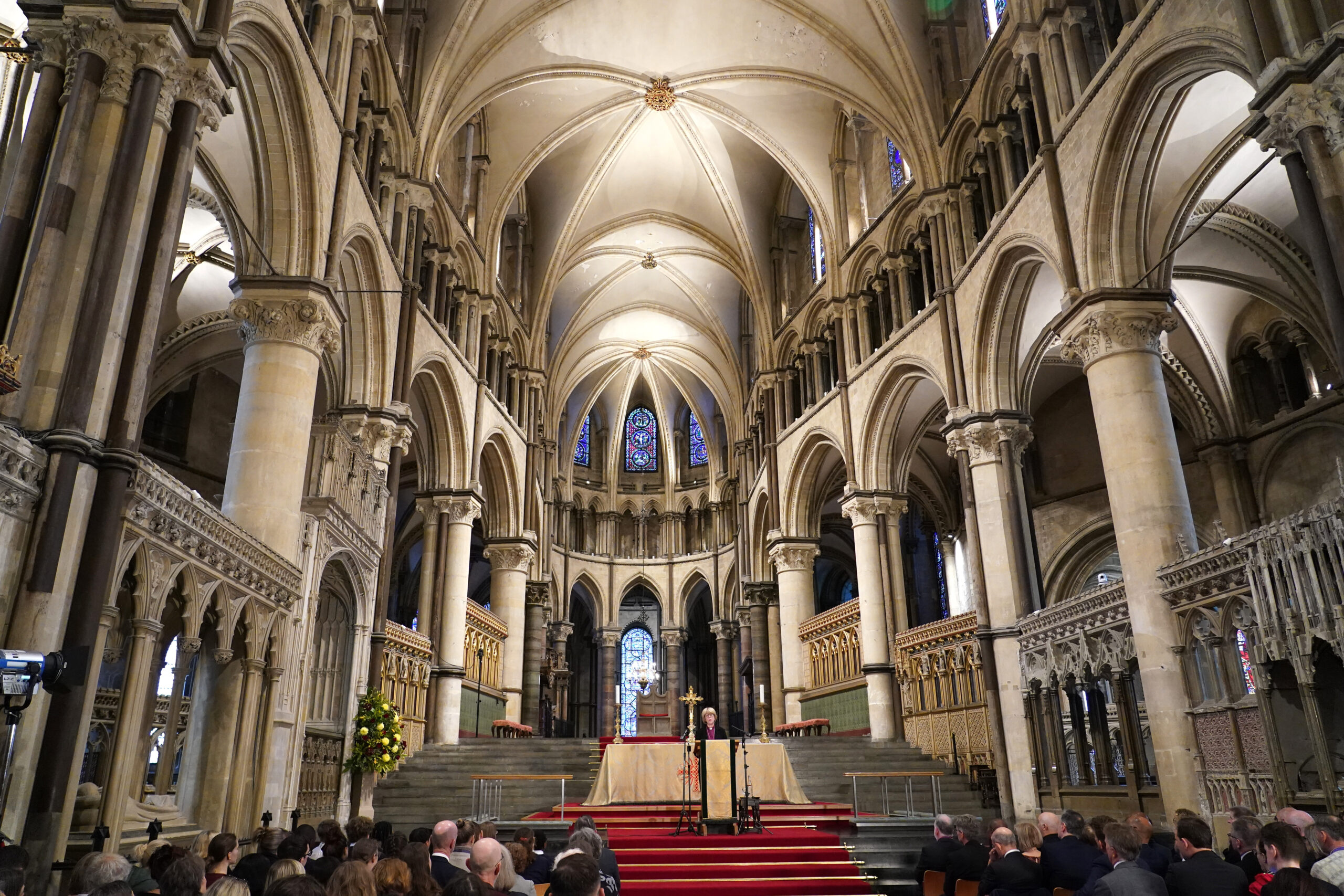
Gafcon’s announcement came shortly after the October appointment of Bishop Sarah Mullally as the first woman to be archbishop of Canterbury, the Anglican Communion’s symbolic spiritual leader. Many in England and other Western countries hailed this as a historic breaking of a stained-glass ceiling.
But leaders of Gafcon criticized the appointment, as did some other bishops. Some said only men should be bishops, but their bigger criticism was her support for some LGBTQ+-inclusive policies — the key fault line in the communion.
Within days of Mullally’s appointment, Gafcon issued another declaration. It completely rejected the Anglican Communion as it has been structured historically. That structure has included a set of governing and advisory bodies and recognition of the archbishop of Canterbury as a symbolic “first among equals” among leaders of self-governing national churches, known as provinces. Since provinces are self-governing, the archbishop’s authority is highly limited.
The ”future has arrived,” said Gafcon’s chairman, Archbishop Laurent Mbanda of Rwanda, in its October statement. “We declare that the Anglican Communion will be reordered.” His statement decried churches it said had violated a 1998 statement by the communion’s bishops, opposing same-sex unions and describing “homosexual practice as incompatible with Scripture.”
Gafcon proclaimed what it calls a restructured “Global Anglican Communion.” It would be overseen by a new council of top national bishops, or primates. Whoever is elected chairman would be “first among equals.”
Uncertainty as to how large a breakaway could be
The question remains is: How many Gafcon members are actually going along with this plan, and how many want to remain in the existing Anglican Communion as a loyal opposition?
Primates of Africa’s two largest national provinces, Nigeria and Uganda, have joined their Rwandan counterpart in endorsing the measure, according to Bishop Paul Donison, Gafcon’s general secretary. So have smaller churches ranging from Myanmar to the Americas.
Nigeria Archbishop Henry Ndukuba confirmed his church’s endorsement of Gafcon’s plan. He called Mullally’s stances on same-sex issues “devastating.”
“This election is a further confirmation that the global Anglican world could no longer accept the leadership of the Church of England and that of the Archbishop of Canterbury,” he said in a statement.
Donison said Gafcon’s statement was drafted at a meeting in Australia, which included several church leaders on Zoom, though several others did not participate. Gafcon’s statement said its bishops would “confer and celebrate” restructuring at their next major meeting, scheduled this March in Nigeria.
Among those signing on to the Gafcon statement is the conservative Anglican Church in North America, formed in a break from the more liberal U.S. and Canadian churches.
The Gafcon move will “mark a decisive moment in the life of the Anglican family,” said ACNA Archbishop Stephen Wood, in a statement issued shortly before he took a leave of absence amid allegations of sexual and other misconduct, which he denies.
The Anglican primate of Congo is committed to maintaining Anglican ties.
In a statement, Archbishop Georges Titre Ande decried liberal trends in some churches but added: “The Anglican Church of Congo has no intention to leave the Anglican Communion, rather to keep working … to reform, heal and revitalise the Anglican Communion without leaving it.”
Tensions have been worsening for many years
The communion consists of churches descended from the Church of England. Anglicanism, with its unique mix of Protestant theology and Catholic-like ritual and sacraments, spread worldwide via colonial and missionary activity. It is especially vibrant in Africa. The London-based communion estimates it has about 85 million members across 165 countries.
Simmering tensions in Anglicanism exploded after 2003, when the U.S. Episcopal Church ordained its first of several openly gay bishops. Conservatives formed Gafcon and other structures. Large provinces such as Uganda’s and Nigeria’s have largely stopped participating in traditional Anglican structures.
The Anglican Communion itself is weighing a proposed new structuring that would de-emphasize Canterbury and share leadership roles more widely.
The proposals “won’t solve all the differences in the Anglican Communion, but they do seek to provide a structure within which people of deeply different convictions can remain in good conscience within that Communion,” said Bishop Graham Tomlin, chair of the committee that drafted the proposals. The plan will be aired before an advisory council next year.
Presiding Bishop Sean Rowe of the Episcopal Church said the latest Gafcon statement was “more of the same” from a subgroup that has largely disengaged from the Anglican Communion.
“There’s a pretty clear agenda here, which I don’t think has very much to do with the church,” he said. “I’m really interested in being in relationship with people who want to continue our relationships across the communion.”
Vocal unhappiness over a female leader
Even if the communion remains intact, its profound divisions surfaced with Mullally’s appointment.
Mullally has affirmed the Church of England’s current definition of church marriage as between a man and a woman, but she supported a plan for blessings of same-sex couples and has acknowledged “the harm that we have done” as a church to LGBTQ+ people.
Homosexuality remains taboo in many African countries, in some cases criminalized under colonial-era laws or newer legislation. Uganda enacted legislation in 2023 prescribing the death penalty for some homosexual offenses.
Stephen Kaziimba, Uganda’s archbishop, lamented Mullally’s “support and advocacy for unbiblical positions on sexuality.”
Her appointment widened “the tear in the fabric of the Anglican Communion,” Kaziimba added in a letter to Anglicans.
Bishop Lukas Katenda, leader of the conservative Reformed Evangelical Anglican Church of Namibia, a Gafcon-aligned faction independent of the Church of England, dismissed Mullally’s appointment as “a joke.”
“She is not a person to look up to for evangelism, for mission, for proclamation of the gospel of Jesus Christ, for winning souls or to call people for repentance,” Katenda told The Namibian newspaper.
When the Anglican Diocese of Upper Shire in Malawi shared the Gafcon statement criticizing the appointment of Mullally on its Facebook page, it attracted approving comments from followers who said “Amen.” However, the diocese also reposted a statement from the general secretary of the Anglican Communion, urging it to stay together.
In Accra, Ghana, Patrick Okaijah-Bortier, parish priest of St. Andrew Anglican Church, said many clergy in his country were unhappy about Mullally, notably because of her support for same-sex blessings.
“It is worrying,” he said. “If she pushes this agenda, she may end up losing almost all of us.”
Another cleric in Accra, Georgina Naa Anyema Collison of the St. Joseph the Worker Anglican Church, said she supported Mullally’s appointment because “I’m a female” yet opposed her position on same-sex unions.
But in South Africa, where same-sex marriages are legal, Archbishop Thabo Makgoba of Cape Town, primate of the Anglican Church of Southern Africa, offered “warm congratulations” to Mullally. In another statement, Makgoba’s office said he is focused on interfaith peacemaking efforts and “has neither the time nor any interest in engaging with these internal Anglican differences.”
___
Contributors include Farai Mutsaka in Harare, Zimbabwe; Dyepkazah Shibayan in Abuja, Nigeria; and Edward Acquah in Accra, Ghana.
___
Associated Press religion coverage receives support through the AP’s collaboration with The Conversation US, with funding from Lilly Endowment Inc. The AP is solely responsible for this content.
(AP) — After decades of fierce controversies over sexuality and theology in the Anglican Communion, some leaders of a conservative coalition say it's time to make a final break from what has long been one of the world's largest Protestant church families.
Rodney Muhumuza and Peter Smith
November 19, 2025
After decades of fierce controversies over sexuality and theology in the Anglican Communion, some leaders of a conservative coalition say it’s time to make a final break from what has long been one of the world’s largest Protestant church families.
That would make a slow-growing Anglican schism complete — if it happens.
But how many church provinces go along with the rupture remains to be seen. Some of the communion’s largest and fastest-growing churches in Africa belong to the conservative group that announced the break — known as the Global Anglican Future Conference, or Gafcon. But several member churches have been silent on the plan, weeks after it was announced.
Gafcon’s announcement came shortly after the October appointment of Bishop Sarah Mullally as the first woman to be archbishop of Canterbury, the Anglican Communion’s symbolic spiritual leader. Many in England and other Western countries hailed this as a historic breaking of a stained-glass ceiling.
But leaders of Gafcon criticized the appointment, as did some other bishops. Some said only men should be bishops, but their bigger criticism was her support for some LGBTQ+-inclusive policies — the key fault line in the communion.
Within days of Mullally’s appointment, Gafcon issued another declaration. It completely rejected the Anglican Communion as it has been structured historically. That structure has included a set of governing and advisory bodies and recognition of the archbishop of Canterbury as a symbolic “first among equals” among leaders of self-governing national churches, known as provinces. Since provinces are self-governing, the archbishop’s authority is highly limited.
The ”future has arrived,” said Gafcon’s chairman, Archbishop Laurent Mbanda of Rwanda, in its October statement. “We declare that the Anglican Communion will be reordered.” His statement decried churches it said had violated a 1998 statement by the communion’s bishops, opposing same-sex unions and describing “homosexual practice as incompatible with Scripture.”
Gafcon proclaimed what it calls a restructured “Global Anglican Communion.” It would be overseen by a new council of top national bishops, or primates. Whoever is elected chairman would be “first among equals.”
Uncertainty as to how large a breakaway could be
The question remains is: How many Gafcon members are actually going along with this plan, and how many want to remain in the existing Anglican Communion as a loyal opposition?
Primates of Africa’s two largest national provinces, Nigeria and Uganda, have joined their Rwandan counterpart in endorsing the measure, according to Bishop Paul Donison, Gafcon’s general secretary. So have smaller churches ranging from Myanmar to the Americas.
Nigeria Archbishop Henry Ndukuba confirmed his church’s endorsement of Gafcon’s plan. He called Mullally’s stances on same-sex issues “devastating.”
“This election is a further confirmation that the global Anglican world could no longer accept the leadership of the Church of England and that of the Archbishop of Canterbury,” he said in a statement.
Donison said Gafcon’s statement was drafted at a meeting in Australia, which included several church leaders on Zoom, though several others did not participate. Gafcon’s statement said its bishops would “confer and celebrate” restructuring at their next major meeting, scheduled this March in Nigeria.
Among those signing on to the Gafcon statement is the conservative Anglican Church in North America, formed in a break from the more liberal U.S. and Canadian churches.
The Gafcon move will “mark a decisive moment in the life of the Anglican family,” said ACNA Archbishop Stephen Wood, in a statement issued shortly before he took a leave of absence amid allegations of sexual and other misconduct, which he denies.
The Anglican primate of Congo is committed to maintaining Anglican ties.
In a statement, Archbishop Georges Titre Ande decried liberal trends in some churches but added: “The Anglican Church of Congo has no intention to leave the Anglican Communion, rather to keep working … to reform, heal and revitalise the Anglican Communion without leaving it.”
Tensions have been worsening for many years
The communion consists of churches descended from the Church of England. Anglicanism, with its unique mix of Protestant theology and Catholic-like ritual and sacraments, spread worldwide via colonial and missionary activity. It is especially vibrant in Africa. The London-based communion estimates it has about 85 million members across 165 countries.
Simmering tensions in Anglicanism exploded after 2003, when the U.S. Episcopal Church ordained its first of several openly gay bishops. Conservatives formed Gafcon and other structures. Large provinces such as Uganda’s and Nigeria’s have largely stopped participating in traditional Anglican structures.
The Anglican Communion itself is weighing a proposed new structuring that would de-emphasize Canterbury and share leadership roles more widely.
The proposals “won’t solve all the differences in the Anglican Communion, but they do seek to provide a structure within which people of deeply different convictions can remain in good conscience within that Communion,” said Bishop Graham Tomlin, chair of the committee that drafted the proposals. The plan will be aired before an advisory council next year.
Presiding Bishop Sean Rowe of the Episcopal Church said the latest Gafcon statement was “more of the same” from a subgroup that has largely disengaged from the Anglican Communion.
“There’s a pretty clear agenda here, which I don’t think has very much to do with the church,” he said. “I’m really interested in being in relationship with people who want to continue our relationships across the communion.”
Vocal unhappiness over a female leader
Even if the communion remains intact, its profound divisions surfaced with Mullally’s appointment.
Mullally has affirmed the Church of England’s current definition of church marriage as between a man and a woman, but she supported a plan for blessings of same-sex couples and has acknowledged “the harm that we have done” as a church to LGBTQ+ people.
Homosexuality remains taboo in many African countries, in some cases criminalized under colonial-era laws or newer legislation. Uganda enacted legislation in 2023 prescribing the death penalty for some homosexual offenses.
Stephen Kaziimba, Uganda’s archbishop, lamented Mullally’s “support and advocacy for unbiblical positions on sexuality.”
Her appointment widened “the tear in the fabric of the Anglican Communion,” Kaziimba added in a letter to Anglicans.
Bishop Lukas Katenda, leader of the conservative Reformed Evangelical Anglican Church of Namibia, a Gafcon-aligned faction independent of the Church of England, dismissed Mullally’s appointment as “a joke.”
“She is not a person to look up to for evangelism, for mission, for proclamation of the gospel of Jesus Christ, for winning souls or to call people for repentance,” Katenda told The Namibian newspaper.
When the Anglican Diocese of Upper Shire in Malawi shared the Gafcon statement criticizing the appointment of Mullally on its Facebook page, it attracted approving comments from followers who said “Amen.” However, the diocese also reposted a statement from the general secretary of the Anglican Communion, urging it to stay together.
In Accra, Ghana, Patrick Okaijah-Bortier, parish priest of St. Andrew Anglican Church, said many clergy in his country were unhappy about Mullally, notably because of her support for same-sex blessings.
“It is worrying,” he said. “If she pushes this agenda, she may end up losing almost all of us.”
Another cleric in Accra, Georgina Naa Anyema Collison of the St. Joseph the Worker Anglican Church, said she supported Mullally’s appointment because “I’m a female” yet opposed her position on same-sex unions.
But in South Africa, where same-sex marriages are legal, Archbishop Thabo Makgoba of Cape Town, primate of the Anglican Church of Southern Africa, offered “warm congratulations” to Mullally. In another statement, Makgoba’s office said he is focused on interfaith peacemaking efforts and “has neither the time nor any interest in engaging with these internal Anglican differences.”
___
Contributors include Farai Mutsaka in Harare, Zimbabwe; Dyepkazah Shibayan in Abuja, Nigeria; and Edward Acquah in Accra, Ghana.
___
Associated Press religion coverage receives support through the AP’s collaboration with The Conversation US, with funding from Lilly Endowment Inc. The AP is solely responsible for this content.
Pope tweaks a law allowing a woman to head the Vatican City State, months after a nun was appointed
ROME (AP) — Leo amended the 2023 law to remove a reference that had said the president of the Vatican City State administration must be a cardinal.

Nicole Winfield
November 24, 2025
ROME (AP) — Pope Leo XIV fixed a technical glitch on Friday in a Vatican law that became problematic after Pope Francis named the first-ever woman to head the Vatican City State administration.
Leo amended the 2023 law to remove a reference that had said the president of the Vatican City State administration must be a cardinal.
Francis in February appointed Sister Raffaella Petrini, a 56-year-old Italian nun, as president of the city state. The appointment was one of many Francis made during his 12-year papacy to elevate women to top decision-making jobs in the Vatican, and it marked the first time a woman had been named governor of the 44-hectare (110-acre) territory in the heart of Rome.
But the appointment immediately created technical and legal problems that hadn’t existed before because Petrini’s predecessors had all been priestly cardinals.
For example, Petrini wasn’t invited to deliver the economic status report of the Vatican City State to the closed-door meetings of cardinals in spring that preceded the May conclave that elected Leo.
Normally, the cardinal-president of the Vatican City State would have delivered the briefing. But those pre-conclave meetings, known as general congregations, are for cardinals only.
In changing the law Friday to allow a non-cardinal to be president of the Vatican administration, Leo suggested that Petrini’s appointment was not a one-off. He wrote that the governance of the territory was a form of service and responsibility that must characterize communion within the church hierarchy.
“This form of shared responsibility makes it appropriate to consolidate certain solutions that have been developed so far in response to governance needs that are proving increasingly complex and pressing,” Leo wrote.
Petrini’s office is responsible for the main revenue sources funding the Holy See coffers, including the Vatican Museums, but it also handles the infrastructure, telecommunications and healthcare for the city state. The Vatican City State commission she heads is responsible for approving laws governing the territory, and approving the annual budgets and accounts.
The Catholic Church reserves the priesthood for men. While women made strides in reaching top management jobs in the Vatican during Francis’ pontificate, there was no movement or indication that the all-male hierarchy would change rules barring women from ministerial ordination.
___
Associated Press religion coverage receives support through the AP’s collaboration with The Conversation US, with funding from Lilly Endowment Inc. The AP is solely responsible for this content.
ROME (AP) — Leo amended the 2023 law to remove a reference that had said the president of the Vatican City State administration must be a cardinal.
Nicole Winfield
November 24, 2025
ROME (AP) — Pope Leo XIV fixed a technical glitch on Friday in a Vatican law that became problematic after Pope Francis named the first-ever woman to head the Vatican City State administration.
Leo amended the 2023 law to remove a reference that had said the president of the Vatican City State administration must be a cardinal.
Francis in February appointed Sister Raffaella Petrini, a 56-year-old Italian nun, as president of the city state. The appointment was one of many Francis made during his 12-year papacy to elevate women to top decision-making jobs in the Vatican, and it marked the first time a woman had been named governor of the 44-hectare (110-acre) territory in the heart of Rome.
But the appointment immediately created technical and legal problems that hadn’t existed before because Petrini’s predecessors had all been priestly cardinals.
For example, Petrini wasn’t invited to deliver the economic status report of the Vatican City State to the closed-door meetings of cardinals in spring that preceded the May conclave that elected Leo.
Normally, the cardinal-president of the Vatican City State would have delivered the briefing. But those pre-conclave meetings, known as general congregations, are for cardinals only.
In changing the law Friday to allow a non-cardinal to be president of the Vatican administration, Leo suggested that Petrini’s appointment was not a one-off. He wrote that the governance of the territory was a form of service and responsibility that must characterize communion within the church hierarchy.
“This form of shared responsibility makes it appropriate to consolidate certain solutions that have been developed so far in response to governance needs that are proving increasingly complex and pressing,” Leo wrote.
Petrini’s office is responsible for the main revenue sources funding the Holy See coffers, including the Vatican Museums, but it also handles the infrastructure, telecommunications and healthcare for the city state. The Vatican City State commission she heads is responsible for approving laws governing the territory, and approving the annual budgets and accounts.
The Catholic Church reserves the priesthood for men. While women made strides in reaching top management jobs in the Vatican during Francis’ pontificate, there was no movement or indication that the all-male hierarchy would change rules barring women from ministerial ordination.
___
Associated Press religion coverage receives support through the AP’s collaboration with The Conversation US, with funding from Lilly Endowment Inc. The AP is solely responsible for this content.
Flunking Sainthood
‘Secret Lives’ shows Mormon women working out the damage of purity culture in real time
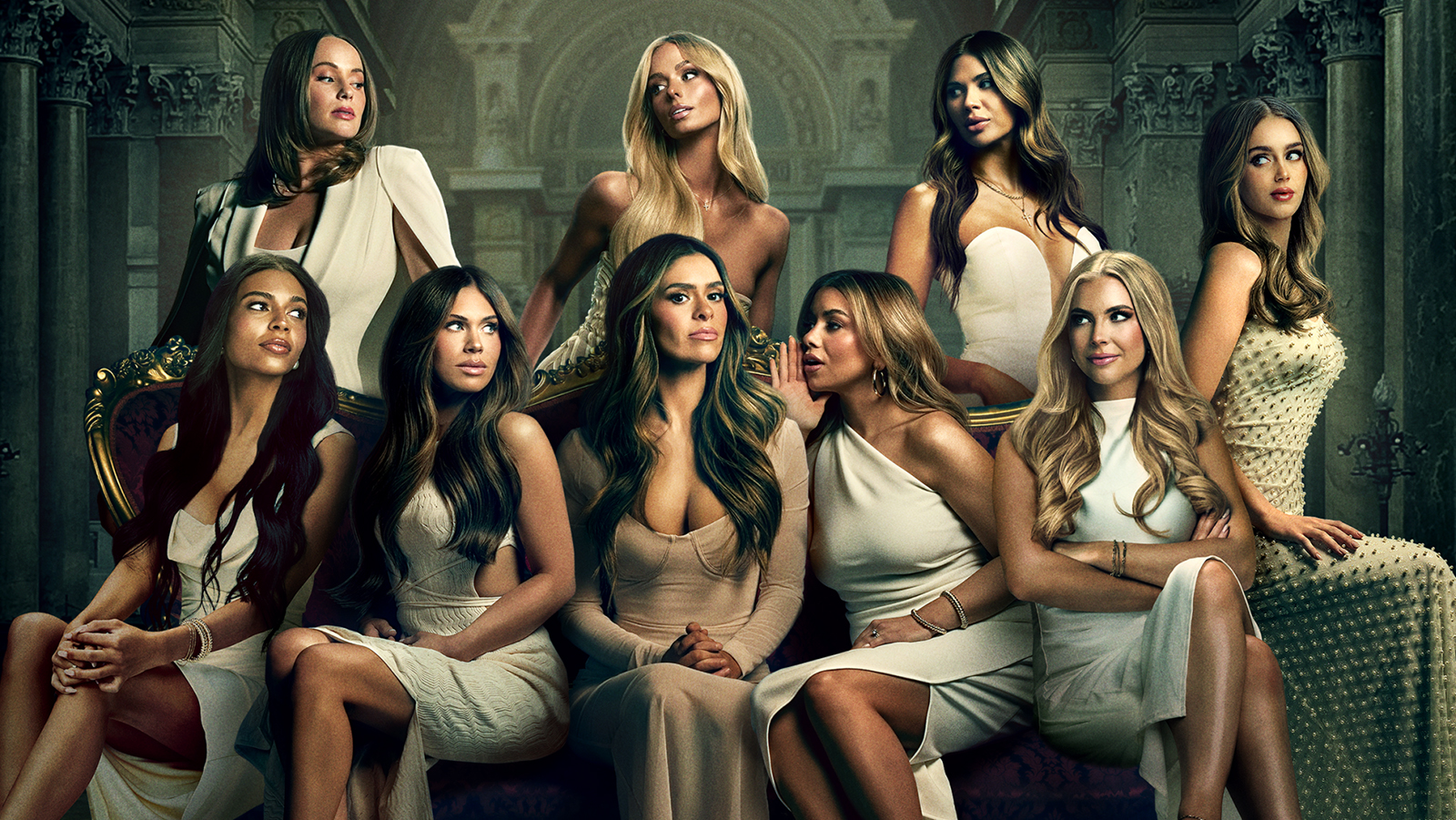
(RNS) — 'Secret Lives' offers an absurdly one-sided picture of Mormonism. But it's also not fully wrong.
Promotional poster for "The Secret Lives of Mormon Wives."
Jana Riess
November 14, 2025
But that doesn’t mean these characters aren’t raising vital questions about what constitutes a Mormon identity.
The first two seasons of “Secret Lives” showed some of the women working out their relationship to the Church of Jesus Christ of Latter-day Saints in real time. The main characters fall on a spectrum where some are “all out” of the church and are very critical of it, a few are at the other extreme and still regularly attending church, and most are somewhere in the middle.
An important aspect of this identity negotiation has to do with sex. Beyond all the revealing clothing and made-for-media drama about who cheated on whom, there’s a good deal of hurt around sexuality.
I admit that the first time Mayci used the word “trauma” to refer to her picture-perfect life, I rolled my eyes. But I gave her the benefit of the doubt by reading some of her new memoir “Told You So,” which came out last month. It details a painful history of adolescent grooming and sexual assault, and the humiliation of having to confess what was mostly nonconsensual sexual activity to her bishop. It’s an important story.
Then, there’s Mikayla, who says in Season Two that she survived childhood sexual abuse that was dismissed or downplayed by her LDS mother. Mikayla left home at 15, became a teenage mom at 17 and now has four kids, despite only being in her mid-20s.
And let’s not forget Layla, who says she has never had an orgasm. Or at least, not until MomTok hired a sex educator to teach them all more about the female body and how it’s not only designed to give men pleasure.
Layla didn’t grow up LDS; she converted as a teenager, attracted to the religion’s seeming ability to deliver a happy nuclear family. She got married super young since early marriage seemed to be emphasized in her new Mormon world. But the church’s ideal of the happy family didn’t work out, and by her early 20s, she was a divorced and destitute single mom.
Some orthodox LDS church members will doubtless respond that these women made their own choices, citing agency and accountability and all that. But the common theme running through these stories is a feeling of powerlessness around their sexuality, and I do think some of that can be blamed on the church.
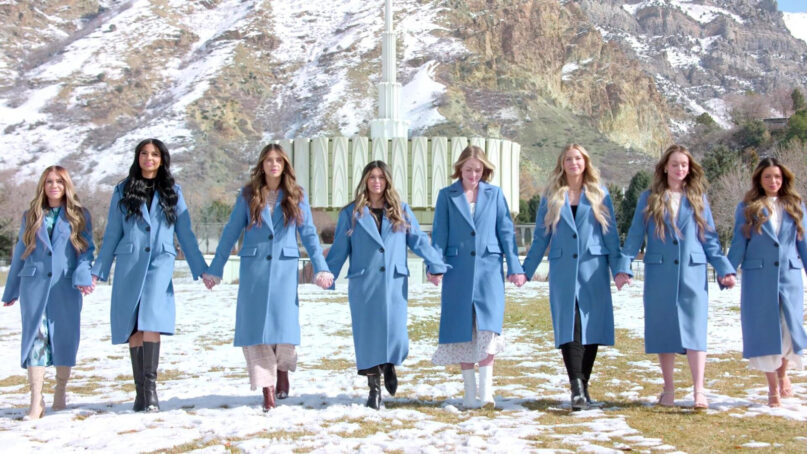
Promotional image for “The Secret Lives of Mormon Wives.” (Image courtesy of Hulu)
The church taught women their sexual “purity” was the most important thing about them, the single-most prized virtue they possessed. The church also taught them that sex outside of marriage was a sin second only to murder (cue Spencer W. Kimball here). And the church wasn’t always careful to distinguish between consensual, chosen sex and being the victim of rape or abuse. If virginity was the commodity that gave a young woman value, then she was damaged goods when it was gone, even if it was forcibly taken from her.
For the last five years, I’ve been part of a research project about who leaves Mormonism and why. In my interviews with women who have left — particularly younger women in their 20s, 30s and 40s — it’s become very clear to me that the damage inflicted by purity culture is real.
In a broader way, the church taught women that their primary role in life was to be a wife and mother. This creates conflict for some of the women in the show. Their generation of LDS women was told to get an education, but also that any career they might prepare for was strictly a “plan B” in case they couldn’t fulfill the ideal of being a stay-at-home mother.
In the series, we see this tension play out in the story of Jen, who begins as the token, quiet young Mormon wife. Jen married very young, and her husband is portrayed as controlling. The show depicts him as attempting to isolate her from her female friends when they exert damaging peer pressure on Jen by frog-marching her against her will to the den of iniquity that is Chippendales. (Did I mention these women are not real friends to each other?)
Jen’s fellow MomTokers don’t think much of her husband. Jen, meanwhile, begins to assert her own opinions and make demands of him, something she feels empowered to do, in part because she has become the unexpected breadwinner in their marriage.
Jen could well be LDS church leaders’ worst nightmare. She’s the cautionary tale of what can happen when women don’t completely buy into the church’s preferred SAHM identity and the chronic financial dependence that goes with it. Lured by the validation and the paycheck they can receive in the working world, they stop playing the role of the deferential wife who just feels lucky to have a husband — any husband, even a crappy one. (And I’m not saying Jen’s man-child of a husband is crappy. Who really knows with fake-ality TV?)
But Jen is living a deeply familiar Mormon story. I know many women like her who postponed or derailed their careers in order to follow the church’s one true approved path for them. Some are happy they did, and others are not. All of them are wrestling with the messages about work and motherhood they absorbed growing up in the church.
Yet, the church claims it can’t see itself in any way in this series. A couple weeks before the first episode of “Secret Lives” debuted in September 2024, the church released an official statement that didn’t name the show but decried “stereotypes or gross misrepresentations that are in poor taste.” The statement further noted the church’s “regret that portrayals often rely on sensationalism and inaccuracies that do not fairly and fully reflect the lives of Church members or the sacred beliefs that they hold dear.”
I agree with some of that: “Secret Lives” offers an absurdly one-sided picture of Mormonism. These women are so materialistic and obsessed with parties and clothes that they don’t resemble any of the Mormon women I know. If the MomTok divas care about the wider world beyond their influencer bubble, we don’t see it onscreen. They mine human relationships for dramatic effect and size up other people based on what those people can do for them.
That self-centered worldview is very much not Mormon. The church has consistently preached a gospel of helping others and serving God.
But in terms of sexuality and gender roles, there’s a clear connective thread to what the church taught these women about their life purpose and their bodies. And it impacts what they are grappling with today.
Their struggles are often painful to watch. But I hold a grudging respect for several of these Mormon-ish women, and I wish them the best. Mostly, I think they would be better off if they stayed away from each other and found at least one actual, tried-and-true friend. Failing that, each could use a loyal Golden Retriever.
‘Secret Lives’ shows Mormon women working out the damage of purity culture in real time
(RNS) — 'Secret Lives' offers an absurdly one-sided picture of Mormonism. But it's also not fully wrong.
Promotional poster for "The Secret Lives of Mormon Wives."
(Image courtesy of Hulu)
Jana Riess
November 14, 2025
RNS
(RNS) — Season Three of Hulu’s hit series “The Secret Lives of Mormon Wives” dropped on Thursday (Nov. 13). Ten new episodes promise to update us on the latest scandals, catfights and shifting alliances among Utah’s notorious MomTok frenemies.
Let me say up front that I’m not a fan of “reality” TV, or what one of my friends aptly calls “fake-ality” TV. There’s a tedious and engineered sameness to these shows. “Secret Lives,” like similar shows, revolves around some type of manufactured conflict, usually low-stakes played as high stakes — for example, adults saying “OMG, she said that?! I am so not inviting her to my birthday party.” Then everyone rehashes the low-stakes conflict endlessly, in cloistered small-group gossip and in solo interviews in front of the camera, telling us again and again how they feel about it.
And yet, I can’t dismiss the show as entirely vacuous, and I can’t dismiss these women as not being real Mormons.
Yes, there’s a lot that is fake about the show and about them. For women who seem bent on asserting their individual uniqueness, they sure went all in on identical “Utah hair” styles. There’s surgical augmentation of certain body parts and the synthetic “sisterhood” they keep claiming to enjoy. They constantly speak about friendship even as they only appear to hug so they can stab one another in the back from closer proximity. Their relationships through MomTok, the nickname for their TikTok community, seem almost wholly transactional. The women use one another for clout, although they also worry aloud that other people are only interested in befriending or dating them to get more clout.
(RNS) — Season Three of Hulu’s hit series “The Secret Lives of Mormon Wives” dropped on Thursday (Nov. 13). Ten new episodes promise to update us on the latest scandals, catfights and shifting alliances among Utah’s notorious MomTok frenemies.
Let me say up front that I’m not a fan of “reality” TV, or what one of my friends aptly calls “fake-ality” TV. There’s a tedious and engineered sameness to these shows. “Secret Lives,” like similar shows, revolves around some type of manufactured conflict, usually low-stakes played as high stakes — for example, adults saying “OMG, she said that?! I am so not inviting her to my birthday party.” Then everyone rehashes the low-stakes conflict endlessly, in cloistered small-group gossip and in solo interviews in front of the camera, telling us again and again how they feel about it.
And yet, I can’t dismiss the show as entirely vacuous, and I can’t dismiss these women as not being real Mormons.
Yes, there’s a lot that is fake about the show and about them. For women who seem bent on asserting their individual uniqueness, they sure went all in on identical “Utah hair” styles. There’s surgical augmentation of certain body parts and the synthetic “sisterhood” they keep claiming to enjoy. They constantly speak about friendship even as they only appear to hug so they can stab one another in the back from closer proximity. Their relationships through MomTok, the nickname for their TikTok community, seem almost wholly transactional. The women use one another for clout, although they also worry aloud that other people are only interested in befriending or dating them to get more clout.
But that doesn’t mean these characters aren’t raising vital questions about what constitutes a Mormon identity.
The first two seasons of “Secret Lives” showed some of the women working out their relationship to the Church of Jesus Christ of Latter-day Saints in real time. The main characters fall on a spectrum where some are “all out” of the church and are very critical of it, a few are at the other extreme and still regularly attending church, and most are somewhere in the middle.
An important aspect of this identity negotiation has to do with sex. Beyond all the revealing clothing and made-for-media drama about who cheated on whom, there’s a good deal of hurt around sexuality.
I admit that the first time Mayci used the word “trauma” to refer to her picture-perfect life, I rolled my eyes. But I gave her the benefit of the doubt by reading some of her new memoir “Told You So,” which came out last month. It details a painful history of adolescent grooming and sexual assault, and the humiliation of having to confess what was mostly nonconsensual sexual activity to her bishop. It’s an important story.
Then, there’s Mikayla, who says in Season Two that she survived childhood sexual abuse that was dismissed or downplayed by her LDS mother. Mikayla left home at 15, became a teenage mom at 17 and now has four kids, despite only being in her mid-20s.
And let’s not forget Layla, who says she has never had an orgasm. Or at least, not until MomTok hired a sex educator to teach them all more about the female body and how it’s not only designed to give men pleasure.
Layla didn’t grow up LDS; she converted as a teenager, attracted to the religion’s seeming ability to deliver a happy nuclear family. She got married super young since early marriage seemed to be emphasized in her new Mormon world. But the church’s ideal of the happy family didn’t work out, and by her early 20s, she was a divorced and destitute single mom.
Some orthodox LDS church members will doubtless respond that these women made their own choices, citing agency and accountability and all that. But the common theme running through these stories is a feeling of powerlessness around their sexuality, and I do think some of that can be blamed on the church.
Promotional image for “The Secret Lives of Mormon Wives.” (Image courtesy of Hulu)
The church taught women their sexual “purity” was the most important thing about them, the single-most prized virtue they possessed. The church also taught them that sex outside of marriage was a sin second only to murder (cue Spencer W. Kimball here). And the church wasn’t always careful to distinguish between consensual, chosen sex and being the victim of rape or abuse. If virginity was the commodity that gave a young woman value, then she was damaged goods when it was gone, even if it was forcibly taken from her.
For the last five years, I’ve been part of a research project about who leaves Mormonism and why. In my interviews with women who have left — particularly younger women in their 20s, 30s and 40s — it’s become very clear to me that the damage inflicted by purity culture is real.
In a broader way, the church taught women that their primary role in life was to be a wife and mother. This creates conflict for some of the women in the show. Their generation of LDS women was told to get an education, but also that any career they might prepare for was strictly a “plan B” in case they couldn’t fulfill the ideal of being a stay-at-home mother.
In the series, we see this tension play out in the story of Jen, who begins as the token, quiet young Mormon wife. Jen married very young, and her husband is portrayed as controlling. The show depicts him as attempting to isolate her from her female friends when they exert damaging peer pressure on Jen by frog-marching her against her will to the den of iniquity that is Chippendales. (Did I mention these women are not real friends to each other?)
Jen’s fellow MomTokers don’t think much of her husband. Jen, meanwhile, begins to assert her own opinions and make demands of him, something she feels empowered to do, in part because she has become the unexpected breadwinner in their marriage.
Jen could well be LDS church leaders’ worst nightmare. She’s the cautionary tale of what can happen when women don’t completely buy into the church’s preferred SAHM identity and the chronic financial dependence that goes with it. Lured by the validation and the paycheck they can receive in the working world, they stop playing the role of the deferential wife who just feels lucky to have a husband — any husband, even a crappy one. (And I’m not saying Jen’s man-child of a husband is crappy. Who really knows with fake-ality TV?)
But Jen is living a deeply familiar Mormon story. I know many women like her who postponed or derailed their careers in order to follow the church’s one true approved path for them. Some are happy they did, and others are not. All of them are wrestling with the messages about work and motherhood they absorbed growing up in the church.
Yet, the church claims it can’t see itself in any way in this series. A couple weeks before the first episode of “Secret Lives” debuted in September 2024, the church released an official statement that didn’t name the show but decried “stereotypes or gross misrepresentations that are in poor taste.” The statement further noted the church’s “regret that portrayals often rely on sensationalism and inaccuracies that do not fairly and fully reflect the lives of Church members or the sacred beliefs that they hold dear.”
I agree with some of that: “Secret Lives” offers an absurdly one-sided picture of Mormonism. These women are so materialistic and obsessed with parties and clothes that they don’t resemble any of the Mormon women I know. If the MomTok divas care about the wider world beyond their influencer bubble, we don’t see it onscreen. They mine human relationships for dramatic effect and size up other people based on what those people can do for them.
That self-centered worldview is very much not Mormon. The church has consistently preached a gospel of helping others and serving God.
But in terms of sexuality and gender roles, there’s a clear connective thread to what the church taught these women about their life purpose and their bodies. And it impacts what they are grappling with today.
Their struggles are often painful to watch. But I hold a grudging respect for several of these Mormon-ish women, and I wish them the best. Mostly, I think they would be better off if they stayed away from each other and found at least one actual, tried-and-true friend. Failing that, each could use a loyal Golden Retriever.
No comments:
Post a Comment