World leaders arrive in the Brazilian Amazon on Thursday for a high-stakes test of global climate promises, with vulnerable nations demanding far greater financial support and scientists warning the world is still veering off track.
Issued on: 06/11/2025 - RFI
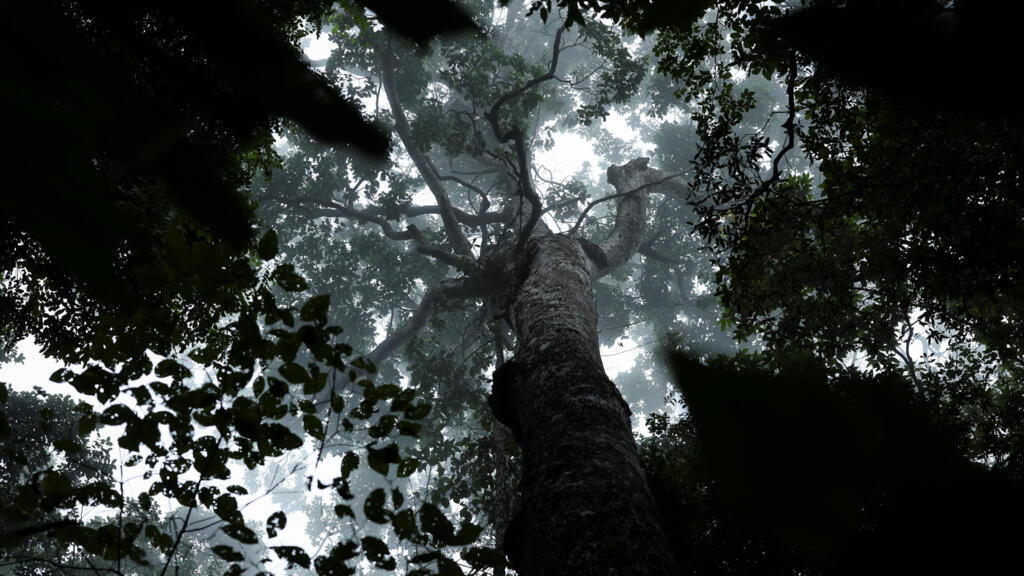
Mist rises over the Carajas National Forest in Para, Brazil, where the mining industry and rainforest coexist uneasily ahead of Cop30 in the Amazon. REUTERS - Jorge Silva
By: Amanda Morrow
The two-day Belem Climate Summit takes place in the humid port city at the mouth of the Amazon River – a symbolic prelude to the UN’s Cop30 conference that begins there next week. Together they mark 10 years since the Paris Agreement and bring global attention back to the planet’s most vital carbon sink.
For Brazil, it is a moment to show that protecting forests and reducing poverty can go hand in hand. For much of the world, it is a chance to prove that promises made in Paris can still deliver results.
“We have to somehow manage to convey that there is progress on this agenda, because we are facing a phase in which most of the public think that this agenda is losing ground,” Cop30 president Andre Correa do Lago said.
But the talks open amid sobering news. Around two-thirds of the 195 countries that signed the Paris accord missed the February deadline to submit updated climate plans for 2035.
By early November, only about 65 countries had submitted new national climate plans for 2035, and most failed to impress. China’s target fell well below expectations, while India has yet to finalise its pledge.
The European Union agreed on Wednesday to a weakened 2040 climate goal after all-night talks in Brussels, keeping its 90 percent emissions cut headline but allowing countries to offset up to 10 percent of that target through foreign carbon credits and delay key measures.
Environmental groups warned the compromise undermines Europe’s credibility as a climate leader, while several member states argued it was needed to protect industries struggling with high energy costs and competition from cheaper imports.
Europe’s climate progress overshadowed by worsening loss of nature
The billion-dollar gap
The battle over money will dominate both the Belem summit and Cop30, which runs from 10 to 21 November. Wealthy nations are under pressure to explain how they will help poorer ones cope with rising seas, extreme heat and mounting climate losses.
Last year’s Cop29 in Baku ended with developed countries agreeing to provide $300 billion a year in climate finance by 2035 – far below what developing nations say is needed. Governments also set a vaguer goal of mobilising $1.3 trillion a year from public and private sources but offered little detail on how to achieve it.
A UN Adaptation Gap Report last week found the world will need to spend about $310 billion a year by 2035 to prepare for worsening floods, droughts and heatwaves – roughly 12 times current spending levels.
“More than ever, the general public, governments in general, cities in general, want resources for adaptation,” Correa do Lago said.
By: Amanda Morrow
The two-day Belem Climate Summit takes place in the humid port city at the mouth of the Amazon River – a symbolic prelude to the UN’s Cop30 conference that begins there next week. Together they mark 10 years since the Paris Agreement and bring global attention back to the planet’s most vital carbon sink.
For Brazil, it is a moment to show that protecting forests and reducing poverty can go hand in hand. For much of the world, it is a chance to prove that promises made in Paris can still deliver results.
“We have to somehow manage to convey that there is progress on this agenda, because we are facing a phase in which most of the public think that this agenda is losing ground,” Cop30 president Andre Correa do Lago said.
But the talks open amid sobering news. Around two-thirds of the 195 countries that signed the Paris accord missed the February deadline to submit updated climate plans for 2035.
By early November, only about 65 countries had submitted new national climate plans for 2035, and most failed to impress. China’s target fell well below expectations, while India has yet to finalise its pledge.
The European Union agreed on Wednesday to a weakened 2040 climate goal after all-night talks in Brussels, keeping its 90 percent emissions cut headline but allowing countries to offset up to 10 percent of that target through foreign carbon credits and delay key measures.
Environmental groups warned the compromise undermines Europe’s credibility as a climate leader, while several member states argued it was needed to protect industries struggling with high energy costs and competition from cheaper imports.
Europe’s climate progress overshadowed by worsening loss of nature
The billion-dollar gap
The battle over money will dominate both the Belem summit and Cop30, which runs from 10 to 21 November. Wealthy nations are under pressure to explain how they will help poorer ones cope with rising seas, extreme heat and mounting climate losses.
Last year’s Cop29 in Baku ended with developed countries agreeing to provide $300 billion a year in climate finance by 2035 – far below what developing nations say is needed. Governments also set a vaguer goal of mobilising $1.3 trillion a year from public and private sources but offered little detail on how to achieve it.
A UN Adaptation Gap Report last week found the world will need to spend about $310 billion a year by 2035 to prepare for worsening floods, droughts and heatwaves – roughly 12 times current spending levels.
“More than ever, the general public, governments in general, cities in general, want resources for adaptation,” Correa do Lago said.
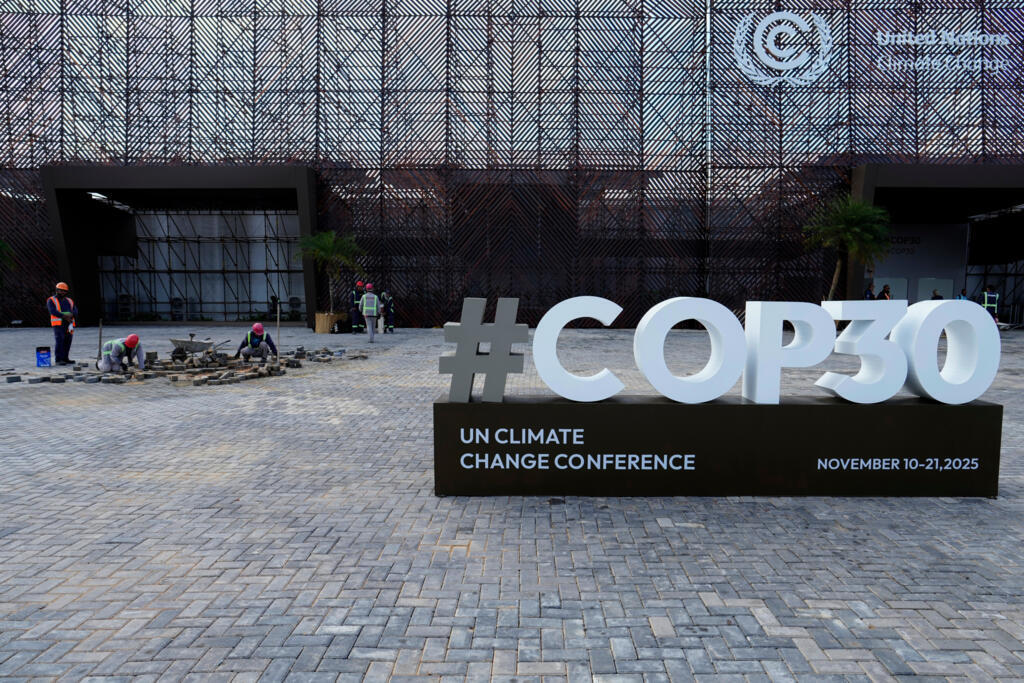
Belém readies for Cop30, where world leaders will meet in the heart of the Amazon to test whether a decade of climate promises still stand. AP - Eraldo Peres
CARE International, which campaigns for climate justice and humanitarian relief, warned that the shortfall is already leaving millions exposed, especially women and girls.
“The need for adaptation finance is immense, up to $300 billion per year, yet current funding barely scratches the surface,” said Marlene Achoki, CARE’s global climate justice policy lead. “Cop30 will be successful, and truly a people’s Cop, when sufficient adaptation finance is provided to drive real action and implementation on the ground.”
Senior adviser John Nordbo described climate finance as “the fault line of global climate action”, saying many rich countries inflate figures and repackage loans as aid.
“Much of this so-called support comes as loans, not grants, and repayments often flow quietly back to donors,” he said.
CARE International, which campaigns for climate justice and humanitarian relief, warned that the shortfall is already leaving millions exposed, especially women and girls.
“The need for adaptation finance is immense, up to $300 billion per year, yet current funding barely scratches the surface,” said Marlene Achoki, CARE’s global climate justice policy lead. “Cop30 will be successful, and truly a people’s Cop, when sufficient adaptation finance is provided to drive real action and implementation on the ground.”
Senior adviser John Nordbo described climate finance as “the fault line of global climate action”, saying many rich countries inflate figures and repackage loans as aid.
“Much of this so-called support comes as loans, not grants, and repayments often flow quietly back to donors,” he said.
Brazil's forest gamble
Holding the leaders’ summit in Belem brings the focus back to the rainforest’s central role in stabilising the planet’s climate.
The Brazilian government will use the event to launch the Tropical Forests Forever Facility – a new global fund that will reward countries with high tropical forest cover for keeping trees standing instead of cutting them down.
The facility aims to raise $25 billion from donor governments and another $100 billion from private investors, with Brazil already pledging $1 billion.
The fund “could be a step forward in protecting tropical forests” if paired with firm commitments to end deforestation by 2030, said Clement Helary, a forests campaigner with Greenpeace.
Tropical primary forest loss hit a record high in 2024 – the equivalent of 18 football fields a minute, driven largely by fires.
Hosting the conference in the Amazon makes it “the perfect opportunity to ramp up action to end deforestation”, the WWF has said, noting that global pledges from Cop26 to halt forest loss by 2030 have stalled.
Holding the leaders’ summit in Belem brings the focus back to the rainforest’s central role in stabilising the planet’s climate.
The Brazilian government will use the event to launch the Tropical Forests Forever Facility – a new global fund that will reward countries with high tropical forest cover for keeping trees standing instead of cutting them down.
The facility aims to raise $25 billion from donor governments and another $100 billion from private investors, with Brazil already pledging $1 billion.
The fund “could be a step forward in protecting tropical forests” if paired with firm commitments to end deforestation by 2030, said Clement Helary, a forests campaigner with Greenpeace.
Tropical primary forest loss hit a record high in 2024 – the equivalent of 18 football fields a minute, driven largely by fires.
Hosting the conference in the Amazon makes it “the perfect opportunity to ramp up action to end deforestation”, the WWF has said, noting that global pledges from Cop26 to halt forest loss by 2030 have stalled.
From talk to action
Cop30 will test whether the world can finally move from ambition to action.
Under the Paris Agreement, countries must strengthen their emissions targets every five years, but the latest round of 2035 plans still falls well short of what is needed to limit warming to 1.5C.
What is needed now is “a step change” – moving from setting targets to delivering them, said the World Resources Institute.
The first global stocktake at Cop28 showed the world is “significantly off track”, while the UN Secretary-General has said overshooting the 1.5C goal is “inevitable” unless countries “change course”.
When the Paris Agreement was signed, the planet was on track for roughly 4C of warming by 2100. Later pledges have cut that to around 3C, and if all net-zero promises were fully met, the rise could fall closer to 1.9C.
Deeper emissions cuts and large-scale ecosystem restoration, scientists say, could still bring temperatures back below 1.5C later this century.
Last year was the first time the 1.5C threshold was breached for an entire year, with extreme weather causing more than $300 billion in damage. Renewable energy and electric vehicles, while already saving lives and creating jobs, is not happening fast enough, experts warn.
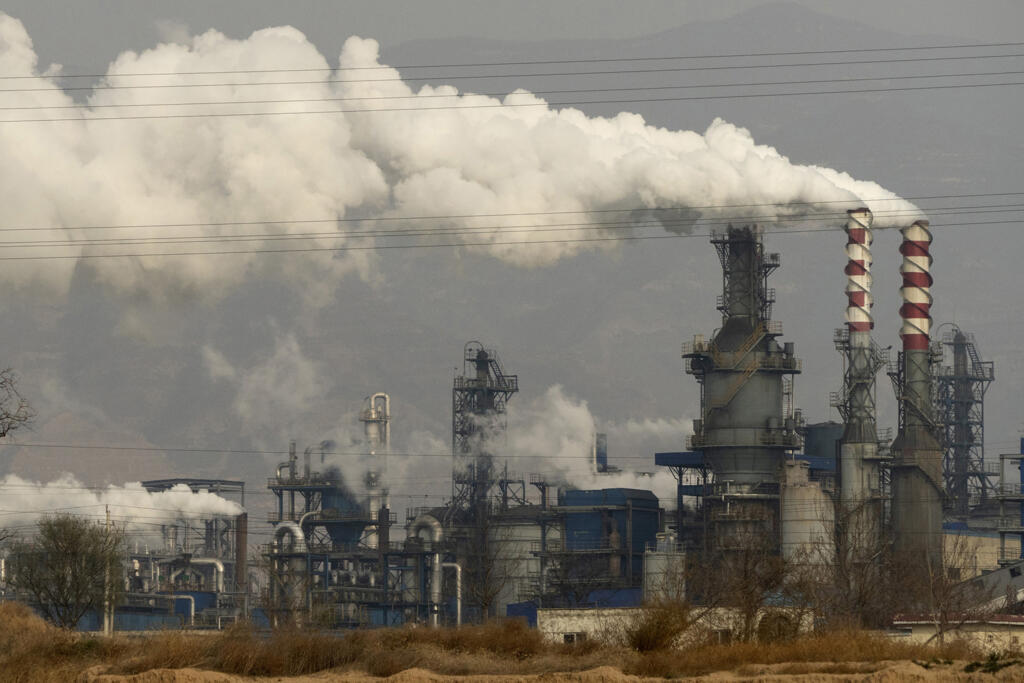
Can trust survive?
Unlike earlier climate summits, Cop30 has no single grand deal in sight.
Organisers are calling it the “Cop of Implementation”, focused on turning words into measurable progress.
“The Brazilian Presidency’s central challenge is to turn promises into real-world action – bridging divides between developed and developing countries, ambition and equity, mitigation and adaptation,” said Karen Silverwood-Cope from WRI Brazil.
The political mood adds to the challenge. US President Donald Trump has dismissed climate change as a “con job” and is sending no senior officials to Belem, deepening fears that global climate diplomacy is losing momentum.
Still, Brazil hopes the Amazon setting can help restore it. President Luiz Inacio Lula da Silva has been in Belem since the weekend, meeting local communities and overseeing preparations ahead of the summit.
He is expected to stay through the opening of Cop30 on Monday, as world leaders gather in the heart of the Amazon – a symbolic setting for a conference that will test whether a decade of promises can finally turn into action.
World leaders rally in support of climate action before COP30 summit
UN Secretary-General Antonio Guterres on Thursday tore into nations for their failure to limit warming to 1.5 degrees Celsius as Brazil hosted world leaders for a summit ahead of the COP30 climate conference. Almost every nation is participating aside from the United States, with US President Donald Trump having branded climate science a "con job".
Issued on: 06/11/2025
By: FRANCE 24
UN chief Antonio Guterres on Thursday said nations must confront the "moral failure and deadly negligence" of missing the 1.5C climate target as leaders gathered in the Brazilian Amazon ahead of next week's COP30 talks.
Dozens of heads of state and government are in the rainforest city of Belem in northern Brazil for the UN climate summit, which come after scientists confirmed the core goal of the Paris Agreement would be missed.
"We have failed to ensure we remain below 1.5 degrees", Guterres told the gathering of leaders in the Amazon city.
"This is moral failure – and deadly negligence" but that did not mean all hope was lost, he added.
Major economies are not cutting planet-warming pollution fast enough to avoid dangerous levels of global warming this century, the UN said this week, but could still speed up action to protect against the worst impacts.
The UN's weather and climate agency on Thursday said 2025 would be among the hottest years ever recorded.
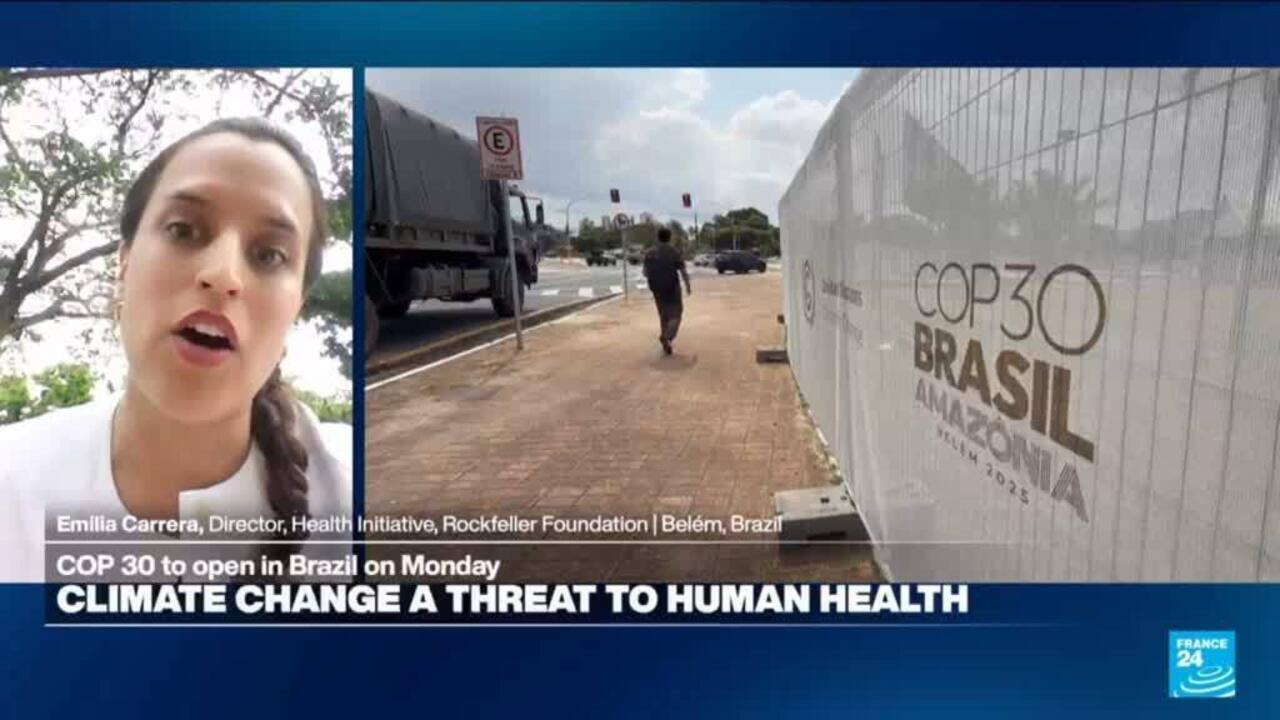
Brazil hopes COP30 demonstrates that climate change remains a top global priority, even as crucial targets are missed and progress falters.
In his opening address, President Luiz Inacio Lula da Silva of COP30 said the window to prevent calamitous climate change was "closing rapidly" and blasted the "extremist forces" condemning future generations.
UK Prime Minister Keir Starmer and French President Emmanuel Macron are expected in Belem but other major economies, including China and India, are sending deputies or climate ministers.
The United States is not participating, with President Donald Trump branding climate science a "con job".
Uphill battle
The choice of Belem, a city of 1.4 million people, half of whom live in working-class neighborhoods known as favelas, has been controversial due to its limited infrastructure, with sky-high hotel fees complicating the participation of small delegations and NGOs.
Nonetheless, Karol Farias, 34, a makeup artist who came to shop at the newly spruced up Ver-o-Peso market told AFP: "The COP is bringing Belem the recognition it deserves."
The US absence will linger awkwardly during the summit, as will Brazil's recent approval of oil drilling near the mouth of the Amazon River.
So, too, will the unanswered call for a wave of ambitious new climate pledges ahead of COP30.
Climate action in a fractured world: Is there a will 'to cooperate in a world full of conflict'?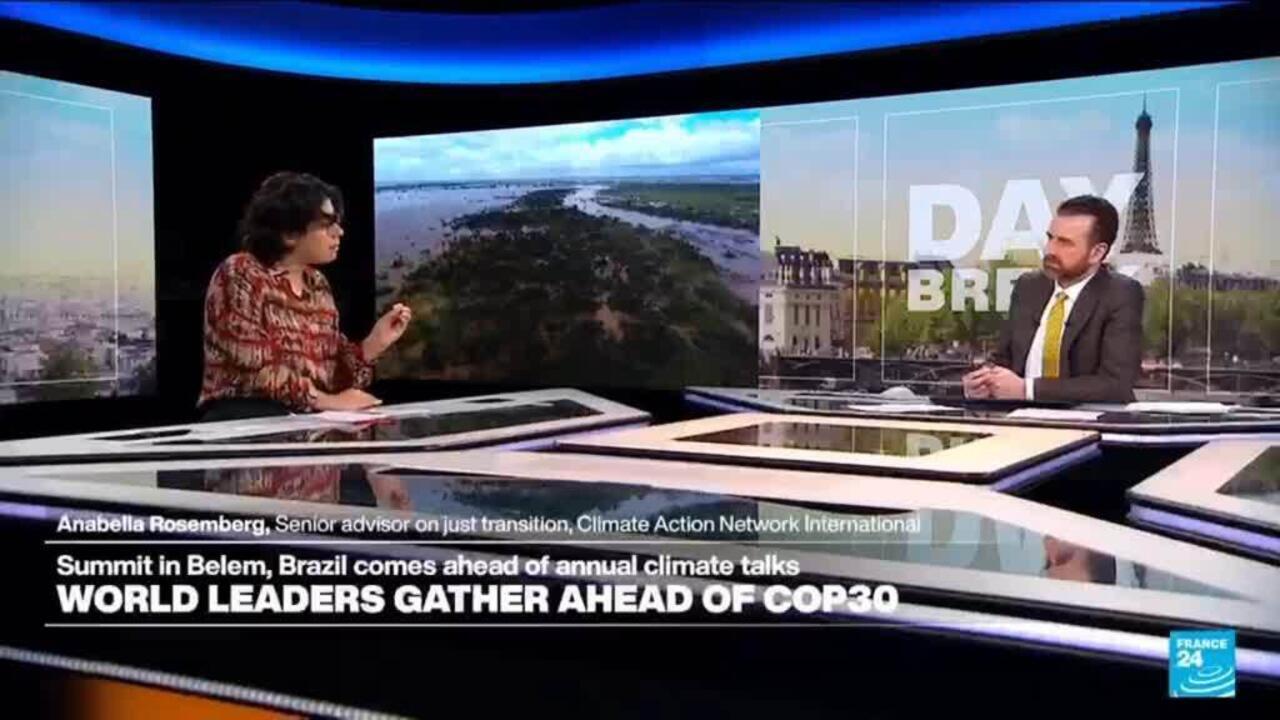
UN Secretary-General Antonio Guterres on Thursday tore into nations for their failure to limit warming to 1.5 degrees Celsius as Brazil hosted world leaders for a summit ahead of the COP30 climate conference. Almost every nation is participating aside from the United States, with US President Donald Trump having branded climate science a "con job".
Issued on: 06/11/2025
By: FRANCE 24
UN chief Antonio Guterres on Thursday said nations must confront the "moral failure and deadly negligence" of missing the 1.5C climate target as leaders gathered in the Brazilian Amazon ahead of next week's COP30 talks.
Dozens of heads of state and government are in the rainforest city of Belem in northern Brazil for the UN climate summit, which come after scientists confirmed the core goal of the Paris Agreement would be missed.
"We have failed to ensure we remain below 1.5 degrees", Guterres told the gathering of leaders in the Amazon city.
"This is moral failure – and deadly negligence" but that did not mean all hope was lost, he added.
Major economies are not cutting planet-warming pollution fast enough to avoid dangerous levels of global warming this century, the UN said this week, but could still speed up action to protect against the worst impacts.
The UN's weather and climate agency on Thursday said 2025 would be among the hottest years ever recorded.
© France 24
09:27
09:27
Brazil hopes COP30 demonstrates that climate change remains a top global priority, even as crucial targets are missed and progress falters.
In his opening address, President Luiz Inacio Lula da Silva of COP30 said the window to prevent calamitous climate change was "closing rapidly" and blasted the "extremist forces" condemning future generations.
UK Prime Minister Keir Starmer and French President Emmanuel Macron are expected in Belem but other major economies, including China and India, are sending deputies or climate ministers.
The United States is not participating, with President Donald Trump branding climate science a "con job".
Uphill battle
The choice of Belem, a city of 1.4 million people, half of whom live in working-class neighborhoods known as favelas, has been controversial due to its limited infrastructure, with sky-high hotel fees complicating the participation of small delegations and NGOs.
Nonetheless, Karol Farias, 34, a makeup artist who came to shop at the newly spruced up Ver-o-Peso market told AFP: "The COP is bringing Belem the recognition it deserves."
The US absence will linger awkwardly during the summit, as will Brazil's recent approval of oil drilling near the mouth of the Amazon River.
So, too, will the unanswered call for a wave of ambitious new climate pledges ahead of COP30.
Climate action in a fractured world: Is there a will 'to cooperate in a world full of conflict'?
© France 24
07:24
Brazil has acknowledged the uphill battle it faces rallying climate action at a time of wars and tariff disputes, tight budgets, and a populist backlash against green policies.
In a sobering reminder of the task at hand, a closely watched vote last month to reduce pollution from global shipping was rejected under intense pressure from the United States.
Leaders gathered in Belem "need to deliver a clear mandate to the COP to be ambitious and to close the gap and to address the issues that are burning," Greenpeace Brazil executive director Carolina Pasquali told AFP aboard the organization's Rainbow Warrior flagship, docked in the city.
'Enough talk'
Rather than producing a slew of new commitments, Brazil has cast the summit as an opportunity for accountability.
Brazil is launching a new rainforest conservation fund and put emphasis on adaptation, a key demand of countries which cannot afford to build defenses against climate disasters.
"This is not a charity, but a necessity," Evans Njewa, a Malawian diplomat and chair of the Least Developed Countries bloc, told AFP.
These countries want concrete detail on how climate finance can be substantially boosted to $1.3 trillion a year by 2035 -- the estimated need in the developing world.
The hosts are also under pressure to marshal a response to the 1.5C failure. Even if all commitments are enacted in full, global warming is still set to reach 2.5C by century's end.
"For many of our countries, we won't be able to adapt our way out of something that overshoots over two degrees," Ilana Seid, a diplomat from Palau and chair of the Alliance of Small Island States, told AFP in October.
They, among others, want to tackle fossil fuels and push for deeper cuts to greenhouse gas emissions.
(FRANCE 24 with AFP, Reuters)
07:24
Brazil has acknowledged the uphill battle it faces rallying climate action at a time of wars and tariff disputes, tight budgets, and a populist backlash against green policies.
In a sobering reminder of the task at hand, a closely watched vote last month to reduce pollution from global shipping was rejected under intense pressure from the United States.
Leaders gathered in Belem "need to deliver a clear mandate to the COP to be ambitious and to close the gap and to address the issues that are burning," Greenpeace Brazil executive director Carolina Pasquali told AFP aboard the organization's Rainbow Warrior flagship, docked in the city.
'Enough talk'
Rather than producing a slew of new commitments, Brazil has cast the summit as an opportunity for accountability.
Brazil is launching a new rainforest conservation fund and put emphasis on adaptation, a key demand of countries which cannot afford to build defenses against climate disasters.
"This is not a charity, but a necessity," Evans Njewa, a Malawian diplomat and chair of the Least Developed Countries bloc, told AFP.
These countries want concrete detail on how climate finance can be substantially boosted to $1.3 trillion a year by 2035 -- the estimated need in the developing world.
The hosts are also under pressure to marshal a response to the 1.5C failure. Even if all commitments are enacted in full, global warming is still set to reach 2.5C by century's end.
"For many of our countries, we won't be able to adapt our way out of something that overshoots over two degrees," Ilana Seid, a diplomat from Palau and chair of the Alliance of Small Island States, told AFP in October.
They, among others, want to tackle fossil fuels and push for deeper cuts to greenhouse gas emissions.
(FRANCE 24 with AFP, Reuters)
What's on the agenda for COP30?
Issued on: 06/11/2025 - FRANCE24
With COP30 opening on November 10, what's on the agenda for world leaders? Aside from marking ten years since the Paris Agreement's ambitious targets - which the world is on track to miss -, the summit should also be looking into Brazilian President's ambitious project for a Tropical Forests Forever Fund. FRANCE 24's Valérie Dekimpe breaks it down for us.
Video by: Valérie DEKIMPE
Issued on: 06/11/2025 - FRANCE24
With COP30 opening on November 10, what's on the agenda for world leaders? Aside from marking ten years since the Paris Agreement's ambitious targets - which the world is on track to miss -, the summit should also be looking into Brazilian President's ambitious project for a Tropical Forests Forever Fund. FRANCE 24's Valérie Dekimpe breaks it down for us.
Video by: Valérie DEKIMPE
No comments:
Post a Comment