Somalia’s UN ambassador said Israel plans to “relocate the Palestinian population from Gaza to the northwestern region of Somalia,” and warned that “this utter disdain for law and morality must be stopped now.”
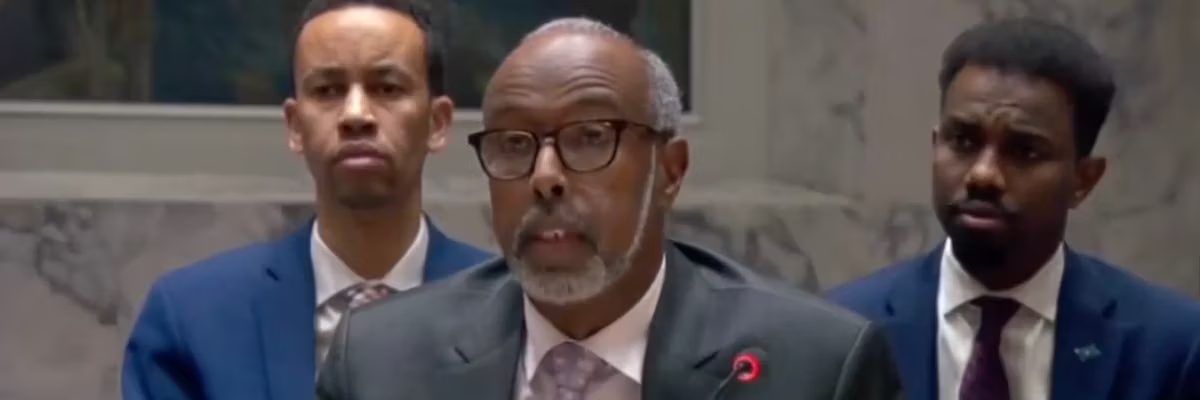
Abukar Osman, Somalia’s permanent representative to the United Nations, spoke at an emergency meeting of the UN Security Council on December 29, 2025.
(Photo: screenshot)
Julia Conley
Dec 30, 2025
COMMON DREAMS
At an emergency meeting of the United Nations Security Council on Monday regarding Israel’s recognition of the breakaway region of Somaliland, 14 of 15 member states joined Somalia’s permanent representative to the UN in condemning what the ambassador called an “act of aggression”—and at least one denounced the Trump administration’s defense of Israel’s move.
The emergency summit was called days after Israel announced its formal recognition of the region, which declared independence in 1991 after a civil war, but which has not been acknowledged by any other country. Somalia continues to claim Somaliland as part of the country while the region’s leaders say the state is the successor to the former British protectorate.
Israel announced its decision months after Prime Minister Benjamin Netanyahu spoke with leaders in Somaliland about a potential deal to trade formal recognition of the region for help with illegally deporting Palestinians from Gaza, and as Israeli policy advisers have argued that Somaliland could be used as a base for military operations against the Houthis in Yemen.
Despite evidence that Israel formally acknowledged Somaliland to further its own military and territorial interests, Israeli Deputy Permanent Representative Jonathan Miller arrived at the meeting Monday with the aim of explaining the “historical context” for the country’s decision.
“Entire cities were destroyed,” said Miller. “Civilians were deliberately targeted. These crimes are now widely recognized as a genocide... Israel’s then-acting permanent representative, Yohanan Bein, submitted this letter to this very council warning of grave human rights violations in Somalia... That history provides essential context for the discussion surrounding Israel’s recognition of Somaliland today.”
Abukar Dahir Osman, Somalia’s permanent representative to the UN, suggested Miller’s comments only added insult to injury, considering Israel has been assaulting Gaza for more than two years—with attacks continuing despite a “ceasefire”—and has killed more than 71,000 Palestinians in what numerous human rights groups and experts have called a genocide.
“If we want to talk about genocide, it’s Israel that’s committed this to our own eyes every day,” said Osman. “[Miller] represents a government that killed more than 70,000 people. Civilians, including children, women, elderly, doctors and other health workers, and patients in hospitals. Destroying infrastructures, deliberately starving people of Gaza.”
“To come to this place, and lecture us [on] humanity and genocide and human rights and independence and democracy. And we know what you’re doing on a daily basis,” said Osman. “It’s just an insult.”
Warning that the recognition of the breakaway region could destabilize Somalia as well as the broader Horn of Africa, the ambassador also expressed concern that Israel plans to “relocate the Palestinian population from Gaza to the northwestern region of Somalia.”
“This utter disdain for law and morality must be stopped now,” said Osman.
Other representatives expressed similar outrage, with the UN envoy for the 22-member Arab League, Maged Abdelfattah Abdelaziz, saying the group would reject “any measures arising from this illegitimate recognition aimed at facilitating forced displacement of the Palestinian people, or exploiting northern Somali ports to establish military bases.”
Muhammad Usman Iqbal Jadoon, deputy UN ambassador for Pakistan, said Israel’s move following its previous comments on potentially deporting Palestinians to Somaliland was “deeply troubling.”
Tammy Bruce, who was sworn in Monday as deputy US representative to the United Nations, was alone in backing Israel’s recognition of Somaliland, though she noted that US policy on the region has not changed.
“Israel has the same right to conduct diplomatic relations as any other sovereign state,” said Bruce. “Earlier this year, several countries, including members of this council, made the unilateral decision to recognize a nonexistent Palestinian state. And yet, no emergency meeting was called to express this council’s outrage.”
More than 150 countries, including a number of major US allies, have recognized Palestinian statehood, with nearly two dozen governments announcing their recognition since Israel began its assault on Gaza in 2023.
Samuel Zbogar, Slovenia’s UN ambassador, pushed back against Bruce’s comparison.
“Slovenia recognized Palestine as an independent state,” he said. “We did so in response to undeniable right of Palestinian people to self-determination. Palestine is not part of any state. It is an illegally occupied territory as declared by the [International Court of Justice], among others. Palestine is also an observer state in this organization.”
“Somaliland, on the other hand, is part of a UN member state and recognizing it goes against Article 2, paragraph 4 of the UN Charter,” he said.
On Tuesday, protests erupted in cities across Somalia, including the capital of Mogadishu, with demonstrators calling for national unity.
Somalis rally against Israel’s world-first recognition of Somaliland
Demonstrations sweep Somalia as the government seeks global diplomatic support.

Yemen’s Houthi rebels have said any Israeli presence in Somaliland would be considered “a military target for our armed forces”.
Shortly after Somaliland announced mutual recognition with Israel on Friday, President Abdirahman Mohamed Abdullahi said the move “is not a threat, not an act of hostility” towards any state, and warned that Somalia’s insistence on unified institutions risks “prolonging divisions rather than healing” them.
The widespread public anger in Somalia reflects a rare show of political unity, where leaders across the spectrum have condemned Israel’s decision.
On Monday, the National Consultative Council — chaired by Mohamud and including the prime minister, federal state presidents and regional governors — rejected the recognition as an “illegal step” that threatens regional security stretching from the Red Sea to the Gulf of Aden.
Four federal member states issued coordinated statements over the weekend denouncing the move. However, Puntland and Jubbaland — both of which recently announced their withdrawal from Somalia’s federal system over electoral and constitutional disputes — have remained silent.
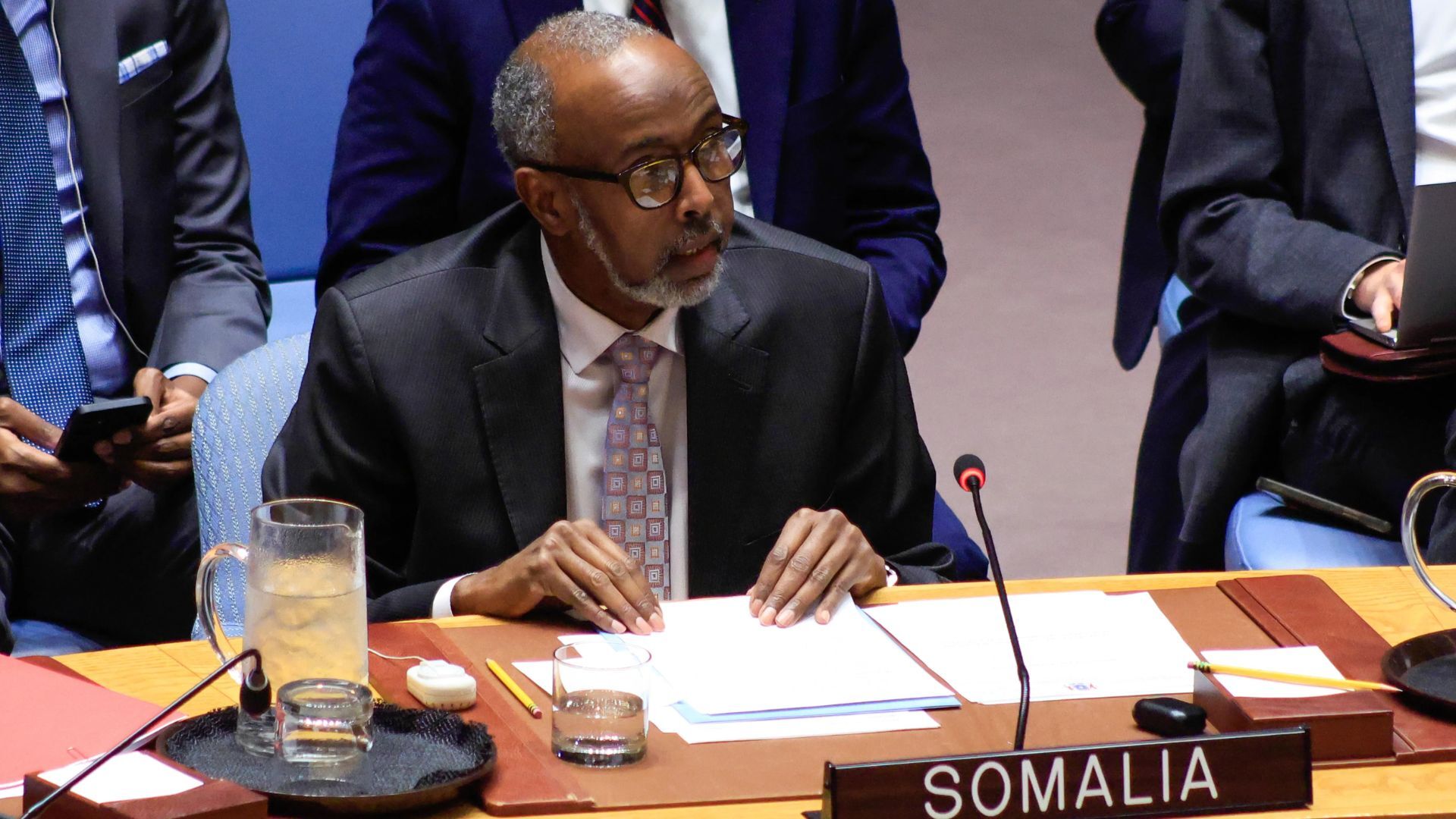
Most United Nations Security Council (UNSC) members slammed Israel’s recognition of Somaliland at a meeting convened on Monday in response to the move, which several countries said may also have serious implications for Palestinians in Gaza.
The United States was the only member of the 15-member body not to condemn Israel’s formal recognition at the emergency meeting in New York on Monday, although it said its own position on Somaliland had not changed.
Somalia’s UN ambassador, Abu Bakr Dahir Osman, warned that the recognition “aims to promote the fragmentation of Somalia” and raised concerns it could facilitate the forced relocation of Palestinians from Gaza to northwestern Somalia, a fear echoed by several other nations.
“This utter disdain for law and morality must be stopped now,” he said.
US deputy representative Tammy Bruce told the council that “Israel has the same right to establish diplomatic relations as any other sovereign state”, though she added Washington had made “no announcement” regarding its own recognition of Somaliland.
Israel’s deputy UN ambassador, Jonathan Miller, defended the decision as “not a hostile step toward Somalia” and made the case to the UNSC for other countries to follow its lead.
Somalia’s state minister for foreign affairs, Ali Omar, thanked UNSC members for their “clear and principled” stance on the issue in a post on X.
Demonstrations sweep Somalia as the government seeks global diplomatic support.
Protesters gather at Mogadishu Stadium to denounce Israel's recognition of Somaliland, December 28, 2025 [Hassan Ali Elmi/AFP]
By Faisal Ali
On 30 Dec 2025
By Faisal Ali
On 30 Dec 2025
AL JAZEERA
Protests have erupted across Somalia following Israel’s formal world-first recognition of the breakaway region of Somaliland, with demonstrators taking to the streets in multiple cities, including the capital, Mogadishu.
On Tuesday morning, large crowds gathered at locations including Mogadishu’s main football stadium and around the city’s airport, where protesters waved Somali flags and chanted slogans calling for national unity.
The demonstrations, which also took place in Baidoa, Dhusamareb, Las Anod, Hobyo and Somalia’s northeastern regions, came as President Hassan Sheikh Mohamud travelled to Istanbul for talks with his Turkish counterpart Recep Tayyip Erdogan following a stop in neighbouring Djibouti.
Somalia and Turkiye have close political and security ties, with Ankara emerging as a regional rival to Israel in recent months.
Small gatherings also took place in Borama, a city in western Somaliland, where the population has appeared more ambivalent about separation from Somalia, to express opposition.
Somaliland unilaterally declared independence in 1991 following a civil war, but has failed to gain international recognition despite maintaining its own currency, passport and army.
Somaliland’s leaders say the state is the successor to the former British protectorate, which voluntarily merged with Italian Somaliland and has now reclaimed its independence. Somalia continues to claim Somaliland as part of its territory and does not recognise its independence.
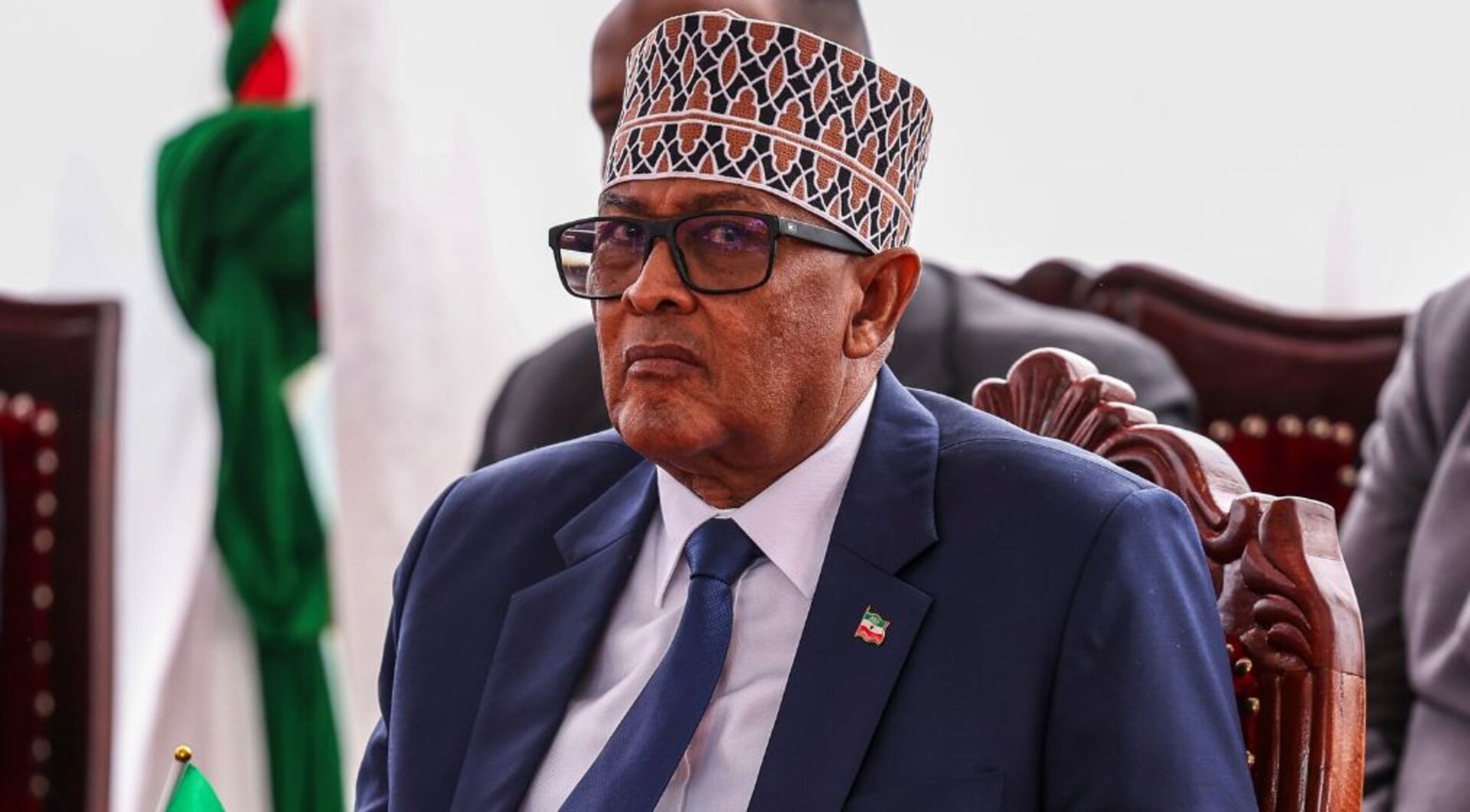
Israel became the first and only country to formally recognise it as a sovereign state last Friday, describing the move as being in the spirit of the Abraham Accords that normalised ties between Israel and several Arab nations.
President Mohamud urged Somaliland’s leadership over the weekend to reverse the decision, warning that its territory, overlooking the strategic gateway to the Red Sea, must not be used as a base for targeting other nations.
Protests have erupted across Somalia following Israel’s formal world-first recognition of the breakaway region of Somaliland, with demonstrators taking to the streets in multiple cities, including the capital, Mogadishu.
On Tuesday morning, large crowds gathered at locations including Mogadishu’s main football stadium and around the city’s airport, where protesters waved Somali flags and chanted slogans calling for national unity.
The demonstrations, which also took place in Baidoa, Dhusamareb, Las Anod, Hobyo and Somalia’s northeastern regions, came as President Hassan Sheikh Mohamud travelled to Istanbul for talks with his Turkish counterpart Recep Tayyip Erdogan following a stop in neighbouring Djibouti.
Somalia and Turkiye have close political and security ties, with Ankara emerging as a regional rival to Israel in recent months.
Small gatherings also took place in Borama, a city in western Somaliland, where the population has appeared more ambivalent about separation from Somalia, to express opposition.
Somaliland unilaterally declared independence in 1991 following a civil war, but has failed to gain international recognition despite maintaining its own currency, passport and army.
Somaliland’s leaders say the state is the successor to the former British protectorate, which voluntarily merged with Italian Somaliland and has now reclaimed its independence. Somalia continues to claim Somaliland as part of its territory and does not recognise its independence.
Israel became the first and only country to formally recognise it as a sovereign state last Friday, describing the move as being in the spirit of the Abraham Accords that normalised ties between Israel and several Arab nations.
President Mohamud urged Somaliland’s leadership over the weekend to reverse the decision, warning that its territory, overlooking the strategic gateway to the Red Sea, must not be used as a base for targeting other nations.
Yemen’s Houthi rebels have said any Israeli presence in Somaliland would be considered “a military target for our armed forces”.
Shortly after Somaliland announced mutual recognition with Israel on Friday, President Abdirahman Mohamed Abdullahi said the move “is not a threat, not an act of hostility” towards any state, and warned that Somalia’s insistence on unified institutions risks “prolonging divisions rather than healing” them.
The widespread public anger in Somalia reflects a rare show of political unity, where leaders across the spectrum have condemned Israel’s decision.
On Monday, the National Consultative Council — chaired by Mohamud and including the prime minister, federal state presidents and regional governors — rejected the recognition as an “illegal step” that threatens regional security stretching from the Red Sea to the Gulf of Aden.
Four federal member states issued coordinated statements over the weekend denouncing the move. However, Puntland and Jubbaland — both of which recently announced their withdrawal from Somalia’s federal system over electoral and constitutional disputes — have remained silent.
Most United Nations Security Council (UNSC) members slammed Israel’s recognition of Somaliland at a meeting convened on Monday in response to the move, which several countries said may also have serious implications for Palestinians in Gaza.
The United States was the only member of the 15-member body not to condemn Israel’s formal recognition at the emergency meeting in New York on Monday, although it said its own position on Somaliland had not changed.
Somalia’s UN ambassador, Abu Bakr Dahir Osman, warned that the recognition “aims to promote the fragmentation of Somalia” and raised concerns it could facilitate the forced relocation of Palestinians from Gaza to northwestern Somalia, a fear echoed by several other nations.
“This utter disdain for law and morality must be stopped now,” he said.
US deputy representative Tammy Bruce told the council that “Israel has the same right to establish diplomatic relations as any other sovereign state”, though she added Washington had made “no announcement” regarding its own recognition of Somaliland.
Israel’s deputy UN ambassador, Jonathan Miller, defended the decision as “not a hostile step toward Somalia” and made the case to the UNSC for other countries to follow its lead.
Somalia’s state minister for foreign affairs, Ali Omar, thanked UNSC members for their “clear and principled” stance on the issue in a post on X.
Why Israel’s ‘recognition’ of Somaliland is fuelling fears of Palestinian resettlement
Any policy advocating the forced relocation of Palestinians from Gaza will constitute a clear violation of the commitments made under the Gaza peace plan, analysts say.
TRT WORLD
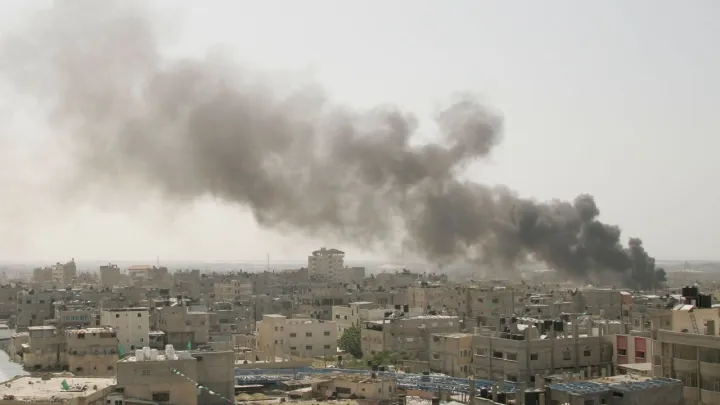
RelatedTRT World - Israel launches renewed air strikes across Gaza, violating ceasefire
According to Kaan Devecioglu, the coordinator for North and East African Studies at the Ankara-based think tank ORSAM, Israel’s recent discourse on “permanent security control” in Gaza cannot be reduced to a single official document establishing a direct intent-policy link with allegations of forced displacement or ethnic cleansing.
“Nevertheless, developments on the ground, including the confinement of the population to specific areas, the large-scale destruction of civilian infrastructure, and debates over plans to ‘concentrate’ the population, significantly reinforce these concerns,” he tells TRT World.
Devecioglu says the ongoing discourse threatens the Palestinians’ right to self-determination in two fundamental ways.
First, the possibility of forced displacement that weakens the people’s de facto link to their land would render any future political settlement “demographically and spatially” meaningless, he says.
Second, determining Gaza’s political future through the military and political decisions of external powers, rather than through local will, runs counter to the very essence of self-determination, he adds.
A threat to regional stability
The recognition of Somaliland’s sovereignty also advances Israel's military ambitions in the Red Sea, according to analysts.
Turhan says Israel’s engagement with Somaliland will provide it with strategic access to the Bab al-Mandeb Strait, a 32-kilometre-wide body of water between the Arabian Peninsula and Africa, connecting the Red Sea with the Gulf of Aden, a key maritime route.
“This access would enable Tel Aviv to conduct discreet intelligence, surveillance, and security operations along a critical global maritime corridor without the need for large-scale military deployment,” he says.
Devecioglu says Israel’s attempt to complement its military objectives against the Houthis in Yemen by expanding access in the Red Sea-Gulf of Aden corridor puts regional stability at risk.
He says that Israel’s recognition of a separatist entity risks encouraging the redrawing of borders in Africa through unilateral secession.
“If the African Union’s long-standing principle of preserving existing borders were to erode, pressures for chain-reaction secessionism could emerge... This would increase the risk of internal conflict across fragile states,” he says.
Any policy advocating the forced relocation of Palestinians from Gaza will constitute a clear violation of the commitments made under the Gaza peace plan, analysts say.
TRT WORLD
Kazim Alam
2 hours ago
Israel's decision on December 26 to become the first country to formally recognise the separatist entity of Somaliland as an “independent and sovereign state” has triggered widespread international outrage, deepening fears that it is part of a strategy to forcibly displace Palestinians from Gaza.
Even though it seceded from Somalia in 1991, Somaliland is recognised by neither the African Union nor the UN as an independent state.
Israeli Prime Minister Benjamin Netanyahu's announcement, made during a phone call with Somaliland's self-proclaimed president Abdirahman Mohamed Abdullahi, was framed as expanding cooperation in agriculture, health and technology.
Yet the move has been widely condemned as a blatant violation of Somalia's sovereignty and territorial integrity, with many linking it directly to Israel's ongoing aggression in Gaza.
The Arab League, African Union, Egypt, Türkiye, Saudi Arabia and numerous other states have rejected the recognition, explicitly warning that it could facilitate the forced relocation of Palestinians, a policy critics describe as ethnic cleansing.
At a UN Security Council briefing on Israel’s recognition of Somaliland, Pakistan called Tel Aviv’s act “deeply troubling”, given that Israeli officials have previously referred to the territory as a “destination for the deportation of Palestinian people, especially from Gaza”.
RelatedTRT World - MSF accuses Israel of 'weaponising' aid as Gaza medical crisis persists despite truce
Yunus Turhan, a post-doctoral researcher at Harvard University’s African Studies Center, frames Israel's action as driven by dangerous strategic motives tied to Gaza.
“Israel’s decision to recognise Somaliland, despite receiving criticism from across the African continent and beyond, can be assessed within the framework of strategic calculations,” Turhan tells TRT World.
“In the short term, this move may be linked to ongoing discussions concerning forced population transfer scenarios in the context of Gaza, with Somaliland potentially being considered as one such option,” he says.
He points out that the Netanyahu government has been exploring Somaliland as an alternative destination for Palestinians.
Sudan, Somalia, Ethiopia, Libya and Indonesia are some of the other countries that Israel has reportedly approached for the resettlement of about two million Palestinians uprooted by the war in Gaza.
Israel’s plans have faced global criticism, and even Donald Trump’s 20-point Gaza peace plan explicitly states that no one will be forced to leave Gaza, and those who wish to leave will be free to do so and free to return.
Turhan says that any policy advocating the forced relocation of Palestinians will constitute a clear violation of the commitments endorsed during the first phase of the peace plan.
But the fact remains that Israel has shown little regard for peace agreements.
Since the announcement of a ceasefire on October 10, Tel Aviv has repeatedly violated the truce, killing more than 400 Palestinians.
“Israel has repeatedly deviated from such commitments in the past, and the Somaliland issue should therefore be interpreted as presenting Gazans, already exhausted by prolonged warfare, with an almost impossible choice,” he says.
Any relocation of Palestinians from Gaza will only exacerbate an already catastrophic humanitarian situation, likely resulting in additional casualties, he adds.
2 hours ago
Israel's decision on December 26 to become the first country to formally recognise the separatist entity of Somaliland as an “independent and sovereign state” has triggered widespread international outrage, deepening fears that it is part of a strategy to forcibly displace Palestinians from Gaza.
Even though it seceded from Somalia in 1991, Somaliland is recognised by neither the African Union nor the UN as an independent state.
Israeli Prime Minister Benjamin Netanyahu's announcement, made during a phone call with Somaliland's self-proclaimed president Abdirahman Mohamed Abdullahi, was framed as expanding cooperation in agriculture, health and technology.
Yet the move has been widely condemned as a blatant violation of Somalia's sovereignty and territorial integrity, with many linking it directly to Israel's ongoing aggression in Gaza.
The Arab League, African Union, Egypt, Türkiye, Saudi Arabia and numerous other states have rejected the recognition, explicitly warning that it could facilitate the forced relocation of Palestinians, a policy critics describe as ethnic cleansing.
At a UN Security Council briefing on Israel’s recognition of Somaliland, Pakistan called Tel Aviv’s act “deeply troubling”, given that Israeli officials have previously referred to the territory as a “destination for the deportation of Palestinian people, especially from Gaza”.
RelatedTRT World - MSF accuses Israel of 'weaponising' aid as Gaza medical crisis persists despite truce
Yunus Turhan, a post-doctoral researcher at Harvard University’s African Studies Center, frames Israel's action as driven by dangerous strategic motives tied to Gaza.
“Israel’s decision to recognise Somaliland, despite receiving criticism from across the African continent and beyond, can be assessed within the framework of strategic calculations,” Turhan tells TRT World.
“In the short term, this move may be linked to ongoing discussions concerning forced population transfer scenarios in the context of Gaza, with Somaliland potentially being considered as one such option,” he says.
He points out that the Netanyahu government has been exploring Somaliland as an alternative destination for Palestinians.
Sudan, Somalia, Ethiopia, Libya and Indonesia are some of the other countries that Israel has reportedly approached for the resettlement of about two million Palestinians uprooted by the war in Gaza.
Israel’s plans have faced global criticism, and even Donald Trump’s 20-point Gaza peace plan explicitly states that no one will be forced to leave Gaza, and those who wish to leave will be free to do so and free to return.
Turhan says that any policy advocating the forced relocation of Palestinians will constitute a clear violation of the commitments endorsed during the first phase of the peace plan.
But the fact remains that Israel has shown little regard for peace agreements.
Since the announcement of a ceasefire on October 10, Tel Aviv has repeatedly violated the truce, killing more than 400 Palestinians.
“Israel has repeatedly deviated from such commitments in the past, and the Somaliland issue should therefore be interpreted as presenting Gazans, already exhausted by prolonged warfare, with an almost impossible choice,” he says.
Any relocation of Palestinians from Gaza will only exacerbate an already catastrophic humanitarian situation, likely resulting in additional casualties, he adds.
RelatedTRT World - Israel launches renewed air strikes across Gaza, violating ceasefire
According to Kaan Devecioglu, the coordinator for North and East African Studies at the Ankara-based think tank ORSAM, Israel’s recent discourse on “permanent security control” in Gaza cannot be reduced to a single official document establishing a direct intent-policy link with allegations of forced displacement or ethnic cleansing.
“Nevertheless, developments on the ground, including the confinement of the population to specific areas, the large-scale destruction of civilian infrastructure, and debates over plans to ‘concentrate’ the population, significantly reinforce these concerns,” he tells TRT World.
Devecioglu says the ongoing discourse threatens the Palestinians’ right to self-determination in two fundamental ways.
First, the possibility of forced displacement that weakens the people’s de facto link to their land would render any future political settlement “demographically and spatially” meaningless, he says.
Second, determining Gaza’s political future through the military and political decisions of external powers, rather than through local will, runs counter to the very essence of self-determination, he adds.
A threat to regional stability
The recognition of Somaliland’s sovereignty also advances Israel's military ambitions in the Red Sea, according to analysts.
Turhan says Israel’s engagement with Somaliland will provide it with strategic access to the Bab al-Mandeb Strait, a 32-kilometre-wide body of water between the Arabian Peninsula and Africa, connecting the Red Sea with the Gulf of Aden, a key maritime route.
“This access would enable Tel Aviv to conduct discreet intelligence, surveillance, and security operations along a critical global maritime corridor without the need for large-scale military deployment,” he says.
Devecioglu says Israel’s attempt to complement its military objectives against the Houthis in Yemen by expanding access in the Red Sea-Gulf of Aden corridor puts regional stability at risk.
He says that Israel’s recognition of a separatist entity risks encouraging the redrawing of borders in Africa through unilateral secession.
“If the African Union’s long-standing principle of preserving existing borders were to erode, pressures for chain-reaction secessionism could emerge... This would increase the risk of internal conflict across fragile states,” he says.
Turhan echoes this view, noting that Israel’s unilateral act of recognition threatens Africa’s political integrity: The move can spur more than 30 active separatist movements in 27 African countries, he says.
In early 2023, violent clashes between two major clans and the Somaliland administration resulted in the de facto separation of significant portions of three eastern provinces, he says.
These clans subsequently established a new regional administration integrated into the Federal Republic of Somalia, known as the Northeastern State of Somalia, which now exercises de facto control over nearly half of the territory commonly referred to as Somaliland, Turhan adds.
“Israel’s recognition largely overlooks these on-the-ground realities.”
SOURCE:TRT World
In early 2023, violent clashes between two major clans and the Somaliland administration resulted in the de facto separation of significant portions of three eastern provinces, he says.
These clans subsequently established a new regional administration integrated into the Federal Republic of Somalia, known as the Northeastern State of Somalia, which now exercises de facto control over nearly half of the territory commonly referred to as Somaliland, Turhan adds.
“Israel’s recognition largely overlooks these on-the-ground realities.”
SOURCE:TRT World
No comments:
Post a Comment