Mexico manufactures medical devices and medicines, but the majority are exported, leaving residents facing shortages.
By Tamara Pearson ,
December 18, 2025
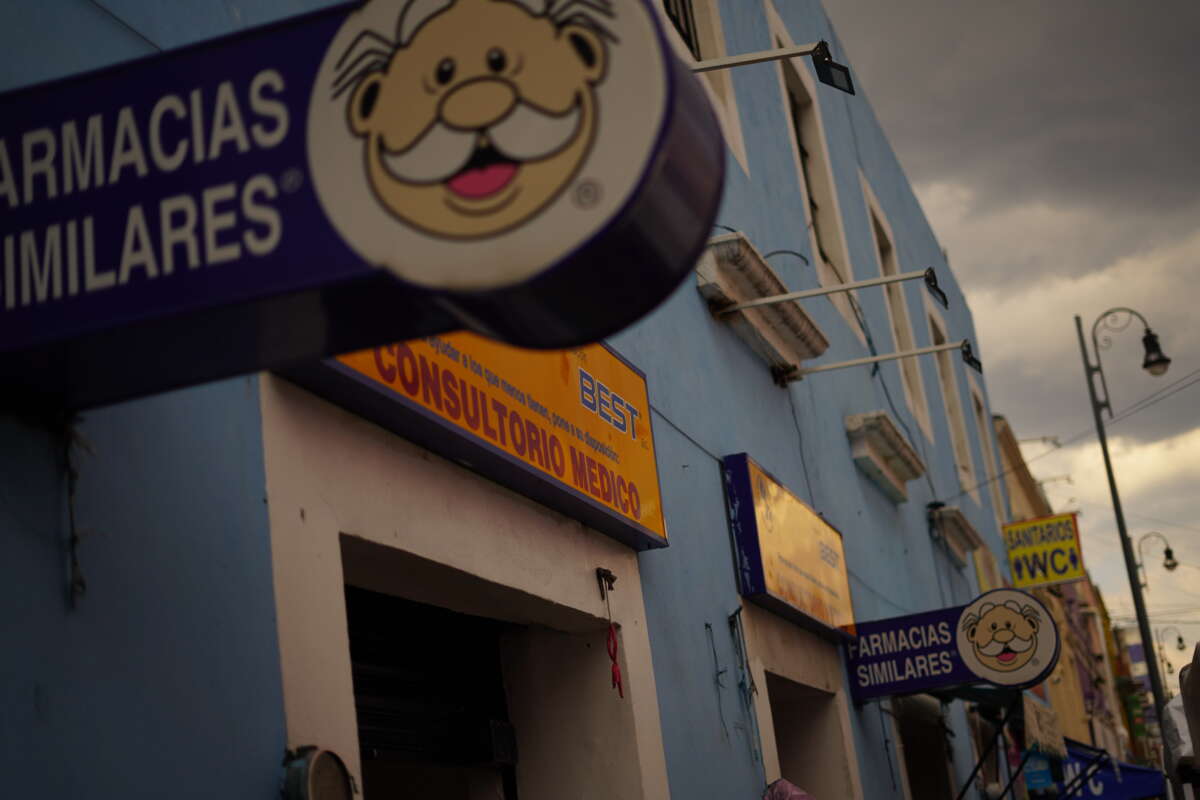
A private doctor's office joined to a pharmacy in Puebla City, Mexico, in November 2025. These doctors charge a fee and tend to focus their treatment on prescribing medicine, in order to increase the pharmacy's sales.Tamara Pearson
Truthout’s December fundraiser is our most important of the year and will determine the scale of work we will be able to do in 2026. Please support us with a tax-deductible donation today.
The U.S. has the highest medical and health care costs in the world — a reality that is driving 1.2 million medical tourists from there to Mexico each year, where up-front costs are lower. Yet for Mexicans whose wages or incomes are many times lower, living in the country with the most expensive medicine in Latin America presents an obstacle to treatment.
Mexico faces serious, deadly shortages of medicines and supplies like gauze and gloves in its complex hospital system, as well as a thriving informal market. Big Pharma is having a free-for-all in Mexico and in the U.S. In both countries, the private health sector is using monopolistic practices to dominate, and to marginalize public care.
Mexican President Claudia Sheinbaum recently announced that branches of the public health system catering separately to formal employees or to poorer, informal sectors would be integrated. But this won’t address the fact that hospitals are struggling to meet the population’s basic needs, which is driving people into private care out of necessity and contributing to the 20 percent of deaths in Mexico caused by a lack of medical attention or medicine.
Mexico faces serious, deadly shortages of medicines and supplies like gauze and gloves in its complex hospital system … hospitals are struggling to meet the population’s basic needs.
As a major industrial producer, Mexico should not be facing these issues, but only 40 percent of devices produced stay in Mexico. It is the biggest exporter of medical devices like syringes and catheters to the U.S., and the third-largest globally. Big Pharma companies such as Becton, Dickinson and Company (U.S.), Johnson & Johnson (U.S.), Medtronic (Ireland), Siemens Healthineers (Germany), and Dräger (Germany) use Mexico’s water and energy resources and pay low wages, to then quickly send products north to customers in the U.S.
“We can see you but we don’t have any supplies to treat you with,” I was told last time I went to a Bienestar (Well-being) clinic — the system for the majority of Mexicans who aren’t formally employed. Like others, I had waited in line since 7:00 am. Others in the line had been waiting for diabetes treatment or mammograms. As the only option for primary care, sick people and the elderly often have to stand in the sun for hours to wait for treatment.
Related Story
Truthout’s December fundraiser is our most important of the year and will determine the scale of work we will be able to do in 2026. Please support us with a tax-deductible donation today.
The U.S. has the highest medical and health care costs in the world — a reality that is driving 1.2 million medical tourists from there to Mexico each year, where up-front costs are lower. Yet for Mexicans whose wages or incomes are many times lower, living in the country with the most expensive medicine in Latin America presents an obstacle to treatment.
Mexico faces serious, deadly shortages of medicines and supplies like gauze and gloves in its complex hospital system, as well as a thriving informal market. Big Pharma is having a free-for-all in Mexico and in the U.S. In both countries, the private health sector is using monopolistic practices to dominate, and to marginalize public care.
Mexican President Claudia Sheinbaum recently announced that branches of the public health system catering separately to formal employees or to poorer, informal sectors would be integrated. But this won’t address the fact that hospitals are struggling to meet the population’s basic needs, which is driving people into private care out of necessity and contributing to the 20 percent of deaths in Mexico caused by a lack of medical attention or medicine.
Mexico faces serious, deadly shortages of medicines and supplies like gauze and gloves in its complex hospital system … hospitals are struggling to meet the population’s basic needs.
As a major industrial producer, Mexico should not be facing these issues, but only 40 percent of devices produced stay in Mexico. It is the biggest exporter of medical devices like syringes and catheters to the U.S., and the third-largest globally. Big Pharma companies such as Becton, Dickinson and Company (U.S.), Johnson & Johnson (U.S.), Medtronic (Ireland), Siemens Healthineers (Germany), and Dräger (Germany) use Mexico’s water and energy resources and pay low wages, to then quickly send products north to customers in the U.S.
“We can see you but we don’t have any supplies to treat you with,” I was told last time I went to a Bienestar (Well-being) clinic — the system for the majority of Mexicans who aren’t formally employed. Like others, I had waited in line since 7:00 am. Others in the line had been waiting for diabetes treatment or mammograms. As the only option for primary care, sick people and the elderly often have to stand in the sun for hours to wait for treatment.
Related Story

Millions of Americans Flood Into Mexico for Health Care
The US’s “dental refugees” flock to Mexico in the thousands every day, seeking affordable care. By Mark Provost , Truthout January 23, 2019
I saw the dentist at midday. He identified a cavity, then I had to see a private dentist to treat it. I asked when they expected to have supplies. “We don’t know, maybe in three or four months,” the dentist replied.
Mexican company PiSA Farmacéutica exports various products including cancer medicine to the U.S., Canada, Latin America, and Europe. In Mexico it has a monopoly on public supply contracts and is failing to meet its commitments and deliver those medicines. Swiss company Novartis produces and conducts clinical research in Mexico, and in a country with serious cancer medicine shortages, charges Mexicans astronomical prices: Afinitor 10 mg is up to 88,000 pesos (about $4,800 in U.S. currency), Votrient 400 mg is 47,465 pesos (about $2,600 in U.S. currency) — prices equivalent to 6-12 months’ income for the typical Mexican worker. GSK also uses Mexico for clinical research, then charges 3,000 pesos (about $160 in U.S. currency) for its herpes vaccine.
Merck sells an HPV vaccine for 3,900 pesos — unaffordable for most women, and only a little less expensive than in the U.S., before any insurance. The company also produces medicine, including cancer treatments, in Mexico and then exports it.
Local and international pharma companies have used various strategies to maintain their high prices, including monopolies on sales to the government, collusion to limit supplies and distribution to keep sales prices high, and evergreening to delay competitive generics, by listing secondary patents. High prices and shortages force people to go to informal markets, where prices can be 70 percent lower than pharmacies, but medicines are either counterfeit, not inspected, adulterated, reused, expired, or procedures aren’t authorized. Some medicines are stolen from public federal supplies, then sold at inflated prices.
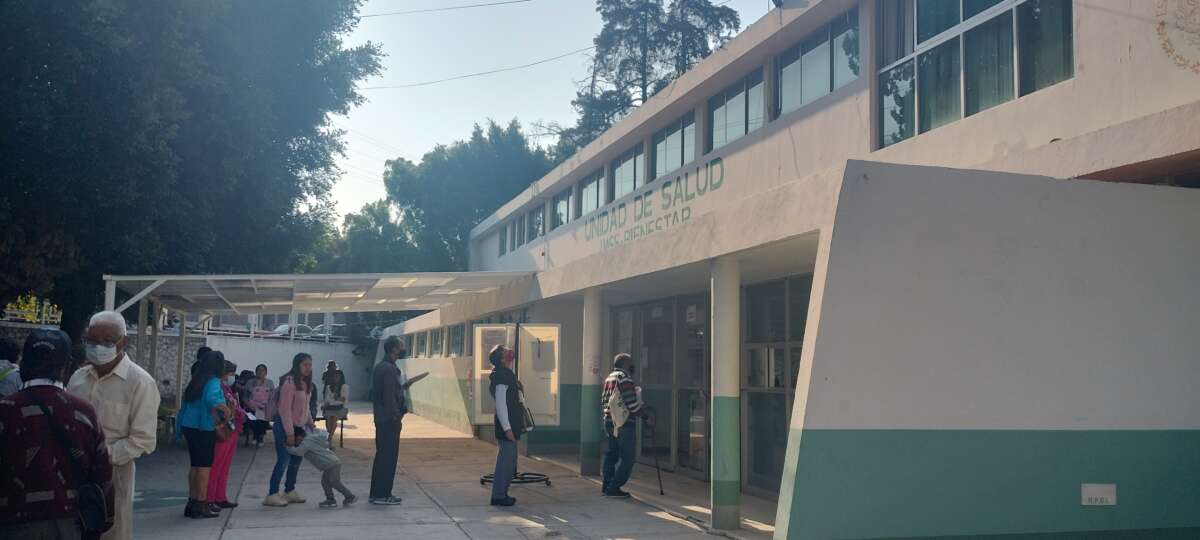
A line outside the public Bienestar (Well-being) primary care clinic,
Puebla.Tamara Pearson
Deadly Shortages
“Of the two people that called us yesterday, one died and the other is in intensive care,” Evangelina Vázquez, head of the Mexican Network of Patients for Patient Safety, told Truthout. “A father died — his daughter called. She said he had a heart attack and went to a public hospital in Chiapas, but the nurse said there weren’t enough supplies or staff, and he needed an appointment. How could he know he was going to have a heart attack? So the daughter took him to a private clinic, but it didn’t handle emergencies, and in the time spent looking for treatment, the man died.”
Vázquez says conditions vary from hospital to hospital, and that poorer states like Chiapas are more often neglected. She stresses that the high cost of Big Pharma medicine “has had a strong impact on the lack of medications.” Mismanagement, corruption, and government debt owed to pharmaceutical companies also contribute to the issues.
In 2024, Mexico’s social security system (hospitals for those who are formally employed) wasn’t able to provide 11 million items of medicine prescribed by doctors, with the main shortages in cancer, diabetes, hypertension, and mental health medicines. Doctors frequently were not able to program laboratory tests or surgeries due to a lack of medicines and supplies like syringes.
Doctors in a specialty hospital in Veracruz said they had gone six months so far without basic supplies like operating gowns, medicines, and gloves.
On an almost daily basis, hospitals are denouncing shortages and staff are protesting. Recently, doctors in a specialty hospital in Veracruz said they had gone six months so far without basic supplies like operating gowns, medicines, and gloves. People are waiting three days to a week to receive care in the emergency department of the General Hospital in Mexico City. Parents in Tamaulipas decried the scarcity of the BCG vaccine, which forced them to line up for 24 hours and sleep in the street to get their newborns vaccinated. Doctors in the children’s hospital in Mexico City said they were suspending complex operations and reducing anesthesia services by 50 percent due to shortages, while five hospitals in Puebla and Oaxaca said they lacked surgical supplies. Health care workers have demonstrated in Mexico City in July, October, and November, calling for an end to the shortages. The health care workers engaged in a violently repressed 30-hour hunger strike in July, and they recently held three day-long protests in Zacatecas.
“I have friends who aren’t getting their chemotherapy from the IMSS (Social Security) because there’s no medicine,” Estefany Lucero Mosqueda, a medical patient and abortion doula, tells Truthout. “There’s discrimination, there are people who die in waiting rooms, there’s a lack of sensitivity, proper training of doctors and nurses.”
The problems, aggravated by cuts to the federal health budget, are seeing people turn to private pharmacies and clinics, but struggling to pay. Household spending on medicine has doubled over the past six years, and patients often abandon vital treatment or go into debt, and chronic diseases get worse.
Unlike other countries, but similarly to the U.S., Mexico prioritizes patents and doesn’t regulate medicinal prices. The market, not human need, determines prices. Brand name drugs are 4.2 times higher in the U.S. than in other countries. For example, Lipitor, for lowering high cholesterol, is $1,761.02 (in U.S. currency) in the U.S., but $14.12 (in U.S. currency) in Australia, and $24.99 (in U.S. currency) in Mexico. Yasmin, a contraceptive pill, is $416 in the U.S., and $66 (in U.S. currency) in Mexico, but only $12.77 (in U.S. currency) in U.K. pharmacies and free in clinics there. Mexicans pay less than the U.S., but massive income inequalities make lower prices unaffordable for many.
“Without the support of my family, I couldn’t afford my medicine,” says Lucero. Her psychiatric treatment costs 2,800 pesos a month, on top of her heart medicine and treatment costs
Deadly Shortages
“Of the two people that called us yesterday, one died and the other is in intensive care,” Evangelina Vázquez, head of the Mexican Network of Patients for Patient Safety, told Truthout. “A father died — his daughter called. She said he had a heart attack and went to a public hospital in Chiapas, but the nurse said there weren’t enough supplies or staff, and he needed an appointment. How could he know he was going to have a heart attack? So the daughter took him to a private clinic, but it didn’t handle emergencies, and in the time spent looking for treatment, the man died.”
Vázquez says conditions vary from hospital to hospital, and that poorer states like Chiapas are more often neglected. She stresses that the high cost of Big Pharma medicine “has had a strong impact on the lack of medications.” Mismanagement, corruption, and government debt owed to pharmaceutical companies also contribute to the issues.
In 2024, Mexico’s social security system (hospitals for those who are formally employed) wasn’t able to provide 11 million items of medicine prescribed by doctors, with the main shortages in cancer, diabetes, hypertension, and mental health medicines. Doctors frequently were not able to program laboratory tests or surgeries due to a lack of medicines and supplies like syringes.
Doctors in a specialty hospital in Veracruz said they had gone six months so far without basic supplies like operating gowns, medicines, and gloves.
On an almost daily basis, hospitals are denouncing shortages and staff are protesting. Recently, doctors in a specialty hospital in Veracruz said they had gone six months so far without basic supplies like operating gowns, medicines, and gloves. People are waiting three days to a week to receive care in the emergency department of the General Hospital in Mexico City. Parents in Tamaulipas decried the scarcity of the BCG vaccine, which forced them to line up for 24 hours and sleep in the street to get their newborns vaccinated. Doctors in the children’s hospital in Mexico City said they were suspending complex operations and reducing anesthesia services by 50 percent due to shortages, while five hospitals in Puebla and Oaxaca said they lacked surgical supplies. Health care workers have demonstrated in Mexico City in July, October, and November, calling for an end to the shortages. The health care workers engaged in a violently repressed 30-hour hunger strike in July, and they recently held three day-long protests in Zacatecas.
“I have friends who aren’t getting their chemotherapy from the IMSS (Social Security) because there’s no medicine,” Estefany Lucero Mosqueda, a medical patient and abortion doula, tells Truthout. “There’s discrimination, there are people who die in waiting rooms, there’s a lack of sensitivity, proper training of doctors and nurses.”
The problems, aggravated by cuts to the federal health budget, are seeing people turn to private pharmacies and clinics, but struggling to pay. Household spending on medicine has doubled over the past six years, and patients often abandon vital treatment or go into debt, and chronic diseases get worse.
Unlike other countries, but similarly to the U.S., Mexico prioritizes patents and doesn’t regulate medicinal prices. The market, not human need, determines prices. Brand name drugs are 4.2 times higher in the U.S. than in other countries. For example, Lipitor, for lowering high cholesterol, is $1,761.02 (in U.S. currency) in the U.S., but $14.12 (in U.S. currency) in Australia, and $24.99 (in U.S. currency) in Mexico. Yasmin, a contraceptive pill, is $416 in the U.S., and $66 (in U.S. currency) in Mexico, but only $12.77 (in U.S. currency) in U.K. pharmacies and free in clinics there. Mexicans pay less than the U.S., but massive income inequalities make lower prices unaffordable for many.
“Without the support of my family, I couldn’t afford my medicine,” says Lucero. Her psychiatric treatment costs 2,800 pesos a month, on top of her heart medicine and treatment costs
.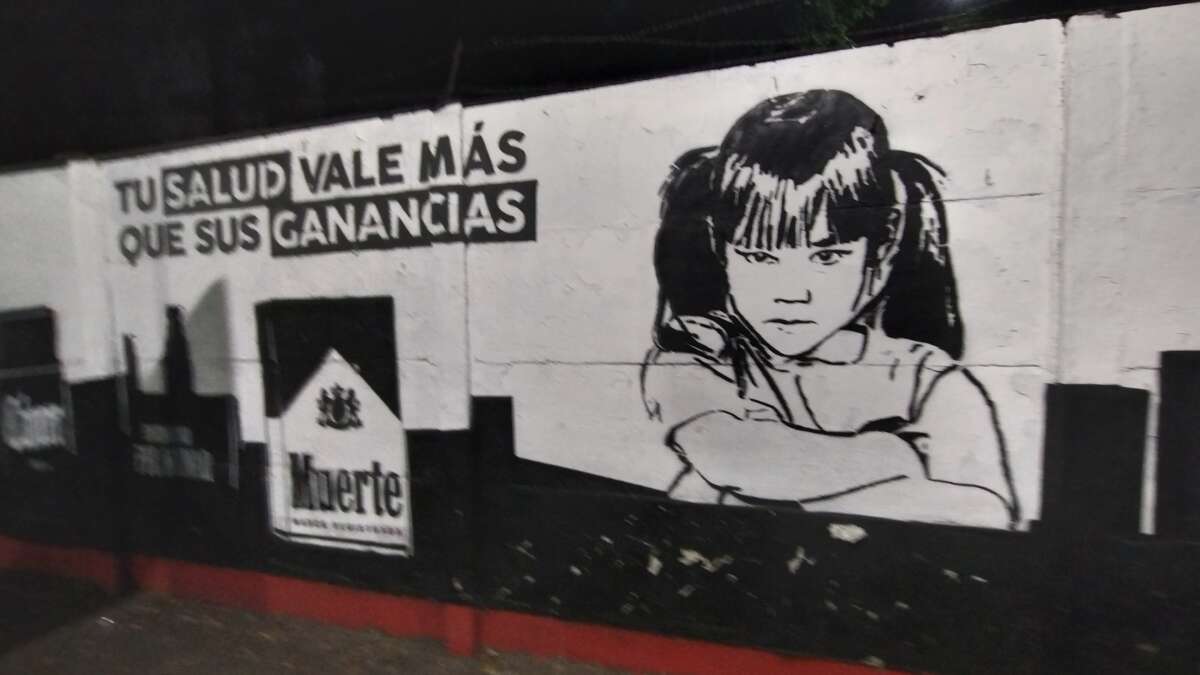
A mural that says “Your health is worth more than your earnings”
Tamara Pearson
Dominance of Private Health Care and Pharma Sector
In both the U.S. and Mexico, the dominance of the private sector has gone hand-in-hand with an abandoned or dysfunctional public health care landscape. In the U.S., health care is treated as a market commodity rather than a service, with public control of health care declining by 42 percent between 1983 and 2019. The 2010 Affordable Care Act subsidized private insurers and reinforced the central role of private companies in the system.
Likewise, in Mexico, the dominance of private companies has coincided with deprioritized public care. President Sheinbaum is incentivizing foreign investment in medicine and medical supplies production, while the government only spends 2.8 percent of GDP on health care. The government announced Big Pharma investment this year (by Bayer, AstraZeneca, and Boehringer Ingelheim). Boehringer Ingelheim says it will make its Xochimilco plant (on Indigenous land) the biggest in the world, and supply 40 countries including Mexico. The government says it also wants to strengthen “sovereignty” by supporting the private domestic pharmaceutical industry, and announced in July that Mexican companies like Genbio and Kener will expand their production. Sheinbaum said the medicine produced will be for export and local consumption.
Transnational health companies exercise imperialism by making countries like Mexico dependent on their products, while using them for research with low levels of regulation — imposed via free trade agreements like the United States-Mexico-Canada Agreement. A Public Services International study on the impact of such transnationals on national health systems in Latin America concluded that their focus on profit growth has led to weaknesses in public health.
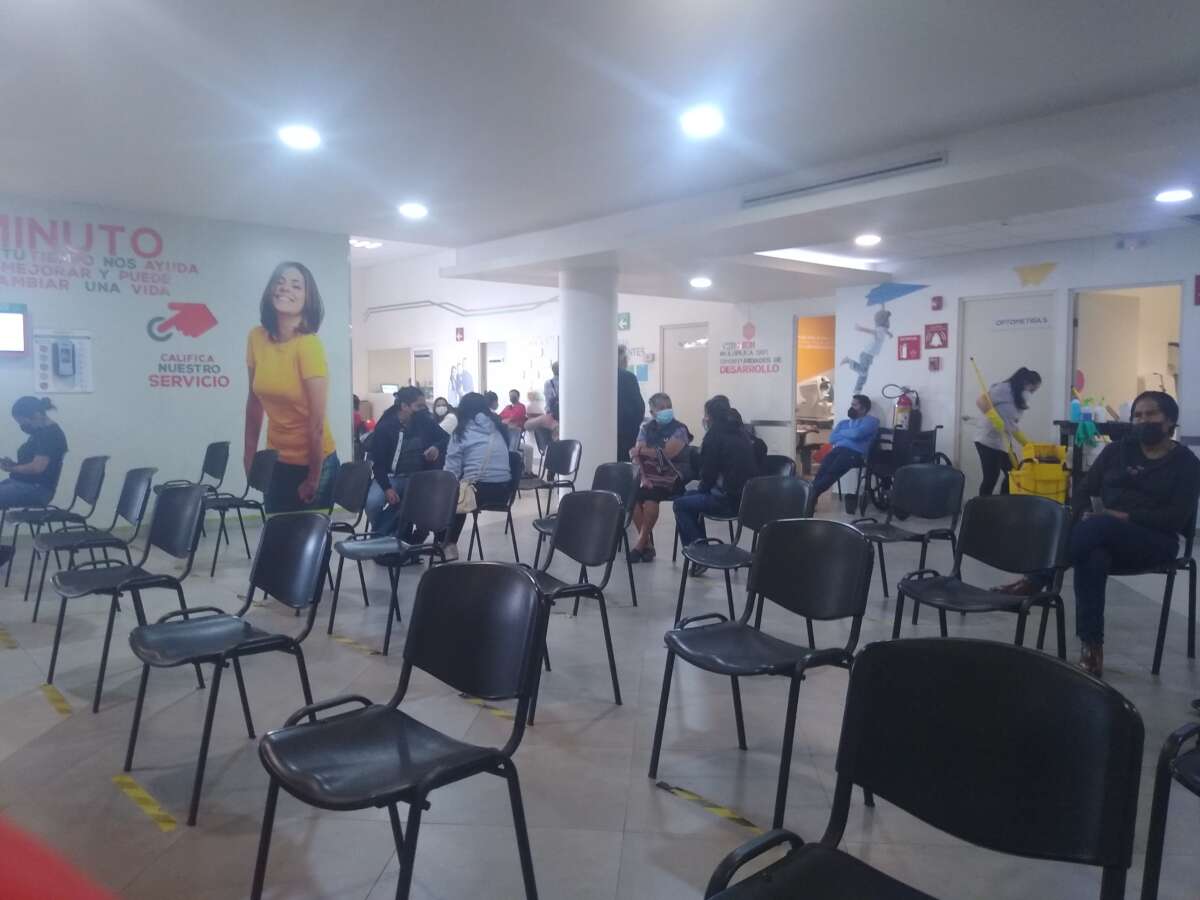
A primary care private health clinic in Puebla city, where all services are paid for in full, up front, and appointments are made online.
Tamara Pearson
Some 64 percent of Mexicans are using unaffordable private care due to deficiencies in the public system, while private pharmacies are booming, increasing from 8,945 in 2022 to 16,000 in 2023. Mexico has one of the world’s lowest rates of doctor consultations, at 1.5 per person, annually. People avoid them due to wait times, travel distances, low-quality care, and shortages. The private doctors’ offices joined to pharmacies are expensive and unreliable, tending to over-prescribe so pharmacies profit.
Mexico has one of the world’s lowest rates of doctor consultations, at 1.5 per person, annually. People avoid them due to wait times, travel distances, low-quality care, and shortages.
Earlier this month, the government began a free medicine program, Wellbeing Pharmacies, with stalls in public hospitals for pensioners and people with disabilities so they can avoid long wait lines. But the program only provides 22 types of medicine to people with prescriptions from another government program. Given how new and limited it is, it is unclear what its impact will be.
Many people are self-diagnosing and buying medicine rather than seeing a doctor, with 16 million people self-medicating in 2024 — up from 9.5 million in 2018.
Public hospitals aren’t working “because a medical emergency like my heart condition can take four to six months to be seen by a specialist,” Lucero says, describing the bureaucracy she tried to go through, having to see a general practitioner first in order to be sent to a cardiologist, who prescribed tests for the heart condition she has had since she was 12. Her private tests weren’t valid, so she would have to redo them, and with each appointment taking months, it would take six months to a year to be seen. “It makes me worry, because what if something serious happens to me?”
On top of this, women, low-income workers, and Indigenous people worry about discrimination and medical violence in both public and private systems.
While abortion has been legal in Puebla for a year, “I’ve accompanied women who are given curettages [uterus scraping] rather than an MVA [the suction procedure recommended by the World Health Organization, that is safer], and they use very little anesthesia for the curettage. Women are also dismissed after being told they are having a panic attack or are anxious when it is actually a heart attack or angina. Women keep dying because of discrimination,” says Lucero.
Vazquez also described gender violence, and how she personally was denied hospital treatment because she had demanded it.
Sheinbaum says the social security hospitals and the Wellbeing clinics will be integrated, with a national health register to be created next year. But, while welcome, it’s hard to see the measure addressing the core issues.
“Patient participation in the health care sector is vital to preventing problems,” Vazquez stresses.
This article is licensed under Creative Commons (CC BY-NC-ND 4.0), and you are free to share and republish under the terms of the license.
Tamara Pearson is an Australian-Mexican journalist, editor, activist and literary fiction author. Her latest novel is, The Eyes of the Earth, and she writes the Global South newsletter, Excluded Headlines.
Some 64 percent of Mexicans are using unaffordable private care due to deficiencies in the public system, while private pharmacies are booming, increasing from 8,945 in 2022 to 16,000 in 2023. Mexico has one of the world’s lowest rates of doctor consultations, at 1.5 per person, annually. People avoid them due to wait times, travel distances, low-quality care, and shortages. The private doctors’ offices joined to pharmacies are expensive and unreliable, tending to over-prescribe so pharmacies profit.
Mexico has one of the world’s lowest rates of doctor consultations, at 1.5 per person, annually. People avoid them due to wait times, travel distances, low-quality care, and shortages.
Earlier this month, the government began a free medicine program, Wellbeing Pharmacies, with stalls in public hospitals for pensioners and people with disabilities so they can avoid long wait lines. But the program only provides 22 types of medicine to people with prescriptions from another government program. Given how new and limited it is, it is unclear what its impact will be.
Many people are self-diagnosing and buying medicine rather than seeing a doctor, with 16 million people self-medicating in 2024 — up from 9.5 million in 2018.
Public hospitals aren’t working “because a medical emergency like my heart condition can take four to six months to be seen by a specialist,” Lucero says, describing the bureaucracy she tried to go through, having to see a general practitioner first in order to be sent to a cardiologist, who prescribed tests for the heart condition she has had since she was 12. Her private tests weren’t valid, so she would have to redo them, and with each appointment taking months, it would take six months to a year to be seen. “It makes me worry, because what if something serious happens to me?”
On top of this, women, low-income workers, and Indigenous people worry about discrimination and medical violence in both public and private systems.
While abortion has been legal in Puebla for a year, “I’ve accompanied women who are given curettages [uterus scraping] rather than an MVA [the suction procedure recommended by the World Health Organization, that is safer], and they use very little anesthesia for the curettage. Women are also dismissed after being told they are having a panic attack or are anxious when it is actually a heart attack or angina. Women keep dying because of discrimination,” says Lucero.
Vazquez also described gender violence, and how she personally was denied hospital treatment because she had demanded it.
Sheinbaum says the social security hospitals and the Wellbeing clinics will be integrated, with a national health register to be created next year. But, while welcome, it’s hard to see the measure addressing the core issues.
“Patient participation in the health care sector is vital to preventing problems,” Vazquez stresses.
This article is licensed under Creative Commons (CC BY-NC-ND 4.0), and you are free to share and republish under the terms of the license.
Tamara Pearson is an Australian-Mexican journalist, editor, activist and literary fiction author. Her latest novel is, The Eyes of the Earth, and she writes the Global South newsletter, Excluded Headlines.
No comments:
Post a Comment