Why There Will Be Almost No Movie Theaters in 5 Years
The race for Warner Bros. by both Netflix and Paramount is just the latest evidence that capitalism will commodify art into oblivion—and a film-loving public will pay the price.

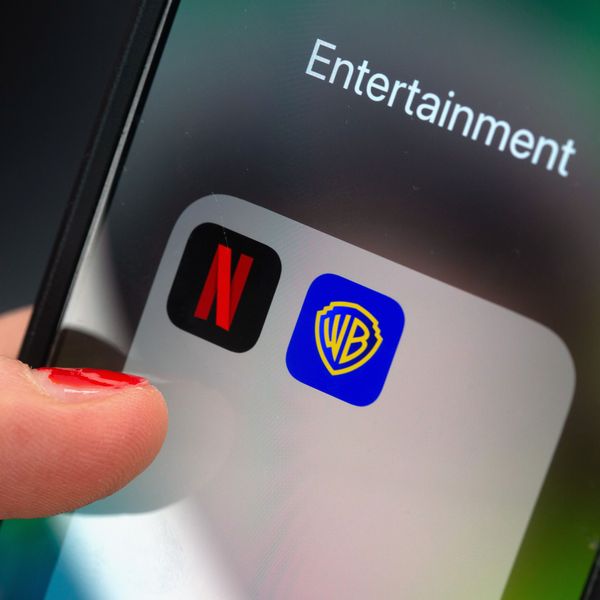
A finger taps an app folder field on a smartphone with the logos of the streaming platform Netflix (l) and the film studio Warner Brothers. Streaming giant Netflix is taking over Hollywood veteran Warner Brothers.
(Photo by Fernando Gutierrez-Juarez/picture alliance via Getty Images)
Miles Mogulescu
Dec 23, 2025
The race for Warner Bros. by both Netflix and Paramount is just the latest evidence that capitalism will commodify art into oblivion—and a film-loving public will pay the price.
A finger taps an app folder field on a smartphone with the logos of the streaming platform Netflix (l) and the film studio Warner Brothers. Streaming giant Netflix is taking over Hollywood veteran Warner Brothers.
(Photo by Fernando Gutierrez-Juarez/picture alliance via Getty Images)
Miles Mogulescu
Dec 23, 2025
Common Dreams
Whether Netflix or Paramount wins the battle of mega-corporations to merge with the fabled Warner Bros. movie studio, the economics of the film industry no longer support the production of enough feature films for most movie theaters to still be viable businesses. Within a few years, the theatrical feature film will be all but dead with devastating cultural, social, political, and economic impact.
I’m a former senior vice president at MGM/UA (now owned by Amazon) and have been in the room of a major studio at greenlight meetings which decided which films were economically profitable enough (and creatively commercial enough) to go into production.
RECOMMENDED...
Critics Warn of ‘Catastrophic’ Threat If Netflix Acquires Warner Bros.
At these greenlight meetings, senior studio management would analyze spreadsheets projecting the likely production and marketing costs of a proposed film compared to the likely stream of revenues from various sequential windows—theatrical/home video/pay TV/first run free TV/syndicated TV/likelihood of sequels, both in the US and around the world.
Largely because of Netflix, those windows have cratered. There used to be an average three- to four-month window between theatrical release and release for viewing at home, and then multi-month windows between streaming, home video, pay tv, and free tv. Now, if Netflix even allows a theatrical release, they only give it as little as 3 weeks before they start to stream a theatrical film like the recent George Cloony/Adaem Sandler/Noah Baumbach film “Jay Kelly,” which started streaming just 17 days after it opened in theaters and sold almost no tickets.
A large portion of the public rightly figures that there’s no point in rushing out to theater to see a new feature for $15 or more a ticket plus parking and popcorn when they can see it at home at in a few weeks. Most theatrical films no longer pencil out.
While there were recently six major studios (plus mini majors), after Warner Bros. is sold (following other recent anti-competitive mergers like Disney buying Fox) there will only be four left.
With the collapsed distribution windows, it’s no longer feasible for those four studios to produce enough theatrical features to keep movie theaters in business. In 2025 over 100 films received a major theatrical release with inflation-adjusted box office revenues of over $15 billion while in 2024 they crashed to only 62 films with box office revenues of about $8.6 billions. Over 5,000 movie theaters have already closed their doors in the last couple of years.
And the types of theatrical films being greenlit have been mostly reduced to either $100-$200 million blockbuster action films (many of them sequels which earn less than their predecessors) and under $20 million horror films, as well as some children’s films. Dramas and comedies have almost disappeared from the majors’ theatrical release schedules except during the fall awards season when a small number of adult films are released in the hopes of being nominated for an Oscar.
“The negative impact of this acquisition will impact theatres from the biggest circuits to one-screen independents in small towns in the United States and around the world,” said Cinema United president Michael O’Leary in a statement. “Netflix’s stated business model does not support theatrical exhibition.”
When he’s not giving bullshit public relations statements, Netflix head honcho Ted Sarandos agrees, stating last year that movie theaters are “outdated.”
Art is now called “content” and is treated as an asset class to be bought and sold by mega-corporations like they’re real estate towers or meme coins. Roughly 2-hour dramas in 3 acts have been inspiring communal audiences for about 2500 years since the Greeks but they’re about to largely disappear from theaters, to the detriment of the entire culture. This is ushering in an age with little originality or surprise and general cultural stagnation. The sale of Warners will only accelerate this trend.
As James Cameron, director of “Titanic” and “Avatar” recently said, it will be a “disaster.”
Mainstream Oscar-winning directors of the recent past like Sidney Pollack (“Tootsie,” “The Way We Were,” Out of Africa“), Sidney Lumet (”Network,“ ”Serpico,“ ”Dog Day Afternoon“), Barry Levinson (”Rain Man,“ ”Wag the Dog,“ ”Good Morning Vietnam“) or Alan Pakula (”All The President’s Men,“ ”Sophie’s Choice“) probably couldn’t get arrested if they were coming up now. While studio execs may feel cool hanging around with Marty Scorsese, it’s unlikely that ”Taxi Driver“ would be greenlit today.
(The recent tragic murder of Rob and Michelle Reiner brings to mind other examples. Reiner’s classics like “When Harry Met Sally” or “A Few Good Men” probably wouldn’t get greenlit today, although as a horror film, “Misery,” based on a Stephen King novel, might sneak through today if it were dumbed down enough.)
The sale of Warner Bros. to either Netflix or Paramount violates Section 7 of the Clayton Antitrust Act which provides that a merger is unlawful if its effect may be to substantially lessen competition. Factors include market concentration, foreclosure of rivals, lower wages for employees, the loss of potential competition, incentives to reduce quality or output , and the likelihood of higher prices to consumers for streaming services. We can’t count on the Trump administration to bring a solid antitrust claim. But state Attorney Generals have the legal right to sue to block anti-competitive mergers. California Attorney General Rob Bonta should coordinate with other state Attorney Generals to bring such a suit. The Hollywood community should be pressuring Bonta to do so.
Fifteen years ago, Warner Bros. CEO Jeff Bewkes infamously dismissed Netflix as the pipsqueak “Albanian Army.” Well, now the Albanian Army has demolished the metaphoric equivalents of the US, Britain, France, Russia, and most of the rest of the world.
We need a new Normandy invasion to take it back.
Our work is licensed under Creative Commons (CC BY-NC-ND 3.0). Feel free to republish and share widely.
Miles Mogulescu
Miles Mogulescu is an entertainment attorney/business affairs executive, producer, political activist and writer.
Full Bio >
Whether Netflix or Paramount wins the battle of mega-corporations to merge with the fabled Warner Bros. movie studio, the economics of the film industry no longer support the production of enough feature films for most movie theaters to still be viable businesses. Within a few years, the theatrical feature film will be all but dead with devastating cultural, social, political, and economic impact.
I’m a former senior vice president at MGM/UA (now owned by Amazon) and have been in the room of a major studio at greenlight meetings which decided which films were economically profitable enough (and creatively commercial enough) to go into production.
RECOMMENDED...
Critics Warn of ‘Catastrophic’ Threat If Netflix Acquires Warner Bros.
At these greenlight meetings, senior studio management would analyze spreadsheets projecting the likely production and marketing costs of a proposed film compared to the likely stream of revenues from various sequential windows—theatrical/home video/pay TV/first run free TV/syndicated TV/likelihood of sequels, both in the US and around the world.
Largely because of Netflix, those windows have cratered. There used to be an average three- to four-month window between theatrical release and release for viewing at home, and then multi-month windows between streaming, home video, pay tv, and free tv. Now, if Netflix even allows a theatrical release, they only give it as little as 3 weeks before they start to stream a theatrical film like the recent George Cloony/Adaem Sandler/Noah Baumbach film “Jay Kelly,” which started streaming just 17 days after it opened in theaters and sold almost no tickets.
A large portion of the public rightly figures that there’s no point in rushing out to theater to see a new feature for $15 or more a ticket plus parking and popcorn when they can see it at home at in a few weeks. Most theatrical films no longer pencil out.
While there were recently six major studios (plus mini majors), after Warner Bros. is sold (following other recent anti-competitive mergers like Disney buying Fox) there will only be four left.
With the collapsed distribution windows, it’s no longer feasible for those four studios to produce enough theatrical features to keep movie theaters in business. In 2025 over 100 films received a major theatrical release with inflation-adjusted box office revenues of over $15 billion while in 2024 they crashed to only 62 films with box office revenues of about $8.6 billions. Over 5,000 movie theaters have already closed their doors in the last couple of years.
And the types of theatrical films being greenlit have been mostly reduced to either $100-$200 million blockbuster action films (many of them sequels which earn less than their predecessors) and under $20 million horror films, as well as some children’s films. Dramas and comedies have almost disappeared from the majors’ theatrical release schedules except during the fall awards season when a small number of adult films are released in the hopes of being nominated for an Oscar.
“The negative impact of this acquisition will impact theatres from the biggest circuits to one-screen independents in small towns in the United States and around the world,” said Cinema United president Michael O’Leary in a statement. “Netflix’s stated business model does not support theatrical exhibition.”
When he’s not giving bullshit public relations statements, Netflix head honcho Ted Sarandos agrees, stating last year that movie theaters are “outdated.”
Art is now called “content” and is treated as an asset class to be bought and sold by mega-corporations like they’re real estate towers or meme coins. Roughly 2-hour dramas in 3 acts have been inspiring communal audiences for about 2500 years since the Greeks but they’re about to largely disappear from theaters, to the detriment of the entire culture. This is ushering in an age with little originality or surprise and general cultural stagnation. The sale of Warners will only accelerate this trend.
As James Cameron, director of “Titanic” and “Avatar” recently said, it will be a “disaster.”
Mainstream Oscar-winning directors of the recent past like Sidney Pollack (“Tootsie,” “The Way We Were,” Out of Africa“), Sidney Lumet (”Network,“ ”Serpico,“ ”Dog Day Afternoon“), Barry Levinson (”Rain Man,“ ”Wag the Dog,“ ”Good Morning Vietnam“) or Alan Pakula (”All The President’s Men,“ ”Sophie’s Choice“) probably couldn’t get arrested if they were coming up now. While studio execs may feel cool hanging around with Marty Scorsese, it’s unlikely that ”Taxi Driver“ would be greenlit today.
(The recent tragic murder of Rob and Michelle Reiner brings to mind other examples. Reiner’s classics like “When Harry Met Sally” or “A Few Good Men” probably wouldn’t get greenlit today, although as a horror film, “Misery,” based on a Stephen King novel, might sneak through today if it were dumbed down enough.)
The sale of Warner Bros. to either Netflix or Paramount violates Section 7 of the Clayton Antitrust Act which provides that a merger is unlawful if its effect may be to substantially lessen competition. Factors include market concentration, foreclosure of rivals, lower wages for employees, the loss of potential competition, incentives to reduce quality or output , and the likelihood of higher prices to consumers for streaming services. We can’t count on the Trump administration to bring a solid antitrust claim. But state Attorney Generals have the legal right to sue to block anti-competitive mergers. California Attorney General Rob Bonta should coordinate with other state Attorney Generals to bring such a suit. The Hollywood community should be pressuring Bonta to do so.
Fifteen years ago, Warner Bros. CEO Jeff Bewkes infamously dismissed Netflix as the pipsqueak “Albanian Army.” Well, now the Albanian Army has demolished the metaphoric equivalents of the US, Britain, France, Russia, and most of the rest of the world.
We need a new Normandy invasion to take it back.
Our work is licensed under Creative Commons (CC BY-NC-ND 3.0). Feel free to republish and share widely.
Miles Mogulescu
Miles Mogulescu is an entertainment attorney/business affairs executive, producer, political activist and writer.
Full Bio >
By AFP
December 22, 2025

Warner Bros. is among top Hollywood studios that are suing MiniMax, a Chinese AI company, for alleged copyright infringement. - Copyright GETTY IMAGES NORTH AMERICA/AFP MARIO TAMA
Oracle tech tycoon Larry Ellison is offering a $40.4 billion personal guarantee to back Paramount’s hostile bid for Warner Bros. Discovery, deepening a bidding war with Netflix, a statement said on Monday.
The amended proposal, worth a total $108 billion from the company run by Ellison’s son David, addresses concerns raised by Warner Bros’ board, which saw the Paramount bid as too risky and asked shareholders to accept a competing buyout offer from Netflix.
Netflix shocked the industry December 5 by announcing it had sealed an agreement to buy the film and television studio and HBO Max streaming business for nearly $83 billion, the entertainment industry’s biggest consolidation deal this decade.
Three days later, Paramount — whose CEO is David Ellison, son of Larry Ellison, an ally of President Donald Trump — launched an all-cash tender offer valuing the entertainment giant at $108.4 billion.
But Warner Bros last week described the Paramount offer as risky, saying it was backed by “an unknown and opaque revocable trust” and involved “no Ellison family commitment of any kind.”
Warner Bros Discovery also stressed the dependence of the Paramount offer on foreign investors — $24 billion of the financing comes from Middle East sovereign wealth funds — which could require further government approval.
Paramount’s amended proposal is meant to address those concerns and also increases the breakup fee to match Netflix’s $5.8 billion, which would be payable to Warner Bros if its offer does not clear regulatory review.
“Paramount has repeatedly demonstrated its commitment to acquiring WBD,” said David Ellison. “Our $30 per share, fully financed all-cash offer… continues to be the superior option to maximize value for WBD shareholders.”

Netflix shocked the industry December 5 by announcing it had sealed an agreement to buy the film and television studio and HBO Max streaming business for nearly $83 billion, the entertainment industry’s biggest consolidation deal this decade – Copyright AFP/File Marvin RECINOS
Unlike Netflix’s offer, Paramount’s bid includes the buyout of cable channels such as CNN, TNT, TBS and Discovery — which would be added to its group of TV assets like CBS, MTV and Comedy Central.
– Trump weighs in –
The bidding war that will reshape Hollywood and US media has drawn White House attention.
Trump has repeatedly weighed in, saying Netflix’s deal “could be a problem” as it would leave Netflix with a huge market share of the film and TV industry.
But he has also railed against coverage of the White House from Paramount-owned CBS News, saying neither bidder for Warner Bros had his preference.
He has stressed the importance that CNN gets new ownership as part of the Warner Bros sale, targeting the outlet he has long criticized for what he calls “fake news.”
Both Paramount and Netflix have lobbied the White House directly, with David Ellison also making conservative-friendly changes at CBS News.
Since taking over Paramount earlier this year, the company has appointed journalist Bari Weiss as editor-in-chief of CBS News.
Weiss is a prominent critic of what she calls bias in mainstream media, and the appointment won praise from conservatives.
On Monday, Weiss was accused by a CBS News staff member of pulling a planned segment on an El Salvador maximum-security prison where the Trump administration sent hundreds of Venezuelan migrants.

No comments:
Post a Comment