Birthright Citizenship is in the Constitution Plain as Day
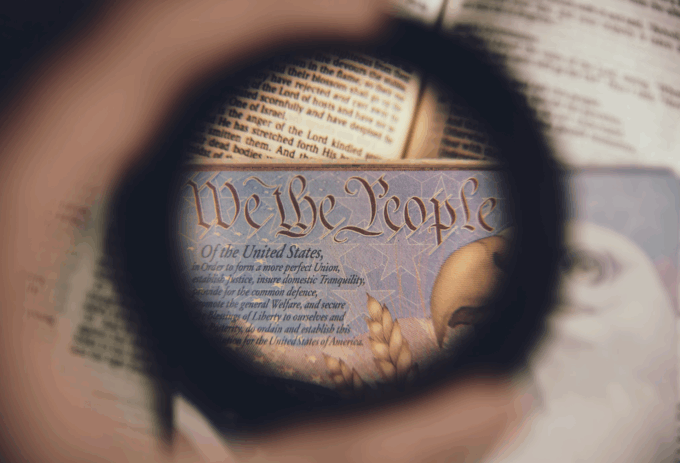
Photo by Anthony Garand
At least four Supreme Court justices recently signaled their apparent agreement with Donald Trump’s effort to roll back the Fourteenth Amendment’s definition of American citizenship.
The case at issue, Trump v. Barbara, involves birthright citizenship — the principle that you’re a citizen of the country where you were born.
In the United States, birthright citizenship was written into the Constitution after the Civil War. Following the end of slavery, the amendment confirmed that the fundamental rights of citizenship do not depend on white ancestry, but belong to everyone born in this country.
On Day One of his presidency, Trump issued an Executive Order to overthrow that principle. He ordered that babies born in the U.S. of undocumented immigrants should not be considered citizens.
If Trump’s order were deemed legal, he would have the power to annul the citizenship of tens of millions of Americans, deny their right to vote and other legal entitlements, and even deport them. Trump’s endorsement of racial targeting in ICE arrests confirms that, in revoking citizenship, he would focus on people of color.
The first judge to hear a challenge to Trump’s order, federal Judge John Coughenour, concluded it was plainly illegal. “I have difficulty understanding how a member of the bar could state unequivocally that this is a constitutional order. It just boggles my mind.”
“I’ve been on the bench for over four decades,” he continued. “I can’t remember another case where the question presented is as clear as this one. This is a blatantly unconstitutional order.”
Coughenour is no “radical liberal.” He was appointed to the bench by conservative Republican President Ronald Reagan. But any reasonable judge would reach the same conclusion — and many did, including judges of the Ninth and First Circuits.
Disturbingly, however, the Supreme Court may validate this “blatantly unconstitutional order.” Under Supreme Court rules, at least four justices must vote to take up a lower court ruling. So at least four decided Trump’s incredible claims were sound enough to put on the Supreme Court docket.
The decision is unsupportable. The Fourteenth Amendment begins with this plain statement: “All persons born or naturalized in the United States, and subject to the jurisdiction thereof, are citizens of the United States and of the State wherein they reside.”
Trump’s lawyers assert that children born in the United States of undocumented immigrants aren’t citizens because they aren’t subject to U.S. jurisdiction. That’s nonsense — jurisdiction has nothing to do with whether someone is legally in the United States.
“Jurisdiction” refers to the lawful authority a government exercises over individuals within its territory. If someone is not subject to U.S. jurisdiction, that means U.S. laws don’t apply to them.
It turns the law upside down to say that people aren’t subject to our law because they entered illegally — and absurd to claim their newborn babies aren’t subject to U.S. jurisdiction either.
Since everyone in the U.S. is subject to U.S. law, why does the Fourteenth Amendment even mention jurisdiction? Because there’s an exception to the citizenship grant: foreign diplomats.
Diplomats enjoy diplomatic immunity, so they’re not “subject to the jurisdiction” of the United States and can’t be charged with crimes under U.S. law. The same is true of their children. Since they are not subject to U.S. jurisdiction, their kids don’t become U.S. citizens by being born here.
If those who wrote the Fourteenth Amendment wanted to put the children of people not lawfully in the U.S. in the same category, they would have said so. They didn’t.
America is one nation of many peoples, and most of our ancestors came from other lands. When newcomers’ children are born here, they are automatically and conclusively Americans — and citizens.
The Fourteenth Amendment was adopted to resolve that question with finality. It’s intolerable that the Supreme Court should consider reopening an issue it took a Civil War to resolve.
No comments:
Post a Comment