TRIBUNE
12.29.2025
A timely new book published this year by the cultural critic Philippa Snow observes how the female celebrity magnifies the experiences of her everyday civilian counterparts, using examples from Pamela Anderson to Amy Winehouse.
A timely new book published this year by the cultural critic Philippa Snow observes how the female celebrity magnifies the experiences of her everyday civilian counterparts, using examples from Pamela Anderson to Amy Winehouse.
There’s a meme I think about all the time: a grainy picture of a huge vertical brush, the kind you see in a drive-through car wash, first stationary and drooping, then spinning and puffed-up. ‘To be a woman is to perform’, it reads — an absurd medium reflecting the absurdity of the feminine act of performance.
Cultural critic Philippa Snow’s book It’s Terrible the Things I Have to Do to Be Me: On Femininity and Fame is a more serious, but no less entertaining or essentially true, look at this phenomenon. Through a series of interlinked essays, Snow examines seven pairs of twentieth- and twenty-first-century British and American female celebrities — singers, models, actresses, and multi-hyphenates — to interrogate the tensions between femininity and fame. Crucially, she also shows how much the performance(s) of womanhood cost us all, arguing that the female celebrity’s experiences and attributes are ‘much like those of her civilian counterparts, but magnified into something stranger, more bombastic, and far easier to see from a distance’.
Snow has long been a fascinating voice on contemporary celebrity culture, offering thoughtful and well-researched takes on the Hiltons and Kardashians of this world. Her 2024 book Trophy Lives: On the Celebrity as an Art Object positioned the celebrity as a self-made art object, taking the fame-entangled works of Richard Prince and Urs Fischer to their logical extreme end points. It’s Terrible the Things I Have to Do to Be Me arrives amid an overhaul of 2000s celebrity culture, with books like Sophie Gilbert’s Girl on Girl and Britney Spears’s The Woman in Me exposing the misogyny of the era and arguing for a humane reassessment of the women caught up in it.
Many of Snow’s subjects are from this particularly cursed era, but her pairings illustrate the culture’s stubborn roots in the twentieth-century star system. Lindsay Lohan’s narrative of child star to untamed woman is traced back to the trajectory of Liz Taylor. Anna Nicole Smith’s particular brand of bleach-blonde tragedy is a mirror of her idol Marilyn Monroe’s ‘blondeness as a form of sacrifice’ (Snow argues that Monroe married ‘the abstract idea of heterosexual masculinity the way a nun might be said to marry Christ’). Amy Winehouse takes artistic inspiration from Billie Holiday but also shares her ultimately fatal hunger for extreme hedonism. Kristen Stewart’s refusal to conform to industry standards is compared to the silent film icon — and fellow queer artist — Louise Brooks.
In an essay on Britney Spears and the R&B singer Aaliyah, Snow shows empathy for both women, while demonstrating the stark difference in public support, respectively, for white and black victims of abusive men. While Spears was (eventually) freed from her father’s conservatorship, Aaliyah never lived to see R. Kelly — who controlled her career and married her when she was 15 — face the consequences for his systematic abuse of young black girls.
It’s Terrible… is rigorous but also intensely readable. Snow is a great storyteller, pulling from a kaleidoscope of often unexpected sources and references. Lindsay Lohan’s life plays out as a Powell and Pressburger film: a psycho-sexual melodrama in tabloid technicolour. Snow takes Werner Herzog’s admitted enjoyment of Anna Nicole Smith’s MTV reality show as a prompt for framing Smith as a Herzogian protagonist, embodying the kind of exaggerated, grotesque ‘ecstatic truth’ the great director’s work aims towards. She compares Smith to the titular character of Herzog’s The Enigma of Kaspar Hauser: ‘a feral foundling … rescued by a rich older man, made into a celebrity, then eventually destroyed’. Her references to art and cinema aren’t just novel, but consistent with Snow’s treatment of the audience as people who — like Herzog — see so-called high- and lowbrow art as part of the same continuum, worthy of the same serious consideration. As it should, her thesis laughs in the face of ‘guilty pleasures’.
The only exception comes in the chapter on Louise Brooks and Kristen Stewart, a generational talent who found fame in the 2008–12 franchise Twilight. Snow admits that Stewart’s talent was underestimated at this time, but her belittling of the franchise as a whole — and her dismissal of the first instalment’s director, Catherine Hardwicke — is surprising considering her generous attitude elsewhere. Snow’s description of Stewart’s early rejection of a traditional star image doesn’t necessarily reckon with the image that she currently occupies. It would have been exciting to read Snow’s take on the tension between this ‘rejection’ and her status as the face of Chanel, or as arguably the contemporary face of female queerness — which, despite her considerable talent and charms, is still one of whiteness and thinness.
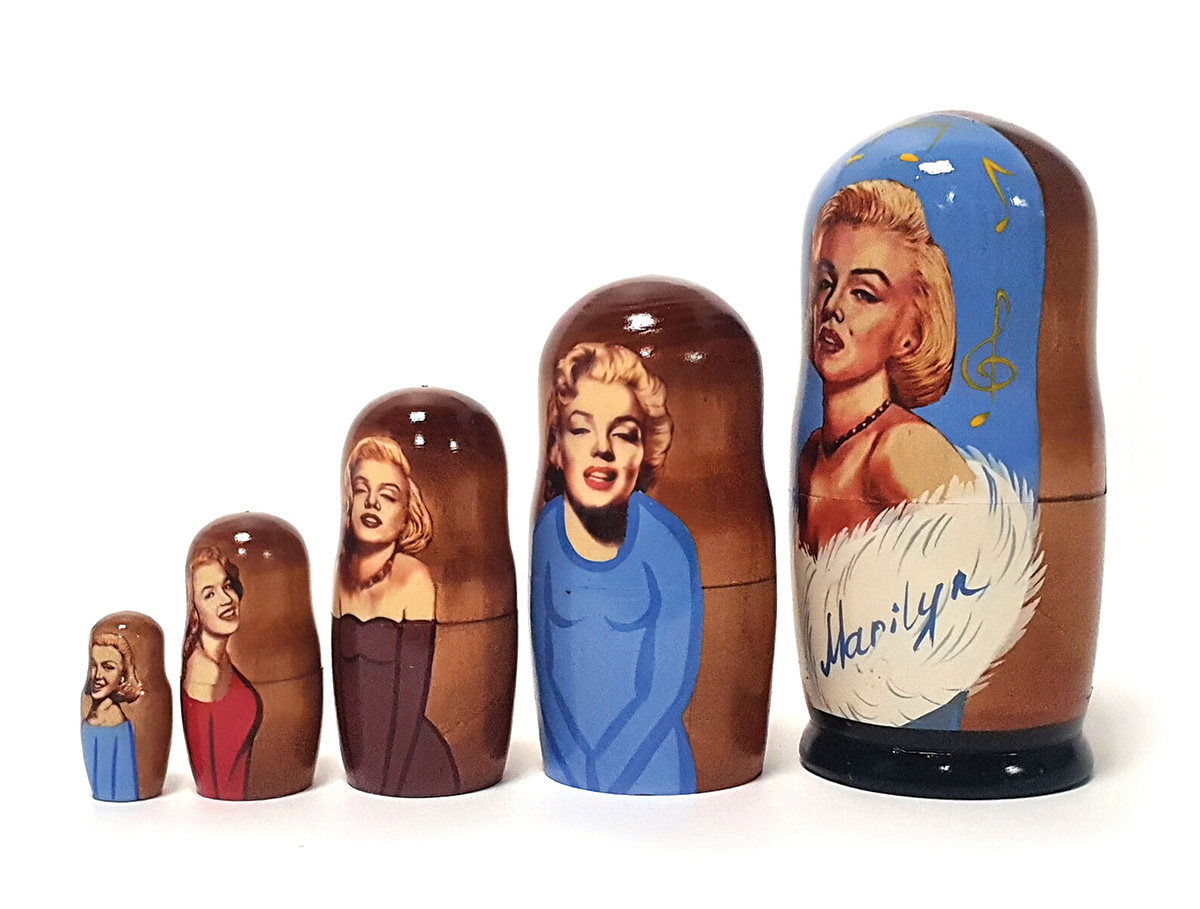
Similarly, I wanted to read more of Snow’s thoughts about Pamela Anderson’s current makeup-free look — only touched upon in her chapter — and the arguably constructed authenticity of her present-day vegan earth mother persona. However, these further explorations would probably require a much longer book. Several essays beg to be expanded: the chapter on Amy Winehouse and Billie Holiday is a kind of Matryoshka doll, a meta-analysis of the star through her influences and her depictions onscreen that begs a follow-up concentrating on celebrity biopics.
Snow’s most consistent theme is the death drive that she views as inherent to female celebrity, such as the compulsion to kill the ordinary self to become the star and the death wish that comes with the torture of fame. The face of Lindsay Lohan betrays a woman ‘equally afraid of life and death’; Liz Taylor’s portrait by Andy Warhol is interpreted as a death mask; Kristen Stewart has an affair with a married man in order to ‘dramatically explore her life, which she believes intends to kill her via gradual suffocation’.
How to survive an industry — or a world — that consistently drives you into the ground? An answer for Snow is suggested by both Pamela Anderson and the British model Tula, aka Caroline Cossey, often cited as the first mainstream transgender model. Both women stay in control by constructing a dazzling, glamorous public self while keeping hold of it as a construction, distancing themselves from it on their own terms. ‘To survive as a professional babe in a world that both wants you and wants to destroy you,’ Snow states, ‘it is necessary to know how and when to — as if by simply saying abracadabra — make yourself disappear’.
It’s Terrible the Things I Have to Do to Be Me: On Femininity and Fame by Philippa Snow is published by Virago Press.
Contributors
Claire Biddles is a freelance music writer and radio host.
No comments:
Post a Comment