Chile Swerves to the Right and Into the Past
December 18, 2025
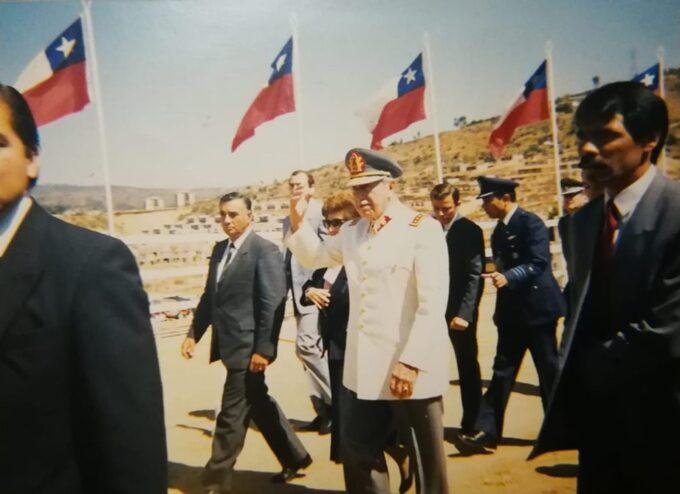
Photograph Source: Nash0h – CC BY 4.0
General Augusto Pinochet, the strongman who imposed a reign of terror on Chile from 1973 to 1990, must be smiling in his grave.
His brazen defender and admirer José Antonio Kast has just been elected president of Chile. Mr. Kast, a right-wing politician who has praised the military dictatorship and once said that if Mr. Pinochet were alive “he would have voted for me,” won by an overwhelming margin on Sunday, beating his center-left opponent by about 16 points. It is the first time since democracy in Chile was restored 35 years ago that any supporter of the dictatorship has won such high office.
Mr. Kast’s victory is not necessarily a public endorsement of his veneration for Mr. Pinochet. His campaign promises appealed to an angry, weary and confused populace eager for radical change: a vow to expel hundreds of thousands of undocumented immigrants, a crackdown on crime and narcotrafficking, a pledge to slash government spending and boost economic growth. Mr. Kast, an ultraconservative Catholic, also opposes abortion, same-sex marriage, gender identity protections and Indigenous rights.
Some might call his rise just one more alarming case of a worldwide trend toward nativist authoritarianism — and it is. But the attendant rehabilitation of one of the continent’s most infamous autocrats is a particularly agonizing setback in a country where many considered the long struggle for democracy to have been won.
In 1973 the military, with Mr. Pinochet at the helm, overthrew the democratically elected government of Salvador Allende. The general proceeded to close Congress, torture and kill thousands of Mr. Allende’s supporters and persecute and exile many more. Mr. Pinochet’s power began to wane in the late 1980s, and democracy in Chile was eventually restored in 1990. In 1998 he was arrested in London on charges of human rights abuses; subsequent revelations that he had illicitly accumulated millions of dollars fueled a general abhorrence that turned him into even more of a pariah. When he died in 2006, wild crowds gathered in Chile’s cities, chanting, “Adiós, General.” To those dancing, riotous citizens, here was the chance to bury forever, along with Mr. Pinochet’s corpse, the influence he had exercised over Chile for so many decades.
I was not so sure. The totalitarian grip he exercised for so long and the dread he had engendered so deeply did not seem easily dispelled. Witnessing the carnivalesque ecstasy in the streets of Santiago, I wondered in an Opinion guest essay if the general’s legacy had really died. “Will he ever stop contaminating every schizophrenic mirror of our life?” I asked. “Will Chile ever cease to be a divided nation?”
Almost two decades later, the answer to both questions appears to be a resounding no.
Supporters of Mr. Pinochet never really went away. The general, they say, saved the country from communism; he imposed law and order; his neoliberal economic policies made Chile a modern country. But they have invariably been a minority. Since the end of the dictatorship, the only conservative to win the presidency — Sebastián Piñera, who governed from 2010 to 2014 and then again from 2018 to 2022 — was careful to distance himself from Mr. Pinochet’s frightful legacy.
In this sense, Mr. Kast’s victory is a political and ethical earthquake. For the first time in Chile’s contemporary history, it’s possible that the most powerful man in the country will use the full force of the executive branch to sanitize Chile’s violent past so that the pain, the slaughters and exiles, the torture and the concentration camps, can be expunged. Although he has said that anyone who violated human rights does not have his support, Mr. Kast has indicated that he might release the 139 high-ranking Pinochet officials who are still in prison for terrible abuses. This includes Miguel Krasnoff, a notorious henchman of Mr. Pinochet’s who was sentenced to over one thousand years for crimes including assassinations, tortures, and kidnappings.
What drove millions of Chileans to embrace him in this way? As I’ve spoken with voters of all social strata and political preferences, the word that kept coming up was “malestar,” which loosely translates to unease, unrest, malaise. Men and women around the country feel that something is obscurely wrong and off balance, and that this cries out for a return to the times when a strong leader enforced discipline and security, no matter the cost. This is what Mr. Kast’s victory signals: the belief that democracy itself is unable to deliver when it comes to the everyday problems of crime, cost of living and rampant immigration.
In his crusade to rewrite the past and recast the future, Mr. Kast may not have an easy ride. There are dissenters in his own conservative coalition who may try to rein in the new president’s worst instincts. Chile also can count on a vigorous and truly independent judiciary that is not inclined to tolerate an anti-democratic blitz. Nor is it certain that the armed forces, leery of being drawn into civilian politics and still stinging from the shame of having enacted so many of Mr. Pinochet’s horrors, will become Mr. Kast’s dogs of war.
The most important opposition to Mr. Kast’s plans will come from ordinary citizens. If the people of this country feel that he is unable to ease their suffering, if they continue to feel excluded and marginalized, without sufficient control of their destiny, that discontent may erupt. Over the past century in Chile, every advance of democracy has been paid for with the lives of miners, workers, peasants and students who died in the defense of their dignity and social rights. It was this embodiment of hope and struggle — this “river of buried tigers,” to quote Pablo Neruda — that I fell in love with when I arrived in Chile from the United States at the age of 12. It was not suffocated under the vindictive dictatorship that Mr. Kast nostalgically reveres, and it will not disappear now.
Any resistance that Chileans bring to the streets must be accompanied by an equally valiant attempt to imagine our way out of this crisis. Mr. Kast could not have won if the center-left parties and their elites had not failed to offer a viable alternative to the country’s chronic unhappiness.
What Chile needs now is a deep intellectual renewal of its progressive forces, a painful reckoning with its shortcomings and fractures. How well the Chilean opposition responds to this sobering defeat will determine whether Mr. Kast truly represents an ominous swerve toward the world’s current desolate panorama of would-be dictators, or whether he proves a mere parenthetical in Chile’s erratic but perpetual advance toward freedom and justice. The battle for the soul and identity of my adopted country is nowhere near over.
A version of this column first appeared in the New York Times.
The Angry Tide Has Washed Into Chile
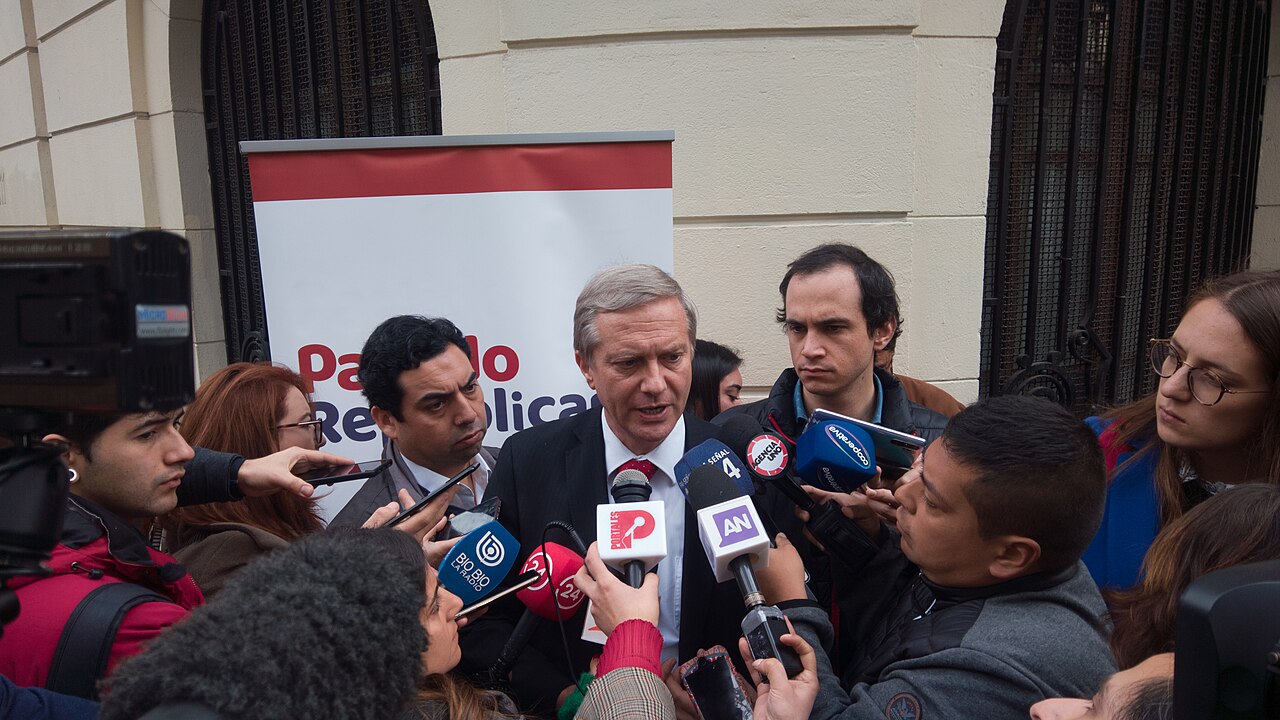
On 14 December, the predictable happened: José Antonio Kast, the candidate of the far-right Republican Party, prevailed over Jeannette Jara of the Communist Party of Chile by 58.16 percent to 41.84 percent. Kast ran as the candidate of the Cambio por Chile (Change for Chile) platform and was backed by all the parties of the traditional right and the centre-right. Jara, on the other hand, was the candidate of Unidad por Chile (Unity for Chile), which comprised the parties of the centre-left, including the bloc of Chile’s current president, Gabriel Boric, the Frente Amplio or Broad Front.
In the first round of the election, Jara had been the lead candidate with 26.58 percent of the vote, while Kast won 23.92 percent. But this was misleading. The two right-wing candidates who immediately endorsed Kast, Johannes Kaiser (with 13.94 percent) and Evelyn Matthei (with 12.46 percent), provided him with an arithmetical advantage of 50.32 percent. The question for Jara was whether she could surpass 30 percent. That she ended up with over 40 percent is itself a remarkable achievement. It is not easy for the Chilean population, marinated in anti-communism for several generations (particularly during the military dictatorship from 1973 to 1990), to consider voting a Communist into the presidential palace, even if her opponent is a man of the extreme right.
Kast’s arrival in La Moneda, the presidential palace, is part of the Angry Tide that has been sweeping Latin America from El Salvador to Argentina. His victory is not entirely unique. It follows the collapse of the liberal agenda that tried to maintain rigid economic austerity policies alongside limited social programmes; and it is the result of the left’s failure to build a strong agenda to fulfil the demands of the social uprisings that have punctually erupted against austerity and hierarchy.
The Child of the Dictatorship
José Antonio Kast is a product of Chile’s long shadow, where the unresolved legacies of the military dictatorship seep into the present. Born in 1966 to a German immigrant family, Kast emerged from the conservative heartlands of Chilean politics, first as a member of the Independent Democratic Union, the party most faithfully aligned with Augusto Pinochet’s project. His political formation is inseparable from that history: an unrepentant defence of the neoliberal order imposed by force and a moral authoritarianism dressed up as “tradition”.
Kast’s father —Michael Martin Kast Schindele— served in the Wehrmacht (the German army) and was a member of the Nazi Party. After Germany’s defeat, Michael Kast fled Allied custody in Italy, returned to Bavaria, then escaped the postwar denazification process and emigrated to Argentina and then Chile via the Vatican’s ratlines. In Santiago in 1950, Kast started a sausage company and built a fortune. His elder son, Miguel Kast —a “Chicago Boy”— served as Minister of Labour and President of the Central Bank under the military government of General Augusto Pinochet. The entire family supported Pinochet. When asked about Pinochet by La Tercera in 2017, José Antonio Kast said, “I defended his government, but I never even had a coffee with him. You don’t have to be very imaginative to think that if he were alive, he would vote for me. Now, if I had met with him, we would have had a cup of tea at La Moneda”.
Kast cannot be held responsible for his father. He has said that Nazism is an ideology with which he disagrees, and one should take him at his word. On the other hand, the easy facility with which he embraces Pinochet’s military dictatorship should give one pause. During the social uprising in Chile in 2019, Kast reinvented himself as the defender of the ordinary Chilean against migrants, feminists, socialists, communists, and Mapuche demands against the cruel social order. Kast borrowed from the global far right: law-and-order fantasies, nostalgia for old hierarchies of race and gender, and a ruthless contempt for social movements that dare to challenge entrenched inequality.
What makes Kast dangerous is not his originality, for there is nothing original about his ideas or his place in society. It is his familiarity that is dangerous. Despite the end of the military dictatorship thirty-five years ago, the structures set in place by Pinochet remain. This includes the Constitution of 1980, which now appears eternal because two attempts to revise it (in 2022 and 2023) failed. Crucially, Chile’s reality includes property relations reorganised during the dictatorship to favour the oligarchy, including Pinochet’s own relatives. During the dictatorship, Pinochet privatised one of the major mining companies —Sociedad Química y Minera (SQM)— which was taken over by Pinochet’s son-in-law Julio Ponce Lerou (then married to Pinochet’s daughter Verónica). This sort of dictatorship-driven piracy remained intact after the dictatorship ended (Pinochet’s granddaughter now runs the company).
These features of the oligarchy and its Pinochet-era consolidation are crucial to Kast’s prominence and rise. He speaks a language long used in Chile to justify this inequality: that markets are sacred, that discipline is virtue, and that memory must be silenced. In moments of crisis, figures like Kast do not arise by accident. They are summoned by elites when democracy threatens to become too democratic, when the people begin to ask for dignity rather than permission. He will be sworn in on 11 March 2026.
Will Chile Rise Again?
A massive social uprising that began in October 2019 brought together many sections of Chile’s society that had felt the hard edge of neoliberal austerity. This was not a spontaneous rebellion, but the product of decades of accumulated grievances rooted in inequality, privatisation, and social humiliation, grievances that had long been contested by various social forces organised into movements and platforms. That protest led to the victory of the centre-left’s Gabriel Boric in 2021, but Boric’s government was simply unable to break with the consensus and provide the country with a new agenda for new times. It was almost a caretaker government from one right-wing president (Sebastián Piñera, 2010-2014 and 2018-2022) to another. The streets are calmer now than they were in 2019, but the structural conditions that produced that uprising have not been dismantled.
When I met Boric before he took office, he was certain that his government would be able to reform the pension system and perhaps address the healthcare, education, and housing crises. Nothing was really achieved, and even constitutional reform failed. With the promise of social mobility no longer available to the population, particularly the youth, discontent rose. The centre-left lost its legitimacy, and that discontent turned to disillusionment once again. There is a widespread sense of political exhaustion and betrayal. Institutions appear incapable of translating popular demands into real change, reinforcing the idea that voting —even if compulsory— cannot inaugurate a new world. This demoralisation is a real social force, one that led a large section of Jara’s voters to vote to block Kast rather than to vote for Jara with enthusiasm.
Chile’s median age is 38. Many young Chileans entered adulthood amid the social uprising over the past decade, then a pandemic, and finally what appears to be permanent inflation. With the failure to ratify a new Constitution and with the victory of Kast, this young Chilean voice for a different future is certainly going to feel muted. But it will not remain silenced for long. It will have to come to terms with Kast’s horrendous programme: the continued militarisation of the Mapuche territory in the south, the criminalisation of protest, and the expansion of a state that prepares for containment, not redistribution. Kast’s agenda will not eliminate unrest but may postpone it for a while, only to sharpen its eventual return to the streets. When Kast sends the police to beat the protestors, his followers will undoubtedly take refuge in the language of legality, while his opponents will speak of the regime’s illegitimacy. If Kast cannot deliver policies to contain inflation and unemployment, inequality will rise and produce its own fury.
If a new social uprising does form, what will be its core issue? And will those who lead it be able to generate a credible political project capable of channeling that anger toward transformation? If there is no such project, a repeat of 2019 might move from explosion to disappointment and then to utter dejection. It will be up to Jara and others around her to craft an agenda to defend citizens’ constitutional rights against the Kast government and then to shape a project that is credible and desirable. The social uprising of 2019 is not a closed chapter; it is an unfinished sentence. Within that unfinished sentence were the Boric years (2022-2026), a delay more than anything. Dignity remains the demand. It may reassert itself, but only when patience runs out again.
This article was produced by Globetrotter.
No comments:
Post a Comment