EU Sanctions Oil Traders While Ukraine Sanctions Majority of Shadow Fleet
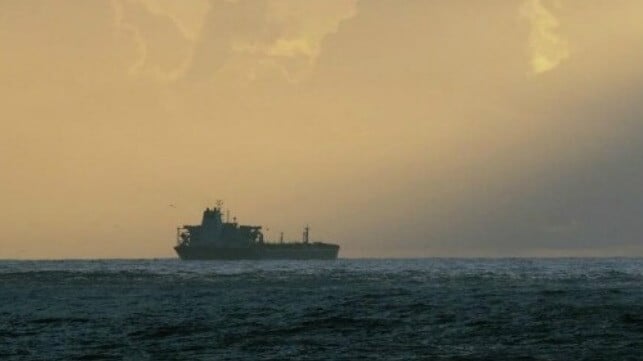
In an effort to continue to keep the pressure up on Russia, and specifically targeting oil revenues, the European Union’s Council is targeting the traders and operators that it says support the Russian oil trade. At the same time, Ukraine sanctioned nearly the entire shadow fleet while saying it would continue to work with its partners to block the vessels generating funds to prolong the war.
The Council of the European Union highlights that the EU has already sanctioned over 2,600 individuals and entities, but in the latest step, it is targeting businessmen and entities linked directly to the major Russian state-owned oil companies Rosneft and Lukoil. The Council announced it was adding nine “shadow fleet enables” to its sanctions today, December 15. Reuters also quotes analysts as saying it is likely the EU will add at least 40 more tankers to its sanctions listing.
“The entities targeted today are shipping companies based in the United Arab Emirates, Vietnam and Russia, which own or manage tankers that are subject to restrictive measures imposed by the EU or by other countries for being part of Russia’s shadow fleet, and that transport crude oil or petroleum products while practicing irregular and high-risk shipping practices,” according to the official announcement.
The European Union accuses the companies of “practicing irregular and high-risk shipping practices. It highlights that they are targeting traders in the oil and companies that control the vessels and work to conceal the actual origin of the oil products.
Among the individuals are Murtaza Lakhani, who has been previously linked by reporting by Bloomberg and the Financial Times, to the oil trade. He is reported to have control over multiple companies in the United Arab Emirates that are linked to the oil exports. His lawyers call the charges “unfounded.”
Among the entities are 2Rivers Group, aka Coral Energy, which has frequently been linked to many of the shadow fleet tankers. Another company, Nova Shipmanegement, has been linked to Omani-flagged tankers that were reported to be involved in the oil transfers.
Ukrainian President Volodymyr Zelenskyy over the weekend also reported that Ukraine had sanctioned nearly 700 additional vessels, which he called a significant part of the shadow fleet transporting Russia’s oil. He said it was the largest sanctions package specifically targeting tankers reporting they were not only Russian-flagged vessels but also under the flags of more than 50 jurisdictions.
“We support the concept of a complete ban on providing maritime services to vessels involved in the export of Russian energy carriers. Pressure on Russia and diplomacy for the end of the war must go hand in hand to achieve the necessary result,” wrote Zelenskyy, announcing the latest move.
It is part of a wider campaign seeking to pressure Russia in the peace negotiations by cutting the revenues from the oil sector.
Removal of Stranded Shadow Tanker Completed to Bulgarian Anchorage
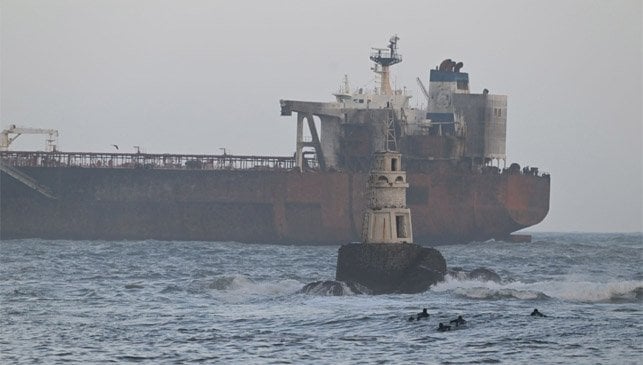
Bulgaria’s Maritime Administration reported late on Monday, December 15, that the blast-damaged tanker Kairos has been successfully relocated from the coastline to a secure anchorage. The vessel will now be held and only released after the Chinese owner repays the salvage costs.
The Kairos (149,989 dwt) drifted toward the Bulgarian coastline more than a week ago under uncertain circumstances. The vessel was damaged in a drone attack while sailing north of Turkey, which caused an explosion and fire, leaving the ship disabled. After the Turkish authorities assisted in putting the fire out, the vessel was towed by a private contractor that appeared to release the ship on December 5, and it nearly grounded near Ahtopol. Bulgaria evacuated part of the remaining crew.
Over the weekend, the salvage company hired by the government, BMF Tug Service, tested the operation and prepared the vessel. Because there was no power on board, the situation was more challenging, and the skeleton crew had reported that the port side bow anchor had jammed when they tried to deploy it.
A 150 kW emergency marine generator was placed on a workboat, which was positioned alongside the tanker. On Sunday, the crews tested their ability to restore power to the hydraulic system. The operation tested the ability to raise the starboard anchor, and they also restored the port side anchor as a spare. They also planned for the placement of the tow lines.
Three crewmembers had remained aboard the vessel while it was anchored near the shore, and on Monday, additional crewmembers were returned to the ship. Early in the morning, the salvage crew attached lines from the three tugs that were sent for the operation and raised the starboard anchor.
The tow moved the vessel nearly 30 nautical miles, and for safety, they were not planning to travel at more than 2 to 3 knots. Late Monday afternoon, the vessel reached Burgas Bay and was anchored in a predetermined location away from traffic and out of danger.
The Maritime Administration reports it will tally the final cost of the salvage operation and, within the next two days, present the bill to the Chinese owners of the tanker. Only after the bill has been paid will Bulgaria permit the owner to remove the tanker.
Because the vessel is under sanctions, Bulgaria points out that it cannot assist with repairs. It can only aid the owner in the removal of the ship.
Swedish Navy Reports Russia’s Steps to Protect Shadow Tankers in the Baltic
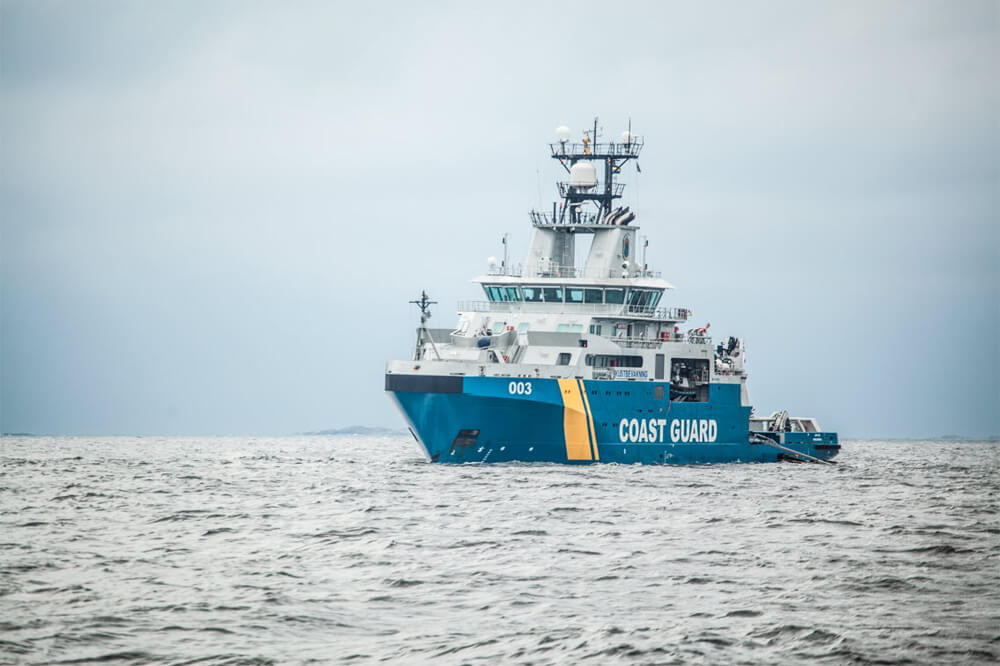
The Swedish Navy is confirming that Russia is taking increased steps to protect the shadow tanker fleet while it is operating in the Baltic. During an interview with SVT Nyheter, the Swedish Navy’s Chief of Operations Marko Petovic detailed the actions the Navy and Coast Guard have seen or heard taken by Russia as Sweden and other nations increased their monitoring of the Baltic.
“The Russian naval presence has become more permanent and present in large parts of the Baltic Sea,” Petkovic told STV. “We have seen and received information that there are uniformed personnel aboard some of these shadow fleet tankers.”
Petkovic was confirming earlier reports that surfaced a few months ago that uniformed military personnel are aboard some of the shadow fleet tankers. The Swedish Navy believes they come from private security companies.
Russia was outspoken about the efforts of the Baltic nations and others to stop and inspect the tankers. The countries have cited the environmental threats from the tankers as well as the lingering fears after the reports of damage to subsea cables at the beginning of 2025.
The Swedish government announced starting on July 1 it would be enforcing new rules on ships that pass through Swedish territorial waters or the economic zone. Regardless of whether the vessels were scheduled to call in Swedish ports, it said the Coast Guard would be challenging the vessels for proof of insurance. Estonia had already been taking actions, and Finland and Germany also reported they were increasing their efforts.
Petkovic said Russia’s response is a demonstration of the importance it places on the shadow fleet operations. He believes the response, however, has currently “tied up” the Russian Baltic Navy.
He does not see any immediate risk, but says Russian vessels are a “fairly constant presence” in several specific zones adjacent to shipping lanes.
The European Union has continued its efforts at sanctioning the tankers and the enables. It has also discussed efforts to stop and detain more of the tankers for inspections. French President Emmanuel Macron has advocated for stopping the tankers, saying holding them even for a few days would disrupt the economics of the operations.
Bellingcat: Russian Traders are Shipping Ukrainian Grain to Saudi Arabia
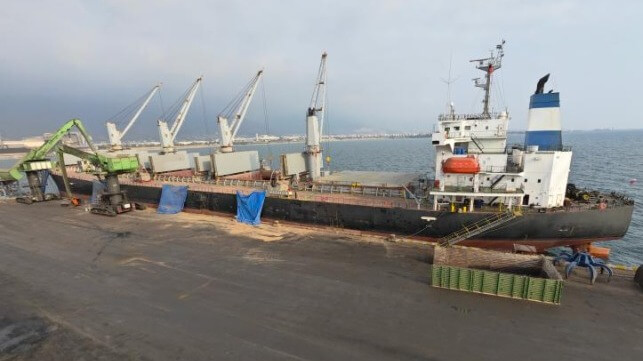
Open-source intelligence agency Bellingcat (in cooperation with Lloyd's List) has detected a new buyer of "stolen" Ukrainian grain, and in an unexpected location: Saudi Arabia.
Kyiv claims that grain produced in and exported from Russian-occupied parts of eastern Ukraine is stolen property, given the patterns of land expropriation and seizure of goods under Russian rule. Russia denies this claim, asserts that the territory is inherently part of Russia, and says that the goods produced there can be freely sold and traded as Russian products.
Because of the controversial nature of the trade, vessels moving grain out of ports on the Sea of Azov or the Crimean Peninsula have been closely tracked by Western analysts and ship-spotters. During the period of the Russian-aligned Assad regime's rule, Syria was a leading destination, and its newly-independent government still receives cargoes. Bellingcat and other outlets have since identified other takers in Egypt, Turkey, Houthi-controlled regions of Yemen, and Russia-aligned Iran and Venezuela.
Now, new buyers appear to have emerged in Saudi Arabia, according to Bellingcat. The outlet tracked a single vessel - the Russian-flagged bulker Krasnodar - on two voyages from a sanctioned terminal in Sevastopol to Saudi Arabia's Red Sea ports. On the first voyage, the ship departed in late August (with AIS likely turned off to disguise the port call in Crimea) and arrived at King Abdullah Port in Saudi Arabia in September. Along the way, prolific ship-spotter Yoruk Isik photographed the vessel southbound in the Bosporus, showing her in laden condition.
Krasnodar returned in late September - her in-ballast status visible thanks to Isik's photography - and turned off her AIS in the Black Sea. Satellite imaging picked up the vessel at the Avlita grain terminal in Sevastopol in the second week of October, then at the port of Jazan, Saudi Arabia in November, and then once more at the same Sevastopol terminal in late November.
The charterer, Russian grain trader Petrokhleb-Kuban, denies that its vessels call at the Sevastopol grain terminal, which is under sanctions. It also denies trading any grain from Ukraine, and denies that Krasnodar disabled its AIS. Instead, it suggests, Krasnodar called at the Russian port of Kavkaz, Russia - not in occupied Crimea. (Bellingcat verified the ship's location at the sanctioned Avlita grain terminal in Sevastopol three times by satellite imaging.)
Petrokhleb-Kuban told Bellingcat that the bills of lading for these voyages showed the grain's origin as Russian, and the port of origin as Kavkaz. Given that the ship's AIS was not visible during port calls in Crimea, and the vessel's documents reportedly did not reference Ukraine, it is possible that Saudi port authorities were unaware of the cargo's true nature - though Ukraine's representatives did bring it up with Saudi diplomats at an IMO meeting recently, Ukrainian development official Alona Shkrum told Bellingcat.
The grain trade is just one aspect of the increasingly contested maritime trade lanes in the Black Sea. Ukraine has also targeted Russia-linked tankers with its suicide drone boats, damaging three vessels, and Russia has repeatedly attacked Ukrainian ports and the vessels that call at them - including a round of multiple strikes on Turkish-owned ships last week.
Top image: Krasnodar at Iskenderun, 2023 (file image courtesy Capt. M. Jendi / VesselFinder)
No comments:
Post a Comment