Interest rate cut can't undo 'damage created by Trump's chaos economy': economist
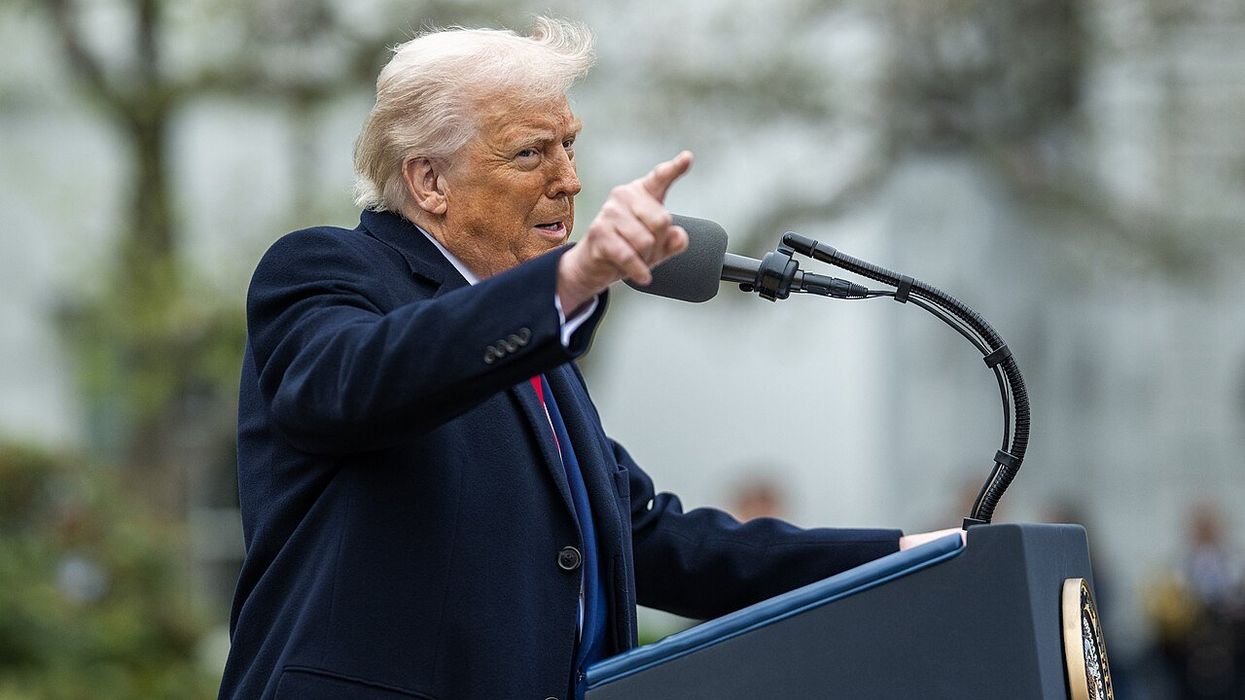
President Donald Trump in the White House Rose Garden on April 2, 2025 (Official White House Photo by Daniel Torok/Flickr)
A leading economist and key congressional Democrat on Wednesday pointed to the Federal Reserve’s benchmark interest rate cut as just the latest evidence of the havoc that President Donald Trump is wreaking on the economy.
The US central bank has a dual mandate to promote price stability and maximum employment. The Federal Open Market Committee may raise the benchmark rate to reduce inflation, or cut it to spur economic growth, including hiring. However, the FOMC is currently contending with a cooling job market and soaring costs
After the FOMC’s two-day monthly meeting, the divided committee announced a quarter-point reduction to 3.5-3.75%. It’s the third time the panel has cut the federal funds rate in recent months after a pause during the early part of Trump’s second term.
“Today’s decision shows that the Trump economy is in a sorry state and that the Federal Reserve is concerned about a weakening job market,” House Budget Committee Ranking Member Brendan Boyle (D-Pa.) said in a statement. “On top of a flailing job market, the president’s tariffs—his national sales tax—continue to fuel inflation.”
“To make matters worse, extreme Republican policies, including Trump’s Big Ugly Law, are driving healthcare costs sharply higher,” he continued, pointing to the budget package that the president signed in July. “I will keep fighting to lower costs and for an economy that works for every American.”
Alex Jacquez, a former Obama administration official who is now chief of policy and advocacy at the Groundwork Collaborative, similarly said that “Trump’s reckless handling of the economy has backed the Fed into a corner—stuck between rising costs and a weakening job market, it has no choice but to try and offer what little relief they can to consumers via rate cuts.”
“But the Fed cannot undo the damage created by Trump’s chaos economy,” Jacquez added, “and working families are heading into the holidays feeling stretched, stressed, and far from jolly.”
Thanks to the historically long federal government shutdown, the FOMC didn’t have typical data—the consumer price index or jobs report—to inform Wednesday’s decision. Instead, its new statement and projections “relied on ‘available indicators,’ which Fed officials have said include their own internal surveys, community contacts, and private data,” Reuters reported.
“The most recent official data on unemployment and inflation is for September, and showed the unemployment rate rising to 4.4% from 4.3%, while the Fed’s preferred measure of inflation also increased slightly to 2.8% from 2.7%,” the news agency noted. “The Fed has a 2% inflation target, but the pace of price increases has risen steadily from 2.3% in April, a fact at least partly attributable to the pass-through of rising import taxes to consumers and a driving force behind the central bank’s policy divide.”
The lack of government data has also shifted journalists’ attention to other sources, including the revelation from global payroll processing firm ADP that the US lost 32,000 jobs in November, as well as Gallup’s finding last week that Americans’ confidence in the economy has fallen by seven points over the past month and is now at its lowest level in over a year.
The Associated Press highlighted that the rate cut is “good news” for US job-seekers:
“Overall, we’ve seen a slowing demand for workers with employers not hiring the way they did a couple of years ago,” said Cory Stahle, senior economist at the Indeed Hiring Lab. “By lowering the interest rate, you make it a little more financially reasonable for employers to hire additional people. Especially in some areas—like startups, where companies lean pretty heavily on borrowed money—that’s the hope here.”Stahle acknowledged that it could take time for the rate cuts to filter down to employers and then to workers, but he said the signal of the reduction is also important.
“Beyond the size of the cut, it tells employers and job-seekers something about the Federal Reserve’s priorities and focus. That they’re concerned about the labor market and willing to step in and support the labor market. It’s an assurance of the reserve’s priorities.”
The Federal Reserve is now projecting only one rate cut next year. During a Wednesday press conference, Fed Chair Jerome Powell pointed to the three cuts since September and said that “we are well positioned to wait to see how the economy evolves.”
However, Powell is on his way out, with his term ending in May, and Trump signaled in a Tuesday interview with Politico that agreeing with immediate interest rate cuts is a litmus test for his next nominee to fill the role.
Trump—who embarked on a nationwide “affordability tour” this week after claiming last week that “the word ‘affordability’ is a Democrat scam”—also graded the US economy on his watch, giving it an A+++++.
US Sen. Bernie Sanders (I-Vt.) responded: “Really? 60% of Americans live paycheck to paycheck. 800,000 are homeless. Food prices are at record highs. Wages lag behind inflation. God help us when we have a B+++++ economy.”
President Donald Trump in the White House Rose Garden on April 2, 2025 (Official White House Photo by Daniel Torok/Flickr)
December 11, 2025
A leading economist and key congressional Democrat on Wednesday pointed to the Federal Reserve’s benchmark interest rate cut as just the latest evidence of the havoc that President Donald Trump is wreaking on the economy.
The US central bank has a dual mandate to promote price stability and maximum employment. The Federal Open Market Committee may raise the benchmark rate to reduce inflation, or cut it to spur economic growth, including hiring. However, the FOMC is currently contending with a cooling job market and soaring costs
After the FOMC’s two-day monthly meeting, the divided committee announced a quarter-point reduction to 3.5-3.75%. It’s the third time the panel has cut the federal funds rate in recent months after a pause during the early part of Trump’s second term.
“Today’s decision shows that the Trump economy is in a sorry state and that the Federal Reserve is concerned about a weakening job market,” House Budget Committee Ranking Member Brendan Boyle (D-Pa.) said in a statement. “On top of a flailing job market, the president’s tariffs—his national sales tax—continue to fuel inflation.”
“To make matters worse, extreme Republican policies, including Trump’s Big Ugly Law, are driving healthcare costs sharply higher,” he continued, pointing to the budget package that the president signed in July. “I will keep fighting to lower costs and for an economy that works for every American.”
Alex Jacquez, a former Obama administration official who is now chief of policy and advocacy at the Groundwork Collaborative, similarly said that “Trump’s reckless handling of the economy has backed the Fed into a corner—stuck between rising costs and a weakening job market, it has no choice but to try and offer what little relief they can to consumers via rate cuts.”
“But the Fed cannot undo the damage created by Trump’s chaos economy,” Jacquez added, “and working families are heading into the holidays feeling stretched, stressed, and far from jolly.”
Thanks to the historically long federal government shutdown, the FOMC didn’t have typical data—the consumer price index or jobs report—to inform Wednesday’s decision. Instead, its new statement and projections “relied on ‘available indicators,’ which Fed officials have said include their own internal surveys, community contacts, and private data,” Reuters reported.
“The most recent official data on unemployment and inflation is for September, and showed the unemployment rate rising to 4.4% from 4.3%, while the Fed’s preferred measure of inflation also increased slightly to 2.8% from 2.7%,” the news agency noted. “The Fed has a 2% inflation target, but the pace of price increases has risen steadily from 2.3% in April, a fact at least partly attributable to the pass-through of rising import taxes to consumers and a driving force behind the central bank’s policy divide.”
The lack of government data has also shifted journalists’ attention to other sources, including the revelation from global payroll processing firm ADP that the US lost 32,000 jobs in November, as well as Gallup’s finding last week that Americans’ confidence in the economy has fallen by seven points over the past month and is now at its lowest level in over a year.
The Associated Press highlighted that the rate cut is “good news” for US job-seekers:
“Overall, we’ve seen a slowing demand for workers with employers not hiring the way they did a couple of years ago,” said Cory Stahle, senior economist at the Indeed Hiring Lab. “By lowering the interest rate, you make it a little more financially reasonable for employers to hire additional people. Especially in some areas—like startups, where companies lean pretty heavily on borrowed money—that’s the hope here.”Stahle acknowledged that it could take time for the rate cuts to filter down to employers and then to workers, but he said the signal of the reduction is also important.
“Beyond the size of the cut, it tells employers and job-seekers something about the Federal Reserve’s priorities and focus. That they’re concerned about the labor market and willing to step in and support the labor market. It’s an assurance of the reserve’s priorities.”
The Federal Reserve is now projecting only one rate cut next year. During a Wednesday press conference, Fed Chair Jerome Powell pointed to the three cuts since September and said that “we are well positioned to wait to see how the economy evolves.”
However, Powell is on his way out, with his term ending in May, and Trump signaled in a Tuesday interview with Politico that agreeing with immediate interest rate cuts is a litmus test for his next nominee to fill the role.
Trump—who embarked on a nationwide “affordability tour” this week after claiming last week that “the word ‘affordability’ is a Democrat scam”—also graded the US economy on his watch, giving it an A+++++.
US Sen. Bernie Sanders (I-Vt.) responded: “Really? 60% of Americans live paycheck to paycheck. 800,000 are homeless. Food prices are at record highs. Wages lag behind inflation. God help us when we have a B+++++ economy.”
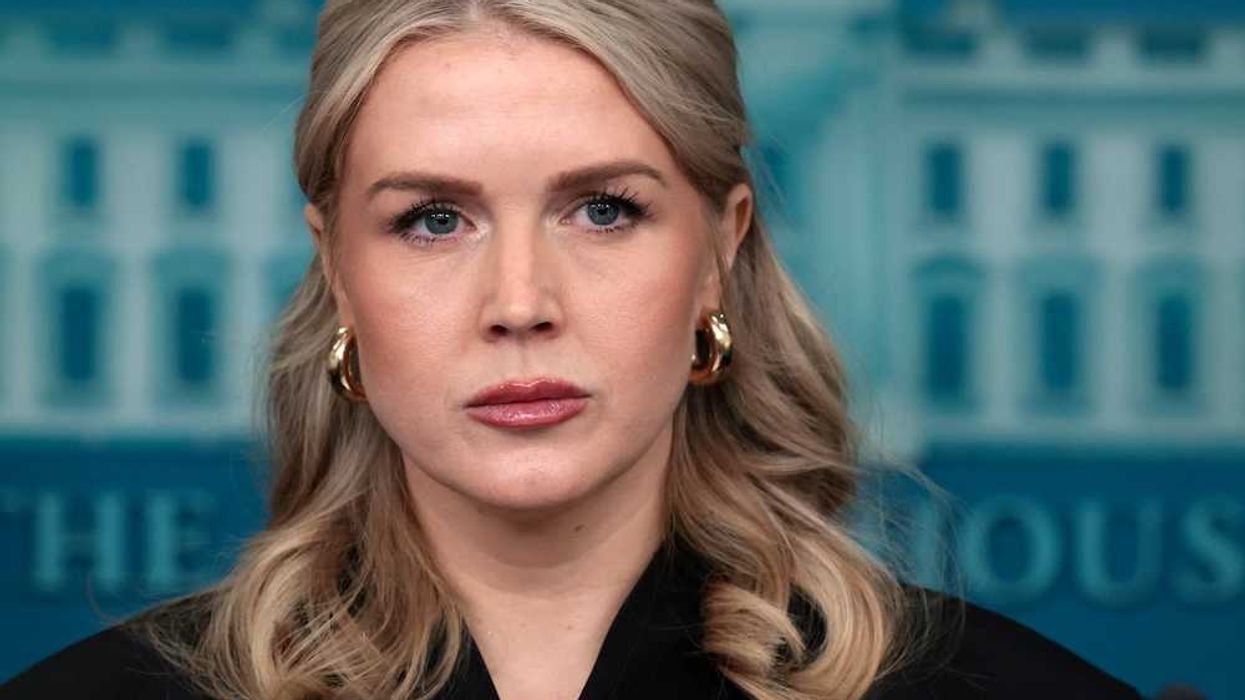
White House Press Secretary Karoline Leavitt holds a press briefing at the White House, in Washington, D.C., U.S., December 11, 2025. REUTERS/Jonathan Ernst
December 11, 2025
ALTERNET
President Donald Trump's administration is cherry-picking inflation data to paint a more flattering picture of the economic climate, according to new reporting from CNN.
During the Thursday episode of her show "The Source," CNN host Kaitlan Collins took Trump's White House to task for falsely reporting the rate of inflation more than 10 months into Trump's second term. She began the segment by playing an exchange she had with White House press secretary Karoline Leavitt, in which Leavitt insisted that the inflation rate was down to 2.5 percent from the three percent Trump inherited from former President Joe Biden.
"So we're trending in the right direction with more to come. And I would remind you, when President Trump left office in his first term, inflation was 1.7 percent, and the previous administration jacked it up to a record high nine percent," Leavitt said. "So again, in ten months, the president has clawed us out of this hole. He's kept it low at 2.5 percent. And we believe that number is going to continue to decline, especially as energy and oil prices continue to decline as well."
CNN fact-checker Daniel Dale disputed Leavitt's claims that Trump had lowered inflation, pointing to the September consumer price index (CPI) report — which is the most recent month of data available — showing that inflation remained at three percent. Dale said Leavitt's use of the 2.5 percent figure was "very much apples to oranges," saying that she was purposefully using the average rate from all 10 months of Trump's second term — rather than the most recent figures — as a means of downplaying the impact of Trump's tariffs.
"So when the press secretary told us today that we're very much headed in the right direction, we're not," Dale said. "... They're grabbing this early-year data. Why are they doing that? Well, because inflation was lower before President Trump's so-called 'Liberation Day,' when he announced sweeping global tariffs that then made their way through the economy."
"So by using this ... annualized rate, they're making inflation sound rosier than it would if they use the one month, most recent data that everyone else is talking about," he continued. "So, no, this is not an apples-to-apples comparison."
"They're entitled to use whatever kind of math they want," he added. "The annualized rate is a real thing, but they're not clearly explaining that they're doing so. And I think that's where they're misleading the public."
Watch the segment below:
During the Thursday episode of her show "The Source," CNN host Kaitlan Collins took Trump's White House to task for falsely reporting the rate of inflation more than 10 months into Trump's second term. She began the segment by playing an exchange she had with White House press secretary Karoline Leavitt, in which Leavitt insisted that the inflation rate was down to 2.5 percent from the three percent Trump inherited from former President Joe Biden.
"So we're trending in the right direction with more to come. And I would remind you, when President Trump left office in his first term, inflation was 1.7 percent, and the previous administration jacked it up to a record high nine percent," Leavitt said. "So again, in ten months, the president has clawed us out of this hole. He's kept it low at 2.5 percent. And we believe that number is going to continue to decline, especially as energy and oil prices continue to decline as well."
CNN fact-checker Daniel Dale disputed Leavitt's claims that Trump had lowered inflation, pointing to the September consumer price index (CPI) report — which is the most recent month of data available — showing that inflation remained at three percent. Dale said Leavitt's use of the 2.5 percent figure was "very much apples to oranges," saying that she was purposefully using the average rate from all 10 months of Trump's second term — rather than the most recent figures — as a means of downplaying the impact of Trump's tariffs.
"So when the press secretary told us today that we're very much headed in the right direction, we're not," Dale said. "... They're grabbing this early-year data. Why are they doing that? Well, because inflation was lower before President Trump's so-called 'Liberation Day,' when he announced sweeping global tariffs that then made their way through the economy."
"So by using this ... annualized rate, they're making inflation sound rosier than it would if they use the one month, most recent data that everyone else is talking about," he continued. "So, no, this is not an apples-to-apples comparison."
"They're entitled to use whatever kind of math they want," he added. "The annualized rate is a real thing, but they're not clearly explaining that they're doing so. And I think that's where they're misleading the public."
Watch the segment below:
Economist rips 'lying' Trump for 'driving the affordability crisis'
White House photo
During a Tuesday, December 9 rally in Mount Pocono, Pennsylvania, President Donald Trump aggressively defended his economic record. Trump insisted that inflation is way down under his watch and claimed that he is making the United States "affordable again."
But the following day on MS NOW, Trump's economic record got a scathing critique from University of Michigan economics professor Justin Wolfers.
The Australian economist, who is originally from Sydney but now lives in the U.S., laid out a variety of ways in which Trump is hurting the economy during a Wednesday morning, December 10 appearance on Ana Cabrera's show.
Wolfers told Cabera, "Look, what I want, Ana, is for us to have honest conversations about the economy. Prices are rising; people feel that. Those are two realities. Another reality is that prices tend to rise in modern economies. It's called inflation. What we typically try to do is not get prices to fall, but get them to rise sufficiently slowly that you barely notice it. When the president says prices are falling, he's lying. When he says he's going to get prices down, he really shouldn't. Because the only way to get prices down is to crush the economy."
The United States, Wolfers added, needs to have "a mature and responsible conversation" about the economy — and Trump isn't offering that.
"Prices are rising," Wolfers told Cabrera, "and what we want from policy is for them to rise slowly — and for people to have an opportunity to get wage rises so that their overall quality of life can do more than keep up, actually get ahead…. I think there's a lot of pain out there right now. Often, we'd say that there's not much that a president can do to shape the economy, except this is a president who's given no deference at all to Congress. And so, the president has done a lot of things."
Wolfers continued, "Let's be clear. He's imposed tariffs…. We have mass deportations; that's making it very difficult for some parts of the economy, particularly agriculture and construction, to get the workers they want. We had the Big, Beautiful Bill, which is the largest redistribution of money from poor to rich in a single bill in American history. We've got the Obamacare subsidies expiring, which could lead to a big shock to the health insurance costs facing a lot of Americans. And we've had overall attempts to undermine Obamacare as well — as well as the loss of renewable energy subsidies and attacks on SNAP (the Supplemental Nutrition Assistance Program). So, if you want to see what's driving the affordability crisis, you don't need to look any further than the White House."
White House photo
December 10, 2025
ALTERNET
During a Tuesday, December 9 rally in Mount Pocono, Pennsylvania, President Donald Trump aggressively defended his economic record. Trump insisted that inflation is way down under his watch and claimed that he is making the United States "affordable again."
But the following day on MS NOW, Trump's economic record got a scathing critique from University of Michigan economics professor Justin Wolfers.
The Australian economist, who is originally from Sydney but now lives in the U.S., laid out a variety of ways in which Trump is hurting the economy during a Wednesday morning, December 10 appearance on Ana Cabrera's show.
Wolfers told Cabera, "Look, what I want, Ana, is for us to have honest conversations about the economy. Prices are rising; people feel that. Those are two realities. Another reality is that prices tend to rise in modern economies. It's called inflation. What we typically try to do is not get prices to fall, but get them to rise sufficiently slowly that you barely notice it. When the president says prices are falling, he's lying. When he says he's going to get prices down, he really shouldn't. Because the only way to get prices down is to crush the economy."
The United States, Wolfers added, needs to have "a mature and responsible conversation" about the economy — and Trump isn't offering that.
"Prices are rising," Wolfers told Cabrera, "and what we want from policy is for them to rise slowly — and for people to have an opportunity to get wage rises so that their overall quality of life can do more than keep up, actually get ahead…. I think there's a lot of pain out there right now. Often, we'd say that there's not much that a president can do to shape the economy, except this is a president who's given no deference at all to Congress. And so, the president has done a lot of things."
Wolfers continued, "Let's be clear. He's imposed tariffs…. We have mass deportations; that's making it very difficult for some parts of the economy, particularly agriculture and construction, to get the workers they want. We had the Big, Beautiful Bill, which is the largest redistribution of money from poor to rich in a single bill in American history. We've got the Obamacare subsidies expiring, which could lead to a big shock to the health insurance costs facing a lot of Americans. And we've had overall attempts to undermine Obamacare as well — as well as the loss of renewable energy subsidies and attacks on SNAP (the Supplemental Nutrition Assistance Program). So, if you want to see what's driving the affordability crisis, you don't need to look any further than the White House."
Fresh data show US consumers still strained by inflation
By AFP
December 5, 2025

The impact of lingering inflation remains a question mark surrounding the US holiday shopping season - Copyright AFP/File Joseph Prezioso
US consumer pricing and sentiment reports released Friday pointed to lingering questions about affordability as the calendar moves towards the peak of the festive season.
The personal consumption expenditures (PCE) price index, the Federal Reserve’s preferred data point for measuring inflation, rose to 2.8 percent on an annual basis in September from 2.7 percent in August.
When food and energy prices were excluded, prices also rose by 2.8 percent in September. However, that was below the 2.9 percent reading in August for the same benchmark.
The mixed report, delayed due to the US federal government shutdown, is the last major inflation reading before the Fed’s rate decision next week.
The figures were largely in line with expectations, but included notable increases in some categories that have strained consumers. Durable goods like automobiles, appliances and furniture rose 1.4 percent from a year ago.
A separate report showed consumer sentiment rose in December to 53.3 from 51.0 in November, according to the University of Michigan.
However, consumers today have a diminished outlook for their expected personal income compared with early in 2025 and labor market expectations “remained relatively dismal,” said survey director Joanne Hsu.
“Consumers see modest improvements from November on a few dimensions, but the overall tenor of views is broadly somber, as consumers continue to cite the burden of high prices,” she said.
The data did not significantly move the US stock market on Friday. Stocks are up modestly for the week, due partly to expectations the Fed will cut interest rates next week.
The Fed has cut interest rates at its last two meetings following indications of a slowdown in the US employment market.
But the Fed has also kept an eye on inflation due to the risk that President Donald Trump’s tariffs could reignite a major increase in prices.
EY-Parthenon Chief Economist Gregory Daco predicted the US central bank would cut rates as expected next week, but could face multiple dissents.
Fed Chair Jerome Powell will “persuade several hesitant policymakers to support a third consecutive ‘risk management’ rate cut, while signaling firmly that additional easing is unlikely before next spring absent a material weakening in economic conditions,” Daco said in a note.
Friday’s pricing data revealed a “gradual and uneven” tariff pass-through on goods, “exacerbating the affordability crisis,” Daco said.
“While many businesses have absorbed cost pressures using pre-tariff inventories and narrower margins, these buffers are slowly eroding,” said Daco, who expects rising inflation in late 2025 and early 2026, “further complicating the consumer outlook amid softening labor-market dynamics.”
By AFP
December 5, 2025
The impact of lingering inflation remains a question mark surrounding the US holiday shopping season - Copyright AFP/File Joseph Prezioso
US consumer pricing and sentiment reports released Friday pointed to lingering questions about affordability as the calendar moves towards the peak of the festive season.
The personal consumption expenditures (PCE) price index, the Federal Reserve’s preferred data point for measuring inflation, rose to 2.8 percent on an annual basis in September from 2.7 percent in August.
When food and energy prices were excluded, prices also rose by 2.8 percent in September. However, that was below the 2.9 percent reading in August for the same benchmark.
The mixed report, delayed due to the US federal government shutdown, is the last major inflation reading before the Fed’s rate decision next week.
The figures were largely in line with expectations, but included notable increases in some categories that have strained consumers. Durable goods like automobiles, appliances and furniture rose 1.4 percent from a year ago.
A separate report showed consumer sentiment rose in December to 53.3 from 51.0 in November, according to the University of Michigan.
However, consumers today have a diminished outlook for their expected personal income compared with early in 2025 and labor market expectations “remained relatively dismal,” said survey director Joanne Hsu.
“Consumers see modest improvements from November on a few dimensions, but the overall tenor of views is broadly somber, as consumers continue to cite the burden of high prices,” she said.
The data did not significantly move the US stock market on Friday. Stocks are up modestly for the week, due partly to expectations the Fed will cut interest rates next week.
The Fed has cut interest rates at its last two meetings following indications of a slowdown in the US employment market.
But the Fed has also kept an eye on inflation due to the risk that President Donald Trump’s tariffs could reignite a major increase in prices.
EY-Parthenon Chief Economist Gregory Daco predicted the US central bank would cut rates as expected next week, but could face multiple dissents.
Fed Chair Jerome Powell will “persuade several hesitant policymakers to support a third consecutive ‘risk management’ rate cut, while signaling firmly that additional easing is unlikely before next spring absent a material weakening in economic conditions,” Daco said in a note.
Friday’s pricing data revealed a “gradual and uneven” tariff pass-through on goods, “exacerbating the affordability crisis,” Daco said.
“While many businesses have absorbed cost pressures using pre-tariff inventories and narrower margins, these buffers are slowly eroding,” said Daco, who expects rising inflation in late 2025 and early 2026, “further complicating the consumer outlook amid softening labor-market dynamics.”
No comments:
Post a Comment