Situation in Gaza is 'catastrophic’, foreign
ministers from 10 countries warn
A group of 10 countries, including France, warned on Tuesday that the situation in Gaza was "catastrophic" due to the "renewed deterioration of the humanitarian situation" in the Palestinian enclave. They called on Israel to allow greater access for NGOs and to lift restrictions on importing essential medical and shelter equipment.
Issued on: 30/12/2025
By: FRANCE 24
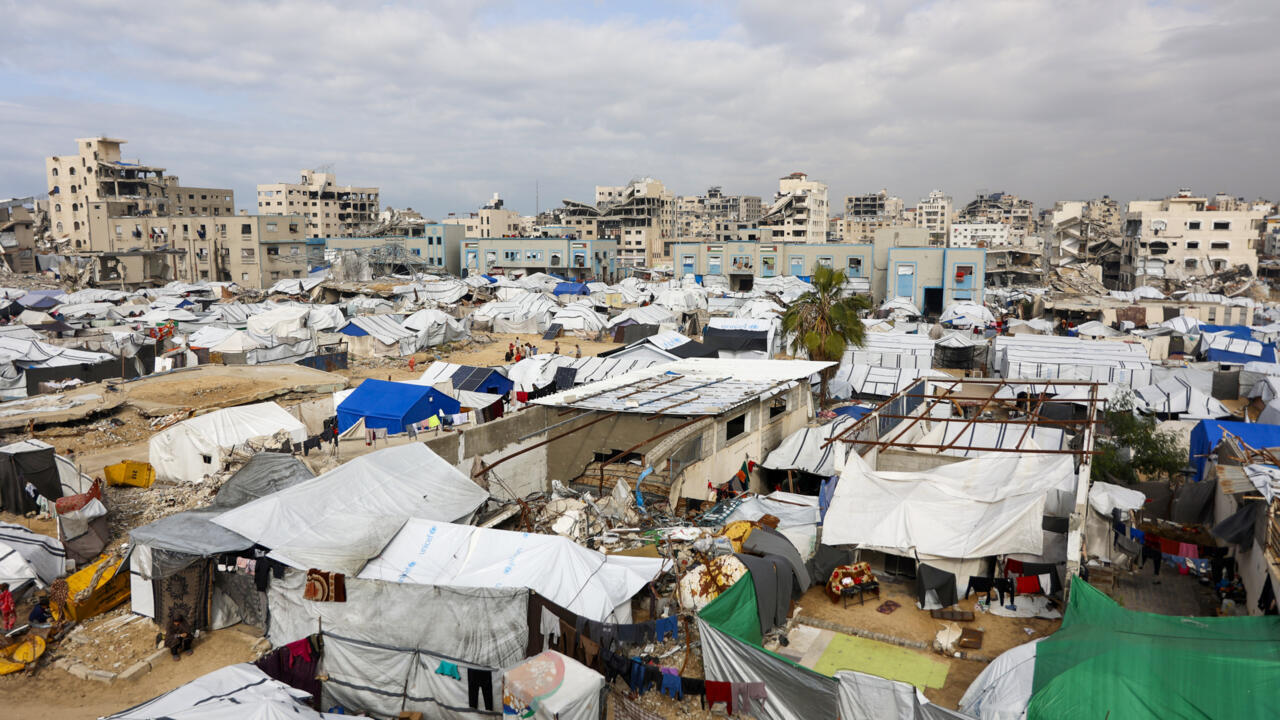
The foreign ministers of 10 nations on Tuesday expressed "serious concerns" about a "renewed deterioration of the humanitarian situation" in Gaza, saying the situation was "catastrophic".
The warning came a day after US President Donald Trump warned Palestinian militant group Hamas there would be "hell to pay" if it fails to disarm in Gaza, as he presented a united front with Israeli Prime Minister Benjamin Netanyahu.
"As winter draws in, civilians in Gaza are facing appalling conditions with heavy rainfall and temperatures dropping," the ministers of Britain, Canada, Denmark, Finland, France, Iceland, Japan, Norway, Sweden and Switzerland said in a joint statement released by the UK's Foreign Office.
"1.3 million people still require urgent shelter support. More than half of health facilities are only partially functional and face shortages of essential medical equipment and supplies. The total collapse of sanitation infrastructure has left 740,000 people vulnerable to toxic flooding," the statement added.
Trump's comments on Monday also downplayed reports of tensions with Netanyahu over the second stage of the fragile Gaza ceasefire.
The president, speaking at a news conference with Netanyahu in Florida, said Israel had "lived up" to its commitments and that the onus was on Hamas.
The foreign ministers in their statement said they welcomed the progress that had been made to end the bloodshed in Gaza and secure the release of Israeli hostages.
"However we will not lose focus on the plight of civilians in Gaza," they said, calling on the government of Israel to take a string of "urgent and essential" steps.
These included ensuring that international NGOs could operate in Gaza in a "sustained and predictable" way.
"As 31 December approaches, many established international NGO partners are at risk of being deregistered because of the government of Israel's restrictive new requirements," the statement said.
It also called for the UN and its partners to be able to continue their work in Gaza and for the lifting of "unreasonable restrictions on imports considered to have a dual use".
This included medical and shelter equipment.
READ MOREGaza truce: Where does it stand and what's supposed to happen under phase two?
'Vital supplies'
The ministers also called for the opening of crossings to boost the flow of humanitarian aid into Gaza.
While welcoming the partial opening of the Allenby crossing, they said other corridors for moving goods remained closed or severely restricted for humanitarian aid, including Rafah.
"Bureaucratic customs processes and extensive screenings are causing delays, while commercial cargo is being allowed in more freely," the statement said.
"The target of 4,200 trucks per week, including an allocation of 250 UN trucks per day, should be a floor not a ceiling. These targets should be lifted so we can be sure the vital supplies are getting in at the vast scale needed," it added.
The Gaza ceasefire in October is considered one of the major achievements of Trump's first year back in power, and Washington and regional mediators have hoped to keep their foot on the gas.
The Axios news site said Trump seeks to make announcements as soon as January on an interim government and an international force.
But Trump on Monday gave few details beyond saying that he hoped "reconstruction" could begin soon in the Palestinian territory, devastated by Israeli attacks in response to Hamas's October 7, 2023 attacks.
The disarmament of Hamas however continued to be a sticking point, with its armed wing again saying that it would not surrender its arms.
(FRANCE 24 with AFP)
Israel says it will halt operations of some aid organisations in Gaza starting in 2026
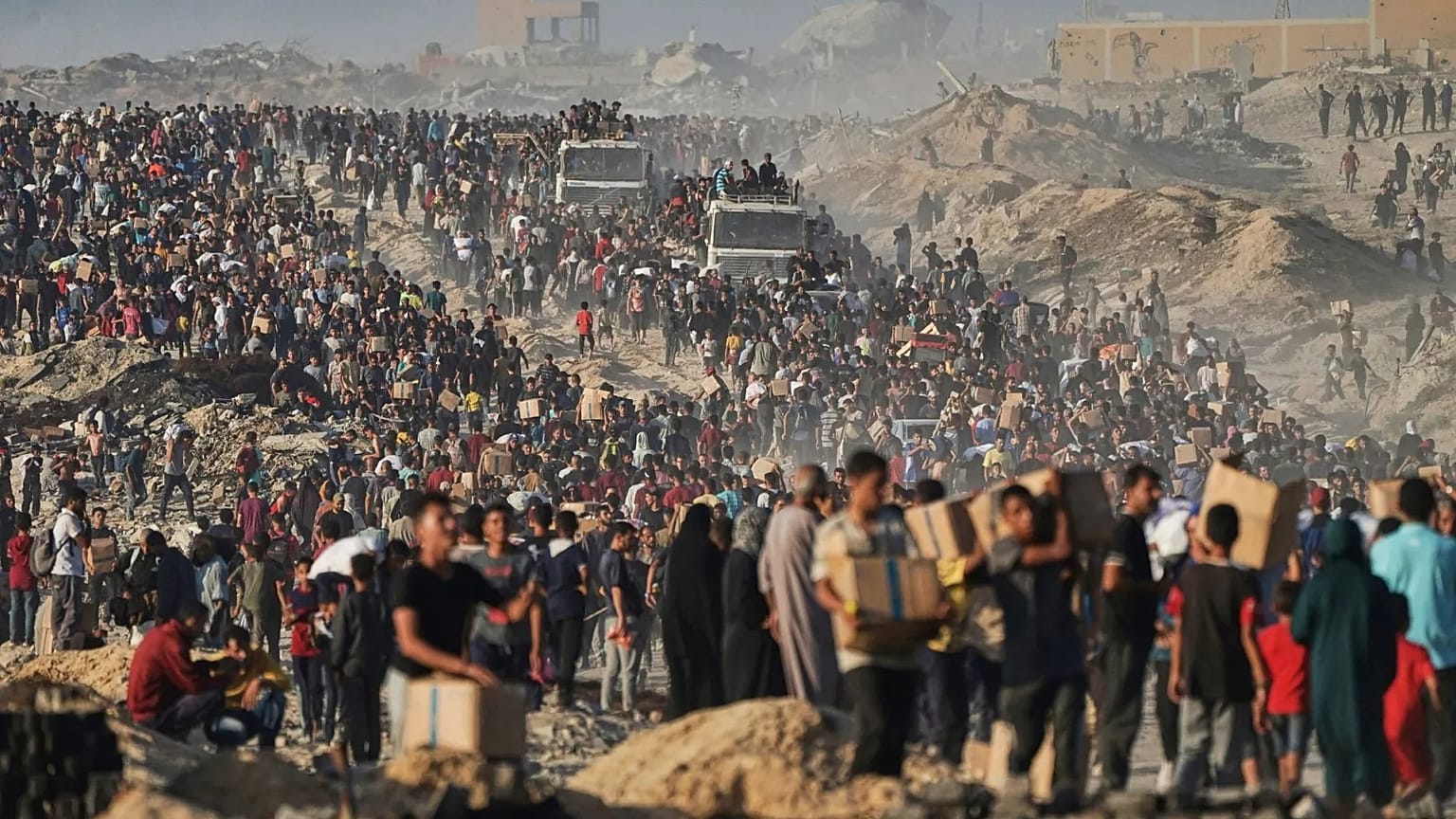
Earlier this year, Israel changed its registration process for aid groups, which included a requirement to submit a list of staff, including Palestinians in Gaza.
Israel said on Tuesday that it will suspend the work of more than two dozen humanitarian organisations for failing to meet its new rules to vet international agencies working in Gaza.
The Ministry of Diaspora Affairs said that the organisations facing bans on 1 January didn't meet new requirements for sharing staff, funding and operations information.
The ministry said that around 25 organisations, or 15%, of non-governmental organisations working in Gaza didn't have their permits renewed.
It accused Doctors Without Borders (MSF), one of the largest health organisations operating in Gaza, of failing to clarify the roles of some staff that Israel accused of cooperation with Hamas and other militant groups.
Other major organisations whose permits weren't renewed include the Norwegian Refugee Council, CARE International, the International Rescue Committee, and divisions of major charities such as Oxfam and Caritas, according to a list from the ministry
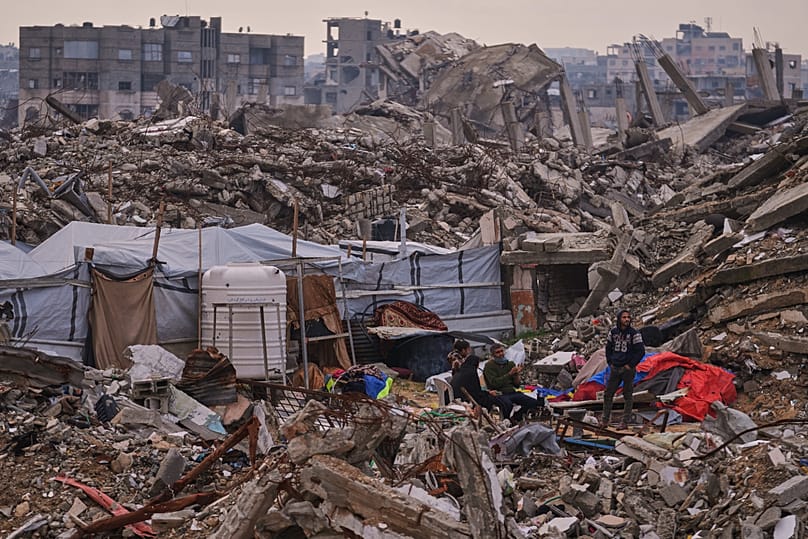
The organisations help with a variety of social services, including food distribution, health care, disability services, education and mental health.
Israel and international groups have been at odds over the amount of aid going into Gaza. Israel says it's upholding the aid commitments laid out in the latest ceasefire that took effect on 10 October, but humanitarian agencies dispute Israel’s numbers and say more aid is desperately needed in the devastated Palestinian territory of more than 2 million people.
New regulations
Earlier this year, Israel changed its registration process for aid groups, which included a requirement to submit a list of staff, including Palestinians in Gaza
Some aid groups say they didn't submit the list of Palestinian staff for fear they'd be targeted by Israel and because of data protection laws in Europe.
"It comes from a legal and safety perspective. In Gaza, we saw hundreds of aid workers get killed," said Shaina Low, communications adviser for the Norwegian Refugee Council.
The decision not to renew aid groups’ licenses means offices in Israel and East Jerusalem will close and organisations won’t be able to send international staff or aid into Gaza.
"Despite the ceasefire, the needs in Gaza are enormous and yet we and dozens of other organisations are and will continue to be blocked from bringing in essential life-saving assistance," Low said. "Not being able to send staff into Gaza means all of the workload falls on our exhausted local staff."
Israel says exploitation unwelcome
The decision means the aid groups will have their license revoked on 1 January and if they are located in Israel, they will need to leave by 1 March, according to the ministry.
"The message is clear: humanitarian assistance is welcome — the exploitation of humanitarian frameworks for terrorism is not," said Amichai Chikli, the minister of diaspora affairs and combating antisemitism.
The Israeli defence body that oversees humanitarian aid to Gaza, COGAT, said that the organisations on the list contribute less than 1% of the total aid going into the Gaza Strip and that help will continue to enter from more than 20 organisations that did receive permits to continue operating in Gaza.
"The registration process is intended to prevent the exploitation of aid by Hamas, which in the past operated under the cover of certain international aid organizations, knowingly or unknowingly," COGAT said in a statement.
This isn't the first time Israel has tried to crack down on international humanitarian groups. Throughout the war, Israel has accused the UN Relief and Works Agency (UNRWA) of being infiltrated by Hamas, using its facilities and taking aid. The United Nations has denied it.
Israel also has said that hundreds of Palestinian militants work for UNRWA, the top UN agency working with Palestinians.
UNRWA has denied knowingly aiding armed groups and says it acts quickly to purge any suspected militants.
After months of criticism from Israeli Prime Minister Benjamin Netanyahu and his far-right allies, Israel banned UNRWA from operating on its territory in January.
The US, formerly the largest donor to UNRWA, halted funding to the agency in early 2024.
NGOs say Israel vague over data use
Israel failed to confirm that the data collected from the new regulations wouldn't be used for military or intelligence purposes, raising serious security concerns, said Athena Rayburn, the executive director of AIDA, an umbrella organization representing over 100 organisations that operate in the Palestinian territories.
She noted that more than 500 aid workers have been killed in Gaza during the war.
"Agreeing for a party to the conflict to vet our staff, especially under the conditions of occupation, is a violation of humanitarian principles, specifically neutrality and independence," she said.
Rayburn said organisations expressed their concerns and offered alternatives to submitting staff lists, such as third-party vetting, but that Israel refused to engage in dialogue.
No comments:
Post a Comment