Liberia backs Ivanhoe Atlantic rail deal to unlock iron ore mine
A US company backed by billionaire Robert Friedland took a key step toward building an iron ore mine in Guinea after lawmakers in neighboring Liberia greenlit an agreement allowing the firm to access an export railway.

The Senate in Liberia on Thursday ratified a deal that Ivanhoe Atlantic Inc. concluded with the West African nation’s government earlier this year, after negotiations that lasted half a decade. The House of Representatives already approved the agreement in a vote last week.
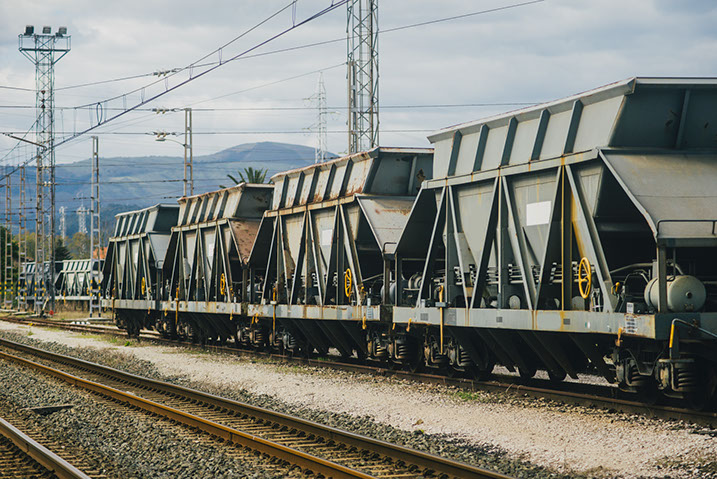
The access arrangement – now endorsed by both chambers of the legislature – permits Ivanhoe Atlantic to transport iron ore from the Kon Kweni deposit located over the border in Guinea via a 243-kilometer railroad to the port of Buchanan in Liberia. It offers the shortest export route for a project that the company says will boost supply to the US and help lessen American dependence on China.
ArcelorMittal SA, which has its own iron ore mines in Liberia, holds the rights to operate the railway until 2030. President Joseph Boakai signed an executive order in October reiterating the government’s plan to appoint an independent operator and introduce “equitable multi-user access to national rail corridors.”
Ivanhoe Atlantic intends to start constructing Kon Kweni in early 2026 and begin shipments the following year, initially aiming for annual output of up to 5 million tons of high-grade iron ore. A second phase targeting production of 30 million tons a year will require the company to invest around $850 million to upgrade existing export infrastructure.
The company has said that over the 25-year concession it expects to pay Liberia about $1.4 billion in rail user fees and $600 million in other taxes and charges.
“Having in place a confirmed logistics route with a clear technical and financial operating framework brings Kon Kweni a step closer to construction,” Ivanhoe Atlantic said in a statement after the Senate’s decision. “This opens up a valuable logistics chain to other users in Liberia and neighboring countries, including US aligned companies looking to expand into the region,” it said.
ArcelorMittal is increasing production from its Liberian iron ore mines to 20 million tons a year. The steelmaking giant has invested about $800 million to rehabilitate and improve the railway, according to a company spokesperson. ArcelorMittal doesn’t mind others using the tracks “provided they invest in adding capacity,” the firm said.
Ivanhoe Atlantic’s majority shareholder is I-Pulse Inc., a firm founded and chaired by Friedland. The mining tycoon is also co-chairman of Ivanhoe Mines Ltd., a Canadian firm that’s partnered with China’s Zijin Mining Group Co. Ltd. to build and run one of the world’s largest copper mines in the Democratic Republic of Congo.
Ivanhoe Atlantic is preparing an initial public offering in Australia to raise money for the development of the Kon Kweni mine, a UK-registered subsidiary said in a filing in July. The firm is yet to outline a time-line for the listing.
The Liberian agreement will provide “unimpeded legal and physical access” to the necessary rail infrastructure, which is “likely to be a critical part of the company’s narrative for future fundraising,” according to the same company filing.
Guinea is becoming an important player in the global iron ore market following the commissioning of the vast Simandou project, which began exports this month and is ramping up production to 120 million tons a year.
That venture – which is mainly owned by Chinese and Singaporean firms including China Baowu Steel Group Corp. as well as Rio Tinto Plc – ships iron ore by another railway that stretches more than 600 kilometers and terminates at a port near Guinea’s capital, Conakry.
(By Festus Poquie and William Clowes)
Column: China’s steel output to slump to 7-year low as iron ore imports hit record
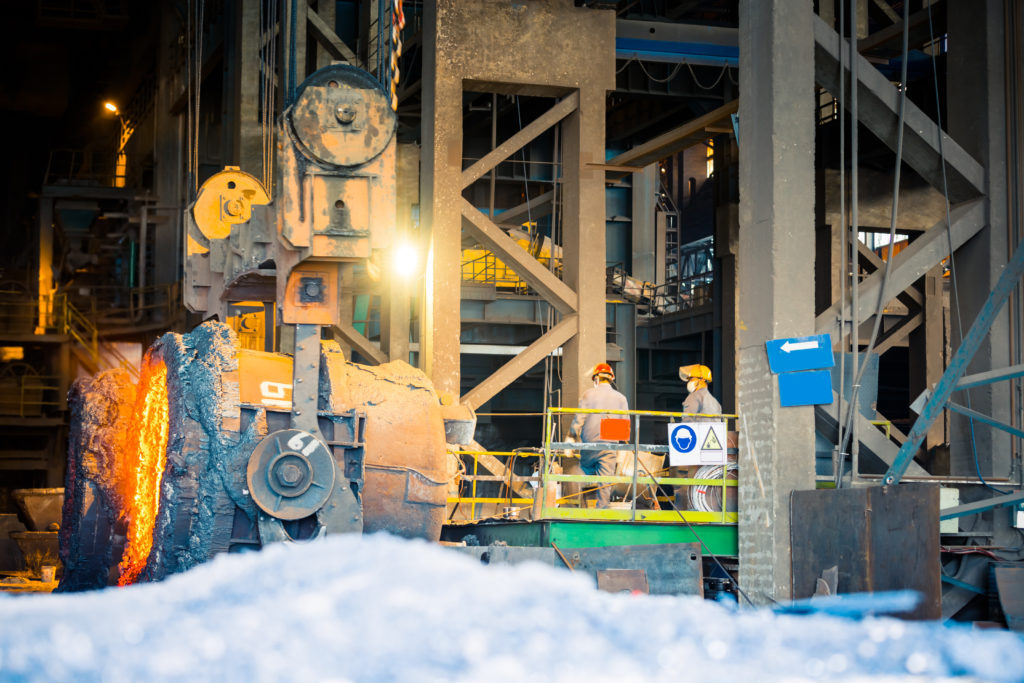
China’s steel production in November was the weakest month in nearly two years and will ensure that the world’s biggest producer of the metal will post its lowest annual output since 2018.
However, imports of steel’s key raw material iron ore are likely to rise to a record high in 2025, eclipsing the previous all-time high of 1.24 billion metric tons set in 2024.
The divergence between weak steel output and robust iron ore imports likely reflects several factors, including restocking of iron ore inventories amid competitive seaborne prices and optimism that Beijing’s stimulus efforts will eventually boost steel demand.
But while sentiment may still be positive for iron ore, the steel sector is dealing with the reality of weak demand in the key property construction sector and increasingly in manufacturing.
China’s steel production fell to 69.87 million tons in November, down 10.9% from the same month a year earlier, according to official data released on December 15.
This was the sixth consecutive monthly decline and the weakest output since December 2023.
For the first 11 months of the year, steel production was 891.67 million tons, down 4% from the corresponding period in 2024.
If December steel output is around the same daily level as that in November, it would come in around 72.3 million tons, meaning total 2025 production would be about 964 million tons.
This would be the lowest since 2018, when 928.3 million tons were produced and would represent a decline of about 4% from the 1.005 billion tons in 2024.
Steel prices have largely mirrored the weakness in production with Shanghai Exchange rebar contracts ending at 3,081 yuan ($437.64) a ton on Tuesday, down 10.1% since the close of 3,429 yuan on July 30, when the current downtrend commenced.
Iron strength
Iron ore prices have followed a different trajectory, with Singapore Exchange contracts having been on a rising trend since hitting a 10-month low of $93.35 a ton on July 1.
They closed at $106.25 a ton on Tuesday, having dropped slightly since the highest close this year of $107.90 on December 4.
The rise in prices has coincided with strength in imports in the second half, with November arrivals coming in at 110.54 million tons, up 8.5% from the same month a year earlier.
For the first 11 months of the year, iron ore imports were up 1.4% to 1.139 billion tons, meaning they only have to exceed 98 million tons in December to better 2024’s record total of 1.237 billion tons.
This is likely to be the case, with commodity analysts Kpler estimating China’s December iron ore imports will come in around 121 million tons.
The question for the market is how long can iron ore imports markedly outperform steel production.
Much depends on how much more Chinese steel mills and traders are prepared to add to inventories, which have been rising in recent weeks.
Stockpiles at Chinese ports monitored by consultants SteelHome rose to 143.8 million tons in the week to December 12, up from 142.4 million the prior week.
They have risen 10.5% from the 18-month low of 130.1 million tons in early August, and are encroaching on the 27-month peak of 151.8 million from July last year.
This implies that there is limited scope for further gains in inventories, which in turn suggests that iron ore imports may moderate in the coming months.
(The views expressed here are those of the author, Clyde Russell, a columnist for Reuters.)
(Editing by Saad Sayeed)
No comments:
Post a Comment