The Norwegian environmental youth organisation has worked with Russian partners for more than 30 years.
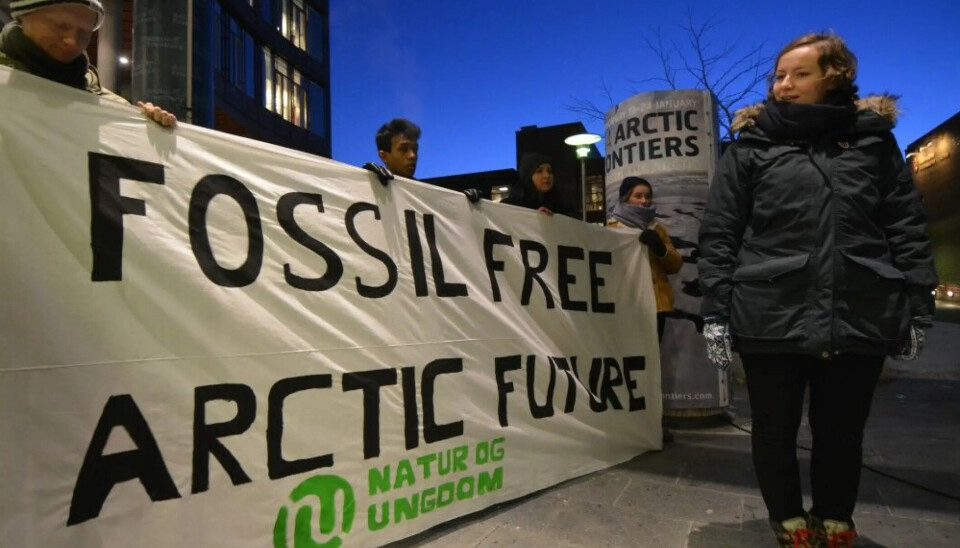
Representatives of Nature and Youth at a demonstration against Arctic oil drilling in Tromsø. Photo: Thomas Nilsen
Olesia Krivtsova
Atle Staalesen
17 December 2025
Atle Staalesen
17 December 2025
THE BARENTS OBSERVER
The Russian Ministry of Justice on December 16 announced that Nature and Youth (Natur og Ungdom) has been included in a list of so-called "undesirable organisations."
The environmental NGO is the fifth entity in Norway that is "undesirable." From before, Bellona, Human Rights Watch, the Norwegian Helsinki Committee and the Barents Observer are on the list.
Leader of the organisation Sigrid Hoddevik Losnegård was not aware of the decision when the Barents Observer took contact.
"We are surprised and sad," she says in a comment.
The Russian Justice Ministry has so far not given any explanation of why the young Norwegian environmentalists have become 'undesirable.'
The Russian Ministry of Justice on December 16 announced that Nature and Youth (Natur og Ungdom) has been included in a list of so-called "undesirable organisations."
The environmental NGO is the fifth entity in Norway that is "undesirable." From before, Bellona, Human Rights Watch, the Norwegian Helsinki Committee and the Barents Observer are on the list.
Leader of the organisation Sigrid Hoddevik Losnegård was not aware of the decision when the Barents Observer took contact.
"We are surprised and sad," she says in a comment.
The Russian Justice Ministry has so far not given any explanation of why the young Norwegian environmentalists have become 'undesirable.'
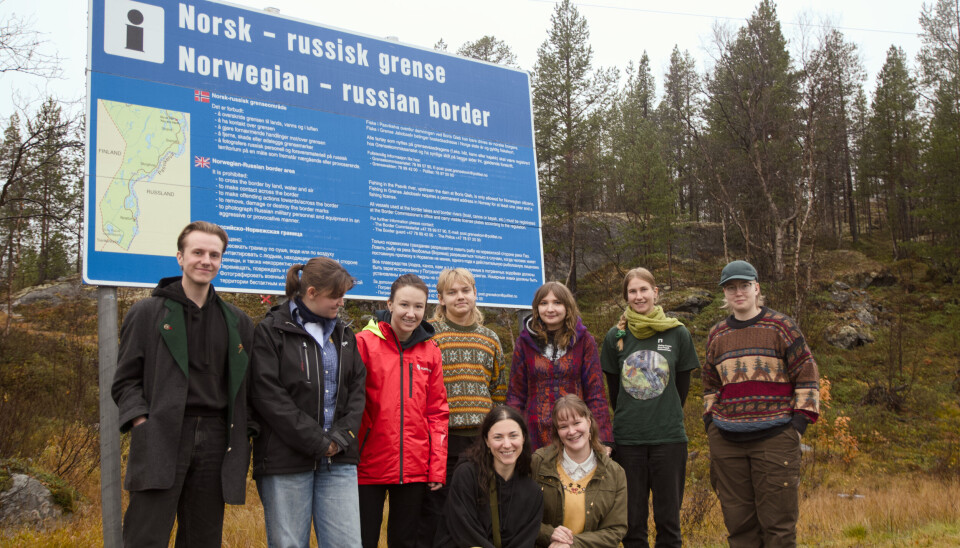
Representatives of Nature and Youth near the border to Russia. Photo: Nature and Youth
Nature and Youth has a more than 30-year-long history of cooperation with Russian partners.
Contacts between young activists from Norway and Russia started in the late 1980s and developed into a fruitful cooperation with dozens of cross-border projects.
In 1989, more than 70 Norwegian youngsters participated in a peace and environmental festival in Murmansk. They were the first Western environmentalists that visited the Kola Peninsula and the festival resulted in a boost in contacts.
At the time, there was a grim environmental situation on the Kola Peninsula. In only short distance from the border to Norway large volumes of nuclear waste materials, including spent nuclear fuel, was stored under extremely bad conditions. There were also major emissions of sulphur dioxide from nickel melters located in the border areas.
In the 1990s several local groups of Nature and Youth, including from Tromsø and Bodø, started cooperation project with Russian groups from the Kola Peninsula
"A key objective for the Nature and Youth has been to support local Russian groups that wanted to do something with the environmental problems," the authors of a book about the organisation's cooperation with Russia explain.
Over the years, Nature and Youth's Russian partners have included regional environmental organisations in the regions of Murmansk and Arkhangelsk. Projects have been funded through Norwegian grant programmes.
With increasing frequency, Russian authorities label organisations as ‘undesirable’ as part of a repression policy towards non-governmental entities. This status implies a complete ban on the organisation's activities in Russia. For Russian citizens, participation in such an organisation, distribution of its materials, or any form of cooperation may result in administrative liability, and in the case of repeated incidents, criminal prosecution.
By late December 2025, the Russian Ministry of Justice had included 290 organisations in the ‘undesirable-’ list. Among them are political and social associations, religious structures, independent media, human rights and environmental initiatives, as well as foundations and think tanks.
Moscow Threatens Activists From Numerically Small Nations With Up To 20 Years In Prison – OpEd
December 28, 2025
By Paul Goble
When Moscow arrests activists in the capital or in one of the major non-Russian republics, journalists and diplomats generally will at least cover the story; but when the center does so against numerically small indigenous nations who live far beyond the ring road, that often does not happen.
As a result, the Russian authorities can be especially brutal in their cases, confident that they won’t face outrage and that what they do to these human communities will serve as a warning to others that a similar fate awaits even larger communities as ever more people in the West accept as normal what the Putin regime is doing.
That makes the case of nearly two dozen activists from these numerically small groups who were arrested a week ago and charged with being members of a terrorist organization especially important (sibreal.org/a/mogut-dat-do-20-let-k-zaschitnikam-prav-korennyh-narodov-prishli-s-obyskami-i-arestami/33630043.html).
Such trumped-up charges are intended to keep them from being able to develop contacts with the international community and call attention to Moscow policies that could leave those charged with up to 20 years behind bars and snuff out any chance that these small groups will get the support they need to continue to resist.
Three things lie behind this latest Moscow effort to “criminalize” the work of activists among the numerically small peoples of the north and far east – and none of them involve the secessionism that the Russian legal system is charging them with in an effort to stop their activities and eliminate what little support they do get abroad.
First, Moscow is angry that these groups have continued to form their own organizations rather than become part of Kremlin-controlled bodies. Second, the center is furious that these groups have succeeded in taking part in UN conferences where they have been able to expose the falsehood of Kremlin claims.
And third – and this may be the most important cause of all – the Kremlin is upset that these groups have exposed the environmental depradation Putin’s development policies have inflicted on the north and far east and sometimes have been able to slow if not stop what Russia’s largest corporations want to do.
The International Committee of the Indigenous Peoples of Russia and the Memorial Anti-Discrimination Center has called the persecution of these activists “unprecedented political repressions” against small ethnic minorities few in the West have ever heard of, according to the SibReal portal.
In its statement, Memorial said that there is no evidence that the activists were guilty of any of the things Moscow is accusing them of and declared that these attacks represented “an effort by the authorities of the Russian Federation to criminalize activism and human rights actions” among peoples too small to be able to defend themselves effectively (adcmemorial.org/novosti/glavnoe/svobodu-dare-egerevoj-i-vsem-korennym-aktivistam-zhertvam-politicheskih-repressij-diskriminaczii-i-kolonialnogo-podavleniya-korennyh-narodov/).
Paul Goble
Paul Goble is a longtime specialist on ethnic and religious questions in Eurasia. Most recently, he was director of research and publications at the Azerbaijan Diplomatic Academy. Earlier, he served as vice dean for the social sciences and humanities at Audentes University in Tallinn and a senior research associate at the EuroCollege of the University of Tartu in Estonia. He has served in various capacities in the U.S. State Department, the Central Intelligence Agency and the International Broadcasting Bureau as well as at the Voice of America and Radio Free Europe/Radio Liberty and at the Carnegie Endowment for International Peace. Mr. Goble maintains the Window on Eurasia blog and can be contacted directly at paul.goble@gmail.com .
December 28, 2025
By Paul Goble
When Moscow arrests activists in the capital or in one of the major non-Russian republics, journalists and diplomats generally will at least cover the story; but when the center does so against numerically small indigenous nations who live far beyond the ring road, that often does not happen.
As a result, the Russian authorities can be especially brutal in their cases, confident that they won’t face outrage and that what they do to these human communities will serve as a warning to others that a similar fate awaits even larger communities as ever more people in the West accept as normal what the Putin regime is doing.
That makes the case of nearly two dozen activists from these numerically small groups who were arrested a week ago and charged with being members of a terrorist organization especially important (sibreal.org/a/mogut-dat-do-20-let-k-zaschitnikam-prav-korennyh-narodov-prishli-s-obyskami-i-arestami/33630043.html).
Such trumped-up charges are intended to keep them from being able to develop contacts with the international community and call attention to Moscow policies that could leave those charged with up to 20 years behind bars and snuff out any chance that these small groups will get the support they need to continue to resist.
Three things lie behind this latest Moscow effort to “criminalize” the work of activists among the numerically small peoples of the north and far east – and none of them involve the secessionism that the Russian legal system is charging them with in an effort to stop their activities and eliminate what little support they do get abroad.
First, Moscow is angry that these groups have continued to form their own organizations rather than become part of Kremlin-controlled bodies. Second, the center is furious that these groups have succeeded in taking part in UN conferences where they have been able to expose the falsehood of Kremlin claims.
And third – and this may be the most important cause of all – the Kremlin is upset that these groups have exposed the environmental depradation Putin’s development policies have inflicted on the north and far east and sometimes have been able to slow if not stop what Russia’s largest corporations want to do.
The International Committee of the Indigenous Peoples of Russia and the Memorial Anti-Discrimination Center has called the persecution of these activists “unprecedented political repressions” against small ethnic minorities few in the West have ever heard of, according to the SibReal portal.
In its statement, Memorial said that there is no evidence that the activists were guilty of any of the things Moscow is accusing them of and declared that these attacks represented “an effort by the authorities of the Russian Federation to criminalize activism and human rights actions” among peoples too small to be able to defend themselves effectively (adcmemorial.org/novosti/glavnoe/svobodu-dare-egerevoj-i-vsem-korennym-aktivistam-zhertvam-politicheskih-repressij-diskriminaczii-i-kolonialnogo-podavleniya-korennyh-narodov/).
Paul Goble
Paul Goble is a longtime specialist on ethnic and religious questions in Eurasia. Most recently, he was director of research and publications at the Azerbaijan Diplomatic Academy. Earlier, he served as vice dean for the social sciences and humanities at Audentes University in Tallinn and a senior research associate at the EuroCollege of the University of Tartu in Estonia. He has served in various capacities in the U.S. State Department, the Central Intelligence Agency and the International Broadcasting Bureau as well as at the Voice of America and Radio Free Europe/Radio Liberty and at the Carnegie Endowment for International Peace. Mr. Goble maintains the Window on Eurasia blog and can be contacted directly at paul.goble@gmail.com .
No comments:
Post a Comment