“Portraying Nigeria’s security challenges as a targeted campaign against a single religious group is a gross misrepresentation of reality,” said Nigeria’s information minister.
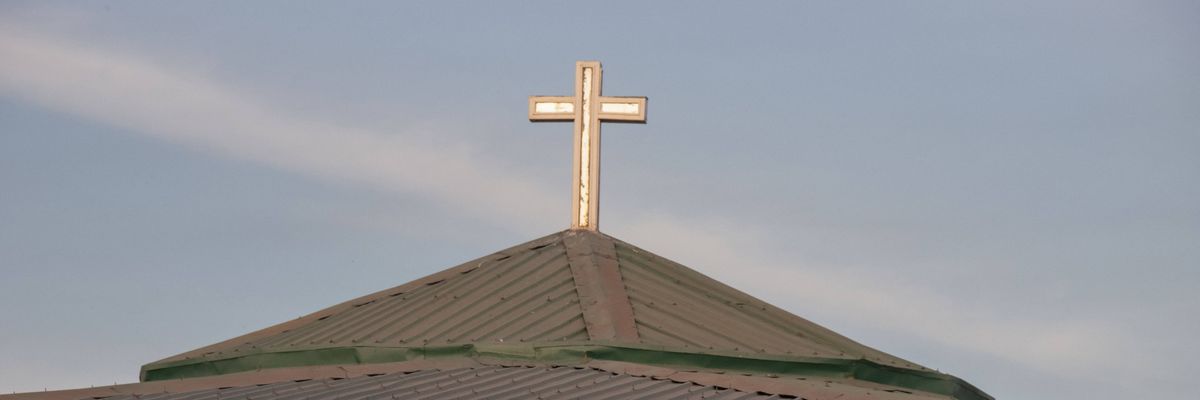
A general view of a cross on the roof of the St Hilary Church Polo in Maiduguri on
December 27, 2025.
(Photo by Audu Marte/AFP via Getty Images)
Stephen Prager
Dec 27, 2025
COMMON DREAMS
When President Donald Trump launched a series of airstrikes in Nigeria on Christmas, he described it as an attack against “ISIS Terrorist Scum in Northwest Nigeria who have been targeting and viciously killing, primarily, innocent Christians.”
But locals in a town that was hit during the strike say terrorism has never been a problem for them. On Friday, CNN published a report based on interviews with several residents of Jabo, which was hit by a US missile during Thursday’s attack, which landed just feet away from the town’s only hospital.
The rural town of Jabo is part of the Sokoto state in northwestern Nigeria, which the Trump administration and the Nigerian government said was hit during the strike.
Both sides have said militants were killed during the attack, but have not specified their identities or the number of casualties.
Kabir Adamu, a security analyst from Beacon Security and Intelligence in Abuja, told Al Jazeera that the likely targets are members of “Lakurawa,” a recently formed offshoot of ISIS.
But the Trump administration’s explanation that their home is at the center of a “Christian genocide” left many residents of Jabo confused. As CNN reported:
While parts of Sokoto face challenges with banditry, kidnappings and attacks by armed groups including Lakurawa–which Nigeria classifies as a terrorist organization due to suspected affiliations with [the] Islamic State–villagers say Jabo is not known for terrorist activity and that local Christians coexist peacefully with the Muslim majority.
Bashar Isah Jabo, a lawmaker who represents the town and surrounding areas in Nigeria’s parliament, described the village to CNN as “a peaceful community” that has “no known history of ISIS, Lakurawa, or any other terrorist groups operating in the area.”
While the town is predominantly Muslim, resident Suleiman Kagara, told reporters: “We see Christians as our brothers. We don’t have religious conflicts, so we weren’t expecting this.”
Nigeria, Africa’s most populous nation with more than 237 million people, has a long history of violence between Christians and Muslims, with each making up about half the population.
However, Nigerian officials have disputed claims by Republican leaders—including US Sen. Ted Cruz (Texas)—who have claimed that the government is “ignoring and even facilitating the mass murder of Christians.”
The senator recently claimed, without citing a source for the figures, that “since 2009, over 50,000 Christians in Nigeria have been massacred, and over 18,000 churches and 2,000 Christian schools have been destroyed” by the Islamist group Boko Haram.
Cruz is correct that many Christians have been killed by Boko Haram. But according to reports by the US-based Armed Conflict Location and Event Data Project and the Council on Foreign Relations, the majority of the approximately 53,000 civilians killed by the group since 2009 have been Muslim.
Moreover, the areas where Boko Haram is most active are in northeastern Nigeria, far away from where Trump’s strikes were conducted. Attacks on Christians cited in October by Cruz, meanwhile, have been in Nigeria’s Middle Belt region, which is separate from violence in the north.
The Nigerian government has pushed back on what they have called an “oversimplified” narrative coming out of Nigerian villagers are rattled by U.S. airstrikes that made their homes shake and the sky glow red
(Photo by Audu Marte/AFP via Getty Images)
Stephen Prager
Dec 27, 2025
COMMON DREAMS
When President Donald Trump launched a series of airstrikes in Nigeria on Christmas, he described it as an attack against “ISIS Terrorist Scum in Northwest Nigeria who have been targeting and viciously killing, primarily, innocent Christians.”
But locals in a town that was hit during the strike say terrorism has never been a problem for them. On Friday, CNN published a report based on interviews with several residents of Jabo, which was hit by a US missile during Thursday’s attack, which landed just feet away from the town’s only hospital.
The rural town of Jabo is part of the Sokoto state in northwestern Nigeria, which the Trump administration and the Nigerian government said was hit during the strike.
Both sides have said militants were killed during the attack, but have not specified their identities or the number of casualties.
Kabir Adamu, a security analyst from Beacon Security and Intelligence in Abuja, told Al Jazeera that the likely targets are members of “Lakurawa,” a recently formed offshoot of ISIS.
But the Trump administration’s explanation that their home is at the center of a “Christian genocide” left many residents of Jabo confused. As CNN reported:
While parts of Sokoto face challenges with banditry, kidnappings and attacks by armed groups including Lakurawa–which Nigeria classifies as a terrorist organization due to suspected affiliations with [the] Islamic State–villagers say Jabo is not known for terrorist activity and that local Christians coexist peacefully with the Muslim majority.
Bashar Isah Jabo, a lawmaker who represents the town and surrounding areas in Nigeria’s parliament, described the village to CNN as “a peaceful community” that has “no known history of ISIS, Lakurawa, or any other terrorist groups operating in the area.”
While the town is predominantly Muslim, resident Suleiman Kagara, told reporters: “We see Christians as our brothers. We don’t have religious conflicts, so we weren’t expecting this.”
Nigeria, Africa’s most populous nation with more than 237 million people, has a long history of violence between Christians and Muslims, with each making up about half the population.
However, Nigerian officials have disputed claims by Republican leaders—including US Sen. Ted Cruz (Texas)—who have claimed that the government is “ignoring and even facilitating the mass murder of Christians.”
The senator recently claimed, without citing a source for the figures, that “since 2009, over 50,000 Christians in Nigeria have been massacred, and over 18,000 churches and 2,000 Christian schools have been destroyed” by the Islamist group Boko Haram.
Cruz is correct that many Christians have been killed by Boko Haram. But according to reports by the US-based Armed Conflict Location and Event Data Project and the Council on Foreign Relations, the majority of the approximately 53,000 civilians killed by the group since 2009 have been Muslim.
Moreover, the areas where Boko Haram is most active are in northeastern Nigeria, far away from where Trump’s strikes were conducted. Attacks on Christians cited in October by Cruz, meanwhile, have been in Nigeria’s Middle Belt region, which is separate from violence in the north.
The Nigerian government has pushed back on what they have called an “oversimplified” narrative coming out of Nigerian villagers are rattled by U.S. airstrikes that made their homes shake and the sky glow red
People visit the site of a U.S. airstrike in Northwest, Jabo, Nigeria, Friday, Dec. 26, 2025.
(AP Photo/ Tunde Omolehin)
By Ope Adetayo and Tunde Omolehin - Associated Press - Friday, December 26, 2025
JABO, Nigeria — Sanusi Madabo, a 40-year-old farmer in the Nigerian village of Jabo, was preparing for bed on Thursday night when he heard a loud noise that sounded like a plane crashing. He rushed outside his mud house with his wife to see the sky glowing a bright red.
The light burned bright for hours, Madabo said: “It was almost like daytime.”
He did not learn until later that he had witnessed a U.S attack on an alleged camp of the militant Islamic State group.
U.S. President Donald Trump announced late Thursday that the United States had launched a “powerful and deadly strike” against IS militants in Nigeria. The Nigerian government has since confirmed that it cooperated with the U.S government in its strike.
Nigerian government spokesperson Mohammed Idris said Friday that the strikes were launched from the Gulf of Guinea in the Atlantic Ocean shortly after midnight and involved “16 GPS-guided precision” missiles and also MQ-9 Reaper drones.
Idris said the strikes targeted areas used as “staging grounds by foreign” IS fighters who had sneaked into Nigeria from the Sahel, the southern fringe of Africa’s vast Sahara Desert. The government did not release any casualty figures among the militants.
PHOTOS: Nigerian villagers are rattled by US airstrikes that made their homes shake and the sky glow red
Residents of Jabo, a village in the northwestern Nigerian state of Sokoto, spoke to The Associated Press on Friday about panic and confusion among the villagers following the strikes, which they said hit not far from Jabo’s outskirts. There were no casualties among the villagers.
They said that Jabo has never been attacked as part of the violence the U.S. says is widespread — though such attacks regularly occur in neighboring villages.
Abubakar Sani, who lives on the edge of the village, recalled the “intense heat” as the strikes hit.
“Our rooms began to shake, and then fire broke out,” he told the AP.
“The Nigerian government should take appropriate measures to protect us as citizens,” he added. “We have never experienced anything like this before.”
The strikes are the outcome of a monthslong tense diplomatic clash between the West African nation and the U.S.
The Trump administration has said Nigeria is experiencing a genocide of Christians, a claim the Nigerian government has rejected.
However, Nigeria’s Ministry of Foreign Affairs now said the strikes resulted from intelligence sharing and strategic coordination between the two governments.
Yusuf Tuggar, Nigeria’s foreign minister, called the airstrikes a “new phase of an old conflict” and said he expected more strikes to follow.
“For us, it is something that has been ongoing,” Tuggar added, referring to attacks that have targeted Christians and Muslims in Nigeria for years.
Bulama Bukarti, a security analyst on sub-Saharan Africa at the Tony Blair Institute, said the residents’ fear is compounded by a lack of information.
Nigerian security forces have since cordoned off the area of the strikes and access was not allowed.
Bukarti said transparency would go a long way to calm the local residents. “The more opaque the governments are, the more panic there will be on the ground, and that is what will escalate tensions.”
Analysts say the strikes might have been intended for the Lakurawa group, a relatively new entrant to Nigeria’s complex security crisis.
The group’s first attack was recorded around 2018 in the northwestern region before the Nigerian government officially announced its presence last year. The composition of the group has been documented by security researchers as primarily consisting of foreigners from the Sahel.
However, experts say ties between the Lakurawa group and the IS are unproven. The Islamic State West African Province — an IS affiliate in Nigeria — has its strongholds in the northeastern part of the country, where it is currently involved in a power struggle with its parent organization, Boko Haram.
“What might have happened is that, working with the American government, Nigeria identified Lakurawa as a threat and identified camps that belong to the group,” Bukarti said.
Still, some local people feel vulnerable.
Aliyu Garba, a Jabo village leader, told the AP that debris left after the strikes was scattered, and that residents had rushed to the scene. Some picked up pieces of the debris, hoping for valuable metal to trade, and Garba said he fears they could get hurt.
The strikes rattled 17-year-old Balira Sa’idu, who has been preparing for her upcoming marriage.
“I am supposed to be thinking about my wedding, but right now I am panicking,” she said. “The strike has changed everything. My family is afraid, and I don’t even know if it is safe to continue with the wedding plan in Jabo.”
• Adetayo reported from Lagos, Nigeria.the White House and from figures in US media, like HBO host Bill Maher, who has echoed Cruz’s overwrought claims of “Christian genocide.”
“Portraying Nigeria’s security challenges as a targeted campaign against a single religious group is a gross misrepresentation of reality,” said Nigerian information minister Mohammed Idris Malagi. “While Nigeria, like many countries, has faced security challenges, including acts of terrorism perpetrated by criminals, couching the situation as a deliberate, systematic attack on Christians is inaccurate and harmful. It oversimplifies a complex, multifaceted security environment and plays into the hands of terrorists and criminals who seek to divide Nigerians along religious or ethnic lines.”
Anthea Butler, a religious scholar at the University of Pennsylvania, has criticized the Trump administration’s attempts to turn the complex situation in Nigeria into a “holy war.”
“This theme of persecution of Christians is a very politically charged, and actually religiously charged, theme for evangelicals across the world. And when you say that Christians are being persecuted, that’s a thing,” she told Democracy Now! in November. “It fits this sort of savior narrative of this American sort of ethos right now that is seeing itself going into countries for a moral war, a moral suasion, as it were, to do something to help other people.”
Nigeria also notably produces more crude oil than any other country in Africa. Trump has explicitly argued that the US should carry out regime change in Venezuela for the purposes of “taking back” that nation’s oil.
Butler has doubted the sincerity of Trump’s concern for the nation’s Christians due to his administration’s denial of entry for Nigerian refugees, as well as virtually every other refugee group, with the exception of white South Africans.
She said: “I think this is sort of disingenuous to say you’re going to go in and save Christianity in Nigeria, when you have, you know, banned Nigerians from coming to this country.”
“Portraying Nigeria’s security challenges as a targeted campaign against a single religious group is a gross misrepresentation of reality,” said Nigerian information minister Mohammed Idris Malagi. “While Nigeria, like many countries, has faced security challenges, including acts of terrorism perpetrated by criminals, couching the situation as a deliberate, systematic attack on Christians is inaccurate and harmful. It oversimplifies a complex, multifaceted security environment and plays into the hands of terrorists and criminals who seek to divide Nigerians along religious or ethnic lines.”
Anthea Butler, a religious scholar at the University of Pennsylvania, has criticized the Trump administration’s attempts to turn the complex situation in Nigeria into a “holy war.”
“This theme of persecution of Christians is a very politically charged, and actually religiously charged, theme for evangelicals across the world. And when you say that Christians are being persecuted, that’s a thing,” she told Democracy Now! in November. “It fits this sort of savior narrative of this American sort of ethos right now that is seeing itself going into countries for a moral war, a moral suasion, as it were, to do something to help other people.”
Nigeria also notably produces more crude oil than any other country in Africa. Trump has explicitly argued that the US should carry out regime change in Venezuela for the purposes of “taking back” that nation’s oil.
Butler has doubted the sincerity of Trump’s concern for the nation’s Christians due to his administration’s denial of entry for Nigerian refugees, as well as virtually every other refugee group, with the exception of white South Africans.
She said: “I think this is sort of disingenuous to say you’re going to go in and save Christianity in Nigeria, when you have, you know, banned Nigerians from coming to this country.”
Nigerian villagers are rattled by U.S. airstrikes that made their homes shake and the sky glow red

By Ope Adetayo and Tunde Omolehin - Associated Press - Friday, December 26, 2025
JABO, Nigeria — Sanusi Madabo, a 40-year-old farmer in the Nigerian village of Jabo, was preparing for bed on Thursday night when he heard a loud noise that sounded like a plane crashing. He rushed outside his mud house with his wife to see the sky glowing a bright red.
The light burned bright for hours, Madabo said: “It was almost like daytime.”
He did not learn until later that he had witnessed a U.S attack on an alleged camp of the militant Islamic State group.
U.S. President Donald Trump announced late Thursday that the United States had launched a “powerful and deadly strike” against IS militants in Nigeria. The Nigerian government has since confirmed that it cooperated with the U.S government in its strike.
Nigerian government spokesperson Mohammed Idris said Friday that the strikes were launched from the Gulf of Guinea in the Atlantic Ocean shortly after midnight and involved “16 GPS-guided precision” missiles and also MQ-9 Reaper drones.
Idris said the strikes targeted areas used as “staging grounds by foreign” IS fighters who had sneaked into Nigeria from the Sahel, the southern fringe of Africa’s vast Sahara Desert. The government did not release any casualty figures among the militants.
PHOTOS: Nigerian villagers are rattled by US airstrikes that made their homes shake and the sky glow red
Residents of Jabo, a village in the northwestern Nigerian state of Sokoto, spoke to The Associated Press on Friday about panic and confusion among the villagers following the strikes, which they said hit not far from Jabo’s outskirts. There were no casualties among the villagers.
They said that Jabo has never been attacked as part of the violence the U.S. says is widespread — though such attacks regularly occur in neighboring villages.
Abubakar Sani, who lives on the edge of the village, recalled the “intense heat” as the strikes hit.
“Our rooms began to shake, and then fire broke out,” he told the AP.
“The Nigerian government should take appropriate measures to protect us as citizens,” he added. “We have never experienced anything like this before.”
The strikes are the outcome of a monthslong tense diplomatic clash between the West African nation and the U.S.
The Trump administration has said Nigeria is experiencing a genocide of Christians, a claim the Nigerian government has rejected.
However, Nigeria’s Ministry of Foreign Affairs now said the strikes resulted from intelligence sharing and strategic coordination between the two governments.
Yusuf Tuggar, Nigeria’s foreign minister, called the airstrikes a “new phase of an old conflict” and said he expected more strikes to follow.
“For us, it is something that has been ongoing,” Tuggar added, referring to attacks that have targeted Christians and Muslims in Nigeria for years.
Bulama Bukarti, a security analyst on sub-Saharan Africa at the Tony Blair Institute, said the residents’ fear is compounded by a lack of information.
Nigerian security forces have since cordoned off the area of the strikes and access was not allowed.
Bukarti said transparency would go a long way to calm the local residents. “The more opaque the governments are, the more panic there will be on the ground, and that is what will escalate tensions.”
Analysts say the strikes might have been intended for the Lakurawa group, a relatively new entrant to Nigeria’s complex security crisis.
The group’s first attack was recorded around 2018 in the northwestern region before the Nigerian government officially announced its presence last year. The composition of the group has been documented by security researchers as primarily consisting of foreigners from the Sahel.
However, experts say ties between the Lakurawa group and the IS are unproven. The Islamic State West African Province — an IS affiliate in Nigeria — has its strongholds in the northeastern part of the country, where it is currently involved in a power struggle with its parent organization, Boko Haram.
“What might have happened is that, working with the American government, Nigeria identified Lakurawa as a threat and identified camps that belong to the group,” Bukarti said.
Still, some local people feel vulnerable.
Aliyu Garba, a Jabo village leader, told the AP that debris left after the strikes was scattered, and that residents had rushed to the scene. Some picked up pieces of the debris, hoping for valuable metal to trade, and Garba said he fears they could get hurt.
The strikes rattled 17-year-old Balira Sa’idu, who has been preparing for her upcoming marriage.
“I am supposed to be thinking about my wedding, but right now I am panicking,” she said. “The strike has changed everything. My family is afraid, and I don’t even know if it is safe to continue with the wedding plan in Jabo.”
• Adetayo reported from Lagos, Nigeria.
People visit the site of a U.S. airstrike in Northwest, Jabo, Nigeria, Friday, Dec. 26, 2025.
(AP Photo/ Tunde Omolehin)
By Ope Adetayo and Tunde Omolehin - Associated Press - Friday, December 26, 2025
JABO, Nigeria — Sanusi Madabo, a 40-year-old farmer in the Nigerian village of Jabo, was preparing for bed on Thursday night when he heard a loud noise that sounded like a plane crashing. He rushed outside his mud house with his wife to see the sky glowing a bright red.
The light burned bright for hours, Madabo said: “It was almost like daytime.”
He did not learn until later that he had witnessed a U.S attack on an alleged camp of the militant Islamic State group.
U.S. President Donald Trump announced late Thursday that the United States had launched a “powerful and deadly strike” against IS militants in Nigeria. The Nigerian government has since confirmed that it cooperated with the U.S government in its strike.
Nigerian government spokesperson Mohammed Idris said Friday that the strikes were launched from the Gulf of Guinea in the Atlantic Ocean shortly after midnight and involved “16 GPS-guided precision” missiles and also MQ-9 Reaper drones.
Idris said the strikes targeted areas used as “staging grounds by foreign” IS fighters who had sneaked into Nigeria from the Sahel, the southern fringe of Africa’s vast Sahara Desert. The government did not release any casualty figures among the militants.
PHOTOS: Nigerian villagers are rattled by US airstrikes that made their homes shake and the sky glow red
Residents of Jabo, a village in the northwestern Nigerian state of Sokoto, spoke to The Associated Press on Friday about panic and confusion among the villagers following the strikes, which they said hit not far from Jabo’s outskirts. There were no casualties among the villagers.
They said that Jabo has never been attacked as part of the violence the U.S. says is widespread — though such attacks regularly occur in neighboring villages.
Abubakar Sani, who lives on the edge of the village, recalled the “intense heat” as the strikes hit.
“Our rooms began to shake, and then fire broke out,” he told the AP.
“The Nigerian government should take appropriate measures to protect us as citizens,” he added. “We have never experienced anything like this before.”
The strikes are the outcome of a monthslong tense diplomatic clash between the West African nation and the U.S.
The Trump administration has said Nigeria is experiencing a genocide of Christians, a claim the Nigerian government has rejected.
However, Nigeria’s Ministry of Foreign Affairs now said the strikes resulted from intelligence sharing and strategic coordination between the two governments.
Yusuf Tuggar, Nigeria’s foreign minister, called the airstrikes a “new phase of an old conflict” and said he expected more strikes to follow.
“For us, it is something that has been ongoing,” Tuggar added, referring to attacks that have targeted Christians and Muslims in Nigeria for years.
Bulama Bukarti, a security analyst on sub-Saharan Africa at the Tony Blair Institute, said the residents’ fear is compounded by a lack of information.
Nigerian security forces have since cordoned off the area of the strikes and access was not allowed.
Bukarti said transparency would go a long way to calm the local residents. “The more opaque the governments are, the more panic there will be on the ground, and that is what will escalate tensions.”
Analysts say the strikes might have been intended for the Lakurawa group, a relatively new entrant to Nigeria’s complex security crisis.
The group’s first attack was recorded around 2018 in the northwestern region before the Nigerian government officially announced its presence last year. The composition of the group has been documented by security researchers as primarily consisting of foreigners from the Sahel.
However, experts say ties between the Lakurawa group and the IS are unproven. The Islamic State West African Province — an IS affiliate in Nigeria — has its strongholds in the northeastern part of the country, where it is currently involved in a power struggle with its parent organization, Boko Haram.
“What might have happened is that, working with the American government, Nigeria identified Lakurawa as a threat and identified camps that belong to the group,” Bukarti said.
Still, some local people feel vulnerable.
Aliyu Garba, a Jabo village leader, told the AP that debris left after the strikes was scattered, and that residents had rushed to the scene. Some picked up pieces of the debris, hoping for valuable metal to trade, and Garba said he fears they could get hurt.
The strikes rattled 17-year-old Balira Sa’idu, who has been preparing for her upcoming marriage.
“I am supposed to be thinking about my wedding, but right now I am panicking,” she said. “The strike has changed everything. My family is afraid, and I don’t even know if it is safe to continue with the wedding plan in Jabo.”
• Adetayo reported from Lagos, Nigeria.
Washington Post backs Trump's strikes in Nigeria, says he'd 'be wise to stay engaged'
The editorial board praised Trump's 'righteous strikes' in the region and argued that these military efforts must be sustained
By Marc Tamasco
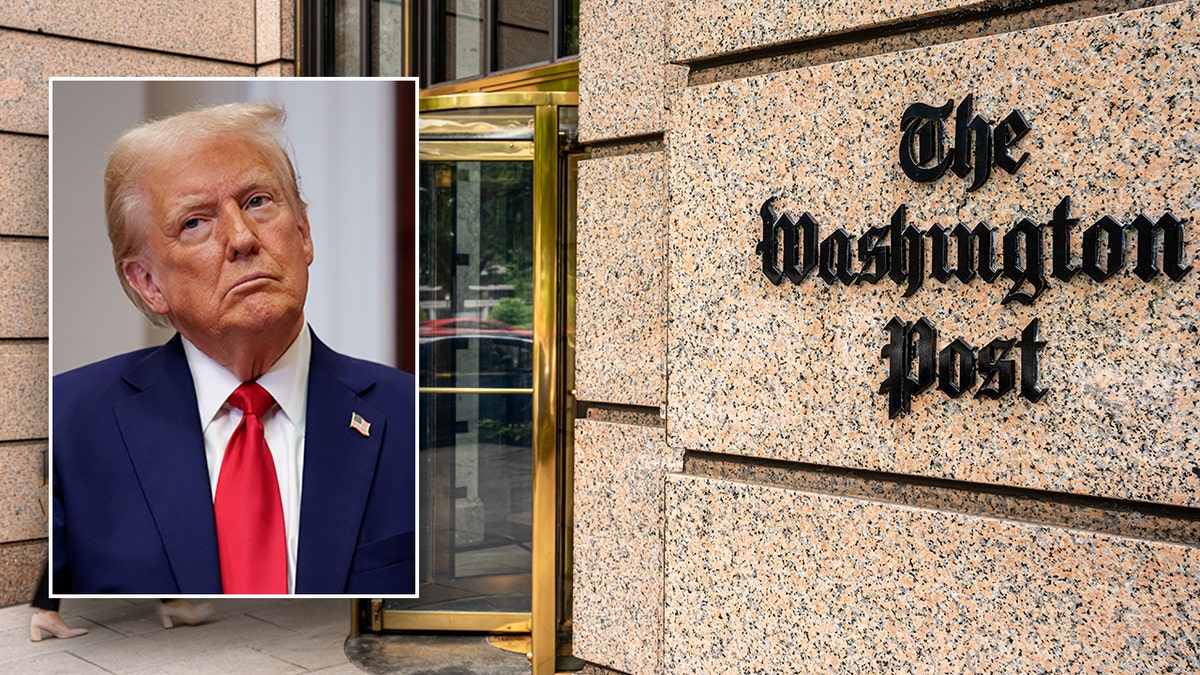
The Washington Post praised Trump's "righteous strikes" against ISIS targets in Nigeria. (Andrew Harnik/Getty Images)
After decades of war pushed many terror groups out of the territories they once controlled in Iraq and Syria, those groups have "found fertile soil in West Africa," the outlet claimed.
"The Islamic State’s history shows that when the group establishes a stable presence, it’s only a matter of time before it looks to wreak havoc around the world," the Post noted. "It’s tempting to want to pretend that the chaos in West Africa isn’t an American problem, but the world isn’t that simple."
The editorial board warned that, without sustained support, the administration's efforts could prove futile.
As reported by the Post, the U.S. once had a regional counterterrorism plan called the Trans-Sahara Counterterrorism Partnership, but a recent audit revealed that the program was "underfunded, leaderless and mostly ineffective." The outlet added that the Pentagon is also considering merging African Command back into European Command, which was separated in 2008.
"This could mean fewer resources and less attention for the region. In addition to the security reasons for continued engagement, the U.S. would be foolish to cede the young and growing continent to China and Russia," the Post warned.
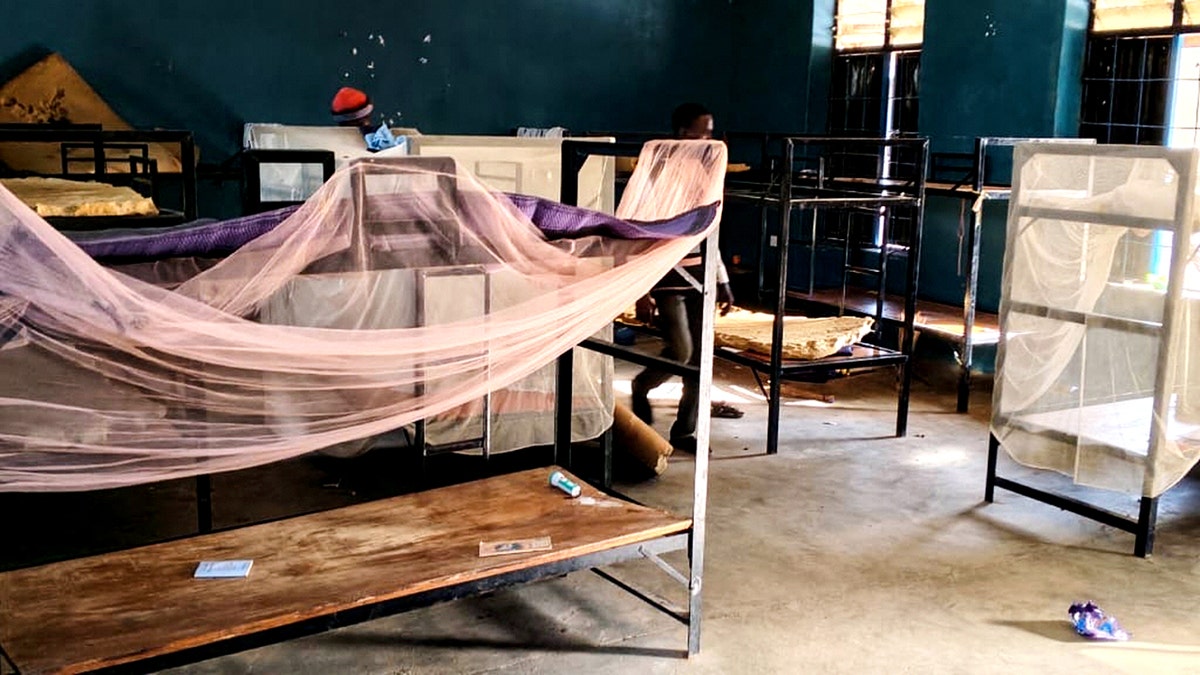
This photo released by the Christian Association of Nigeria shows the dormitories of St. Mary's Catholic Primary and Secondary School after gunmen abducted children and staff in Papiri community in Nigeria Nov. 21, 2025. (Christian Association of Nigeria via AP)
Wrapping up its thoughts, the editorial board reiterated the importance of Trump remaining committed to stopping the slaughter of innocents in the region.
"Nigeria, a relatively wealthy country in the region, is still battling insecurity on several fronts. The central government has been ineffective at restoring security. It’s good that Abuja is willing to work closely with Washington to stop the slaughter, and Trump would be wise to remain engaged," the Post concluded.
Fox News' Greg Wehner contributed to this report.
The editorial board praised Trump's 'righteous strikes' in the region and argued that these military efforts must be sustained
By Marc Tamasco
Fox News
December 27, 2025
Nigeria is the world’s 'deadliest place for Christians': Sam Brownback
The Washington Post editorial board said the Trump administration's military strikes on ISIS targets in Nigeria were a "welcome change" and that the president would "be wise to remain engaged" in the region.
In an editorial Saturday, the Post praised President Donald Trump's "righteous strikes" Thursday against the Islamic State’s Sahel Province branch in Nigeria, where Christians and Christian institutions have been under attack in recent months.
"A not insignificant cohort of President Donald Trump’s advisers want the United States to abandon widespread commitments abroad and instead become a regional power focused on the Western Hemisphere. The president’s righteous strike against Islamic State targets in Nigeria is a reminder that America is capable of much more," the editorial board contended.
On Thursday, Trump posted to Truth Social announcing that the U.S. military launched airstrikes in Northwest Nigeria on Christmas night targeting ISIS militants he accused of killing Christians, calling the operation decisive and warning further attacks would follow if the violence continues.
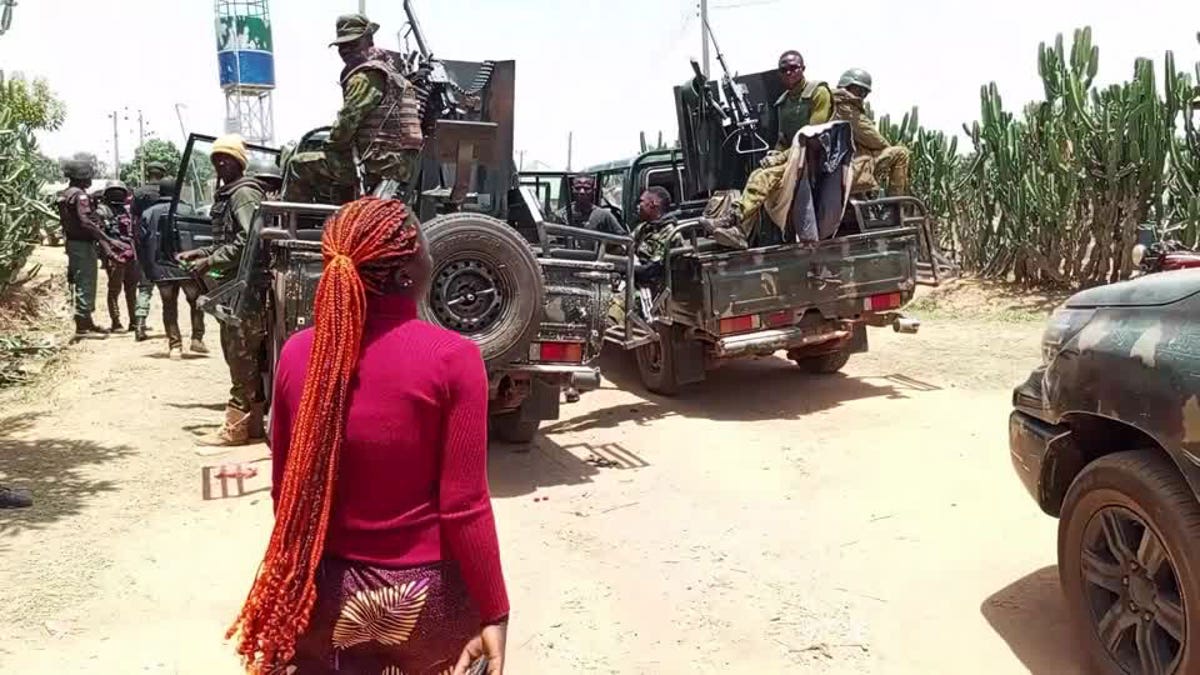
At least 51 Christians were killed in an attack in Nigeria's Plateau state in April 2025. (Reuters)
"Tonight, at my direction as Commander in Chief, the United States launched a powerful and deadly strike against ISIS Terrorist Scum in Northwest Nigeria, who have been targeting and viciously killing, primarily, innocent Christians, at levels not seen for many years, and even Centuries!" Trump wrote Thursday.
Although the Post was supportive of the Trump administration's intervention in the region, the outlet argued that "the question is whether this is a one-off decision or the start of a more consistent and coherent policy."
The editorial board noted that it understands "the desire to want to abandon the entire region" but made its case for why Trump should continue his efforts in the region, a part of the world that the Post claimed "has always been little more than an afterthought for the president."
"The U.S. strikes in Nigeria targeted the Islamic State’s Sahel Province branch, which has clashed violently in recent years for territory with JNIM, an al-Qaeda affiliate that is currently trying to seize control of Mali by blocking fuel from entering the capital city of Bamako," the outlet reported. "If Mali falls, it would mark the first takeover of a country by an anti-Western Islamic terrorist group since the Taliban took Afghanistan.
According to the Post, the Sahel region, which stretches from Mauritania through Chad, has become "the world’s biggest epicenter for global terrorism," where half of the world's deaths due to terrorism take place.
December 27, 2025
Nigeria is the world’s 'deadliest place for Christians': Sam Brownback
The Washington Post editorial board said the Trump administration's military strikes on ISIS targets in Nigeria were a "welcome change" and that the president would "be wise to remain engaged" in the region.
In an editorial Saturday, the Post praised President Donald Trump's "righteous strikes" Thursday against the Islamic State’s Sahel Province branch in Nigeria, where Christians and Christian institutions have been under attack in recent months.
"A not insignificant cohort of President Donald Trump’s advisers want the United States to abandon widespread commitments abroad and instead become a regional power focused on the Western Hemisphere. The president’s righteous strike against Islamic State targets in Nigeria is a reminder that America is capable of much more," the editorial board contended.
On Thursday, Trump posted to Truth Social announcing that the U.S. military launched airstrikes in Northwest Nigeria on Christmas night targeting ISIS militants he accused of killing Christians, calling the operation decisive and warning further attacks would follow if the violence continues.
At least 51 Christians were killed in an attack in Nigeria's Plateau state in April 2025. (Reuters)
"Tonight, at my direction as Commander in Chief, the United States launched a powerful and deadly strike against ISIS Terrorist Scum in Northwest Nigeria, who have been targeting and viciously killing, primarily, innocent Christians, at levels not seen for many years, and even Centuries!" Trump wrote Thursday.
Although the Post was supportive of the Trump administration's intervention in the region, the outlet argued that "the question is whether this is a one-off decision or the start of a more consistent and coherent policy."
The editorial board noted that it understands "the desire to want to abandon the entire region" but made its case for why Trump should continue his efforts in the region, a part of the world that the Post claimed "has always been little more than an afterthought for the president."
"The U.S. strikes in Nigeria targeted the Islamic State’s Sahel Province branch, which has clashed violently in recent years for territory with JNIM, an al-Qaeda affiliate that is currently trying to seize control of Mali by blocking fuel from entering the capital city of Bamako," the outlet reported. "If Mali falls, it would mark the first takeover of a country by an anti-Western Islamic terrorist group since the Taliban took Afghanistan.
According to the Post, the Sahel region, which stretches from Mauritania through Chad, has become "the world’s biggest epicenter for global terrorism," where half of the world's deaths due to terrorism take place.
The Washington Post praised Trump's "righteous strikes" against ISIS targets in Nigeria. (Andrew Harnik/Getty Images)
After decades of war pushed many terror groups out of the territories they once controlled in Iraq and Syria, those groups have "found fertile soil in West Africa," the outlet claimed.
"The Islamic State’s history shows that when the group establishes a stable presence, it’s only a matter of time before it looks to wreak havoc around the world," the Post noted. "It’s tempting to want to pretend that the chaos in West Africa isn’t an American problem, but the world isn’t that simple."
The editorial board warned that, without sustained support, the administration's efforts could prove futile.
As reported by the Post, the U.S. once had a regional counterterrorism plan called the Trans-Sahara Counterterrorism Partnership, but a recent audit revealed that the program was "underfunded, leaderless and mostly ineffective." The outlet added that the Pentagon is also considering merging African Command back into European Command, which was separated in 2008.
"This could mean fewer resources and less attention for the region. In addition to the security reasons for continued engagement, the U.S. would be foolish to cede the young and growing continent to China and Russia," the Post warned.
This photo released by the Christian Association of Nigeria shows the dormitories of St. Mary's Catholic Primary and Secondary School after gunmen abducted children and staff in Papiri community in Nigeria Nov. 21, 2025. (Christian Association of Nigeria via AP)
Wrapping up its thoughts, the editorial board reiterated the importance of Trump remaining committed to stopping the slaughter of innocents in the region.
"Nigeria, a relatively wealthy country in the region, is still battling insecurity on several fronts. The central government has been ineffective at restoring security. It’s good that Abuja is willing to work closely with Washington to stop the slaughter, and Trump would be wise to remain engaged," the Post concluded.
Fox News' Greg Wehner contributed to this report.
No comments:
Post a Comment