Pristina (AFP) – Before the first vote is even cast in Kosovo's snap election on Sunday, experts predict it is unlikely to end the political crisis that has been gripping Europe's youngest country for almost a year.
26/12/2025 - FRANCE24
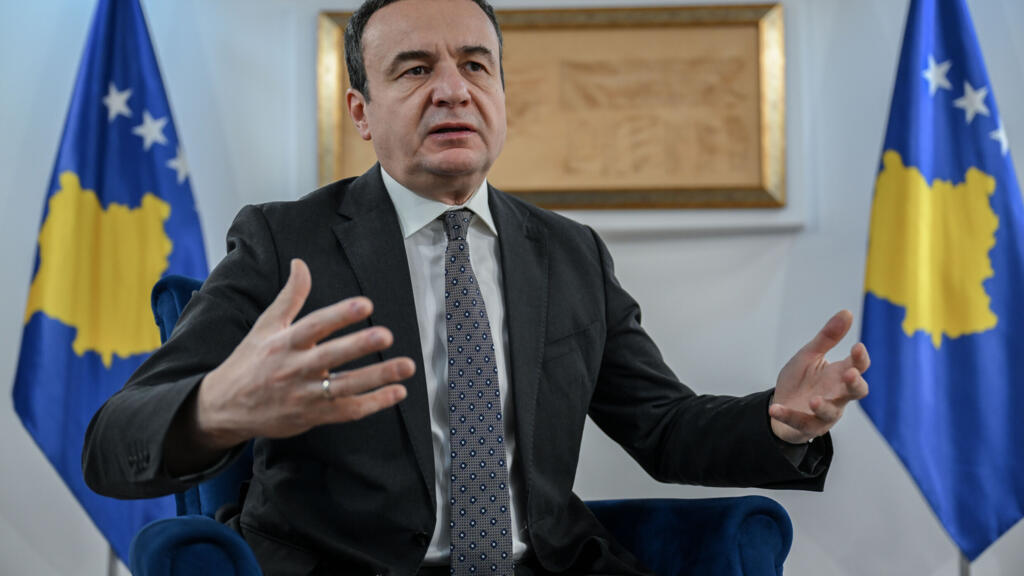
Fated favourite? Kosovo's acting premier Albin Kurti may win the election but not end up as PM © Armend NIMANI / AFP
The Balkan nation has been politically deadlocked since the inconclusive vote in February, which outgoing premier Albin Kurti's Vetevendosje (VV) party won but without enough seats to form a government.
After months of wrangling in a stalled parliament, the caretaker prime minister is going back to the electorate in a vote that analysts say will change very little.
"I think that the December 28 elections will not bring any clarity," economist Mehmet Gjata told AFP as he predicted Kurti's party would come out on top again.
Political analyst Fatime Hajdari agreed that "chances were high" that VV would secure the most votes, but said little else was clear.
Charismatic Kurti
If anyone can secure a majority, Kurti, once dubbed Kosovo's Che Guevara for his radical past, has a rare record.
His party swept to power in 2021 in the largest electoral victory since the country's independence from Serbia in 2008, taking over 50 percent of the vote.
From a student radical to a political prisoner, Kurti's long path to the prime ministership has made him one of the most recognisable and influential politicians in Kosovo.
His blend of nationalism and a reform agenda has proven popular in a country whose sovereignty is still contested by Serbia, more than two decades after its war for independence ended.
But Gjata says things may have changed since Kurti's last term.
The Balkan nation has been politically deadlocked since the inconclusive vote in February, which outgoing premier Albin Kurti's Vetevendosje (VV) party won but without enough seats to form a government.
After months of wrangling in a stalled parliament, the caretaker prime minister is going back to the electorate in a vote that analysts say will change very little.
"I think that the December 28 elections will not bring any clarity," economist Mehmet Gjata told AFP as he predicted Kurti's party would come out on top again.
Political analyst Fatime Hajdari agreed that "chances were high" that VV would secure the most votes, but said little else was clear.
Charismatic Kurti
If anyone can secure a majority, Kurti, once dubbed Kosovo's Che Guevara for his radical past, has a rare record.
His party swept to power in 2021 in the largest electoral victory since the country's independence from Serbia in 2008, taking over 50 percent of the vote.
From a student radical to a political prisoner, Kurti's long path to the prime ministership has made him one of the most recognisable and influential politicians in Kosovo.
His blend of nationalism and a reform agenda has proven popular in a country whose sovereignty is still contested by Serbia, more than two decades after its war for independence ended.
But Gjata says things may have changed since Kurti's last term.
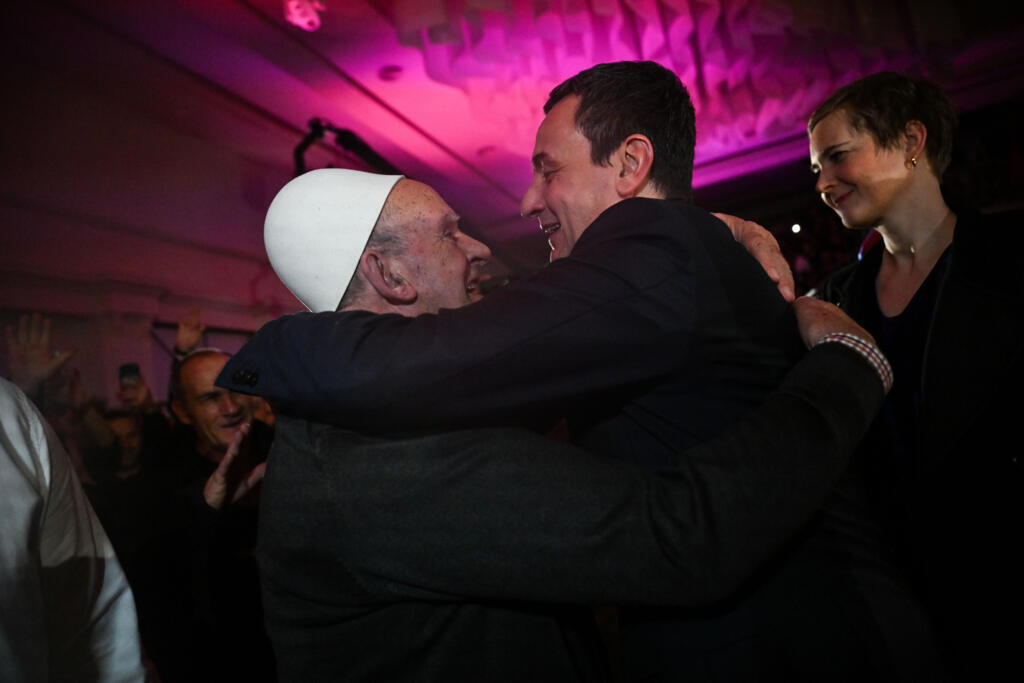
Kurti (R) embraces a supporter during a campaign rally in Podujevo © Armend NIMANI / AFP
"I'm afraid that the current political crisis will repeat itself, because VV will not get more than 50 percent of the votes," the economist said.
"We will have no winner again."
The largest opposition parties have refused to join a Kurti coalition, all but assuring a fragmented parliament.
The only realistic challenge to VV would be "cooperation" between the three major opposition parties, former foreign minister and opposition candidate Enver Hoxhaj said.
"I think that only they can offer stability," Hoxhaj said.
Popular Serb policy blamed for 'instability'
For Kurti and his party, countering Serbian influence in Kosovo has long been a focus, drawing support at home but criticism abroad.
When Serbian forces withdrew under NATO bombardment in 1999, it left many of its state structures in place for ethnic Serbs who live mainly in the north.
"I'm afraid that the current political crisis will repeat itself, because VV will not get more than 50 percent of the votes," the economist said.
"We will have no winner again."
The largest opposition parties have refused to join a Kurti coalition, all but assuring a fragmented parliament.
The only realistic challenge to VV would be "cooperation" between the three major opposition parties, former foreign minister and opposition candidate Enver Hoxhaj said.
"I think that only they can offer stability," Hoxhaj said.
Popular Serb policy blamed for 'instability'
For Kurti and his party, countering Serbian influence in Kosovo has long been a focus, drawing support at home but criticism abroad.
When Serbian forces withdrew under NATO bombardment in 1999, it left many of its state structures in place for ethnic Serbs who live mainly in the north.

Kosovo Serb voters in Gracanica queue to vote in the last general election in February © Armend NIMANI / AFP
Kurti has labelled these services "instruments of intimidation, threat and control" and spent nearly his entire second term uprooting the system -- and angering Belgrade in the process.
The resulting tensions in the north, which last flared into violence in 2023, have drawn sanctions from the European Union and caused Washington to accuse Kurti's government of increasing "instability".
But among his voters, the removal of Serbian influence remains popular, Hajdari said.
"The extension of sovereignty there is perceived by the citizens as a major success," Hajdari said.
Most opposition parties avoid the issue, but the Serb List -- which contests and retains most of the ten reserved Serb seats in parliament -- regularly clashes with Kurti's agenda in the north.
The minor party, with close ties to Belgrade, has previously called the government's moves in the north "ethnic cleansing" and has said they are willing to work with other parties to keep Kurti out of power.
Kurti has labelled these services "instruments of intimidation, threat and control" and spent nearly his entire second term uprooting the system -- and angering Belgrade in the process.
The resulting tensions in the north, which last flared into violence in 2023, have drawn sanctions from the European Union and caused Washington to accuse Kurti's government of increasing "instability".
But among his voters, the removal of Serbian influence remains popular, Hajdari said.
"The extension of sovereignty there is perceived by the citizens as a major success," Hajdari said.
Most opposition parties avoid the issue, but the Serb List -- which contests and retains most of the ten reserved Serb seats in parliament -- regularly clashes with Kurti's agenda in the north.
The minor party, with close ties to Belgrade, has previously called the government's moves in the north "ethnic cleansing" and has said they are willing to work with other parties to keep Kurti out of power.
A year of 'colossal damage'
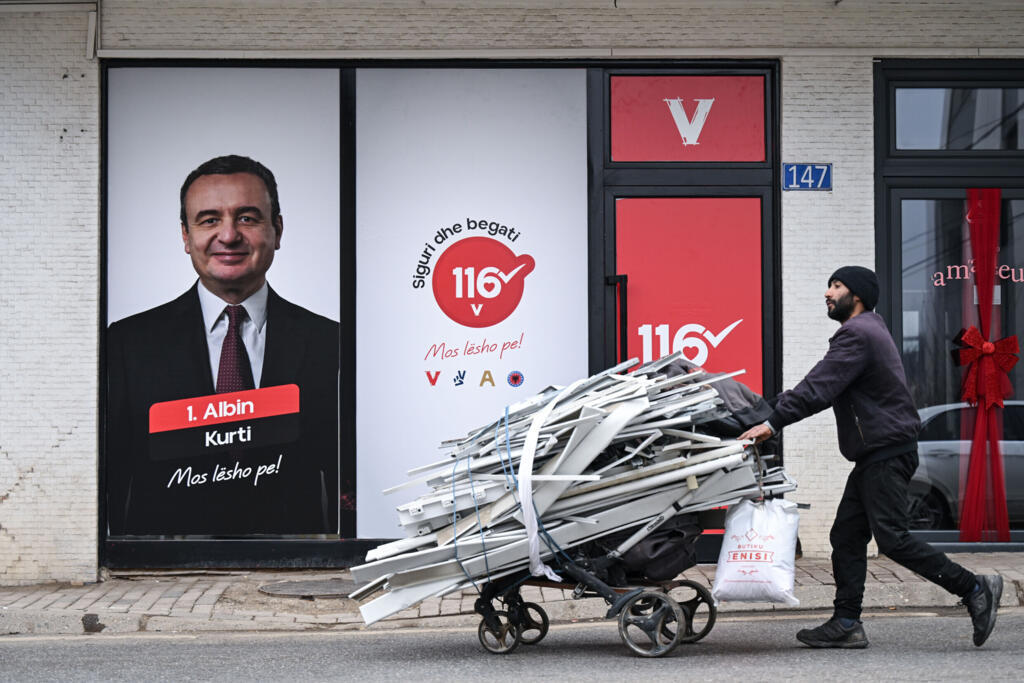
A man pushes a cart past an election poster for Kosovo's outgoing premier Albin Kurti © Armend NIMANI / AFP
Without a parliament, key international agreements have not been ratified, putting hundreds of millions of euros in assistance funds at risk.
Two national polls and a local election have cost one of Europe's poorest nations at least 30 million euros ($35 million) this year.
Over a dozen government institutions and agencies have also been left leaderless, as the mandates of their managers expired without new ones being appointed.
Gjata said "colossal damage" had been done to the economy by divided lawmakers over the past months.
"They have put Kosovo in a state of anarchy," he said.
While lawmakers bickered, the cost of the crisis would be felt by the Balkan nation's citizens, Hajdari warned.
"That is precisely why Kosovo needs a stable and functional government that would focus on development and welfare."
© 2025 AFP
Main contenders in Kosovo's snap election
Pristina (AFP) – Kosovo is heading for early elections Sunday after months of political deadlock and failure to form a government -- the only solution its deeply divided parties could agree on to break the stalemate.
26/12/2025 - FRANCE24
Without a parliament, key international agreements have not been ratified, putting hundreds of millions of euros in assistance funds at risk.
Two national polls and a local election have cost one of Europe's poorest nations at least 30 million euros ($35 million) this year.
Over a dozen government institutions and agencies have also been left leaderless, as the mandates of their managers expired without new ones being appointed.
Gjata said "colossal damage" had been done to the economy by divided lawmakers over the past months.
"They have put Kosovo in a state of anarchy," he said.
While lawmakers bickered, the cost of the crisis would be felt by the Balkan nation's citizens, Hajdari warned.
"That is precisely why Kosovo needs a stable and functional government that would focus on development and welfare."
© 2025 AFP
Main contenders in Kosovo's snap election
Pristina (AFP) – Kosovo is heading for early elections Sunday after months of political deadlock and failure to form a government -- the only solution its deeply divided parties could agree on to break the stalemate.
26/12/2025 - FRANCE24
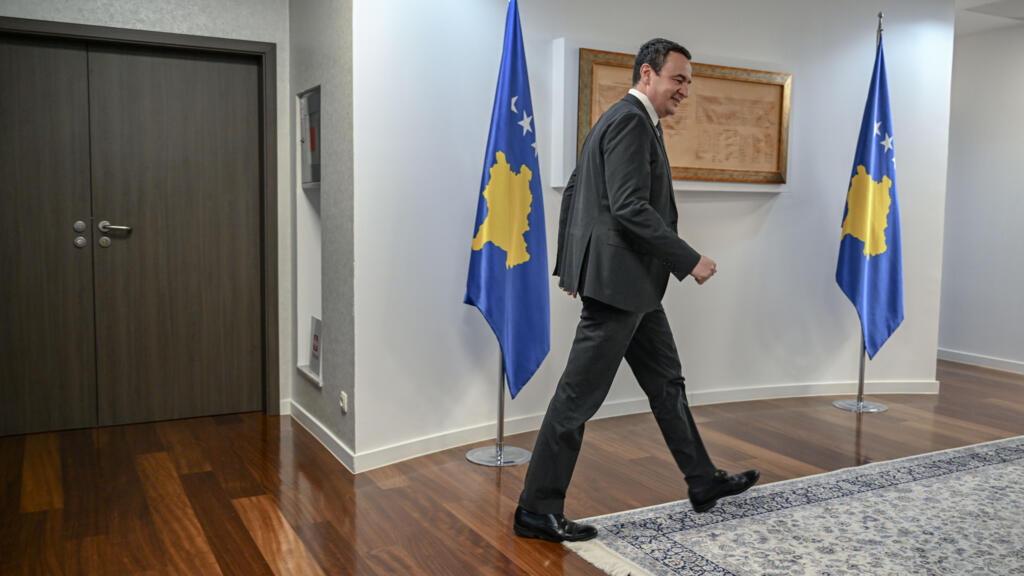
Serial winner: Kosovo's acting premier Albin Kurti © Armend NIMANI / AFP
Here are the main contenders to be the Balkan nation's next prime minister:
Here are the main contenders to be the Balkan nation's next prime minister:
Albin Kurti: eyeing fourth win
Kosovo's caretaker prime minister, Albin Kurti, is widely seen as the unbeatable frontrunner in the race—even after a year of political paralysis during which he failed to form a coalition.
If he wins, it will mark the fourth consecutive time the 50-year-old left-wing leader has crossed the finish line first, securing his position at the helm of the small, landlocked country.
Kurti has left nothing to chance, pouring enormous energy into a two-week snap election campaign, travelling extensively and lobbying across the country.
Once nicknamed "Che Guevara" for his youthful radicalism, Kurti boasts long political experience rooted in Kosovo's independence movement during the war-torn 1990s and later in parliament.
After a brief first term as prime minister from February to June 2020, Kurti's party, Vetevendosje (VV) -- which blends a leftist agenda with fervent nationalism -- won the 2021 snap elections with over half the vote.
He then became the first prime minister to complete a full term since Kosovo's independence. However, in February's election, his party fell short of the numbers needed to govern alone and failed to secure a coalition partner, triggering months of deadlock that ultimately led to Sunday's snap vote.
Kurti and VV still enjoy strong voter support, thanks largely to their reformist and anti-corruption platform. But if Kurti wins on Sunday, he will face intense international pressure to revive dialogue with Serbian President Aleksandar Vucic on normalizing relations between the two neighbours.
Bedri Hamza: the challenger
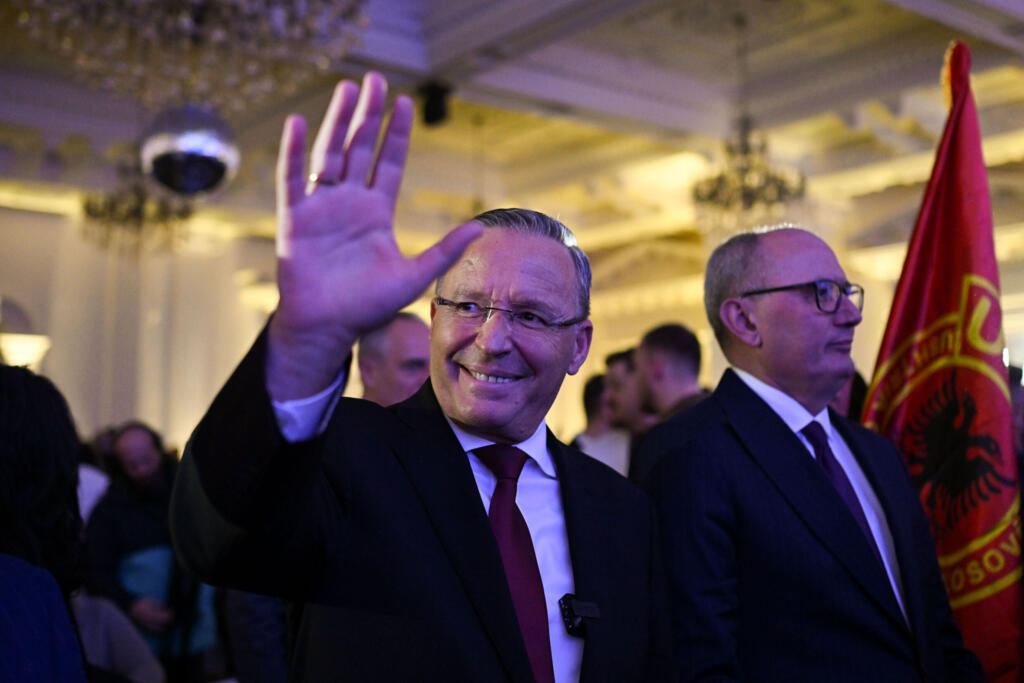
Former central bank governor Bedri Hamza greets his supporters during an election rally © Armend NIMANI / AFP
Bedri Hamza, a former central bank governor and newly elected president of the Democratic Party of Kosovo (PDK), is seen as Kurti's strongest challenger.
Born out of a guerrilla movement during the war against rule from Belgrade, the PDK dominated Kosovo's political scene for years, riding the wave of wartime popularity. But its influence gradually waned as the country moved beyond the conflict.
The party has since reinvented itself with figures like Hamza, who blends national values with liberal economic policies championing free markets, economic growth, a stronger private sector and social protection.
The 62-year-old graduated from the Faculty of Economics at the University of Pristina and began his career in the late 1980s as head of accounting and finance at a lead metallurgy plant in Mitrovica.
More than three decades later, Hamza returned to the ethnically divided city as mayor of its Albanian-majority south. His tenure is remembered for successfully implementing multi-ethnic projects with the Serb-majority north, including regulating the Ibar River. If elected prime minister, this experience could prove invaluable in building trust with Kosovo's Serb minority, which remains loyal to Belgrade.
A prominent economist, Hamza has served as finance minister, central bank governor and has been a three-term MP.
Knowing that in pro-American Kosovo, political ambitions often hinge on US support, Hamza's first major move after announcing his candidacy was a trip to Washington, where he met senior US officials.
Generally regarded as a man of integrity, Hamza declared after his election as PDK leader that the party "is ready for victory".
Bedri Hamza, a former central bank governor and newly elected president of the Democratic Party of Kosovo (PDK), is seen as Kurti's strongest challenger.
Born out of a guerrilla movement during the war against rule from Belgrade, the PDK dominated Kosovo's political scene for years, riding the wave of wartime popularity. But its influence gradually waned as the country moved beyond the conflict.
The party has since reinvented itself with figures like Hamza, who blends national values with liberal economic policies championing free markets, economic growth, a stronger private sector and social protection.
The 62-year-old graduated from the Faculty of Economics at the University of Pristina and began his career in the late 1980s as head of accounting and finance at a lead metallurgy plant in Mitrovica.
More than three decades later, Hamza returned to the ethnically divided city as mayor of its Albanian-majority south. His tenure is remembered for successfully implementing multi-ethnic projects with the Serb-majority north, including regulating the Ibar River. If elected prime minister, this experience could prove invaluable in building trust with Kosovo's Serb minority, which remains loyal to Belgrade.
A prominent economist, Hamza has served as finance minister, central bank governor and has been a three-term MP.
Knowing that in pro-American Kosovo, political ambitions often hinge on US support, Hamza's first major move after announcing his candidacy was a trip to Washington, where he met senior US officials.
Generally regarded as a man of integrity, Hamza declared after his election as PDK leader that the party "is ready for victory".
Lumir Abdixhiku: young pretender
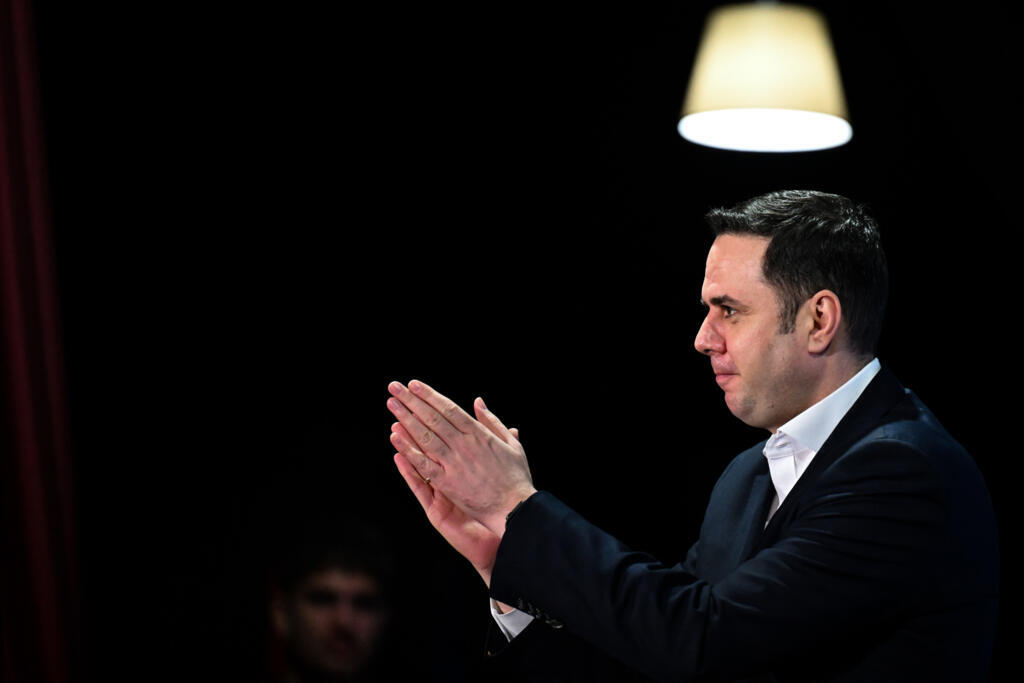
The LDK's youthful leader Lumir Abdixhiku © Armend NIMANI / AFP
Lumir Abdixhiku is the youngest candidate for prime minister but leads the country's oldest political party, the Democratic League of Kosovo (LDK).
The 42-year-old economist was an academic focusing on tax evasion in transition economies before entering politics and served as Kosovo's infrastructure minister.
Abdixhiku also spent several years as a newspaper columnist, penning the well-known "Letters from Limbo" column in the daily Koha Ditore.
He became LDK leader in 2021, just a month after the party suffered a crushing parliamentary defeat. Abdixhiku pledged reform and delivered, replacing much of its leadership with younger activists. Now the third-largest party in parliament, the LDK could play kingmaker in these elections, as both left and right seek its support for a coalition.
Abdixhiku declared that LDK aims to "take the leadership of Kosovo" and offer "a dignified and European government" if it wins.
© 2025 AFP
Lumir Abdixhiku is the youngest candidate for prime minister but leads the country's oldest political party, the Democratic League of Kosovo (LDK).
The 42-year-old economist was an academic focusing on tax evasion in transition economies before entering politics and served as Kosovo's infrastructure minister.
Abdixhiku also spent several years as a newspaper columnist, penning the well-known "Letters from Limbo" column in the daily Koha Ditore.
He became LDK leader in 2021, just a month after the party suffered a crushing parliamentary defeat. Abdixhiku pledged reform and delivered, replacing much of its leadership with younger activists. Now the third-largest party in parliament, the LDK could play kingmaker in these elections, as both left and right seek its support for a coalition.
Abdixhiku declared that LDK aims to "take the leadership of Kosovo" and offer "a dignified and European government" if it wins.
© 2025 AFP
No comments:
Post a Comment