|
Will Mamdani’s Inauguration Open a New Chapter for New York City’s Muslims?
Muslim voters who backed Zohran Mamdani are now looking for him to follow through on his policy proposals.
By Nour Saudi ,
December 31, 2025

New York City Mayor-elect Zohran Mamdani speaks during a press conference on December 22, 2025.CHARLY TRIBALLEAU / AFP via Getty Images
On January 1, New York City’s first ever Muslim and South Asian mayor will take office, inheriting the largest police force in the United States while assuming responsibility for a city that’s seen a rise in immigration raids and deportations ever since Donald Trump became president over the last year. Zohran Mamdani’s victory in November came on the heels of a campaign focused on making the city more affordable. His messaging was clear, consistent, and connected directly to the concerns of New York workers in every community across the city.
The mayoral election saw the highest turnout in more than 50 years, thanks to Mamdani’s success with a wide coalition of groups. His campaign brought in new immigrant voters, particularly within South Asian communities, younger millennial and Gen Z voters, and Black voters who flipped from Andrew Cuomo thanks to consistent outreach. The campaign also spoke directly to Muslim voters, many of whom were motivated to cast a ballot because of the surge of Islamophobia, both on a national level and specifically hurled against Mamdani, especially as the election drew closer.
The attacks against Mamdani felt almost like outdated caricatures, reminiscent of a time when Muslim hate was much more bluntly spoken and acceptable across the political aisle. Systemic Islamophobia has long been normalized, but that more candid, virulent brand of hate was brought back into fashion with the rise of Donald Trump. And while the anti-Muslim rhetoric that dominated his 2016 campaign caused real harm, Trump was still generally regarded as extreme and outlandish, especially by Democrats. Now, Democrats, who’d long couched their harmful rhetoric and policies in flowery language and progressive aesthetics, jumped on the bandwagon, suggesting Mamdani’s win would make the city unsafe.
What changed? The genocide in Gaza, which illustrated clearly the dehumanization of Muslims and Arabs that was so pervasive across our institutions. Mamdani’s unequivocal stance against Israel’s genocide and his solidarity with pro-Palestinian student protesters made him inseparable from that very same dehumanization.
Tens of millions of dollars were spent attacking Mamdani, including on attacks that tried to paint him as a Muslim extremist. In one case, a pro-Cuomo group ran a video ad showing Mamdani smiling while the Twin Towers burned in the background. Mamdani was forced by media, in interviews, on talk shows, and from his own opponents, to repeatedly respond to accusations of antisemitism for his criticisms of Israel — allegations that are also rooted in anti-Muslim sentiment, suggesting any Muslim who condemns the genocide in Gaza must harbor hatred against Jews.
On January 1, New York City’s first ever Muslim and South Asian mayor will take office, inheriting the largest police force in the United States while assuming responsibility for a city that’s seen a rise in immigration raids and deportations ever since Donald Trump became president over the last year. Zohran Mamdani’s victory in November came on the heels of a campaign focused on making the city more affordable. His messaging was clear, consistent, and connected directly to the concerns of New York workers in every community across the city.
The mayoral election saw the highest turnout in more than 50 years, thanks to Mamdani’s success with a wide coalition of groups. His campaign brought in new immigrant voters, particularly within South Asian communities, younger millennial and Gen Z voters, and Black voters who flipped from Andrew Cuomo thanks to consistent outreach. The campaign also spoke directly to Muslim voters, many of whom were motivated to cast a ballot because of the surge of Islamophobia, both on a national level and specifically hurled against Mamdani, especially as the election drew closer.
The attacks against Mamdani felt almost like outdated caricatures, reminiscent of a time when Muslim hate was much more bluntly spoken and acceptable across the political aisle. Systemic Islamophobia has long been normalized, but that more candid, virulent brand of hate was brought back into fashion with the rise of Donald Trump. And while the anti-Muslim rhetoric that dominated his 2016 campaign caused real harm, Trump was still generally regarded as extreme and outlandish, especially by Democrats. Now, Democrats, who’d long couched their harmful rhetoric and policies in flowery language and progressive aesthetics, jumped on the bandwagon, suggesting Mamdani’s win would make the city unsafe.
What changed? The genocide in Gaza, which illustrated clearly the dehumanization of Muslims and Arabs that was so pervasive across our institutions. Mamdani’s unequivocal stance against Israel’s genocide and his solidarity with pro-Palestinian student protesters made him inseparable from that very same dehumanization.
Tens of millions of dollars were spent attacking Mamdani, including on attacks that tried to paint him as a Muslim extremist. In one case, a pro-Cuomo group ran a video ad showing Mamdani smiling while the Twin Towers burned in the background. Mamdani was forced by media, in interviews, on talk shows, and from his own opponents, to repeatedly respond to accusations of antisemitism for his criticisms of Israel — allegations that are also rooted in anti-Muslim sentiment, suggesting any Muslim who condemns the genocide in Gaza must harbor hatred against Jews.

Majority of Americans Support Mamdani’s Affordability Proposals, Poll Finds
Nearly 7 in 10 respondents said they back the mayor-elect’s proposal to raise taxes on corporations and the 1 percent. By Sharon Zhang , Truthout November 12, 2025
Mamdani’s response to the wave of Islamophobia directed at him, however, signaled a turning point, not only in the election, but hopefully the future of the city as well. Addressing New York City’s roughly 1 million Muslims, Mamdani doubled down on his Muslim-ness and invited the rest of us to do the same. He challenged the casual racism and dehumanization of Muslims that has become so acceptable in this country, to the point that repeatedly questioning a Muslim about Jewish safety has been framed as not only reasonable, but in the public’s best interest.
And then he won, in spite of — or perhaps because of — all of the blatant attempts to tear him down.
While Muslims of every generation celebrated Mamdani’s win, millennials like myself, who came of age in a post-9/11 New York City, may have felt the significance of his victory the deepest. Members of this generation might have been too young to understand the shifting geopolitics of the time as the country would soon begin an endless war in the Middle East, but they were old enough to know that their place in this country, their sense of belonging, was being questioned. They felt that ostracization when a classmate made a “terrorist” joke, or when a family member was questioned by law enforcement. They heard the stories that swirled around campuses about FBI and New York City Police Department (NYPD) informants in Muslim student organizations. They learned, along with their elders, that the NYPD had been spying on our communities, mosques and campuses, surveilling young Muslims under the guise of public safety.
Many of these Muslim New Yorkers, who grew up in Mamdani’s generation, see themselves in him. They share a perspective similar to the one he shared during the campaign: the understanding that being a Muslim New Yorker after 9/11 meant becoming familiar with the anti-Muslim hate and fearmongering that has become embedded in our institutions, along with an urgent desire to make such hate politically toxic.
Political leaders on both sides have historically used anti-Muslim hate to further their own agendas. After 9/11, the anti-Muslim sentiment that became synonymous with the George W. Bush administration, which used the attacks to start an illegal war in Iraq and fuel the creation of the Department of Homeland Security, pushed Muslims to vote for Barack Obama and his promise of change. Obama then left office with a legacy of deporting more immigrants than any other president in U.S. history and carrying out more drone strikes on largely Muslim-majority countries in his first year than his predecessor Bush did in his entire tenure. Donald Trump’s Muslim ban, which was enacted in his first week in office, tore families apart. Again, Muslims chose “the lesser of two evils” in the next election. They reluctantly turned out for Obama’s former vice president, Joe Biden, who then facilitated and funded a horrific genocide in Gaza that killed more than 70,000 people.
Islamophobia is still being used by politicians to garner support. In Texas, Gov. Greg Abbott, who is running for a fourth term, recently designated the Council on American-Islamic Relations (CAIR), a civil rights group, a terrorist organization. In the same state, a Republican running for Congress has made anti-Muslim hate a focal point of her campaign, calling Muslims “terrorists” and promising to expel them from Texas if elected. Far right, anti-immigrant rhetoric like this has only increased under a Trump administration that has made immigrants the target of baseless attacks and often aggressive violence.
At the same time, the success of Mamdani’s campaign has already inspired other Muslims to pursue political office. Aber Kawas, a community organizer and member of the Democratic Socialists of America, like Mamdani, announced her run for New York State Assembly in Queens in early December after receiving the endorsement from the socialist group. In a post announcing her run, Kawas wrote, “I never planned to run for office, but in the last two years, there has been a massive political shift that has called for all of us to reexamine who should hold power,” citing similar issues around affordability that were the focal point of Mamdani’s campaign. If she wins, she would become the first Palestinian to serve in the state’s legislature. More importantly, it would add to the number of officials elected on the promise of protecting immigrants and making the city more affordable for its workers.
Of course, identity representation doesn’t equal tangible change — there is a laundry list of prior leaders across every level of office who are proof of that. Especially not after more than two years of an ongoing genocide in Gaza funded by our own tax dollars, it’s not enough for elected officials to simply come from marginalized identities. They must be willing to upend a status quo in which people struggle to afford even the most basic necessities while their government spends billions of dollars a year to support mass slaughter in Gaza instead.
Muslim voters who backed Mamdani are now looking for him to follow through on his policy proposals, from affordable housing to universal child care to raising the minimum wage — things that will actually make a real difference in their lives.
And they are not naive, either. Mamdani has advocated for reforms to policing, proposing a Department of Community Safety which would limit the role of police in responding to 911 calls concerning mental health and homelessness. But his decision to keep NYPD Commissioner Jessica Tisch, appointed by former Mayor Eric Adams, has left many of his supporters wary of his incoming administration. Under Tisch’s leadership, the NYPD amped up its crackdown on low-level offenses and cooperated with Immigration and Customs Enforcement to target and detain student protesters. Muslims and others are moving with caution, aware of the NYPD’s long history of surveilling Black and Brown communities and enacting policies that disproportionately harm our people.
Muslims have been exploited by both parties for so long, used as political pawns to incite fear and garner support for foreign policy objectives. In this fraught political moment, we must remember it is our right to call on our leaders to build the city we want to live in, one where our safety is prioritized and our needs are met. Like any elected official, Mamdani will face scrutiny as mayor over how well he makes good on his promises. His actions can also set the precedent for how Muslims are reflected in policy and governance for years to come. After a campaign in which we finally felt heard, and at a time when the stakes for our communities are so high, he bears a heavy responsibility.
This article is licensed under Creative Commons (CC BY-NC-ND 4.0), and you are free to share and republish under the terms of the license.
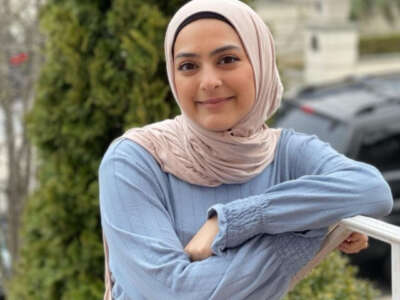
Nour Saudi
Nour Saudi is a New York City-based writer and audio journalist. She is currently a producer at Futuro Media, where she leads production on podcast series. She envisions a just and equitable media industry as one that goes beyond representation and identity, and actively and unequivocally calls out the harmful policies being enacted against historically marginalized communities.
No comments:
Post a Comment