CLIMATE CRISIS
Asia floods toll tops 1,000 as military aid survivors
Padang (Indonesia) (AFP) – The toll in deadly flooding and landslides across parts of Asia climbed past 1,000 on Monday as hardest-hit Sri Lanka and Indonesia deployed military personnel to help survivors.
Issued on: 01/12/2025 - FRANCE24


Rapid floods shock Sri Lanka's survivorsPadang (Indonesia) (AFP) – The toll in deadly flooding and landslides across parts of Asia climbed past 1,000 on Monday as hardest-hit Sri Lanka and Indonesia deployed military personnel to help survivors.
Issued on: 01/12/2025 - FRANCE24
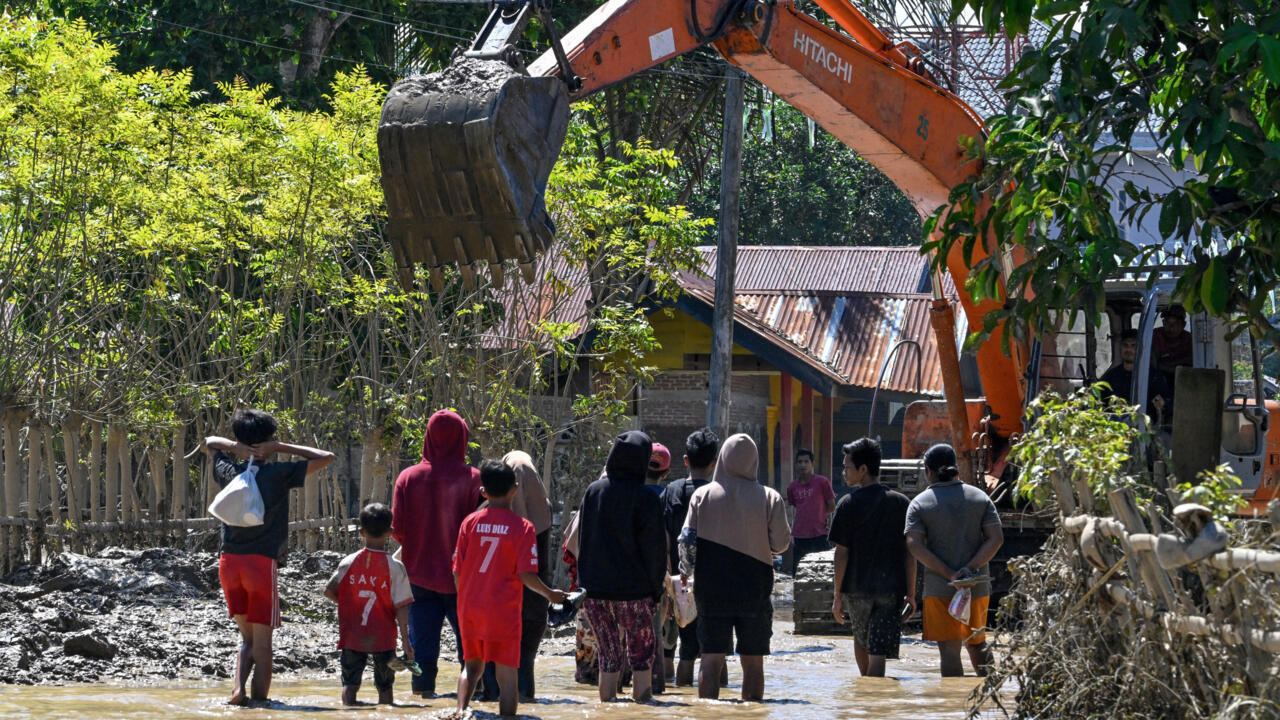
Floods and landslides have killed more than 500 people in Indonesia, with another 500 still missing © CHAIDEER MAHYUDDIN / AFP
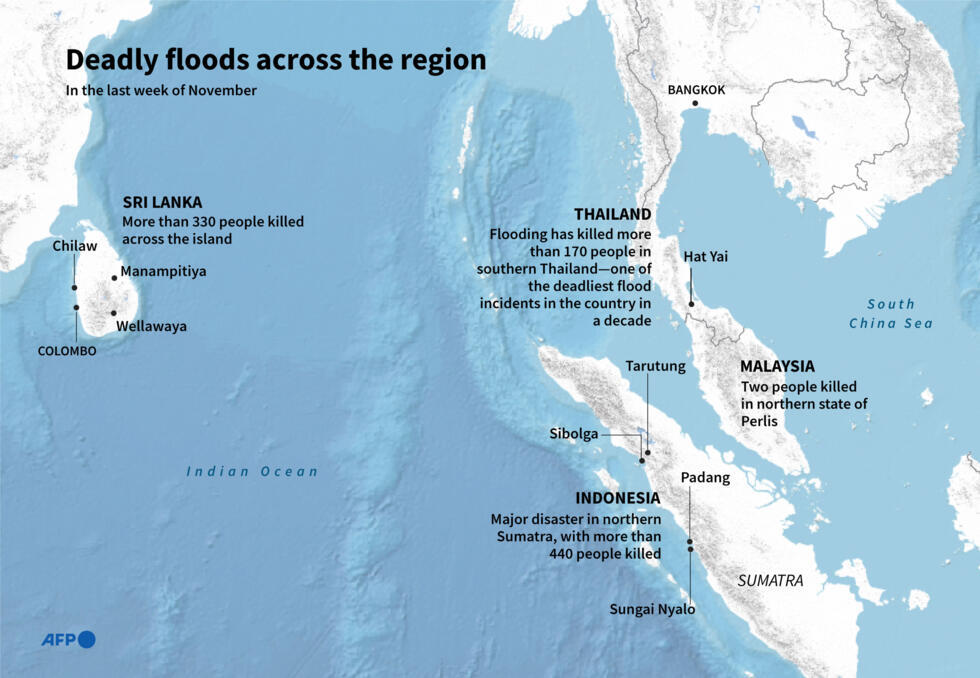
Separate weather systems brought torrential, extended rainfall to the entire island of Sri Lanka and large parts of Indonesia's Sumatra, southern Thailand and northern Malaysia last week.
Much of the region is currently in its monsoon season but climate change is producing more extreme rain events and turbocharging storms.
The relentless rains left residents clinging to rooftops awaiting rescue by boat or helicopter, and cut entire villages off from assistance.
Arriving in North Sumatra on Monday, Indonesian President Prabowo Subianto said "the worst has passed, hopefully".
The government's "priority now is how to immediately send the necessary aid", with particular focus on several cut-off areas, he added.
Prabowo has come under increasing pressure to declare a national emergency in response to flooding and landslides that have killed at least 502 people, with more than 500 still missing.
Separate weather systems brought torrential, extended rainfall to the entire island of Sri Lanka and large parts of Indonesia's Sumatra, southern Thailand and northern Malaysia last week.
Much of the region is currently in its monsoon season but climate change is producing more extreme rain events and turbocharging storms.
The relentless rains left residents clinging to rooftops awaiting rescue by boat or helicopter, and cut entire villages off from assistance.
Arriving in North Sumatra on Monday, Indonesian President Prabowo Subianto said "the worst has passed, hopefully".
The government's "priority now is how to immediately send the necessary aid", with particular focus on several cut-off areas, he added.
Prabowo has come under increasing pressure to declare a national emergency in response to flooding and landslides that have killed at least 502 people, with more than 500 still missing.
Army personnel ride a truck carrying boats to rescue stranded people as they wade through a flooded road after heavy rainfall on the outskirts of Colombo © Ishara S. KODIKARA / AFP
Unlike his Sri Lankan counterpart, he has also not publicly called for international assistance.
The toll is the deadliest in a natural disaster in Indonesia since a massive 2018 earthquake and subsequent tsunami killed more than 2,000 people in Sulawesi.
The government has sent three warships carrying aid and two hospital ships to some of the worst-hit areas, where many roads remain impassable.
At an evacuation centre in North Aceh, 28-year-old Misbahul Munir described walking through water that reached his neck to get back to his parents.
"Everything in the house was destroyed because it was submerged," he told AFP.
"I have only the clothes I am wearing," he said, dissolving into tears.
"In other places, there were a lot of people who died. We are grateful that we are healthy."
Sri Lanka seeks aid
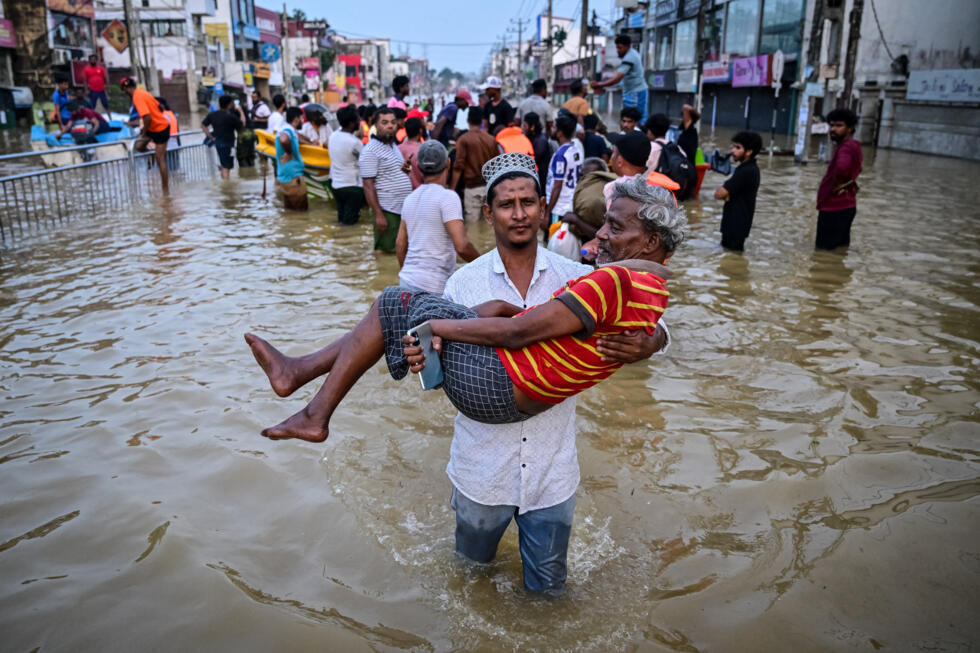
In Sri Lanka meanwhile, the government called for international aid and used military helicopters to reach people stranded by flooding and landslides triggered by Cyclone Ditwah.
Unlike his Sri Lankan counterpart, he has also not publicly called for international assistance.
The toll is the deadliest in a natural disaster in Indonesia since a massive 2018 earthquake and subsequent tsunami killed more than 2,000 people in Sulawesi.
The government has sent three warships carrying aid and two hospital ships to some of the worst-hit areas, where many roads remain impassable.
At an evacuation centre in North Aceh, 28-year-old Misbahul Munir described walking through water that reached his neck to get back to his parents.
"Everything in the house was destroyed because it was submerged," he told AFP.
"I have only the clothes I am wearing," he said, dissolving into tears.
"In other places, there were a lot of people who died. We are grateful that we are healthy."
Sri Lanka seeks aid
In Sri Lanka meanwhile, the government called for international aid and used military helicopters to reach people stranded by flooding and landslides triggered by Cyclone Ditwah.
Sri Lanka has called for international aid to cope with the aftermath of floods which have killed more than 300 people © Ishara S. KODIKARA / AFP
At least 340 people have been killed, Sri Lankan officials said on Monday, with many more still missing.
Floodwaters in the capital Colombo peaked overnight, and with rain now stopped there were hopes that waters would begin receding.
Some shops and offices began to reopen.
The floodwaters came as a surprise to some around Colombo.
"Every year we experience minor floods, but this is something else," delivery driver Dinusha Sanjaya told AFP.
"It is not just the amount of water, but how quickly everything went under."
At least 340 people have been killed, Sri Lankan officials said on Monday, with many more still missing.
Floodwaters in the capital Colombo peaked overnight, and with rain now stopped there were hopes that waters would begin receding.
Some shops and offices began to reopen.
The floodwaters came as a surprise to some around Colombo.
"Every year we experience minor floods, but this is something else," delivery driver Dinusha Sanjaya told AFP.
"It is not just the amount of water, but how quickly everything went under."
Flooding in Asia © John SAEKI / AFP
Officials said the extent of the damage in the worst-affected central region was only just being revealed as relief workers cleared roads blocked by fallen trees and mudslides.
President Anura Kumara Dissanayake, who declared a state of emergency to deal with the disaster, called the flooding the "largest and most challenging natural disaster in our history."
The losses and damage are the worst in Sri Lanka since the devastating 2004 Asian tsunami that killed around 31,000 people there and left more than a million homeless.
Anger in Thailand
By Sunday afternoon, rain had subsided across Sri Lanka but low-lying areas of the capital were flooded and authorities were bracing for a major relief operation.
Military helicopters have been deployed to airlift stranded residents, and deliver food, though one crashed just north of Colombo on Sunday evening.
Officials said the extent of the damage in the worst-affected central region was only just being revealed as relief workers cleared roads blocked by fallen trees and mudslides.
President Anura Kumara Dissanayake, who declared a state of emergency to deal with the disaster, called the flooding the "largest and most challenging natural disaster in our history."
The losses and damage are the worst in Sri Lanka since the devastating 2004 Asian tsunami that killed around 31,000 people there and left more than a million homeless.
Anger in Thailand
By Sunday afternoon, rain had subsided across Sri Lanka but low-lying areas of the capital were flooded and authorities were bracing for a major relief operation.
Military helicopters have been deployed to airlift stranded residents, and deliver food, though one crashed just north of Colombo on Sunday evening.
Displaced residents rest in a shelter following flash floods and landslides in Pandan in Central Tapanuli, Indonesia's North Sumatra province on November 30 © YT Hariono / AFP
Much of Asia is in its annual monsoon season, which often brings heavy rain, triggering landslides and flash floods.
But the flooding that hit Indonesia, Thailand and Malaysia was also exacerbated by a rare tropical storm that dumped heavy rain on Sumatra island in particular.
Climate change has also increased the intensity of storms, and produced more heavy rain events because a warmer atmosphere holds more moisture.
The waves of rain caused flooding that killed at least 176 people in southern Thailand, authorities said Monday, one of the deadliest flood incidents in the country in a decade.
The government has rolled out relief measures, but there has been growing public criticism of the flood response, and two local officials have been suspended over their alleged failures.
Across the border in Malaysia, where heavy rains also inundated large stretches of land in Perlis state, two people were killed.
burs-sah/mtp
© 2025 AFP
Much of Asia is in its annual monsoon season, which often brings heavy rain, triggering landslides and flash floods.
But the flooding that hit Indonesia, Thailand and Malaysia was also exacerbated by a rare tropical storm that dumped heavy rain on Sumatra island in particular.
Climate change has also increased the intensity of storms, and produced more heavy rain events because a warmer atmosphere holds more moisture.
The waves of rain caused flooding that killed at least 176 people in southern Thailand, authorities said Monday, one of the deadliest flood incidents in the country in a decade.
The government has rolled out relief measures, but there has been growing public criticism of the flood response, and two local officials have been suspended over their alleged failures.
Across the border in Malaysia, where heavy rains also inundated large stretches of land in Perlis state, two people were killed.
burs-sah/mtp
© 2025 AFP
Kolonnawa (Sri Lanka) (AFP) – For villages on the northern edge of Sri Lanka's capital, floods are a familiar ordeal -- but even the hardiest residents were stunned when the Kelani river surged this week.
Issued on: 01/12/2025 - FRANCE24
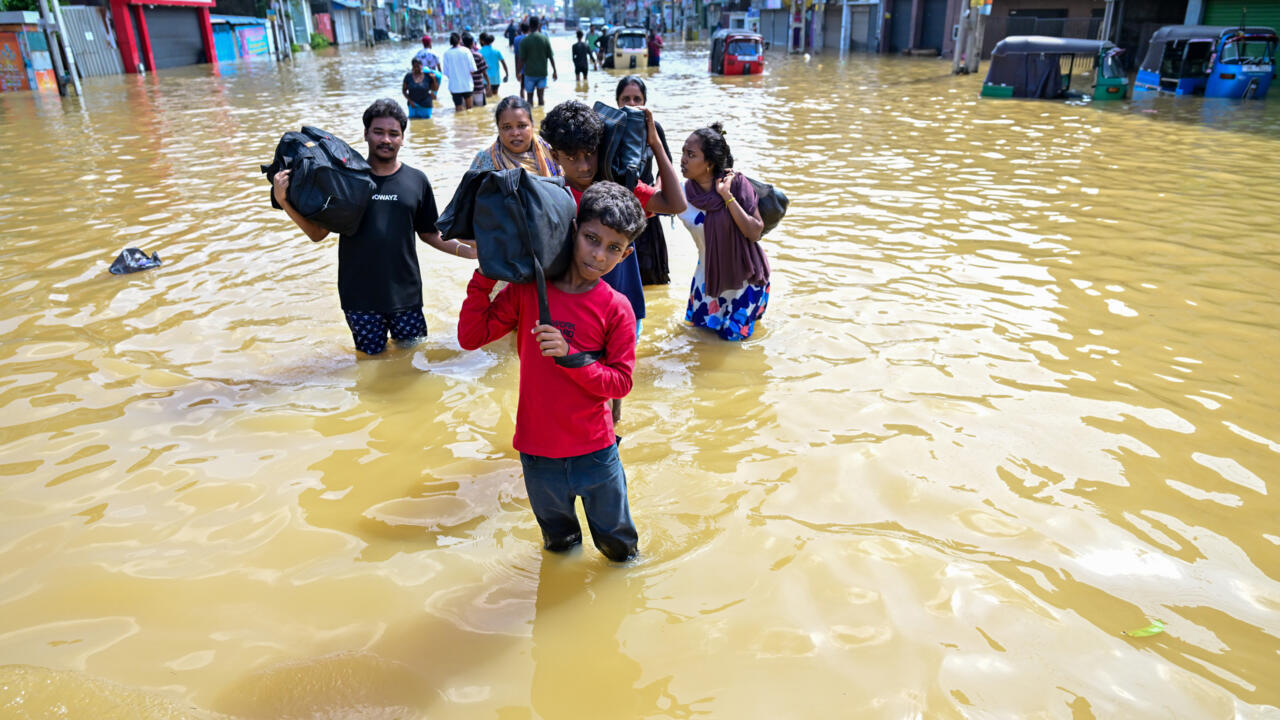
People wade through a flooded street on the outskirts of Colombo on November 30 © Ishara S. KODIKARA / AFP
Heavy showers upstream inundated the banks of the Kelani on Friday night, and the situation deteriorated rapidly the next day even though Cyclone Ditwah -- which brought the rains -- had already moved on.
Most residents along the banks of the major waterway in Kolonnawa ignored repeated flood warnings, thinking it wouldn't be as bad as authorities were predicting.
Climate change has increased the intensity of storms, and produced more heavy rain events because a warmer atmosphere holds more moisture.
Delivery driver Dinusha Sanjaya said he brushed aside the warnings, assuming the worst would be a few feet of water.
But within an hour, his two-storey house was submerged.
"I never thought the floods would be this bad," Sanjaya, 37, told AFP at Vidyawardana school where all his neighbours were also taking refuge on Monday.
"Every year we experience minor floods, but this is something else. It is not just the amount of water, but how quickly everything went under."
Neighbour Fatima Rushna, 48, said she realised the house was flooding when water reached her bed shortly after midnight on Saturday. She rushed out with her husband, Mohamed Azmi, 50.
Heavy showers upstream inundated the banks of the Kelani on Friday night, and the situation deteriorated rapidly the next day even though Cyclone Ditwah -- which brought the rains -- had already moved on.
Most residents along the banks of the major waterway in Kolonnawa ignored repeated flood warnings, thinking it wouldn't be as bad as authorities were predicting.
Climate change has increased the intensity of storms, and produced more heavy rain events because a warmer atmosphere holds more moisture.
Delivery driver Dinusha Sanjaya said he brushed aside the warnings, assuming the worst would be a few feet of water.
But within an hour, his two-storey house was submerged.
"I never thought the floods would be this bad," Sanjaya, 37, told AFP at Vidyawardana school where all his neighbours were also taking refuge on Monday.
"Every year we experience minor floods, but this is something else. It is not just the amount of water, but how quickly everything went under."
Neighbour Fatima Rushna, 48, said she realised the house was flooding when water reached her bed shortly after midnight on Saturday. She rushed out with her husband, Mohamed Azmi, 50.
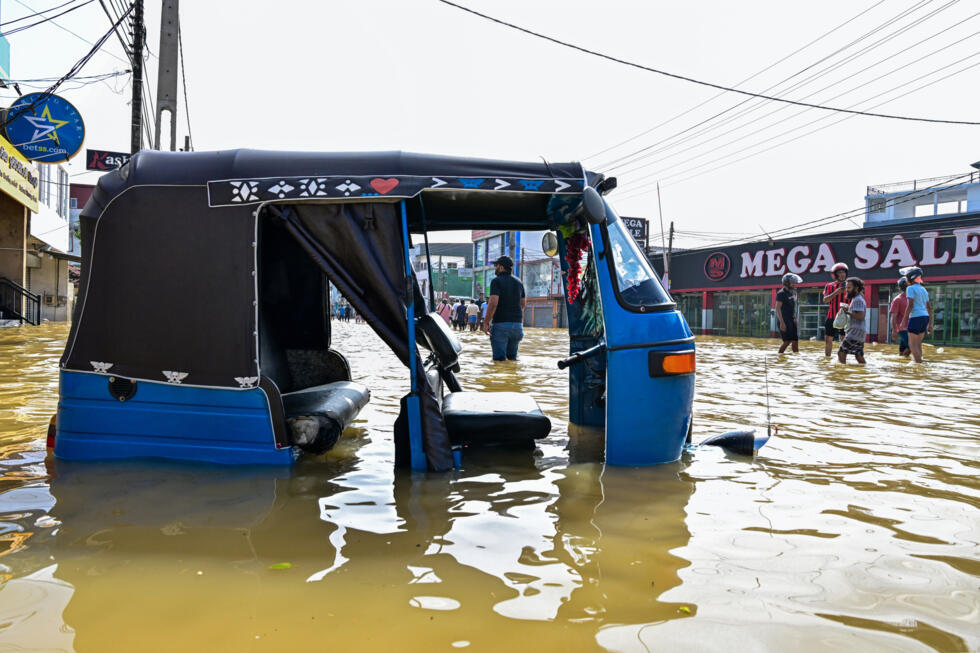
A rickshaw stranded on a flooded street on the outskirts of Colombo © Ishara S. KODIKARA / AFP
"We had no time to collect any valuables. All we have are the clothes we are wearing," she said while waiting for donations at the makeshift camp.
Livelihoods lost
For C. V. Ariyaratne, 70, and his wife Emalin, 65, evacuating in a hurry was particularly challenging as she suffers from scoliosis, is severely hunched and needs help to walk.
"We have been through floods, but this is even worse than what we experienced in 2016," Ariyaratne said, referring to the disaster nine years ago when 71 people were killed across the country.
"We had no time to collect any valuables. All we have are the clothes we are wearing," she said while waiting for donations at the makeshift camp.
Livelihoods lost
For C. V. Ariyaratne, 70, and his wife Emalin, 65, evacuating in a hurry was particularly challenging as she suffers from scoliosis, is severely hunched and needs help to walk.
"We have been through floods, but this is even worse than what we experienced in 2016," Ariyaratne said, referring to the disaster nine years ago when 71 people were killed across the country.
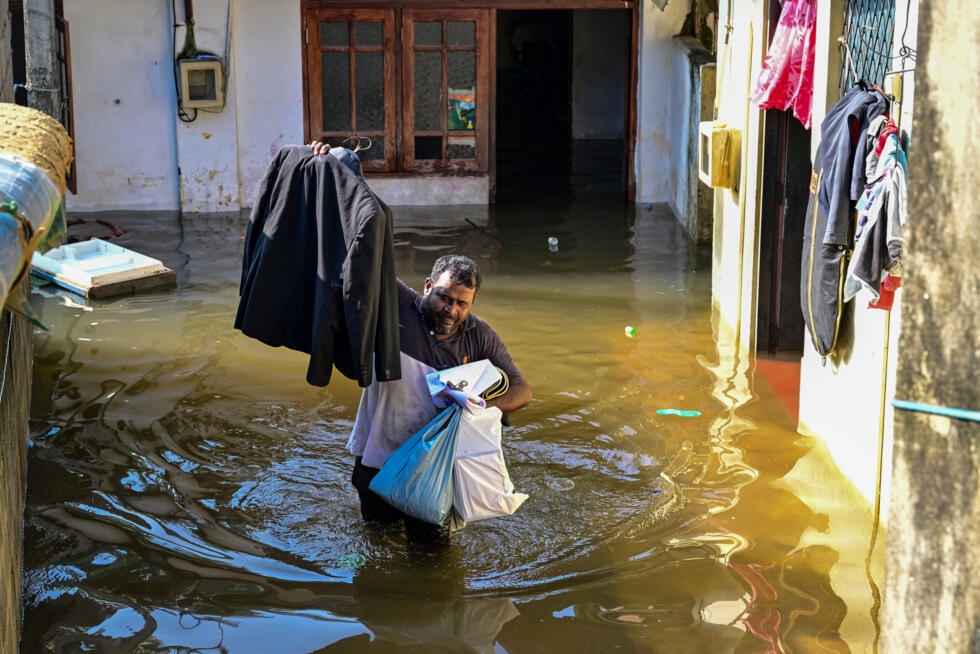
A man wades through floodwaters outside his house in Wellampitiya on the outskirts of Colombo © Ishara S. KODIKARA / AFP
For seamstress Nirushika, 44, the floods have taken away her livelihood.
"I earned a living by running a small sewing business," she said. "Both my sewing machines were lost."
There was more havoc upstream.
The mountainous central region was the worst-affected, with scores of people buried alive in mudslides triggered by record rain, in some places over 500 millimetres.
'Clean-up'
Official data showed that 250 out of the 340 deaths so far were in the central hilly tea-growing region.
For seamstress Nirushika, 44, the floods have taken away her livelihood.
"I earned a living by running a small sewing business," she said. "Both my sewing machines were lost."
There was more havoc upstream.
The mountainous central region was the worst-affected, with scores of people buried alive in mudslides triggered by record rain, in some places over 500 millimetres.
'Clean-up'
Official data showed that 250 out of the 340 deaths so far were in the central hilly tea-growing region.
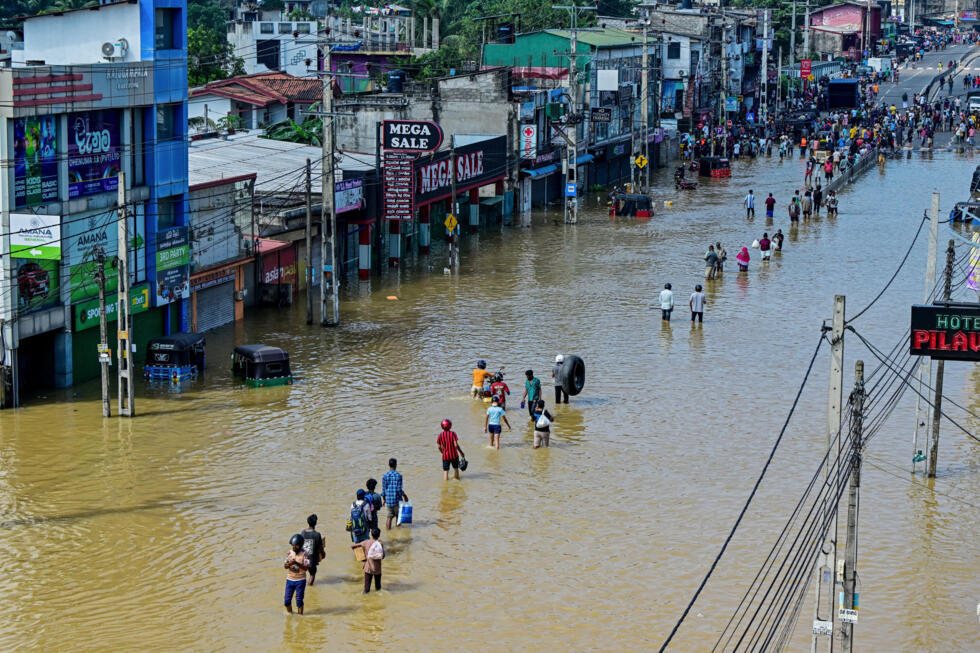
Heavy showers upstream inundated the banks of the Kelani river © Ishara S. KODIKARA / AFP
President Anura Kumara Dissanayake has declared a state of emergency to deal with the disaster and vowed to "build back better" with international assistance.
Residents at the Kolonnawa camp said the state had provided dry rations, which volunteers had cooked for them.
Classrooms in the three-storey building had been turned into makeshift accommodation, occupied by about 300 people, including 80 children below the age of 12.
As the situation elsewhere in the capital slowly returned to normal, residents were seen donating food and other essentials.
Government figures show that nearly 200,000 people were in camps, while another 1.12 million needed some form of government assistance.
The Irrigation Department said water levels in Colombo had peaked and that the floods should begin receding within a day.
"Colombo floods are at their maximum now," Irrigation Director L. S. Sooriyabandara said. "Flood levels elsewhere have gone down substantially."
Survivor G. Patrick, 70, said he was dreading returning home.
"For me, the biggest problem is getting help for the clean-up."
© 2025 AFP
President Anura Kumara Dissanayake has declared a state of emergency to deal with the disaster and vowed to "build back better" with international assistance.
Residents at the Kolonnawa camp said the state had provided dry rations, which volunteers had cooked for them.
Classrooms in the three-storey building had been turned into makeshift accommodation, occupied by about 300 people, including 80 children below the age of 12.
As the situation elsewhere in the capital slowly returned to normal, residents were seen donating food and other essentials.
Government figures show that nearly 200,000 people were in camps, while another 1.12 million needed some form of government assistance.
The Irrigation Department said water levels in Colombo had peaked and that the floods should begin receding within a day.
"Colombo floods are at their maximum now," Irrigation Director L. S. Sooriyabandara said. "Flood levels elsewhere have gone down substantially."
Survivor G. Patrick, 70, said he was dreading returning home.
"For me, the biggest problem is getting help for the clean-up."
© 2025 AFP
No comments:
Post a Comment