Syrian military deploys in coastal cities following violent clashes by former regime loyalists
Yenişafak
Escalation of Violence During Protests
The decision for a military deployment came after a sharp increase in violence on Sunday. Official Syrian media reported that three people were killed and at least 60 others were wounded in Latakia when remnants of the fallen regime attacked security forces and civilians during demonstrations. Similar protests, calling for federalism and opposing the Damascus government, were also reported in Tartus, Hama, and Homs.
Calls for Federalism and Regional Tensions
The protests were reportedly sparked by a call from Ghazal Ghazal, head of the Alawite Supreme Council, following a deadly mosque attack in Homs on Friday. Ghazal, known for his ties to the former Baathist government, urged supporters to demand "political federalism and international protection." Despite heavy security measures at the gatherings, some protesters in Latakia and Jableh assaulted security forces and damaged their vehicles.
New Administration Pursues Security Crackdown
This unrest presents a direct challenge to the new transitional administration under President Ahmad al-Sharaa, which was formed in January after Assad fled to Russia. The administration has pledged to tighten security nationwide and pursue elements of the former regime accused of stirring instability. The current military intervention in these key coastal cities underscores the ongoing struggle to establish control and secure the country after the end of the decades-long Baath Party rule.
Yenişafak
28/12/2025, Sunday

AAFile photo
The Syrian army moved into the centers of Latakia and Tartus on Sunday after armed groups linked to the ousted Assad regime targeted civilians and security forces. The Defense Ministry stated the operation aims to restore order amid escalating violence that has left several dead and dozens wounded during recent protests.
The Syrian Defense Ministry announced that army units, supported by armored vehicles, have been deployed to the central areas of the coastal cities of Latakia and Tartus. This security operation was launched to restore stability following attacks by armed groups affiliated with the former regime of Bashar al-Assad against civilians and state security personnel.
AAFile photo
The Syrian army moved into the centers of Latakia and Tartus on Sunday after armed groups linked to the ousted Assad regime targeted civilians and security forces. The Defense Ministry stated the operation aims to restore order amid escalating violence that has left several dead and dozens wounded during recent protests.
The Syrian Defense Ministry announced that army units, supported by armored vehicles, have been deployed to the central areas of the coastal cities of Latakia and Tartus. This security operation was launched to restore stability following attacks by armed groups affiliated with the former regime of Bashar al-Assad against civilians and state security personnel.
Escalation of Violence During Protests
The decision for a military deployment came after a sharp increase in violence on Sunday. Official Syrian media reported that three people were killed and at least 60 others were wounded in Latakia when remnants of the fallen regime attacked security forces and civilians during demonstrations. Similar protests, calling for federalism and opposing the Damascus government, were also reported in Tartus, Hama, and Homs.
Calls for Federalism and Regional Tensions
The protests were reportedly sparked by a call from Ghazal Ghazal, head of the Alawite Supreme Council, following a deadly mosque attack in Homs on Friday. Ghazal, known for his ties to the former Baathist government, urged supporters to demand "political federalism and international protection." Despite heavy security measures at the gatherings, some protesters in Latakia and Jableh assaulted security forces and damaged their vehicles.
New Administration Pursues Security Crackdown
This unrest presents a direct challenge to the new transitional administration under President Ahmad al-Sharaa, which was formed in January after Assad fled to Russia. The administration has pledged to tighten security nationwide and pursue elements of the former regime accused of stirring instability. The current military intervention in these key coastal cities underscores the ongoing struggle to establish control and secure the country after the end of the decades-long Baath Party rule.
Clashes erupt in Syria as Alawite minority protests deadly Homs mosque bombing
Clashes broke out on Sunday during rallies held by members of Syria’s Alawite minority in the coastal cities of Latakia and Tartous, as well as in other areas, following Friday's deadly bombing at an Alawite mosque in Homs. According to a war monitor, at least two people were killed when security forces tried to disperse the demonstrators.
Issued on: 28/12/2025
By: FRANCE 24
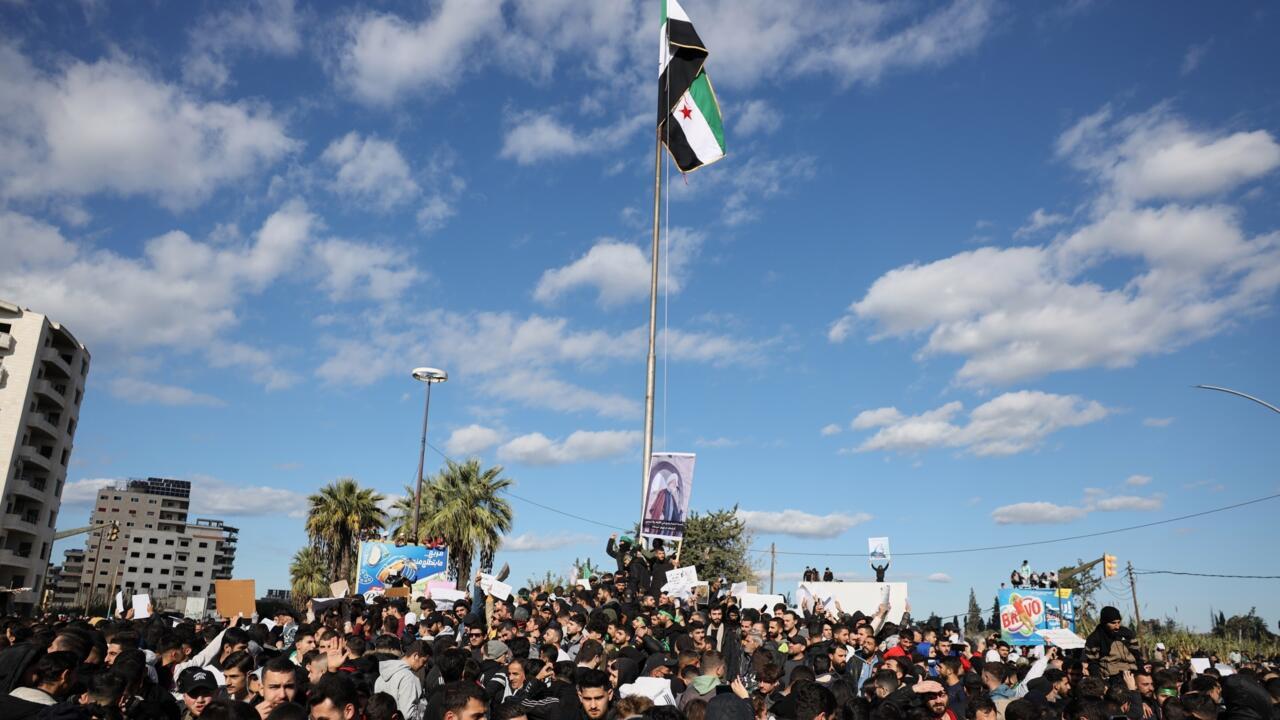
Monitor claims two dead
An Associated Press photographer in Latakia saw pro-government counterprotesters throw rocks at the Alawite demonstrators, while a group of protesters beat a counterdemonstrator who crossed to their side.
According to The Syrian Observatory for Human Rights, at least two people were killed as security forces tried to disperse the protests – and a medical source said two bodies had been taken to a local hospital.
Syrian authorities did not confirm they had opened fire but said they had “contained the situation”. They accused what they called “remnants” of former ruler Bashar al-Assad’s government of attacking security forces.
Syria’s state-run television also reported that two members of the security forces had been wounded in the area of Tartous after someone threw a hand grenade at a police station. Cars belonging to security forces were also set on fire in Latakia.
Waves of sectarian violence since Assad’s downfall
The country has experienced several waves of sectarian clashes since the fall of former president Assad in a lightning rebel offensive in December 2024 that brought to an end nearly 14 years of civil war. Assad, an Alawite, fled the country to Russia.
In March, an ambush carried out by Assad’s supporters against security forces triggered days of violence that left hundreds of people dead, most of them Alawites. Since then, although the situation has calmed, Alawites have been targeted sporadically in sectarian attacks. They have also complained of discrimination against them in public employment since Assad’s fall and of young Alawite men detained without charges.
During the rein of the Assad dynasty, Alawites were over-represented in government jobs and in the army and security forces.
Government officials condemned Friday’s attack and promised to hold perpetrators accountable, but have not yet announced any arrests.
(FRANCE 24 with AP and AFP)
Clashes broke out on Sunday during rallies held by members of Syria’s Alawite minority in the coastal cities of Latakia and Tartous, as well as in other areas, following Friday's deadly bombing at an Alawite mosque in Homs. According to a war monitor, at least two people were killed when security forces tried to disperse the demonstrators.
Issued on: 28/12/2025
By: FRANCE 24
Protesters from the Alawite religious minority in Latakia, Syria's coastal region, on December 28, 2025. © Omar Albam, AP
Clashes broke out on Syria’s coast between protesters from the Alawite religious minority and counter-demonstrators on Sunday, two days after a bombing at an Alawite mosque in the city of Homs killed eight people and wounded 18 others during prayers.
Thousands of protesters gathered in the coastal cities of Latakia and Tartous, and elsewhere. Officials have said that preliminary investigations indicate that explosive devices were planted inside the mosque in Homs, but authorities haven’t publicly identified a suspect yet in Friday’s bombing. Funerals for the dead were held on Saturday.
A little-known group calling itself Saraya Ansar al-Sunna claimed responsibility for the attack in a statement posted on its Telegram channel, in which it indicated that the attack intended to target members of the Alawite sect, an offshoot of Shiite Islam whom hard-line Islamists consider to be apostates.
Sunday’s demonstrations were called for by Ghazal Ghazal, an Alawite sheikh living outside of Syria who heads a group called the Supreme Alawite Islamic Council in Syria and the Diaspora.
Clashes broke out on Syria’s coast between protesters from the Alawite religious minority and counter-demonstrators on Sunday, two days after a bombing at an Alawite mosque in the city of Homs killed eight people and wounded 18 others during prayers.
Thousands of protesters gathered in the coastal cities of Latakia and Tartous, and elsewhere. Officials have said that preliminary investigations indicate that explosive devices were planted inside the mosque in Homs, but authorities haven’t publicly identified a suspect yet in Friday’s bombing. Funerals for the dead were held on Saturday.
A little-known group calling itself Saraya Ansar al-Sunna claimed responsibility for the attack in a statement posted on its Telegram channel, in which it indicated that the attack intended to target members of the Alawite sect, an offshoot of Shiite Islam whom hard-line Islamists consider to be apostates.
Sunday’s demonstrations were called for by Ghazal Ghazal, an Alawite sheikh living outside of Syria who heads a group called the Supreme Alawite Islamic Council in Syria and the Diaspora.
Monitor claims two dead
An Associated Press photographer in Latakia saw pro-government counterprotesters throw rocks at the Alawite demonstrators, while a group of protesters beat a counterdemonstrator who crossed to their side.
According to The Syrian Observatory for Human Rights, at least two people were killed as security forces tried to disperse the protests – and a medical source said two bodies had been taken to a local hospital.
Syrian authorities did not confirm they had opened fire but said they had “contained the situation”. They accused what they called “remnants” of former ruler Bashar al-Assad’s government of attacking security forces.
Syria’s state-run television also reported that two members of the security forces had been wounded in the area of Tartous after someone threw a hand grenade at a police station. Cars belonging to security forces were also set on fire in Latakia.
Waves of sectarian violence since Assad’s downfall
The country has experienced several waves of sectarian clashes since the fall of former president Assad in a lightning rebel offensive in December 2024 that brought to an end nearly 14 years of civil war. Assad, an Alawite, fled the country to Russia.
In March, an ambush carried out by Assad’s supporters against security forces triggered days of violence that left hundreds of people dead, most of them Alawites. Since then, although the situation has calmed, Alawites have been targeted sporadically in sectarian attacks. They have also complained of discrimination against them in public employment since Assad’s fall and of young Alawite men detained without charges.
During the rein of the Assad dynasty, Alawites were over-represented in government jobs and in the army and security forces.
Government officials condemned Friday’s attack and promised to hold perpetrators accountable, but have not yet announced any arrests.
(FRANCE 24 with AP and AFP)
Three killed in clashes in Syria after deadly Alawite mosque bombing
Thousands gathered in the coastal cities of Latakia and Tartous, and elsewhere, on Sunday.

By Omar Albam,
At least three people have been killed in clashes on Syria’s coast between protesters from the Alawite religious minority and counter-demonstrators.
The violence came two days after a bombing at an Alawite mosque in the city of Homs killed eight people and wounded 18 others during prayers.
Thousands of protesters gathered in the coastal cities of Latakia and Tartous, and elsewhere, on Sunday.
Officials have said preliminary investigations indicate explosive devices were planted inside the mosque in Homs, but authorities have not publicly identified a suspect.
A little-known group calling itself Saraya Ansar al-Sunna claimed responsibility for the attack in a statement posted on its Telegram channel, in which it indicated the attack intended to target members of the Alawite sect, an offshoot of Shiite Islam whom hard-line Islamists consider to be apostates.
Sunday’s demonstrations were called for by Ghazal Ghazal, an Alawite sheikh living outside of Syria who heads a group called the Supreme Alawite Islamic Council in Syria and the Diaspora.
An Associated Press photographer in Latakia saw pro-government counter-protesters throw rocks at the Alawite demonstrators, while a group of protesters beat a counter-demonstrator who crossed to their side.
Security forces tried to break up the two sides and fired into the air in an attempt to disperse them.

Thousands gathered in the coastal cities of Latakia and Tartous, and elsewhere, on Sunday.
Counter-protesters chant pro-government slogans at Alawite demonstrators (Omar Albam/AP) (Omar Albam/AP)
By Omar Albam,
Associated Press
December 28, 2025
At least three people have been killed in clashes on Syria’s coast between protesters from the Alawite religious minority and counter-demonstrators.
The violence came two days after a bombing at an Alawite mosque in the city of Homs killed eight people and wounded 18 others during prayers.
Thousands of protesters gathered in the coastal cities of Latakia and Tartous, and elsewhere, on Sunday.
Officials have said preliminary investigations indicate explosive devices were planted inside the mosque in Homs, but authorities have not publicly identified a suspect.
Protesters from the Alawite religious minority demonstrate in Latakia (Omar Albam/AP) (Omar Albam/AP)
Funerals for the victims were held on Saturday.
Funerals for the victims were held on Saturday.
A little-known group calling itself Saraya Ansar al-Sunna claimed responsibility for the attack in a statement posted on its Telegram channel, in which it indicated the attack intended to target members of the Alawite sect, an offshoot of Shiite Islam whom hard-line Islamists consider to be apostates.
Sunday’s demonstrations were called for by Ghazal Ghazal, an Alawite sheikh living outside of Syria who heads a group called the Supreme Alawite Islamic Council in Syria and the Diaspora.
An Associated Press photographer in Latakia saw pro-government counter-protesters throw rocks at the Alawite demonstrators, while a group of protesters beat a counter-demonstrator who crossed to their side.
Security forces tried to break up the two sides and fired into the air in an attempt to disperse them.
Syria has experienced several waves of sectarian clashes since the fall of former president Bashar Assad (Omar Albam/AP) (Omar Albam/AP)
Syria’s state-run television reported two members of the security forces were wounded in the area of Tartous after someone threw a hand grenade at a police station, and cars belonging to security forces were set on fire in Latakia.
Later, state-run news agency Sana reported a member of the security forces was killed by gunfire. Local health officials said three people were killed and 60 others wounded.
The country has experienced several waves of sectarian clashes since the fall of former president Bashar Assad in a lightning rebel offensive in December 2024 that brought to an end nearly 14 years of civil war.
Assad, an Alawite, fled the country to Russia.
In March, an ambush carried out Assad supporters against security forces triggered days of violence that left hundreds of people dead, most of them Alawites.
Syria’s state-run television reported two members of the security forces were wounded in the area of Tartous after someone threw a hand grenade at a police station, and cars belonging to security forces were set on fire in Latakia.
Later, state-run news agency Sana reported a member of the security forces was killed by gunfire. Local health officials said three people were killed and 60 others wounded.
The country has experienced several waves of sectarian clashes since the fall of former president Bashar Assad in a lightning rebel offensive in December 2024 that brought to an end nearly 14 years of civil war.
Assad, an Alawite, fled the country to Russia.
In March, an ambush carried out Assad supporters against security forces triggered days of violence that left hundreds of people dead, most of them Alawites.
Protesters from the Alawite religious minority demonstrate in Latakia (Omar Albam/AP) (Omar Albam/AP)
Since then, although the situation has calmed, Alawites have been targeted sporadically in sectarian attacks.
They have also complained of discrimination against them in public employment since Mr Assad’s fall and of young Alawite men detained without charges.
During the rein of the Assad dynasty, Alawites were overrepresented in government jobs and in the army and security forces.
Government officials condemned Friday’s attack and promised to hold perpetrators accountable, but have not yet announced any arrests.
Since then, although the situation has calmed, Alawites have been targeted sporadically in sectarian attacks.
They have also complained of discrimination against them in public employment since Mr Assad’s fall and of young Alawite men detained without charges.
During the rein of the Assad dynasty, Alawites were overrepresented in government jobs and in the army and security forces.
Government officials condemned Friday’s attack and promised to hold perpetrators accountable, but have not yet announced any arrests.
Security member killed during protests calling for ‘federalism’ on Syria’s coast
Security source says gunmen attacked forces guarding demonstrations in coastal and central cities
Security source says gunmen attacked forces guarding demonstrations in coastal and central cities
Anadolu Staff |28.12.2025
LATAKIA, Syria / ISTANBUL
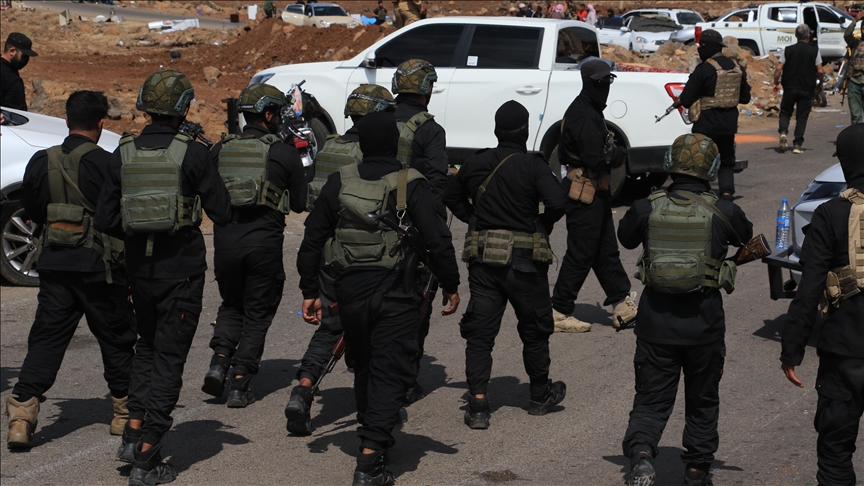
A Syrian security member was killed and others were wounded after gunmen attacked security forces assigned to protect demonstrations calling for “federalism” in coastal and central parts of the country, local media said.
Demonstrations took place in the coastal provinces of Latakia and Tartus, as well as in the central provinces of Hama and Homs, according to an Anadolu correspondent. The protests followed a call by Ghazal Ghazal, head of the Alawite Supreme Council in Syria and abroad.
The state-run Alikhbariyah TV reported that “outlaw elements” opened fire on civilian vehicles in the village of al-Mahrousa in western rural Hama as security forces deployed to protect civilians.
Citing an unnamed security source, the channel said one member of the Internal Security Forces was killed and others were wounded while securing protests in Latakia after attacks carried out by remnants of the former regime of Bashar al-Assad.
Crowds gathered at several locations, including Azziraa and al-Azhari roundabouts in Latakia; Amara Roundabout and Hospital District Roundabout in the city of Jableh; al-Marija Roundabout in Qardaha; and al-Qusour Roundabout in Baniyas.
Protests were also reported at al-Saadi Roundabout in Tartus, as well as in Masyaf, Wadi al-Dhahab, Imam Ali bin Abi Talib Mosque Square and the Zahraa neighborhood in Homs, and the Wadi al-Uyun area in Hama province.
During the demonstrations, which were held under tight security measures, protesters chanted slogans calling for “federalism” and voiced opposition to the government in Damascus.
Some protesters in Latakia and Jableh attacked security personnel and their vehicles despite heightened security.
Clashes involving sticks and stones erupted between demonstrators and opposing groups in the centers of Latakia and Homs, while security forces fired shots into the air at some locations to disperse crowds.
Ghazal issued his call for protests after a deadly attack on a mosque in a predominantly Alawite neighborhood of Homs on Friday that killed eight people. In statements following the attack, he urged supporters to demand “political federalism and international protection.”
The new Syrian administration is working to tighten security conditions nationwide and to pursue remnants of the former regime accused of stirring security unrest.
Assad, Syria’s leader for nearly 25 years, fled to Russia, ending the Baath Party regime, which had been in power since 1963. A new transitional administration headed by President Ahmad al-Sharaa was formed in January.
LATAKIA, Syria / ISTANBUL
A Syrian security member was killed and others were wounded after gunmen attacked security forces assigned to protect demonstrations calling for “federalism” in coastal and central parts of the country, local media said.
Demonstrations took place in the coastal provinces of Latakia and Tartus, as well as in the central provinces of Hama and Homs, according to an Anadolu correspondent. The protests followed a call by Ghazal Ghazal, head of the Alawite Supreme Council in Syria and abroad.
The state-run Alikhbariyah TV reported that “outlaw elements” opened fire on civilian vehicles in the village of al-Mahrousa in western rural Hama as security forces deployed to protect civilians.
Citing an unnamed security source, the channel said one member of the Internal Security Forces was killed and others were wounded while securing protests in Latakia after attacks carried out by remnants of the former regime of Bashar al-Assad.
Crowds gathered at several locations, including Azziraa and al-Azhari roundabouts in Latakia; Amara Roundabout and Hospital District Roundabout in the city of Jableh; al-Marija Roundabout in Qardaha; and al-Qusour Roundabout in Baniyas.
Protests were also reported at al-Saadi Roundabout in Tartus, as well as in Masyaf, Wadi al-Dhahab, Imam Ali bin Abi Talib Mosque Square and the Zahraa neighborhood in Homs, and the Wadi al-Uyun area in Hama province.
During the demonstrations, which were held under tight security measures, protesters chanted slogans calling for “federalism” and voiced opposition to the government in Damascus.
Some protesters in Latakia and Jableh attacked security personnel and their vehicles despite heightened security.
Clashes involving sticks and stones erupted between demonstrators and opposing groups in the centers of Latakia and Homs, while security forces fired shots into the air at some locations to disperse crowds.
Ghazal issued his call for protests after a deadly attack on a mosque in a predominantly Alawite neighborhood of Homs on Friday that killed eight people. In statements following the attack, he urged supporters to demand “political federalism and international protection.”
The new Syrian administration is working to tighten security conditions nationwide and to pursue remnants of the former regime accused of stirring security unrest.
Assad, Syria’s leader for nearly 25 years, fled to Russia, ending the Baath Party regime, which had been in power since 1963. A new transitional administration headed by President Ahmad al-Sharaa was formed in January.
Israeli Occupation Forces intrude into Syrian territory, detaining 6 people
QNA/Damascus

The Israeli occupation forces renewed their incursion into Syrian territory on Sunday, detaining six people.The Syrian Arab News Agency (SANA) said that the Israeli forces detained these young men from the Daraa governorate as they were searching for wild mushrooms in farmlands near the town of Qudna, in the southern Quneitra countryside.SANA added that the occupation forces transferred the detainees to the Tal Al Ahmar Al Gharbi military base, with no information available regarding their fate or the reason behind their detention.The Israeli forces, driving four military vehicles, also carried out an incursion into Saida Al Hanout village in southern Quneitra countryside, where it detained a local young man.
QNA/Damascus
December 29, 2025
The Israeli occupation forces renewed their incursion into Syrian territory on Sunday, detaining six people.The Syrian Arab News Agency (SANA) said that the Israeli forces detained these young men from the Daraa governorate as they were searching for wild mushrooms in farmlands near the town of Qudna, in the southern Quneitra countryside.SANA added that the occupation forces transferred the detainees to the Tal Al Ahmar Al Gharbi military base, with no information available regarding their fate or the reason behind their detention.The Israeli forces, driving four military vehicles, also carried out an incursion into Saida Al Hanout village in southern Quneitra countryside, where it detained a local young man.
No comments:
Post a Comment