Mary Mwangi turned to her knitting needles for solace during her cancer treatment – and then used them to help other women survivors reclaim their dignity.
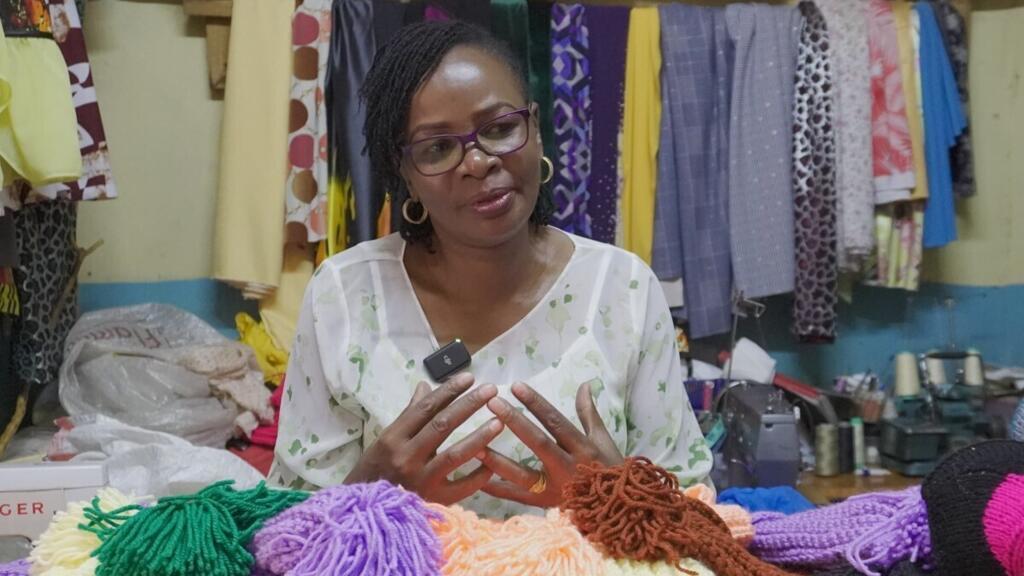
Mary Mwangi at her small shop, where she knits prostheses and teaches other women how to do the same. © Mary Mwangi
By: Anne Macharia in Nairobi
Issued on: 27/12/2025 - RFI
The first thing you notice about Mary is her laughter – warm, loud, and quite unexpected from one who has faced death twice.
Inside a tiny tailoring shop in the town of Thika, near the Kenyan capital Nairobi, rolls of fabric spill off the shelves and sewing machines hum. Mary sits in one corner, yarn in hand, looping stitch after stitch with meditative focus.
Knitting was not always her livelihood, it was once just a childhood hobby, forgotten somewhere between raising three children and building a business. It only resurfaced in 2017, when her body forced her to slow down.
'I felt like the world had slapped me'
That year, Mary was diagnosed with spinal cancer and was bedridden for 11 months. She remembers the silence in her house, the long days and the longer nights, and a mind restless with fear. In an attempt to escape it all, she reached for her knitting needles.
“I just needed something to keep my mind from sinking,” she says, her fingers absently tracing the rim of a basket full of yarn.
She began knitting hats and donating them to cancer patients at Kenyatta National Hospital.
A year later, her cancer was back – this time, stage three breast cancer. Mary remembers the doctor's voice fading into a blur as she was told the news.
"I felt like the world had slapped me," she says. She turned off her phone and withdrew from her friends, telling her husband she didn't want to speak to anyone. "Everything felt violent. Even the air."
Her treatment was gruelling – a mastectomy, 33 rounds of radiotherapy, endless visits to the hospital. Her hair disappeared. Her savings vanished. The loan of $10,000 she had taken out to expand her small tailoring shop was swallowed up by medical bills.
'A common wound'
But what cut deepest for Mary was the stigma around losing her breasts.
“People whispered. They called me ‘the woman whose breasts were cut'. Losing them, and your sense of dignity and womanhood... it's not something you can prepare for,” she says.
When Mary was well enough to walk around the cancer ward, she saw other women draped in scarves and oversized jumpers, disguising the area where a breast used to be.
"The conversations revealed a common wound: stigma and silence," she says.
Silicone prosthetic breasts cost far more than most of these women can afford. So Mary turned again to the thing that had got her through her illness – her knitting, But this time she had a different purpose in mind.
She learned how to make soft yarn breast prostheses, mastered the technique with YouTube videos and long nights of trial and error.
"Knitting saved me mentally," she says. "It pulled me from fear into purpose."
Small shop, big dreams
Today, Mary's tailoring shop is more than a business, it's a sanctuary.
As the staff work the machines, Mary sits by the window knitting prosthesis after prosthesis – round, soft and colourful. She sells them for 1,500 shillings each, and organisations buy them in bulk to donate to cancer survivors.
She has now made more than 600 prostheses and more than 450 hats, and the orders just keep coming.
Every week, Mary also holds classes teaching women – many of whom are fellow survivors – how to knit the prostheses, in order to earn an income.
Hannah Nungari Mugo is a former vegetable seller, who says she felt her identity fade away after her 2019 mastectomy.
"People treated me like a broken thing," she says. Knitting gave her something to hold on to, and she now makes around even prostheses a week.
Mary Patricia Karobia, who had a liver transplant, says she too knows what that stigma feels like. “I heard people whisper about my liver being removed." For her, knitting is about healing, and showing others her strength.
Mary hopes one day to be able to train women throughout Kenya, but space and finances are standing in her way for now.
"Cancer took a lot from me," she says, looking down at the colourful prostheses on her table. "But it also gave me purpose. And I want to pass that purpose on."
By: Anne Macharia in Nairobi
Issued on: 27/12/2025 - RFI
The first thing you notice about Mary is her laughter – warm, loud, and quite unexpected from one who has faced death twice.
Inside a tiny tailoring shop in the town of Thika, near the Kenyan capital Nairobi, rolls of fabric spill off the shelves and sewing machines hum. Mary sits in one corner, yarn in hand, looping stitch after stitch with meditative focus.
Knitting was not always her livelihood, it was once just a childhood hobby, forgotten somewhere between raising three children and building a business. It only resurfaced in 2017, when her body forced her to slow down.
'I felt like the world had slapped me'
That year, Mary was diagnosed with spinal cancer and was bedridden for 11 months. She remembers the silence in her house, the long days and the longer nights, and a mind restless with fear. In an attempt to escape it all, she reached for her knitting needles.
“I just needed something to keep my mind from sinking,” she says, her fingers absently tracing the rim of a basket full of yarn.
She began knitting hats and donating them to cancer patients at Kenyatta National Hospital.
A year later, her cancer was back – this time, stage three breast cancer. Mary remembers the doctor's voice fading into a blur as she was told the news.
"I felt like the world had slapped me," she says. She turned off her phone and withdrew from her friends, telling her husband she didn't want to speak to anyone. "Everything felt violent. Even the air."
Her treatment was gruelling – a mastectomy, 33 rounds of radiotherapy, endless visits to the hospital. Her hair disappeared. Her savings vanished. The loan of $10,000 she had taken out to expand her small tailoring shop was swallowed up by medical bills.
'A common wound'
But what cut deepest for Mary was the stigma around losing her breasts.
“People whispered. They called me ‘the woman whose breasts were cut'. Losing them, and your sense of dignity and womanhood... it's not something you can prepare for,” she says.
When Mary was well enough to walk around the cancer ward, she saw other women draped in scarves and oversized jumpers, disguising the area where a breast used to be.
"The conversations revealed a common wound: stigma and silence," she says.
Silicone prosthetic breasts cost far more than most of these women can afford. So Mary turned again to the thing that had got her through her illness – her knitting, But this time she had a different purpose in mind.
She learned how to make soft yarn breast prostheses, mastered the technique with YouTube videos and long nights of trial and error.
"Knitting saved me mentally," she says. "It pulled me from fear into purpose."
Small shop, big dreams
Today, Mary's tailoring shop is more than a business, it's a sanctuary.
As the staff work the machines, Mary sits by the window knitting prosthesis after prosthesis – round, soft and colourful. She sells them for 1,500 shillings each, and organisations buy them in bulk to donate to cancer survivors.
She has now made more than 600 prostheses and more than 450 hats, and the orders just keep coming.
Every week, Mary also holds classes teaching women – many of whom are fellow survivors – how to knit the prostheses, in order to earn an income.
Hannah Nungari Mugo is a former vegetable seller, who says she felt her identity fade away after her 2019 mastectomy.
"People treated me like a broken thing," she says. Knitting gave her something to hold on to, and she now makes around even prostheses a week.
Mary Patricia Karobia, who had a liver transplant, says she too knows what that stigma feels like. “I heard people whisper about my liver being removed." For her, knitting is about healing, and showing others her strength.
Mary hopes one day to be able to train women throughout Kenya, but space and finances are standing in her way for now.
"Cancer took a lot from me," she says, looking down at the colourful prostheses on her table. "But it also gave me purpose. And I want to pass that purpose on."
No comments:
Post a Comment