Swift Anglo-Teck merger approval shows Canada’s pro-business shift, dealmakers say
| December 16, 2025 |
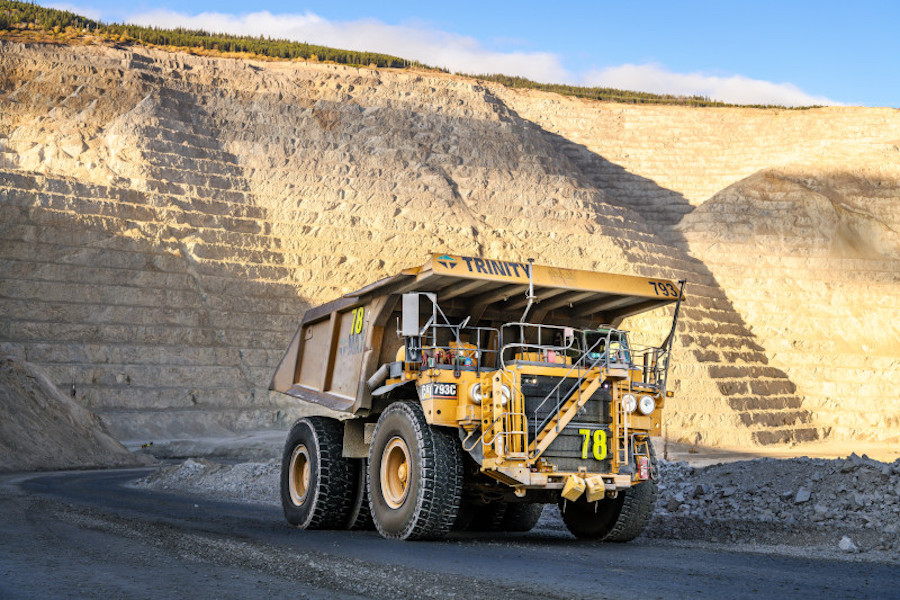
Canada’s swift approval of the $53 billion merger between British miner Anglo American and Canada’s Teck Resources signals a push to attract investment to offset the impact of US tariffs, dealmakers told Reuters.

Late Monday night, Melanie Joly, Canada’s Innovation, Science, and Economic Development Minister, said that Canada has approved the all-share buyout of Teck Resources by Anglo American under the Investment Canada Act, clearing a regulatory hurdle to create a global copper heavyweight.
Joly said in a statement that the deal benefits Canada. Her office did not respond to further requests for comment.
Canada approved the deal in about three months, much faster than normal for mergers of this size in the mining sector.
The rapid approval signals a significant shift in Ottawa’s approach to foreign takeovers, particularly in the sensitive critical minerals sector. Analysts say the government is prioritizing attracting capital over lengthy reviews as it contends with the challenging trade environment created by US President Donald Trump.
Anglo-Teck said it made a series of concessions to the government, including a commitment to spend C$4.5 billion in Canada within five years.
Canadian lawyers said the faster approval is part of Prime Minister Mark Carney’s efforts to show the world that Canada is open for business.
The Investment Canada Act, which guides approvals for mergers and acquisitions in the country, established a high bar for approving deals involving critical minerals.
Canada took eight months in 2024 to approve Glencore’s $7 billion acquisition of Teck’s steelmaking coal unit with strict conditions to preserve jobs.
Joly’s predecessor had said Canada would approve any deals involving critical minerals only under “exceptional circumstances.”
“Those statements from the previous minister were made before Canada faced the daunting economic challenges as a result of the tariff war,” said Sandy Walker, partner at Dentons Canada.
“This government now seems highly motivated to encourage investment and economic activity,” Walker added.
However, in Canada, the popular opinion toward foreign ownership of mining companies remains contentious.
By Divya Rajagopal; Editing by Caroline Stauffer and Lisa Shumaker)
Ontario, Ottawa sign deal to speed up major projects
Ontario and Canada’s federal government signed an agreement deal that aims to curb duplicate reviews and advance long-planned infrastructure and projects such as those in the province’s metals-rich Ring of Fire region.
The deal will bring a “one project, one review” approach to major infrastructure initiatives in Canada’s most populous province, the federal government said Thursday in a statement. It will ensure that both levels of government “can adopt the most effective assessment process on a case-by-case basis – either by relying on Ontario’s process or by implementing a coordinated federal-provincial approach,” Ottawa said.
Under the deal, Ontario and Canada pledge to coordinate environmental and impact assessments on major projects that would otherwise trigger separate federal and provincial processes while respecting jurisdictional responsibilities. Officials say the model will deliver major projects faster while reinforcing environmental protections.
More resilient
Canada’s announcement comes as its biggest trading partner, the United States, forges ahead with efforts to reshape a decades-old trade policy by imposing tariffs on major Canadian exports. Ottawa says the deal with Ontario will help transform the nation’s economy by lessening its dependence on a single country and making it more resilient to global shocks.
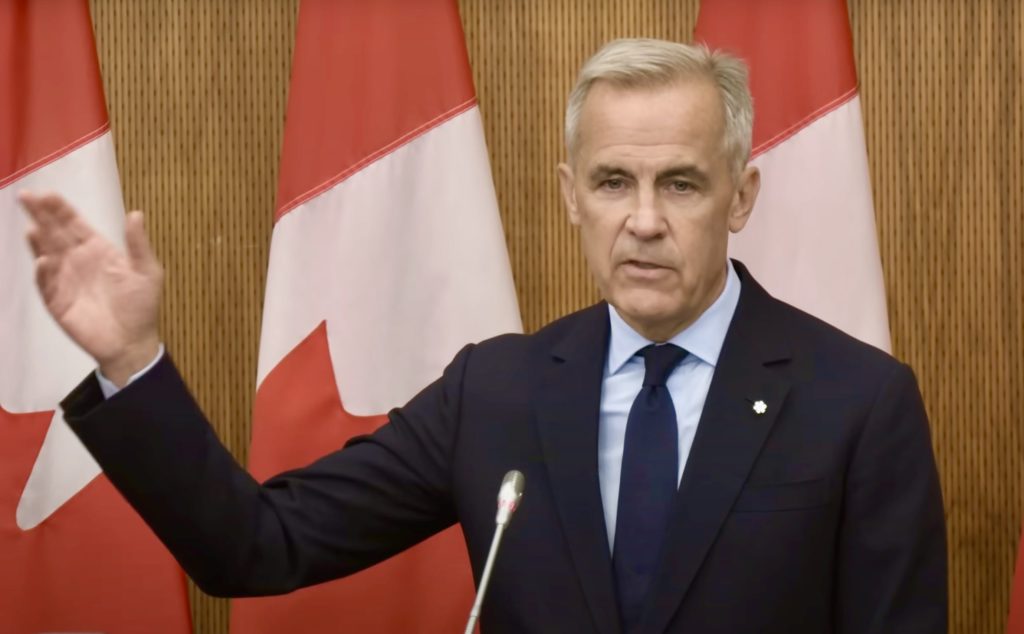
“This agreement will speed up project approval timelines by introducing a new ‘one project, one review’ approach,” Prime Minister Mark Carney told reporters Thursday at a news conference in Ottawa. “And under the agreement, Canada and Ontario will have a streamlined and flexible assessment process.”
News of the cooperation accord comes about four months after Ottawa formed the Major Projects Office to speed up nation-building ventures through permits.
In September, Carney announced the first series of projects being referred to the office for consideration, part of a wider push to develop critical mineral supply chains outside of Chinese and Russian control.
Approval times
A month later, Frontier Lithium’s (TSXV: FL) PAK project in northwestern Ontario was the first to be added to the province’s One Project, One Process (1P1P) program designed to cut mine approval times by half. Its framework created a centralized permitting and authorization model that aims to approve advanced exploration and mine development projects in a maximum of two years, Energy and Mines Minister Stephen Lecce said in October. The reform will give investors and developers the confidence to build mines and create jobs across northern Ontario, he added.
As Canada reels from U.S. President Donald Trump’s tariff war, Ontario Premier Doug Ford has moved to rev up mining output in the province. In June, his government passed a sweeping and contentious mining law aimed at accelerating major development projects. A new provincial C$500 million critical minerals processing fund, which Ford announced Feb. 23, seeks to advance development projects for turning ore into metals by attracting large investors.
Ontario’s new rules replaced what Lecce branded an outdated and fragmented system that has seen mine approval timelines balloon to as long as 15 years – second-longest among Organization for Economic Co-operation and Development member countries. These delays have curtailed investment, job creation and access to critical and strategic minerals like cobalt, lithium and nickel, especially in areas such as the Ring of Fire, Ontario says.
Third deal
The agreement between Canada and Ontario is the third of its kind, following one with New Brunswick earlier this week and a 2019 deal on impact assessments with British Columbia. Accords with Manitoba and Prince Edward Island have completed consultation and are being finalized. Alberta and Canada are working to sign a co-operation agreement by April 1.
Carney said the most recent deal will help the country in trade talks with the U.S. – assuming they resume before an existing North America-wide free trade agreement expires next year.
“It (…) puts us in a stronger position,” Carney said Thursday. “We’re ready to sit down on the weekend, negotiate any weekend, any time, but we’re also busy. We’re busy building Ontario. We’re busy building Canada. We’re going to build it faster.”
Ford defended the province’s decision to run an ad on U.S. television during the most recent baseball World Series that criticized tariffs with the help of excerpts from a 1980s speech by former U.S. president – and Republican – Ronald Reagan. The ad sparked Trump’s furor, leading him to unilaterally end trade talks with Canada.
“That was the best ad that’s ever been run, 12.4 billion views. “We wanted to bring it to the attention of the American people,” Ford said at the press conference.
“Protectionism does not work. We’re their No. 1 customer. They’re our No. 1 customer. We need to work together.”
No comments:
Post a Comment