Ukraine: Fighting for the least unjust peace
First published at Rosa-Luxemburg-Stiftung.
For many Ukrainians, the past year has felt a bit like Groundhog Day. Now and then, Washington decides to open discussions with Moscow about ending the war in their country, a terrible “peace” proposal pops up, pressure mounts on Kyiv to compromise, a flurry of diplomacy manages to reduce the demands placed on Ukraine, and then Putin brings up his so-called “root causes” for the war — before the whole circus starts over again.
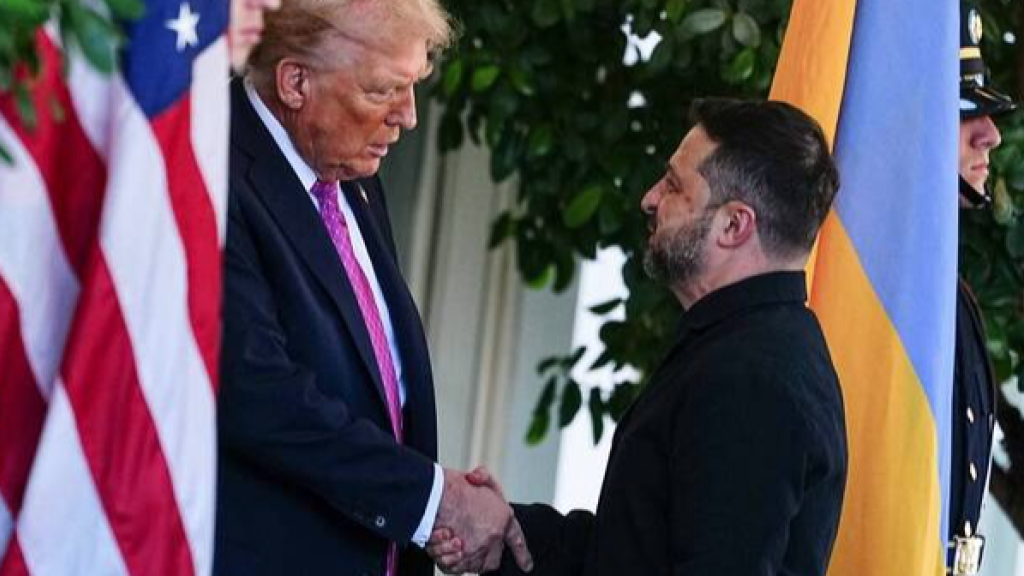
The mid-November leak of a secret 28-point plan negotiated between the US and Russia was the most dramatic iteration of this circus yet. The plan foresaw Kyiv ceding the entire Donetsk region, capping its armed forces at 600,000 troops, dropping any hopes for NATO membership, and prohibiting NATO forces from being stationed on Ukrainian soil. This round also coincided with Ukraine’s most serious domestic political crisis and near-exhaustion on the battlefield.
First published at Rosa-Luxemburg-Stiftung.
For many Ukrainians, the past year has felt a bit like Groundhog Day. Now and then, Washington decides to open discussions with Moscow about ending the war in their country, a terrible “peace” proposal pops up, pressure mounts on Kyiv to compromise, a flurry of diplomacy manages to reduce the demands placed on Ukraine, and then Putin brings up his so-called “root causes” for the war — before the whole circus starts over again.
The mid-November leak of a secret 28-point plan negotiated between the US and Russia was the most dramatic iteration of this circus yet. The plan foresaw Kyiv ceding the entire Donetsk region, capping its armed forces at 600,000 troops, dropping any hopes for NATO membership, and prohibiting NATO forces from being stationed on Ukrainian soil. This round also coincided with Ukraine’s most serious domestic political crisis and near-exhaustion on the battlefield.
Modest progress, fundamental problems
As Andrii Movchan, a Ukrainian left-wing activist in exile and organizer of a solidarity campaign in Catalonia, acknowledges, despite containing several conditions unacceptable to Ukraine, the draft is already better than previous proposals. The ceiling on Ukraine’s armed forces is higher, Russia’s non-aggression obligations are recognized, the wording of ideological requirements vis-à-vis minority rights is less alienating, sanctions on Russia are to be removed gradually and on a case-by-case basis, and for the first time, Moscow accepted that it may have to contribute at least some of its frozen assets to Ukraine’s reconstruction.
Another positive sign, according to Movchan, is that Ukraine also agreed to take this revised draft as a basis for further negotiations and is ready to move towards compromises. This pragmatism, however, does not alter the nature of the current proposal. The draft still reads like an imbalanced settlement heavily favouring the Kremlin and granting Moscow control over Ukraine’s foreign policy and a blanket amnesty for war crimes. Taras Bilous, co-editor of the left-wing Ukrainian journal Spilne/Commons and currently serving in the Ukrainian armed forces, reacted particularly strongly to the unilateral limitations on Ukraine’s military, which seem to imply that Ukraine was somehow responsible for the war.
Consultations between Kyiv and Washington in Geneva have since reduced the scope of the framework, but three issues remain unresolved: the size of Ukraine’s army, territorial settlements, and NATO membership for Ukraine. It is hard to imagine Russia compromising on these points and accepting a deal that would not allow it to resume the war at will. In fact, whether Kyiv refused to negotiate, called for a ceasefire, or tried to reach understanding, it had little influence on the Russian agenda of weakening Ukraine. Many are now convinced that as long as Moscow continues to succeed on the battlefield, it will push further.
Rumours that the US would unilaterally recognize Russian demands to overcome the impasse began circulating in late November. Insights from talks held in Florida confirmed what many suspected: the agreement addressing Russia’s concerns over NATO membership and Ukrainian territories will be between Washington and Moscow. The dialogue between US and Russian representatives in the Kremlin in early December was “ useful” but did not bring any breakthroughs.
Former Commander-in-Chief of the Armed Forces of Ukraine Valerii Zaluzhny recently noted that while obtaining reliable security guarantees is impossible under current conditions, even a temporary ceasefire in anticipation of the next war might open a window for political changes, deep reforms, and economic recovery for Ukraine. Vitalii Dudin, co-founder of the left-wing group Sotsialnyi Rukh, concurred that there is a chance that Russia’s killing machine will slow down in the near future, while Ukraine could at least catch its breath and recover its strength if the war stops. He remains sceptical, however, that signing another document will make Moscow lay down its weapons. Such reservations seem warranted, given that the Friendship Treaty between Russia and Ukraine signed in 1997, which included mutual obligations to non-aggression and respect for territorial integrity, did not prevent Russia from invading 17 years later, and then again in 2022.
The elephant in the room is the fate of the parts of the Donetsk region that Ukraine still controls. As Putin underlined in a recent speech given in Bishkek, “Ukrainian troops must withdraw from the territories they hold, and then the fighting will cease. If they don’t leave, then we shall achieve this by armed means.” For Kyiv, surrendering cities like Kramatorsk or Sloviansk without a fight would constitute a red line. Bilous warns that it would destabilize Ukrainian society and encourage further Russian aggression. After all, two more disputed regions would remain.
As Andrii Movchan, a Ukrainian left-wing activist in exile and organizer of a solidarity campaign in Catalonia, acknowledges, despite containing several conditions unacceptable to Ukraine, the draft is already better than previous proposals. The ceiling on Ukraine’s armed forces is higher, Russia’s non-aggression obligations are recognized, the wording of ideological requirements vis-à-vis minority rights is less alienating, sanctions on Russia are to be removed gradually and on a case-by-case basis, and for the first time, Moscow accepted that it may have to contribute at least some of its frozen assets to Ukraine’s reconstruction.
Another positive sign, according to Movchan, is that Ukraine also agreed to take this revised draft as a basis for further negotiations and is ready to move towards compromises. This pragmatism, however, does not alter the nature of the current proposal. The draft still reads like an imbalanced settlement heavily favouring the Kremlin and granting Moscow control over Ukraine’s foreign policy and a blanket amnesty for war crimes. Taras Bilous, co-editor of the left-wing Ukrainian journal Spilne/Commons and currently serving in the Ukrainian armed forces, reacted particularly strongly to the unilateral limitations on Ukraine’s military, which seem to imply that Ukraine was somehow responsible for the war.
Consultations between Kyiv and Washington in Geneva have since reduced the scope of the framework, but three issues remain unresolved: the size of Ukraine’s army, territorial settlements, and NATO membership for Ukraine. It is hard to imagine Russia compromising on these points and accepting a deal that would not allow it to resume the war at will. In fact, whether Kyiv refused to negotiate, called for a ceasefire, or tried to reach understanding, it had little influence on the Russian agenda of weakening Ukraine. Many are now convinced that as long as Moscow continues to succeed on the battlefield, it will push further.
Rumours that the US would unilaterally recognize Russian demands to overcome the impasse began circulating in late November. Insights from talks held in Florida confirmed what many suspected: the agreement addressing Russia’s concerns over NATO membership and Ukrainian territories will be between Washington and Moscow. The dialogue between US and Russian representatives in the Kremlin in early December was “ useful” but did not bring any breakthroughs.
Former Commander-in-Chief of the Armed Forces of Ukraine Valerii Zaluzhny recently noted that while obtaining reliable security guarantees is impossible under current conditions, even a temporary ceasefire in anticipation of the next war might open a window for political changes, deep reforms, and economic recovery for Ukraine. Vitalii Dudin, co-founder of the left-wing group Sotsialnyi Rukh, concurred that there is a chance that Russia’s killing machine will slow down in the near future, while Ukraine could at least catch its breath and recover its strength if the war stops. He remains sceptical, however, that signing another document will make Moscow lay down its weapons. Such reservations seem warranted, given that the Friendship Treaty between Russia and Ukraine signed in 1997, which included mutual obligations to non-aggression and respect for territorial integrity, did not prevent Russia from invading 17 years later, and then again in 2022.
The elephant in the room is the fate of the parts of the Donetsk region that Ukraine still controls. As Putin underlined in a recent speech given in Bishkek, “Ukrainian troops must withdraw from the territories they hold, and then the fighting will cease. If they don’t leave, then we shall achieve this by armed means.” For Kyiv, surrendering cities like Kramatorsk or Sloviansk without a fight would constitute a red line. Bilous warns that it would destabilize Ukrainian society and encourage further Russian aggression. After all, two more disputed regions would remain.
Crisis and leverage
A number of factors affect Ukraine’s negotiating position. For one, the war narrows the space for public scrutiny of the Ukrainian government. Therefore, as Dudin ponders, there is doubt concerning the extent to which current political figures have the right to make such consequential decisions for the country in this moment of historic significance. Just recently, a 100-million-dollar graft scheme revealed at the state-owned nuclear power company Energoatom implicated a former deputy prime minister and compelled two sitting ministers to resign. This crisis came as Russia’s systematic onslaught has reduced Ukraine’s energy sector to operating at only one third of pre-war capacity, with reconstruction costs estimated at 67.78 billion US dollars. A week ago, amidst ongoing investigations, anti-corruption agencies raided the home of Andriy Yermak, Zelensky’s chief of staff who was effectively in charge of peace negotiations, forcing him to step down.
While 76 percent of Ukrainians are eager to continue the fight even if the US withdraws its support, the country is in a highly vulnerable position, facing a 63-billion-dollar financing gap for the upcoming fiscal years of 2026 and 2027. The EU, in turn, has yet to find a way to issue a “reparations loan” to Ukraine without dumping all the risks on Belgium, prompting the Chairman of the Verkhovna Rada’s Committee on Finance, Taxation, and Customs Policy, Danylo Hetmantsev, to underline that there is no alternative to complying with IMF demands — which, as usual, are austerity-coded.
There is also another kind of dependency. Since the war began, annual in-kind military donations have averaged over 40 billion dollars. The issue here exceeds the need to raise funds for purchasing them on the market. Ukraine remains critically dependent on the US: rocket artillery, long-range anti-aircraft systems, intelligence sharing, and satellite imagery are hard to replace. At the same time, even Ukraine’s celebrated drone industry is highly reliant on Chinese components, with nearly 97 percent of producers identifying China as a primary source of imports.
Meanwhile, war fatigue across Ukrainian society is very real: while rejecting the Russian terms, 74 percent of Ukrainians now consider freezing the conflict along the line of contact a success of varying degrees, even if over half of them are convinced that Russia will resume hostilities sometime in the future. In the Ukrainian armed forces, meanwhile, over 183,000 AWOL and desertion cases were registered from January through October 2025 alone — more than in all of 2022–2024 combined.
As much as Washington forcing Kyiv into the deal with Moscow is unjust and morally reprehensible, it is unclear whether Ukraine can withstand the pressure alone, given that Europe is unable to offer much beyond comforting words.
A number of factors affect Ukraine’s negotiating position. For one, the war narrows the space for public scrutiny of the Ukrainian government. Therefore, as Dudin ponders, there is doubt concerning the extent to which current political figures have the right to make such consequential decisions for the country in this moment of historic significance. Just recently, a 100-million-dollar graft scheme revealed at the state-owned nuclear power company Energoatom implicated a former deputy prime minister and compelled two sitting ministers to resign. This crisis came as Russia’s systematic onslaught has reduced Ukraine’s energy sector to operating at only one third of pre-war capacity, with reconstruction costs estimated at 67.78 billion US dollars. A week ago, amidst ongoing investigations, anti-corruption agencies raided the home of Andriy Yermak, Zelensky’s chief of staff who was effectively in charge of peace negotiations, forcing him to step down.
While 76 percent of Ukrainians are eager to continue the fight even if the US withdraws its support, the country is in a highly vulnerable position, facing a 63-billion-dollar financing gap for the upcoming fiscal years of 2026 and 2027. The EU, in turn, has yet to find a way to issue a “reparations loan” to Ukraine without dumping all the risks on Belgium, prompting the Chairman of the Verkhovna Rada’s Committee on Finance, Taxation, and Customs Policy, Danylo Hetmantsev, to underline that there is no alternative to complying with IMF demands — which, as usual, are austerity-coded.
There is also another kind of dependency. Since the war began, annual in-kind military donations have averaged over 40 billion dollars. The issue here exceeds the need to raise funds for purchasing them on the market. Ukraine remains critically dependent on the US: rocket artillery, long-range anti-aircraft systems, intelligence sharing, and satellite imagery are hard to replace. At the same time, even Ukraine’s celebrated drone industry is highly reliant on Chinese components, with nearly 97 percent of producers identifying China as a primary source of imports.
Meanwhile, war fatigue across Ukrainian society is very real: while rejecting the Russian terms, 74 percent of Ukrainians now consider freezing the conflict along the line of contact a success of varying degrees, even if over half of them are convinced that Russia will resume hostilities sometime in the future. In the Ukrainian armed forces, meanwhile, over 183,000 AWOL and desertion cases were registered from January through October 2025 alone — more than in all of 2022–2024 combined.
As much as Washington forcing Kyiv into the deal with Moscow is unjust and morally reprehensible, it is unclear whether Ukraine can withstand the pressure alone, given that Europe is unable to offer much beyond comforting words.
Preparing for the worst, fighting for the best
As Russia advances on the battlefield, leaving devastation in its wake, and international backing becomes more critical than ever, many Ukrainians struggle to understand the stance adopted by the European Left. During heated debates in the European Parliament last month on the peace plan for Ukraine, the Left Group, with the exception of its Nordic MEPs, abstained or voted against the resolution. While none of them justify the invasion, they tend to focus on condemning hawks, emphasizing the security concerns of both sides, and blaming Europe for sabotaging diplomatic efforts.
Nothing can guarantee forever peace next to a wounded second-tier empire. The role of the military, then, is not to pursue war, but to be ready should everything else fail. While Europe already spends more on defence than at the end of the Cold War, it is unclear whether it is able to withstand a possible Russian attack. Yet instead of raising the alarm about unpreparedness, the Left largely limits itself to denouncing militarism even as the aggressor continues its assault on Europe’s doorstep. Not every country may be directly threatened, but NATO and the EU’s mutual defence clauses — and, some would say, solidarity — foster obligations that transcend national borders.
The Ukrainian Left does not believe that diplomacy is enough to ensure the end of the war or exclude its recurrence. They are therefore unambiguous: getting to any meaningful deal requires increasing pressure on Russia. Andrii Movchan warns that, otherwise, “Ukraine will have to accept even worse terms.” Taras Bilous concludes that while a fair peace may no longer be possible, “we must fight for the least unjust and safest conditions that can realistically be achieved today so that the war doesn’t restart tomorrow”. What exactly these will be depends entirely on Ukraine’s ability to survive, recover, and resist. The stronger its military capacity, economic resilience, and international backing, the better the settlement it can expect and the longer it will last.
Oleksandr Kyselov holds an MA in European Studies from Yerevan State University. He worked as data analyst at the Right to Protection Foundation’s office in Sloviansk and is currently a Research Assistant at the Department of Government at Uppsala University.
As Russia advances on the battlefield, leaving devastation in its wake, and international backing becomes more critical than ever, many Ukrainians struggle to understand the stance adopted by the European Left. During heated debates in the European Parliament last month on the peace plan for Ukraine, the Left Group, with the exception of its Nordic MEPs, abstained or voted against the resolution. While none of them justify the invasion, they tend to focus on condemning hawks, emphasizing the security concerns of both sides, and blaming Europe for sabotaging diplomatic efforts.
Nothing can guarantee forever peace next to a wounded second-tier empire. The role of the military, then, is not to pursue war, but to be ready should everything else fail. While Europe already spends more on defence than at the end of the Cold War, it is unclear whether it is able to withstand a possible Russian attack. Yet instead of raising the alarm about unpreparedness, the Left largely limits itself to denouncing militarism even as the aggressor continues its assault on Europe’s doorstep. Not every country may be directly threatened, but NATO and the EU’s mutual defence clauses — and, some would say, solidarity — foster obligations that transcend national borders.
The Ukrainian Left does not believe that diplomacy is enough to ensure the end of the war or exclude its recurrence. They are therefore unambiguous: getting to any meaningful deal requires increasing pressure on Russia. Andrii Movchan warns that, otherwise, “Ukraine will have to accept even worse terms.” Taras Bilous concludes that while a fair peace may no longer be possible, “we must fight for the least unjust and safest conditions that can realistically be achieved today so that the war doesn’t restart tomorrow”. What exactly these will be depends entirely on Ukraine’s ability to survive, recover, and resist. The stronger its military capacity, economic resilience, and international backing, the better the settlement it can expect and the longer it will last.
Oleksandr Kyselov holds an MA in European Studies from Yerevan State University. He worked as data analyst at the Right to Protection Foundation’s office in Sloviansk and is currently a Research Assistant at the Department of Government at Uppsala University.
The Agony of Defeat
A peaceful settlement of the Ukraine conflict is not in the cards. It is a logical impossibility given the following truths
1. America’s leaders could not tolerate terms minimally acceptable to Russia. For such terms would represent a) an unmistakable loss of status and self-regard; b) a reversion from the strategic foundations of the country’s foreign policy put firmly in place over the past 35 years; and c) a domestic political embarrassment carrying heavy costs for Trump and his movement. Furthermore, Trump’s narcissistic, warped personality is too vulnerable to endure a rebuke and a failure of that magnitude. He is terrified at the prospect of looking like a loser.
2. Currently, there is not a single official at the policy level who has direct knowledge of Russia or has dealt with it on a sustained basis. Similarly, there is not a single official at the policy level who has the experience of having conducted serious diplomacy with foreign powers. Ignorant amateurs wedded to a rigid conception of American national interest are at the helm. A crew made up of a New York real estate operator who draws heavy financing from the Qatari government, a FOX news loudmouth, a Castro-obsessed Miami pol and an opportunistic novice Veep is in so far over their heads that the bubbles don’t reach the surface – and their skipper is an erratic, mentally impaired narcissist whose hold on reality is tenuous.
The fixed goal of everything that the United States does in the world is the securing of American dominance as institutionalized since 1991 – in every sphere of international life that counts and in every region where either the stakes are high or the prospect of a putative rival arising exists. To that end, they are prepared to use all the formidable means available to them. There is no group or intellectual current of weight whose worldview deviates markedly from this line in either political party, in Congress or among prominent members of the foreign policy community.
3. Therefore, the United States in Ukraine has stranded itself in a cul de sac that is strategic, political, intellectual and psychological. Trump’s so-called 28 Point peace proposal – a pastiche of the not-so-good, the very bad, and the very ugly – is an absurd non-starter. Dead on arrival in Moscow whoever the delivery man. When he finally realizes that he is cornered, Trump’s first instinct will be to bluster his way out; that failing, to forcibly fight his way out. Only the pervasive, unlimited capacity for self-delusion hides that unyielding fact. Self-delusion is the cardinal feature of the faux diplomatic initiatives that the White House is desperately trying to make real – over the strenuous objections of Kiev and the European allies who have succeeded in stiffening its provisions so they are yet more unpalatable to Moscow.
4. Vladimir Putin, and his associates, tacitly feed this delusion by taking a calculatingly temperate tack in reaction to this non-starter of a “peace” plan despite Washington’s quixotic and bumbling machinations. Whether they do so to satisfy partners (China, India, Turkey, Brazil) who for their own national reasons want to see an end to the war and whose cooperation is valued OR due to Putin’s long-standing and enduring hopes of engaging constructively with the United States, their non-confrontational approach carries the risk of entrenching the Americans’ fantastical view of the world. So that when crunch time comes, and humiliating defeat is at the door, they might revert to type and impulse by resorting to the violent, escalatory option.
Far-fetched? For some time, the Kremlin may well have been emboldening Washington to consider escalation by passively accepting that hundreds of American military personnel are firing American HIMARS and ACATM missiles into Russia proper, that American AWACS and satellites guide Ukrainian attacks against strategic radar sites, that analogous technical assistance allows for assault on Russia’s “shadow” oil fleet, that the Pentagon draws up the battle plans for the Ukrainian army and orchestrated the ill-starred 2023 offensive, that the CIA implanted itself along the country’s border to provide Kiev Intelligence and to facilitate para-military operations. This passive behavior has led many within Washington policy circles to believe that Putin is lacking in ruthlessness – whatever his other strengths. That impression has been reinforced by Russian restraint on Syria, Iran, Palestine and Venezuela when the Kremlin was confronted by audacious, in-your-face American actions. The conclusion that Putin is not a ruthless leader is probably correct – although incorrect in the corollary assumption that he would allow himself to be bullied into major concessions when push comes to shove over Ukraine. Putin’s reading of the Trump presidency is that the man’s mercurial nature and unpredictability potentially opens the possibility for some kind of meeting of the minds which was foreclosed by more conventional American leaders like Biden. A stable Russo-American modus vivendi, in turn, is the sine qua non for a longer-term reconciliation of Russia within the wider European system.
Another consideration. In all likelihood, there lurks in the back of Putin’s mind the dread fear that an unhinged Trump, roiling in the coils of his twisted psyche, could do something truly insane that endangers all. Keeping company with him – however tenuous – is seen as mitigating that risk by ensuring that Trump didn’t disconnect from reality totally.
What he fails to perceive is that behind the showmanship and disconnects, Trump’s outlook on the world – especially the fixed belief in the country’s superiority and privileged exceptionalism – at its core closely resembles that of the Washington consensus. Scratch beneath the surface and we experience deja vu all over again – decked out in novel costume.
Looking beyond Ukraine, bear in mind that this government, in less than a year, has established a stunning record for bellicosity: launching a massive air assault against Iran with no legal or security justification (an aggression concealed by a deceptive veil of fictitious peace talks); lending its military might and diplomatic muscle to Israel’s attacks on Lebanon and Syria followed by partial territorial seizures; participating in the Palestinian genocide; declaring war on Venezuela behind a smokescreen of transparent lies to hide the actual objective of taking control of the country’s petroleum resources; encouraging the newly minted Japanese government of ultra-nationalist Prime Minister Sanae Takaichi to make the reckless declaration that Japan had a strategic national interest in Taiwan’s independence and, if necessary, defense; imposing or threatening coercive economic sanctions on an array of countries suspected of disobedience to Washington.
5. Domestic criticism of Trump’s mishandling of the United States’ foreign relations is feeble. The Democratic Party leaders share the same worldview (re. the Biden administration – and are inhibited about crossing swords with Trunp on any issue. The MSM have been intimidated into subservience to the point where even the most egregious lies and illegal actions are not labelled as such. Examples: the global tariff wars that are in direct violation of the Constitution (Article I, Section 8) that grants Congress the power “To lay and collect Taxes, Duties, Imposts and Excises,” which includes the authority to set tariffs on imported goods – with statutory exemptions limited to national security emergencies; the promiscuous use of the armed forces without even prior notification of the Congress; the ridiculous tale about Venezuela’s fishing skiffs delivering drugs only 800 miles off the U.S. coast, , the condition of Russia’s economy, the Afghan who shot the two National Guardsman – a CIA commando trained to fight a dirty war against the Taliban – as reason to suspend all asylum petitions, the destruction of the Nordstrom II gas pipeline, the denunciation as ‘traitor’ anyone who reminds serving military officers that they are bound by the Department of Defense’s manual stipulating codes of conduct as well as international law to refuse a manifestly illegal order. Hence, the public is instilled with the notion that there is nothing out-of-the-ordinary about the Trump dangerous escapades and inanities.
A conscientious follower of the MSM remains largely oblivious to the meaning and consequence of these matters. Superficial and fleeting mention of tactical differences or disagreements over the grammar of policy elbows out any serious critical commentary. Therefore, tolerance is high, electoral costs abnormally low and the President’s ability to act with feckless impunity unimpeded.
The United States is being defeated in Ukraine – comprehensively. One could say that it is facing defeat – or, more starkly, that it is staring defeat in the face. Neither formulation is appropriate, though. The U.S. doesn’t look reality squarely in the eye. We prefer to look at the world through the distorted lenses of our delusions. We plunge forward on whatever path we’ve chosen while averting our eyes from the topography that we are trying to traverse.
It is not that America is a stranger to defeat. We are very well acquainted with it: Vietnam, Afghanistan, Iraq, Yemen, Mali – in strategic terms if not always military terms. To this broad category, we might add Venezuela, Cuba, Belarus, Georgia and Niger. Moreover, Washington’s failures are now crowned by its embarrassment at being forced to run up the white flag when China stared it down in the Trump initiated tariff war. That rich experience in frustrated ambition has failed to liberate us from the deeply rooted habit of eliding defeat. Indeed, we have acquired a large inventory of methods for doing so.
Vietnam being the prime example. A society that so thoroughly can erase from the collective mind a Vietnam where 59,000 Americans died, surely can suppress Ukraine where no deaths are recorded.
No comments:
Post a Comment