Unbridled Capitalism, Necropolitics, and the Crisis of Life Conditions
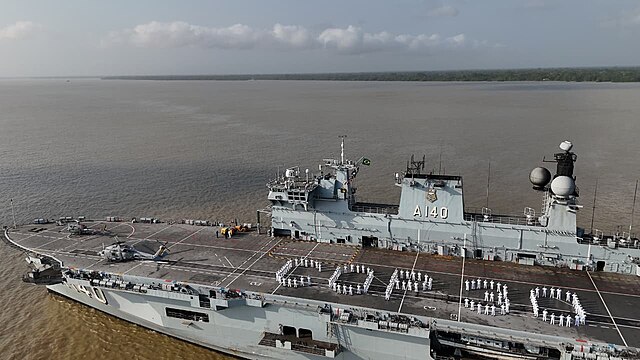
In days when many people are condemned to (and partly enchanted by) Black Friday advertisements, and when companies and media prepare a large part of the world to better welcome New Year celebrations, this ominous news was buried among other unpleasant daily reports: In the final agreement of the UN Climate Change Conference (COP30 / in Blem, Brazil), no mention was made of fossil fuels as the main cause of the climate warming/crisis. Perhaps the ironic comment by Guterres, the UN Secretary-General, in reaction to the conference’s outcome, sufficiently illustrates the dire state: “There is still a dangerously wide gap between science and action regarding climate change1”. This essay aims to critically examine some implications of this event within the context of the broader mechanisms that shape the development of the capitalist order.
I.
Considering that over the last decade the condition of climate change has shifted from warning/danger to the phase of “climate crisis,” the shameful failure of states to address the severity of the crisis and its terrifying near-term consequences again demonstrates that for servants of the capitalist system, the idea of the end of human life on this planet is easier than imagining the end of capitalism. However, the dimensions of this issue go far beyond the ridiculous repetition of this catastrophic blindness: the fact that the most important cause of global warming – fossil fuels – has not been recognized as the main source of the climate crisis indicates that we are facing more than a mere setback.
Ten years ago, at the 2015 global climate summit (Paris Conference), although the trajectory of climate change was not yet at the current critical stage, there was an emphasis on the necessity of seriously reducing fossil fuel consumption and replacing them with renewable energy sources, albeit at a superficial level of goals and plans. Now, ten years after the Paris Conference, not only has fossil fuel consumption increased significantly, but fossil fuels have also disappeared from the list of problems and targets for confrontation. It is as if the global powers have tacitly accepted that they are neither authorized nor able to cut off one of the vital arteries of capitalism (fossil fuels), even to save the very conditions of life on this planet.
The strange aspect of this occurrence is not that the future consequences of climate change increasingly threaten human life and many other living beings with irreversible danger, because the logic of capitalism is essentially indifferent to their lives. Rather, what is revealing is that, although continuing such a process endangers the fundamental reproduction of capitalism itself as a whole, governments – especially in the current context of rising tensions, divergence, and the global war regime2 – are neither willing to prioritize the reproduction basis of the global capitalist order over their national interests nor fundamentally capable of changing course at the cost of reducing capital’s profit rate. In this sense, the term global capital, as a cohesive whole, is an analytical abstraction that only becomes concrete through considering the ongoing contest and competition of capital within national and international frameworks or through the contradiction and opposition between relevant states.
Given these conditions, the final outcome of the recent global summit on climate change shows that the capitalist system has gone beyond control. Because the inherent chaos of capitalism has never peaked as it has now, where the rulers (or the supposedly defenders of this system) ignore such an urgent and widespread threat to the foundations of capitalist reproduction. Interestingly, what compels this neglect (to the point of collective suicide) is not a lack of trustworthy scientific knowledge but an unavoidable continuation along the same blind logic of capital, which governments, due to their existential functions, are conditioned to follow. Today, what sustains the illusion of stability in the capitalist system, despite its very fragility, is merely its long-standing and centuries-old endurance, fostering a familiar perception of stability.
Meanwhile, safeguarding this decayed edifice’s stability is achieved through increasing brute-force measures (including in the form of necropolitics), the proliferation of corrupted and deceptive ideologies, and the imposition of further alienated forms of life and social relations. In this regard, the outcome of this conference manifests the ongoing blind process of the inevitable struggle for survival among states, which is enveloping the dominance of the “law of the jungle.” in both national and international relations. Certainly, this struggle began some time earlier, fueled by capitalism’s increasingly close approach to its historical limits and the chronic crisis of global accumulation, which is mainly the main driving force of the contemporary super-crisis. The complex, intertwined, and expanding crisis has manifested in various ways, including the establishment and expansion of a global war regime, designed to propel the mechanism of accumulation through militarization. However, the official declaration and normalization of the “law of the jungle” in major events like the global climate change summit, whose starting point is presumably the universal nature of the problem, is relatively a new phenomenon. In this new historical context, alongside the evident turn of governments toward militarization and authoritarianism, the conventional shell of liberal democracy that once protected the cohesion of the capitalist state order is being more openly and officially discarded, like a troublesome carcass of a dead dog.
II.
For several years now, as governments’ approaches have shifted more openly from climate change confrontation policies toward climate adaptation, the alarm has sounded that humanity is entering a new era characterized by the normalization of crises. The fact is that capitalism’s capacity to manage crises through delay, deflection, or by changing the accumulation regime has been exhausted, because most potential spaces and resources for capitalist delay have already been occupied and consumed. Thus, the rulers of this system, like in a dance of death, have resorted to ignoring crises and feeding off the possible surpluses of crises. As the name suggests, normalization of crises is a state mechanism for blindly defending the remnants of capitalist relations amid the collapse of capitalism, a defensive yet highly aggressive mechanism. The greater danger, however, is that this strategy might succeed in its goal: making the climate crisis and other structural crises of capitalism so normalized that most people, depending on their social position and capacity, merely attempt to adapt to their consequences. Achieving such a scenario would mean entering an era of normalized crises, which would mark the beginning of humanity’s end. Because in this case, capitalism – destined for inevitable collapse – would further destroy the foundations for continued life on this planet without facing significant resistance.
At the same time, another feature of the current era is that there are still tendencies and mechanisms confronting and opposing the capital-driven transition from normalization of crises to normalized crises. Such a transition remains an arena of ongoing struggles. That is, many human subjects – consciously or intuitively – continue to oppose this dreadful transition in diverse ways, by defending life itself. It must be noted that the global visibility of crises inevitably occurs asynchronously: whether due to the inequality gap between the Global North and South and the heterogeneity of living conditions across countries and regions; or due to the capacity of rulers to deflect and project the causes and material reasons of crises; or due to the different natures of crises and the phase differences in the emergence of their widespread consequences. For example, although the consequences of climate change are increasingly widespread and tangible, not everyone is affected directly, simultaneously, or equally. Moreover, today’s rulers (especially through the dominance of mainstream media) still possess the means to deny and deflect the causes and continuance of this crisis. Ultimately, the severity of the consequences of the global climate crisis still remains a future concern for many people. Consequently, the possibility of distortion and concealment of the dimensions of the climate crisis remains for global rulers.
Nonetheless, since in the current deadlock of contemporary capitalism, the expansion of chronic crises is unavoidable, the success of rulers in normalizing a particular crisis facilitates the normalization of others. From this perspective, the live global broadcast of genocide in Gaza, with all its grim and complex aspects, was an attempt to normalize the manifestations of contemporary crises, ranging from the “global war regime” and systematic dehumanization of human groups and “surplus humans,” to visible efforts to normalize neo-fascist governance patterns.
III.
Although combating capitalism must now more than ever become a struggle for existence, the widespread understanding of critical perspectives on capitalism still faces many obstacles. Even within the anti-capitalist left, an old approach persists: that capitalism, as an economic system, determines:who works (gets exploited), where and how, while the inherent authoritarianism of this process is mainly realized through destructive economic mechanisms (division of labor, bourgeois property laws, expropriation), sometimes accompanied by political authoritarianism. Meanwhile, the historical trajectory of capitalism has involved a continuous expansion of dominance and control over humans and nature, adding new dimensions and domains to its subjugation mechanisms, so much so that capitalism now effectively determines: who survives, where, and how. Ignoring this fundamental change directly leads to the inadequacy of current anti-capitalist strategies, including the failure to recognize potential subjects of revolutionary struggle or the new proletariat, namely, those who concretely embody the historical concept of the proletariat in the contemporary age. The point is that the new proletariat must be recognized (and organized) beyond a mere economic perspective, to include all people whose very material foundations of life are threatened by the reckless onslaughts of today’s uncontrolled capitalism. This expands the domain of the concept beyond the classical working class to include those whose very existence is ontologically opposed to capital relations and the capitalist class.
From this perspective, all the scattered and seemingly unrelated disastrous events, mechanisms, and developments witnessed or experienced today are manifestations of the same fundamental situation: the super-crisis of the pervasive capitalist order. How the world’s governments respond to this historic deadlock depends on their degree of economic and political stability and their position within the global hierarchy. However, the common strategy increasingly adopted by all of them, to varying degrees and domains, is the wider resort to necropolitics. Today, the term necropolitics can be understood in two related but distinct senses of certain macro-level state policies or strategies that 1) impose fragile subsistence on the oppressed and marginalized to control and suppress their political subjectivity or destroy their capacity to develop it; 2) authoritatively determine who, where, and how to survive. A significant difference between the approaches of core and peripheral states in contemporary global capitalism can be summarized as follows: while core states cautiously and gradually expand the first aspect of necropolitics domestically, in the international sphere (particularly regarding the Global South), they blatantly and recklessly increase the second aspect. Conversely, peripheral states, many of which have relied to different degrees on both mechanisms, are now, amid the current global super-crisis, recklessly extending the scope and intensity of their necropolitics strategies in both senses. Yet, these differences should not obscure their fundamental overlap: a significant part of the current divergence between core and peripheral states depends on the possibility of outsourcing some “dirty work” by core states to peripheral states. Furthermore, the continuation of fragile, aggressive capitalism -despite its decay – is only possible if peripheral states increasingly fulfill their historical role: carrying out outsourced dirty work more intensely and broadly. For this reason, the tendency of dominant capitalist powers to strengthen authoritarian regimes and develop sub-imperialist regional powers is not accidental or merely ideological; it is a necessary consequence of outsourcing the most exploitative, violent, and expropriative tasks, so that necropolitics sustains the global order despite its fragility and resistance from oppressed peoples. (The sub-imperialist role of the United Arab Emirates in Sudan3, against the revolutionary movement, is a vivid example.)
According to this same logic, at the Brazil-2025 climate summit, the shame of supporting fossil fuels was only attributed to the oil-producing countries of the Middle East and others; yet all capitalist states benefit enormously from continued fossil fuel use. Thus, some peripheral states and sub-imperialist powers, while providing political cover for core capitalist states and extending the lifespan of decayed capitalism, have paved the way to impose a different kind of necropolitics on the peoples of the world and future generations: turning issues like water shortages, air pollution, and extreme weather into chronic, permanent, and insoluble problems for many. Capitalism, in order to prolong its shameful existence, has no choice but to make everyone’s life increasingly limited. In this sense, at a stage where capitalism has reached its material limits of existence (or its historical borders), considering the current existential-ontological implications of the logic of capital, the fundamental antagonism between labour and capital has expanded into a life-death antagonism. One inevitable consequence of this expansion is that, in today’s era, the capacity for resistance against capitalism, disregarding other factors, has increased. How this expanded antagonism and the potential for resistance will manifest depends partly on the extent to which the inevitable struggles adopt anti-capitalist strategies.
If the proletariat is to play a role in shaping its future and that of humankind, it must, in light of the life-death antagonism (the legacy of the super-crisis of contemporary capitalism), be recognized and organized in a much broader scope. Along this strategic line, it can be expected that the new proletariat ill merge its historic struggles and demands for economic and social justice with the fight for a healthy environment, rich biodiversity, and a sustainable climate. Therefore, the current catastrophic super-crisis of capitalism should be understood from the perspective of the vital interests of the new proletariat. Hence, what we were traditionally used to call class struggle must be expanded into a broader struggle for existence and the right to life; a framework capable of including the fight for clean water, clean air, a sustainable climate, and other essential/basic prerequisites of life, while challenging their linkage with the life-hostile foundations of capitalism. If overthrowing capitalism requires expanding the class struggle generally, then given today’s pervasive forms of capitalist necropolitics, that struggle must be universalized into a struggle for (the right to) life.
Notes:
1 Guterres: “‘The world has failed on the 1.5 degree target’. Downward expectations on Cop30 in Brazil,” Il Sole 24 Ore, 6 November 2025.
2 Michael Hardt & Sandro Mezzadra: “A Global War Regime,” New Left Review, 09 May 2024.
3 See, for instance:
Husam Mahjoub: “The UAE’s Subimperialism in Sudan – Counterrevolution, Gold, and Global Impunity,”
Spectre Journal, August 15, 2025.
No comments:
Post a Comment