A Dangerous Attack on Free Speech: Matt Taibbi Sues for Defamation
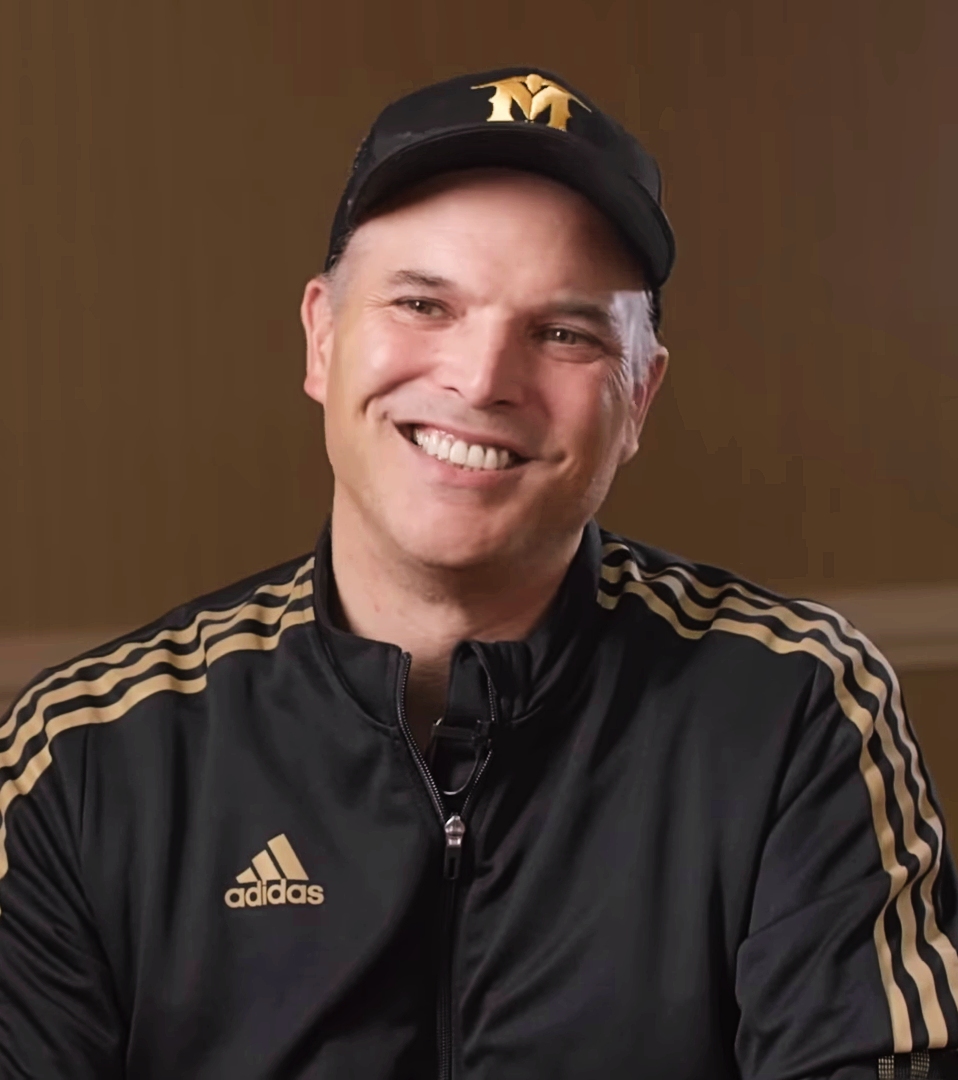

In November of last year, in an egregious abuse of defamation law, former progressive journalist (and current right wing influencer) Matt Taibbi launched a lawsuit–presently ongoing–claiming to have been defamed by leftist journalist Eoin Higgins (and Higgins’s publisher Hachette Book Group), ludicrously alleging “reputational and financial damages”, according to the official legal complaint, “in excess of $1,000,000.” Taibbi claims that his integrity as a journalist was defamed by Higgins’s book Owned: How Tech Billionaires on the Right Bought the Loudest Voices on the Left. The book–released in February 2025–alleges that Taibbi and another previously progressive journalist, Glenn Greenwald, have moved to the right politically in recent years as a result of developing professional connections with pro-MAGA Silicon Valley billionaires like Elon Musk and David Sacks.
Taibbi’s lawsuit focuses on the book’s statements that Taibbi was “owned” and “bought” by Elon Musk after he participated in Musk’s Twitter Files campaign of 2022-23– the latter being where Taibbi and half a dozen other journalists received from Musk tens of thousands of internal company documents produced under Twitter’s pre-Musk owners. In their published analysis on Twitter threads, Taibbi and the other journalists handpicked by Musk (like the right wingers Michael Shellenberger and Bari Weiss) offered support for Musk’s contention that the documents proved that pre-Musk Twitter was immensely biased against conservatives and even secretly collaborated with the Biden administration in suppressing pro-Trump voices and anti-vaxxers. Taibbi insists he didn’t receive a dime from Musk for his work.
Taibbi’s Case
In my opinion, Taibbi’s lawsuit against Higgins has the marks of a SLAPP case: an abuse of the legal system by a powerful person or organization in order to silence a critic of much less power and influence. Based on publicly available evidence, it is extremely difficult to accept Taibbi’s claim that Higgins’s book has brought “harm” to his journalistic career and caused him a million dollars in damages.
First of all, there is a vast asymmetry and power and influence between Higgins and Taibbi. Higgins is a relatively obscure left wing journalist whose work has previously been confined to such outlets as The New Republic, Common Dreams and Counterpunch; his book on Taibbi and Greenwald has not received wide discussion in the mainstream media (although it has had some). In contrast, Taibbi, with his move to the right politically, has become a visible presence on widely viewed right wing media and has attracted favorable publicity from some of the most influential right wing personalities in the world; for example, in June (five months after Higgins published his book), Joe Rogan, on his hugely popular podcast, singled out Taibbi and Greenwald as journalists he trusts for “unbiased news.” Taibbi was picked by the world’s richest man, Musk to work on the Twitter Files; and as Higgins notes in his book, in 2022 Taibbi sat on a stage with Greenwald and beamed as he was interviewed in highly friendly fashion by David Sacks, the Silicon Valley billionaire who is now the AI and cryptocurrency czar for the Trump administration. During the interview, Sacks lavished Taibbi and Greenwald with praise as iconoclastic journalists.
Taibbi has presented no evidence that Higgins’s book has made any appreciable impact on the relations that he as a journalist has cultivated with influential people like Rogan, Sacks et. al or brought any real damage to his journalistic credibility with the general public.
Second, it is extremely difficult to accept Taibbi’s claim that Higgins’s book comes close to meeting the defamation standard of “actual malice” and “reckless disregard for truth” as described in the US Supreme Court’s 1964 case of New York Times Co. v. Sullivan.
Taibbi’s defamation claim focuses on Higgins’s assertion of Taibbi being “owned” and “bought” by Elon Musk–and having “cashed in” on his relationship with the latter. Taibbi’s legal claim notes (accurately) that while uttering these words, Higgins also admitted in the book and in subsequent published interviews that he could not prove the existence of any financial transactions between Musk and Taibbi. He also allowed in the book and in subsequent interviews that Taibbi’s primary motives are probably much less titillating than mere grift: that he has likely sincerely grown more conservative as he has aged.
At the same, Taibbi’s lawsuit ignores the expansive context in which Higgins uses words like “bought” and “owned,” which he defines more broadly than Taibbi merely receiving financial compensation from Musk. In his book, Higgins uses those words to connote something along the lines of “a journalist being under the disproportionate influence of an immensely wealthy and powerful person.”
Even if Taibbi worked for free on the Twitter Files (as he seems to have), Higgins argues that at the same time, he disregarded basic journalistic ethics and served Elon Musk’s agenda of using the Twitter Files as a “controlled infodump” to provide fodder for right wing culture wars: for example material on pre-Musk Twitter’s suppression of posts about the New York Post story on the Hunter Biden laptop.
Musk’s people curated the Files material for Taibbi: he sent “keywords” to them on various topics and they sent him what they chose to. There was no material released, for example, about the scandal of Saudi government agents employed within pre-Musk Twitter using their positions to access data on the accounts of dissidents to spy on them and pinpoint their locations. The Saudis, of course, were major partners of Musk in his 2022 purchase of Twitter.
Higgins also attacks Taibbi for refusing to criticize Musk publicly–for example regarding Musk’s collaboration in the censorship of Twitter posts by Narendra Modi’s government in India–at least until Musk directly hit Taibbi’s pocketbook in April 2023 by shadowbanning tweets containing material from Substack, Taibbi’s main writing platform.
As for the words “cashed in,” Higgins claims in his book that Taibbi’s work on the Twitter Files gained him massive publicity among the conservative Americans he was “desperate to cultivate” and his Substack page Racket News “already incredibly successful–gained thousands of subscriptions.” Taibbi, in contrast, has always implausibly tried to downplay any wealth he has gained from his increased exposure on right wing media. His formal legal complaint against Higgins states, perhaps truthfully, that he actually “lost money for the first time in his career as an independent journalist” while working on the Twitter Files, especially after Musk decided to limit circulation of Substack material on Twitter. .
Whatever the criticism one might legitimately make against Higgins’s critique of Taibbi, it is clear that it is protected speech: Taibbi has no grounds for suing Higgins, much less claiming a million dollars in damages against him.
Taibbi Wants Leftist Love
Taibbi did his lawsuit no favors with his January 3rd piece in Bari Weiss’s The Free Press entitled “To Protect Free Speech, I’m Suing the Man Who Defamed Me.” In the piece he doesn’t list any tangible harm that Higgins’s book has materially inflicted upon his journalistic career–much less any harm worth a million dollars in damages. Rather, with surprising transparency, he states that he is suing Higgins because progressives–ranging from Democratic congressmembers and former journalistic colleagues to random internet trolls– have been saying very harsh, even slanderous things about him in recent years (long before Higgins published his book). Not without poignancy he writes: “I’m fed up. I’m pissed.” He reveals a seemingly intense psychological anguish about his lost cachet among progressives and radical leftists.
It seems odd that Taibbi, a journalist who has moved so palpably to the right in recent years, would be so sensitive about what leftists are saying about him. He is somebody who, for example, last June, described the main features of the anti-ICE protests in Los Angeles as allegedly being violence by protestors and “revolting homages to Marx and socialist revolution” on the part of the protestors. However, he also clearly still feels a few bonds of affinity with leftists and is deeply upset that he has not been reciprocated.
A major part of his Free Press essay devoted to defending his lawsuit against Higgins features him complaining about how leftists have given him no respect for his Twitter Files work–or for the fact that, during Trump’s first term, he covered in Rolling Stone the suppression by social media companies of posts by left wing figures like Chris Hedges, Paul Jay of the Real News Network, the Democratic Socialists of America (DSA) and the World Socialist Web Site (WSWS) as well as Palestinian voices. He claims that his Twitter Files work showed government officials, in the US and elsewhere, privately pressuring Twitter to suppress tweets by “left-wing voices along with the right, from Truthdig, to Italian left-populists…to the French yellow-vest movement.”
Taibbi whimpers that in spite of such heroic muckraking journalism on his part, he was smeared by leftists like Higgins and many others as “a paid shill for billionaire scum” for his Twitter Files involvement. Nonsensically trying to add to his arguments for suing Higgins, he also complains that such leftists spread “falsehoods” about him in the wake of Israel’s genocidal war on Gaza. He explains that he believed he “made the ethical decision” not to side with the Palestinians during the (ongoing) Gaza genocide “because I’d never covered the Israel-Palestine conflict” as a journalist and “didn’t want to be wrong about one of the most complex stories ever.” He argues that if he criticized anti-genocide student protestors in 2023-24 for supposedly not knowing anything about the Israeli-Palestinian conflict and for supposedly obstructing the rights of other students in their sit-ins and other civil disobedience, he did so out of sincere conviction and not because, as he claims Higgins implied, he was taking money from right wing billionaires.
The Bottom Line
It seems to me highly disingenuous on Taibbi’s part to try to prove that he was not under Elon Musk’s ideological influence by implying that in his Twitter Files work he covered suppression of the left by social media companies as much as he did of the right.
His tidbits for the left in the Twitter Files–one instance of officials in the first Trump administration privately requesting censorship of a tweet or FBI agents pestering Twitter officials about a Truthdig article–were mere drops in a bucket–usually single tweet threads–compared to the lengthy threads that he and his Twitter Files colleagues like Bari Weiss published as right wing fodder for the culture wars. Taibbi and Weiss,for example, focused almost all their attention on Twitter’s suppression of the Hunter Biden laptop story, the shadowbanning of tweets by vaccine sceptics or pre-Musk Twitter’s multiple suspensions of the account of the virulently anti-LGTBQ Libs of TikTok. There was nothing in the Twitter Files about pre-Musk Twitter’s suppression of Palestinian voices.
Also, Taibbi engages in a bit of obfuscation by defending his Twitter Files work by including his Rolling Stone reporting on the various social media platforms’ suppression of posts by leftists like Chris Hedges, DSA, WSWS, Palestinians, etc. which he did before he made a marked turn to the right politically, developed a relationship with Elon Musk and began work on the Twitter Files. During the launch of the Twitter Files in late 2022, Musk’s Twitter engaged in suppression of radical left voices, but Taibbi made no public comment even as he gave public credence to Musk’s claim to being a free speech devotee.
In his whining about getting no respect from leftists in recent years–and thereby ludicrously trying to justify his lawsuit against Higgins–Taibbi’s arguments are mostly silly and disingenuous but perhaps he is right in one major way. In spite of major errors in some of his Twitter Files reporting, Taibbi did ultimately valuably reveal that Biden administration officials were improperly seeking to pressure Twitter and other social media platforms to remove posts by private citizens, even if such posts were by anti-vaxxers and other persons who were potentially causing a public nuisance during the height of the Covid pandemic. I don’t think critics like Higgins have given him enough credit for that. That does not mean that Taibbi’s lawsuit against Higgins is anything but an egregious abuse of defamation law.
No comments:
Post a Comment