As Suez Traffic Cautiously Returns, Houthis Make New Threats
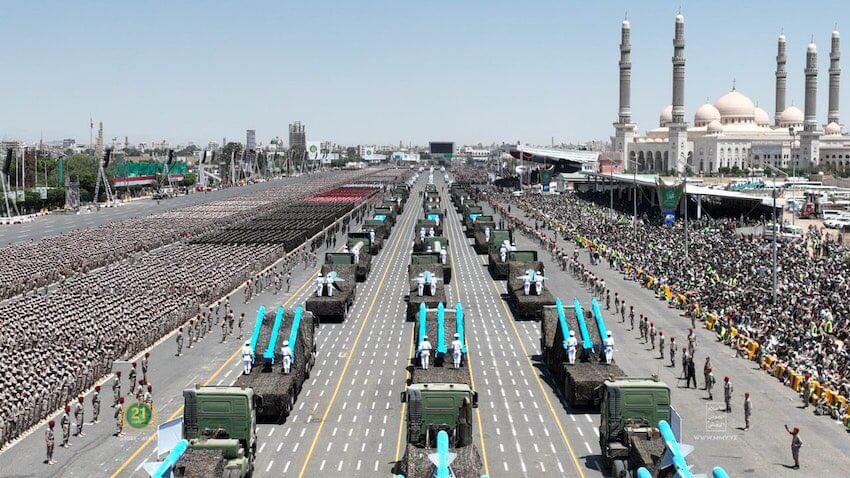
Shipping lines have been exploring a reopening of their container line services through the Suez Canal and the Red Sea.
CMA CGM has led the way. After having maintained some transits using naval protection during the conflict with the Houthis, the French carrier has returned two regular container line services starting this month. It follows the passage through the Red Sea by their French-flagged CMA CGM Jacques Saade and Marshall Island-flagged CMA CGM Adonis, both of whom have both made transits since Christmas without incident.
Danish shipping company Maersk has also been exploring a reopening, having sent the US-flagged containership Maersk Denver north through the Bab el Mandab Strait into the Red Sea on January 12, which followed a transit earlier in December by Singapore-flagged Maersk Sebarok. Maersk announced on January 15 that it is restoring its first route, one between the U.S. and India to sail through the Suez – Red Sea corridor. It said it would continue to closely monitor security in the region.
Although the last incident was on September 29, when the Dutch-flagged general cargo vessel MV Minervagracht fell victim to a Houthi attack, traffic through the Suez Canal has not yet recovered. Suez Canal traffic transits in 4Q25 were 19 percent lower than in 2023 and 45 percent lower than in 2024, figures skewed by an increase in product tanker transits, while container traffic has still not recovered.
This caution may be justified.
On January 15, Houthi leader Abdel Malek Al Houthi made new threats on Al Mayadeen television. He warned that reconnaissance was being conducted preparatory to the launching of attacks on what he described both as Israeli and Zionist fixed positions in Somaliland. He called the positions a threat to Houthi oversight of the Red Sea and Bab el Mandeb Straits.
The Houthis previously have never been very precise in their targeting threats, making very broad or perhaps imprecise interpretations of what constitutes an Israeli or Zionist target. It must be assumed, therefore, that Emirati and U.S.-operated sites are also vulnerable, and that such sites anywhere in the Red Sea and Gulf of Aden littoral are also covered by this Houthi threat.
It is unclear what sites, presumably for intelligence collection purposes, are maintained by the Israelis in Somaliland, although rumors have persisted for some time that such sites exist. Hilltop intercept and radar sites need not have a large footprint, and indeed could largely be unmanned, using satellite links to rebroadcast intercepts to safe locations for analysis. The Somaliland government, newly recognized by Israel, has already indicated its continuing support for military ties with Israel.
Similar sites may also have been supported by the Emirati presence on islands and coastal areas in the Red Sea and Gulf of Aden, although their presence has never been reliably established. The Yemeni Internationally Recognized Government (IRG), with much enhanced support from the Saudis, appears to have taken over the coastline south of Hodeida, with the Emiratis having left their recently-constructed airfields at Mocha and Dhubab. Based on a rush of heavy-lift cargo air movements, the Emiratis appear also to have left the Red Sea islands of Perim and Zuqar. The Emiratis still, however, have a foothold in Assab on Eritrea’s Red Sea coast. The UAE is also maintaining its military footprint at Berbera in Somaliland and Bosaso in Puntland on the south side of the Gulf of Aden, with the support of the autonomous governments of these areas and despite falling out with the Somali government.
The UAE has, for the moment, retained some form of presence on the island of Socotra. But Emirati companies, such as Prime Fishing, which used to wholesale the local fishing industry, have closed shop, as have hospitals, ADNOC selling fuel, and Eastern Triangle generating electricity. Socotrans serving in the UAE-sponsored local militia have been paid off. Social media has shown a Saudi force boarding ships in Mukalla en route to consolidate the IRG’s hold on Socotra. If, as is likely, there were intelligence collection sites in the Socotra Archipelago overlooking the Maritime Security Transit Corridor (MSTC), and they served a useful anti-Houthi purpose, it is possible that the IRG would wish to support their continued operation, notwithstanding a full Emirati withdrawal.
The geopolitical situation for the Houthis has also changed. While the Houthi leadership has declared its continuing support for the Iranian religious leadership, and is Iran’s last remaining reliable ally, Houthi ranks have been severely depleted by the targeted attacks on its leadership cadre last summer. Confidence (and bravado) has taken a knock, and the Houthis may be keen not to broaden any reactivation of hostilities, particularly with the USS Abraham Lincoln carrier strike group making its way to the region. But they remain an enduring threat to the maritime community.
U.S. Sanctions Captains, a Vessel, and Networks Supporting Houthis
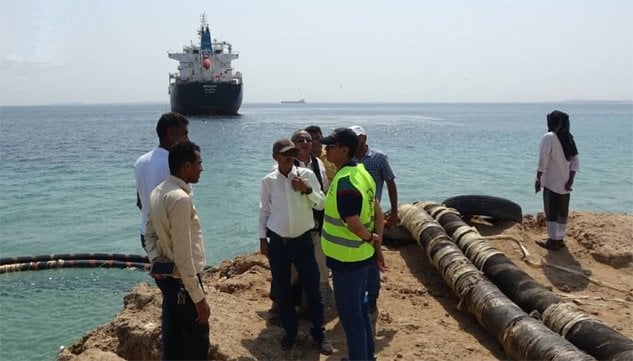
The U.S. Department of the Treasury, through its Office of Foreign Assets Control, launched a new effort to break up the networks supporting the Houthis. They pointed to conduits and front companies used to finance the Houthis and smuggle materials with links to Iran.
Today’s action included the designation of five ship captains who had commanded vessels previously designated for delivering petroleum products to Houthi-controlled ports. The U.S. highlights that vessels have continued to deliver petroleum products to the Houthi-controlled ports, providing vital economic support to the militant group. OFAC had issued a humanitarian license to allow in-progress deliveries after the designation in March 2025 of the Houthis as a Foreign Terrorist Organization. Those licenses expired in April 2025.
“Despite the pressure of international sanctions, the Houthis continue to acquire a significant amount of revenue through illicit oil sales, generating over $2 billion annually. As part of the Houthi oil sales operation, the Iranian government both sells and provides a free monthly shipment of oil to the Houthis using Iranian-owned or affiliated companies based in Dubai, UAE,” the U.S. asserts.
A shipping company named Albarraq Shipping they contend, continued to make deliveries using a tanker named Albarraq Z (71,522 dwt). Built in 2003, the vessel appears to have been acquired in 2025 for this purpose and was registered in the Comoros. The U.S. added it to the sanctions today.
The captain of the vessel was one of the individuals designated by OFAC. They also listed the captain of a vessel named Sarah that they said delivered LPG to Ras Isa port in June 2025, and the captain of the Atlantis MZ, which discharged gasoline in June 2025. They also listed the captain of the Akoya Gas, which discharged its cargo in Ras Isa in April, and the captain of the Valente, which discharged gas at Ras Isa in May 2025.
The U.S. charges that the Houthis’ leaders are behind the oil and gas trade and sell the products at “exorbitant prices” to Yemenis. They report the proceeds are pocketed for personal gain and used to fund the group’s military operations.
The broader program also targeted the network that is helping the Houthis procure weapons and other equipment, as well as providing financial services. The U.S. cites key front companies, facilitators, and operatives located in Yemen, Oman, and the United Arab Emirates that are part of the Houthis’ vast revenue generation and smuggling networks.
The U.S. designated a total of 21 individuals and entities, including oil and gas facilitators in the UAE and front companies used to facilitate financial transactions between the Iranian government and Houthi-affiliated oil companies. They also targeted logistics firms and shipping facilitators used to transport weapons and other military-grade materials into Yemen.
All of this came as the Houthis reappeared on Thursday, making new threats against Israeli installations in Somaliland. It was their first threat of new attacks since the ceasefire in Gaza agreed to in the fall of 2025.
No comments:
Post a Comment