
Bulgaria’s President Rumen Radev said on January 19 he would resign from office, ending his second term a year early amid deepening political turmoil and mounting speculation that he is preparing to launch his own political movement ahead of snap parliamentary elections.
“Tomorrow I will submit my resignation as President of Bulgaria,” Radev said in an extraordinary televised address to the nation. “Today is the last time I address you as president.”
Radev, 62, thanked voters for their support over the past nine years and acknowledged mistakes, saying his presidency had unfolded against a backdrop of repeated crises, mass protests and entrenched political deadlock.
“You voted for me to serve Bulgaria as president. Together we went through a number of crises, attacks by the oligarchy and the major protests of 2020 and 2025,” he said.
Radev is Bulgaria’s fifth democratically elected head of state. He was first elected in November 2016 and re-elected in November 2021. His second term was due to expire in January 2027, with regular presidential elections scheduled for October this year.
His announcement comes as Bulgaria heads toward its eighth parliamentary election since 2021 after the country’s third and final attempt to form a government failed last week. Radev said on January 16 that snap elections were unavoidable after months of political paralysis.
“We are going to the elections,” he told reporters, confirming that voters would again be called to the polls following the collapse of coalition talks.
Bulgaria has been without a regular government since Prime Minister Rossen Zhelyazkov resigned on December 11, 2025, after nationwide protests over corruption and a disputed budget proposal. Zhelyazkov’s government, which took office in January 2025 after months of negotiations, fell amid public anger over perceived oligarchic influence, including opposition to businessman Delyan Peevski, who is sanctioned by the United States under the Magnitsky Act.
Political deadlock has plagued the country for more than four years, eroding trust in state institutions and leaving successive minority and caretaker governments in charge.
Radev’s resignation is unprecedented in post-communist Bulgaria and raises procedural questions, as the constitution does not clearly outline the process for a president stepping down before the end of a mandate. Legal experts say his resignation would have to be confirmed by the Constitutional Court.
Speculation has intensified in recent weeks that Radev, the country’s most popular political figure, plans to enter party politics. In recent months he has repeatedly called for the creation of a new political force to confront corruption, describing Peevski as a symbol of a flawed governance model.
“It is important to build a wall against the corruption in power,” Radev said last year, without directly confirming plans to lead a new party.
Opinion polls show Radev enjoys significantly higher approval ratings than other senior politicians. A Market Links survey published on January 12 put his approval at 44%, against 34% disapproval. A December poll by Alpha Research showed trust in most political leaders in single digits, while Radev retained the highest rating at 35%.
Analysts say his early departure from the presidency could clear the way for him to play a direct role in the expected parliamentary elections, likely to be held in late March or early April, although time constraints may force him to rely on an existing political vehicle rather than registering a new party.
Under constitutional rules, the president must appoint a caretaker government and set a date for the snap election within two months.
The President of Bulgaria resigns, seeks to become Prime minister
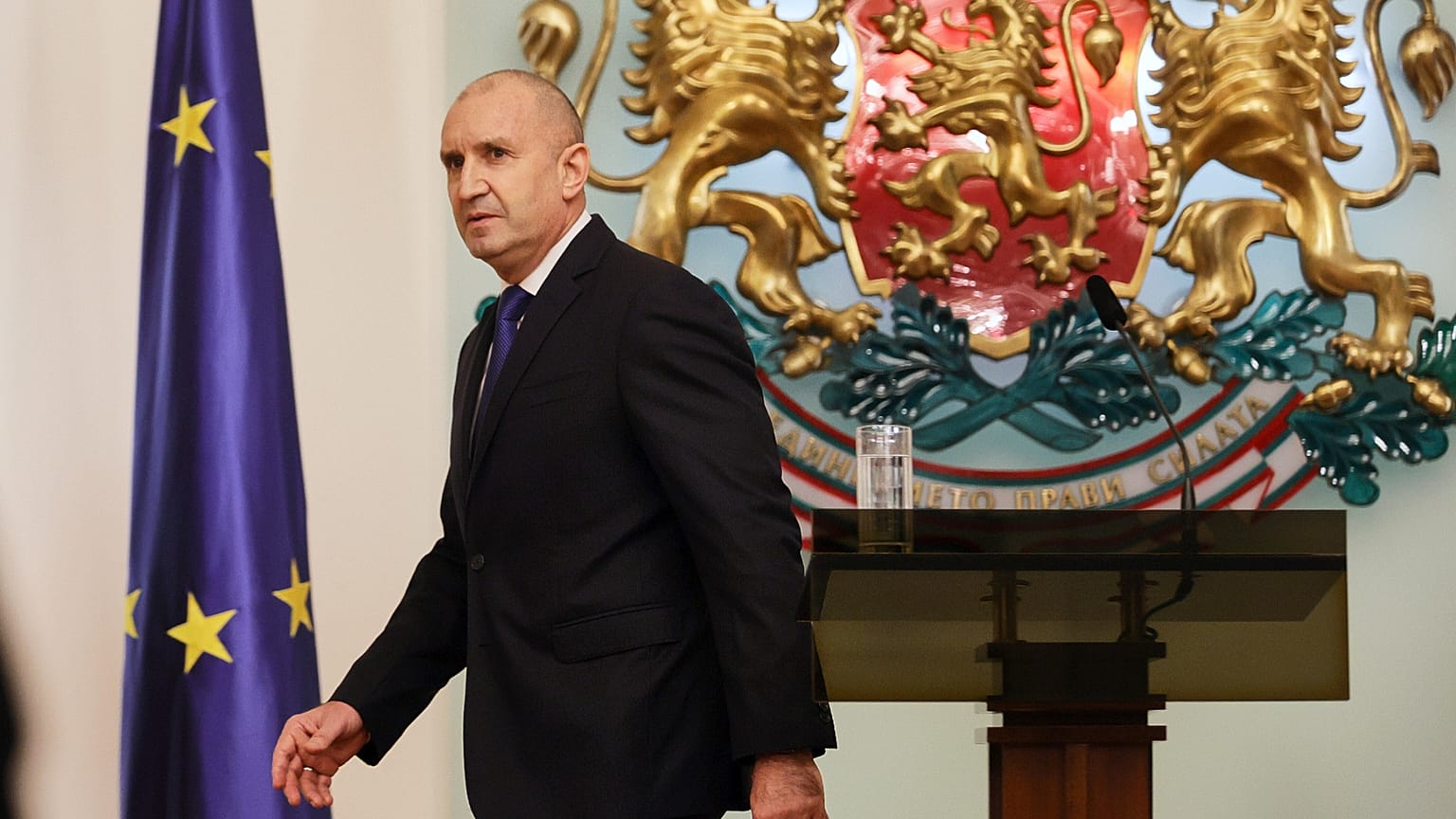
The emergence of a new political party led by the former president Rumen Radev could significantly reshape not only Bulgaria’s domestic affairs but also its foreign policy.
The Bulgarian President, Rumen Radev, announced that he is resigning as head of state and signaled the launch of a new political project just two months before the next snap parliamentary elections in the country, which has been gripped by an ongoing political crisis.
“Our democracy cannot survive if we leave it in the hands of corrupt figures, deal-makers, and extremists,” the president said, adding that he will formally submit his resignation on Tuesday.
Rumen Radev has held the presidency of Bulgaria for nine years. Speculation that he would enter the parliamentary race and seek the post of prime minister has existed for some time and was confirmed today. Bulgaria is a parliamentary republic, and its governance lies in the hands of the parliament, the Council of Ministers, and the prime minister.
“We are already members of Schengen and the eurozone. The questions here are: why did achieving these goals not bring stability and satisfaction; why did Bulgarians stop voting; why do they not rely on the justice system and do not trust the media; why did citizens flood the squares twice; why, in a European Bulgaria, a large percentage of people feel poor, and even more live in insecurity,” Radev said. He blamed the “conveyor-belt” model of governance, “which has the outward features of democracy but functions through the mechanisms of oligarchy.”
During his tenure as president, Rumen Radev had to appoint seven caretaker governments due to the years-long political crisis and the inability of parties to form stable majorities.
Just weeks ago, the country was shaken by the largest protests since the 1990s, initially triggered by opposition to the draft budget but later escalating into demands for resignations and more - namely, the withdrawal from politics of key political figures such as former Prime Minister Boyko Borissov and Delyan Peevski, who has been sanctioned under the Magnitsky Act.
The emergence of a new political party led by the former president Rumen Radev could significantly reshape not only Bulgaria’s domestic affairs but also its foreign policy. Radev’s position on the war in Ukraine differs sharply from that of previous governments. For this reason, analysts and opponents have often labeled him “pro-Russian.” In today’s speech, Radev also addressed this issue, stating: “In the name of their political future, some politicians are putting the peaceful lives of Bulgarians at risk amid a dangerous war close to our borders and are even encroaching on civil and ethnic peace, which you and I will preserve despite their provocations.”
Weeks before Bulgaria was set to adopt the euro (on January 1, 2026), Rumen Radev called for a referendum on the adoption of the single European currency, but the parliament rejected it. “The final rift between Bulgarians and the political class came with the National Assembly’s refusal to hold a referendum on the date of introduction of the single European currency. The representatives of the people denied the people their right to choose,” Radev said today.
The snap parliamentary elections in Bulgaria will take place in the spring and will be the seventh election since 2021. The role of president will be assumed by Vice President Iliana Yotova.
No comments:
Post a Comment