It’s possible that I shall make an ass of myself. But in that case one can always get out of it with a little dialectic. I have, of course, so worded my proposition as to be right either way (K.Marx, Letter to F.Engels on the Indian Mutiny)
Wednesday, January 21, 2026
RARE EARTHS
Europe Sets Its Sights on Brazil’s Rare Earth Riches
The European Union is actively seeking rare-earth suppliers outside of China, focusing on Brazil, which holds the world's second-largest resources.
The main challenge for Europe is not the rarity of the minerals, but the limited processing capacity, with a target to process 40% of its rare earths domestically by 2030.
A potential competition is emerging between the United States and the European Union for access to Brazil's critical mineral and rare earth resources.
The European Union has been looking for rare-earth suppliers outside China for a while now. Last year, Commission president Ursula von der Leyen declared, “The aim is to secure access to alternative sources of critical raw materials in the short, medium and long term for our European industries.” It seems one of these alternative sources will be Brazil.
“We will speed up work on critical raw materials partnerships with countries like Ukraine and Australia, Canada, Kazakhstan, Uzbekistan, Chile and Greenland,” von der Leyen also said in October last year when she made the alternative sources declaration. Brazil was not even mentioned, and yet Brazil has the world’s second-largest rare earth resources after China and seems eager to start developing them.
Earlier this month, as the EU and its South American partners in the Mercosur deal were putting the finishing touches to said deal, Ursula von der Leyen said that rare earths would have a central place in the relationship between the EU and Brazil. This highlights the top priority spot that the leadership in Brussels places on those minerals, which, despite their name, are not rare at all. The problem is the processing part—and it will remain a problem for Europe even if it starts importing rare earths from Brazil.
There are plenty of rare earths in the planet’s crust. They are, however, concentrated in a relatively limited number of deposits, which are the only ones that make commercial sense to develop. But rare earths need to be refined, like all other ores, before becoming usable. Most of the world’s rare earth refining capacity is in China. So the European Union wants to build its own.
Per targets announced by the Commission, the economic and political bloc wants to process as much as 40% of its rare earths domestically by 2030. It also wants to mine 10% of the rare earths it plans on using domestically. That second part just became a lot more challenging after President Trump declared he wants Greenland, and he will not stop pressuring the EU until he gets it. Greenland is widely considered Europe’s motherlode of rare earths and other critical elements.
Yet even the EU’s decision-makers realize European countries cannot become fully self-reliant on critical minerals and rare earths. Brazil, in this context, makes a very good bet, with its critical mineral resources barely tapped. The potential problem is that the United States also wants a piece of Brazil’s rare earths.
Of course, a race between Europe and the United States for Brazil’s rare earths is by no means inevitable. But it is also not improbable, as both the world’s largest economy and the 27-country bloc vie for the secure supply of the minerals that are used in a wide variety of components for the electronics, automotive, and defence industry, among others.
Indeed, some in the mining industry are already positioning themselves to benefit from the surge of demand for non-Chinese rare earth supply. Bloomberg reported this week that an Australian-listed miner, Viridis Mining, had started talks with both European and U.S. buyers of its output from the Colossus project in the Brazilians state of Minas Gerais. The talks, the company said, include establishing a floor price to provide protection from Chinese price-setting, which is notoriously low, undercutting competitors.
The European Union and the United States, in other words, are competing for Brazil’s critical mineral—and especially rare earth—resources. For Brazil, this would likely mean more investments in mining. For the two competitors, it might mean one more vector for potential arguments. Yet perhaps both should instead focus on building rare earth processing capacity to reduce their reliance on China.
US lawmakers last week introduced bipartisan legislation to create a new authority for a $2.5 billion critical minerals stockpile, aiming to counter China’s dominance of global supply chains.
The proposed Securing Essential and Critical US Resources and Elements (SECURE) Minerals Act would establish a Strategic Resilience Reserve (SRR) to support domestic production and processing of minerals vital to electrification, clean energy and national defense.
China currently controls over 60% of the world’s mined rare earths and about 90% of their processing. The Asian nation also holds a major share of the refined production of lithium, graphite and cobalt, all minerals key to electrification, clean energy and national defense.
For lithium, China has created a huge glut that has driven down prices globally, rendering many projects in the West unprofitable. In the rare earth sector, it deployed export curbs that have also resulted in high prices.
US Senators Jeanne Shaheen (D-NH) and Todd Young (R-IN), alongside Representatives Rob Wittman (R-VA-01) and John Moolenaar (R-MI-02), introduced new legislation to support domestic supply chains to meet national and economic security needs through the creation of a new SRR.
The legislation has been introduced on a bicameral and bipartisan basis, reflecting early alignment across chambers and parties.
Critical minerals have emerged as a key chokepoint in the global economy, the lawmakers said.
The SECURE Act would establish the SRR in an independent government corporation, run by a seven-member board appointed by the President and confirmed by the Senate.
“China’s global dominance of critical minerals supply chains gives it significant leverage and leaves the US vulnerable to economic coercion. This bipartisan legislation is a historic investment in making the US economy more resilient and supporting good-paying jobs in key sectors like aerospace, autos and technology,” Senator Shaheen said in a news release.
“Delivering much-needed stability to the market, providing targeted investments and stockpiling key inputs will help insulate the US from foreign threats and will provide a significant, and cost effective, boost to the US economy.”
Path to law
Sahar Hafeez, senior counsel, international trade and national security matters at Pillsbury Winthrop Shaw Pittman’s Washington DC office told MINING.COM such legislation takes time and will involve subsequent edits and versions on the path to being passed into law.
“We understand that the House Committee on Natural Resources is looking to schedule a mark-up and that the Senate is aiming for including this as part of the NDAA (US National Defense Authorization Act),” Hafeez said in an email.
The bill establishes new statutory authority to create a $2.5 billion strategic reserve, rather than relying on pre-existing stockpiling frameworks. It does not amend legacy statutes such as the Strategic and Critical Materials Stock Piling Act of 1939, she confirmed.
“From a national security and supply-chain resilience perspective, the legislation prioritizes domestic projects and US-based supply chains, as well as initiatives that incorporate recycling and unconventional feedstocks,” Hafeez said.
“It also targets materials where US import dependence is effectively 100%, which could potentially include projects from foreign sources, particularly where DFC (Development Finance Corporation) authorities are leveraged. The legislation also provides that partner governments, upon approval by the Reserve, can make capital contributions for financing and acquiring for the Reserve.”
As Congress debates the details, the SECURE Act signals growing urgency in Washington to address mineral supply vulnerabilities.
Whether through this bill or a revised successor, lawmakers appear increasingly aligned on one point: securing critical minerals will remain a central pillar of US economic and security policy in the years ahead.
Critical minerals firm weighs plan to build US rare earth plant
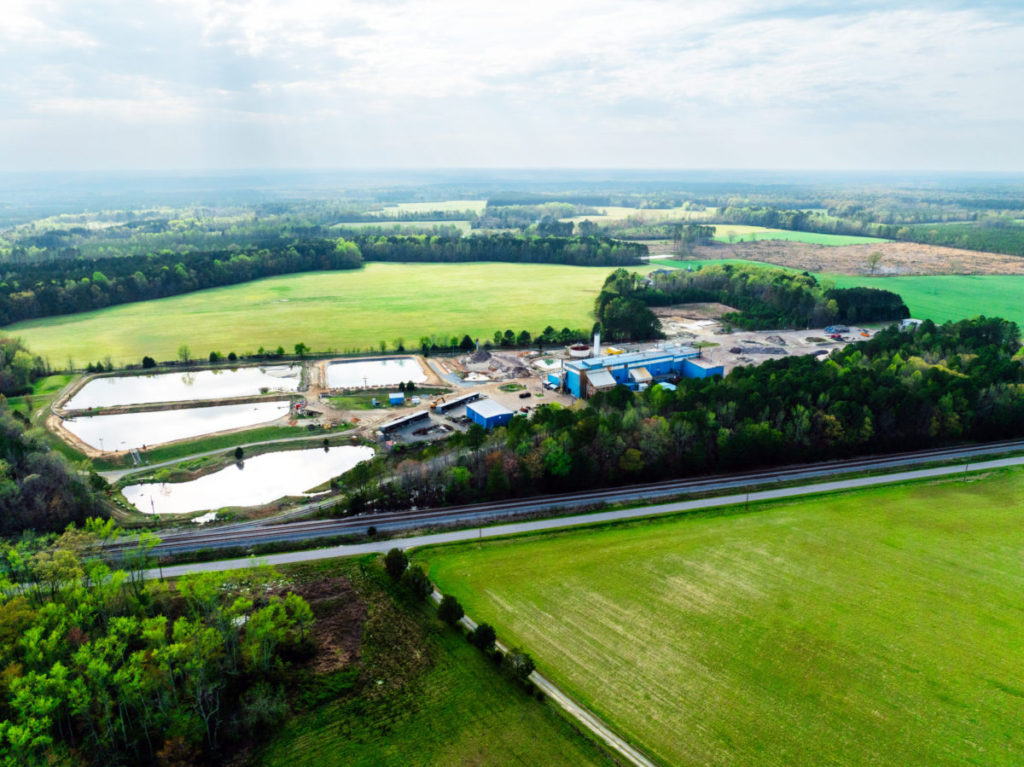
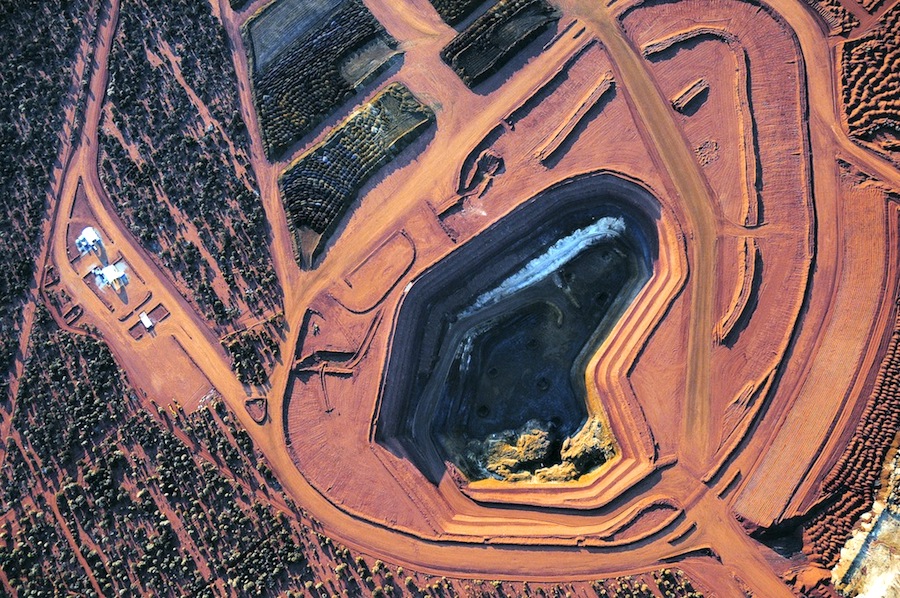
Atlantic Strategic Minerals’ mineral processing facilities in Virginia. Image: ASM.
Atlantic Strategic Minerals, a small US mining company, is considering building a rare earths plant in a bid to join America’s push for domestic production of key materials.
The facility would be at the company’s operations in Stoney Creek, Virginia, about 150 miles from Washington, DC, where it already produces some critical minerals and rare earth elements as a byproduct, according to Michael Scherb, chief executive officer of Appian Capital Advisory, which owns Atlantic Strategic Minerals.
“We’re debating now what we should do with the byproduct,” Scherb said Tuesday in an interview. “You can separate it and you can produce rare earths, but you need a refining facility.”
The decision follows the Trump administration’s push to loosen China’s grip on rare earth minerals, which are essential for products ranging from smartphones and electric vehicles to fighter jets. China controls the vast majority of the world’s rare earth mining and processing capacity, leaving US industries exposed to potential supply shocks.
Appian, which has about $5 billion of assets under management, is one of a few investment firms dedicated to the mining sector, alongside the likes of Orion Resource Partners and Resource Capital Funds. Atlantic Strategic Minerals started commercial operations in June, where it now produces niche minerals like ilmenite — a primary material used in titanium — and zircon, a source for the metal zirconium, which is used in nuclear reactors.
Scherb said Appian has held conversations with the White House seeking government support for the plant, which he estimated would cost under $100 million to build. The firm also is looking at processing domestic and international materials from third—party companies beyond its own operations, including Appian-owned Gippsland Critical Minerals, which has a rare earths project in Australia.
Companies have announced a flurry of investment plans for critical mineral projects in the US in light of President Donald Trump’s efforts to secure domestic supplies. Korea Zinc Co. — one of the world’s largest zinc processors — is planning a $7.4 billion smelter in Tennessee, while MP Materials Corp. is building a rare earths separation plan in California.\
Atlantic Strategic Minerals’ facility would be considerably smaller but easier to achieve, said Scherb.
“These grand, huge mega-projects — you don’t need to pursue those,” he said. “You can actually look at more cost-effective, strategic ways to get supply out, whether it be through recycling or better use of the byproduct that comes out of operations like these.”
(By Jacob Lorinc)
Energy Fuels to buy Australian Strategic Materials in $300M deal
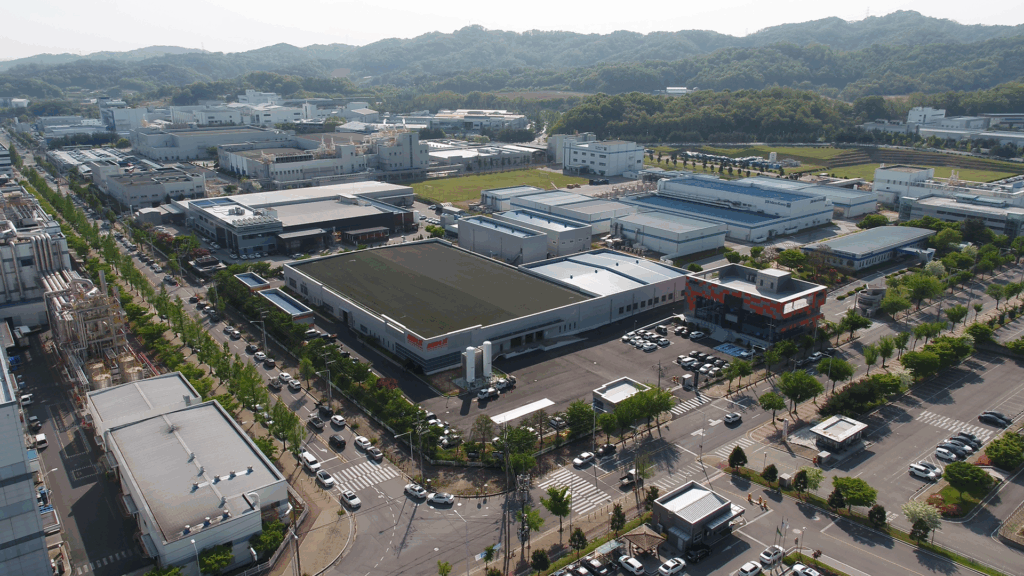
ASM’s Korean metals plant. Credit: Australian Strategic Materials
US uranium producer Energy Fuels has agreed to pay a large premium for Australian Strategic Materials (ASM), as the United States bolsters efforts to secure Western supply chains for rare earth elements.
Energy Fuels will acquire the rare earths firm in a deal valuing the Australian firm’s equity at A$447 million ($300.9 million), the two parties said in separate statements on Wednesday.
The deal, which represents a 121% premium on ASM’s close from January 20, sent shares of the Australian producer soaring as much as 126% to A$1.63.
The buyout is significant for the US, which is looking to lock in Western supply for the metals used in applications such as wind farms, mobile phones and missiles. Australia and the US signed a framework agreement for cooperation around critical minerals including rare earths last year, each pledging to invest $1 billion.
That investment, which will cut the risk for other stakeholders, is part of a suite of government policies that are expected to spur more sector consolidation, said law firm White and Case in a report this week.
“We are already seeing it (consolidation), and we’re going to continue to see it, because everyone recognizes that…rapid establishment of the supply chain you are going to need multiple parties who are working together,” ASM CEO Rowena Smith told Reuters in an interview.
Under the deal, shareholders of ASM would receive 0.053 Energy Fuels shares for each ASM share held, along with a special dividend of up to A$0.13 per ASM share, representing a total implied value of A$1.60 per ASM share.
ASM’s board has unanimously recommended that ASM shareholders vote in favour of the transaction in the absence of a superior proposal, it said.
Upon completion, the transaction will combine ASM’s operating Korean metalization plant and its planned American metals plant with Energy Fuels’ existing rare earth oxide production at its White Mesa Mill in Utah.
It will also have a number of development projects. In Australia that will include ASM’s Dubbo rare earths project in New South Wales, the Donald project in Victoria, as well as the Vara Mada project in Madagascar and the Bahia project in Brazil.
They are all intended to supply feed materials for the planned expansion of the company’s White Mesa Mill to produce 6,000 tonnes per annum (tpa) neodymium-praseodymium (NdPr), 240 tpa dysprosium, and 66 tpa terbium oxides.
Prices of rare earths have been rising as Western countries scramble to reduce dependence on China. In response, Australia has been considering setting a price floor and new international partnerships to support rare earths projects and build alternative supplies.
Australia’s Lynas Rare Earths is the world’s largest rare earths producer outside China. It produced 10,462 tons of rare earth oxides in the 2025 financial year.
($1 = 1.4857 Australian dollars)
(By Himanshi Akhand and Melanie Burton; Editing by Alan Barona, Chris Reese and Jacqueline Wong)
Lynas Rare Earths’ quarterly revenue surges as higher prices offset lower production
Lynas’ rare earths come from the Mount Weld mine in Western Australia. (Image courtesy of Lynas.)
Australia’s Lynas Rare Earths reported a 43% rise in second-quarter revenue on Wednesday, as higher selling prices eclipsed a production shortfall caused by power disruptions at its ore processing plant.
Prices of rare earths have been rising as Western countries scramble to reduce dependence on China. In response, Australia has been mulling a price floor and new international partnerships to support rare earth projects and build alternative supplies.
Lynas, the world’s largest producer of rare earths outside China, said the selling prices rose in tandem with higher benchmark prices for the elements.
The average selling price for Lynas’ product range was A$85.6 per kilogram during the quarter, higher than A$49.2 per kg a year ago.
The upbeat sentiment has also spilled over to January, Lynas said in its statement.
Rare earth elements are crucial for green-energy applications and are used in electric vehicles and smartphones, among other applications.
The company’s total rare earth oxide output was 2,382 metric tons, lower than 3,993 metric tons in the previous quarter, as power outages at its Kalgoorlie facility in Western Australia hampered production.
Last year, the firm said there had been a substantial rise in power supply disruptions at the facility, with outages in November resulting in a significant loss in mixed rare earth carbonate (MREC) production.
The Perth-headquartered firm said it had been working to secure off-grid solutions to ensure power stability at the facility.
The Kalgoorlie plant produces MREC, which is later processed into high-purity rare earth oxides.
Lynas posted sales revenue of A$201.9 million ($135.98 million) for the quarter ended December 31, compared with A$141.2 million a year ago.
($1 = 1.4848 Australian dollars)
(By Rajasik Mukherjee and Jasmeen Ara Shaikh; Editing by Sahal Muhammed)
Lynas CEO says government policies are improving rare earths market
Amanda Lacaze, CEO of Lynas Rare Earths. (Image: Kristie Batten | MINING.COM.)
Government policies around floor prices for rare earths have improved the function of the market and helped lift prices to sustainable levels, Amanda Lacaze, the CEO of Lynas Rare Earths said on Wednesday.
Lacaze made the comments as the world’s top rare earths producer outside China reported lower production but higher revenue from sales of the materials critical for green-energy infrastructure, electric vehicles, smartphones and defence.
Government policy is seen as a key driver of critical minerals markets this year, as nations seek to secure long-term supply separate from top producer China, and Lacaze’s comments highlight that policy action is having its intended effect.
Additionally, the easing of China’s export controls has reduced a glut there, boosting the domestic Chinese benchmark against which Lynas sells much of its supply, she said in a call with analysts after Lynas released its second-quarter results.
“I think everyone understands that the market settings remain positive, and in fact, in some ways, they’ve even become more positive during January,” Lacaze said.
“(The) price continues to strengthen, and frankly, geopolitics continue to be our friend, although we are yet to finalize various agreements with governments, the policies which have been particularly implemented by the US government have already fostered more functional market dynamics.”
Lacaze pointed specifically to the US government’s support of minimum prices for producer MP Materials and related discussions about support for floor prices between governments including Australia and the world’s top seven most advanced economies.
Prices should reflect costs
The floor price policy discussions are the most important talks Lynas is having with governments, she said. They are crucial for the company to sell rare earths at a level competitive with its lower-cost Chinese rivals.
“We don’t need governments to be buying our product. We need customers to be buying our product, and we need those customers to buy our product at prices that properly reflect the cost of doing business,” she said.
Lynas reported a 43% rise in second-quarter revenue on Wednesday as the higher selling prices eclipsed a production shortfall caused by power disruptions at its ore processing plant in Western Australia. Shares rallied 6%.
The average selling price for Lynas’ product range was A$85.60 ($57.69) per kg during the quarter, higher than A$49.20 per kg a year ago.
The upbeat price sentiment has also spilled over to January, Lynas said in a statement announcing the earnings.
The company’s total rare earth oxide output was 2,382 metric tons, lower than the 3,993 tons produced in the previous quarter, as power outages at its Kalgoorlie facility hampered production.
Last year, Lynas said there had been an increase in power supply disruptions at Kalgoorlie, with outages in November causing significant losses in mixed rare earth carbonate (MREC) production. The MREC from Kalgoorlie is later processed into high-purity rare earth oxides.
The Perth-headquartered firm said it had been working to secure off-grid solutions to ensure power stability at the facility, including considering using diesel fuel. While some power issues have been rectified, they are ongoing, said Lacaze, who is retiring after 10 years as CEO.
“As recently as yesterday, we had two significant power outages,” she said.
Lynas posted sales revenue of A$201.9 million ($136.08 million) for the quarter ended December 31, compared with A$141.2 million a year ago.
($1 = 1.4837 Australian dollars)
(By Rajasik Mukherjee and Jasmeen Ara Shaikh; Editing by Sahal Muhammed and Christian Schmollinger)
Viridis targets US, Europe rare earth deals amid China pushback
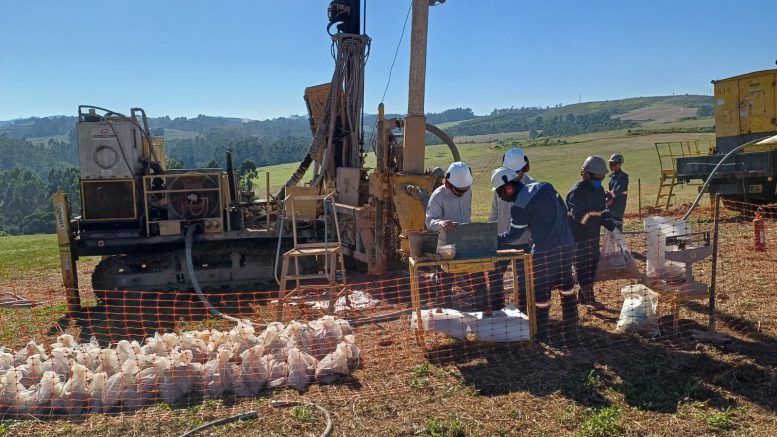
Drilling at the Colossus rare earth project in Brazil. Image from Viridis Mining.
Viridis Mining and Minerals Ltd. is in talks with prospective buyers of rare earths mined in Brazil, as Western nations look to reduce their reliance on China for elements used in electric vehicles and wind turbines.
The Australian-listed mineral developer is holding discussions with potential off-takers from the US and Europe and intends to sign up multiple buyers, including rare earth refineries and magnet makers, Brazil country manager Klaus Petersen said in an interview.
The negotiations include setting a minimum price for output from Viridis’ $360 million Colossus project in the state of Minas Gerais, Petersen said. A floor price would provide protection against low prices set in China, which accounts for about 90% of global rare earth permanent magnet production.
The talks come as Europe and Brazil move closer to a political agreement on critical raw materials. European Commission President Ursula von der Leyen has said such a deal would frame cooperation on joint investments in lithium, nickel and rare earths — materials she described as central to strategic independence in “a world where minerals tend to become an instrument of coercion.”
Brazil holds the largest rare earth reserves after China but has little commercial production. The country is seeking to tap much more of its geological potential, while junior miners developing critical minerals projects push for financial guarantees to better access funding.
Viridis plans to make a final investment decision in the second half of the year, with a view to starting production by 2028.
(By Mariana Durao)
China rare earth product exports fall as Japan spat draws focus
China’s rare earth product exports declined in December compared with the previous month, as investors monitor heightened tensions between Beijing and Japan that could trigger tighter shipment controls.
Outbound flows of the materials — used in electric vehicles, weapons systems and high-tech manufacturing — totaled 6,745 tons, down from 6,958 tons in November, according to customs data released on Sunday. The category is largely dominated by rare earth magnets, a product that’s provided China with critical leverage in a series of trade disputes that have jolted markets.
Rare earths have emerged as a flash point in trade relations in recent years, with the US and other nations seeking to challenge China’s dominance of their mining and processing. Although Beijing and Washington reached a trade truce in October, easing strains, attention has since shifted to Japan after China’s Ministry of Commerce announced controls on shipments to the country with potential military applications. The announcement followed remarks made last year by Japan’s prime minister over Taiwan.
Beijing is also mulling stricter scrutiny of the licenses to ship the minerals to the country, the China Daily reported, following the ministry’s statement.
The export figures released on Sunday cover shipments to all destinations and do not provide a breakdown by geography or product type. More detailed data is expected on Tuesday.

 Atlantic Strategic Minerals’ mineral processing facilities in Virginia. Image: ASM.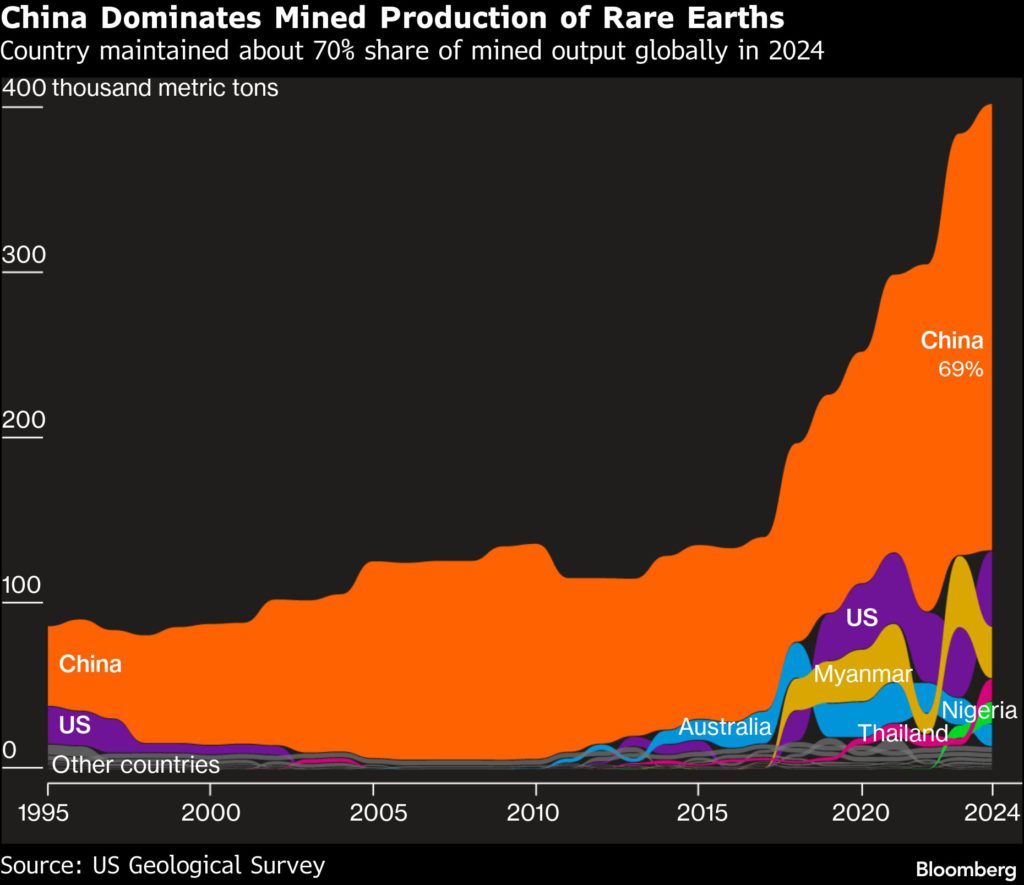
 Stock image.
No comments:
Post a Comment