
A senior US senator warned on January 16 that talk of the United States taking Greenland by force would damage American security interests and hand a strategic gift to Russian President Vladimir Putin, as Denmark, France and other allies stepped up resistance to any such move.
Democratic senator Jeanne Shaheen, a member of the Senate Foreign Relations Committee and part of a delegation of US lawmakers visiting Denmark, said even raising the possibility of seizing the Arctic island undermined trust among US allies and risked weakening Nato at a time when unity was critical.
Trump has repeatedly argued that the United States needs Greenland for national security reasons, claiming that Russia and China pose growing threats in the Arctic.
“Just the suggestion that the US would take Greenland by force does real damage not just to the relationship with Greenland, with Denmark, but to America's own national security. It erodes decades of hard won confidence among allies and it weakens the sense of security that comes with it and that rhetoric plays right into the hands of our greatest adversaries, Russia and China,” Shaheen said in a speech delivered during her visit to Copenhagen, broadcast on YouTube.
“Vladimir Putin would welcome any move that fractures Nato or diverts attention and resources away from Ukraine … If we're serious about limiting Russia's influence in the Arctic and beyond, the most effective way to do that is by defeating Vladimir Putin in Ukraine. And that's precisely why the current debate over Greenland makes so little sense.
She added: “Whether it's US bases to defend against Arctic threats or critical mineral deals, your leaders here in Denmark and in Greenland have made clear that they want to partner with us. So I think the threats are not only unnecessary, they are counterproductive. They risk undermining not just our relationship with all of you in Denmark, with the people of Greenland, but the broader Nato alliance in the process.
She added that she had met Danish Prime Minister Mette Frederiksen earlier on Friday and stressed that Washington could pursue its interests on the island through cooperation rather than confrontation.
“If the United States wants to do certain things in Greenland — whether it’s building more military bases or developing critical minerals — all we have to do is partner with you,” Shaheen said.
Greenland is a self-governing territory within the Kingdom of Denmark, a Nato ally of the United States.
Russia has repeatedly said it regards Greenland as part of Denmark under international law, even as it closely watches the dispute unfold. This was reiterated by Kremlin spokesman Dmitry Peskov to state news agency Ria Novosti on January 16.
Peskov added Russia considered Trump’s comments “extraordinary”, and noted that the US president had previously indicated that legal considerations were not a priority.
US, Danish and Greenlandic officials took place at the White House on January 14. Danish Foreign Minister Lars Løkke Rasmussen described those discussions as frank but constructive, though they ended without a breakthrough. The parties agreed to continue discussions through a high-level working group.
“The US position is that it needs to take over Greenland. We continue to believe that long term security can be achieved while respecting the territorial integrity of the Kingdom of Denmark and the right of self-determination of the Greenlandic people. Respecting international law and the UN Charter. This is our red line,” wrote Rasmussen on Facebook after the meeting.
“This is 2026 - you can trade with people, but you don’t trade people,” he added.
In Paris, France also warned of consequences if Washington pursued the issue further. Finance Minister Roland Lescure told the Financial Times that taking Greenland would cross a red line and could threaten trade relations between the United States and the European Union.
Lescure said European officials were using all diplomatic channels to persuade Washington of the risks, while trying to keep dialogue open despite disagreements over steel tariffs and technology regulation.
Trump threatens to slap tariffs on countries that won't let him take over Greenland
January 16, 2026
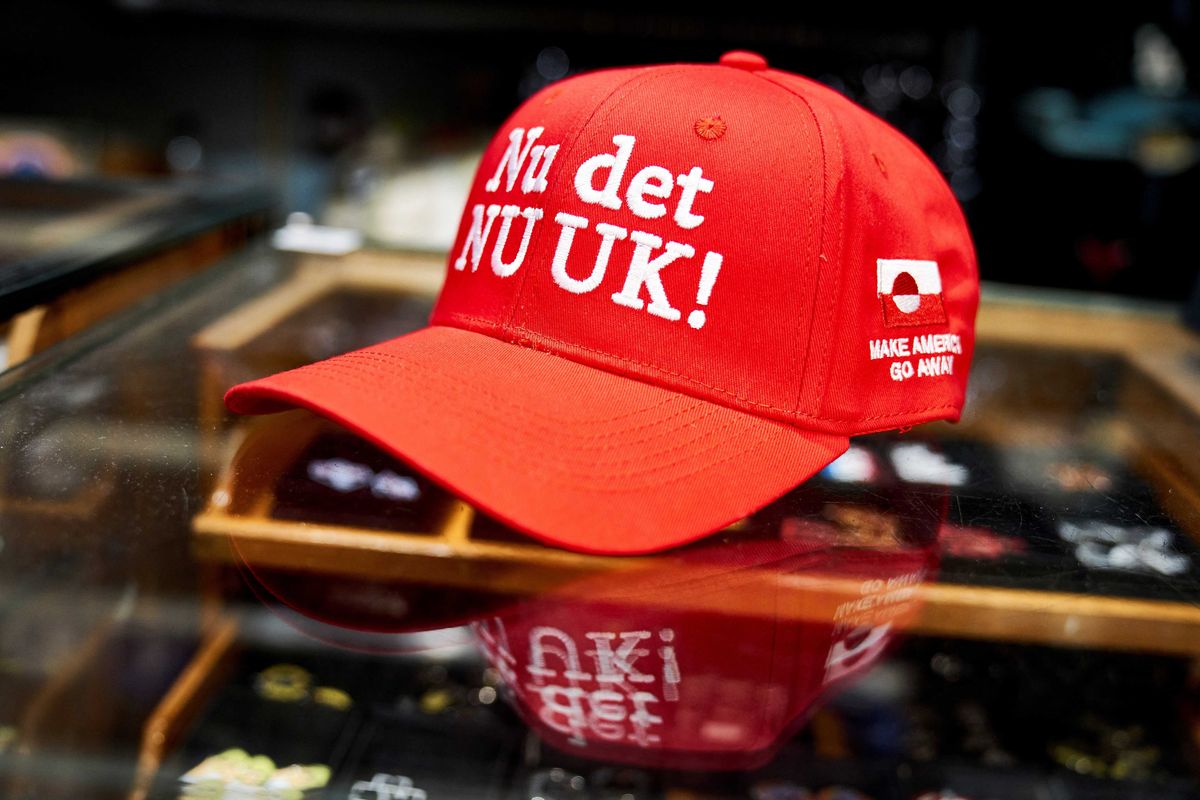
A Anti-MAGA cap "Nu det NUUK!" which is sold in the clothing store McKorman on Noerrebrogade, is displayed, in Copenhagen, Denmark January 13, 2026. The message "Nu er det NUUK!" and "Make America go away" is embroidered on the cap. After the heated debate between the U.S., Greenland, and Denmark about Trump's renewed desire to take over Greenland, "Nu er det NUUK" has gone viral on the internet. The phrase "Nu er det NUUK!" refers to Greenland's capital Nuuk - and can be translated from Danish as "Enough is enough".
by Jennifer Shutt,
January 16, 2026
WASHINGTON — President Donald Trump threatened Friday to place tariffs on Greenland and any country that opposes his efforts to take over the Arctic island, as members of Congress from both political parties were in Europe to assure allied nations that lawmakers won’t go along with his plans.
“I may do that for Greenland too. I may put a tariff on countries if they don’t go along with Greenland because we need Greenland for national security,” Trump said. “So I may do that.”
Trump has been increasingly focused on acquiring Greenland during his second term in the Oval Office and White House press secretary Karoline Leavitt said earlier this month that “utilizing the U.S. Military is always an option at the Commander in Chief’s disposal.”
Lawmakers not on board
Republicans and Democrats in Congress have been skeptical or outright opposed to Trump’s aspirations for Greenland, a territory of Denmark, which is a NATO ally.
Alaska Republican Sen. Lisa Murkowski and Maine independent Sen. Angus King, co-chairs of the Senate Arctic Caucus, met with officials from Denmark this week to try to reassure the country’s leaders.
King wrote in a statement after the meeting that “the Denmark and Greenland coalition reiterated to us that they are fully prepared to cooperate with the United States in any way to expand our national security presence in Greenland – an agreement which goes back 75 years.”
“It was a very productive meeting and I’m hopeful that the administration will finally realize that taking Greenland over by a military force is almost unthinkable — to attack essentially a NATO ally,” King added. “That would be the greatest gift to (Russian President) Vladimir Putin that this country could possibly bestow.”
Murkowski wrote that the “United States, Denmark and Greenland should be able to count on each other as partners in diplomacy and national security.”
“Respect for the sovereignty of the people of Greenland should be non-negotiable, which is why I was grateful for the opportunity to engage in direct dialogue with Foreign Ministers from Denmark and Greenland,” Murkowski wrote. “Meetings like the one held today are integral to building stronger relationships with our allies that will continue to endure amid a shifting geopolitical landscape.”
House speaker derides ‘media narrative’
U.S. House Speaker Mike Johnson, R-La., said during a press conference this week that he hasn’t heard any plans for military action in Greenland at any briefings he’s attended and that he believes “this is a media narrative that’s been created.”
Johnson said he doesn’t “anticipate any boots on the ground anywhere anytime soon,” though he added the United States does have national security and critical mineral interests in Greenland.
“Greenland is of strategic importance, its geography and everything else. So look, again, you have to wait for that to play out. I’m going to leave it to the administration to articulate it how they will,” Johnson said. “But I think what the president is articulating is something that everybody objectively has to acknowledge, that Greenland has strategic significance to us and also to other countries around the world, so we need to play that very seriously.”
A bipartisan congressional delegation was in Denmark on Friday to communicate to leaders of that country and Greenland that they don’t support Trump’s efforts.
Lawmakers on the trip include Delaware Democratic Sen. Chris Coons, Illinois Democratic Sen. Dick Durbin, Murkowski, New Hampshire Democratic Sen. Jeanne Shaheen and North Carolina Republican Sen. Thom Tillis, as well as Pennsylvania Democratic Rep. Madeleine Dean, Maryland Democratic Rep. Steny Hoyer, California Democratic Rep. Sara Jacobs, Delaware Democratic Rep. Sarah McBride and New York Democratic Rep. Gregory Meeks.
Daily Montanan is part of States Newsroom, a nonprofit news network supported by grants and a coalition of donors as a 501c(3) public charity. Daily Montanan maintains editorial independence. Contact Editor Darrell Ehrlick for questions: info@dailymontanan.com.

The Arctic Circle — and the sovereignty of its biggest island, Greenland — is back in the international geopolitical spotlight.
"We need Greenland for national security and even international security. And we’re working with everybody involved to try and get it," US President Donald Trump said in a speech to the US Congress on March 4.
"One way or the other, we’re going to get it."
Even on the campaign trail, Trump repeatedly called into question the sovereignty of two Arctic nations, Denmark and Canada. Not only does he want the US to acquire Greenland, a Danish territory — a prospect vocally opposed by Copenhagen and the territory's semiautonomous government — but he has also floated the idea of Canada becoming a US state.
And with tensions rising between other Arctic nations, particularly Russia, what used to be a cooperative relationship between countries in the region has fragmented.
Amid a scramble to shore up valuable resource reserves, are the Arctic's relatively peaceful days soon to be a thing of the past?
Frosty diplomatic relations
Eight nations lie in the Arctic Circle: the Arctic Five — Canada, Denmark (through Greenland and the Faroe Islands), Norway, Russia and the US — are the region's coastal states.
Finland, Sweden and Iceland have territory, but no significant shoreline.
None of these nations "owns" the Arctic. They exercise their territorial and economic rights in line with international law, as all countries do. The Arctic Five can exploit living and non-living natural resources in their Exclusive Economic Zones (EEZs): this includes fishing rights,oil and gas exploration and the ability to establish offshore renewable energy infrastructure.
These states also form the Arctic Council, an intergovernmental forum established in 1996 to foster cooperation between governments, Indigenous peoples and others living in the region. Other nations such as Germany, China and India have observer status.
The council has no regulatory powers, but is meant to serve as a platform for dialogue. Recent conflicts further south, however, particularly Russia's annexation of Crimea in 2014 and full-scale invasion of Ukraine in 2022, have seen once-cooperative scientific and diplomatic relationships in the Arctic affected by the frayed relationships between Moscow and EU, as well as NATO members in the region.
'Great power competition'
Will Greaves, a political scientist at the University of Victoria, Canada, said these strained relations are the result of an "increase in great power competition."
"And something of a return to the bad old days of abandoning what was a very successful project of pan-Arctic cooperation that was established after the end of the Cold War," Greaves told DW.
Combined with its attacks on Ukraine, Greaves said Russia's increased military activity in the Arctic resulted in "the end, effectively, of military and defense cooperation between Russia and the other Arctic [states]."
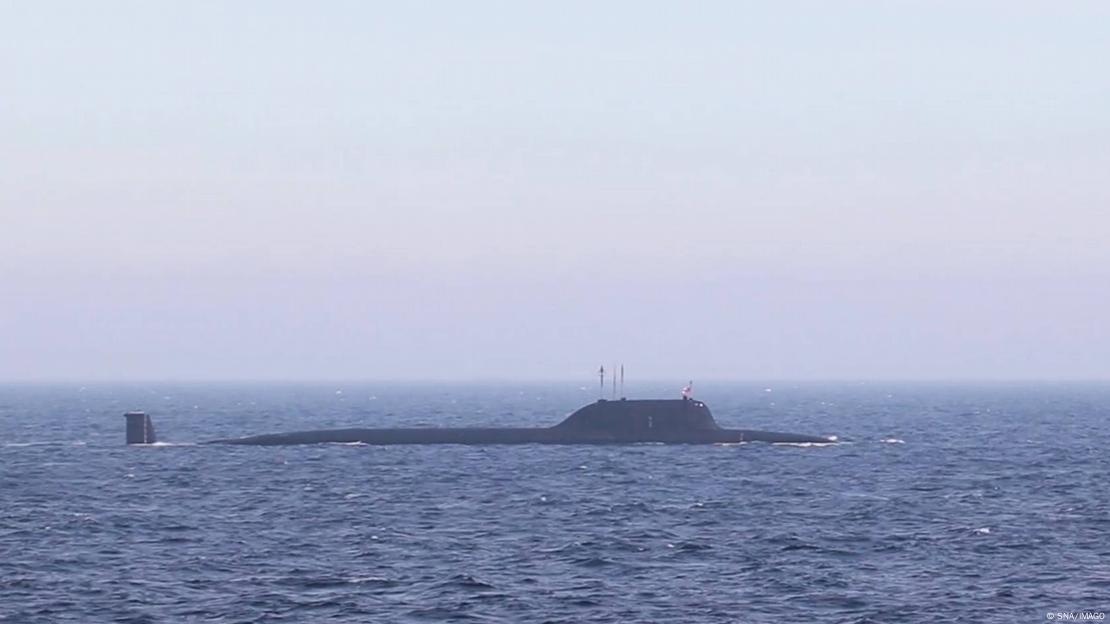
Trump's stance on Greenland, Canada and a previous refusal to sign a 2019 council meeting communique mentioning climate change have also upset the balance between the Western bloc of Arctic nations.
Greaves argues there are now three geopolitical poles in the region: a Russia-dominated "Eurasian Arctic," a Nordic and Scandinavian "European Arctic" and the North American Arctic with an increasingly strained Canada, US and nearby Greenland.
The expert added that, although the Arctic's NATO states were effectively in lockstep opposition to Russia under the Biden administration, "the reality is that the Trump administration's own foreign policy behavior, combined with its climate denialism, makes it virtually impossible for there to be a kind of consensus [between the Trump administration and Western allies]."
The race for the Arctic is ramping up. Here's why 14:09
A region worth exploring?
In 2008, the US Geological Survey estimated that 22% of the world's undiscovered oil and gas reserves could be found north of the Arctic Circle.
There are also major deposits of critical minerals and metals located within each Arctic nation's territory, which they can extract. Greenland also has significant deposits, which will become easier to access due to climate-induced ice melt.
While Norway and Russia have been able to develop their Arctic offshore oil and gas, it may be harder — and therefore less lucrative — to drill into the ocean floor of the whole region.
"It's all very traditional industrialization off the Arctic, but geographically limited. It's not like an all-out boom everywhere, it's more targeted," said Malte Humpert, founder of the nonprofit think tank The Arctic Institute.
It's also more expensive. "We know there are some resources, but we also know that resource extraction in the Arctic is comparatively expensive," said Elana Wilson Rowe, an expert on Arctic governance at the Norwegian University of the Life Sciences.
China considers itself a near-Arctic state, if only to enhance its stake in the region. But despite some low-key investments in mining infrastructure in the region, a 2022 RAND report found the country had only limited success in extracting materials.
But China's Arctic ambitions could benefit in another way: trade. If climate change turns the Arctic summer ice-free, new shipping routes might open up directly through the North Pole. Russia and China would benefit most from such an environmental transformation, with a more direct path to send freight between their major ports that doesn't require hugging the Russian shoreline.
"No slowdown, no icebreaker, nothing," said Humpert. "Climate change is altering the map and creating winners and losers. There will be economic opportunity, but there will also be challenges for Indigenous people, for local populations that already live there."
The climate is changing — environmentally and politically
Climate change is rapidly transforming the Arctic. Winter sea ice extent is at record lowest levels and some expect an ice-free summer could occur by 2050, given the continued rise of carbon dioxide emissions from human activity.
"There's certainly an awareness in all of the capitals of Arctic states about how climate change is transforming the Arctic region," said Wilson Rowe. "The retreat of sea ice is especially important and presents for coastal states some opportunities and threats."
Annual winter maximum sea ice in 2025 was around 1.4 million square kilometers (540 million square miles) less than the 30-year median value. That's an area of ice about the size of Mongolia that has failed to form.
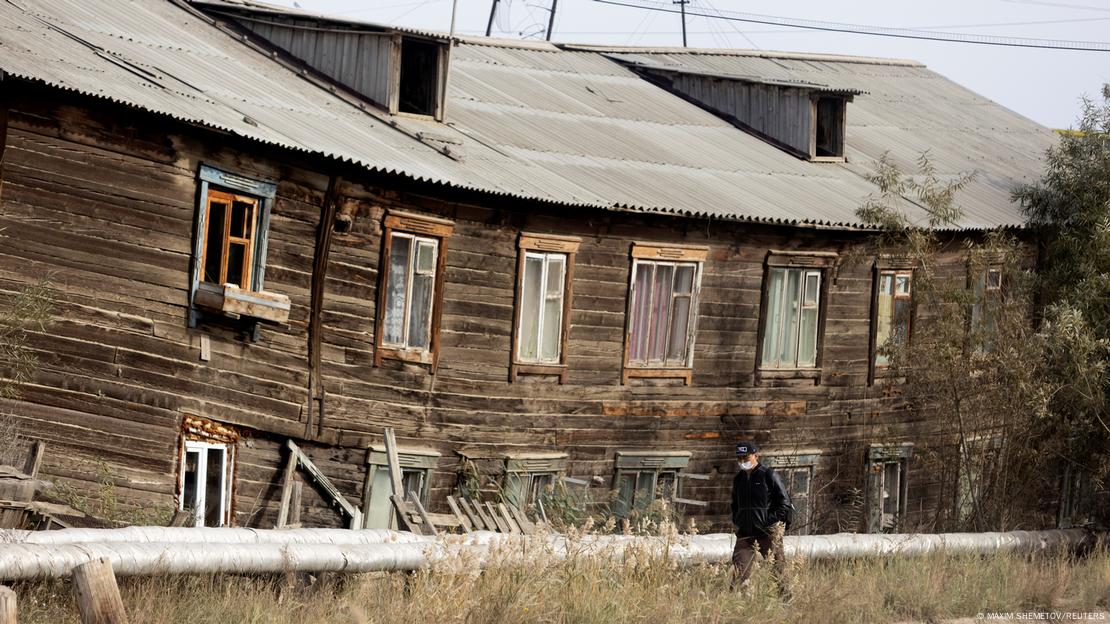
While absent sea ice could open new trade routes, there are also major risks to human safety from ice loss and thawing permafrost on land. A recent study found climate-induced permafrost thaw across Russia, Europe and North America could lead to infrastructure failure, land-based transport and freight disruption, lower water quality, food security and greater exposure to disease and contaminants.
"All of these issues […] are happening against the backdrop of climate change in the Arctic that is decades and decades into this accelerated pace of warming at three to four times the global average," said Greaves. "It's causing a magnitude of ecological, social and economic impacts that are not well understood outside of the Arctic."
"Geopolitics is highly relevant," he said, "but it's also distracting from the longer term and, in many ways, far more grave implications of climate change."
Edited by: Maren Sass

Matthew Ward Agius DW Journalist reporting on Health, Science, Politics and Current Affairs
Greenland? Really?
It is hard to understand why Donald Trump is so anxious to acquire Greenland even if it takes military force. When he suggested this during his first administration, one of his Cabinet secretaries mused, “You just sit there and be, like, ‘Well, this isn’t real.’” Now, somehow, it is.
Venezuela shows us that, other than a desire for domination, there is no reasonable policy reason for Trump’s military actions. When he first ordered blowing up civilians in speedboats in international waters in the Caribbean, he claimed it was to prevent fentanyl from coming to the United States. After the obvious point that Venezuela produces no fentanyl was made, the justification became cocaine even though it was unlikely that any of these small boats, more than a thousand miles away from the US, contributed to the American drug problem.
Shortly before seizing Maduro, Trump pardoned the former president of Honduras who had just begun a 45-year sentence for his involvement in trafficking more than 400 tons of cocaine to the US. Switching justifications to regime change convinced few as Trump kept the rest of the Maduro regime in power while criticizing opposition leader Maria Machado. As for Trump’s latest justification, seizing “stolen” Venezuelan oil, even the major American oil companies, the supposed victims, seem singularly unenthusiastic.
When Germany occupied Denmark during WWII, the United States temporarily protected Greenland. At the end of the war, it was returned to Danish control but, since then, Denmark has made changes to give Greenlanders greater autonomy including granting the island home rule in 1979.
A major reason many Greenlanders want more control over foreign policy is a 2004 agreement that gave the US permission to upgrade its missile defense system at Thule Air Base which has since been renamed Pituffik Space Base. Inuit, who make up most of Greenland’s population and who had been forcibly removed from the area, sued for the right of return at the European Court of Justice.
Tensions had increased because the US stored nuclear weapons on the island in violation of a Danish ban and without the knowledge of Greenland, a problem worsened by the 1968 crash near Thule of a military airplane carrying four hydrogen bombs. A 2008 referendum calling for increased autonomy for the island passed with a three-quarters majority. It is hardly surprising that despite Trump’s claim that “Greenlanders “want to be with us,” a 2025 Verian poll showed 85% opposed and only 6% in favor.
The 1951 treaty between the US and Denmark allows the building of multiple military bases across Greenland. During the Cold War about a dozen bases, housing some 11,000 troops were built, including the 1959 Project Iceworm, a top-secret city under the ice that would house nuclear missiles. The instability of the ice sheet caused this project to be abandoned in 1966. All of the bases except Pituffik have been closed while the number of American personnel stationed there has been reduced from 6000 to 150.
If there was a real national security threat, the existing treaty would allow the US to increase the number of bases and personnel to whatever it deems necessary, provided it consults with Denmark and Greenland. According to Trump, there is a danger of Russia or China taking over Greenland if the US does not. A week ago he asserted that “Greenland is covered with Russian and Chinese ships,” a claim denied by Danish and Greenland officials who say that since a 2018 attempt by China to build several airports was rejected, “there really has been nothing from the Chinese.” Nor does tracking data show any sign of Chinese or Russian ships or submarines near Greenland.
Instead of Trump’s megalomania and desire for domination, Greenland’s future should be up to its own people. The same poll that showed most Greenlanders opposed a US takeover found that if there was a referendum on independence from Denmark, 56% indicated they would vote in favor versus 28% in opposition. Instead of Trump’s imperialist domination, they should be given the opportunity for self-determination.
European military personnel were due to begin arriving in Greenland on Thursday, shortly after a meeting between American, Danish and Greenlandic officials in Washington failed to resolve "fundamental disagreement" over the mineral-rich, strategic Arctic island.
Issued on: 15/01/2026 - RFI
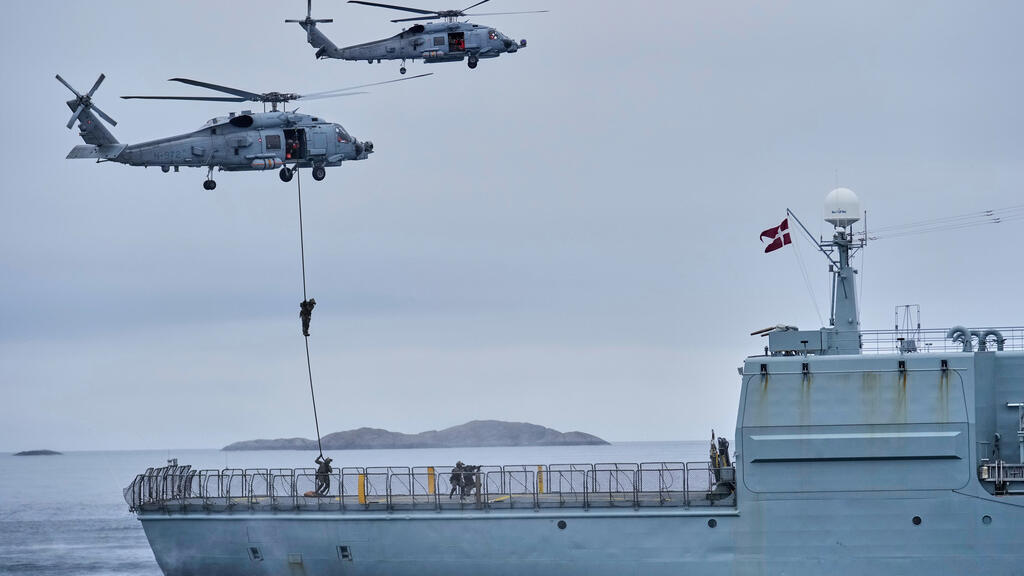 Danish military forces participate in an exercise with hundreds of troops from several European NATO members in the Arctic Ocean in Nuuk, Greenland, Monday, Sept. 15, 2025. AP - Ebrahim Noroozi
US President Donald Trump has repeatedly vowed to take control of the autonomous Danish territory, arguing that it is vital for US security.
France, Sweden, Germany and Norway announced Wednesday that they would deploy military personnel as part of a reconnaissance mission to Greenland's capital Nuuk."Soldiers of NATO are expected to be more present in Greenland from today and in the coming days. It is expected that there will be more military flights and ships," Greenland's deputy prime minister Mute Egede told a news conference on Wednesday, adding they would be "training".
"The first French military personnel are already on their way. Others will follow," French President Emmanuel Macron said on X.
The deployment of a 13-strong Bundeswehr reconnaissance team to Nuuk from Thursday was at Denmark's invitation, the German defence ministry said, adding it would run from Thursday to Sunday.
The deployment was announced on the same day that the foreign ministers of Denmark and Greenland met with US Vice President JD Vance and Secretary of State Marco Rubio in Washington.
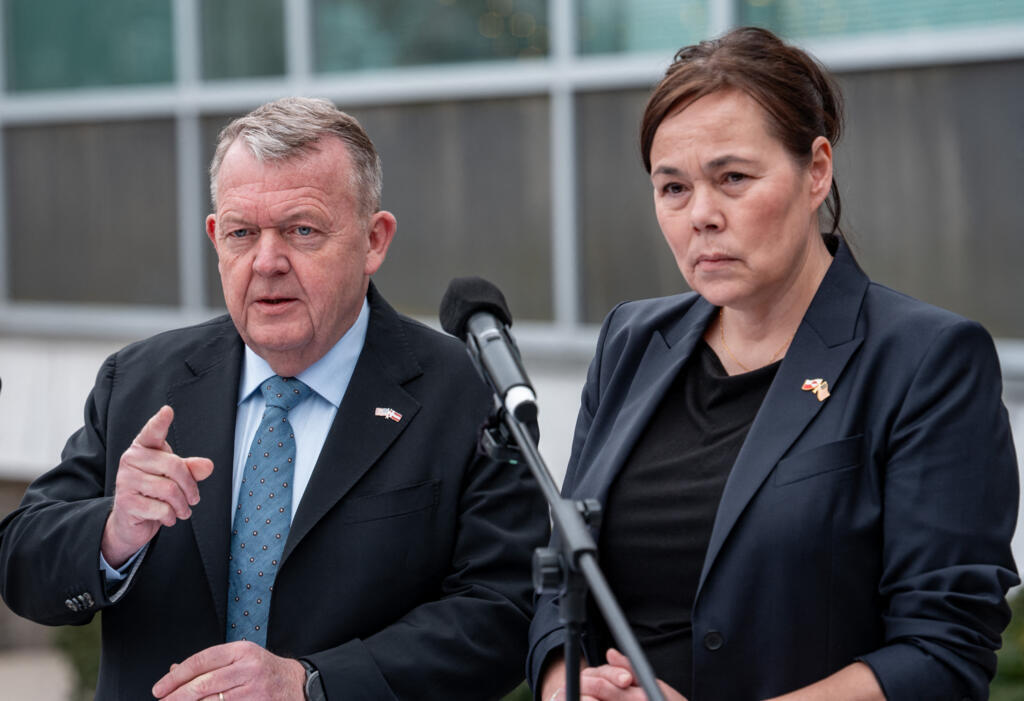
Danish Foreign Minister Lars Lokke Rasmussen, speaking after leaving the White House, said a US takeover of Greenland was "absolutely not necessary."
"We didn't manage to change the American position. It's clear that the president has this wish of conquering over Greenland," Lokke told reporters.
"We therefore still have a fundamental disagreement, but we also agree to disagree."
Trump, speaking after the meeting which he did not attend, for the first time sounded conciliatory on Greenland, acknowledging Denmark's interests even if he again said he was not ruling out any options.
"I have a very good relationship with Denmark, and we'll see how it all works out. I think something will work out," Trump said without explaining further.

He again said Denmark was powerless if Russia or China wanted to occupy Greenland, but added: "There's everything we can do."
Trump has appeared emboldened on Greenland after ordering a deadly January 3 attack in Venezuela that removed president Nicolas Maduro.
On the streets of Nuuk, red and white Greenlandic flags flew in shop windows, on apartment balconies, and on cars and buses, in a show of national unity this week.
Some residents described anxiety from finding themselves at the centre of the geopolitical spotlight.
"It's very frightening because it's such a big thing," said Vera Stidsen, 51, a teacher in Nuuk.
"I hope that in the future we can continue to live as we have until now: in peace and without being disturbed," Stidsen told AFP.
(With newswires)
Macron warns of 'cascading consequences' if US seizes Greenland
US threats to seize Greenland drew a warning from France on Wednesday, after leader Donald Trump renewed claims that Washington should take control of the Arctic island for security reasons. President Emmanuel Macron warned that any move affecting Greenland’s sovereignty would bring “unprecedented” consequences.
Issued on: 14/01/2026 - RFI
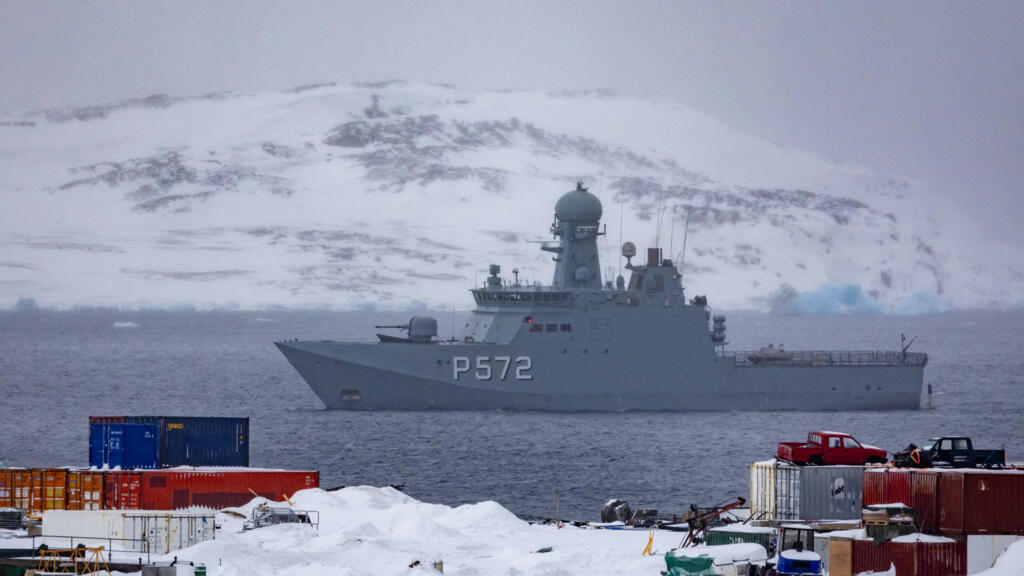
“If the sovereignty of a European ally were affected, the cascading consequences would be unprecedented,” Macron told a cabinet meeting, according to government spokeswoman Maud Bregeon.
“France is closely monitoring the situation and will act in full solidarity with Denmark and its sovereignty."
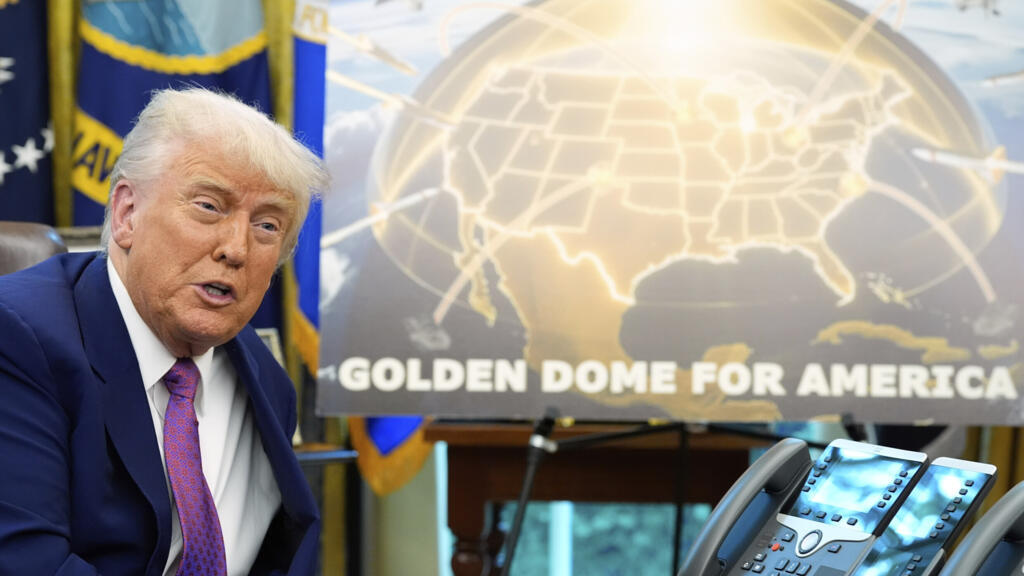
Macron’s comments came after US President Donald Trump said American control of Greenland was “vital” for a planned Golden Dome air and missile defence system.
Greenland is an autonomous territory within the Kingdom of Denmark and has a population of about 57,000.
Security claims and NATO
“The United States needs Greenland for the purpose of National Security,” Trump wrote on social media. “It is vital for the Golden Dome that we are building,” he said.
Trump argued that NATO would be “far more formidable and effective” if Greenland were under US control, adding that “anything less than that is unacceptable”. He warned that if Washington did not act, “Russia or China will”.
The US president has repeatedly justified his position by pointing to increased Russian and Chinese activity in the Arctic as ice melts due to climate change, although neither country claims Greenland.
Trump also said NATO “should be leading the way” in building the defence system.
His remarks came as Danish Foreign Minister Lars Lokke Rasmussen and his Greenlandic counterpart Vivian Motzfeldt were due to visit the White House for talks with Vice President JD Vance and Secretary of State Marco Rubio.
Rasmussen said he hoped to “clear up certain misunderstandings”.
Greenland rejects US control
Hours before the meeting, Danish Defence Minister Troels Lund Poulsen told the French news agency AFP that Denmark was boosting its military presence in Greenland and discussing “an increased NATO presence in the Arctic” with allies.
Greenland’s leaders have firmly opposed Trump’s ambitions.
“One thing must be clear to everyone: Greenland does not want to be owned by the United States,” Prime Minister Jens-Frederik Nielsen said.
“Greenland does not want to be governed by the United States. Greenland does not want to be part of the United States."
The US already has the right to station troops on Greenland under an agreement with Denmark, but Trump has pushed for full ownership.
“We’re talking about acquiring not leasing,” he told reporters on Sunday.
(with newswires)
Danish official cites 'fundamental disagreement' with US over Greenland after White House meeting
Greenland and Denmark on Wednesday said they “agreed to disagree” with US diplomats after a “frank, constructive” discussion at the White House on US President Donald Trump’s desire to acquire the autonomous territory.
Issued on: 14/01/2026
By: FRANCE 24
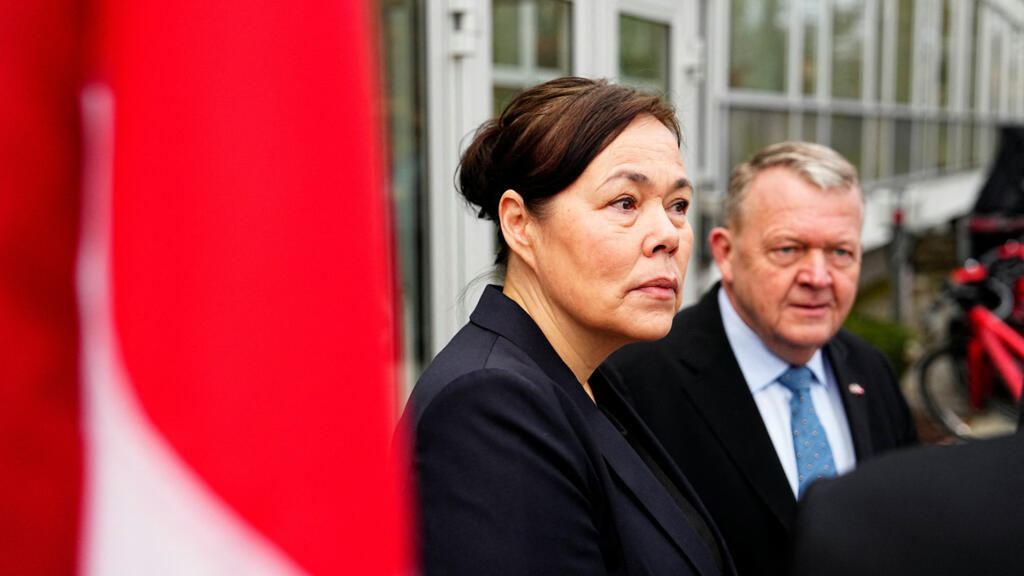
A top Danish official said Wednesday that a “fundamental disagreement” over Greenland remains with President Donald Trump after highly anticipated talks in Washington with Vice President JD Vance and Secretary of State Marco Rubio.
The two sides, however, agreed to create a working group to discuss ways to work through differences as Trump continues to call for a US takeover of the semiautonomous territory of NATO ally Denmark.
“The group, in our view, should focus on how to address the American security concerns, while at the same time respecting the red lines of the Kingdom of Denmark,” Danish Foreign Minister Lars Løkke Rasmussen told reporters after joining Greenland’s foreign minister, Vivian Motzfeldt, for the talks.
Trump is trying to make the case that NATO should help the US acquire the world's largest island and says anything less than it being under American control is unacceptable.
Denmark has announced plans to boost the country's military presence in the Arctic and North Atlantic as Trump tries to justify his calls for a US takeover of the vast territory by repeatedly claiming that China and Russia have their designs on Greenland.
The White House did not immediately respond to a request for comment after the roughly hourlong meeting.
But a few hours before the officials sat down, Trump said on his social media site that the US “needs Greenland for the purpose of National Security”. He added that “NATO should be leading the way for us to get it” and that otherwise Russia or China would – “AND THAT IS NOT GOING TO HAPPEN!”
“NATO becomes far more formidable and effective with Greenland in the hands of the UNITED STATES,” Trump wrote. “Anything less than that is unacceptable.”
Løkke Rasmussen told reporters that it remains “clear that the president has this wish of conquering over Greenland”.
“And we made it very, very clear that this is not in the interest of the kingdom,” he said after the meeting, citing a “fundamental disagreement” with the Trump administration but willing to keep talking.
In Copenhagen, Danish Defense Minister Troels Lund Poulsen announced an increase in Denmark’s “military presence and exercise activity” in the Arctic and the North Atlantic, “in close cooperation with our allies”.
Poulsen said at a news conference the stepped-up military presence was necessary in a security environment in which “no one can predict what will happen tomorrow”.
“This means that from today and in the coming time there will be an increased military presence in and around Greenland of aircraft, ships and soldiers, including from other NATO allies,” Poulsen said.
Other NATO allies were arriving in Greenland along with Danish personnel, he said. Poulsen declined to name the other countries contributing to increased Arctic presence, saying that it is up to the allies to announce their own participation.
Earlier, Swedish Prime Minister Ulf Kristersson wrote on X that “some officers from the Swedish Armed Forces are arriving in Greenland today” as part of a group from several allied countries. “Together, they will prepare events within the framework of the Danish exercise Operation Arctic Endurance,” Kristersson said. Two Norwegian military personnel also will be sent to Greenland to map out further cooperation with allies, the country’s Defense Minister Tore O. Sandvik told newspaper VG.
Greenland's prime minister, Jens-Frederik Nielsen, said Tuesday that "if we have to choose between the United States and Denmark here and now, we choose Denmark. We choose NATO. We choose the Kingdom of Denmark. We choose the EU.”
Asked about those comments, Trump replied: “I disagree with him. I don’t know who he is. I don’t know anything about him. But, that’s going to be a big problem for him.”
Greenland is strategically important because, as climate change causes the ice to melt, it opens up the possibility of shorter trade routes to Asia. That also could make it easier to extract and transport untapped deposits of critical minerals which are needed for computers and phones.
Trump says Greenland is also “vital” to the United States' Golden Dome missile defense program. He also has said he wants the island to expand America’s security and has repeatedly cited what he says is the threat from Russian and Chinese ships as a reason to control it.
But experts and Greenlanders question that claim.
“The only Chinese I see is when I go to the fast food market,” heating engineer Lars Vintner said. He said he frequently goes sailing and hunting and has never seen Russian or Chinese ships.
His friend, Hans Nørgaard, agreed, adding “what has come out of the mouth of Donald Trump about all these ships is just fantasy.”
Denmark has said the U.S, which already has a military presence, can boost its bases on Greenland. The US is party to a 1951 treaty that gives it broad rights to set up military bases there with the consent of Denmark and Greenland.
For that reason, “security is just a cover”, Vintner said, suggesting Trump actually wants to own the island to make money from its untapped natural resources.
Mikaelsen, the student, said Greenlanders benefit from being part of Denmark, which provides free health care, education and payments during study, and “I don’t want the US to take that away from us."
Løkke Rasmussen and Motzfeldt, along with Denmark’s ambassador to the US, planned to meet later Wednesday with senators from the Arctic Caucus. A bipartisan delegation of US lawmakers is also heading to Copenhagen this week to see Danish and Greenlandic officials.
(FRANCE 24 with AP)
Trump says US control of Greenland ‘vital’ for Golden Dome
US control of Greenland is "vital" for the country's planned Golden Dome air and missile defence system, President Donald Trump said in a social media post on Wednesday. Trump's post came as Danish Defence Minister Troels Lund Poulsen sought to ease US concerns about security in Greenland, telling media that Denmark was boosting its military presence there.
Issued on: 14/01/2026
By: FRANCE 24
Video by: Oliver FARRY
02:06
US President Donald Trump insisted Wednesday the US needs to take control of Greenland, with NATO's support, just hours before crunch talks about the Arctic island with top Danish, Greenlandic and US officials.
Just hours before the meeting with US Vice President JD Vance was due to start, Trump said that US control of Greenland – an autonomous territory belonging to NATO ally Denmark – was "vital" for his planned Golden Dome air and missile defense system.
"NATO becomes far more formidable and effective with Greenland in the hands of the UNITED STATES. Anything less than that is unacceptable," he wrote on social media.
He said NATO "should be leading the way" in building the multi-layer missile defense system.
"IF WE DON'T, RUSSIA OR CHINA WILL, AND THAT IS NOT GOING TO HAPPEN!" Trump wrote.
Just prior, Danish Defence Minister Troels Lund Poulsen had sought to ease US concerns about security in Greenland, telling AFP Denmark was boosting its military presence there and was in talks with allies on "an increased NATO presence in the Arctic."
Trump has repeatedly threatened to take over the vast, strategic and sparsely populated Arctic island, and he has sounded emboldened since ordering a deadly January 3 attack in Venezuela that removed its president.
Danish Foreign Minister Lars Lokke Rasmussen and his Greenlandic counterpart were to hold talks later Wednesday in Washington with US Secretary of State Marco Rubio and Vice President JD Vance.
Lokke said he was hoping to "clear up certain misunderstandings." But it remains to be seen if the Trump administration also sees a misunderstanding and if it wants to climb down.
Trump, when asked Tuesday about Greenland's leader saying that the island prefers to remain part of Denmark, said: "Well that's their problem."
"Don't know anything about him, but that's going to be a big problem for him," Trump said.
Trump said on Friday that he wanted Greenland "whether they like it or not" and "if we don't do it the easy way, we're going to do it the hard way."
Danish Prime Minister Mette Frederiksen has warned that an attack on a NATO ally would end the alliance.
While an agreement with Denmark allows the United States to station as many soldiers as it wants on Greenland, Trump has doubled down on US ownership, telling reporters on Sunday that "we're talking about acquiring not leasing."
The former real estate developer told The New York Times that ownership "is psychologically needed for success" and "gives you things and elements that you can't get from just signing a document."
Trump maintains the United States needs Greenland due to the threat of a takeover by Russia or China.
The two rival powers have both stepped up activity in the Arctic, where ice is melting due to climate change, but neither claims Greenland, which is home to 57,000 people.
'Bad ally'?
Vance, who slammed Denmark as a "bad ally" during a visit to Greenland last year, is known for his hard edge, which was on display when he publicly berated Ukrainian President Volodymyr Zelensky during a White House meeting in February.
It has not been announced if the Greenland meeting will be open to the press.
"If the US continues with, 'We have to have Greenland at all cost,' it could be a very short meeting," said Penny Naas, a senior vice president at the German Marshall Fund of the United States, a Washington think tank.
"If there is a slight nuance to it, it could lead to a different conversation," she said.
Greenland's government and Denmark have been firmly against Trump's designs.
"One thing must be clear to everyone: Greenland does not want to be owned by the United States. Greenland does not want to be governed by the United States. Greenland does not want to be part of the United States," Greenland's Prime Minister Jens-Frederik Nielsen said ahead of the Washington talks.
The Danish prime minister said it had not been easy to stand up to "completely unacceptable pressure from our closest ally."
Copenhagen has rejected US claims that it is not protecting Greenland from Russia and China, pointing out that it has invested almost 90 billion kroner ($14 billion) to beef up its military presence in the Arctic.
Denmark is a founding member of NATO and its military joined the United States in the wars in Afghanistan and Iraq, the latter to much criticism.
Shortly after the White House talks, a senior delegation from the US Congress – mostly Democrats, but with one Republican – will visit Copenhagen to offer solidarity.
(FRANCE 24 with AFP)

No comments:
Post a Comment