Hapag’s Terminal Operator Takes Full Ownership of Port Everglades Facility
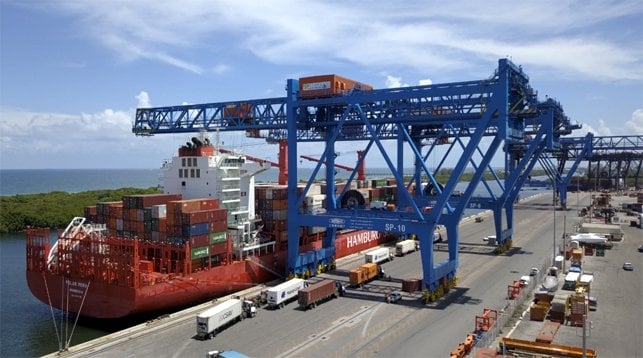
Hapag-Lloyd’s Hanseatic Global Terminals is continuing to execute on its growth strategy, with reports that it has taken full ownership of Port Everglades'Florida International Terminal. Major carriers have been working to build out their terminal operations in support of corporate goals and a positive business opportunity.
Hapag-Lloyd and Grupo Empresas Navieras, through its affiliate Agunsa Universales, have operated the terminal in Port Everglades for a decade. The companies reported they have reached an agreement regarding the capital structure of the operation. Hanseatic Global Terminals will become the sole owner of FIT. Agunsa USA, which is working to consolidate GEN's port, logistics, and towage operations, had previously owned approximately a third of the joint operation in Fort Lauderdale.
According to the companies, FIT is strategically located in South Florida, serving one of the largest consumer markets globally. The terminal specializes in container and general cargo handling and provides direct connectivity to major highways and rail networks, ensuring efficient inland and intermodal transportation and access to the region’s hinterland.
In 2024, the terminal announced a new 10-year lease with the port running to 2035 for the facility located on 46 acres in the Southport area of Port Everglades. As part of the concession, it reported plans to invest $25 million. The terminal has four berths with six ship-to-shore cranes. It handled over 330,000 in 2024 and over 2.8 million tonnes of cargo.
Established in 2023, Hanseatic Global Terminals operates as an independent entity within the Hapag-Lloyd Group, focusing on terminals and infrastructure. Hanseatic aims to grow from 21 port terminals to approximately 30 globally by 2030.
Baltimore’s Sparrows Point Container Terminal Receives Key Permits
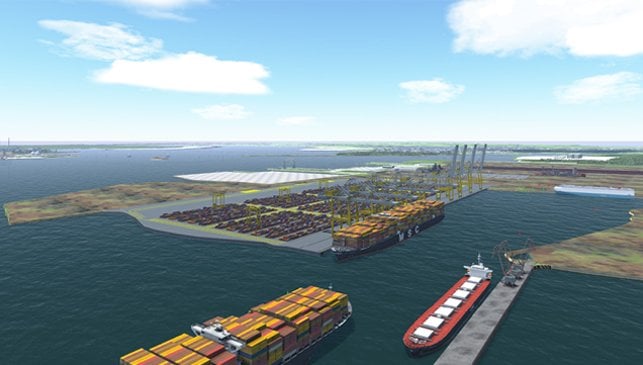
Plans to develop a new container terminal as part of the redevelopment of the Sparrow’s Point region of Baltimore marked key steps with the US Army Corps of Engineers and federal authorities granting construction permits. The project is a joint venture with MSC’s Terminal Investment Limited (TIL), which calls for doubling Baltimore’s container capacity and further establishing the port as a critical gateway to the Mid-Atlantic and central United States.
The Army Corps announced late last week that it has issued its permit decision for the Sparrows Point Container Terminal after having completed its Final Environmental Impact Statement last fall. The Army Corps has authorized the construction of approximately 3,000 linear feet for the terminal’s wharf. The project will require mechanical dredging and placement of approximately 4.2 million cubic yards of material. In addition to the wharf, the project was also seeking permission to create a turning basin and to lower the depth to 52 feet to accommodate large containerships.
The project requires Army Corps approval as USACE oversees harbor and river improvements, construction of structures on navigable waters, and ocean disposal of dredged material. It must also permit the maintenance dredging for the facility.
In December, the Federal Permitting Improvement Steering Council also announced the completion of federal permitting for the project. The Council was created a decade ago to improve the permitting process for infrastructure projects that require federal environmental review.
The Sparrows Point Container Terminal is a $1 project that will redevelop 330 acres at the former Bethlehem Steel Sparrows Point manufacturing plant. Tradepoint Atlantic acquired the site in 2014 for redevelopment into a multi-use facility. More than 50 companies are already located at Sparrows Point, and the area includes a marine terminal and rail link
Tradepoint Atlantic and TIL announced plans in October 2022 to develop the new container facility, saying it would be opened by 2028. The container facility will consist of 168 acres for the terminal and intermodal yard, with an additional 162 acres for support facilities. Plans call for up to nine ship-to-shore cranes as well as an intermodal rail facility.
The project has won key support as part of the overall plan to expand and improve operations in the Port of Baltimore. It will provide critical jobs and economic enhancement to the region.
Shanghai Exceeds 55 Million TEU in Container Throughput for 2025
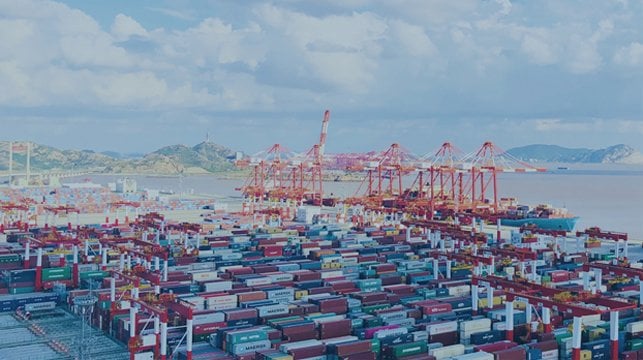
The Shanghai International Port Group is highlighting that its port operation has remained the world’s busiest container port for the 16th consecutive year. They also report completion of the 14th Five-Year Plan as it looks toward the future by taking more steps to build its role as a global container transshipment hub.
Releasing its final tally for 2025, SIPG says the Shanghai port overall handled 55.06 million TEU, which was a 6.9 percent increase in throughput. Over volume, however, lagged at 600 million tons, up just over 3 percent from the 580 million tons in 2024.
It reports that the Yangshan Deep Water Port accounted for just over half the port complex’s total volume, an increase of just over 10 percent for the port area’s throughput. Critically, it points out that the Yangshan Phase III Terminal surpassed 10 million TEU for the first time, highlighting its role as a core pillar of the port. Observers note that few ports around the world handle 10 million TEU in a year.
One of the key focuses for the port is growth in its role as an international transshipment hub. SPIG highlights its transshipment volume surpassed 7.9 million TEU, up 10.6 percent for the year. They said this is evidence of its reach and influence as a global hub. Efforts such as a water-to-water transshipment effort and increased efficiency helped it grow this operation.
The overall throughput they report “underscores the port’s resilience and stability as a critical node in the global supply chain.”
SPIG highlights a range of challenges that it had to address and manage in 2025. It points to “complex and volatile global trade conditions,” saying there were frequent geopolitical conflicts and an accelerated restructuring of global supply chains. SPIG points to deepening its strategic collaboration with shipping companies and improving resource utilization efficiency to help it manage the challenges. It also points to “extreme weather events” and surges in peak logistics periods.
Technology plays a critical role in the port’s ability to handle these massive volumes. It points to a rollout of automated terminals among the innovations. They are using digital twins and big data analytics to increase quay crane productivity. It also points to technologies such as smart yards and AI-based stowage models to significantly reduce the re-stowage rate. They call this movement “China speed.”
SPIG also highlights strong growth in its sea-rail inter-model volumes. They report it exceeded 1 million TEU for the first time, up just over 16 percent year-on-year.
Looking ahead, it says the operations will focus on strengthening hub resilience. One of the key goals is to increase the share of international transshipment cargo.
“SIPG will accelerate major infrastructure development, optimize port layout, and enhance container-handling capacity and vessel berthing efficiency. With a strategic focus on international transshipment, it will further expand global shipping networks and scopes of cabotage operations, and water-to-water transshipment, increasing the share of international transshipment cargo and consolidating its position as a core international transshipment hub in Northeast Asia,” the company writes in its report for 2025.
The volume growth came after a report that Shanghai, after 11 months, had already reached 50 million TEU. They said it was 26 days earlier than 2024, forecasting a new record for the full year. Shanghai had been expected to exceed 53 million TEU for the year.
The growth in volumes was not limited to just Shanghai. Last week, the operators of the Ningbo-Zhoushan port reported it had handled 43 million TEU in 2025. It continues to rival Singapore, which reported today that it had a throughput of 44.66 million TEU in 2025, up 8.6 percent. Singapore handled a total of 3.22 billion gross tonnage of vessel arrivals in 2025, which was up 3.5 percent year-on-year.
No comments:
Post a Comment