Meta announces 'landmark' agreements for new nuclear
Tech giant Meta says new agreements with Vistra, TerraPower, and Oklo will support up to 6.6 GW of new and existing capacity by 2035 and, together with last year's agreement with Constellation Energy, make it one of the most significant corporate purchasers of nuclear energy in US history.
_28178.jpg)
The agreements follow a request for proposals issued by Meta in December 2024. They are:
• Vistra Corp: 20-year power purchase agreements (PPAs) for 2,176 MW of nuclear energy and capacity from the operating Perry and Davis-Besse plants in Ohio; plus the purchase of energy from uprates at those two plants and the Beaver Valley plant in Pennsylvania
• TerraPower: funding to support the development of up to eight Natrium sodium fast reactors - two new units capable of generating up to 690 MW of firm power with delivery as early as 2032, plus the rights for energy from up to six other Natrium units capable of producing 2.1 GW and targeted for delivery by 2035.
• Oklo Inc: support for a project to develop a 1.2 GW power campus in Pike County, Ohio, with Meta to prepay for power and provide funding to advance project certainty for Oklo's Aurora powerhouse deployment.
These projects will deliver power to the grids that support Meta's operations, including its Prometheus supercluster in New Albany, Ohio, Meta said.
"State-of-the-art data centres and AI infrastructure are essential to securing America's position as a global leader in AI," said Meta Chief Global Affairs Officer Joel Kaplan.
"Nuclear energy will help power our AI future, strengthen our country's energy infrastructure, and provide clean, reliable electricity for everyone. These projects are going to create thousands of skilled jobs in Ohio and Pennsylvania, add new energy to the grid, extend the life of three existing nuclear plants, and accelerate new reactor technologies."
Purchasing power
The Perry, Davis-Besse, and Beaver Valley plants had been "on a path to retirement" as recently as 2020, Vistra Chief Strategy & Sustainability Officer Stacey Doré said. Vistra acquired the plants in 2023. "Fast-forward to today and we're investing in expanding these same plants, and thanks to our dedicated employees and a committed partner like Meta, this fleet will continue to provide reliable, carbon-free energy to power the grid of the future," Doré said.
Meta's purchases under the agreements will begin in late 2026, with additional capacity added to the grid through to 2034, when the full 2,609 MW of power will be online.
Each of the three plants has received an initial licence renewal from the US Nuclear Regulatory Commission, clearing them to operate for a further 20 years beyond their initial 40-year licensing term. The power purchase agreements provide certainty for Vistra to pursue subsequent licence renewal for each of the reactors, which would extend each licence an additional 20 years, the company said. Beaver Valley 1 is currently licenced until 2036; Davis-Besse to 2037; Perry to 2046; and Beaver Valley 2 to 2047.
Vistra President and CEO Jim Burke said the "unique and exciting collaboration" will ensure the continued safe and reliable operation of the plants for "decades to come" while providing a "competitive solution" to support sustainable operations. "Importantly, this commitment from Meta provides Vistra the certainty needed to invest in these plants and communities and bring new nuclear generation online for the grid - through uprates at our existing plants."
The long-term operation of Constellation Energy's Clinton Clean Energy Center - another plant previously slated for premature closure for economic reasons until the state of Illinois enacted legislation recognising its clean energy credentials - was secured by a 20-year power purchase agreement announced in June 2025.
New generation
As the demand for reliable, scalable, and clean energy continues to rise, advanced nuclear technology has the potential to become a key part of the solution, and the latest generation of advanced nuclear reactors are ideal for supporting the USA's evolving power needs, Meta said.
The agreements with Oklo and TerraPower will help advance this next generation of energy technology, as well as providing greater business certainty, so they can raise capital to move forward with these projects, and ultimately add more energy capacity to the grid, Meta said.
TerraPower began non-nuclear construction for its first Natrium plant, in Wyoming, in June 2024, and expects construction of the plant - which it says will be the first commercial-scale, advanced nuclear project in the USA - to be complete in 2030. The first Natrium project is being developed through the US Department of Energy's Advanced Reactor Demonstration Program. The Natrium reactor is a TerraPower and GE Vernova Hitachi Nuclear Energy technology.
Meta's agreement with TerraPower supports the early development activities for two new Natrium units with rights for energy provided to Meta for up to six additional Natrium units. Covering up to 2.8 GW of baseload energy generation capacity and an additional 1.2 GW of built-in storage, Meta said this is its largest support of advanced nuclear technologies to date.
The agreement with Meta is designed to support the rapid deployment of the Natrium technology, TerraPower President and CEO Chris Levesque said. "With our first Natrium plant under development, we have completed our design, established our supply chain, and cleared key regulatory milestones. These successes mean our TerraPower team is well-positioned to deliver on this historic multi-unit delivery agreement."
Ohio campus
Oklo's sodium-cooled Aurora powerhouse is a fast-neutron reactor that uses heat pipes to transport heat from the reactor core to a supercritical carbon dioxide power conversion system to generate electricity. Meta's agreement with the company will advance the development of an entirely new advanced nuclear technology campus in Pike County, Ohio, which may come online as early as 2030.
"Two years ago, Oklo shared its vision to build a new generation of advanced reactors in Ohio. Today, that vision is becoming a reality. We have finalised the purchase of over 200 acres in Pike County and are excited to announce this agreement in support of a multi-year effort with Meta to deliver clean energy and create long-term, high-quality jobs in Ohio," Oklo's co-founder and CEO Jacob DeWitte said. "Meta's funding commitment in support of early procurement and development activity is a major step in moving advanced nuclear forward."
Pre-construction and site characterisation are scheduled to begin in 2026, with the first phase targeted to come online as early as 2030, Oklo said. The plans for the scalable powerhouse facility are expected to expand incrementally to deliver up to the full target of 1.2 GW by 2034.
"For more than a decade, we've worked with innovative partners to back clean energy projects that support the grid - adding nearly 28 GW of new energy to grids across 27 states. We're proud to include Oklo, TerraPower, and Vistra on that list and support their work to boost America's energy leadership," Meta said.
Muroosystems expands nuclear cooperation in Central Asia
_29823.jpg)
Nukem Technologies Engineering Services GmbH - a German subsidiary of Muroosystems - will provide technical consulting services and assessments in accordance with internationally recognised best practices and the requirements of the International Atomic Energy Agency (IAEA).
Muroosystems said it was supporting a pioneering data centre project in Uzbekistan based on the use of small modular reactors (SMRs), which explores the integration of SMR technology with digital infrastructure. The project is designed for a power demand of about 50 MWe, which is to be fully met by SMR-based power generation. By combining nuclear energy and digital infrastructure, the project aims to create a stable and predictable power supply for data centres while simultaneously enabling the efficient use of nuclear power generation capacity.
"This makes the project the first of its kind in the world and sets a new standard for high-energy IT facilities," UzAtom said. "The project will create opportunities for the development of sustainable digital solutions, increasing the reliability of energy supply, and introducing innovative models of nuclear energy use. The initiative demonstrates the potential of small modular reactors as an efficient and reliable source of electricity for high-load technological facilities. The cooperation between UzAtom and Muroosystems Corporation reflects the high level of international technological partnership and creates a solid foundation for the further development and expansion of similar projects."
"The project demonstrates a new model for linking energy infrastructure and digital development and highlights the flexible application potential of SMRs for energy-intensive facilities," said Nukem, which is contributing technical reviews and safety-oriented engineering expertise.
The MoU between Muroosystems and UzAtom was signed during the first Central Asia–Japan Summit of Heads of State, held in Tokyo in December.
During the same event, Muroosystems also signed an MoU with Kazakhstan's National Nuclear Centre for cooperation in the peaceful use of nuclear energy and the disposal of radioactive waste. Nukem will provide technical assessments, engineering assistance, and expert advice.
"This collaboration in Central Asia goes far beyond individual projects," said Nukem President Thomas Seipolt. "It represents a long-term partnership for the further development of nuclear energy and energy systems in a safe, transparent, and internationally coordinated manner. As an independent engineering company, NUKEM strives to deliver technically sound solutions in accordance with IAEA standards and to contribute responsibly to the development of sustainable energy systems for future generations. Together with our parent company, Muroosystems, we are bringing our combined expertise in SMR technologies and intelligent data centre concepts to the region."
Nukem CEO Nobuaki Ninomiya added: "The collaboration between Japan, Germany, and the Central Asian states – especially Uzbekistan and Kazakhstan – is a strong sign of international partnership based on technology, trust, and shared values. As the owner's engineer, NUKEM ensures strict adherence to the respective regulatory frameworks, taking into account the specific needs of each country to implement practical and sustainable energy solutions. At the same time, we are bringing the expertise of our parent company, Muroosystems, to Central Asia, particularly in the integration of nuclear energy and AI-powered data centres, thereby contributing to the development of a resilient long-term energy infrastructure in the region."
Tokyo-based IT company Muroosystems completed its acquisition of Nukem - which specialises in decommissioning, waste management and engineering services - in October 2024.
Slovakia selects Rothschild & Co to advise on new nuclear financing
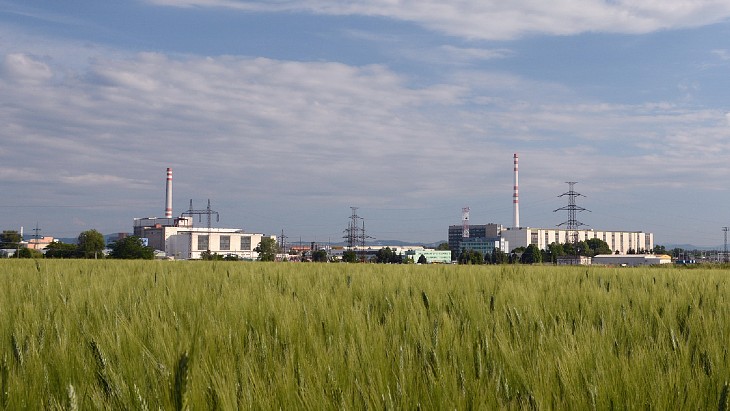
The Slovak government officially approved plans in May 2024 for a 1.2 GWe unit near the existing Bohunice nuclear power plant. And in September 2025 ministers approved wording for a proposed intergovernmental agreement with the USA "on the construction of a new nuclear unit ... which will be state-owned and will have an output of more than 1,000 MW".
State-owned Javys said: "It is a project with a preliminary investment framework of several billion euros, a long construction period and a lifespan exceeding several decades, while the financing conditions will have a decisive impact on its total costs. The preparation of the project is therefore entering the next phase, the aim of which is to set an optimal and long-term sustainable financing model."
It said three bidders had taken part, with the financial contract valued at EUR13.9 million (USD16.17 million), excluding VAT.
Under the contract, Rothschild & Co will provide the state with professional support, "particularly in preparing and defending the financial structure of the project in European Union state aid processes, in applying proven solutions from large nuclear projects, as well as in preparing the project for a smooth transition to the financing and implementation phase".
Rothschild & Co has experience in preparing such projects, including work relating to the UK’s Sizewell C and the Czech Republic's new nuclear projects.
Javys said: "From the perspective of the Slovak Republic, this partnership strengthens the state's position in negotiations with the European Commission and potential domestic and international financial partners. It brings a higher level of transparency, clarity and predictability of long-term costs and enables responsible risk sharing. Slovakia will thus enter the next phase of the project prepared, with high-quality analyses, documentation and financial structures necessary for the successful implementation of the strategic goal in the field of energy."
Slovakia currently has five nuclear reactors - three at Mochovce and two at Bohunice - generating half of its electricity, and it has one more at Mochovce under construction. Both plants are operated by Slovenske Elektrarne.
Bulk sample programme begins at Tony M mine
_24251.jpg)
The programme, which began in late December, will run over 12-14 weeks, using contract mining services provided by Nevada company GenX Mining Contractors. Mineralised material recovered during the programme will be transported to the White Mesa Mill in Utah, owned by Energy Fuels Inc, for processing. The aim is to collect key technical, operational, and economic data required as one of the steps to support a potential production restart decision at what IsoEnergy describes as one of the few fully permitted, past-producing conventional uranium mines in the USA.
IsoEnergy Director and CEO Philip Williams described the bulk sample as a major milestone for the project. "This programme is designed to generate the real-world data we need to evaluate a potential full scale production restart under current market conditions. With permitting, infrastructure, and toll milling already in place, Tony M has the potential to be among the next conventional uranium mines in the US to return to production as demand for secure domestic supply continues to grow," he said.
Tony M is is about 66 miles (107 km) from the town of Blanding and 127 miles west of the White Mesa mill. It produced nearly one million pounds of U3O8 during two different periods of operation from 1979-1984, under Plateau Resources, and from 2007-2008, under Denison Mines Corp. It was acquired by IsoEnergy through a share-for-share merger with Consolidated Uranium Inc in 2023, and the company says it has been maintained in a "ready state". Its current NI 43-101 mineral resource estimates are 6.606 million pounds U3O8 (2541 tU) of indicated resources and 2.218 million pounds U3O8 in the inferred resources category.
First mobile sorption unit launched by Rosatom
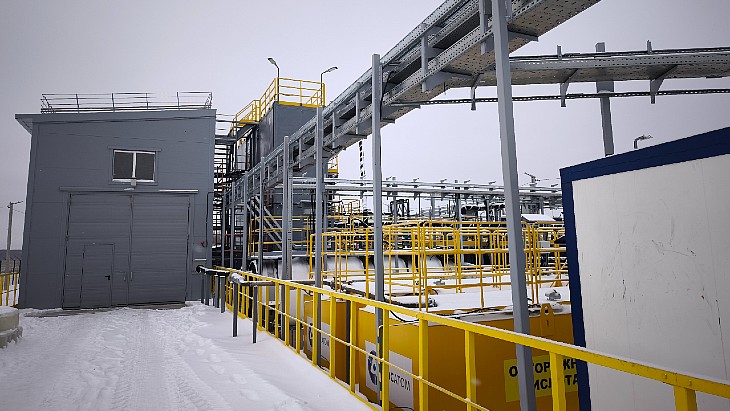
The mobile sorption unit, installed by Rosatom mining division company JSC Dalur, consists of container-type modules including mobile sorption columns, solution and sorbent tanks and an electrical substation and control room.
It can be relocated between sites rapidly and is focused on remote areas, with Rosatom saying its main advantages are "mobility, rapid commissioning, and a significant reduction in capital expenditures compared with traditional stationary facilities".
Dalur was the first company in Russia to mine uranium using the in-situ recovery (ISR) method - also known as in-situ leaching (ISL). It involves minerals being recovered from ore in the ground by dissolving them in situ, using a mining solution injected into the orebody.
The solution is then pumped to the surface, where the minerals are recovered from the uranium-bearing solution. More than half of the world's uranium production is now produced by such methods.
Rosatom described it as the most environmentally-friendly mining method and said it had been developed by Dalur in collaboration with other mining division companies - it was tested at the deposits of JSC Khiagda, in the Republic of Buryatia.
Dinis Ezhurov, CEO of JSC Dalur, said: "We are optimising mining processes by maximising startup, eliminating time-consuming and costly stages of design documentation preparation and the construction of expensive deep foundations. This not only improves production and economic performance but also sets modern standards for uranium mining using the in-situ leaching method."
Dalur is currently in the process of commissioning the new uranium deposit, "testing the facility, connecting the wells and constructing associated infrastructure", and aims to begin mining in the first half of 2026
No comments:
Post a Comment