Twelve months into Donald Trump’s second term, a presidency driven by impulse rather than restraint is hollowing out US institutions at home while sending shockwaves through NATO, the UN and the wider international order.
Issued on: 20/01/2026 - RFI
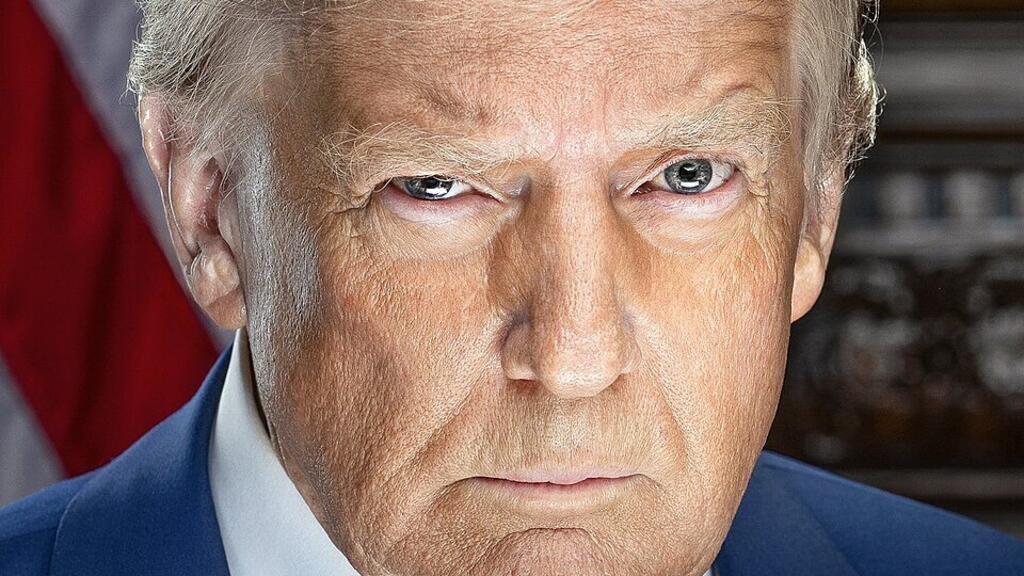
The official portrait of US President Donald Trump, 2025 © wikimedia commons
By:David Coffey
A year after Donald Trump's return to office, the shock persists – but the consequences grow starker. Power is wielded impulsively, institutions appear weakened, and policy often follows presidential whim over process. Critics call it monarchical governance. What does this mean for American democracy and the global order?
Speaking to RFI, former US diplomat William Jordan says what we are witnessing is not simply an unconventional administration, but something far more radical.
“What’s happening in Washington is basically a revolution – a far-right or reactionary revolution – that is playing out every day,” he says. “It’s driven by agitation and then propaganda to support it.”
Jordan points to what he describes as a deliberately performative strategy, popularised by Trump allies like Steve Bannon, designed to overwhelm opponents and institutions alike.
“There’s a certain theatricality to it – flooding the zone, making it impossible for anybody to focus on anything else,” he says. “And the institutions that should be protecting the American system are proving they’re not up to the task.”
By:David Coffey
A year after Donald Trump's return to office, the shock persists – but the consequences grow starker. Power is wielded impulsively, institutions appear weakened, and policy often follows presidential whim over process. Critics call it monarchical governance. What does this mean for American democracy and the global order?
Speaking to RFI, former US diplomat William Jordan says what we are witnessing is not simply an unconventional administration, but something far more radical.
“What’s happening in Washington is basically a revolution – a far-right or reactionary revolution – that is playing out every day,” he says. “It’s driven by agitation and then propaganda to support it.”
Jordan points to what he describes as a deliberately performative strategy, popularised by Trump allies like Steve Bannon, designed to overwhelm opponents and institutions alike.
“There’s a certain theatricality to it – flooding the zone, making it impossible for anybody to focus on anything else,” he says. “And the institutions that should be protecting the American system are proving they’re not up to the task.”
Checks, balances and a broken Congress
The United States’ constitutional architecture – its checks and balances,its bicameral Congress – is often held up as a model of democratic resilience. But Jordan is blunt about how well it is functioning today.
“Is it working? I would say no,” he says. “Congress has not been insisting on any sort of real accountability from the executive – at least not anything the executive would have a hard time ignoring.”
While courts are clogged with legal challenges to Trump administration actions, Jordan notes that even there, resolution is slow and often indulgent.
“The court system is choked with pending cases, and we have no clear resolution,” he says. “So the real stakes now are how much has already changed – and how much of that we won’t be able to change back easily, or at all.”
Recent, tentative pushback from Republican senators – particularly over Venezuela and Trump’s threats towards Greenland – may hint at limits, but Jordan cautions against optimism.
“Congress, as an institution, is simply not functioning in the way it’s supposed to,” he says. “The House is basically deadlocked, and the Senate has only shown resistance in very limited areas.”
Trump has openly suggested that a Democratic victory in the midterm elections could lead to impeachment – and has even hinted at blocking or cancelling the vote altogether. Constitutionally, Jordan says, that line is difficult to cross.
“I’m not aware of any provision that+ allows a president to suspend elections,” he says. “Even during the Civil War, the United States continued to hold federal elections. Abraham Lincoln was re-elected in the middle of it.”
The real battleground, he argues, lies elsewhere – in voting rules, redistricting and restrictions on mail-in ballots.
“If the Democrats do take control of the House, it would at least allow hearings and some level of accountability,” Jordan says. “It could also open the door to articles of impeachment – and frankly, they’d likely have even more material to work with than before.”
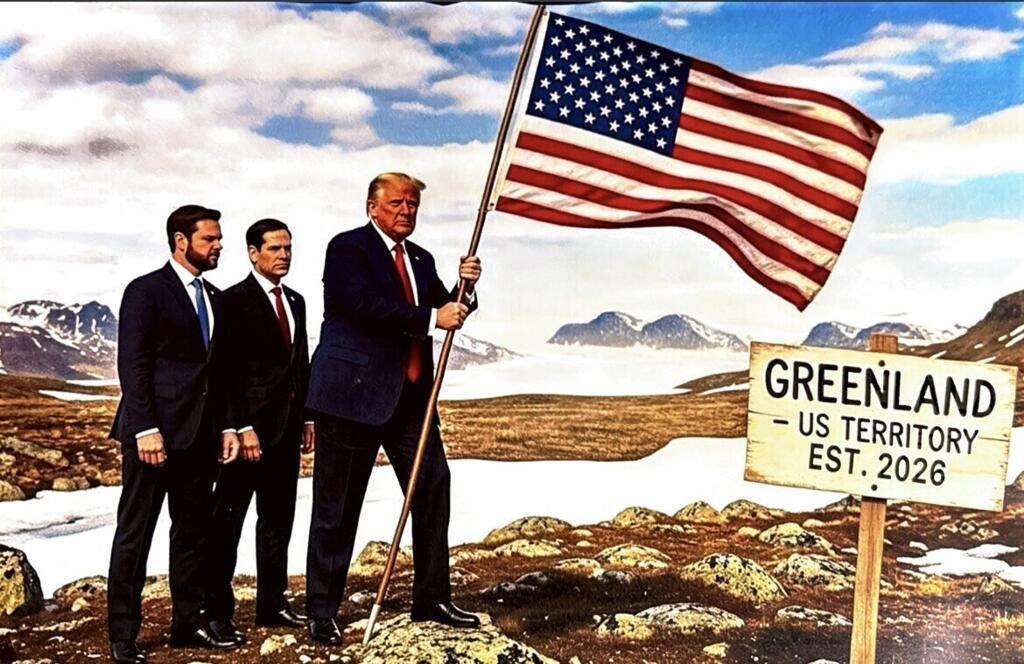
A montage of US President Donald Trump, Vice President JD Vance and Secretary of State Marco Rubio posted on Trump's Truth Social account, 19 January 2026 © Truth Social
American expansionism
Abroad, Trump’s expansionist rhetoric is being digested very differently depending on the capital.
“The Russians are much more publicly in a celebratory mode,” Jordan says. “The Chinese are more inscrutable – and I think more apprehensive.”
Far from welcoming chaos, he argues that Beijing sees itself as a status quo power.
“What the United States is doing is undermining the status quo,” he says. “And I don’t think that’s in China’s interest.”
European allies hit back at US threat to start trade war over Greenland
Few issues encapsulate the current unease more clearly than Trump’s repeated threats to take control of Greenland – a move that would strike at the heart of NATO.
“If the United States were to move on Greenland, that would effectively spell the end of the transatlantic alliance as we know it,” Jordan says.
Could NATO survive without Washington?
“I think something would emerge from the ashes,” he says, though he acknowledges it would be an “extremely heavy lift” for Europe. “Europe remains heavily dependent on American equipment and capabilities. That’s a vulnerability that will last for decades.”
Still, he believes the political will is growing – and that Canada, in particular, could play a key role in keeping NATO genuinely transatlantic.
“I can’t help but think Canada will continue to see value in a very close relationship with European partners,” he says
American expansionism
Abroad, Trump’s expansionist rhetoric is being digested very differently depending on the capital.
“The Russians are much more publicly in a celebratory mode,” Jordan says. “The Chinese are more inscrutable – and I think more apprehensive.”
Far from welcoming chaos, he argues that Beijing sees itself as a status quo power.
“What the United States is doing is undermining the status quo,” he says. “And I don’t think that’s in China’s interest.”
European allies hit back at US threat to start trade war over Greenland
Few issues encapsulate the current unease more clearly than Trump’s repeated threats to take control of Greenland – a move that would strike at the heart of NATO.
“If the United States were to move on Greenland, that would effectively spell the end of the transatlantic alliance as we know it,” Jordan says.
Could NATO survive without Washington?
“I think something would emerge from the ashes,” he says, though he acknowledges it would be an “extremely heavy lift” for Europe. “Europe remains heavily dependent on American equipment and capabilities. That’s a vulnerability that will last for decades.”
Still, he believes the political will is growing – and that Canada, in particular, could play a key role in keeping NATO genuinely transatlantic.
“I can’t help but think Canada will continue to see value in a very close relationship with European partners,” he says
Pulling back the curtain
Commentators argue that Trump is merely exposing behaviour the US has long practised behind closed doors, and Jordan agrees – up to a point.
“What we’re seeing now is the culmination of decades of the US undermining the rules-based international order it helped create,” he says, pointing to Iraq, the war on terror, and long-standing double standards over issues like Palestine.
But he warns that what comes next could be even more destabilising.
“I think the next target is the United Nations,” Jordan says. “I’ve been waiting for the guns to come out and start blasting at what remains of the UN system.”
He sees recent talk of an alternative "board of peace" as the opening shots in a broader campaign.
“This is being carried out in stages,” he says. “What we’re seeing now is likely the first salvo in a much larger battle to undermine the international order.”
Commentators argue that Trump is merely exposing behaviour the US has long practised behind closed doors, and Jordan agrees – up to a point.
“What we’re seeing now is the culmination of decades of the US undermining the rules-based international order it helped create,” he says, pointing to Iraq, the war on terror, and long-standing double standards over issues like Palestine.
But he warns that what comes next could be even more destabilising.
“I think the next target is the United Nations,” Jordan says. “I’ve been waiting for the guns to come out and start blasting at what remains of the UN system.”
He sees recent talk of an alternative "board of peace" as the opening shots in a broader campaign.
“This is being carried out in stages,” he says. “What we’re seeing now is likely the first salvo in a much larger battle to undermine the international order.”
Crypto investments and conflicts of interest: Trump's very profitable year in office
EXPLAINER
Twelve months into Donald Trump’s second presidency, his personal fortune has shot up by at least $3 billion, according to estimates by US media. This is largely due to his family’s crypto ventures, which have attracted wealthy investors and sparked conflict of interest accusations from critics.
Issued on: 20/01/2026
EXPLAINER
Twelve months into Donald Trump’s second presidency, his personal fortune has shot up by at least $3 billion, according to estimates by US media. This is largely due to his family’s crypto ventures, which have attracted wealthy investors and sparked conflict of interest accusations from critics.
Issued on: 20/01/2026
FRANCE24
By: Joanna YORK
A crypto windfall
During Trump’s first term, the infamous dealmaker lost money. According to Forbes, Trump was worth $3.5 billion when he was first inaugurated. By 2021, the figure had slumped to $2.4 billion.
The loss was largely due to the impact of the Covid pandemic on his commercial real-estate interests, including hotels, resorts and office blocks, as well as devaluations in his fleet of planes and golf courses.
By the time Trump was poised to run for a second presidential term in 2024, his portfolio of investments had diversified.
The vast majority of his new wealth has come from crypto investment projects run by the Trump family including World Liberty Financial, stablecoin USD1, meme coin tokens and NFTs (non-fungible tokens).
Although many of these are run by Trump’s sons, Forbes estimates that Trump himself has made $2.4 billion from cryptocurrencies since 2024 while Trump’s Take estimates the total value of the Trump family’s crypto assets has grown by $7.4 billion since his returned to the White House.

Paying for access
Trump’s other crypto ventures have benefitted from similar boosts since he became president.
Since 2025, World Liberty Financial – a platform for borrowing, lending and trading cryptocurrencies – has sold more than $1 billion of its own tokens, Trump NFT’s have netted him around $13 million and the USD1 stablecoin is now worth an estimated $235 million.
'A systemic failure'
Such deals are not necessarily illegal, but they “certainly transgress the ways in which things have been done in the past,” said Emma Long, associate professor in American history and politics, at the University of East Anglia.
It is not unusual for US presidents to use their profile for lucrative ends: most do this after they leave office, via book deals and speaking fees worth tens of millions of dollars.
But while in office, “presidents usually divest themselves of any financial arrangements that might be a conflict of interest or that might be seen as trading on their official position”, Long added.
While crypto ventures are the main source of Trump’s rapidly increasing fortune, there are other ventures that operate in this grey area.
On the 2024 campaign trail, Trump became the only presidential candidate to run an online merchandise store redirecting funds – that supporters may have believed were going to his campaign – into his own pocket.
Since his re-election, there have been claims that Trump’s hotels and resorts have benefitted from their association with the White House and from Trump holding official events there. Membership fees for Trump’s most famous resort, Mar-a-Lago in Florida, have now risen to $1million.
Then there are a host of other eyebrow-raising deals, such as a $40 million agreement signed with Amazon giving the corporation access to film a documentary with Melania Trump.
There's also the $400 million luxury jet that Trump accepted from Qatari government, which he has been allowed to keep even though it “appears to violate the spirit if not the letter of the Constitution, which essentially prohibits accepting profits or gifts from foreign countries without congressional approval”, said Ragland.
US Congress has so far failed to take action against the exceptionally expensive gift, making it part of a wider cash grab that indicates the country's “ethical guardrails are no longer functional,” said Ragland.
“We aren't just looking at one man’s fortune; we’re looking at a systemic failure that leaves the American public completely vulnerable to industrial-scale corruption,” he added.
By: Joanna YORK
President Donald Trump's is thought to have made billions of dollars from crypto ventures doing his second term. © Studio graphique FMM
In his second inaugural address, US President Donald Trump promised a “golden age of America” was about to begin.
One year later, many Americans still find themselves in the grip of price hikes, but Trump’s personal fortune has flourished, according to estimates from US media and monitors.
The US president has increased his wealth by $3 billion in the past 12 months – up to a total of $7.3 billion, according to Forbes. The New Yorker meanwhile estimates his fortune shot up $3.4 billion in the first six months of his second term alone, largely from “pocketing off the presidency”.
Almost $2 billion-worth of cash and gifts have boosted the Trump family fortune according to the Trump's Take tracker, run by the Center for American Progress (CAP) policy institute.
No one knows exactly how much Donald Trump is worth. Since he first took office in 2017, he has refused to comply with the decades-old tradition of US presidents releasing their tax returns. He has also been accused by a US court of lying about his net worth to make himself look richer.
Historically Trump’s fortune came from the Trump Organisation family conglomerate focused on real estate and tourism, but much of his new wealth is thought to come from crypto ventures that have boosted his fortunes by billions of dollars in just a few months.
The sums are unprecedented for a president in office. “There is no historical parallel for this. Nothing comes close,” said Will Ragland, vice president of research at CAP.
While former presidents have gone to great lengths to avoid conflicts of interest, such as Jimmy Carter putting his peanut farm into a blind trust, Trump seems to embrace the grey area.
Trump is “a president who appears to actively use his businesses as a vehicle for blatant conflict of interest for personal gain,” said Ragland.
In his second inaugural address, US President Donald Trump promised a “golden age of America” was about to begin.
One year later, many Americans still find themselves in the grip of price hikes, but Trump’s personal fortune has flourished, according to estimates from US media and monitors.
The US president has increased his wealth by $3 billion in the past 12 months – up to a total of $7.3 billion, according to Forbes. The New Yorker meanwhile estimates his fortune shot up $3.4 billion in the first six months of his second term alone, largely from “pocketing off the presidency”.
Almost $2 billion-worth of cash and gifts have boosted the Trump family fortune according to the Trump's Take tracker, run by the Center for American Progress (CAP) policy institute.
No one knows exactly how much Donald Trump is worth. Since he first took office in 2017, he has refused to comply with the decades-old tradition of US presidents releasing their tax returns. He has also been accused by a US court of lying about his net worth to make himself look richer.
Historically Trump’s fortune came from the Trump Organisation family conglomerate focused on real estate and tourism, but much of his new wealth is thought to come from crypto ventures that have boosted his fortunes by billions of dollars in just a few months.
The sums are unprecedented for a president in office. “There is no historical parallel for this. Nothing comes close,” said Will Ragland, vice president of research at CAP.
While former presidents have gone to great lengths to avoid conflicts of interest, such as Jimmy Carter putting his peanut farm into a blind trust, Trump seems to embrace the grey area.
Trump is “a president who appears to actively use his businesses as a vehicle for blatant conflict of interest for personal gain,” said Ragland.
A crypto windfall
During Trump’s first term, the infamous dealmaker lost money. According to Forbes, Trump was worth $3.5 billion when he was first inaugurated. By 2021, the figure had slumped to $2.4 billion.
The loss was largely due to the impact of the Covid pandemic on his commercial real-estate interests, including hotels, resorts and office blocks, as well as devaluations in his fleet of planes and golf courses.
By the time Trump was poised to run for a second presidential term in 2024, his portfolio of investments had diversified.
The vast majority of his new wealth has come from crypto investment projects run by the Trump family including World Liberty Financial, stablecoin USD1, meme coin tokens and NFTs (non-fungible tokens).
Although many of these are run by Trump’s sons, Forbes estimates that Trump himself has made $2.4 billion from cryptocurrencies since 2024 while Trump’s Take estimates the total value of the Trump family’s crypto assets has grown by $7.4 billion since his returned to the White House.
Crypto billionaire Justin Sun, World Liberty Financial co-founder Zach Witkoff and Eric Trump participate in a session at the Token 2049 crypto conference in Dubai on May 1, 2025. © Giuseppe Cacace, AFP
This, despite Trump's claim back in 2019 that he was “not a fan” of cryptocurrencies as their value was “highly volatile and based on thin air” and that they could also facilitate “illegal activity”.
Six years later, the mercurial nature of crypto has played to his advantage.
Meme coins, for example, are cryptocurrencies that generally emerge from internet jokes and are often bought as a novel way to engage with online trends, rather than as a serious investment.
When Trump launched his $TRUMP meme coin days before his second inauguration, buying in was a way for his supporters to ride a wave of excitement – but it was also a money spinner. By March, Trump had made $350 million off the coin, according to the Financial Times.
Next to launch was the $MELANIA meme coin, named after the first lady, which quickly earned $65 million in sales and trading fees – with particular benefits for a few early investors.
In the minutes before it’s official launch, 24 unidentified wallets bought up $2.6 million of the $MELANIA coin and within days flipped them for $100 million, the Financial Times reported.
This, despite Trump's claim back in 2019 that he was “not a fan” of cryptocurrencies as their value was “highly volatile and based on thin air” and that they could also facilitate “illegal activity”.
Six years later, the mercurial nature of crypto has played to his advantage.
Meme coins, for example, are cryptocurrencies that generally emerge from internet jokes and are often bought as a novel way to engage with online trends, rather than as a serious investment.
When Trump launched his $TRUMP meme coin days before his second inauguration, buying in was a way for his supporters to ride a wave of excitement – but it was also a money spinner. By March, Trump had made $350 million off the coin, according to the Financial Times.
Next to launch was the $MELANIA meme coin, named after the first lady, which quickly earned $65 million in sales and trading fees – with particular benefits for a few early investors.
In the minutes before it’s official launch, 24 unidentified wallets bought up $2.6 million of the $MELANIA coin and within days flipped them for $100 million, the Financial Times reported.
Paying for access
Trump’s other crypto ventures have benefitted from similar boosts since he became president.
Since 2025, World Liberty Financial – a platform for borrowing, lending and trading cryptocurrencies – has sold more than $1 billion of its own tokens, Trump NFT’s have netted him around $13 million and the USD1 stablecoin is now worth an estimated $235 million.
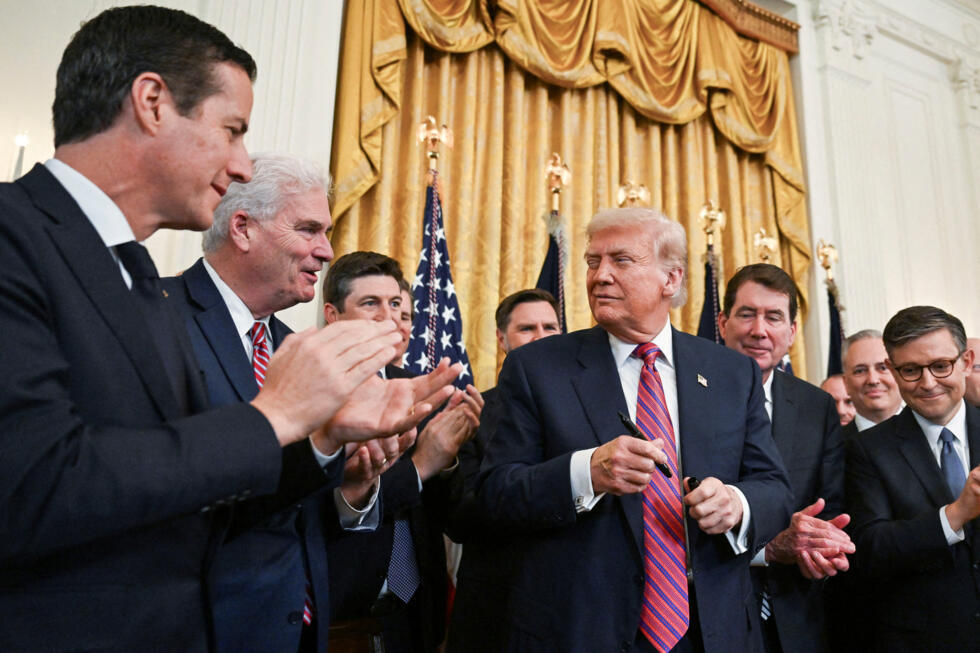
US President Donald Trump signed the "Genius Act" to develop regulatory framework for stablecoin cryptocurrencies and expand oversight of the industry at the White House on July 18, 2025. © Annabelle Gordon, Reuters
The advantage of an association with the White House is especially clear for Trump's stablecoin.
Stablecoins are cryptocurrencies that aim to maintain a stable value through links to specific assets – in USD1’s case it comes with a presidential guarantee that it is backed by short-term US government treasuries and dollar deposits.
The safeguard has encouraged foreign investment. In May 2025, the UAE’s ruling family bought up $2 billion of USD1.
Weeks later the White House gave the UAE access to thousands of the world’s most advanced and scarce computer chips.
Although the two incidents are not explicitly linked, there are indications – some more blatant than others – that those who invest in Trump’s crypto ventures are being given preferential treatment.
In April 2025, it was announced that the top 25 $TRUMP coin holders would be invited to a reception and VIP tour of the White House, a clear opportunity to pay for access to the President.
Among those on the guest list was China-born crypto billionaire Justin Sun, who is thought to own hundreds of millions of Trump’s meme coins, and is also the second-largest known investor in World Liberty Financial.
He was also the subject of a 2023 investigation by the US Securities and Exchange Commission (SEC), which charged him with finding illicit ways of trading in the US including enlisting celebrities to endorse his cryptocurrency.
The Trump administration has since ended nearly all regulation against crypto traders and, in 2026, the SEC put its charges against Sun on hold.
The advantage of an association with the White House is especially clear for Trump's stablecoin.
Stablecoins are cryptocurrencies that aim to maintain a stable value through links to specific assets – in USD1’s case it comes with a presidential guarantee that it is backed by short-term US government treasuries and dollar deposits.
The safeguard has encouraged foreign investment. In May 2025, the UAE’s ruling family bought up $2 billion of USD1.
Weeks later the White House gave the UAE access to thousands of the world’s most advanced and scarce computer chips.
Although the two incidents are not explicitly linked, there are indications – some more blatant than others – that those who invest in Trump’s crypto ventures are being given preferential treatment.
In April 2025, it was announced that the top 25 $TRUMP coin holders would be invited to a reception and VIP tour of the White House, a clear opportunity to pay for access to the President.
Among those on the guest list was China-born crypto billionaire Justin Sun, who is thought to own hundreds of millions of Trump’s meme coins, and is also the second-largest known investor in World Liberty Financial.
He was also the subject of a 2023 investigation by the US Securities and Exchange Commission (SEC), which charged him with finding illicit ways of trading in the US including enlisting celebrities to endorse his cryptocurrency.
The Trump administration has since ended nearly all regulation against crypto traders and, in 2026, the SEC put its charges against Sun on hold.
'A systemic failure'
Such deals are not necessarily illegal, but they “certainly transgress the ways in which things have been done in the past,” said Emma Long, associate professor in American history and politics, at the University of East Anglia.
It is not unusual for US presidents to use their profile for lucrative ends: most do this after they leave office, via book deals and speaking fees worth tens of millions of dollars.
But while in office, “presidents usually divest themselves of any financial arrangements that might be a conflict of interest or that might be seen as trading on their official position”, Long added.
While crypto ventures are the main source of Trump’s rapidly increasing fortune, there are other ventures that operate in this grey area.
On the 2024 campaign trail, Trump became the only presidential candidate to run an online merchandise store redirecting funds – that supporters may have believed were going to his campaign – into his own pocket.
Since his re-election, there have been claims that Trump’s hotels and resorts have benefitted from their association with the White House and from Trump holding official events there. Membership fees for Trump’s most famous resort, Mar-a-Lago in Florida, have now risen to $1million.
Then there are a host of other eyebrow-raising deals, such as a $40 million agreement signed with Amazon giving the corporation access to film a documentary with Melania Trump.
There's also the $400 million luxury jet that Trump accepted from Qatari government, which he has been allowed to keep even though it “appears to violate the spirit if not the letter of the Constitution, which essentially prohibits accepting profits or gifts from foreign countries without congressional approval”, said Ragland.
US Congress has so far failed to take action against the exceptionally expensive gift, making it part of a wider cash grab that indicates the country's “ethical guardrails are no longer functional,” said Ragland.
“We aren't just looking at one man’s fortune; we’re looking at a systemic failure that leaves the American public completely vulnerable to industrial-scale corruption,” he added.
One year of Trump's war on American culture
Issued on: 20/01/2026
07:24 min
Issued on: 20/01/2026
07:24 min
From the show
One year after Donald Trump's return to power, FRANCE 24's Eve Jackson revisits the paradoxical and conflictual relationship between the US president and culture and the arts. From controversial appointments in Hollywood, to attacks on diversity policies, to the symbolic takeover of the Kennedy Center, the US president intends to regain control of the American cultural narrative. Faced with this pressure, artists and institutions are getting organised, taking a stand and mobilising for freedom of speech.
One year after Donald Trump's return to power, FRANCE 24's Eve Jackson revisits the paradoxical and conflictual relationship between the US president and culture and the arts. From controversial appointments in Hollywood, to attacks on diversity policies, to the symbolic takeover of the Kennedy Center, the US president intends to regain control of the American cultural narrative. Faced with this pressure, artists and institutions are getting organised, taking a stand and mobilising for freedom of speech.
BY:
Magali FAURE
Eve JACKSON
Laura DI BIASIO
Eve JACKSON
Laura DI BIASIO
VIDEO BY: Eve JACKSON
One year of Trump 2.0: How he's weaponised AI as political propaganda
Issued on: 20/01/2026 -
05:31 min

As Donald Trump marks one year back in the White House, FRANCE 24's Vedika Bahl takes a closer look at how he has weaponised artificial intelligence into a political tool, used to glorify himself, attack his opponents and amplify his political agenda. Whilst it has become a defining feature of his digital presence, it's brought with it a new frontier for misinformation and fake news.
BY: Vedika BAH
No comments:
Post a Comment