La Clef, a legendary arthouse cinema in Paris's Latin Quarter, remains a symbol of resistance in an era when big screens are struggling to survive. After a long closure, a sit-in and a legal battle, a collective of its supporters bought the venue and reopened it this week.
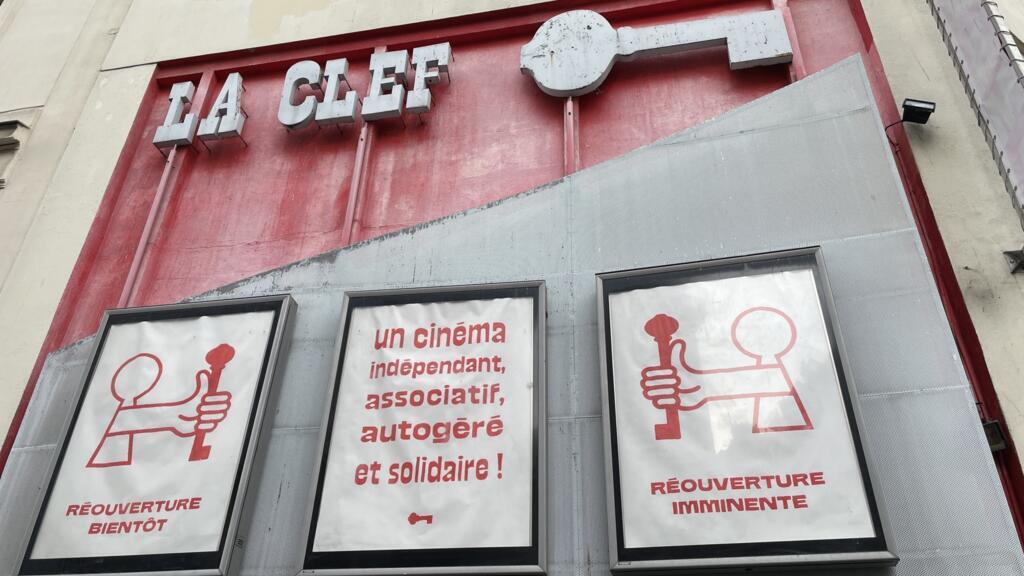
Photo of the facade of La Clef arthouse cinema in Paris's 5th arrondissement. After a five-year closure, a legal battle and a sit-in, the cinema reopened on 14 January, 2026. © RFI / Ollia Horton
04:07
04:07
Issued on: 18/01/2026
RFI
By: Ollia Horton
The saga could make a script for a David-and-Goliath movie: plucky community group saves local cinema from real estate developers!
That’s exactly what happened to La Clef ("The Key"), one of the few remaining independent arthouse cinemas in Paris, which reopened on 14 January.
Established by cinephile Claude Franck-Forter in 1973, when the 1968 protests still loomed large in the student-dominated fifth arrondissement, the cosy theatre on the corner of Rue de la Clef carved out a niche for non-mainstream films and political debates.
It has always prided itself on supporting rare films from France and abroad, showcasing minority voices and under-represented groups while keeping ticket prices reasonable.
That model came under pressure when the building was taken over by the social committee of a French savings bank in 1981. Although it continued to function as a cinema, its future was uncertain – and even more so when the bank decided to put it on the market, forcing La Clef to close its doors in April 2018.
But the cinema's connection to the neighbourhood and wider film community ran deep – so much so that a collective calling itself La Clef Revival formed to raise funds to buy the building and keep it running as a non-profit organisation.
This ad hoc group of cinema-lovers, activists and local residents organised an illegal occupation of the building from 2019 until 2022, putting on screenings and gatherings and drumming up financial support.
The saga could make a script for a David-and-Goliath movie: plucky community group saves local cinema from real estate developers!
That’s exactly what happened to La Clef ("The Key"), one of the few remaining independent arthouse cinemas in Paris, which reopened on 14 January.
Established by cinephile Claude Franck-Forter in 1973, when the 1968 protests still loomed large in the student-dominated fifth arrondissement, the cosy theatre on the corner of Rue de la Clef carved out a niche for non-mainstream films and political debates.
It has always prided itself on supporting rare films from France and abroad, showcasing minority voices and under-represented groups while keeping ticket prices reasonable.
That model came under pressure when the building was taken over by the social committee of a French savings bank in 1981. Although it continued to function as a cinema, its future was uncertain – and even more so when the bank decided to put it on the market, forcing La Clef to close its doors in April 2018.
But the cinema's connection to the neighbourhood and wider film community ran deep – so much so that a collective calling itself La Clef Revival formed to raise funds to buy the building and keep it running as a non-profit organisation.
This ad hoc group of cinema-lovers, activists and local residents organised an illegal occupation of the building from 2019 until 2022, putting on screenings and gatherings and drumming up financial support.
Round-the-clock occupation
After an eviction, a long legal battle and a crowdfunding campaign, the cinema was finally bought by the collective in June 2024 for just over €2.5 million.
Chloé, a member of the collective, has fond memories of the sit-in, when activists occupied the cinema from 6am to midnight everyday to deter police intervention.
“We took turns sleeping in the cinema,” she told RFI. “I remember I had put my mattress behind the screen in the main screening hall and I was awoken by the noise of the 35mm [projector] showing a Gregg Araki film.
“Students from the area were coming in to have a croissant and watch the film before their classes. It was wonderful to wake up in that environment.”
After an eviction, a long legal battle and a crowdfunding campaign, the cinema was finally bought by the collective in June 2024 for just over €2.5 million.
Chloé, a member of the collective, has fond memories of the sit-in, when activists occupied the cinema from 6am to midnight everyday to deter police intervention.
“We took turns sleeping in the cinema,” she told RFI. “I remember I had put my mattress behind the screen in the main screening hall and I was awoken by the noise of the 35mm [projector] showing a Gregg Araki film.
“Students from the area were coming in to have a croissant and watch the film before their classes. It was wonderful to wake up in that environment.”
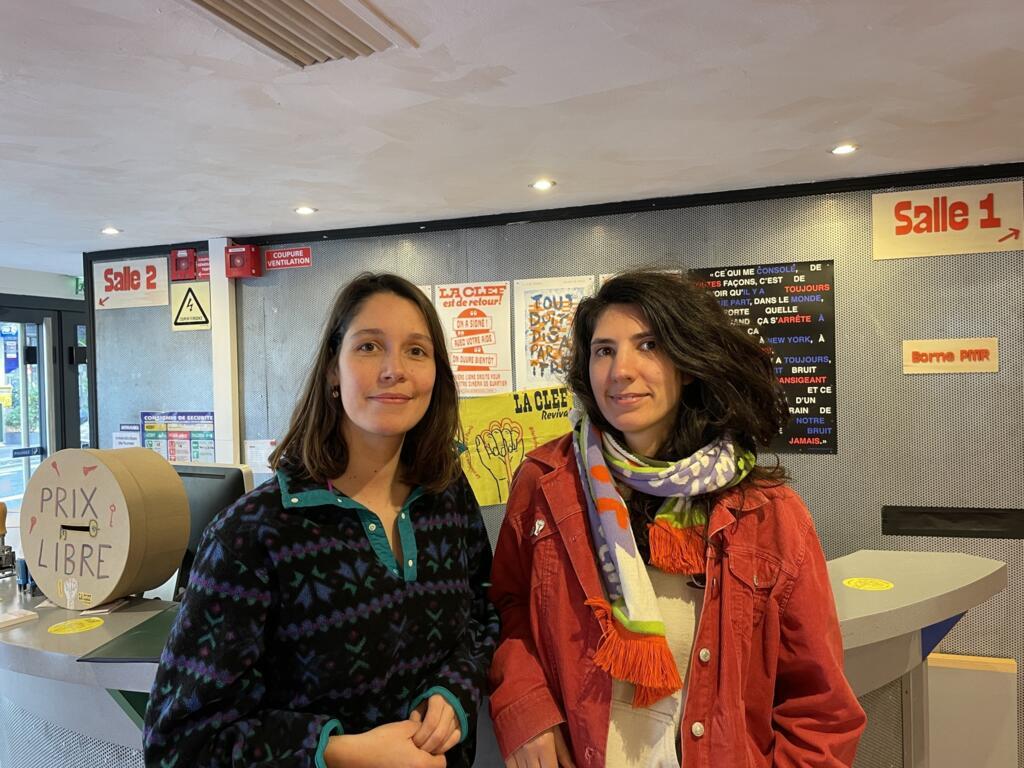
Chloé (L) and Kira (R) are active members of La Clef Revival, a collective that raised money to save La Clef cinema in the 5th district of Paris and keep it running as an independent non-profit organisation. It reopened on 14 January 2026. © RFI / Ollia Horton
The campaign to save the cinema received support from the film world in France and overseas – including in Hollywood, where Martin Scorsese and Quentin Tarantino were among the high-profile backers.
Numerous French directors, including Céline Sciamma and Leos Carax, hosted screenings during the occupation. And in 2023, more than 80 international artists donated works to be sold off in a fundraising auction, including filmmaker David Lynch and photographers Wang Bing and Nan Goldin.
“We were very touched by the recognition from certain figures in the film industry regarding our project and our commitment to saving this place,” says Taddeo, a cinema-goer who helped organise the sale and now acts as one of the collective's programming coordinators.
The day-to-day work of reopening La Clef has been led by ordinary film lovers like him – and Kira, who was in New York at the time of the occupation but remembered the cinema from her childhood in the neighbourhood.
“It’s amazing to show that it's possible to de-commodify an entire building, to take it out of the speculative real estate, to run it together and figure it out, to learn how to use the projectors, to learn how to take care of a space,” she told RFI.
The campaign to save the cinema received support from the film world in France and overseas – including in Hollywood, where Martin Scorsese and Quentin Tarantino were among the high-profile backers.
Numerous French directors, including Céline Sciamma and Leos Carax, hosted screenings during the occupation. And in 2023, more than 80 international artists donated works to be sold off in a fundraising auction, including filmmaker David Lynch and photographers Wang Bing and Nan Goldin.
“We were very touched by the recognition from certain figures in the film industry regarding our project and our commitment to saving this place,” says Taddeo, a cinema-goer who helped organise the sale and now acts as one of the collective's programming coordinators.
The day-to-day work of reopening La Clef has been led by ordinary film lovers like him – and Kira, who was in New York at the time of the occupation but remembered the cinema from her childhood in the neighbourhood.
“It’s amazing to show that it's possible to de-commodify an entire building, to take it out of the speculative real estate, to run it together and figure it out, to learn how to use the projectors, to learn how to take care of a space,” she told RFI.
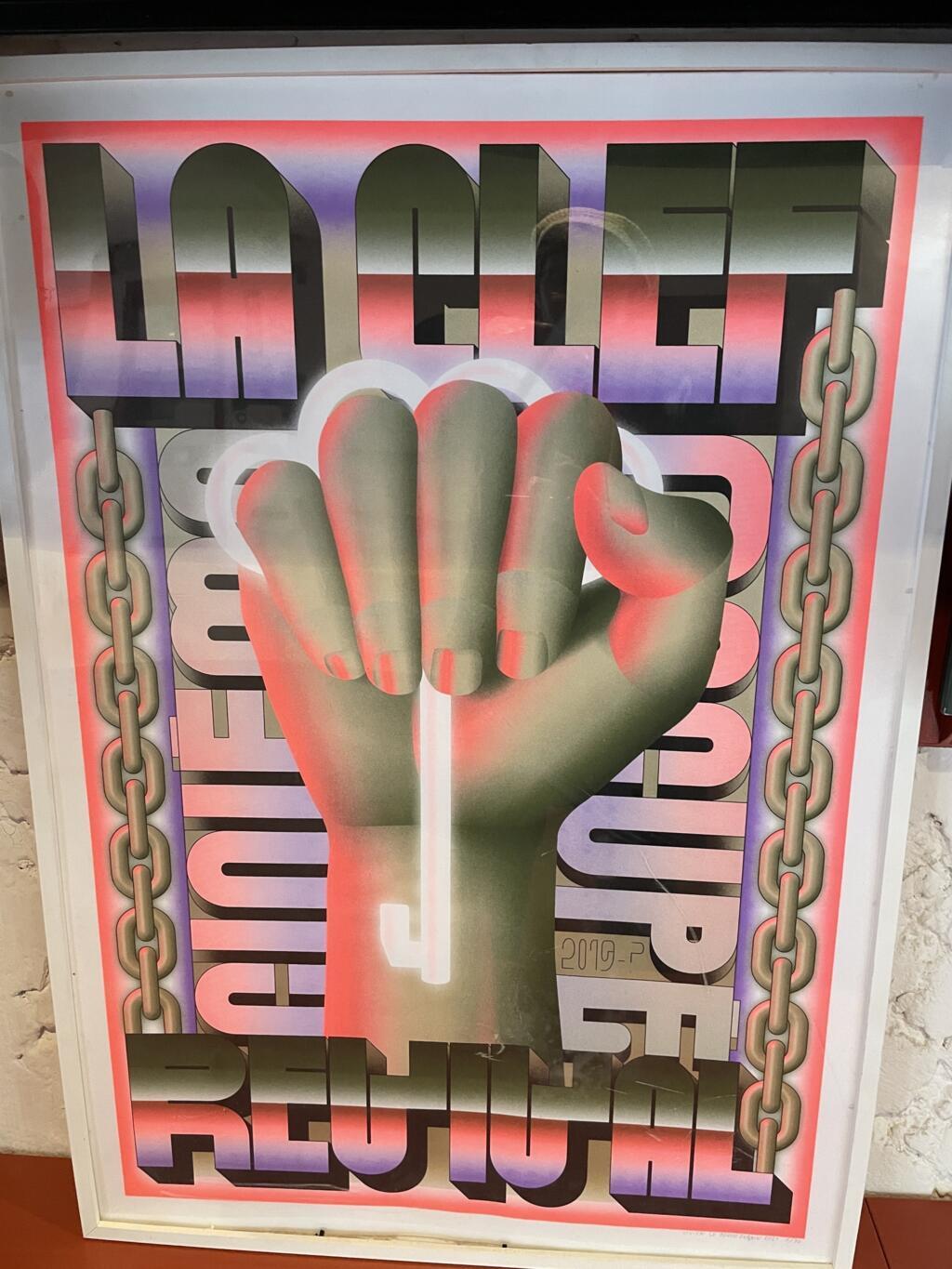
Poster created to help save La Clef cinema in Paris. © RFI / Ollia Horton / La Clef Revival
Simon, who lives nearby, has been a regular spectator for years and loves the variety of films on offer. He became steadily more involved during the occupation and helped renovate the building after the sale was finalised.
“Every time I've seen a screening at La Clef, it's been completely different,” he says. “Being able to discuss amongst ourselves, developing new ways of watching films, is really something we can do in this kind of place.”
A true community cinema
In order to manage the funding and purchase, the collective set up an endowment fund called Cinéma Revival. The new legal status means that the building doesn’t belong to any one entity and decisions must have a consensus from all members, preventing the cinema being sold off on a whim.
To maintain financial independence and limit the need for subsidies, La Clef’s business model is based on a mix of yearly memberships, sales at the bar and pay-what-you-want tickets. This means the price is decided by each audience member according to their means – at an average of €4.
The cinema operates with only two paid employees. The rest are volunteers who receive training to run the building, project the films and liaise with the public.
The collective also rents out the space to other associations for themed screenings and other community activities. And they have partnerships with film schools to allow cinema students to practice using 35mm projectors, as well as image and sound editing.
Simon, who lives nearby, has been a regular spectator for years and loves the variety of films on offer. He became steadily more involved during the occupation and helped renovate the building after the sale was finalised.
“Every time I've seen a screening at La Clef, it's been completely different,” he says. “Being able to discuss amongst ourselves, developing new ways of watching films, is really something we can do in this kind of place.”
A true community cinema
In order to manage the funding and purchase, the collective set up an endowment fund called Cinéma Revival. The new legal status means that the building doesn’t belong to any one entity and decisions must have a consensus from all members, preventing the cinema being sold off on a whim.
To maintain financial independence and limit the need for subsidies, La Clef’s business model is based on a mix of yearly memberships, sales at the bar and pay-what-you-want tickets. This means the price is decided by each audience member according to their means – at an average of €4.
The cinema operates with only two paid employees. The rest are volunteers who receive training to run the building, project the films and liaise with the public.
The collective also rents out the space to other associations for themed screenings and other community activities. And they have partnerships with film schools to allow cinema students to practice using 35mm projectors, as well as image and sound editing.
Model for independents
The cinema is connected to other independent cinemas around Europe via the Kino Climates network, which unites alternative venues in 17 countries.
La Clef Revival hopes their success will be emulated elsewhere, proving that there are viable alternatives to blockbuster films, multiscreen cinema chains and ever bigger streaming platforms.
“We really hope that this serves as an example, and that other people who want to also run spaces that are open to the public in their neighbourhoods and their cities,” says Kira.
“Maybe other countries can come here and see that it actually happened and that they could probably do it too.”
No comments:
Post a Comment