7 hours ago
Rudaw
ERBIL, Kurdistan Region - Islamic State (ISIS) cells are exploiting military operations by Damascus-affiliated forces and ongoing threats against northeast Syria (Rojava) to attack prisons holding their militants, the Kurdish-led Syrian Democratic Forces (SDF) said Thursday, warning that further escalation could undermine years of counterterrorism efforts.
In a statement on its official Telegram channel, the SDF said that “amid attacks by Damascus-linked factions, military buildups, and continued threats against North and East Syria [Rojava], ISIS terrorist cells are attempting to take advantage of the situation to target prisons holding their members.”
The SDF stressed that their forces remain “fully prepared and vigilant” and “have taken all necessary measures to secure the prisons and prevent any security breaches,” adding that the facilities are “currently under full control.”
However, the Kurdish-led forces warned that the continued “military escalation could lead to widespread instability, posing a serious threat to prison security and risking to return the region to square one after years of sacrifices in the fight against terrorism.”
While the SDF did not name the prisons, it is believed they were referring to jails holding ISIS remnants in Hasaka province in eastern Rojava.
The Kurdish-led SDF serves as the de facto military force in the region. Until Syria joined the US-led Global Coalition to Defeat ISIS in November, the SDF had been the coalition’s sole on-the-ground partner, playing a key role in ISIS’s territorial defeat in Syria in 2019.
Despite its losses, ISIS has continued insurgent attacks against the SDF and its affiliated Internal Security Forces (Asayish), with assaults escalating over the past year amid the instability following the fall of longtime dictator Bashar al-Assad’s regime in December 2024.
In late December, the SDF reported carrying out 163 security and military operations against ISIS cells in 2025, arresting and killing dozens, including three leaders.
The Kurdish-led forces said these operations included at least three large-scale sweeps, 128 raids on ISIS hideouts, and 32 direct clashes, while also defusing 79 improvised explosive devices (IEDs).
During the same period, ISIS carried out 220 attacks in areas under SDF control.
Last week, thousands of Syrian army troops and allied jihadists launched a wide-scale attack on the predominantly Kurdish Ashrafiyeh and Sheikh Maqsood neighborhoods, to take control of northern Aleppo areas that had been secured for nearly 15 years by the Asayish.
The deadly violence claimed the lives of at least 82 people - including 43 civilians - according to a Sunday report by the UK-based Syrian Observatory for Human Rights (SOHR). The fighting also displaced around 150,000 people, the Erbil-based Barzani Charity Foundation (BCF) told Rudaw a day earlier.
Shortly after a ceasefire came into effect in Aleppo’s Kurdish areas on Sunday, the Syrian army’s Operations Command on Tuesday declared additional Kurdish-held areas - this time Deir Hafer, Maskanah, and surrounding areas in eastern Aleppo - as “closed military zones.”
These areas, controlled by the SDF, have in past months been flashpoints for Damascus-affiliated factions, who view seizing them as a way to open a logistical corridor connecting Aleppo to Raqqa province while increasing military pressure on the SDF along the Euphrates River.
The latter push prompted veteran US lawmakers to warn of a “stronger reaction” if Syrian forces advance further against “our Kurdish allies.”
Influential US Senator Graham on Wednesday remarked, “I’m receiving what I believe to be credible reports that Syrian army forces and Turkey may be advancing further against our Kurdish allies - a move that I believe would prompt a strong response from the United States.”
He added, “While I support giving this new Syrian government a chance, I will not tolerate or accept a brazen attack against our Kurdish allies,” concluding, “To the Syrian government and Turkey: choose wisely.”
The Turkish state's Ministry of Defense, which participated in the attack on Kurds in Aleppo, reiterated its support for the Al-Qaeda/ISIS coalition HTS.

ANF
NEWS CENTER
Thursday, January 15, 2026, 12:40 PM
Rear Admiral Zeki Aktürk, Press and Public Relations Counselor of the Ministry of Defense, said, "We would like to state once again that we do not see Syria's security separately from our own security, and that we will support Syria's fight against terrorist organizations on the basis of its unity and territorial integrity in line with the principle of 'one state, one army' if they request."
Shortly before the attacks on Kurdish neighborhoods in Aleppo began on January 6, the Turkish Ministry of Defense stated that they were ready to support the Damascus regime if it took the initiative against the Kurds.
During the war crimes committed in Aleppo, the Turkish state and gangs gave open support and expressed their satisfaction. Numerous documents and images show that Turkish state-linked forces are directly involved in war crimes.
How Syria's Aleppo clashes in Kurdish districts are impacting Iraqi Kurdistan
What began as clashes in Aleppo's Kurdish neighbourhoods is now reshaping life in Iraqi Kurdistan, from street protests to media shifts and refugee tensions.
Dana Taib Menmy
Iraq
15 January, 2026The New Arab
_0.jpeg) Barzani called for an end to what he described as "illegal campaigns" against Syrian residents in the Iraqi Kurdistan Region. [Getty]
Barzani called for an end to what he described as "illegal campaigns" against Syrian residents in the Iraqi Kurdistan Region. [Getty]
Clashes between Syrian government forces and Kurdish armed groups in Ashrafia and Sheikh Maqsoud, Kurdish-populated neighbourhoods of Aleppo, have notably altered the political and social dynamics within Iraqi Kurdistan.
These developments encompass public demonstrations, shifts in Kurdish media coverage, the cancellation of a Syrian trade fair, and incidents of violence targeting Syrian refugees living in the region.
Masoud Barzani, leader of the ruling Kurdistan Democratic Party (KDP), condemned the attacks on Syrian refugees and advocated for restraint and peaceful coexistence.
Barzani called for an end to what he described as "illegal campaigns" against Arab Syrian residents in the Kurdistan Region, labelling them as "inappropriate behaviour." He stated that such actions are inconsistent with Kurdish values and the region’s institutional policies.
On Sunday, hundreds of Sulaymaniyah residents protested in the city centre against the displacement of Kurds from Aleppo's Sheikh Maqsoud and Ashrafia districts. Comparable demonstrations occurred in Erbil on Friday and in Halabja province.
Kurdish-language media, predominantly owned by the KDP and the Patriotic Union of Kurdistan (PUK), have offered extensive coverage of the Aleppo clashes and have been openly critical of both Syrian authorities and Turkey-backed militias.
Responding to public pressure, Erbil Governor Omed Khoshnaw cancelled a Syrian trade fair that was scheduled for later this month.
After the clashes, Shams TV, an Arabic-language channel affiliated with the KDP, abruptly cancelled a televised interview with Syrian President Ahmed al-Sharaa.
Fethullah Husseini, who represents the Autonomous Administration of North and East Syria (AANES) in the Kurdistan Region, told The New Arab that after attacks by the Syrian army and Turkey-backed militias on Kurdish-populated areas in Aleppo, several injured individuals are now receiving treatment in hospitals in the Iraqi Kurdistan region, mainly in Duhok province.
He expressed appreciation for the Kurdistan Regional Government's (KRG) position. Addressing reports of mistreatment of Syrian refugees, al-Husseini condemned such actions and emphasised that the KRG should prevent any mistreatment of Syrians in the region.
Husseini also acknowledged the solidarity demonstrated by the people of the Kurdistan region and commended Kurdish media for exposing the "massacre" in the two neighbourhoods. In contrast, he criticised Arabic media channels, including Al Jazeera, Al Arabiya, and Al Hadath, as "very bad" and "unprofessional".
Tensions have also led to isolated attacks on Syrian refugees, most of whom live in camps or major cities.
Kurdish security forces have made several arrests and reported that these incidents were limited to five or six cases throughout the region.
Kifah Mahmoud, media adviser to Barzani, told Al-Araby Al-Jadeed, TNA's Arabic language sister website, that the incidents constituted abuses by Syrian Kurds against Syrian Arabs, noting that many Syrians in the region have family ties to Aleppo. He explained that emotions regarding the events in Aleppo influenced actions and reactions, prompting regional leaders to reiterate calls for coexistence and a zero-tolerance policy toward abuse based on ethnic or national identity.
Mahmoud denied that these reactions represent an official political stance, emphasising that the regional government opposes such violations and will hold perpetrators accountable. He stated that Syrian refugees of all backgrounds are protected by both the government and the Kurdish public, and that incidents of violence and hate are closely monitored.
According to the UN High Commissioner for Refugees, Iraq hosts approximately 341,000 refugees and asylum seekers, with over 90 per cent being Syrians. Approximately 85 per cent of these individuals reside in the Iraqi Kurdistan Region, while the remaining 15 per cent are located in central and southern provinces.
Barzani's message represents an official effort to reduce inflammatory rhetoric and maintain social unity in the Iraqi Kurdistan Region, which has hosted large numbers of Syrian refugees for over a decade despite ongoing regional tensions.
What began as clashes in Aleppo's Kurdish neighbourhoods is now reshaping life in Iraqi Kurdistan, from street protests to media shifts and refugee tensions.
Dana Taib Menmy
Iraq
15 January, 2026
_0.jpeg)
Clashes between Syrian government forces and Kurdish armed groups in Ashrafia and Sheikh Maqsoud, Kurdish-populated neighbourhoods of Aleppo, have notably altered the political and social dynamics within Iraqi Kurdistan.
These developments encompass public demonstrations, shifts in Kurdish media coverage, the cancellation of a Syrian trade fair, and incidents of violence targeting Syrian refugees living in the region.
Masoud Barzani, leader of the ruling Kurdistan Democratic Party (KDP), condemned the attacks on Syrian refugees and advocated for restraint and peaceful coexistence.
Barzani called for an end to what he described as "illegal campaigns" against Arab Syrian residents in the Kurdistan Region, labelling them as "inappropriate behaviour." He stated that such actions are inconsistent with Kurdish values and the region’s institutional policies.
On Sunday, hundreds of Sulaymaniyah residents protested in the city centre against the displacement of Kurds from Aleppo's Sheikh Maqsoud and Ashrafia districts. Comparable demonstrations occurred in Erbil on Friday and in Halabja province.
Kurdish-language media, predominantly owned by the KDP and the Patriotic Union of Kurdistan (PUK), have offered extensive coverage of the Aleppo clashes and have been openly critical of both Syrian authorities and Turkey-backed militias.
Responding to public pressure, Erbil Governor Omed Khoshnaw cancelled a Syrian trade fair that was scheduled for later this month.
After the clashes, Shams TV, an Arabic-language channel affiliated with the KDP, abruptly cancelled a televised interview with Syrian President Ahmed al-Sharaa.
Fethullah Husseini, who represents the Autonomous Administration of North and East Syria (AANES) in the Kurdistan Region, told The New Arab that after attacks by the Syrian army and Turkey-backed militias on Kurdish-populated areas in Aleppo, several injured individuals are now receiving treatment in hospitals in the Iraqi Kurdistan region, mainly in Duhok province.
He expressed appreciation for the Kurdistan Regional Government's (KRG) position. Addressing reports of mistreatment of Syrian refugees, al-Husseini condemned such actions and emphasised that the KRG should prevent any mistreatment of Syrians in the region.
Husseini also acknowledged the solidarity demonstrated by the people of the Kurdistan region and commended Kurdish media for exposing the "massacre" in the two neighbourhoods. In contrast, he criticised Arabic media channels, including Al Jazeera, Al Arabiya, and Al Hadath, as "very bad" and "unprofessional".
Tensions have also led to isolated attacks on Syrian refugees, most of whom live in camps or major cities.
Kurdish security forces have made several arrests and reported that these incidents were limited to five or six cases throughout the region.
Kifah Mahmoud, media adviser to Barzani, told Al-Araby Al-Jadeed, TNA's Arabic language sister website, that the incidents constituted abuses by Syrian Kurds against Syrian Arabs, noting that many Syrians in the region have family ties to Aleppo. He explained that emotions regarding the events in Aleppo influenced actions and reactions, prompting regional leaders to reiterate calls for coexistence and a zero-tolerance policy toward abuse based on ethnic or national identity.
Mahmoud denied that these reactions represent an official political stance, emphasising that the regional government opposes such violations and will hold perpetrators accountable. He stated that Syrian refugees of all backgrounds are protected by both the government and the Kurdish public, and that incidents of violence and hate are closely monitored.
According to the UN High Commissioner for Refugees, Iraq hosts approximately 341,000 refugees and asylum seekers, with over 90 per cent being Syrians. Approximately 85 per cent of these individuals reside in the Iraqi Kurdistan Region, while the remaining 15 per cent are located in central and southern provinces.
Barzani's message represents an official effort to reduce inflammatory rhetoric and maintain social unity in the Iraqi Kurdistan Region, which has hosted large numbers of Syrian refugees for over a decade despite ongoing regional tensions.
Syria's Kurdish outreach masks plans for new offensive against SDF in Aleppo - analysis
Syria’s President Ahmad al-Sharaa “affirmed that the injustices witnessed in Syria during the decades of the deposed regime’s rule affected all segments of the Syrian population without exception.”
 A member of the Kurdish-led Syrian Democratic Forces (SDF) stands guard as Syrian Kurds attend a protest in solidarity with people in Sweida, on July 17, 2025.(photo credit: REUTERS/Orhan Qereman)
JANUARY 15, 2026JERUSALEM POST
Syria’s transitional government is trying to do outreach to Kurds as it appears to prepare a new offensive against the Syrian Democratic Forces.
The SDF is backed by the US and is composed mostly of Kurds, controlling eastern Syria.
Syrian security forces recently ejected Kurdish fighters from two neighborhoods in Aleppo, raising concerns about Damascus abusing the rights of Kurds. US officials, who back the new Syrian government, are concerned about attacks on the SDF.
Syria’s President Ahmad al-Sharaa “affirmed that the injustices witnessed in Syria during the decades of the deposed regime’s rule affected all segments of the Syrian population without exception,” Syrian state media said on Wednesday.
“The President stressed that the post-liberation period represents a new beginning based on equal citizenship, the rule of law, and the building of state institutions. This ensures the constitutional rights of all Syrians, preserves the unity of Syrian territory, and strengthens stability and development.”
 Security forces affiliated with the Ministry of the Interior stand guard in the Ashrafieh neighbourhood, which they have taken control of, according to the Interior Ministry, following battles with the Syrian Democratic Forces, in Aleppo, Syria, January 9, 2026. (credit: REUTERS/Karam al-Masri TPX IMAGES OF THE DAY)
At the same time, Shara’a is conducting an outreach to build support in the region. He spoke to the Emir of Qatar this week.
Meanwhile, Damascus is also trying to show that Kurds displaced from Aleppo in the fighting are returning. “The United Nations Office for the Coordination of Humanitarian Affairs (OCHA) said that thousands of displaced residents have begun returning to their homes in the Aleppo neighborhoods of Ashrafieh and Sheikh Maqsoud, following weeks of displacement caused by clashes between the Syrian Arab Army and the SDF organization,” SANA noted.
Syria plans SDF offensive while engaging Kurds for support
Now, Syria is preparing the ground for a new offensive. Syrian state media SANA noted that “the Syrian Arab Army’s Operations Command announced on Wednesday the opening of a humanitarian corridor toward Aleppo city, saying the passage will be opened on Thursday via Hmemeh village on the M15 main road linking Deir Hafer with Aleppo.”
Syrian officials said, “We draw the attention of our people residing in the previously specified eastern Aleppo area, identified via the screens and platforms of al-Ikhbariyah channel, that a humanitarian corridor will be opened tomorrow toward Aleppo city.” The concept of a humanitarian corridor appears to be one of several messaging themes that Syria has borrowed from Israel’s war in Gaza.
Syria has begun to send reinforcements to the Dayr Hafir front near the Euphrates, as the country is opening, saying that it is fighting against “SDF elements, PKK [Kurdistan Workers’ Party] terrorist militants, and remnants of the deposed regime.”
SANA said, “On Tuesday, the Army’s Operations Command declared Deir Hafer and Maskanah, located on the western bank of the Euphrates, a closed military zone due to continued mobilization by SDF groups, PKK militants, and remnants of the deposed regime.” Using “closed military zones” is also language that Damascus appears to have borrowed from Israeli announcements, but it remains unclear whether Syria is using this terminology systematically to appeal to Western audiences.
The accusation that the SDF is linked to the PKK is an accusation often made by Turkey.
Turkey is backing the Syrian government, and the SDF has reported that Turkish drones have been active over the frontline recently. There are concerns in SDF ranks that Ankara may join a Syrian government offensive.
Syria’s government is portraying the SDF as recruiting former Assad regime members, saying that the SDF is working with “criminals are being recruited with support from Iran and the Kurdistan Workers’ Party (PKK).” A factor that will not go over well with US officials who have worked closely with the SDF for years.
In another move, designed to prepare the way for a new offensive, SANA reported several times that “the Syrian Arab Army Operations Command declared the areas of Deir Hafer and Maskanah, located on the western Euphrates, a closed military zone following continued mobilization by SDF groups, along with PKK terrorists and remnants of the deposed regime in the area.”
Damascus officials published a map of the area being targeted in the upcoming offensive, including Dayr Hafir, Maskanah, Babiri, and Qawas on the western bank of the Euphrates.
Syria’s President Ahmad al-Sharaa “affirmed that the injustices witnessed in Syria during the decades of the deposed regime’s rule affected all segments of the Syrian population without exception.”
Syria’s transitional government is trying to do outreach to Kurds as it appears to prepare a new offensive against the Syrian Democratic Forces.
The SDF is backed by the US and is composed mostly of Kurds, controlling eastern Syria.
Syrian security forces recently ejected Kurdish fighters from two neighborhoods in Aleppo, raising concerns about Damascus abusing the rights of Kurds. US officials, who back the new Syrian government, are concerned about attacks on the SDF.
Syria’s President Ahmad al-Sharaa “affirmed that the injustices witnessed in Syria during the decades of the deposed regime’s rule affected all segments of the Syrian population without exception,” Syrian state media said on Wednesday.
“The President stressed that the post-liberation period represents a new beginning based on equal citizenship, the rule of law, and the building of state institutions. This ensures the constitutional rights of all Syrians, preserves the unity of Syrian territory, and strengthens stability and development.”
Meanwhile, Damascus is also trying to show that Kurds displaced from Aleppo in the fighting are returning. “The United Nations Office for the Coordination of Humanitarian Affairs (OCHA) said that thousands of displaced residents have begun returning to their homes in the Aleppo neighborhoods of Ashrafieh and Sheikh Maqsoud, following weeks of displacement caused by clashes between the Syrian Arab Army and the SDF organization,” SANA noted.
Syria plans SDF offensive while engaging Kurds for support
Now, Syria is preparing the ground for a new offensive. Syrian state media SANA noted that “the Syrian Arab Army’s Operations Command announced on Wednesday the opening of a humanitarian corridor toward Aleppo city, saying the passage will be opened on Thursday via Hmemeh village on the M15 main road linking Deir Hafer with Aleppo.”
Syrian officials said, “We draw the attention of our people residing in the previously specified eastern Aleppo area, identified via the screens and platforms of al-Ikhbariyah channel, that a humanitarian corridor will be opened tomorrow toward Aleppo city.” The concept of a humanitarian corridor appears to be one of several messaging themes that Syria has borrowed from Israel’s war in Gaza.
Syria has begun to send reinforcements to the Dayr Hafir front near the Euphrates, as the country is opening, saying that it is fighting against “SDF elements, PKK [Kurdistan Workers’ Party] terrorist militants, and remnants of the deposed regime.”
SANA said, “On Tuesday, the Army’s Operations Command declared Deir Hafer and Maskanah, located on the western bank of the Euphrates, a closed military zone due to continued mobilization by SDF groups, PKK militants, and remnants of the deposed regime.” Using “closed military zones” is also language that Damascus appears to have borrowed from Israeli announcements, but it remains unclear whether Syria is using this terminology systematically to appeal to Western audiences.
The accusation that the SDF is linked to the PKK is an accusation often made by Turkey.
Turkey is backing the Syrian government, and the SDF has reported that Turkish drones have been active over the frontline recently. There are concerns in SDF ranks that Ankara may join a Syrian government offensive.
Syria’s government is portraying the SDF as recruiting former Assad regime members, saying that the SDF is working with “criminals are being recruited with support from Iran and the Kurdistan Workers’ Party (PKK).” A factor that will not go over well with US officials who have worked closely with the SDF for years.
In another move, designed to prepare the way for a new offensive, SANA reported several times that “the Syrian Arab Army Operations Command declared the areas of Deir Hafer and Maskanah, located on the western Euphrates, a closed military zone following continued mobilization by SDF groups, along with PKK terrorists and remnants of the deposed regime in the area.”
Damascus officials published a map of the area being targeted in the upcoming offensive, including Dayr Hafir, Maskanah, Babiri, and Qawas on the western bank of the Euphrates.
Syrian army reinforces Deir Hafir front as tensions escalate in eastern Aleppo

The Syrian army has continued to send military reinforcements towards Deir Hafir in eastern Aleppo, amid a sharp escalation on the ground that has intensified over recent days.
According to SANA on January 14, Syrian forces are deploying additional units from Latakia towards the Deir Hafir front east of Aleppo.
The Syrian government has earlier declared areas west of the Euphrates River controlled by the Kurdish-led Syrian Democratic Forces (SDF) as a military zone.
A military source said that reinforcements were still arriving in the area, describing Deir Hafir as “a launch point for several suicide drones that have targeted Aleppo in recent weeks.”
The source added that the government aims to reassert control over Deir Hafir and its surroundings, including the city of Maskanah, and to push the SDF east of the Euphrates River.
State broadcaster Syrian TV reported that the SDF shelled Syrian army positions and civilian homes near the village of Humaymah east of Aleppo using heavy machine guns and drones, prompting retaliatory fire by government forces. The channel also said the army thwarted an attempt by the SDF on Tuesday to rig and blow up a bridge linking the villages of Rasm al-Imam and Rasm al-Karoum near Deir Hafir.
The SDF, meanwhile, accused what it described as “Damascus government factions” of targeting infrastructure in Deir Hafir, including the local post office, with artillery and explosive drones, saying no casualties were reported.
The SDF-linked Hawar agency also reported a drone strike near the Tishreen Dam, alleging it was carried out by government forces.
Local authorities in the Safira area east of Aleppo announced the closure of roads leading to Maskanah and nearby areas “for security reasons”, amid warnings of possible military action along the Deir Hafir axis.
A source familiar with the situation told BNE Intellinews,”unless an agreement is reached between the SDF and Damascus, a government offensive on the SDF-held Deir Hafir pocket west of the Euphrates both sides are massing forces along the frontlines, with multiple Syrian army divisions and specialised sniper, drone and artillery units reportedly arriving in the area, while the SDF has moved forward armoured vehicles, artillery and thousands of fighters.”
According to sources involved in talks between Damascus and the SDF, the Syrian government has floated a proposal to integrate the SDF into the army as three territorial divisions, allowing Kurdish forces to manage local security, alongside possible amendments to constitutional arrangements to guarantee cultural rights. Analysts say a deal could avert further bloodshed, while the absence of an agreement risks a wider and more destructive confrontation in eastern Aleppo.
Syrian military tells civilians to evacuate contested area east of Aleppo amid rising tensions
Soldiers in military vehicles on a road, as Syrian state-owned news agency SANA reported on Wednesday that the Syrian army sent reinforcements to "Deir Hafer front". (FILE)Next
AP
January 15, 2026
Syria’s military has announced it will open a “humanitarian corridor” for civilians to evacuate from an area in Aleppo province
This follows several days of intense clashes between government forces and the Kurdish-led Syrian Democratic Forces
DAMASCUS: Syria’s military said it would open a corridor Thursday for civilians to evacuate an area of Aleppo province that has seen a military buildup following intense clashes between government and Kurdish-led forces in Aleppo city.
The army’s announcement late Wednesday — which said civilians would be able to evacuate through the “humanitarian corridor” from 9 a.m. to 5 p.m. Thursday — appeared to signal plans for an offensive in the towns of Deir Hafer and Maskana and surrounding areas, about 60 kilometers (40 miles) east of Aleppo city.
The military called on the Kurdish-led Syrian Democratic Forces and other armed groups to withdraw to the other side of the the Euphrates River, to the east of the contested zone.
Syrian government troops have already sent troop reinforcements to the area after accusing the SDF of building up its own forces there, which the SDF denied. There have been limited exchanges of fire between the two sides, and the SDF has said that Turkish drones carried out strikes there.
The government has accused the SDF of launching drone strikes in Aleppo city, including one that hit the Aleppo governorate building on Saturday shortly after two Cabinet ministers and a local official held a news conference there.
The tensions in the Deir Hafer area come after several days of intense clashes last week in Aleppo city that ended with the evacuation of Kurdish fighters and government forces taking control of three contested neighborhoods. The fighting killed at least 23 people, wounded dozens more, and displaced tens of thousands.
The fighting broke out as negotiations have stalled between Damascus and the SDF, which controls large swaths of northeast Syria, over an agreement to integrate their forces and for the central government to take control of institutions including border crossings and oil fields in the northeast.
Some of the factions that make up the new Syrian army, which was formed after the fall of former President Bashar Assad in a rebel offensive in December 2024, were previously Turkiye-backed insurgent groups that have a long history of clashing with Kurdish forces.
The SDF for years has been the main US partner in Syria in fighting against the Daesh group, but Turkiye considers the SDF a terrorist organization because of its association with the Kurdistan Workers’ Party, or PKK, which has waged a long-running insurgency in Turkiye. A peace process is now underway.
Despite the long-running US support for the SDF, the Trump administration has also developed close ties with the government of interim Syrian President Ahmad Al-Sharaa and has pushed the Kurds to implement the integration deal. Washington has so far avoided publicly taking sides in the clashes in Aleppo.
The SDF in a statement warned of “dangerous repercussions on civilians, infrastructure, and vital facilities” in case of a further escalation and said Damascus bears “full responsibility for this escalation and all ensuing humanitarian and security repercussions in the region.”
Adm. Brad Cooper, commander of US Central Command, said in a statement Tuesday that the US is “closely monitoring” the situation and called for “all parties to exercise maximum restraint, avoid actions that could further escalate tensions, and prioritize the protection of civilians and critical infrastructure.” He called on the parties to “return to the negotiating table in good faith.”
Al-Sharaa blasts the SDF
In a televised interview aired Wednesday, Al-Sharaa praised the “courage of the Kurds” and said he would guarantee their rights and wants them to be part of the Syrian army, but he lashed out at the SDF.
He accused the group of not abiding by an agreement reached last year under which their forces were supposed to withdraw from neighborhoods they controlled in Aleppo city and of forcibly preventing civilians from leaving when the army opened a corridor for them to evacuate amid the recent clashes.
Al-Sharaa claimed that the SDF refused attempts by France and the US to mediate a ceasefire and withdrawal of Kurdish forces during the clashes due to an order from the PKK.
The interview was initially intended to air Tuesday on Shams TV, a broadcaster based in Irbil — the seat of northern Iraq’s semi-autonomous Kurdish region — but was canceled for what the station initially said were technical reasons.
Later the station’s manager said that the interview had been spiked out of fear of further inflaming tensions because of the hard line Al-Sharaa took against the SDF.
Syria’s state TV station instead aired clips from the interview on Wednesday. There was no immediate response from the SDF to Al-Sharaa’s comments.

Displaced Syrians walk to cross at a river crossing near the village of Jarirat al Imam, in the eastern Aleppo countryside, near the front line with the Kurdish-led Syrian Democratic Forces in Deir Hafer, Syria, Jan. 15, 2026. (AP)
AFP
January 15, 2026
Mahmud Al-Mussa, 30, said “thousands of people have not left,” accusing the US-backed, Kurdish-led Syrian Democratic Forces of not letting them leave
Damascus, which has deployed forces to the region, also accused Kurdish forces of barring the civilians from leaving
ALEPPO: Syrians began fleeing an area east of Aleppo city on Thursday after the army gave civilians a deadline to leave amid fears of an escalation in clashes with Kurdish forces.
The government is seeking to extend its authority across the country following the ouster of longtime leader Bashar Assad a year ago.
On Sunday, government troops took full control of Aleppo city over the weekend after capturing two Kurdish-majority neighborhoods.
It reached a deal in March to fold a Kurdish de facto autonomous administration in the north into the state, but progress on its implementation has stalled.
An AFP correspondent near Deir Hafer, one of the Kurdish-controlled towns being eyed by Damascus, saw many cars, trucks and civilians on foot leaving through a corridor set up by the army on Thursday, but the road was due to close at 5:00 p.m. (1400 GMT).
Mahmud Al-Mussa, 30, said “thousands of people have not left,” accusing the US-backed, Kurdish-led Syrian Democratic Forces of not letting them leave.
“They want to use civilians as human shields,” he said.
The area targeted extends from near Deir Hafer, around 50 kilometers (30 miles) from Aleppo, to the Euphrates River about 30 kilometers further east, as well as toward the south.
Damascus, which has deployed forces to the region, also accused Kurdish forces of barring the civilians from leaving.
Farhad Shami, spokesperson for the SDF, told AFP the accusations were “unfounded.”
Nadima Al-Wayss, 54, said she, her brother and her niece had to cross a damaged bridge to leave Deir Hafer through a different road.
“Good people helped me cross the bridge... I was afraid I would fall.”
- ‘Join hands’ -
The SDF controls swathes of Syria’s oil-rich north and northeast, much of which it captured during the country’s civil war and the fight against the Daesh group over the past decade.
In a statement on Thursday, the Kurdish-led autonomous administration said they remained open to dialogue with Damascus and called on the international community to prevent a new civil war in Syria.
The SDF warned that the escalation “could lead to general instability, posing a real threat to the security of prisons holding Daesh members,” referring to the Islamic State (IS) group.
Camps and prisons in Syria’s Kurdish-administered northeast hold tens of thousands of people, many with alleged or perceived links to IS, more than six years after the group’s territorial defeat in the country.
Syrian President Ahmed Al-Sharaa said “the ball is in (the SDF’s) court,” calling on the group to “join hands with us... and begin the reconstruction process in Syria.”
He made his remarks in an interview with Iraqi Kurdish channel Al Shams, which then decided not to air it.
Syrian state television and other regional channels have since aired excerpts.
“The agreement signed by Mazlum Abdi does not include federalism, self-administration... it includes a unified Syria,” Sharaa said, referring to the SDF leader.
The Kurds have called for a decentralized federal system as part of their integration process into the Syrian state, but Sharaa has rejected their demands.
Syria’s Kurds faced decades of oppression under former president Assad and his father, Hafez, who preached a Baathist brand of Arab nationalism.
They fear Syria’s new Islamist rulers may take away from them the autonomy they carved out during the civil war that erupted with Assad’s 2011 crackdown on nationwide democracy protests
Syrian president says ‘door remains open’ for YPG to integrate to state
Al Sharaa says renewed clashes with YPG terror group in the Sheikh Maqsoud neighbourhood undermine security and investment in the city.

Syrian President Ahmed al Sharaa said “the state has not demanded the dismantling of YPG, but has instead called for integrating its forces within state institutions,” Syrian TV said.
According to excerpts from a televised interview aired on Wednesday by Al-Ikhbariya, Al Sharaa said “trust cannot be built overnight,” citing what he described as the terror group’s record during Syria’s uprising.
He said “the YPG did not confront the former government for over 14 years of conflict and maintained direct contacts with it.”
Al Sharaa said, “YPG advances during the liberation phase into areas including Deir ez-Zor and parts of Aleppo hindered the liberation process itself, not the former government.”
He said “all state proposals were presented with broad international awareness, including by the US, the UN, and key regional and European states.”
Al Sharaa said “the YPG chose not to take part in the national conference, government formation, or constitutional declaration,” despite not being barred from participation.
He noted that “the state granted the group nine months to build trust,” and emphasised that invitations were extended without intent to exclude it.
The president added that “the YPG failed to abide by the April 1, 2025 agreement calling for the withdrawal of YPG from Sheikh Maqsoud,” with a limited number of Interior Ministry security personnel remaining, alongside local residents, to manage security and services because of the area’s unique social makeup.
“The YPG announced at the time that the withdrawal had been completed,” he added.
About two months later, however, clashes resumed, and shelling began targeting nearby residential neighbourhoods, including Sheikh Maqsoud, Ashrafieh, and Bani Zaid, areas home to Arabs, Kurds, and Christians, al Sharaa stressed.
He added that “shells landed in markets and civilian districts, directly undermining security across Aleppo.”
The continued violence has undercut efforts to promote Aleppo as an economic hub, given its industrial and agricultural base and its role as a key trade corridor, he added.
Al Sharaa also noted that “the state cannot attract global investment while shells are fired from a residential neighbourhood every few months,” emphasising that protecting Aleppo and ensuring its stability remain a national priority that cannot be compromised.
In March 2025, the Syrian presidency announced an agreement for the YPG’s integration into state institutions, reaffirming the country’s territorial unity and rejecting any attempts at division.
In April 2025, Syrian authorities signed a separate agreement concerning the Sheikh Maqsoud and Ashrafieh neighbourhoods, stipulating that both districts remain administrative parts of Aleppo city while respecting their local particularities.
The agreement included provisions banning armed manifestations, restricting weapons to internal security forces, and requiring the withdrawal of YPG terror group to areas east of the Euphrates River in northeastern Syria.
However, authorities said the YPG has failed to comply with the terms of those agreements.
The Syrian Army has recently deployed additional military reinforcements to the eastern countryside of Aleppo, amid rising tensions with the YPG terrorist organisation and remnants of the former regime, according to Syrian media.
The Syrian government has intensified efforts to restore security nationwide since the ouster of the Bashar al-Assad regime in December 2024, after 24 years in power.
Al-Sharaa says renewed clashes with SDF in Sheikh Maqsoud neighborhood undermine security, investment in city
Lina Altawell |15.01.2026 - TRT/AA

Damascus seeks integration, not dismantlement, but questions group’s commitment, president also notes
Syrian President Ahmed al-Sharaa said “the state has not demanded the dismantling of SDF, but has instead called for integrating its forces within state institutions,” Syrian TV said.
According to excerpts from a televised interview aired on Wednesday by Al-Ikhbariya, Al-Sharaa said “trust cannot be built overnight,” citing what he described as the group’s record during Syria’s uprising.
He said “the SDF did not confront the former government for over 14 years of conflict and maintained direct contacts with it,” while Kurds participated individually in the uprising without an organizational role by the SDF.
Al-Sharaa said “SDF advances during the liberation phase into areas including Deir ez-Zor and parts of Aleppo hindered the liberation process itself, not the former government.”
He said “all state proposals were presented with broad international awareness, including by the US, the UN, and key regional and European states.”
Al-Sharaa said “the SDF chose not to take part in the national conference, government formation, or constitutional declaration,” despite not being barred from participation.
He noted that “the state granted the group nine months to build trust,” and emphasized that invitations were extended without intent to exclude it.
The president added that “the SDF failed to abide by the April 1, 2025 agreement calling for the withdrawal of SDF from Sheikh Maqsoud,” with a limited number of Interior Ministry security personnel remaining, alongside local residents, to manage security and services because of the area’s unique social makeup.
“The SDF announced at the time that the withdrawal had been completed,” he added.
About two months later, however, clashes resumed, and shelling began targeting nearby residential neighborhoods, including Sheikh Maqsoud, Ashrafieh, and Bani Zaid, areas home to Arabs, Kurds, and Christians, al-Sharaa stressed.
He added that “shells landed in markets and civilian districts, directly undermining security across Aleppo.”
The continued violence has undercut efforts to promote Aleppo as an economic hub, given its industrial and agricultural base and its role as a key trade corridor, he added.
Al-Sharaa also noted that “the state cannot attract global investment while shells are fired from a residential neighborhood every few months,” emphasizing that protecting Aleppo and ensuring its stability remain a national priority that cannot be compromised.
In March 2025, the Syrian presidency announced an agreement for the SDF’s integration into state institutions, reaffirming the country’s territorial unity and rejecting any attempts at division.
In April 2025, Syrian authorities signed a separate agreement concerning the Sheikh Maqsoud and Ashrafieh neighborhoods, stipulating that both districts remain administrative parts of Aleppo city while respecting their local particularities.
The agreement included provisions banning armed manifestations, restricting weapons to internal security forces, and requiring the withdrawal of SDF to areas east of the Euphrates River in northeastern Syria.
However, authorities said the SDF has failed to comply with the terms of those agreements.
The Syrian Army has recently deployed additional military reinforcements to the eastern countryside of Aleppo, amid rising tensions with the YPG/SDF terrorist organization and remnants of the former regime, according to Syrian media.
The Syrian government has intensified efforts to restore security nationwide since the ouster of the Bashar al-Assad regime in December 2024, after 24 years in power.
Headed by a close ally of Syria’s President Ahmed al-Sharaa, the recently established Office of Tribes and Clans aims to ease tensions within the country’s Sunni majority, divided between former rebels, those who once sided with the Assad regime, and others in the ranks of the Kurdish-led Syrian Democratic Forces. FRANCE 24’s Wassim Nasr has gained exclusive access to a crucial link in the Syrian reconciliation process.
Issued on: 15/01/2026 -
By: Wassim NASR
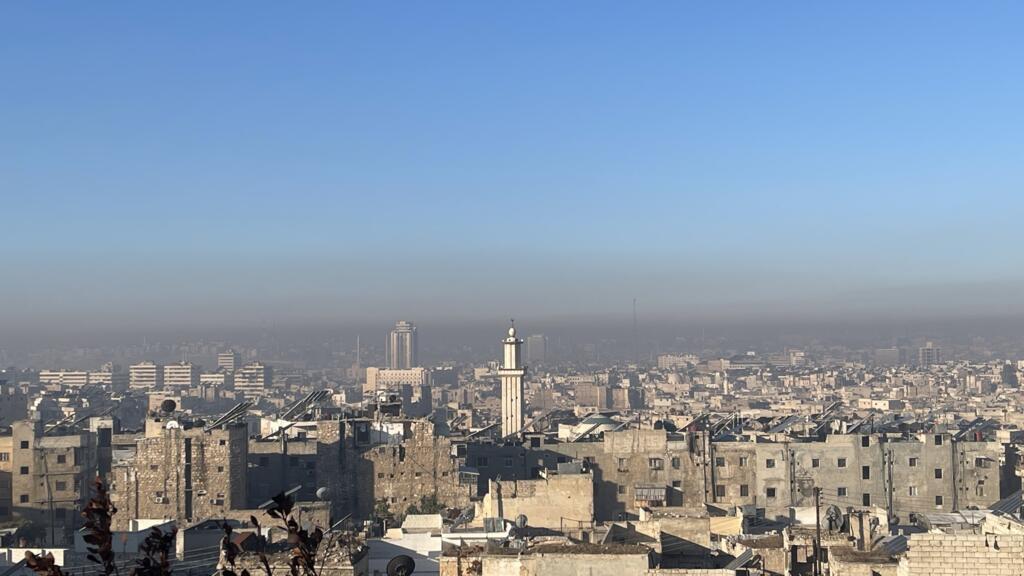
Renewed clashes between Syrian security forces and Kurdish fighters in the Aleppo region are a reminder of the volatile communal and sectarian tensions that continue to roil the country more than a year after the fall of the Assad dynasty.
The latest violence follows weeks of deadly clashes last summer pitting Bedouin tribesmen against Druze militias in the country’s south, and after the massacre of Alawite civilians in their western heartland in March and April of last year.
Each bout of violence underscores the daunting challenge facing Syria’s new rulers as they grapple with the complex, fragile ethnoreligious mosaic of a country ravaged by more than a decade of civil war and riven with bitter divides.
While the focus is on Syria’s vulnerable minorities, the country’s Sunni majority – itself divided along tribal lines and past opposition or allegiance to the Assads – holds the key to stabilising the country and staving off further sectarian strife.
With that aim in mind, the Syrian presidency set up an “Office of Tribes and Clans” in September headed by Jihad Issa al-Sheikh, also known by his nom de guerre Abu Ahmed Zakour, a longtime fellow traveller of Syria's rebel-turned-president Ahmed al-Sharaa.
FRANCE 24’s Wassim Nasr was able to meet with al-Sheikh and other members of the office at its three regional branches in Aleppo, Hama and Idlib, gaining exclusive insight into a body that aims to play a key role in the Syrian reconciliation process.
In Aleppo, old grudges and shifting alliances
Strategically placed alongside Aleppo's Bureau of political affairs, the local branch of the Office of Tribes and Clans has moved into the former premises of the Baath party that ruled Syria for decades under the Assads.
Its task is to maintain the non-aggression pact between Syria’s former rebels and the Sunni militias that had previously backed the Assad regime, before switching sides during the lightening offensive led by Sharaa’s Hayat Tahrir al-Sham (HTS) in November 2024.
It was their change of allegiance that led to the fall of Aleppo, Syria’s economic capital, in just three days, hastening the end of Assad rule.
The largest of these militias, the al-Baqir Brigade, had previously received funding from the Iranian Revolutionary Guards and was entrusted with conscripts from the Syrian regular army. This effectively gave them the power of life and death over local inhabitants.
“The rebels in Aleppo came from the same (Sunni) neighbourhoods (as the militiamen),” said a witness from the early days of the Syrian revolution in 2011, who traced existing rancours to a notorious incident involving a family accused of siding with the Assads.
“The discord began when the head of the Meraai family and one of his sons were executed and their mutilated bodies displayed in public for several days,” added the witness, describing their killing as a response to the shooting of anti-Assad demonstrators.
A lynchpin of the al-Baqir Brigade, the Meraai family was widely seen as a tool of the Assad regime to suppress opponents – not necessarily acting on direct orders from Damascus, but rather to preserve its financial interests and the favours granted by the regime.
Sitting on a plastic chair amid the ruins, a Meraai family member who was imprisoned at the time had a different take on the incident. He said the executions “were unjustified because we simply don’t know who fired at demonstrators from the rooftops”.
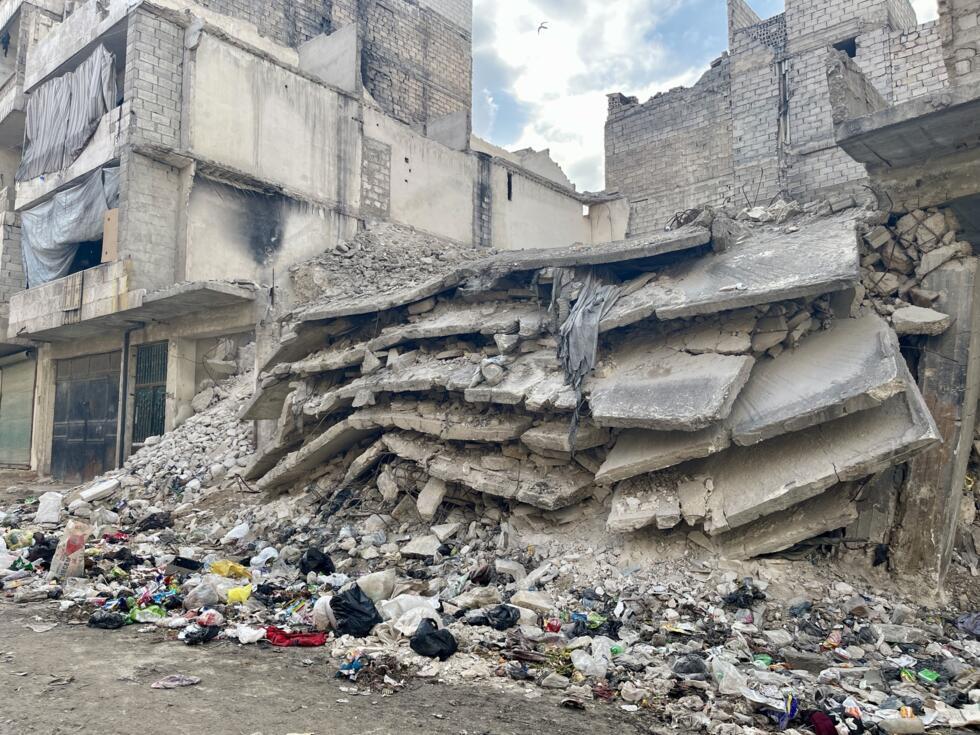
Fifteen years on from that fateful incident, his brothers Khaled and Hamza would play a key role in the liberation of Aleppo by Sharaa’s rebel coalition. After more than two years of negotiations and a visit to Sharaa’s bastion in Idlib, Khaled al-Meraai was persuaded by his fellow Bagara clansman Jihad Issa al-Sheikh that the time had come to abandon the Assads.
Seeing the tide turning, Khaled al-Meraai agreed to secretly harbour an HTS commando unit that would attack a strategic command centre of the Syrian army in Aleppo. Months before the battle, scouts had infiltrated the city to prepare the ground, including Jihad Issa al-Sheikh's own brother, Abu Omar.
But this crucial role in the liberation of Aleppo has not erased, at least in the eyes of the early rebels, the Sunni family’s earlier participation in the Assad regime’s repressive apparatus. As the former inmate put it, “our relatives will flee the city, fearing revenge, if they don't see me sitting in my chair here every day”.
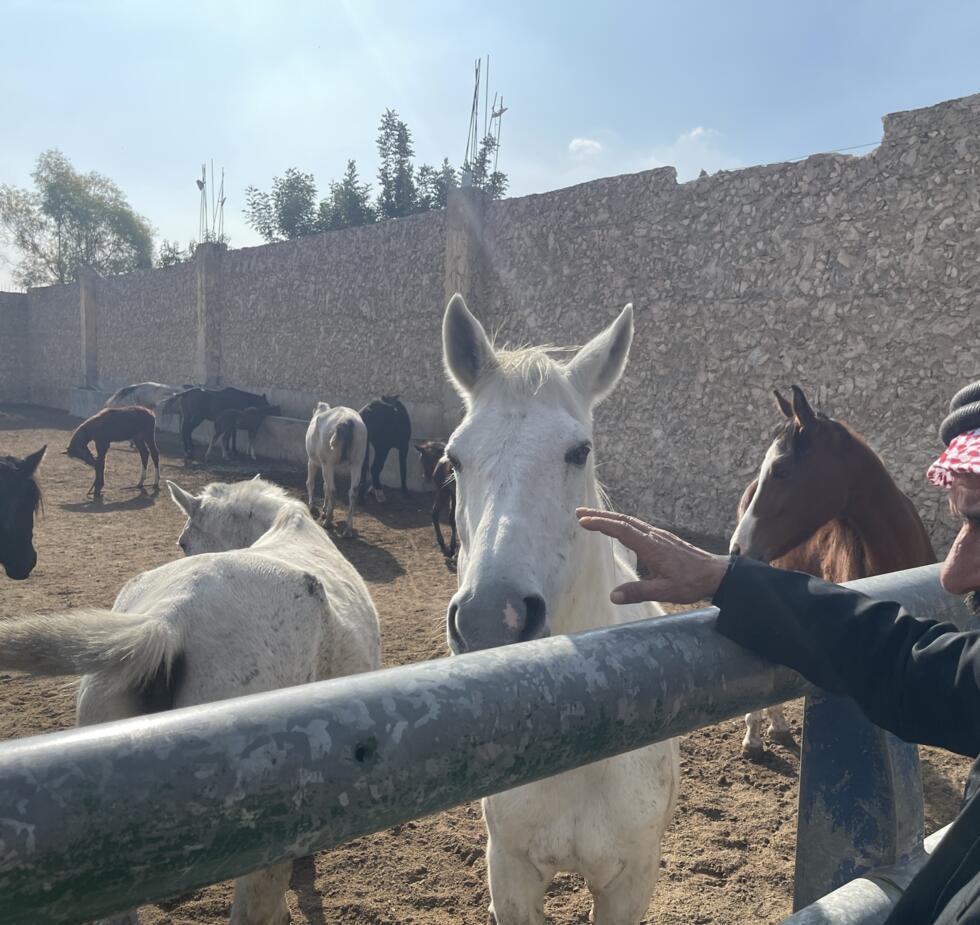
While the Meraais still own valuable properties, including a stud farm for purebred Arabian horses, they have been forced to return some of the assets that were confiscated from former rebels. The new Syrian authorities are protecting the family, but without publicly acknowledging the deal that helped bring about the capture of Aleppo – even though Hamza al-Meraai was recently photographed with an interior ministry spokesperson in Damascus.
In addition to Sunni reconciliation, the sprawling multi-faith city faces formidable security challenges. On New Year's Day, a member of the internal security forces was killed while preventing a suicide bomber from attacking a Christian celebration. His funeral was attended by senior officials including the interior minister as well as representatives of Aleppo’s Christian churches.
A few kilometres north of the city, residents of the Shiite villages of Nubl and Zahra live under heavy protection from the Syrian army. As soon as Aleppo was captured in late 2024, the villages sent representatives to the city to obtain security guarantees. Once again, Jihad Issa al-Sheikh, the presidential adviser, acted as mediator. Since then, “there has been only one murder”, said a local representative in Nubl. “In the early days, the local (HTS) commander slept here on the floor to ensure that there would be no abuses.”
But the situation remains precarious for the Shiite villagers, who are mindful that nearby Sunni villages are still in ruins. “Our [Sunni] neighbours see that we are protected, while they are unable to rebuild their villages and are still living in tents,” said the Nubl resident. “One can imagine and understand what they are going through.”
Clan leaders gather in Damascus
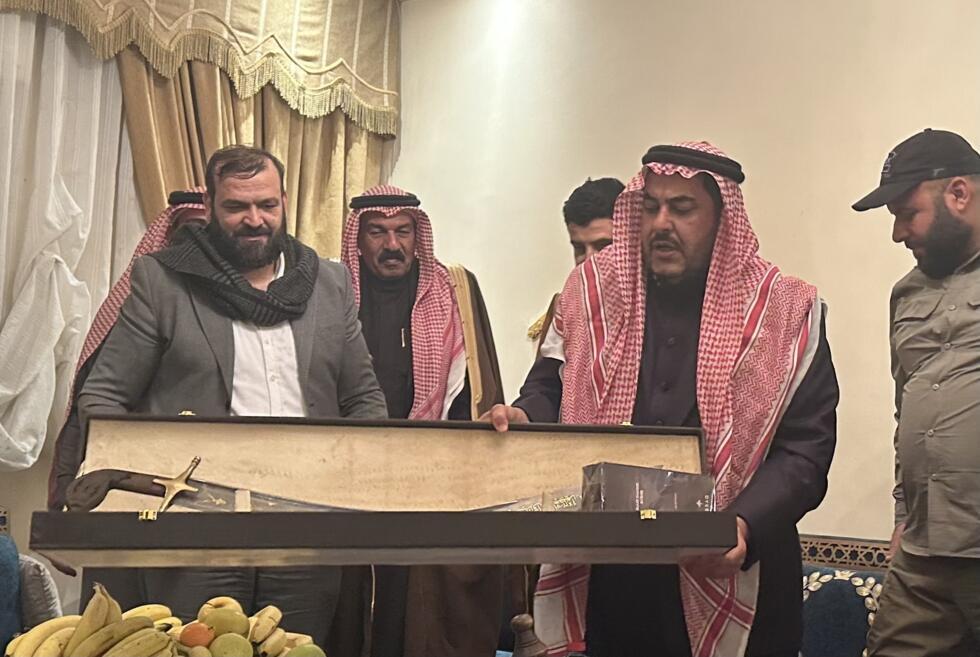
On December 9, the Damascus home of Sheikh Abdel Menaam al-Nassif, an early supporter of the Syrian revolution, hosted a high-level meeting of clan representatives from across the country, presenting the Office of Clans and Tribes with an ideal platform to send a message.
Addressing the assembly of senior clansmen, Jihad Issa al-Sheikh said the office was “not designed to command you or replace you, but rather to serve as a direct line to President Sharaa”. He then issued an advice to clans tarnished by collaboration with the deposed regime.
“Those clans that were on Assad’s side should keep a low profile and put forward figures who have not been compromised. We need everyone,” he added. “We must turn the page on old quarrels once and for all by supporting the state and not being a source of destabilisation.”
Referring to recent sectarian classes, the top Sharaa aide said it was “unacceptable for clans to take up arms at the slightest incident or to join the ranks of our enemies for one reason or another”.
He added: “We must rise to the challenges we have faced since the liberation of the country.”
General Hamza al-Hmidi, the head of operations for the Syrian armed forces, then spoke of the deadly summer clashes in Sweida, which saw Bedouin tribesmen converge on the southern province to fight local Druze militias, and led Israel to intervene militarily with strikes on security forces deployed to quell the bloodshed.
“We were faced with militiamen firing at us at the front and with killers and looters in our wake. These actions, which do not reflect our values, gave (the Israelis) a pretext to bomb us, forcing us to leave the city in the hands of (Druze) militiamen,” lamented the young general. \
The meeting touched on the sensitive subject of cronyism and political appointments, with clan leaders urged to present qualified candidates for administration jobs and the future National Assembly – and to refrain from promoting themselves or their relatives. The message was that the Baath party ways of coopting tribal and clan leaders through clientelism would no longer be accepted.
The meeting, attended by two representatives of Syria’s new political bureau, led to animated debate. The idea of a "Council of Elders" composed of clan leaders was put forward – a means to preserve their status and influence while separating their role from that of political institutions.
It’s a delicate balance for Syria’s new rulers, for whom gaining the support of clans necessarily means making concessions, including material ones, particularly in areas that are still outside Damascus’s control.
Preventing vendettas in Hama and Homs
The office’s Hama branch had its baptism of fire in the wake of two particularly grisly murders in nearby Homs, which kicked off attacks on Alawite neighbourhoods. Its primary mission was clear: to ease tensions in Syria’s third most populous city.
In the days following the murders, representatives of various clans acted quickly to prevent an escalation, under the coordination of Sharaa’s adviser al-Sheikh. The investigation revealed that the murders of a married couple, initially presented as sectarian, were in fact an internal family affair. A joint letter from community leaders helped to tamp down reprisals and narrowly avert bloodshed.
Sheikh Abu Jaafar Khaldoun, head of the Hama office, stressed the importance of inter-community dialogue. “We need to start from scratch and rebuild neighbourly relations,” he said. “This involves simple gestures, such as attending funerals.”
Khaldoun said interactions with the Alawite, Ismaili and Christian communities helped to defuse tensions after rebel forces took over Hama and then Homs.
‘We wasted no time after liberation, for fear of reprisals between communities, and even within each community,” he explained. “The first few months were tense, and some people took advantage of the situation to settle old scores.”
In Idlib, a laboratory for reconciliation
A rebel bastion and launchpad for the lighting offensive that toppled Assad, northwestern Idlib province has also served as a model for the type of conflict resolution advocated by Syria's new leaders.
Starting in 2017, Sharaa’s HTS began to work with local clans with a pragmatic goal: to resolve conflicts between rival factions in areas outside the regime's control, drawing on clan ties shared both by residents and the province’s large number of internally displaced people. After a series of military setbacks in 2019, the clans were gradually integrated as a supporting force for HTS and the "Syrian Salvation Government" that administered the rebel holdout.
This dual experience, both military and mediatory, is the foundation of the new Office of Clans and Tribes, whose leaders are largely drawn from the ranks of Idlib’s displaced population.
A key role of the office’s local branch is to maintain a link between the new Syrian authorities and displaced people from eastern Syria. The latter include both the clans based in areas controlled by the Kurdish-led Syrian Democratic Forces (SDF) and displaced people from Raqqa, Hassaka or Deir ez-Zor – populations often buffeted by war, forced displacement and shifting alliances.
Efforts to tilt the tribal balance have weighed heavily in recent military realignments. Most recently in Aleppo and months before in nearby Manbij, shifts in clan alliances have facilitated the recapture of entire neighbourhoods previously held by Kurdish forces, illustrating the decisive role played by Jihad Issa al-Sheikh and his office in reshaping the balance of power on the ground.
For the new regime, the stakes are primarily political and security-related. The eastern provinces provide most of the SDF's recruits while at the same time constituting a potential breeding ground for jihadist groups. To alienate them once more would be to repeat the mistakes that in the past pushed certain clans into the arms of the Assad regime, Kurdish forces or the Islamic State (IS) group.
Reassuring the Sunni majority and healing the deep divides left by years of war is a matter of survival for the new Syrian authorities. Lasting stability can only come from internal dynamics, driven by Syrians themselves. In this context, the Office of Tribes and Clans holds a key place at the intersection of community tensions and the most sensitive security issues. The stated objective is not to marginalise the clans, but to integrate them as actors of stabilisation.
The authorities are claiming a number of results since the office’s creation, including de-escalation in Homs, the management of protests in coastal areas home to many Alawites, and a gradual decline in assassinations targeting former members of the Assad regime. Despite the recent deadly clashes in Aleppo, the ability to prevent a major escalation in fighting over sensitive neighbourhoods previously held by Kurdish factions is also presented as concrete illustration of this new approach.

No comments:
Post a Comment