
The US Government is Not the Daddy of US Oil Companies
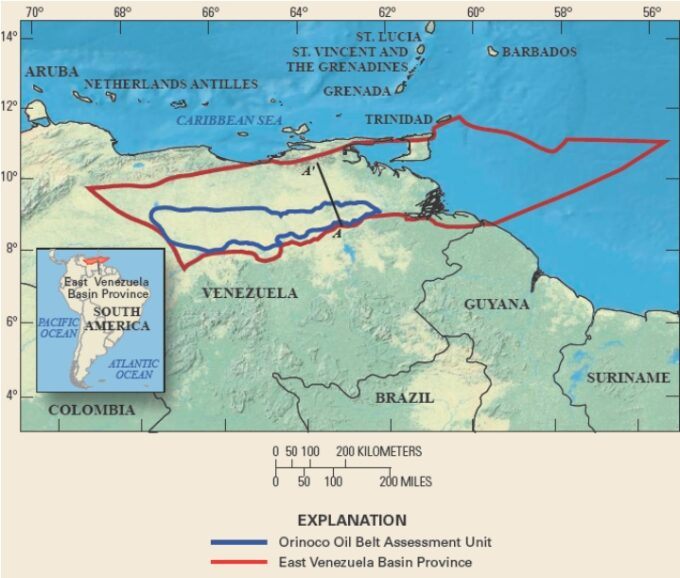
Oil reserves of the Orinoco Belt, Venezuela. US Geological Survey.
Among the many rationalizations that the Trump administration is using to initiate massive force and violence against the Venezuelan people is that the Venezuelan government nationalized American oil interests many years ago. The notion is that since “they stole our oil” several decades ago, it is entirely proper, U.S. officials say, for the U.S. government to retaliate against Venezuela, including, presumably, getting back the oil they supposedly “stole from us.”
But contrary to what many Americans now have convinced themselves is true, Venezuela never stole “our oil,” especially if one is referring to you and me and most other American citizens with the use of the possessive pronoun “our.” That’s because neither you nor I or the vast majority of other Americans ever owned Venezuelan oil.
For that matter, the U.S. government didn’t own any Venezuelan oil either. It was U.S. oil companies that were granted concessions from the Venezuelan government near the beginning of the 20th century to extract oil from Venezuela in return for payment of concession fees to the Venezuelan government.
The situation was similar to what happens when an oil company enters into a lease contract with a private landowner here in the United States. The oil company pays the landowner a bonus to sign the lease. If it later strikes oil, the oil company pays royalties to the landowner.
Essentially, the same thing happened with Venezuela, with the Venezuelan government serving as owner of the mineral rights. It should be pointed out that the terms of the concessions were extremely generous to the oil companies.
But there is one critically important point that we must keep in mind: There is always the risk of nationalization when it comes to operating in foreign countries. Every oil company executive knows that. Nationalization, of course, is impossible to defend on a libertarian basis. It constitutes a severe breach of contract. But the fact is that it happens, and everyone knows that. It’s a risk of doing business in a foreign country. If an oil company doesn’t want to take that risk, then it should simply limit its operations to the domestic United States.
In other words, oil company executives are big boys. They themselves choose to take the risk of nationalization if they decide to drill in a foreign country. If things don’t pan out and their operations are nationalized, they shouldn’t be looking to the U.S. government to be their daddy. They simply have to take their lumps.
And don’t forget: the U.S. oil companies made a lot of money with their oil concessions in Venezuela before the Venezuelan government nationalized their oil interests in 1976.
We also shouldn’t forget that it’s not only foreign countries that engage in nationalization. So does the U.S. government. In the 1930s, it nationalized privately owned gold coins, which had been the official money of the American people under the Constitution for more than 125 years. In other words, the U.S. government “stole our money.” When is it going to return “our money” to us?
It’s also worth reminding ourselves that we’ve heard this “they stole our oil” argument before. When the democratically elected prime minister of Iran, Mohammad Mossadegh, nationalized British oil interests in Iran in 1951, British officials ran to U.S. officials to seek their help in getting “their oil back.” That’s what led to the CIA coup that ousted Mossadegh from power, installed the brutal, tyrannical, and dictatorial rule of the Shah, and destroyed Iran’s democratic system. That U.S.-installed and U.S.-supported tyranny led to the Iranian revolution in 1979, which brought the brutal theocratic regime in Iran that is now considered to be a permanent official enemy of the United States.
What happened in Iran was just another dark and sordid legacy of the U.S. national-security state and its foreign policy of interventionism, including coups, assassinations, sanctions, embargoes, ship seizures, freezing of assets, single-tap and double-tap killings, and military invasions. No doubt the Pentagon, the CIA, and the NSA are hoping to have better results with their interventionism against Venezuela.
This first appeared on Hornberger’s Explore Freedom blog.
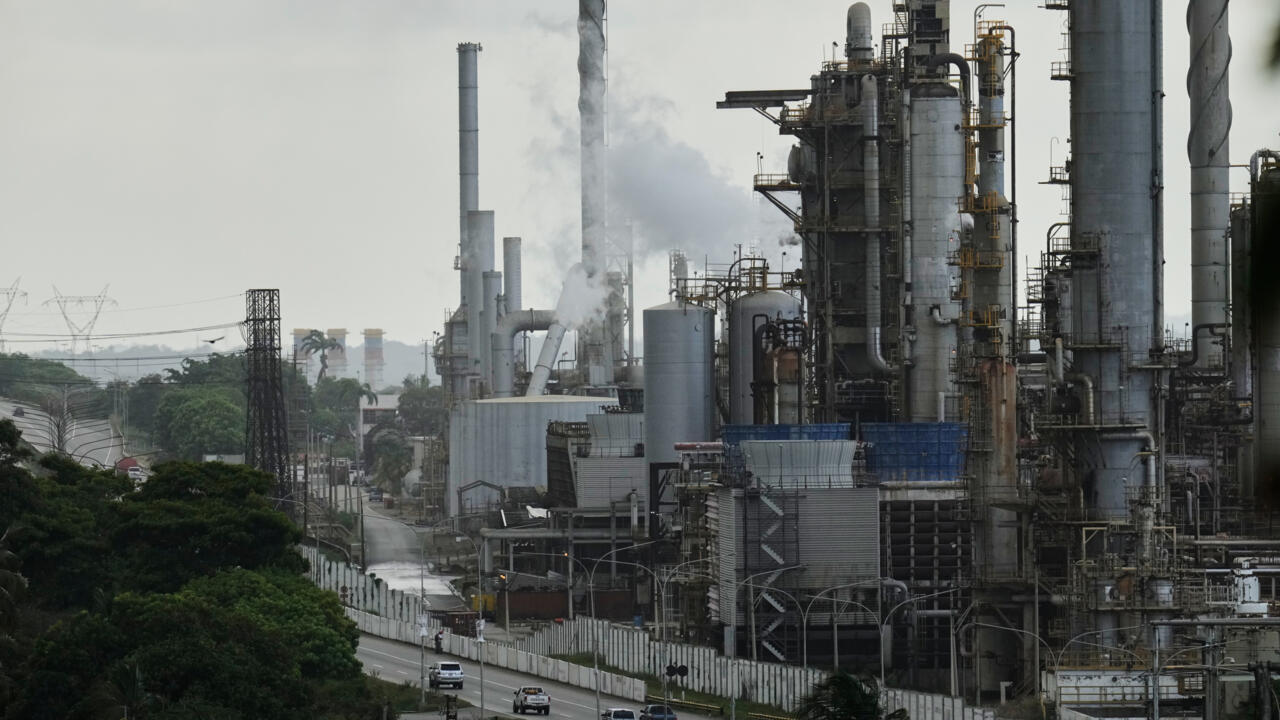
The United States is going to be "very strongly involved" in Venezuela's oil industry in the wake of the operation to capture Venezuelan President Nicolas Maduro, President Donald Trump told Fox News on Saturday.
"We have the greatest oil companies in the world, the biggest, the greatest, and we're going to be very much involved.
Here's what we know about Venezuela’s oil industry.
Vast Reserves, Minimal Output
Venezuela holds the world’s largest oil reserves – about 303 billion barrels, or 17% of global reserves – surpassing OPEC+ leader Saudi Arabia, according to the London-based Energy Institute. Most of its reserves are heavy oil in the Orinoco Belt, making production costly, though technically straightforward, according to the US Energy Department.
Despite its vast reserves, Venezuela’s crude output remains far below capacity due to mismanagement, underinvestment, and sanctions. Production, which once peaked at 3.5 million barrels per day in the 1970s (over 7% of global output), fell below 2 million bpd during the 2010s and averaged around 1.1 million bpd last year.
Analysts note that any regime change could eventually boost production if sanctions are lifted and foreign investment returns. However, historical precedents in Libya and Iraq suggest recovery is unlikely to be rapid.
Joint Ventures and Nationalisation
Venezuela nationalised its oil sector in the 1970s, creating Petroleos de Venezuela S.A. (PDVSA). In the 1990s, it briefly opened up to foreign investment, but under Hugo Chavez from 1999 onward, PDVSA was required to maintain majority ownership in all projects. The state company partnered with firms including Chevron, China National Petroleum Corporation, ENI, Total, and Russia’s Rosneft to boost production.
Exports and Refining
The United States was formerly Venezuela’s main oil buyer, but sanctions shifted the main market to China over the past decade. Exports halted entirely after the Trump administration’s blockade on vessels entering or leaving Venezuela in December 2025. PDVSA also owns significant refining capacity abroad, including CITGO in the US, though creditors are contesting control through long-standing legal cases in American courts.
(FRANCE 24 with Reuters)
By The Week News Desk
After capturing and indicting deposed Venezuelan President Nicolas Maduro, the US has indicated that it has its eye on the South American country's oil industry.
Speaking to Fox News, US President Donald Trump said the US will be "very strongly involved" in Venezuela's oil industry.
"We have the greatest oil companies in the world, the biggest and the best, and we’re going to be very much involved in it," he said.
Vice President JD Vance said Trump had "offered multiple off ramps, but was very clear throughout this process: the drug trafficking must stop, and the stolen oil must be returned to the United States."
"Maduro is the newest person to find out that President Trump means what he says," Vance posted on X.
It should be noted that the US spared the Petróleos de Venezuela, S.A (PDVSA), the Venezuelan state-owned oil and natural gas company, while carrying out airstrikes on Venezuela.
In December, the US blockaded oil tankers entering or leaving the country, besides seizing two cargoes of Venezuelan oil.
Interestingly, Maduro was captured just a day after he said Venezuela is ready to discuss a drug-trafficking deal and oil investments with the US.
"The US government knows, because we've told many of their spokespeople, that if they want to seriously discuss an agreement to combat drug trafficking, we're ready," he said. "If they want oil, Venezuela is ready for U.S. investment, like with Chevron, whenever they want it, wherever they want it and however they want it."
He also alleged that the US wants to change the regime in Venezuela so that it can access the oil reserves in the country. It is clear the U.S. wants "to impose themselves through threats, intimidation and force," he said.
No comments:
Post a Comment