
The US's Magical Realism Show in Venezuela
R. Viswanathan
THE WIRE
INDIA
'The United States appear to be destined by providence to plague Latin America with misery in the name of liberty.'
'The United States appear to be destined by providence to plague Latin America with misery in the name of liberty.'
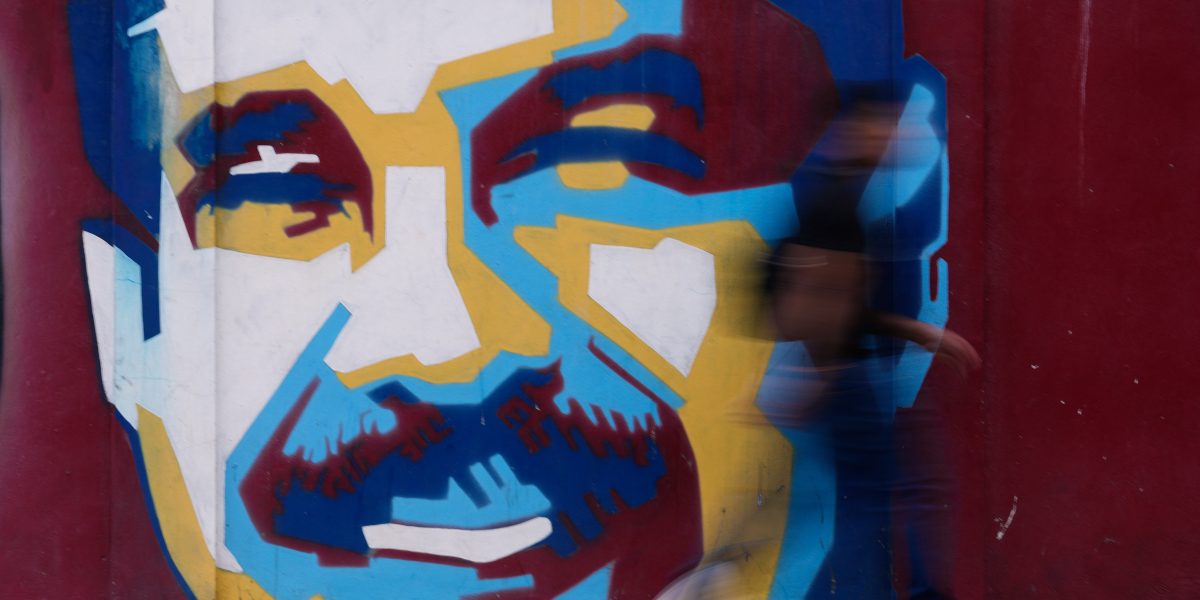
A pedestrian walks past a mural of Venezuelan President Nicolas Maduro Sunday, Jan. 4, 2026. Photo: AP/PTI.
LONG READ
What has happened in Venezuela is not a surprise to those who have read the magical realism stories of Gabriel Garcia Marquez and other famous Latin American writers. In this signature genre of Latin American literature, the writers blur the line between fantasy and facts, weaving magic into reality.
Maria Corina Machado is magic and Delcy Rodriguez is realism in the ongoing magical realism show of Venezuela choreographed by the US.
Maria Corina Machado, the Nobel Prize winner, had the fantasy of flying in an American magic carpet and landing on the Miraflores presidential palace in Caracas after the kidnapping of President Nicolás Maduro by the American forces. Machado has been a relentless democratic activist fighting the Chavista dictatorship in the last two decades. She wanted to wipe out the Chavistas with the military help of US.
But the fact is that Delcy Rodrigues from the ruling Chavista (followers of Hugo Chavez who was president from 1998 till his death in 2013) regime has moved into the presidential palace. Machado has got a reality check from US president Donald Trump who ruled her out “as not having enough support or respect within Venezuela”. He chose to let Delcy Rodriguez, the vice-president under Maduro, to continue as acting president. Rodriguez is a better choice for Tump as he sets his sights on oil and other benefits. On the other hand, Machado’s takeover of power would have resulted in violent clashes between her party cadres and the Chavistas – resulting in bloodshed and instability. This would have complicated Trump’s agenda which was focussed on oil and not restoration of democracy, as imagined by Machado.
This was not the first ‘American Magical Realism Show’ in Venezuela.
The US had recognised Juan Guaido, another opposition leader, as the real president of Venezuela between January 2019 and January 2023. Washington D.C. refused to recognise Maduro, accusing him of rigging the 2018 election. Over 50 countries followed the US diktat (some willingly and some under coercion) and recognised Guaido as the legitimate president. Guaido assumed the role of president seriously, appointing cabinet ministers and ambassadors. He and his appointees as well as his US lawyers and collaborators swindled and spent hundreds of millions of dollars of Venezuelan government funds seized by the US government. Eventually, Guaido succumbed to the scandals of his regime and was dropped as useless luggage. But despite the de-recognition of Maduro, the US and other western governments continued to have official dealings with his government, despite the devious British refusing to hand over the Venezuelan gold in their Bank of England to him when Maduro wanted it back. The excuse was that UK had not recognised Maduro as the president. The Brits continued to deal with Maduro officially but have shamelessly held on to Venezuelan gold even now.
There was a brief magical realism show in May 2020 as well.
A group of ex-marine mercenaries of the US hatched a plan code-named “Operation Gideon”. They attempted a sea-borne raid, through boats which were to land in Venezuela, capture Maduro, take him to the US and claim the $ 15 million bounty which was the going rate announced by Washington D.C. at that time. The mercenaries were caught and some were killed and others jailed by Venezuelan authorities. The US administration claimed that it was not an official operation but got these criminals released through quiet negotiations. They were back to the US in 2023.
Who stole the Venezuelan election?
Maduro claimed to be the winner of 2024 election. Trump and Machado claimed that Edmundo Gonzalez was the winner and accused Maduro of stealing the election. Now Trump has ditched Gonzalez and Machado while jailing Maduro. Trump says he will run Venezuela.
So, it will not be exaggeration to say that the real thief who has stolen the election is Trump. He refuses to give a timeline for election or transition and a digitally altered image he has posted says that he is “Acting President of Venezuela.” Restoration of democracy is not Trump’s priority.
Trump says that the the interim government of Venezuela is “giving us everything that we feel is necessary. They’re treating us with great respect. We’re getting along very well with the administration that is there right now”.
The fable of a monkey and two cats
Once upon a time, two cats were fighting over a piece of bread. Each wanted it more than the other. A monkey saw this and offered a solution. It brought a weighing scale and deliberately broke the bread into two unequal pieces and put a piece each on either side of the weighing scale. When one side weighed heavier it took a bite from that and put the rest on the scale. Then the other side was heavier and the monkey took a bite from the other side. Eventually the monkey finished the pieces on both the sides and the foolish cats were left hungry. Trump has done the monkey trick to Maduro and Machado.
Trump has announced that he will extract Venezuelan oil from its huge reserves. He has already begun to make money for the US by taking oil that has been under sanctions. He says that the US will obtain 30 to 50 million barrels of Venezuelan crude oil in the near future. He talks of a deal with the Venezuelan authorities whereby America would market all Venezuelan oil “indefinitely”. The proceeds “will be disbursed for the benefit of the American people and the Venezuelan people at the discretion of the US government”. Trump adds that all the goods purchased for Venezuela in this way would be American.
Advertisement
Was Maduro a dictator in the classical sense?
One can say that Maduro was not a classical dictator like Augusto Pinochet Ugarte of Chile or Manuel Antonio Noriega of Panama. He did not have absolute powers and control over others in the regime. He was a just a public face of the collective leadership of the post-Chavez regime. He, for one, had less power than Diosdado Cabello, the interior minister, or Padrino Lopez, the defence minister and army chief or the Rodriguez siblings Delcy, his vice-president and her brother Jorge, the president of the national assembly. He could not take any major decisions without the approval of the other four.
Maduro did not have the charisma or grassroots support or any personal vision or agenda, unlike Chavez. Even in speeches, he tried simply to imitate the style and rhetoric of Chavez. The other four powerful figures let him appear in the TV, sing and dance. This was a clever move which paved the way for his being portrayed in the western media as a dictator responsible for rigging of elections and economic collapse.
The Cuba angle
Maduro was not the prime candidate to succeed Chavez. It was Diosdado Cabello, the interior minister, who was expected to inherit the mantle of Chavez. He had better credentials as the second strongest man after Chavez. But the Cubans had influenced Chavez to appoint Maduro as successor during his last days in a Cuban hospital. The Cubans did not warm to Cabello who was independent and did not share Chavez’s or Maduro’s admiration for the country.
After the coup against him in 2002 (in which a few dissident Generals joined), Chavez took on Cuban advisors for personal protection and intelligence services. This system continued for Maduro also. Since he had less power than the other quartet, Maduro relied even more on his Cuban advisors. This was resented by the others and could well be why they let the US kill 32 Cubans during the raid.
Chavez considered Fidel Castro as his role model and mentor. He gave free and subsidised oil, besides monetary and other support, to Cuba which was helpless after the withdrawal of Soviet assistance in 1991. Maduro continued Chavez’s policy of supporting Cuba with oil and money. This was not to the liking of the other Chavista factions.
The US has instructed Delcy Rodriguez to end the support to Cuba, which will become even more vulnerable and an easier game for US. This has pleased the Cuban-origin secretary of state Marco Rubio who has been dreaming of liberating Cuba from communism and claiming the properties owned by his family. Rubio has already warned that the Cuban regime should be afraid.
A stage-managed event
The so called capture and kidnapping of Maduro was a stage-managed event. Delcy Rodriguez and company had willingly offered the head of Maduro to appease the deities of Washington D.C. in return for the US allowing thousands of Chavistas to continue with their heads on their bodies. There is bounty of $ 25 million on interior minister Diosdado Cabello and $ 15 million on defence minister Padrino Lopez. There are some more millions on other heads. Trump is not pursuing them despite the trumped up charges and US court convictions against them. If Machado or Gonzalez had taken power, they would have happily handed over hundreds of Chavista heads to the Americans.
Delcy Rodriguez has been in touch with the US through Chevron which still operates in Venezuela. As the minister in charge of oil sector, she had an excuse to deal with the US. She is more pragmatic and better skilled in negotiations than Cabello or Lopez and is thus the choice of both the sides to do the deal of offering Maduro’s head and lot of oil to the Americans. One must note that even Maduro had been willing to give oil and other perks – except his head – but Trump wanted a trophy and a spectacular display of his macho MAGA image. Rodriguez clearly agreed and let the Americans display the power of airforce jets, helicopters, high-tech weapons and skills of special forces in what appears to have been a prearranged show.
A regime reset
So what has happened in Venezuela is not a regime change but a simple regime reconfiguration minus Maduro but plus Trump.
This arrangement suits the US better than letting Machado-Gonzalez take over the country. If that was the case, the Chavistas (with their armed forces and militias) would have fought with the Machado government fiercely to save their heads and positions of power. There would have been bloodshed. Machado would not have been able to manage the situation and the American ground forces would have become necessary. Having learnt from the mistakes made in Iraq and Afghanistan, the Americans did not want a repeat. In any case, Trump’s priority was not restoration of democracy.
Oil, not democracy
Venezuela has the world’s largest oil reserves of over 300 billion barrels. It was the American companies who had discovered the oil in 1914 and produced it till the nationalisation in 1975 by president Carlos Andres Perez. He had paid them compensation through negotiations and after approval by the Venezuelan Congress. In the 1990s, the Venezuelan government had invited foreign companies back into the oil sector. Some companies such as Chevron, Exxon Mobile and ConocoPhillips went back. But when Chavez came to power in 1998, he wanted these companies to form joint ventures with PDVSA, the national oil company which held the majority shares. Except Chevron, the other companies refused the terms and exited. They claimed compensation but the amounts were exorbitant. So they went to the courts and through arbitration. These claims, with interest, now amount to $ 22 billion. The American companies will certainly plan to take Venezuelan oil against the dues claimed by them.
Despite the dispute over compensation disputes, Chevron has been operating in Venezuela all these years. When the Americans imposed sanctions on Venezuela in 2019, Chevron got a special license to operate in the country. It has been operating with repeated renewal of sanctions.
In the meeting with Trump on January 9, the oil companies asked for change of Venezuelan laws on regulations as well as investment guarantees in order to go back to the country. Because of sanctions, PDVSA’s production capacity has been crippled due to shortage of equipment and materials needed for repairs and modernisation. Billions of dollars would need to be invested to restore production to the pre-sanction level of over three million barrels per day.
Oil is a resource curse for Venezuela
The country has fertile agricultural land, mineral resources including gold and diamond, hydroelectric potential, beautiful beaches and pleasant climate. These resources are sufficient to be a prosperous nation, even without oil. But when the easy money from oil started coming, the Venezuelans abandoned all the other resources and started living exclusively on oil income.
The problems of Venezuela started when oil was discovered in 1914. In just a decade, the country had undergone a rapid transformation from an obscure agricultural backwater somewhere in the Andes to the world’s largest oil exporter and the second-largest oil producer after the United States.
Since then, the Venezuelans have been infected incurably by the Dutch disease and resource curse. Oil has spoiled both the rulers and the ruled. The politicians stole and misspent the petrodollars during the high oil prices and let the economy slide into crisis when the prices went down. The businessmen gave up productive industries and went into imports and quick ways of making fast buck. Farmers neglected agriculture and moved into cities to share the life style spawned by the oil boom.
By 1930, while the world struggled with the Great Depression, Venezuelans began to enjoy enormous riches. Venezuela became a key supplier of the oil that fuelled the Allied efforts during World War II. The flood of oil revenue caused their currency, the bolivar, to appreciate against the dollar. The strong currency was a boon for Venezuelan consumers, who could suddenly afford to import what they used, wore, and ate every day. Caracas became expensive. A US diplomat earning $ 2,000 in Washington DC needed $ 5,000 to live in Caracas.
Venezuela’s days of economic plenty did not last. World War II disrupted global trade and pushed the import-dependent nation into economic disarray, plagued by product shortages. Venezuela quickly went from a nation with enough purchasing power to import fine wines to a place where people struggled to find car tires.
What has happened in Venezuela is not a surprise to those who have read the magical realism stories of Gabriel Garcia Marquez and other famous Latin American writers. In this signature genre of Latin American literature, the writers blur the line between fantasy and facts, weaving magic into reality.
Maria Corina Machado is magic and Delcy Rodriguez is realism in the ongoing magical realism show of Venezuela choreographed by the US.
Maria Corina Machado, the Nobel Prize winner, had the fantasy of flying in an American magic carpet and landing on the Miraflores presidential palace in Caracas after the kidnapping of President Nicolás Maduro by the American forces. Machado has been a relentless democratic activist fighting the Chavista dictatorship in the last two decades. She wanted to wipe out the Chavistas with the military help of US.
But the fact is that Delcy Rodrigues from the ruling Chavista (followers of Hugo Chavez who was president from 1998 till his death in 2013) regime has moved into the presidential palace. Machado has got a reality check from US president Donald Trump who ruled her out “as not having enough support or respect within Venezuela”. He chose to let Delcy Rodriguez, the vice-president under Maduro, to continue as acting president. Rodriguez is a better choice for Tump as he sets his sights on oil and other benefits. On the other hand, Machado’s takeover of power would have resulted in violent clashes between her party cadres and the Chavistas – resulting in bloodshed and instability. This would have complicated Trump’s agenda which was focussed on oil and not restoration of democracy, as imagined by Machado.
This was not the first ‘American Magical Realism Show’ in Venezuela.
The US had recognised Juan Guaido, another opposition leader, as the real president of Venezuela between January 2019 and January 2023. Washington D.C. refused to recognise Maduro, accusing him of rigging the 2018 election. Over 50 countries followed the US diktat (some willingly and some under coercion) and recognised Guaido as the legitimate president. Guaido assumed the role of president seriously, appointing cabinet ministers and ambassadors. He and his appointees as well as his US lawyers and collaborators swindled and spent hundreds of millions of dollars of Venezuelan government funds seized by the US government. Eventually, Guaido succumbed to the scandals of his regime and was dropped as useless luggage. But despite the de-recognition of Maduro, the US and other western governments continued to have official dealings with his government, despite the devious British refusing to hand over the Venezuelan gold in their Bank of England to him when Maduro wanted it back. The excuse was that UK had not recognised Maduro as the president. The Brits continued to deal with Maduro officially but have shamelessly held on to Venezuelan gold even now.
There was a brief magical realism show in May 2020 as well.
A group of ex-marine mercenaries of the US hatched a plan code-named “Operation Gideon”. They attempted a sea-borne raid, through boats which were to land in Venezuela, capture Maduro, take him to the US and claim the $ 15 million bounty which was the going rate announced by Washington D.C. at that time. The mercenaries were caught and some were killed and others jailed by Venezuelan authorities. The US administration claimed that it was not an official operation but got these criminals released through quiet negotiations. They were back to the US in 2023.
Who stole the Venezuelan election?
Maduro claimed to be the winner of 2024 election. Trump and Machado claimed that Edmundo Gonzalez was the winner and accused Maduro of stealing the election. Now Trump has ditched Gonzalez and Machado while jailing Maduro. Trump says he will run Venezuela.
So, it will not be exaggeration to say that the real thief who has stolen the election is Trump. He refuses to give a timeline for election or transition and a digitally altered image he has posted says that he is “Acting President of Venezuela.” Restoration of democracy is not Trump’s priority.
Trump says that the the interim government of Venezuela is “giving us everything that we feel is necessary. They’re treating us with great respect. We’re getting along very well with the administration that is there right now”.
The fable of a monkey and two cats
Once upon a time, two cats were fighting over a piece of bread. Each wanted it more than the other. A monkey saw this and offered a solution. It brought a weighing scale and deliberately broke the bread into two unequal pieces and put a piece each on either side of the weighing scale. When one side weighed heavier it took a bite from that and put the rest on the scale. Then the other side was heavier and the monkey took a bite from the other side. Eventually the monkey finished the pieces on both the sides and the foolish cats were left hungry. Trump has done the monkey trick to Maduro and Machado.
Trump has announced that he will extract Venezuelan oil from its huge reserves. He has already begun to make money for the US by taking oil that has been under sanctions. He says that the US will obtain 30 to 50 million barrels of Venezuelan crude oil in the near future. He talks of a deal with the Venezuelan authorities whereby America would market all Venezuelan oil “indefinitely”. The proceeds “will be disbursed for the benefit of the American people and the Venezuelan people at the discretion of the US government”. Trump adds that all the goods purchased for Venezuela in this way would be American.
Advertisement
Was Maduro a dictator in the classical sense?
One can say that Maduro was not a classical dictator like Augusto Pinochet Ugarte of Chile or Manuel Antonio Noriega of Panama. He did not have absolute powers and control over others in the regime. He was a just a public face of the collective leadership of the post-Chavez regime. He, for one, had less power than Diosdado Cabello, the interior minister, or Padrino Lopez, the defence minister and army chief or the Rodriguez siblings Delcy, his vice-president and her brother Jorge, the president of the national assembly. He could not take any major decisions without the approval of the other four.
Maduro did not have the charisma or grassroots support or any personal vision or agenda, unlike Chavez. Even in speeches, he tried simply to imitate the style and rhetoric of Chavez. The other four powerful figures let him appear in the TV, sing and dance. This was a clever move which paved the way for his being portrayed in the western media as a dictator responsible for rigging of elections and economic collapse.
The Cuba angle
Maduro was not the prime candidate to succeed Chavez. It was Diosdado Cabello, the interior minister, who was expected to inherit the mantle of Chavez. He had better credentials as the second strongest man after Chavez. But the Cubans had influenced Chavez to appoint Maduro as successor during his last days in a Cuban hospital. The Cubans did not warm to Cabello who was independent and did not share Chavez’s or Maduro’s admiration for the country.
After the coup against him in 2002 (in which a few dissident Generals joined), Chavez took on Cuban advisors for personal protection and intelligence services. This system continued for Maduro also. Since he had less power than the other quartet, Maduro relied even more on his Cuban advisors. This was resented by the others and could well be why they let the US kill 32 Cubans during the raid.
Chavez considered Fidel Castro as his role model and mentor. He gave free and subsidised oil, besides monetary and other support, to Cuba which was helpless after the withdrawal of Soviet assistance in 1991. Maduro continued Chavez’s policy of supporting Cuba with oil and money. This was not to the liking of the other Chavista factions.
The US has instructed Delcy Rodriguez to end the support to Cuba, which will become even more vulnerable and an easier game for US. This has pleased the Cuban-origin secretary of state Marco Rubio who has been dreaming of liberating Cuba from communism and claiming the properties owned by his family. Rubio has already warned that the Cuban regime should be afraid.
A stage-managed event
The so called capture and kidnapping of Maduro was a stage-managed event. Delcy Rodriguez and company had willingly offered the head of Maduro to appease the deities of Washington D.C. in return for the US allowing thousands of Chavistas to continue with their heads on their bodies. There is bounty of $ 25 million on interior minister Diosdado Cabello and $ 15 million on defence minister Padrino Lopez. There are some more millions on other heads. Trump is not pursuing them despite the trumped up charges and US court convictions against them. If Machado or Gonzalez had taken power, they would have happily handed over hundreds of Chavista heads to the Americans.
Delcy Rodriguez has been in touch with the US through Chevron which still operates in Venezuela. As the minister in charge of oil sector, she had an excuse to deal with the US. She is more pragmatic and better skilled in negotiations than Cabello or Lopez and is thus the choice of both the sides to do the deal of offering Maduro’s head and lot of oil to the Americans. One must note that even Maduro had been willing to give oil and other perks – except his head – but Trump wanted a trophy and a spectacular display of his macho MAGA image. Rodriguez clearly agreed and let the Americans display the power of airforce jets, helicopters, high-tech weapons and skills of special forces in what appears to have been a prearranged show.
A regime reset
So what has happened in Venezuela is not a regime change but a simple regime reconfiguration minus Maduro but plus Trump.
This arrangement suits the US better than letting Machado-Gonzalez take over the country. If that was the case, the Chavistas (with their armed forces and militias) would have fought with the Machado government fiercely to save their heads and positions of power. There would have been bloodshed. Machado would not have been able to manage the situation and the American ground forces would have become necessary. Having learnt from the mistakes made in Iraq and Afghanistan, the Americans did not want a repeat. In any case, Trump’s priority was not restoration of democracy.
Oil, not democracy
Venezuela has the world’s largest oil reserves of over 300 billion barrels. It was the American companies who had discovered the oil in 1914 and produced it till the nationalisation in 1975 by president Carlos Andres Perez. He had paid them compensation through negotiations and after approval by the Venezuelan Congress. In the 1990s, the Venezuelan government had invited foreign companies back into the oil sector. Some companies such as Chevron, Exxon Mobile and ConocoPhillips went back. But when Chavez came to power in 1998, he wanted these companies to form joint ventures with PDVSA, the national oil company which held the majority shares. Except Chevron, the other companies refused the terms and exited. They claimed compensation but the amounts were exorbitant. So they went to the courts and through arbitration. These claims, with interest, now amount to $ 22 billion. The American companies will certainly plan to take Venezuelan oil against the dues claimed by them.
Despite the dispute over compensation disputes, Chevron has been operating in Venezuela all these years. When the Americans imposed sanctions on Venezuela in 2019, Chevron got a special license to operate in the country. It has been operating with repeated renewal of sanctions.
In the meeting with Trump on January 9, the oil companies asked for change of Venezuelan laws on regulations as well as investment guarantees in order to go back to the country. Because of sanctions, PDVSA’s production capacity has been crippled due to shortage of equipment and materials needed for repairs and modernisation. Billions of dollars would need to be invested to restore production to the pre-sanction level of over three million barrels per day.
Oil is a resource curse for Venezuela
The country has fertile agricultural land, mineral resources including gold and diamond, hydroelectric potential, beautiful beaches and pleasant climate. These resources are sufficient to be a prosperous nation, even without oil. But when the easy money from oil started coming, the Venezuelans abandoned all the other resources and started living exclusively on oil income.
The problems of Venezuela started when oil was discovered in 1914. In just a decade, the country had undergone a rapid transformation from an obscure agricultural backwater somewhere in the Andes to the world’s largest oil exporter and the second-largest oil producer after the United States.
Since then, the Venezuelans have been infected incurably by the Dutch disease and resource curse. Oil has spoiled both the rulers and the ruled. The politicians stole and misspent the petrodollars during the high oil prices and let the economy slide into crisis when the prices went down. The businessmen gave up productive industries and went into imports and quick ways of making fast buck. Farmers neglected agriculture and moved into cities to share the life style spawned by the oil boom.
By 1930, while the world struggled with the Great Depression, Venezuelans began to enjoy enormous riches. Venezuela became a key supplier of the oil that fuelled the Allied efforts during World War II. The flood of oil revenue caused their currency, the bolivar, to appreciate against the dollar. The strong currency was a boon for Venezuelan consumers, who could suddenly afford to import what they used, wore, and ate every day. Caracas became expensive. A US diplomat earning $ 2,000 in Washington DC needed $ 5,000 to live in Caracas.
Venezuela’s days of economic plenty did not last. World War II disrupted global trade and pushed the import-dependent nation into economic disarray, plagued by product shortages. Venezuela quickly went from a nation with enough purchasing power to import fine wines to a place where people struggled to find car tires.
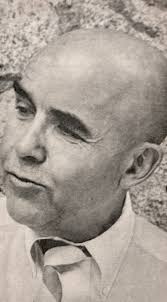
Juan Pablo Pérez Alfonzo (1903-1979) Venezuelan diplomat, politician and lawyer primarily responsible for the creation of the OPEC. Photo: Public domain.
Venezuela had increased its oil revenue thanks to a smart Venezuelan, Juan Pablo Pérez Alfonzo, the minister of development appointed by the military rulers after the 1945 coup. He changed the game of negotiations with the foreign oil companies. He pushed them for fifty-fifty share in the profits the multinational oil companies derived from the sale of crude oil as well as refining, transportation, and sale of fuel. He educated the sheikhs in West Asia and helped them to get a similar arrangement with foreign oil firms. Pérez Alfonzo worked with the representatives of Saudi Arabia, Kuwait, Iraq, and Iran and signed the agreement to create the Organisation of the Petroleum Exporting Countries, OPEC. From that point on, oil companies would have to consult with exporter countries before setting oil prices.
In the period 1950-57, Venezuela accumulated huge foreign exchange reserves, thanks to the hike in oil prices after the coup in Iran and closure of Suez Canal. In 1963, the country churned out 3.5 million barrels of oil a day. The country’s per capita income was the highest in Latin America, and the bolivar remained one of the world’s strongest currencies. The US chai Sears, Roebuck and Co. opened 11 stores in Venezuela.
After the Arab oil embargo in 1973, Venezuela’s petrodollars tripled. The flow of dollars from oil was too much for Venezuela’s economy causing a form of economic indigestion. The newly elected president Carlos Andrés Pérez asked congress for special powers to better handle the avalanche of money. Venezuela was in a state of emergency because it had too much cash.
Venezuelans wasted no time in developing a taste for the finer things in life. The country became known for having the best French and Italian restaurants in Latin America, many of them run by famed chefs. Venezuela became one of the largest importers of premium alcohol, like whiskey and champagne, as well as luxury vehicles, like the Cadillac El Dorado. Caracas became such a chic destination that Air France’s Concorde supersonic jet opened a Paris–Caracas flight in 1976. The per capita income of Venezuelans rivalled that of West Germany.
Chavez and the Venezuelan oligarchs
In the 1980s, Venezuela faced a crisis after the fall in prices due to a global oil glut and lower demand. Since Venezuelans had grown accustomed to generous governments, politicians continued to spend even in the face of less money coming in. The country’s economy in 1989 went into its worst recession ever, with gross domestic product contracting nearly 9%. Venezuela was forced to seek a financial lifeline from the International Monetary Fund and asked for the US government’s help to renegotiate and reduce its outstanding debts. People got frustrated with the austerity programme of the government and took to the streets by the thousands to protest, riot, and loot for 10 days. Protesters set fire to cars and buses, and they clashed with the military. When it was all over, the uprising that became known as El Caracazo had left three hundred people dead and material losses in the millions of dollars. During the eight years ending in 1989, poverty had increased tenfold. Inflation topped 100 percent in 1996.
It was at this time that Chavez entered politics as an outsider challenging the two established political parties – AD (Democratic Action) and COPEI (Social Christian Committee) – run by oligarchs. He asked a simple question to the audience during his election campaign, “Venezuela is a rich country with the largest reserves of oil. Why then 44% of the people are poor?”. The masses voted for him overwhelmingly. He won the subsequent elections and a constitutional referendum overwhelmingly. He did not need to rig them. Chavez started implementing his pro-poor and other socialistic policies. He wanted PDVSA, which was a state within the state to reduce over-dependence on US and diversify other markets.
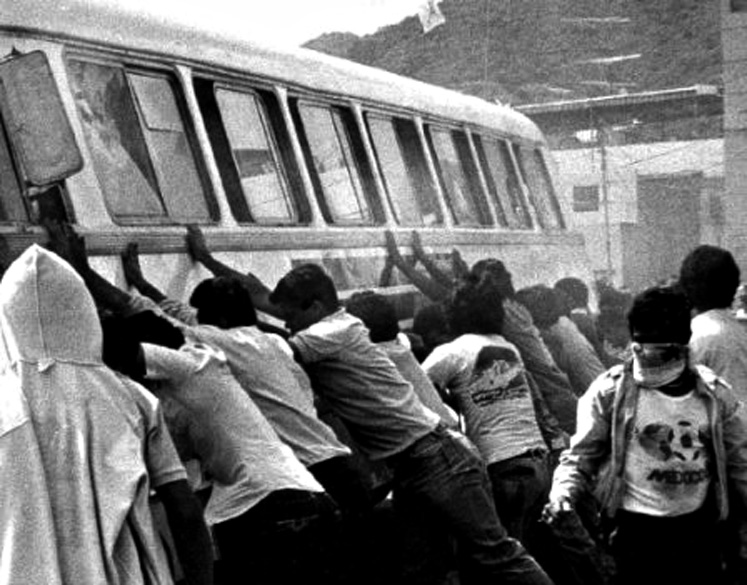
Rioters of the El Caracazo. Photo: Jheremycg (Own work, CC BY-SA 4.0).
Overthrow of Chavez in a coup
The two oligarchic political parties, who were wiped out in the elections, realised that they could not beat Chavez electorally. So they went to Uncle Sam and organised a coup in April 2002 and overthrew Chavez with the help of a few dissident elements from the army. The PDVSA employees went on a strike and crippled oil production, exports and even internal distribution. There was severe shortage of gasoline. Chavez was sent to jail in a remote island. But the oligarchs started fighting against each other for spoils and refused to give any share to the generals. So the generals freed Chavez and restored him as president after two days. As Ambassador of India to Venezuela, I saw the coup and its aftermath.
Chavez wanted to teach a lesson to those who were involved in and supported the coup. He sacked 15,000 employees of PDVSA and put the company under the control of Chavistas. He started destroying the business and industry of the oligarchs systematically. He imposed strict controls on foreign exchange and business licenses. He took over some factories and put the army in charge of distribution of essential supplies and some business. He let the army commanders and militant followers to make money through corruption. He brought democratic institutions, judiciary and the election tribunal under his control. Since the opposition parties had become insignificant, he assumed more powers and became authoritarian.
This is how the country became a Chavista dictatorship – one which mismanaged the economy. Inflation and devaluation of currency reached five digits. The GDP contracted for several years. This was the system inherited by Maduro when he was appointed as the successor after Chavez’s death in 2013. The system worsened under Maduro who could not control the others involved in corruption and mismanagement. He did not have the power or competency to arrest the deterioration.
The US, with its bounties and sanctions, became the obstacle for free and fair elections
The American sanctions starting from 2006 worsened the Venezuelan situation. The sanctions on oil exports, started and intensified since 2017, crippled the Venezuelan economy. Shortage of foreign exchange meant scarcity of essential items, more control, crime and corruption. This triggered economic emigration of several million Venezuelans.
Maduro and the Chavista party PSUV (United Socialist Party of Venezuela) would have definitely been voted out in the 2024 elections. The people were angry and frustrated with the misery of daily life. But Maduro was forced to rig the elections because of the fear of American bounties.
The US had imposed bounties of $ 50 million on the head of Maduro, $ 25 million on interior minister Cabello and $ 15 million on defence minister Lopez besides several more millions on others. This meant that if the pro-American opposition came to power, they would have sent all of the top Chavista leadership to American jails. So, the Chavista regime could not hold free and fair elections which would have been their death warrant. They had no option but to rig the elections to prevent the opposition from coming to power. Thus, the US became the obstacle for free and fair elections in Venezuela.
The political parties of Brazil, Chile, Argentina and Uruguay restored democracy in the 1980s by internal protests, guerrilla warfare and eventually negotiations with the military dictatorships who were supported by the US. The political leaders offered amnesty to the perpetrators of human rights crimes only after which the Generals agreed to hand over power. But Machado forgot this history of Latin America. She made a dangerous move when she openly sought US military intervention. She did not realise that it would come at a price. Trump says he will run the country. Thus, the US has again become the obstacle for restoration of democracy.
American serial wars
The success of ‘Operation Absolute Resolve’ has whetted the appetite of US for further adventures in Cuba, Colombia and Mexico.
The history of Latin America is filled with American invasions, occupations, military coups and destabilisations. It is like a Netflix serial. Location shootings and subtitles change, but the main plot through the episodes is the same – regime change to remove leftist governments and install pro-US regimes to promote American business and hegemony.
The wars are given different titles such as war on communism, war on drugs, war on terrorism and war on corruption. The last one was used to bring down the government of the Workers’ Party in Brazil and some leftist presidents in the region. In the current campaign to oust Maduro, the Americans started with the title ‘war on drugs’ but changed it to ‘war on terrorism’ and combined the two later to make a ‘war on narco-terrorism’ to get more bang for the buck. Venezuela and Maduro were not significant sources of drugs nor were they terrorist threats to the US.
War on drugs
The US has accused Maduro and his colleagues of involvement in drug trafficking to the US. This is a false accusation. Even according to American official sources, Venezuela accounts for an insignificant portion of drugs which go to the US.
Secondly, drug is not a supply-side problem. Drug is a demand- and consumer-driven multibillion-dollar US business. Out of every drug dollar, only 20 cents go outside the US to the producers and traffickers, while 80 cents remain within the US. Millions of Americans pay top dollars willingly and happily to get high on drugs from wherever they can get them. Some years ago, an American firm, Purdue Pharma, had aggressively marketed its opioid Oxycontin and made billion of dollars while thousands of Americans became addicts and ended up dead. The DEA did not wage a drug war against the company. The Justice Department did a deal with it and the company got away with some fines.
As long as American consumers continue to demand and pay for the drugs, the business will go on. The drug consumption in the US has not decreased after the killing of Pablo Escobar or the arrest of Chapo Guzman. Drugs are simply and clearly an American domestic issue. But the US has created a false and malicious narrative blaming other countries, and the film industry has propagated this falsehood through efforts like the Netflix serial Narcos.
There is a flip side to the drug issue. The Latin American cartels have been empowered by illegally supplied American guns. US is the main source of illegal guns to the cartels. Mexico has only two gun shops for the whole country. These are run by the Mexican military which has rigorous checking and control procedures. But there are nearly 10,000 American gun shops in the border with Mexico. About 200,000 American guns are supplied illegally to Mexico every year. These guns cause more Latin American deaths than the drugs in the US. While the drug is consumed by the user, the guns stay around for many years and kill a lot of people. The US refuse to recognise this issue and do not take any action to stop gun trafficking.
Simon Bolivar’s prophecy
Simon Bolivar, the Venezuelan independence hero and liberator of South America, wrote in a private letter dated August 5, 1829, addressed to British diplomat Patrick Campbell, “The United States appear to be destined by providence to plague Latin America with misery in the name of liberty”.
Venezuela is the latest example of misery caused by US in the name of liberty. The Donroe Doctrine will cause only more misery to the Latin Americans in future.
R. Viswanathan, a Latin America expert, was ambassador to Venezuela in 2000-2003.
This article went live on January twelfth, two thousand twenty six, at thirty-nine minutes past five in the evening.
No comments:
Post a Comment