FOSSIL FOOLS
Last Czech deep coal mine closes as centuries-old industry reaches final day
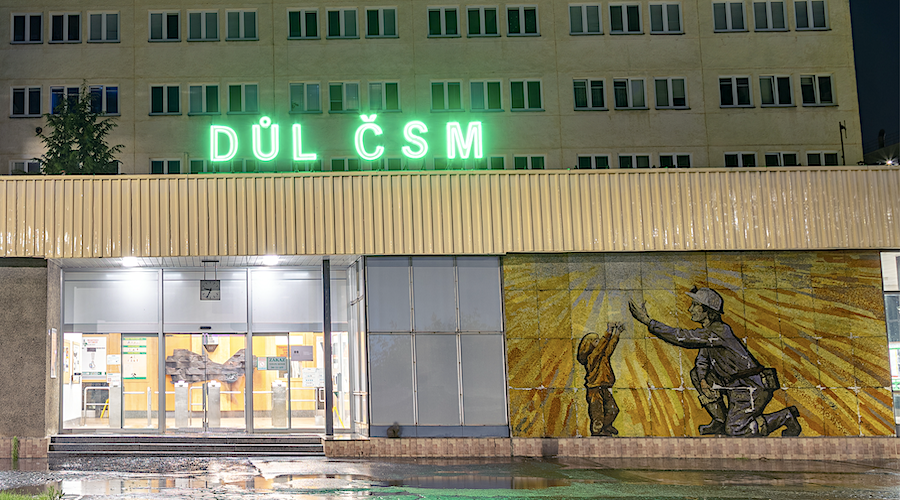
The last Czech black coal shaft will shut at the end of January, closing the door on more than 250 years of deep mining and bringing to an end an industry that powered the rise of heavy industry in Central Europe.

The final tons are being hauled this month from kilometre‑deep shafts at the CSM mine in Stonava, near the Polish border, as low coal prices and Europe’s industrial and environmental transition sap demand for what was once the region’s most prized resource.
State‑owned OKD had been preparing to shut down three years ago, until Russia’s full‑scale invasion of Ukraine in 2022 sent energy markets surging and bought the mine a short‑lived extension.
For the last time miners rattle into the dark on the underground railway, headlamps flickering across steel supports as machines drill into the coal face.
“It is sad that the shaft is ending, it is hard work but good work,” said Grzegorz Sobolewski, a Polish miner who is considering taking another job across the border in Poland, where shafts remain in operation.
“I will miss the work, I will miss the shearer,” referring to the cutting machine that slices coal from the face as it moves along the seam. Behind him, another miner shouted instructions over the roar of machinery – a sound soon to disappear from the basin.
OKD director Roman Sikora said the mine’s depth had become its weakness.
“Global coal prices are low, while our mining costs are ever greater with the ever greater depths we go to,” he said.
Industrial heartland faces post-coal future
Mining in the Ostrava region began in the late 18th century and turned a rural corner of the Habsburg empire into an industrial enclave.
Investors, including the Rothschild family, financed major industrial projects such as railways, steelworks and supporting infrastructure, helping draw tens of thousands of labourers into what became a powerhouse of heavy industry.
The industry got another boost after Communist nationalisation in 1948. In the 1980s, more than 100,000 miners worked the basin and OKD produced up to 25 million metric tons a year.
Much of that world collapsed after 1989 when communist‑era heavy industry unraveled, pits closed one by one and tens of thousands of miners lost their livelihoods.
When privatised OKD went bankrupt a decade ago, the state took it over to wind it down. By last October, OKD had mined just 1.1 million tons for the year and shrunk its workforce to 2,300, with another 1,550 to be let go in the coming months.
Workforce reshaped by decades of mine closures
Economist Jan Belardi of the Technical University of Ostrava said the 1990s and early 2000s were the hardest years, as the region grappled with mass redundancies and the slow arrival of new industries.
Today unemployment stands at 6.6% – still above the national average, but far from the levels of the post‑communist slump, bolstered by retraining schemes and foreign investors drawn to the area after the Czech Republic joined the EU in 2004.
“Being on the border with Poland and Slovakia, this region had a significant influx of foreign direct investment such as South Korea’s Hyundai,” he said.
Mining also leaves behind an environmental impact, including polluted lagoons or ground drops, and former mines’ surface installations.
The region is getting 19 billion crowns ($907.96 million) from the EU’s Just Transition fund for transformation of regions affected by the bloc’s decarbonisation policies, Belardi said.
In Poland, black coal mining still employs 70,000, and unions have won pledges to keep mining until 2049. In western Czech Republic, surface mining of lignite is expected to continue for several more years.
OKD itself is trying to shape a future above ground. The company aims to stay active in coal trading and develop new ventures including a battery park, a data centre and a small methane‑fuelled power plant using gas seeping from the old shafts.
“We have quite grand plans with OKD in the future,” Sikora said.
($1 = 20.9260 Czech crowns)
(By Radovan Stoklasa and Jan Lopatka; Editing by Louise Heavens)
US approves Warrior Met Coal’s mining plans in Alabama
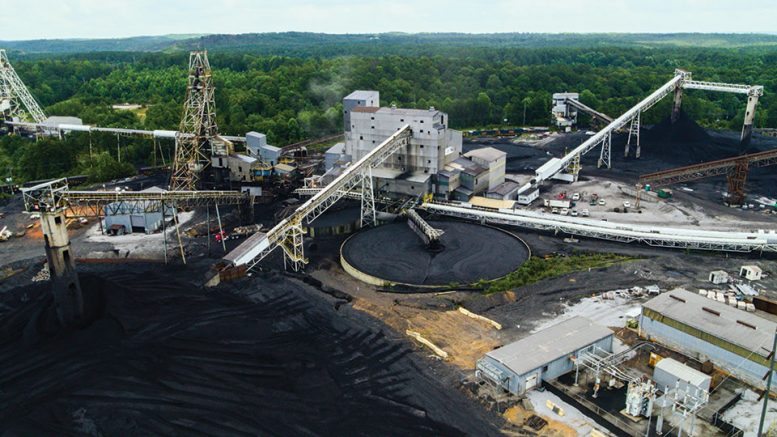
The Office of Surface Mining Reclamation and Enforcement (OSM), a branch of the US Department of the Interior, has announced the federal approval of Warrior Met Coal’s mining plan for two sites in Tuscaloosa county, Alabama.
Leasing of the federal coal tracts was approved after OSM reviewed an EIS (environmental impact statement) prepared by the Bureau of Land Management and determined that the company’s mining plan adequately addresses “potential adverse environmental effects” and satisfies its responsibilities under the National Environmental Policy Act.
The approval authorizes the recovery of more than 53 million tons of metallurgical coal — a designated critical material under the Energy Act of 2020. Met coal is used to produce coke, an essential fuel for producing high-grade steel used in a wide range of applications, including manufacturing, automotive and construction.
Last year, US President Donald Trump signed an executive order to revive the country’s shrinking coal industry, rolling back key restrictions despite the fuel’s major role in climate change and pollution.
Trump directed federal agencies to lift Obama-era limits on coal mining, leasing and exports. He instructed the Interior Department to locate coal deposits on federal lands, remove barriers to mining, and fast-track leasing processes.
The mining plans for Warrior Met Coal’s Mine No. 4 and Blue Creek Mine No. 1 were advanced under Executive Order 14241, Immediate Measures to Increase American Mineral Production, and Executive Order 14261, Reinvigorating America’s Beautiful Clean Coal Industry.
“Coal recovered from the approval of these mining plans will go to America’s allies for steelmaking,” OSM director Lanny E. Erdos said in a news release. “This will strengthen our national security by ensuring stable supply chains for critical defense materials and reduces reliance on rivals like China.”
At Mine No. 4, Warrior expects to extract about 16.9 million tons of met coal, extending the life of mine by seven years to 2046, while employing approximately 425 employees annually. At Blue Creek Mine No. 1, the company plans to extract about 36.3 million tons, extending the life of mine by 14 years to 2067, while employing approximately 500 employees annually.
Coal recovery from these mines is anticipated to generate more than $400 million in average annual economic output, the company said.

Heavy rainfall disrupts Australian metallurgical coal supplies
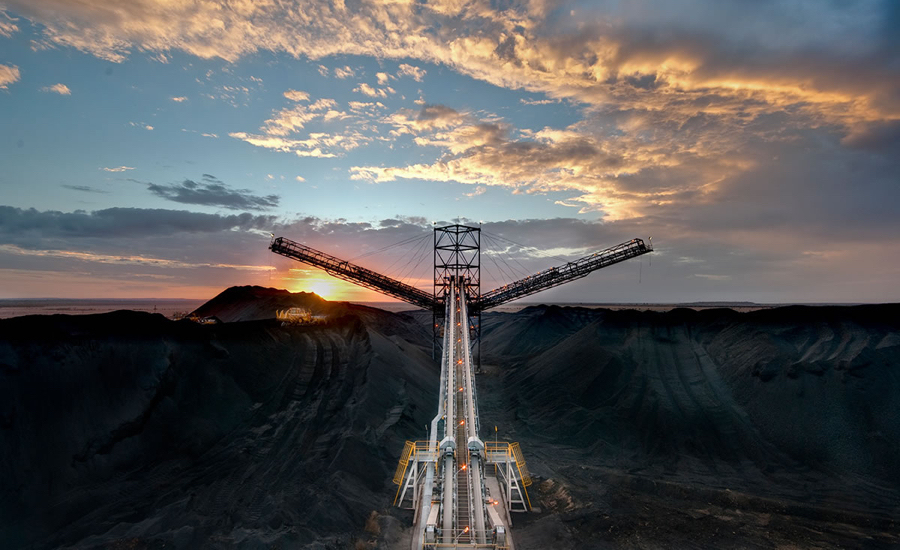
Heavy rainfall in northeast Australia has triggered floods that are hampering mine operations and disrupting supplies of metallurgical coal in the region.
Some coal miners have declared force majeure on portions of their shipments or warned customers of potential delays, according to traders, who asked not to be named as they are not authorized to speak to the media. The companies include Stanmore Resources Ltd., GM3 — a joint venture between Golden Energy and Resources and M Resources Ltd. — as well as Pembroke Resources Pty Ltd. and Fitzroy Coal Sales Pty Ltd.
Major miners such as Anglo American Plc and Glencore Plc have also been impacted but have not declared force majeure, the traders said. Argus Media reported that the road and rail disruptions had limited Glencore’s ability to supply copper concentrate for multiple days.
The disruptions follow an unusually wet start to summer in Queensland state, where some areas have seen rainfall close to their monthly precipitation averages weeks earlier than normal, due in part to Tropical Cyclone Koji.
Forecasters are warning that another weather system could form over the region from Monday, potentially compounding the impact on mining and transport operations.
Elsewhere in Australia, heavy rain is affecting parts of Victoria, with flash floods sweeping away cars on Great Ocean Road.
Stanmore, GM3, Pembroke, Fitzroy Coal, Anglo and Glencore did not immediately respond to requests for comment.
(By Paul-Alain Hunt and Katharine Gemmell)

No comments:
Post a Comment