
France must adopt a national strategy to combat masculinism – an organised ideology that promotes male supremacy and hostility to women – as it spreads online and poses a growing public security risk, the country’s gender equality watchdog has warned.
Masculinist ideas are spreading online, with a French report finding many men view feminism as a threat rather than a movement for equality.
Issued on: 22/01/2026 - RFI
In its annual report on sexism, the High Council for Gender Equality, an advisory body attached to the office of the prime minister, on Wednesday said France was falling worryingly behind in identifying and tackling masculinism.
The council said the phenomenon should be recognised as a public security issue, warning that hatred of women can lead to violence and even terrorism. It noted that countries such as Canada and the United Kingdom have already included the issue in their strategies against violent extremism.
Masculinism emerged in the 1980s as a reaction to feminism. The ideology promotes male supremacy and blames women for what its supporters see as a decline in men’s living conditions.
Senior French civil servant accused of mass drinks spiking to humiliate women
From ideology to violence
“This is a real threat. From the moment you develop a hatred of women, there can be violence and terrorist acts,” Bérangère Couillard, president of the council, told French news agency AFP.
The report cited several cases linked to misogynist violence, going back to 1989 when a self-declared anti-feminist shot dead 14 women at Montreal’s École Polytechnique in Canada.
In France, an 18-year-old was arrested last summer in Saint-Étienne on suspicion of planning knife attacks against women. He was charged by the national anti-terrorism prosecutor, marking the first case involving someone claiming allegiance solely to the masculinist “incel” movement.
The council described that judicial decision as “a major step forward”, and said it now supports integrating what it calls “misogynist terrorism” into security doctrines.
This would involve training intelligence agents to recognise the language, recruitment methods and narratives used within the so-called manosphere.
Growing 'masculinist' culture in France slows down fight against sexism
Online influence
“If masculinist language is not understood, it gets missed,” Couillard said. She cited the British series Adolescence as an example of why familiarity with these terms matters.
The Netflix series, released in March 2025, depicts the murder of a schoolgirl by a classmate and the influence of masculinist ideas on boys. In January, French Education Minister Elisabeth Borne announced that it will be shown in French schools.
The gender equality watchdog said such masculinist ideologies were spreading more widely in France and elsewhere, especially among young people through social media.
It called for stronger regulation and more resources for Pharos, the state platform for reporting illegal online content, and Arcom, the media regulator.
A 2024 study by Dublin City University found that young men are exposed to masculinist content within 23 minutes of browsing TikTok and YouTube, on average, regardless of whether they looked for this material.
France to show 'Adolescence' mini-series as part of school curriculum
Hostile vs. paternalistic sexism
The council's report is based on an online survey by polling company Toluna Harris Interactive of 3,061 people aged 15 and over, representative of the French population.
It found that 60 percent of men believe feminists are seeking to give women more power than men.
A quarter of men said it was normal for a woman to agree to sex to please a partner or out of duty. The same proportion said they had already doubted a partner’s consent.
From these findings, the council estimated that 17 percent of the French population adheres to “hostile” sexism, which devalues women and justifies discrimination and violence.
“The risk is that these people join and become members of masculinist networks,” said Couillard.
In addition, some 23 percent of those surveyed supported a more “paternalistic” form of sexism which promotes traditional gender roles, the council said. Often seen as benevolent by its proponents, it nonetheless contributes to inequality by confining women to stereotypical roles based on fragility or dependence.
The council's report is based on an online survey by polling company Toluna Harris Interactive of 3,061 people aged 15 and over, representative of the French population.
It found that 60 percent of men believe feminists are seeking to give women more power than men.
A quarter of men said it was normal for a woman to agree to sex to please a partner or out of duty. The same proportion said they had already doubted a partner’s consent.
From these findings, the council estimated that 17 percent of the French population adheres to “hostile” sexism, which devalues women and justifies discrimination and violence.
“The risk is that these people join and become members of masculinist networks,” said Couillard.
In addition, some 23 percent of those surveyed supported a more “paternalistic” form of sexism which promotes traditional gender roles, the council said. Often seen as benevolent by its proponents, it nonetheless contributes to inequality by confining women to stereotypical roles based on fragility or dependence.
French investigators expose failings in Dominique Pelicot mass rape case
France's General Inspectorate of Justice has exposed failings in an investigation into Dominique Pelicot, accusing authorities of not acting on DNA evidence against him for a dozen years. Pelicot's DNA was taken by police after he was first apprehended in 2010 in a suburban Paris shopping centre while filming up women's skirts .
Issued on: 19/01/2026
By: FRANCE 24
Yet the DNA match was not acted upon by the justice system for more than 12 years.
In October 2022, he was finally placed under formal investigation by a cold case unit in Nanterre, west of Paris, for the 1999 incident as well as a 1991 rape and murder of a woman in Paris.
Last year, Justice Minister Gérald Darmanin called on the IGJ to look into why the investigation did not happen sooner.
The IGJ report seen by AFP this week found that the court investigating the 1999 rape had no receipt of receiving the evidence, which was sent by regular mail.
Furthermore, the court at the time was undergoing a structural re-organisation and "loss of documents was sometimes observed", the report said.
READ MORE France enshrines consent in sexual violence law in wake of Pelicot case
The IGJ report highlighted "vulnerabilities" and general malfunction in the handling of genetic profiles, prompting a list of recommendations to secure the receipt of reports issued by France's National Automated DNA Database (FNAEG).
Contacted by AFP, Dominique Pelicot's lawyer, Beatrice Zavarro, said "the work of justice had been undermined".
She also acknowledged that the rape case involving his ex-wife "could have been avoided" had police intervened earlier.
"If we take it at face value, yes, this case could obviously have been avoided," she said.
Pelicot has admitted to his involvement in the 1999 case after he was identified by his DNA, but has denied involvement in the 1991 rape and murder case.
Last week, the Nanterre cold case unit launched a broader investigation into Pelicot's "criminal trajectories" to identify other possible crimes and victims.
(FRANCE 24 with AFP)
France's General Inspectorate of Justice has exposed failings in an investigation into Dominique Pelicot, accusing authorities of not acting on DNA evidence against him for a dozen years. Pelicot's DNA was taken by police after he was first apprehended in 2010 in a suburban Paris shopping centre while filming up women's skirts .
Issued on: 19/01/2026
By: FRANCE 24
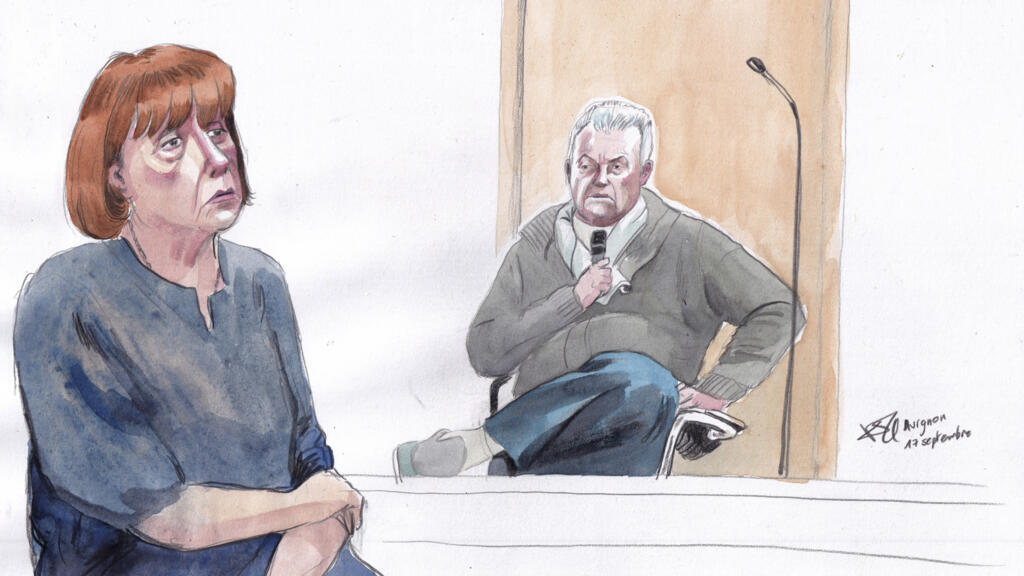
Courtroom sketch by Valentin Pasquier shows Gisele Pelicot, and her ex-husband Dominique Pelicot during his trial in Avignon, southern France, on September 17, 2024. © Valentin Pasquier, AP
France's General Inspectorate of Justice (IGJ) has exposed failings in an investigation into Dominique Pelicot, convicted in a high-profile rape case, for not acting on DNA evidence against him for a dozen years, in a report seen by AFP.
Pelicot was sentenced to 20 years in prison in December 2024 in a case that shocked the country, after admitting to repeatedly drugging his then-wife Gisele Pelicot and inviting dozens of men to rape her while she was unconscious between 2011 and 2020.
During the trial, it emerged that he had been first apprehended in 2010 in a suburban Paris shopping centre while filming up women's skirts, and had his DNA taken by police.
A few months later, he was connected with an attempted rape in the Seine-et-Marne area east of the capital on May 11, 1999.

France's General Inspectorate of Justice (IGJ) has exposed failings in an investigation into Dominique Pelicot, convicted in a high-profile rape case, for not acting on DNA evidence against him for a dozen years, in a report seen by AFP.
Pelicot was sentenced to 20 years in prison in December 2024 in a case that shocked the country, after admitting to repeatedly drugging his then-wife Gisele Pelicot and inviting dozens of men to rape her while she was unconscious between 2011 and 2020.
During the trial, it emerged that he had been first apprehended in 2010 in a suburban Paris shopping centre while filming up women's skirts, and had his DNA taken by police.
A few months later, he was connected with an attempted rape in the Seine-et-Marne area east of the capital on May 11, 1999.
French rape victim Gisele Pelicot arrives at court for appeal trial
AFP - CHRISTOPHE SIMON
01:51
01:51
Yet the DNA match was not acted upon by the justice system for more than 12 years.
In October 2022, he was finally placed under formal investigation by a cold case unit in Nanterre, west of Paris, for the 1999 incident as well as a 1991 rape and murder of a woman in Paris.
Last year, Justice Minister Gérald Darmanin called on the IGJ to look into why the investigation did not happen sooner.
The IGJ report seen by AFP this week found that the court investigating the 1999 rape had no receipt of receiving the evidence, which was sent by regular mail.
Furthermore, the court at the time was undergoing a structural re-organisation and "loss of documents was sometimes observed", the report said.
READ MORE France enshrines consent in sexual violence law in wake of Pelicot case
The IGJ report highlighted "vulnerabilities" and general malfunction in the handling of genetic profiles, prompting a list of recommendations to secure the receipt of reports issued by France's National Automated DNA Database (FNAEG).
Contacted by AFP, Dominique Pelicot's lawyer, Beatrice Zavarro, said "the work of justice had been undermined".
She also acknowledged that the rape case involving his ex-wife "could have been avoided" had police intervened earlier.
"If we take it at face value, yes, this case could obviously have been avoided," she said.
Pelicot has admitted to his involvement in the 1999 case after he was identified by his DNA, but has denied involvement in the 1991 rape and murder case.
Last week, the Nanterre cold case unit launched a broader investigation into Pelicot's "criminal trajectories" to identify other possible crimes and victims.
(FRANCE 24 with AFP)
No comments:
Post a Comment