It’s possible that I shall make an ass of myself. But in that case one can always get out of it with a little dialectic. I have, of course, so worded my proposition as to be right either way (K.Marx, Letter to F.Engels on the Indian Mutiny)
Wednesday, May 06, 2026
PLAGUE SHIP
Cruise Ship Hondius Underway After Three People Were Medically Evacuated
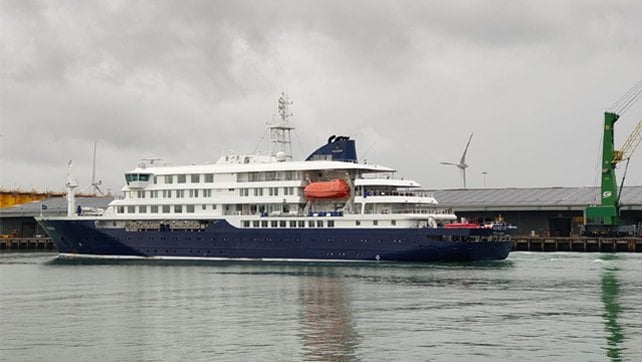
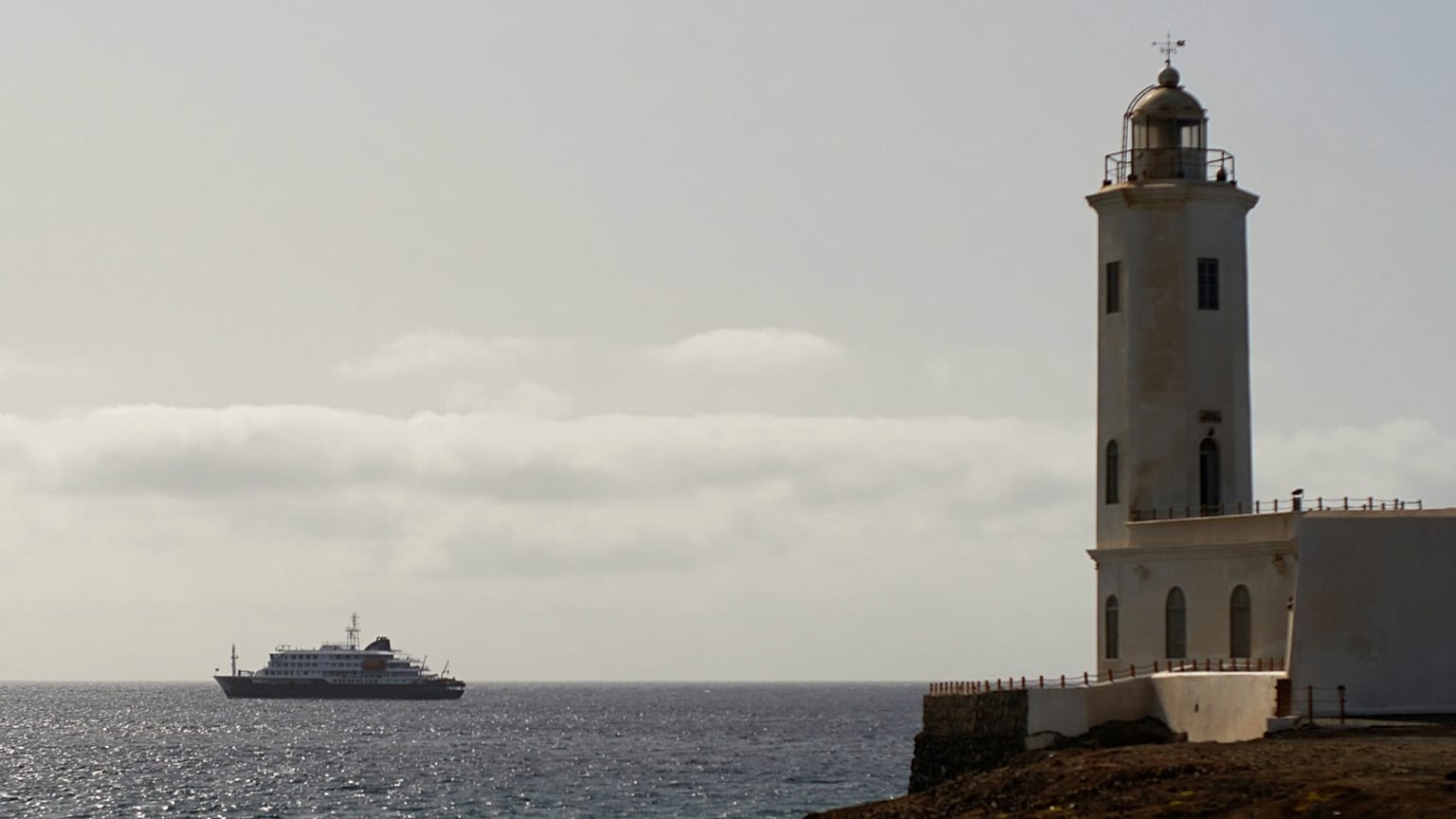
Hondius departed Cape Verde heading toward the Canary Islands (Piet Vink photo courtesy of Oceanwide Expeditions)
The expedition cruise ship Hondius, dealing with the outbreak of hantavirus, got back underway late on Wednesday, May 6, with its destination being reported as the Canary Islands. Earlier in the day, the World Health Organization, working with the RIVM (Dutch Institute for Public Health and Environment), effected the medical evacuation of two ill crewmembers and an asymptomatic passenger.
The ship’s movement to the Canary Islands is being closely tracked, with the operator, Oceanwide Expeditions, reporting that discussions were still underway regarding the arrival and procedures. A member of the local government in the Canary Islands told interviewers that they were not being consulted and questioned why the passengers could not have been repatriated from Cape Verde.
Spain’s Health Minister, Monica Garcia, however, told reporters that the decision had been made and the ship would proceed to Tenerife. The trip is expected to take approximately three days, and the ship will be placed in the industrial port of Granadilla at the southern end of Tenerife. The passengers will remain isolated and undergo additional medical screening with the intent to repatriate them to their respective countries.
RIVM sent two infectious disease physicians on the planes from the Netherlands to Cape Verde. The doctors boarded the cruise ship and are traveling with the ship to ensure that expanded medical care is available if needed.
The two crewmembers, one from the Netherlands and the other from the UK, were airlifted from Cape Verde on a specially equipped air ambulance. The plane, according to media reports, was denied entry into Moroccan airspace. The plan had been to refuel at Marrakesh, but instead the plane had to divert to Gran Canaria to refuel. Unconfirmed reports are that it has now arrived in Amsterdam.
One passenger, a German citizen, was also medically evacuated and flew on a separate flight to Düsseldorf, where she will enter a hospital. The woman was traveling with another passenger who died on May 2. Neither has been confirmed to have hantavirus, and she is reported to be asymptomatic.
The WHO reported that it has confirmed that the virus is the Andes variant, which has been known to be able to be transmitted between humans who are in close contact. Yesterday, the WHO said it suspected the virus came aboard the ship with a passenger who had likely been infected before boarding and then spread on the ship. They did not rule out that the passengers were infected during a port stop during the cruise, but they do not believe the source was on the ship.
Swiss authorities, however, also confirmed a third case of the virus associated with the Hondius. A passenger who was on the first leg of the cruise from Ushuaia, Argentina, to St. Helena has now tested positive for the virus at a hospital in Zurich. This person’s wife is also self-isolating as a precaution.
So far, the authorities have confirmed one case of hantavirus in a passenger who died on April 26, two days after disembarking the cruise ship. A second passenger was medically evacuated on April 27 to a hospital in Johannesburg and is in serious condition. They also have a confirmed case of the virus.
Oceanwide had reported there were 88 passengers, including the one deceased individual, when the ship reached Cape Verde. There were also 61 crewmembers aboard. The ship has been on the highest level of medical protocols, with passengers asked to stay in their cabins, and the ship was undergoing disinfection. The company stresses that no additional cases have been identified and that it has been in touch with everyone who was aboard the ship during this cruise.
'Unconscionable to keep them on cruise ship': WHO's Gostin on hantavirus outbreak
Issued on: 06/05/2026 - FRANCE24 Play (07:32 min) From the show
François Picard is pleased to welcome Lawrence Gostin, author and director of the WHO Center on Global Health Law. His analysis highlights the legal and ethical dilemmas surrounding a cruise ship carrying suspected hantavirus cases off the coast of Cape Verde. Drawing direct parallels with the traumatic memory of cruise ships stranded during the Covid-19 pandemic, Gostin argues that the international community has already learned, at enormous human cost, the dangers of confining passengers at sea without adequate medical care or disembarkation plans.
"You can't really confine people on a ship," argues Gostin, "especially if there's a transmissible virus on board, and keep them there without medical care, without quarantine facilities. That's unacceptable."
At the heart of his intervention lies a sharp critique of political hesitation in moments of public health uncertainty. Gostin calls it ultimately "unconscionable" to leave potentially infected passengers isolated without proper treatment or quarantine infrastructure.
While acknowledging Cape Verde's limited medical capacities, Gostin emphasises that international law places obligations on wealthier jurisdictions capable of responding, arguing that Spain would be required to let them in: "The Canary Islands, which is a Spanish jurisdiction, certainly has advanced medical care and should be able to provide the medical intensive services that these sick passengers need."
Gostin frames the crisis within a broader framework of global health governance, scientific uncertainty and the fragile lessons inherited from Covid-19. His remarks also expand into a broader critique of cruise ship public health standards, warning that modern maritime tourism remains deeply vulnerable to infectious disease outbreaks ranging from hantavirus to norovirus.
Asked whether he himself would ever take a cruise, Gostin replies with understated candour: "I wouldn't be afraid, but I wouldn't put myself to that kind of exposure."
Produced by François Picard, Ilayda Habip and Guillaume Gougeon
The Canary Islands reject the Spanish government's decision to transfer a cruise ship with a hantavirus outbreak to their territory, as health authorities coordinate a medical evacuation from Cabo Verde. South African authorities have detected the Andean variant, which is contagious between humans.
The president of the Canary Islands, Fernando Clavijo, rejected on Wednesday the Spanish government's decision to bring the cruise ship MV Hondius to the archipelago
The vessel, affected by a hantavirus outbreak on board, is currently anchored off Praia, the capital of Cabo Verde. The ship is expected to dock in Tenerife in three days.
"It is an improvisation by the Spanish government," Clavijo said in an interview on Spanish radio, in which he assured that there is insufficient information on the extent of the outbreak. "We have no medical report on how many patients are infected," he said.
The Canarian president has asked for an urgent meeting with the Spanish President Pedro Sánchez to ask him to reconsider the decision to bring the ship to the islands.
Sánchez has convened a meeting on the hantavirus crisis, which will be attended by the Minister of Interior, Fernando Grande-Marlaska, the Minister of Health, Mónica García, the Minister of Transport, Óscar Puente, and the Minister of Territorial Policy, Ángel Víctor Torres.
The World Health Organisation (WHO) has reported that 147 passengers and crew are on board the ship and that, for the moment, seven cases linked to the outbreak have been identified: two laboratory-confirmed and five suspected cases.
The toll includes three deaths, one patient in critical condition, and three people with mild symptoms. South African authorities have detected the Andean variant in several of those infected, a variant that is transmitted between humans.
The secretary general of the WHO, Tedros Adhanom Ghebreyesus, has stated that based on current information, the international organisation "assesses the risk to the general population is low".
Clavijo also questioned the Spanish government's decision, taken in coordination with the WHO and the European Union, to bring the ship to the Canary Islands.
"It is the Spanish government that decides to take it to the Canary Islands (...) Why can't they be treated in Praia?" said the regional president.
The WHO appealed to compliance with international law and the "humanitarian spirit" in asking Spain to take in the ship, and stressed that Cabo Verde does not have the necessary capacity to manage an operation of this magnitude. According to Pedro Sánchez's government, the transfer responds to humanitarian criteria.
The Ministry of Health has confirmed that Spain has also agreed to the urgent transfer of the ship's doctor, who is in a serious condition, on a medicalised plane to the Canary Islands.
The operation is part of the arrangements coordinated with the WHO and the European Centre for Disease Prevention and Control, which is assessing the epidemiological situation on the ship.
Clavijo has warned that the decision "does not convey peace of mind" to the Canary Islands population.
He also insisted that "the position of the Government of the Canary Islands" is to reject the operation as it has been proposed, considering that the necessary data to guarantee the health safety of the archipelago has not been provided.
The first hospitalised plane arrives in Cabo Verde
Cabo Verde has confirmed the arrival in the country of one of the two ambulance planes planned to evacuate three people affected by the outbreak detected on the cruise.
According to the country's Ministry of Health, "the sanitary evacuation of the three patients will be carried out in the next few hours, using two ambulance planes, in coordination with the competent national and international authorities".
The department specified that one of the aircraft is already in the country and that a second plane is expected to arrive, as well as a specialist doctor to assist the occupants of the ship.
The health authorities stressed that once the evacuation process is completed, the ship should resume its journey. The Ministry assured that the operation is being prepared "with maximum security and inter-institutional coordination", with the participation of all the entities involved, in order to guarantee its execution as soon as the necessary conditions are met.
What is the hantavirus?
Hantavirus refers to a group of viruses carried by rodents, primarily transmitted to humans through the inhalation of airborne particles from dried rodent droppings.
Contact with infected rodents or their urine, saliva, or droppings — especially when these materials are disturbed and become airborne — is the primary way it spreads.
The infection can lead to hantavirus pulmonary syndrome (HPS), characterised by headaches, dizziness, chills, fever, muscle pain and gastrointestinal problems, followed by the onset of respiratory distress and hypotension.
According to the WHO, symptoms of HPS typically appear two to four weeks after initial exposure to the virus.
However, symptoms may appear as early as one week and as late as eight weeks following exposure.
Hantavirus outbreak: Spain agrees to take in MV Hondius doctor in serious condition
Copyright Copyright 2026 The Associated Press. All rights reserved
The Spanish government accepted the urgent transfer to the Canary Islands of the doctor from the MV Hondius, in serious condition due to hantavirus, as part of the operation coordinated with the WHO and the EU to treat the ship, which is currently sailing in the waters off Cape Verde. The doctor will be transported in a "hospitalised aircraft".
The Spanish government has agreed to take in the doctor from the luxury cruise ship MV Hondius, who is in serious condition due to an outbreak of hantavirus detected on board, as part of the humanitarian operation activated for the ship in the Canary Islands.
The doctor will be transferred the same day in a medicalised plane, following a formal request from the Dutch government, according to the Ministry of Health.
"As part of the operation, the government has also accepted the request from the Dutch government to take in the doctor from the MV Hondius, who is in a serious condition, and who will be transported to the Canary Islands today in a hospitalised plane," the health ministry announced via the X platform.
The decision comes after the World Health Organisation (WHO), in coordination with the European Union, asked Spain to receive the ship in compliance with international law and the "humanitarian spirit". The Hondius, which departed from Argentina, is currently in the waters of Cape Verde, where it arrived after detecting several cases of hantavirus during its Atlantic crossing.
Health has stressed that Cape Verde does not have the necessary capacity to manage an operation of this magnitude and that the Canary Islands are the closest point with sufficient resources.
In parallel to the transfer of the doctor in serious condition, the European Centre for Disease Prevention and Control (ECDC) is carrying out a thorough assessment of the boat to determine which people should be evacuated urgently in Cape Verde itself and which will continue to the Canary Islands.
The WHO reports that 147 passengers and crew are on board the ship and that, so far, seven cases linked to the outbreak have been identified: two laboratory-confirmed and five suspected cases. The toll includes three deaths, one patient in critical condition, and three people with mild symptoms.
According to the international agency, the first symptoms appeared between 6 and 28 April and were characterised by fever and gastrointestinal disorders, with a rapid progression in some cases to pneumonia, acute respiratory distress syndrome, and shock.
Apart from those with symptoms, the remaining passengers and crew will be examined and treated according to a common protocol developed by the WHO and the ECDC, once the ship arrives in the archipelago in an estimated three to four days.
This procedure includes specific health and transport circuits, "avoiding all contact with the local population and guaranteeing the safety of health personnel at all times", according to an official statement from the Ministry of Health.
The government has stressed that it will provide timely information on the details of the protocol and its implementation. The operation also includes the subsequent repatriation of passengers and crew members to their countries of origin, including several Spanish citizens, once the medical and epidemiological evaluations have been completed.
Tracking of a hantavirus-contacted flight
The WHO is tracing more than 80 passengers following a case of hantavirus on a flightto Johannesburg that included a woman who subsequently died from hantavirus. The victim, a Dutch national, had previously been evacuated from the island of St Helena after developing symptoms.
The international health agency confirmed that the 69-year-old woman was flown on 25 April on a plane operated by Airlink, carrying 82 passengers and six crew members. She died the next day in hospital, her infection with the virus was confirmed days later.
How is hantavirus transmitted?
Hantavirus is a group of viruses carried by rodents and transmitted to humans mainly by inhalation of particles from dried droppings, urine, or saliva. The risk increases when these materials are stirred up and become airborne or by direct contact with infected animals.
Infection can lead to hantavirus pulmonary syndrome, which starts with symptoms such as fever, headache, muscle aches, dizziness, chills, and gastrointestinal disorders. In later stages, it can progress to severe respiratory distress and hypotension, making severe cases a medical emergency.
The incubation period is usually between two and four weeks after exposure, but can range from one week to eight weeks.
There is no specific treatment and the virus can occur in different variants, with the American variant being the most severe. Human-to-human transmission is very rare and, when it has been described, requires very close and prolonged contact.
Cruise Ship to Sail to Canary Islands After Medical Evacuation of Ill Crew
Hondius will sail toward the Canary Islands after the medical evacuation of the ill crewmembers (Pier Vink photo courtesy of Oceanwide Expeditions)
The situation with the expedition cruise ship Hondius continues to unfold as the World Health Organization (WHO) and multiple local authorities coordinate to address the ongoing viral outbreak aboard the ship. The latest reports indicate that no further cases have been identified, although a second case of hantavirus was confirmed, and after a medical evacuation, the ship will head toward the Canary Islands.
The situation began developing after the cruise ship departed Argentina on an extended repositioning cruise after a season in Antarctica. The cruise had been due to end this week at Cape Verde, but with a total of seven suspected cases of the virus, the authorities placed the ship in quarantine when it reached port. It remains anchored off Cape Verde, receiving support from the authorities on shore.
At this stage, the World Health Organization reports no new symptomatic individuals have been identified. One person had reported a mild fever at one point but is reported to be currently doing well. Two crewmembers, one Dutch and the other British, continue to experience acute respiratory symptoms. One is reported to be mild and the other severe, and two medical evacuation teams and planes are on route to Cape Verde to remove the two crewmembers and the traveling companion of a passenger who died on May 2.
The investigations are ongoing, while the WHO works with multiple authorities to implement the next phase of the plan. The ship’s operator, Oceanwide Expeditions, reports it is working to expedite the disembarkation of the 149 people aboard the ship so that they can receive medical screening.
The ship is currently operating at the highest level of its medical protocol, including isolation measures, hygiene protocols, and medical monitoring. WHO reports, as a precaution, passengers have been asked to remain in their cabins while disinfection and other public health measures are carried out.
“With the timing of the incubation period of hantavirus, which can be anywhere from one to six weeks, our assumption is that they were infected off the ship,” said WHO’s chief of Epidemic and Pandemic Preparedness and Prevention Dr Maria Van Kerkhove. “There could be some source of infection on the islands as well for some of the other suspect cases,” she said. “However, we do believe that there may be some human-to-human transmission that's happening among the really close contacts” such as the husband and wife and others who have shared cabins. They are also looking at a possible source, as the cruise stopped at several islands off the coast of Africa. Dr. Van Kerkhove pointed out that some of the ports “have a lot of rodents.” WHO also said there are no rodents aboard the cruise ship.
One passenger remains in a hospital in South Africa. WHO reports it was advised the patient is improving. Two passengers died in April, and a third aboard the ship on Saturday shortly before it reached Cape Verde.
WHO has been working with Spanish authorities, who have said they will welcome the ship and do a full epidemiological investigation.
Oceanwide reports after the three people are evacuated, the plan is to begin repositioning the cruise ship. It will proceed toward the Canary Islands, which will take three days. They are in discussions to dock either at Gran Canaria or Tenerife.
WHO points out that there are thousands of hantavirus infections each year. It believes the risk to the public from this outbreak is very low.
Three Have Died, Three Ill from Suspected Virus on Expedition Cruise Ship
Hondius remains offshore while authorities discuss the next steps (Piet Vink photo courtesy of Oceanwide)
International health authorities are supporting a rare outbreak believed to be hantavirus, which is associated with rodents. One case has been confirmed with a total of three people having died, one more is in a hospital, and two crewmembers remain ill aboard the expedition cruise ship Hondius.
The ship, which entered service in June 2019, is operated by a Dutch expedition company, Oceanwide Expeditions, and was on a repositioning cruise from Argentina to Cape Verde. The ship is 6,600 gross tons and 108 meters (354 feet). It made port stops in South Georgia and Saint Helena. Oceanwide reports that while it has a capacity for 170 passengers, there are 88 passengers on the cruise along with a total of 61 crewmembers. The company says on its website that the ship carries a doctor.
The World Health Organization has become involved and reports that one case of the deadly virus has been laboratory confirmed for the person who was evacuated and is now in a hospital in South Africa. The five additional cases are suspected and under investigation. It notes that hantavirus infections are typically linked to environmental exposure. While rare, the WHO hantavirus may spread between people and can lead to severe respiratory illness requiring careful patient monitoring, support, and response.
Medical reports state that the incubation period for the virus is typically one to eight weeks after exposure. Symptoms usually develop two to three weeks later. There is no known cure, and it can lead to severe respiratory distress and death.
The ship had departed Ushuaia in Argentina on March 20 for a cruise that was scheduled to end today, May 4, at Cape Verde. Oceanwide reports that the first passenger died aboard the cruise ship on April 11, with media reports saying it was a 70-year-old Dutch male. The cause of death could not be determined, and the body of the deceased and his wife disembarked at St. Helena on April 24. The wife, a 69-year-old Dutch citizen, also became ill after leaving the ship and was evacuated to South Africa, where she also died. The cause of their death has not yet been confirmed.
Three days later, on April 27, another passenger became seriously ill aboard the ship. This person, reported to be a 69-year-old British citizen, was evacuated to South Africa. They remain seriously ill in a hospital in Johannesburg, and they were confirmed to have contracted a variant of hantavirus.
Since then, another passenger died aboard the ship on May 2, shortly before reaching Cape Verde. Two crewmembers, one British and one Dutch, are also experiencing acute respiratory symptoms. One is reported to be mild, and the other severe.
The authorities in Cape Verde have visited the ship, and a request was made to medically evacuate the two ill crewmembers. The WHO reports it is facilitating the medical evacuation and conducting a full risk assessment. It is also supporting affected people onboard. The Dutch Ministry of Foreign Affairs has proposed to medically evacuate the two individuals and the other deceased passenger and transport them to the Netherlands.
Oceanwide also reports it is considering the option of sailing to Las Palmas or Tenerife. They said those destinations could be a gateway for disembarkation and further medical screening.
The cruise ship remains off the coast of Cape Verde. There are 149 people on board, representing 23 different nationalities.
Hantavirus ship evacuees to be taken to Netherlands but timeline unclear, cruise line says
The ship has been at the centre of an international health scare since Saturday after it was revealed that the rare disease was suspected of being behind the deaths of three of its passengers.
Two people who fell ill on a cruise ship hit by a hantavirus outbreak will be evacuated to the Netherlands, the vessel's Dutch operator said on Tuesday, without specifying when.
"The medical evacuation of two individuals currently requiring urgent medical care and the individual associated with the guest who passed away on 2 May, will occur using two specialised aircraft that are en route to Cape Verde," Oceanwide Expeditions said in a statement.
They would be taken to the Netherlands, it said, adding: "At this stage, we do not have an exact timeline."
Once the evacuated passengers are in transit to the Netherlands, the ship, the MV Hondius, will head for "the Canary Islands, either Gran Canaria or Tenerife, which will take three days of sailing."
The ship has been at the centre of an international health scare since Saturday after it was revealed that the rare disease, generally spread from infected rodents, typically through urine, droppings and saliva, was suspected of being behind the deaths of three of its passengers.
Health workers get off the Dutch-flagged MV Hondius off Cape Verde, 4 May, 2026 AP Photo
WHO operation
Meanwhile, the World Health Organisation said on Tuesday it was tracing people on a flight between the island of Saint Helena and Johannesburg, taken by one of the passengers who died on the MV Hondius.
A total of 82 passengers and six crew were on board the 25 April flight from the British island in the Atlantic Ocean, South African-based carrier Airlink told the AFP news agency.
They included a Dutch woman whose husband died of the virus on the ship and whose condition "deteriorated during a flight to Johannesburg," the WHO said in a statement.
She had left the ship in Saint Helena with "gastrointestinal symptoms" on 24 April, flew the next day and died upon arrival at the emergency department of a Johannesburg hospital on 26 April, the WHO said.
On 4 May, tests for hantavirus proved positive.
"Contact tracing for passengers on the flight has been initiated," the WHO said.
The WHO said it suspected that hantavirus may have spread between people on the cruise ship, which is anchored just off Cape Verde.
Besides the Dutch couple, a German passenger has also died. There are two confirmed and five suspected cases.
Saint Helena, home to around 4,400 people, said passengers from the MV Hondius had come ashore and some people on the remote South Atlantic island were being asked to isolate themselves.
A researcher and doctoral candidate prepares samples of inactivated material as part of hantavirus research in Albuquerque, 4 May, 2026 AP Photo
"Two passengers with minor symptoms came ashore and may have had some contact with members of our local community," the British overseas territory's government said in a statement.
"While the virus can be serious, no cases of this illness have been identified in St Helena and there is no significant cause for concern on the island at this time.”
The government said a full risk-based contact tracing process was under way to identify and notify such persons.
 Copyright Copyright 2026 The Associated Press. All rights reserved
 Copyright Copyright 2026 The Associated Press. All rights reserved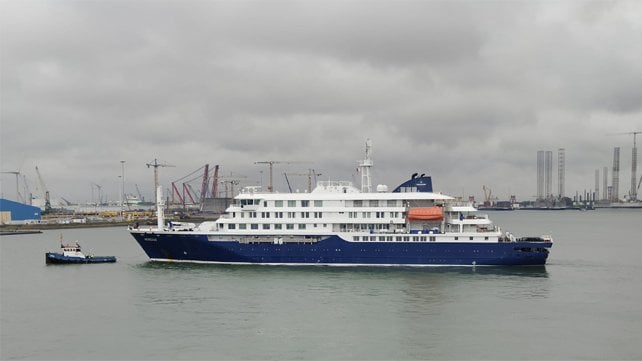
 Copyright AP Photo
 Health workers get off the Dutch-flagged MV Hondius off Cape Verde, 4 May, 2026 AP Photo
 A researcher and doctoral candidate prepares samples of inactivated material as part of hantavirus research in Albuquerque, 4 May, 2026 AP Photo
No comments:
Post a Comment