P3 PUBLIC PENSIONS FUND PRIVATIZATION
AustralianSuper says possible Glencore listing on ASX would be positive
 Stock image.
Pension fund AustralianSuper on Wednesday said if Glencore decides to list shares on the Australian Securities Exchange, it would be “positive” for both the bourse and the Swiss-based commodities trader and miner.

“If they were to list here we think it would be positive for Glencore and for the Australian stock exchange,” AustralianSuper portfolio manager Luke Smith said at the Australian Financial Review mining summit in Perth.\
The move would suit Glencore because “we believe the Australian share market is the best and most informed mining share market in the world,” Smith said, which would offer its shares a better chance to reflect the company’s worth. He added the fund had discussed the topic with Glencore and a listing on the ASX would offer more choice to investors such as itself.
Glencore has said it is open to considering a secondary listing in Australia.
Glencore and Rio Tinto earlier this year explored a possible merger that would have forged a $240 billion company, but Rio walked away saying it could not see sufficient cost advantages. There is speculation that Glencore is still interested in a tie-up.
Some mining CEOs like Glencore CEO Gary Nagle have argued that the industry needs to grow in size to become more relevant and influential – and to attract interest from a wider audience.
Smith said AustralianSuper was cautious about mining companies getting bigger because even if a large company emerged, “it’s still not going to be anywhere near the major tech companies.”
“We always approach cautiously, M&A, and if we can see it’s going to create value, we’ll be open-minded about it,” he said.
BlackRock portfolio manager Olivia Markham earlier said that she saw merit in “sensible” M&A as a way for miners to grow and attract generalist investors to fund large and complex projects.
“Australian Super has got a bit of a track record of sometimes saying yes and sometimes saying no, but it’s all about not looking just to this transaction and instant gratification of maybe a share price rise of 20% or 30%,” Smith said.
“We’re always looking for three to five years. What is the company’s … intrinsic worth in three to five years’ time? And is this appropriate price being paid today?”
(By Helen Clark; Editing by Christian Schmollinger and Thomas Derpinghaus)
Pension fund AustralianSuper on Wednesday said if Glencore decides to list shares on the Australian Securities Exchange, it would be “positive” for both the bourse and the Swiss-based commodities trader and miner.
“If they were to list here we think it would be positive for Glencore and for the Australian stock exchange,” AustralianSuper portfolio manager Luke Smith said at the Australian Financial Review mining summit in Perth.\
The move would suit Glencore because “we believe the Australian share market is the best and most informed mining share market in the world,” Smith said, which would offer its shares a better chance to reflect the company’s worth. He added the fund had discussed the topic with Glencore and a listing on the ASX would offer more choice to investors such as itself.
Glencore has said it is open to considering a secondary listing in Australia.
Glencore and Rio Tinto earlier this year explored a possible merger that would have forged a $240 billion company, but Rio walked away saying it could not see sufficient cost advantages. There is speculation that Glencore is still interested in a tie-up.
Some mining CEOs like Glencore CEO Gary Nagle have argued that the industry needs to grow in size to become more relevant and influential – and to attract interest from a wider audience.
Smith said AustralianSuper was cautious about mining companies getting bigger because even if a large company emerged, “it’s still not going to be anywhere near the major tech companies.”
“We always approach cautiously, M&A, and if we can see it’s going to create value, we’ll be open-minded about it,” he said.
BlackRock portfolio manager Olivia Markham earlier said that she saw merit in “sensible” M&A as a way for miners to grow and attract generalist investors to fund large and complex projects.
“Australian Super has got a bit of a track record of sometimes saying yes and sometimes saying no, but it’s all about not looking just to this transaction and instant gratification of maybe a share price rise of 20% or 30%,” Smith said.
“We’re always looking for three to five years. What is the company’s … intrinsic worth in three to five years’ time? And is this appropriate price being paid today?”
(By Helen Clark; Editing by Christian Schmollinger and Thomas Derpinghaus)
BlackRock sees merit in large-scale mining M&A
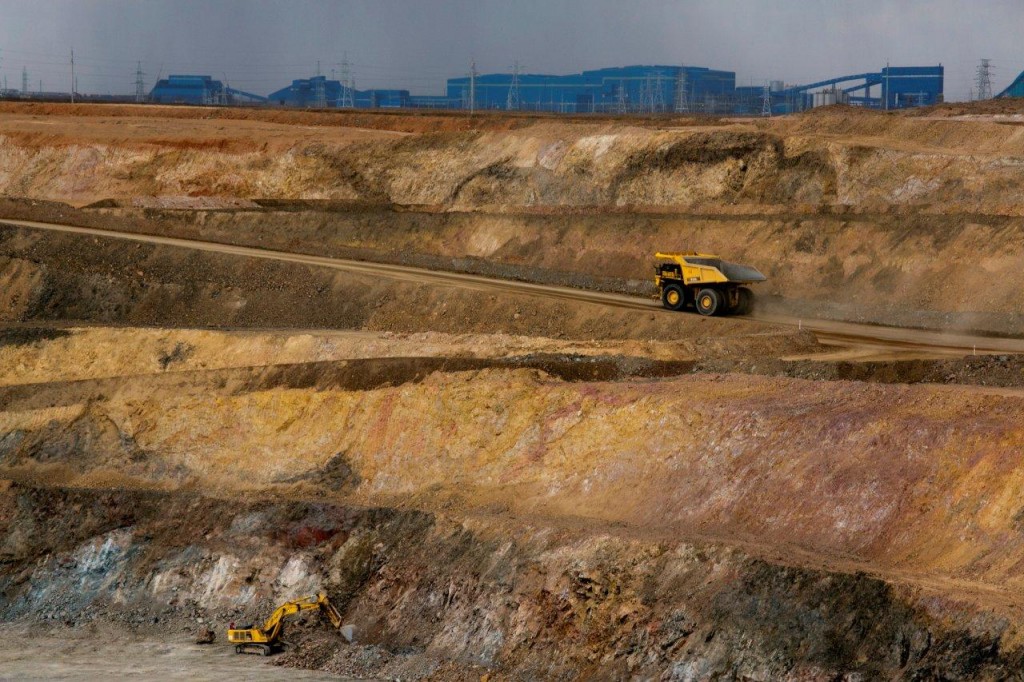 Credit: Rio Tinto
BlackRock would back consolidation among large miners because it would open the sector to generalist investors at a scale that would make it easier to bring on large and complex projects needed for new supply, a portfolio manager said on Wednesday.
The mining industry has an issue around scale, especially compared to other sectors such as technology, said Olivia Markham, speaking at the Australian Financial Review (AFR) conference in Perth.
“When you speak to a US generalist investor, they want large, liquid equities to invest in. Bigger companies have better access to capital, they typically trade at a better multiple, and I think within the context of the mining sector, bigger companies have also got the teams and the people to go and build all these complex projects,” she said.
“We’ve had a wave of M&A, but I see merit in more,” she said.
Among major miners, Glencore and Rio Tinto explored a possible merger earlier this year that would have forged a $240 billion company and tied together Glencore’s marketing business and copper assets with Rio Tinto’s operational expertise.
Rio Tinto walked away saying it could not see sufficient cost advantages for the deal. However, there is speculation that Glencore CEO Gary Nagle is still interested in in the Anglo-Australian miner and may look to reopen talks if the Swiss miner’s share price continues to outpace Rio’s.
BlackRock holds stakes in both miners, as well as top global miner BHP.
BlackRock would back consolidation among large miners because it would open the sector to generalist investors at a scale that would make it easier to bring on large and complex projects needed for new supply, a portfolio manager said on Wednesday.
The mining industry has an issue around scale, especially compared to other sectors such as technology, said Olivia Markham, speaking at the Australian Financial Review (AFR) conference in Perth.
“When you speak to a US generalist investor, they want large, liquid equities to invest in. Bigger companies have better access to capital, they typically trade at a better multiple, and I think within the context of the mining sector, bigger companies have also got the teams and the people to go and build all these complex projects,” she said.
“We’ve had a wave of M&A, but I see merit in more,” she said.
Among major miners, Glencore and Rio Tinto explored a possible merger earlier this year that would have forged a $240 billion company and tied together Glencore’s marketing business and copper assets with Rio Tinto’s operational expertise.
Rio Tinto walked away saying it could not see sufficient cost advantages for the deal. However, there is speculation that Glencore CEO Gary Nagle is still interested in in the Anglo-Australian miner and may look to reopen talks if the Swiss miner’s share price continues to outpace Rio’s.
BlackRock holds stakes in both miners, as well as top global miner BHP.
Demand accelerating
Major investments in supply are needed as commodity demand speeds up, underpinned by trends including electrification, AI and defence spending, Markham said.
“Commodity demand is simply accelerating, and the commodity intensity of GDP growth continues to go up, and when you look at every exciting theme that’s going on in the market… it all leads back to mining,” she said.
“At the same time, you’ve got a supply side that is massively underinvested, so there’s just no immediate supply response…. we’re going to have to keep having commodity prices move up to incentivize more and more supply to come on line,” she said.
Markham also said that the closure of the Strait of Hormuz was driving a push towards energy independence that would support alternative energy sources. “We are going to be thinking much more about uranium,” she added.
BlackRock’s exposure to Australia has declined across the past five years as it has looked to invest in jurisdictions that have greater copper exposure and as Australia becomes less cost competitive with other countries since Covid, she added.
(By Helen Clark and Melanie Burton; Editing by Stephen Coates and Lincoln Feast)
Major investments in supply are needed as commodity demand speeds up, underpinned by trends including electrification, AI and defence spending, Markham said.
“Commodity demand is simply accelerating, and the commodity intensity of GDP growth continues to go up, and when you look at every exciting theme that’s going on in the market… it all leads back to mining,” she said.
“At the same time, you’ve got a supply side that is massively underinvested, so there’s just no immediate supply response…. we’re going to have to keep having commodity prices move up to incentivize more and more supply to come on line,” she said.
Markham also said that the closure of the Strait of Hormuz was driving a push towards energy independence that would support alternative energy sources. “We are going to be thinking much more about uranium,” she added.
BlackRock’s exposure to Australia has declined across the past five years as it has looked to invest in jurisdictions that have greater copper exposure and as Australia becomes less cost competitive with other countries since Covid, she added.
(By Helen Clark and Melanie Burton; Editing by Stephen Coates and Lincoln Feast)
No comments:
Post a Comment