Omissions, Corrections, and Deceptions — Critics Blast the DNC’s Autopsy Report
The autopsy never once mentions the terms “Gaza” or “Palestinian,” a top issue for many voters in 2024.
By Chris Walker , May 22, 2026
 DNC Chair Ken Martin phone banks at the Women's March Foundation Office on October 23, 2025 in Los Angeles, California.Juliana Yamada / Los Angeles Times via Getty Images
Along-anticipated “autopsy” report from the Democratic National Committee (DNC) was released to the public on Thursday, containing multiple errors and omissions on subjects that may have cost Democrats the White House in 2024.
The DNC — which commissioned the report that was authored by Democratic consultant Paul Rivera — sought to distance itself from its own document. The report features multiple “red boxes” throughout, containing notes from the party objecting to the conclusions on why the Democratic Party failed to defeat President Donald Trump in the 2024 election.
“Disclaimer: This document reflects the views of the author, not the DNC,” reads a message from the party that appears at the top of every page of the report. “The DNC was not provided with the underlying sourcing, interviews, or supporting data for many of the assertions contained herein and therefore cannot independently verify the claims presented.”
The 192-page document lacks multiple sections one might expect from an autopsy report of this kind, including an executive message at its beginning or a conclusion at its end. The autopsy contains many spelling and data errors, observers also noted.
Throughout the document, the red boxes feature complaints about a lack of sourcing. However, near the end of the report, the document states that there are hyperlinks throughout that serve as those sources, suggesting that it’s possible the original copy included those sources. A bibliography that is accessible from a hyperlink is also mentioned in the report.

DNC “Autopsy” Finds Kamala Harris’s Silence on Gaza Genocide Cost Her Votes
The refusal to condemn Israel’s genocide of Palestinians resulted in a “net-negative” of voters’ support, sources said. By Chris Walker , Truthout February 23, 2026
The autopsy largely faults Democrats for not campaigning as Republicans do, and says Kamala Harris’s presidential campaign failed to connect with male voters.
According to the report:
At times, it seems Democrats are trying to win arguments while Republicans are focused on winning elections. Democrats operate in an ecosystem defined by reason even in cycles when the electorate is defined by rage. This highlights a fundamental and necessary truth – a brutal and efficiently delivered message will frame the choice for voters and help actually win the election.
“The gender gap can be narrowed. Deploy male messengers, address economic concerns, and don’t assume identity politics will hold male voters of color,” the report states.
But the autopsy also has noticeable issues:It makes no mention of the decision by the Harris campaign to include right-wing voices, including former Republican congresswoman Liz Cheney, during the final stretch of the race — a move that, along with other conservative-leaning policy decisions, may have caused some progressive voters to reconsider backing the Democratic candidate;
It pushes the false narrative that Americans are against a transition to “green” energy programs, or that progressive-backed social issues caused a “distraction” to voters on the Democrats’ economic messaging;
And, the report makes zero mention of Democratic candidates’ support for funding Israel’s genocide of Palestinians in Gaza. Indeed, the search terms “Palestine,” “Gaza,” or “Israel” never even show up once in the document.
Indeed, in polling after the election, a subset of voters who backed former President Joe Biden in 2020 were asked why they didn’t back Harris in 2024. Three in 10 of those voters, 29 percent, said “ending Israel’s violence in Gaza” was their top issue in that year’s race. That topic even beat out “the economy” as the main issue for voters in that group.
Although he didn’t make specific mention of the issues outlined above, DNC Chair Ken Martin tried to disavow the autopsy, issuing a statement apologizing for its inadequacies.
“I am not proud of this product; it does not meet my standards, and it won’t meet your standards,” Martin said in a statement about the autopsy. “I don’t endorse what’s in this report, or what’s left out of it. I could not in good faith put the DNC’s stamp of approval on it.”
After the disastrous outcome for Democrats in the 2024 races, Martin had run for the chair position, and won, on a platform of conducting and releasing an autopsy report regarding what went wrong for the party. He later reneged on that promise, stating that the party wouldn’t, in fact, make the autopsy report public.
Thursday’s decision to release it after all was a reversal of his reversal — a decision he made in an effort to be transparent, Martin explained.
“I didn’t want to create a distraction. Ironically, in doing so, I ended up creating an even bigger distraction. And for that, I sincerely apologize,” Martin said.
Criticism of the report was widespread among progressive and Democratic circles.
“Martin and the DNC are trying to wash their hands of the report and its contents. In a hasty, almost amateurish markup, the DNC has gone out of its way to poke holes in the legitimacy of the very report it commissioned,” read a message from RootsAction, which had published its own report late last year (in the absence of the promised one from the DNC).
The progressive organization added:
Martin recruited the author to write the report. He presumably provided the author with resources and access to party officials and functionaries. The DNC has a responsibility to turn in a report that truly grapples with the mistakes of the past so that the Democratic Party can learn from those mistakes and emerge stronger in its fight against Trumpism. The DNC has utterly failed in that respect.
Patrick Gaspard, senior fellow at the Center for American Progress who formerly served as the organization’s president, claimed Martin wasn’t the sole person responsible for the report’s shortcomings.
“I will say this isn’t the failing of one guy behind the curtain who isn’t really Oz,” Gaspard said.
However, “the need to be transparent and accountable about blowing 2024 was never a Dem leadership priority,” Gaspard also suggested. “And it shows.”
David Hogg, a former DNC co-vice chair and current president of Leaders We Deserve, was more pointed in his criticism of the report. “Ken Martin should resign,” he said in a post on X.
Remarking on the report’s missing information, the Institute for Middle East Understanding (IMEU) noted that, earlier this year, members of its organization were given more details about the autopsy’s findings from its author. During those proceedings, IMEU was told the research concluded that Gaza played a major role in why people didn’t back Harris in 2024, describing it as a “net-negative” issue for her.
On Thursday, following the release of the DNC autopsy, IMEU Policy Project Executive Director Margaret DeReus demanded that Martin be more transparent about the effect the issue had on the presidential election outcome.
“Ken Martin should release the information that the author of the autopsy told us clearly and unambiguously, which is that DNC officials’ review of their own data found Biden’s support for Israel to be a net-negative for Democrats in 2024,” DeReus said.
By Chris Walker ,
Along-anticipated “autopsy” report from the Democratic National Committee (DNC) was released to the public on Thursday, containing multiple errors and omissions on subjects that may have cost Democrats the White House in 2024.
The DNC — which commissioned the report that was authored by Democratic consultant Paul Rivera — sought to distance itself from its own document. The report features multiple “red boxes” throughout, containing notes from the party objecting to the conclusions on why the Democratic Party failed to defeat President Donald Trump in the 2024 election.
“Disclaimer: This document reflects the views of the author, not the DNC,” reads a message from the party that appears at the top of every page of the report. “The DNC was not provided with the underlying sourcing, interviews, or supporting data for many of the assertions contained herein and therefore cannot independently verify the claims presented.”
The 192-page document lacks multiple sections one might expect from an autopsy report of this kind, including an executive message at its beginning or a conclusion at its end. The autopsy contains many spelling and data errors, observers also noted.
Throughout the document, the red boxes feature complaints about a lack of sourcing. However, near the end of the report, the document states that there are hyperlinks throughout that serve as those sources, suggesting that it’s possible the original copy included those sources. A bibliography that is accessible from a hyperlink is also mentioned in the report.
DNC “Autopsy” Finds Kamala Harris’s Silence on Gaza Genocide Cost Her Votes
The refusal to condemn Israel’s genocide of Palestinians resulted in a “net-negative” of voters’ support, sources said. By Chris Walker , Truthout February 23, 2026
The autopsy largely faults Democrats for not campaigning as Republicans do, and says Kamala Harris’s presidential campaign failed to connect with male voters.
According to the report:
At times, it seems Democrats are trying to win arguments while Republicans are focused on winning elections. Democrats operate in an ecosystem defined by reason even in cycles when the electorate is defined by rage. This highlights a fundamental and necessary truth – a brutal and efficiently delivered message will frame the choice for voters and help actually win the election.
“The gender gap can be narrowed. Deploy male messengers, address economic concerns, and don’t assume identity politics will hold male voters of color,” the report states.
But the autopsy also has noticeable issues:It makes no mention of the decision by the Harris campaign to include right-wing voices, including former Republican congresswoman Liz Cheney, during the final stretch of the race — a move that, along with other conservative-leaning policy decisions, may have caused some progressive voters to reconsider backing the Democratic candidate;
It pushes the false narrative that Americans are against a transition to “green” energy programs, or that progressive-backed social issues caused a “distraction” to voters on the Democrats’ economic messaging;
And, the report makes zero mention of Democratic candidates’ support for funding Israel’s genocide of Palestinians in Gaza. Indeed, the search terms “Palestine,” “Gaza,” or “Israel” never even show up once in the document.
Indeed, in polling after the election, a subset of voters who backed former President Joe Biden in 2020 were asked why they didn’t back Harris in 2024. Three in 10 of those voters, 29 percent, said “ending Israel’s violence in Gaza” was their top issue in that year’s race. That topic even beat out “the economy” as the main issue for voters in that group.
Although he didn’t make specific mention of the issues outlined above, DNC Chair Ken Martin tried to disavow the autopsy, issuing a statement apologizing for its inadequacies.
“I am not proud of this product; it does not meet my standards, and it won’t meet your standards,” Martin said in a statement about the autopsy. “I don’t endorse what’s in this report, or what’s left out of it. I could not in good faith put the DNC’s stamp of approval on it.”
After the disastrous outcome for Democrats in the 2024 races, Martin had run for the chair position, and won, on a platform of conducting and releasing an autopsy report regarding what went wrong for the party. He later reneged on that promise, stating that the party wouldn’t, in fact, make the autopsy report public.
Thursday’s decision to release it after all was a reversal of his reversal — a decision he made in an effort to be transparent, Martin explained.
“I didn’t want to create a distraction. Ironically, in doing so, I ended up creating an even bigger distraction. And for that, I sincerely apologize,” Martin said.
Criticism of the report was widespread among progressive and Democratic circles.
“Martin and the DNC are trying to wash their hands of the report and its contents. In a hasty, almost amateurish markup, the DNC has gone out of its way to poke holes in the legitimacy of the very report it commissioned,” read a message from RootsAction, which had published its own report late last year (in the absence of the promised one from the DNC).
The progressive organization added:
Martin recruited the author to write the report. He presumably provided the author with resources and access to party officials and functionaries. The DNC has a responsibility to turn in a report that truly grapples with the mistakes of the past so that the Democratic Party can learn from those mistakes and emerge stronger in its fight against Trumpism. The DNC has utterly failed in that respect.
Patrick Gaspard, senior fellow at the Center for American Progress who formerly served as the organization’s president, claimed Martin wasn’t the sole person responsible for the report’s shortcomings.
“I will say this isn’t the failing of one guy behind the curtain who isn’t really Oz,” Gaspard said.
However, “the need to be transparent and accountable about blowing 2024 was never a Dem leadership priority,” Gaspard also suggested. “And it shows.”
David Hogg, a former DNC co-vice chair and current president of Leaders We Deserve, was more pointed in his criticism of the report. “Ken Martin should resign,” he said in a post on X.
Remarking on the report’s missing information, the Institute for Middle East Understanding (IMEU) noted that, earlier this year, members of its organization were given more details about the autopsy’s findings from its author. During those proceedings, IMEU was told the research concluded that Gaza played a major role in why people didn’t back Harris in 2024, describing it as a “net-negative” issue for her.
On Thursday, following the release of the DNC autopsy, IMEU Policy Project Executive Director Margaret DeReus demanded that Martin be more transparent about the effect the issue had on the presidential election outcome.
“Ken Martin should release the information that the author of the autopsy told us clearly and unambiguously, which is that DNC officials’ review of their own data found Biden’s support for Israel to be a net-negative for Democrats in 2024,” DeReus said.
‘Not Up to the Task’: Calls Mount for Ken Martin to Resign Over 2024 DNC Autopsy Debacle
“The DNC should select a new leader who demonstrates competence, creativity, moral clarity, and a relentless commitment to actually changing the broken Democratic Party brand.”
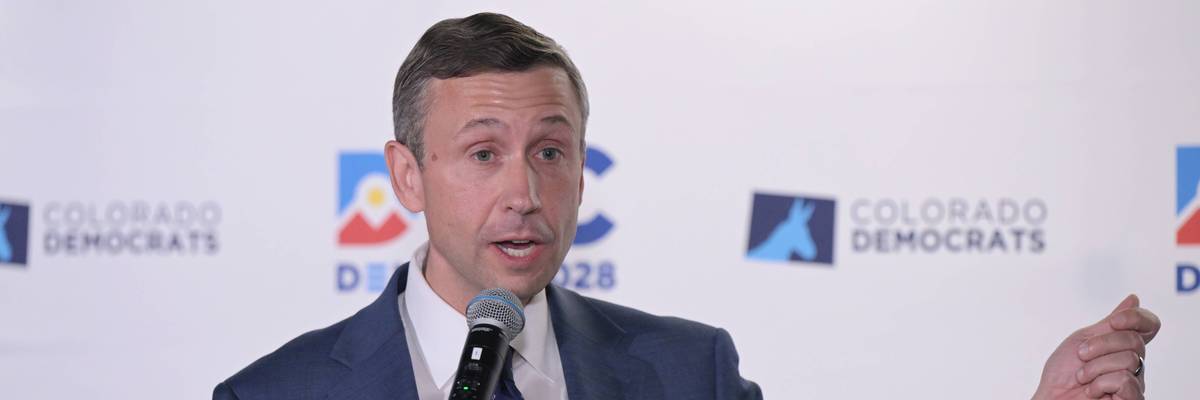
Democratic National Committee Chair Ken Martin makes a speech during the press conference for the DNC site visit at Ball Arena in Denver, Colorado, on May 6, 2026.
(Photo by Hyoung Chang/The Denver Post)
Stephen Prager
May 22, 2026
COMMON DREAMS
The disastrous release of the Democratic National Committee’s 2024 election “autopsy” report on Thursday has brought about a reckoning for the committee’s chair, Ken Martin, who is facing calls to resign from legislators and other influential figures in the party.
The 192-page report, written by strategist Paul Rivera in the wake of former Vice President Kamala Harris’ loss to President Donald Trump, was panned as amateurish and incomplete, even more than 18 months after the election. Rivera was reportedly fired on Friday.
Aside from being filled with glaring spelling and factual errors and containing several unfinished sections and self-contradicting annotations, it neglected key issues widely believed to have contributed to the Democratic nominee’s defeat: Most acutely, her continued backing of Israel as it perpetrated a genocide in Gaza, her inability to address working- and middle-class voters’ concerns about affordability, and the shambolic attempt by former President Joe Biden to run for a second term despite his old age and his earlier indications he would serve for only four years.
Many Democrats now see it as a damning indictment of Martin, who was elected as DNC chair last year in part on promises to conduct a thorough and transparent review of the party’s defeat. Not helping was his sudden pivot in late 2025 to attempt to bury the report he once championed, only releasing it this week after it leaked to CNN despite mounting pressure from party members.
On Friday morning, Axios quoted an ideological mix of Democratic legislators describing the report’s release as the final straw for Martin.
“He should resign,” Rep. Seth Moulton (D-Mass.) told Axios, citing “his lack of leadership” and saying it is “utterly nuts it took us this long to release the autopsy.”
In a radio interview Thursday, Rep. Mark Pocan (D-Wis.) said in response to a caller who argued Martin should be replaced: “I agree... Having what we have right now is not doing it.”
Rep. Marc Veasey (D-Texas) told Semafor that “there doesn’t seem to be a plan to turn things around and the clock is ticking... I believe it’s time for him to move on.”
Despite a push by Martin’s allies to arm state party chairs with talking points expressing that they are “fully confident in his leadership,” NOTUS reported that inside private DNC group chats and one-on-one conversations, dissension is brewing, and there is even talk of forcing a vote of no confidence to oust the chairman.
“People feel gaslit” by Martin’s flip-flopping, one unnamed DNC member told the outlet. “You kept telling people it was coming, then when you didn’t release it, you didn’t even tell everyone the real reason why.”
“While I don’t believe that there are enough votes to pass a vote of no confidence yet, I think there’s more of a permission structure now to have a more open conversation about it,” said another member who NOTUS described as an ally of Martin’s. “If they think this is going to make things go away, no, this is only going to ramp up now.”
That’s the hope of many in the party’s grassroots, who said the entire saga demonstrated Martin’s unfitness for a role with major responsibilities as Democrats head into existentially important elections in 2026 and 2028.
Dan Pfeiffer—a former Obama administration staffer whose Pod Save America podcast cohosts held Martin’s feet to the fire as he fought to keep the autopsy hidden—called the release “a disaster of his own making.”
“He didn’t pick a qualified person to run the autopsy. The fact that he was apparently shocked by the work product shows there was no oversight of the process,” Pfeiffer said on social media. “Once he saw that the report was poorly done, he just decided to start lying to everyone about why it wasn’t being released.”
“In ‘28, the DNC will set the primary calendar, decide how delegates are awarded, sponsor the debates, and put on the convention,” he said. “If no one trusts the DNC, it will be harder to unite the party around the eventual nominee.”
Amanda Litman, the president of Run For Something, a group that recruits progressive candidates for office, said in a video posted to social media Thursday that putting together a report composed of “pure gibberish,” without access to any of the underlying interviews or materials that buoyed its conclusions, called into question the DNC’s ability to be “a fair, competent... conductor of the Democratic presidential primary.”
“Ken Martin is not up to the task of being DNC chair—the most important part of which is preparing to run the presidential primary process with trust and competency—and should resign,” she added on Friday.
David Hogg, who served as the DNC vice chair in 2025 before being pushed out by Martin over his efforts to support primary challengers against some entrenched party elders, said the autopsy saga was a “demoralizing joke” for the party.
In a release from his political action committee, Leaders We Deserve, Hogg said, “Martin should resign, and the DNC should select a new leader who demonstrates competence, creativity, moral clarity, and a relentless commitment to actually changing the broken Democratic Party brand.”
Stephen Prager
May 22, 2026
COMMON DREAMS
The disastrous release of the Democratic National Committee’s 2024 election “autopsy” report on Thursday has brought about a reckoning for the committee’s chair, Ken Martin, who is facing calls to resign from legislators and other influential figures in the party.
The 192-page report, written by strategist Paul Rivera in the wake of former Vice President Kamala Harris’ loss to President Donald Trump, was panned as amateurish and incomplete, even more than 18 months after the election. Rivera was reportedly fired on Friday.
Aside from being filled with glaring spelling and factual errors and containing several unfinished sections and self-contradicting annotations, it neglected key issues widely believed to have contributed to the Democratic nominee’s defeat: Most acutely, her continued backing of Israel as it perpetrated a genocide in Gaza, her inability to address working- and middle-class voters’ concerns about affordability, and the shambolic attempt by former President Joe Biden to run for a second term despite his old age and his earlier indications he would serve for only four years.
Many Democrats now see it as a damning indictment of Martin, who was elected as DNC chair last year in part on promises to conduct a thorough and transparent review of the party’s defeat. Not helping was his sudden pivot in late 2025 to attempt to bury the report he once championed, only releasing it this week after it leaked to CNN despite mounting pressure from party members.
On Friday morning, Axios quoted an ideological mix of Democratic legislators describing the report’s release as the final straw for Martin.
“He should resign,” Rep. Seth Moulton (D-Mass.) told Axios, citing “his lack of leadership” and saying it is “utterly nuts it took us this long to release the autopsy.”
In a radio interview Thursday, Rep. Mark Pocan (D-Wis.) said in response to a caller who argued Martin should be replaced: “I agree... Having what we have right now is not doing it.”
Rep. Marc Veasey (D-Texas) told Semafor that “there doesn’t seem to be a plan to turn things around and the clock is ticking... I believe it’s time for him to move on.”
Despite a push by Martin’s allies to arm state party chairs with talking points expressing that they are “fully confident in his leadership,” NOTUS reported that inside private DNC group chats and one-on-one conversations, dissension is brewing, and there is even talk of forcing a vote of no confidence to oust the chairman.
“People feel gaslit” by Martin’s flip-flopping, one unnamed DNC member told the outlet. “You kept telling people it was coming, then when you didn’t release it, you didn’t even tell everyone the real reason why.”
“While I don’t believe that there are enough votes to pass a vote of no confidence yet, I think there’s more of a permission structure now to have a more open conversation about it,” said another member who NOTUS described as an ally of Martin’s. “If they think this is going to make things go away, no, this is only going to ramp up now.”
That’s the hope of many in the party’s grassroots, who said the entire saga demonstrated Martin’s unfitness for a role with major responsibilities as Democrats head into existentially important elections in 2026 and 2028.
Dan Pfeiffer—a former Obama administration staffer whose Pod Save America podcast cohosts held Martin’s feet to the fire as he fought to keep the autopsy hidden—called the release “a disaster of his own making.”
“He didn’t pick a qualified person to run the autopsy. The fact that he was apparently shocked by the work product shows there was no oversight of the process,” Pfeiffer said on social media. “Once he saw that the report was poorly done, he just decided to start lying to everyone about why it wasn’t being released.”
“In ‘28, the DNC will set the primary calendar, decide how delegates are awarded, sponsor the debates, and put on the convention,” he said. “If no one trusts the DNC, it will be harder to unite the party around the eventual nominee.”
Amanda Litman, the president of Run For Something, a group that recruits progressive candidates for office, said in a video posted to social media Thursday that putting together a report composed of “pure gibberish,” without access to any of the underlying interviews or materials that buoyed its conclusions, called into question the DNC’s ability to be “a fair, competent... conductor of the Democratic presidential primary.”
“Ken Martin is not up to the task of being DNC chair—the most important part of which is preparing to run the presidential primary process with trust and competency—and should resign,” she added on Friday.
David Hogg, who served as the DNC vice chair in 2025 before being pushed out by Martin over his efforts to support primary challengers against some entrenched party elders, said the autopsy saga was a “demoralizing joke” for the party.
In a release from his political action committee, Leaders We Deserve, Hogg said, “Martin should resign, and the DNC should select a new leader who demonstrates competence, creativity, moral clarity, and a relentless commitment to actually changing the broken Democratic Party brand.”
Establishment Democrats Still Don’t Get Why They Lost in 2024

As the controversy over the Democratic National Committee’s buried autopsy report continues to rage, more Democrats from the party’s establishment wing are offering their two cents. The latest contribution is a column in The Bulwark, written by Rob Flaherty, the former deputy manager of Kamala Harris’ presidential campaign.
Flaherty’s piece “Here’s What I Told the DNC Autopsy” discusses his conversations with DNC operatives tasked with writing the still-unreleased report. He then continues into his own analysis of what went wrong with Harris’ 2024 campaign for president.
To his credit, Flaherty is willing to do what very few mainstream Democrats have done since Harris’ 2024 loss: take a long, and public, look at the campaign’s missteps. But, as with so many other analyses from the establishment wing of the party, he believes that tweaks to the campaign’s messaging strategy and media apparatus could have won the race.
Progressives operating inside the party, meanwhile, have long argued that no amount of messaging acumen could have plastered over the gaping hole in Harris’ campaign: a total dearth of popular policies. (At RootsAction, where I’m the political director, we’ve written our own post-2024 autopsy that focuses exactly on this issue, and where Harris’ campaign fell out of step with popular sentiment.)
Flaherty, by his account, was principally responsible for the digital dimensions of the campaign (social media, content creators, etc.) and so his analysis proceeds through that lens. He devotes a lot of time to worrying over message alignment—alignment between earned and paid media, between the campaign and independent expenditures, and so on. What’s missing in that analysis, though, is what that message was.
At the tail end of Joe Biden’s presidency, the nation was embroiled in a number of crises. The recovery from the Covid-19 pandemic had been uneven, with many at the bottom of the labor ladder still struggling to find steady work and keep up with runaway inflation. Americans at all income levels, in fact, were reeling from spiking costs in basic consumer goods. And, while Israel’s slaughter of civilians in Gaza unfolded in full view of anyone with a social media account, Biden and his administration continued their unyielding support for Israel. On top of it all, the unpopular Biden broke his promise to be a “bridge” president, ignored the polls showing that most Democrats wanted a different candidate, and unwisely opted to run for a second term—dropping out only after a disastrous debate and massive pressure from inside the party.
His vice president was then thrust into the unenviable position of having just 107 days (as she often reminds us) to mount a presidential campaign that could defeat Donald Trump.This entailed massive logistical challenges, yes—but it also meant reckoning with Biden’s tenure as president. Would Harris continue to argue, as the Biden administration had, that Bidenomics had been a boon for the working class? Would she continue to support Israeli Prime Minister Benjamin Netanyahu as he laid waste to the Gaza Strip? These questions demanded answers. Harris and her campaign though, seemed loath to provide them.
Flaherty appears to understand that this was a major problem for Harris. He bemoans the campaign’s vacillation on its core message, contrasting that with Trump’s comms discipline: “Trump’s message was much clearer: The economy feels bad and Harris says it’s good. Those vibes were tough to argue with.”
He is heavily focused on vibes: “The moment the [BidenHQ] account switched from Biden to Harris, the campaign channeled a vibe shift that showed up in polls. We needed to consolidate the base, make the campaign cooler, and have a campaign voice that could be more flexible and nimble than the candidate’s own.”
Putting aside how a “vibe shift” appears in polls, it’s clear from the outset that Flaherty’s level of analysis is all branding, no substance. He gets into the weeds of individual social media accounts and their relative impacts with critical constituencies. Was the KamalaHQ online presence too “girls and gays” coded? Did the account turn off men? For someone who devotes a footnote to scolding the “DC crowd” for believing Biden to be broadly unpopular, Flaherty sure seems to have drunk the Beltway insider Kool-Aid when it comes to assessing the impact of an individual social media account on an election in which more than 152 million Americans cast a vote.
Vibes should not be the basis for a campaign. Yes, a sour mood in the electorate requires a particular approach, but it doesn’t mean that Democrats can entirely punt on the difficult work of crafting a resonant political message. Coordination and message discipline between social media influencers, independent expenditures, surrogates, and official campaign accounts is meaningless if those voices aren’t making a compelling argument. In 2024, Democrats’ biggest political liability was that voters had no idea what four more years of a Democratic administration would entail. It was like Harris was running back Biden’s infamous campaign promise to donors in 2019: that “nothing would fundamentally change.” Such an approach couldn’t work in 2024, given all the public discontent and anxiety.
When Flaherty steps back from the arcana of digital strategy, he seems to understand this problem quite well. He points out that Democrats, in focusing on picking up comparatively well-off, suburban voters, have shed too many votes elsewhere. “The resulting [Democratic] coalition, which has involved a shrinking share of working-class voters of color, especially men, just isn’t big enough to beat a motivated MAGA base.” He even goes on to write that Democrats should embrace “economic populism with teeth.”
Progressives in the Democratic Party would certainly agree with the last point. Poll after poll confirms that this is popular policy: Most voters support taxing the rich and a more equitable distribution of wealth. Flaherty understands enough to give lip service to this idea, but is either unwilling or unable to continue this line of thinking to its logical conclusion: Democrats should embrace this reality, codify it in their political platform, and let it ring out loudly in all their campaign messaging. Like many in the establishment wing of the Democratic Party, Flaherty shows a remarkable ability to diagnose the party’s political ailments without being able to clamor for a cure.
This trend continues. Flaherty touches briefly on the discord between Harris and pro-ceasefire activists, but he is eager to wave away the negative impact it may have had on her campaign. He writes that the Biden’s administration’s support for Israel’s war in Gaza hurt the campaign “but not in the ways people think.” He then goes on to quote another campaign worker who characterizes Biden’s support for Israel (and Harris’ inability to create daylight between herself and Biden) as a “giant, rotting fish around [the campaign’s] neck.”
This is actually exactly how progressives think that Gaza hurt the campaign. Those of us who were pro-ceasefire, and who clamored for Harris to reject the policy of unquestioning support that the Biden administration had pushed, worried that the moral stain of US complicity in Gaza would be impossible to wash out, even as the Democrats switched standard-bearers midstream. We worried that critical constituencies—young people, Arab and Muslim Americans—who had been bombarded on social media with an unending stream of carnage from Gaza would be unable to hold their noses in the ballot box when it came time to vote for the Democratic ticket, even against Trump. Harris’ campaign faltered because 6.8 million Americans who supported Biden in 2020 did not support her. With such a stark drop off in support, it makes sense to focus on an issue where the Democratic Party policy was firmly out of step with popular sentiment among the Democrats’ base. This disconnect can’t simply be brushed aside.
Flaherty admits that, by the time the Harris campaign got going, they were “playing around the edges.” That is, campaign staff were permitted only to make marginal tweaks to a campaign that was already underway; the time for grand strategy had passed. Postmortems from insiders about the 2024 election sometimes read like the accounts of survivors struck by some environmental catastrophe. But this was a tragedy of the Democrats’ own making; Flaherty himself was a deputy manager of Biden’s aborted 2024 campaign.
Donald Trump’s political career is nearing its end, but the effects of Trumpism will be felt for decades to come. If Democrats want to present themselves as a convincing alternative to the post-MAGA Republican Party, they’re going to have to articulate what their political differences are. Progressive policy is increasingly popular among Democrats and the broader American electorate: universal healthcare, debt-free public college, AI regulation, and an end to endless war all rank as attractive policy planks with majority support. Any candidate running for the Democratic presidential nomination in 2028 should have this policy at the core of their platform.
Otherwise, there is no amount of consulting, brand management, influencer outreach, or narrative shaping that can save a campaign with no message at its core. If Democrats can’t internalize the real lessons of Harris’ campaign, they may be doomed to repeat its failures.

“At a time when Republicans are polling at historic lows, Democrats need to capitalize and offer a better vision for the country,” said one critic. “This isn’t it.”

Democratic presidential nominee Vice President Kamala Harris speaks during the Democratic National Convention Thursday, Aug. 22, 2024, in Chicago, IL.
(Photo: Robert Gauthier/Los Angeles Times via Getty Images)
Brett Wilkins
May 21, 2026
COMMON DREAMS
Critics on Thursday slammed the controversial—and until now secret—Democratic National Committee autopsy of the 2024 election, which completely omitted some of the biggest issues affecting the contest, including President Joe Biden’s decision to seek reelection, the manner in which Vice President Kamala Harris replaced him atop the ticket, and the Gaza genocide.
The 2024 postmortem—which was written by strategist Paul Rivera and ostensibly examines why and how Democrats lost the White House to President Donald Trump and control of Congress to Republicans—was published online Thursday after it was obtained CNN. DNC Chair Ken Martin told CNN that he was “releasing the report as we received it, in its entirety, unedited and unabridged,” for the sake of “full transparency.”
“It does not meet my standards, and it won’t meet your standards, but I am doing this because people need to be able to trust the Democratic Party and trust our word,” Martin said. “After last November’s massive Democratic wins, I didn’t want to create a distraction, but by not putting the report out, I ended up creating an even bigger distraction. For that, I sincerely apologize.”
RootsAction, the progressive advocacy group that led the push to release the autopsy, said Thursday that “to call the report a disgrace would be an understatement.”
“The report focuses extensively on ad spending and fundraising, without discussing the Democratic platform, policy positions, or political context of the 2024 election,” the group noted. “The word ‘affordability,’ arguably the most important issue in the 2024 election, appears twice in the 129-page report.”
“Martin and the DNC are trying to wash their hands of the report and its contents,” RootsAction continued. “In a hasty, almost amateurish markup, the DNC has gone out of its way to poke holes in the legitimacy of the very report it commissioned... While Martin may feel that this absolves him of the responsibility to answer for this pitiful document, it should only intensify scrutiny of his leadership of the DNC.”
Speculation abounded that the report contained damning findings about the electoral harm caused by the Biden-Harris administration’s support for Israel as it waged both a genocidal war in Gaza and expanded its illegal occupation, colonization, apartheid, and ethnic cleansing in the West Bank.
Opposition to the administration’s complicity in the slaughter, as well as Biden and Harris’ refusal to acknowledge the genocide or seek a ceasefire, was embodied by the Uncommitted movement and its 30 Democratic National Convention delegates.
There isn’t a single mention of Gaza, Palestine, Israel, genocide, or Uncommitted in the autopsy.
“We needed a serious DNC autopsy. This alleged autopsy is almost worthless,” Jeff Cohen, co-founder of RootsAction—which led the battle for the DNC to release the report—told Common Dreams on Thursday.
“There’s no mention of the Biden/Harris administration’s Israel policy that abetted the Gaza massacre,” Cohen continued. “That cost votes, and helped Trump win. Earlier leaks suggested that the DNC autopsy would discuss Gaza’s impact on voters.”
The Institute for Middle East Understanding (IMEU) noted that “polls and reporting leading up to and after the 2024 election showed Biden and Harris’s support for providing weapons to Israel was deeply unpopular with their own voters and an electoral liability.”
“Ken Martin should release the information that the author of the autopsy told us clearly and unambiguously, which is that DNC officials’ review of their own data found Biden’s support for Israel to be a net-negative for Democrats in 2024,” IMEU policy project executive director Margaret DeReus said Thursday.
While the autopsy mentions inflation 18 times, it does so within the context of adjusting fundraising figures for inflation and not the affordability crisis—arguably the number one issue Trump campaigned on, before exacerbating the crisis via trade wars and actual wars once back in office.
The DNC postmortem argues that Democrats have steadily lost the trust of working-class and non-college voters since the high-water mark of former President Barack Obama’s historic 2008 victory.
“The Democratic Party has always tried to be seen as the party of the people, the party of workers, fair play, and civil discourse,” the report states. “The party’s connections with working Americans and their families were forged through decades of organizing and engagement, the development of a vibrant and inclusive party infrastructure, and a relatable agenda which helped us connect in homes, workplaces, and neighborhoods across the country.”
However, the report argues that the party defined itself as anti-Trump while failing to define what Harris and Democrats stood for, while underinvesting in state and local organizing and failing to build and maintain relationships with voters outside its coastal and urban strongholds.
“Harris wrote off rural America, assuming urban/suburban margins would compensate,” the publication notes. “The Harris campaign appears to have relied on Trump being unacceptable rather than building an affirmative case for Harris.”
The autopsy concluded that so-called “identity politics” don’t resonate with white male voters. The report noted the success of Trump’s attack ads, particularly the anti-trans spots with the kicker, “Kamala is for they/them, President Trump is for you.”
“If the vice president would not change her position—and she did not—then there was nothing which would have worked as a response,” the report asserts.
Some observers worried that the DNC was suggesting throwing trans people under the bus in pursuit of electoral gains. Worryingly, the only time the publication mentions transgender people, it uses an antiquated term that is offensive to many trans folk.
Amid relentless Republican attacks on transgender people and the wider LGBTQ+ community, reproductive freedom, voting rights—especially for Black Americans—immigrants, and others, the DNC postmortem encourages future Democratic candidates to “focus less on abstract issues and identity politics, and connect with voters on the issues they say matter most, including the economy, disaster relief, and addressing housing affordability.”
The autopsy’s assertion that “the problem wasn’t Democratic policy or party brand” drew incredulous derision from observers including gun control activist and former DNC co-vice chair David Hogg:
Taking aim at the autopsy’s many failures, RootsAction asserted that the DNC had “a responsibility to turn in a report that truly grapples with the mistakes of the past so that the Democratic Party can learn from those mistakes and emerge stronger in its fight against Trumpism,” but ultimately, “the DNC has utterly failed in that respect.”
“The only serious autopsy so far remains the one that RootsAction published,” the group said.
The RootsAction 2024 postmortem, authored by San Francisco journalist Christopher Cook, covers some of the same issues as the DNC autopsy. However, it argues that Democrats lost in 2024 because of voter disenchantment, Biden’s decision to run for reelection, Democrats’ abandonment of their working-class base, loss of younger voters, and “the Gaza effect.”
While the DNC autopsy makes no mention of Biden’s fateful decision, RootsAction’s report states that “a key factor hobbling Harris’s chances in 2024 was the short timeline she had to execute her campaign—just 107 days.”
“That her nomination was secured not via the traditional Democratic Party primary, but through some process of intra-administration succession, exacerbated this challenging chronology,” the publication adds. “This was, of course, due to President Biden’s betrayal of his 2020 promise to be a ‘bridge’ president, and his tragic decision to continue running for reelection despite cognitive decline and plunging approval ratings.”
Cohen lamented these omissions from the DNC report.
“There’s no criticism of Biden for his insistence on seeking reelection, or the lack of any kind of open process to choose Biden’s replacement,” he told Common Dreams. “No analysis of Harris for her lack of principles—leading to her avoiding media platforms reaching millions of potential voters.”
Criticism of the DNC report mounted throughout the day Thursday as more and more people read it.
“What’s important is what’s missing, what they’re not releasing,” former Harris communications director Ashley Etienne told Politico. “It feels like what the DNC is doing is cherry-picking the parts of it that it wants to actually release, that [are] less problematic for the party going forward.”
Zenith Research founding partner Adam Carlson called the paper “an absolute mess in every sense of the word” and added that “anyone that is using its findings as justification to follow their ideological preferences for the future of the party should be laughed out of every room they go into.”
Hafiz Rashid, a writer at The New Republic, said that “Martin seems to be right about the report’s flaws.”
“But hiding it and not commissioning a new one—or at least not editing this one to a passable standard—is a scandal in itself,” he added. “At a time when Republicans are polling at historic lows, Democrats need to capitalize and offer a better vision for the country. This isn’t it.”
Here is the DNC document, as posted by CNN:
No comments:
Post a Comment