Import Prices Soar: Trump Says Exporters Too Low IQ to Eat the Tariffs
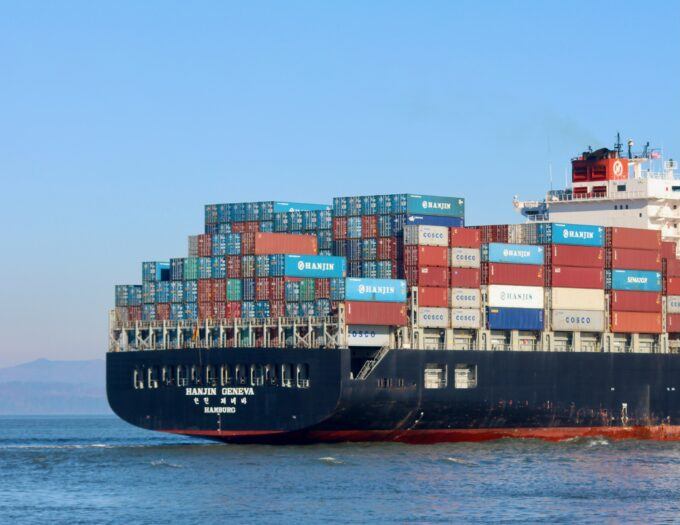
Cargo ship entering the Columbia River. Photo: Jeffrey St. Clair.
When Trump decided to whack us with his “liberation day” tariffs last April, he assured us that exporters would eat the tariffs, so that consumers didn’t pay higher prices. There was a large body of research that showed otherwise, but Trump insisted that he knew more than the economists.
Trump’s tariffs have been in place for more than a year, and it’s very clear that exporters have not eaten the tariffs, as Trump promised they would. There is some careful research that tries to determine the extent to which the price exporters charge is lower than it otherwise would be, because they were absorbing the tariffs. This research, which controls for factors like pre-existing trends and other variables that could reasonably be expected to affect import prices, finds that well over 90% of the cost of Trump’s tariffs is paid by U.S. corporations or consumers.
But there is a simpler way to get a ballpark number on the impact of the tariffs: just look at import prices. The Bureau of Labor Statistics produces data every month on the price of imports. It looks at the price at the point where imports are brought into the country, that is, before the tariff is applied. If the exporters in China, Mexico, or wherever are bearing the cost of Trump’s tariffs, import prices should have fallen.
In fact, they did not fall, and in the last few months, largely because of Trump’s Iran war, they have been rising rapidly. The year-over-year increase as of April was 2.9%. Import prices had actually been falling in most of 2023 and 2024. The big jump in import prices in 2021 and 2022 is one reason reality fans know that the inflation in those years was the fault of the pandemic and not Joe Biden. Biden’s recovery package didn’t send prices soaring in China, Europe, and Mexico.
Anyhow, the basic story on exporters eating the tariff is completely wrong; import prices went up, not down.

To be clear, the fuller picture is surely more complicated, but when we switch from falling import prices to rising import prices, again, before counting the impact of the tariffs, it’s pretty hard to tell a story that exporters are somehow eating tariffs.
Rising import prices will also feed directly into U.S. inflation. Unless we think that retailers have somehow become benevolent, it is reasonable to assume that most of the higher price being paid at the port will end up in higher consumer prices.
The shift from falling prices in 2024 to a year-over-year import price inflation of 2.9% comes to around a 3.5 percentage point increase. With goods imports equal to roughly 11% of GDP, this would add a bit less than 0.4 percentage points to inflation.
To be fair, we have already seen some of this shift show up at the retail level, and not all of the price increases will necessarily be borne by consumers. Wholesalers and retailers will end up absorbing some of the hit. But if folks are wondering why everything costs more, the fact that exporters did not eat the tariffs is at least part of the story. And Trump’s war makes this worse, because higher gas and energy prices don’t only raise prices here, they raise prices in all the countries from which we import things. Higher import prices is one more item on the Trump war dividend list.
This first appeared on Dean Baker’s Beat the Press blog.
No comments:
Post a Comment