Inside Portugal’s huge operation to beat wildfires with Black Hawks, bulldozers and firefighters
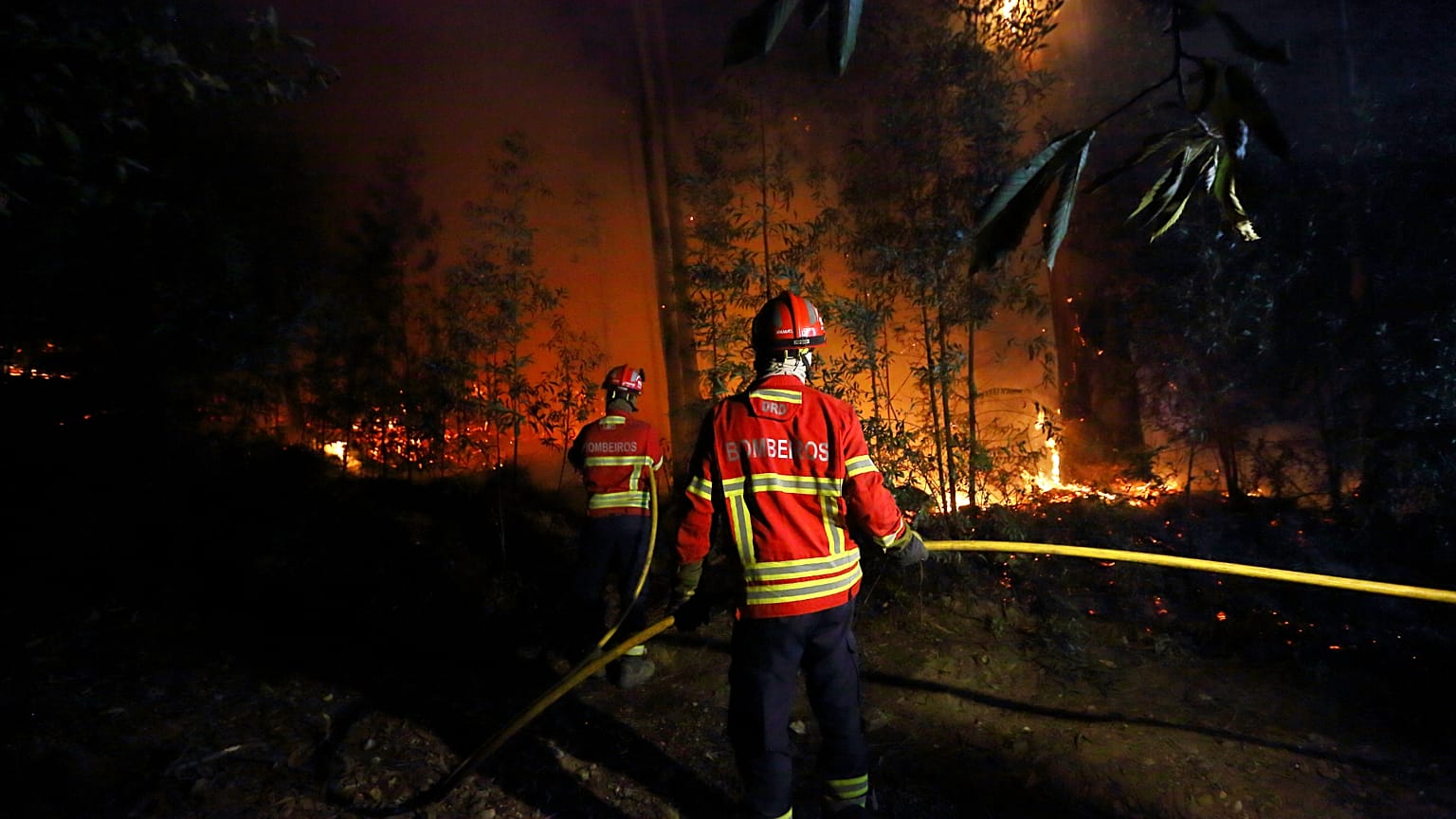
The public are being asked to 'do their part' by clearing tinder from around their homes.
“If the authorities managed to remove all that timber, I would feel much calmer because it is a huge amount of fuel for fires. Here on my property, I am trying to remove as much as I can.
79-year-old retiree Manuel Calhanas is doing just what Portugal's Minister for Internal Administration has asked of citizens: "do your part" ahead of a "terrible summer".
Devastating wildfires gripped Portugal in 2025, when more than a quarter of a million hectares of land burned.
With fears that this year could be even worse, Portugal has mounted an intensive nationwide operation to clear fallen trees and dry leaves - the tinder that wildfires thrive on.
Citizens are being asked to clear the land around their homes - known to be one of the most effective ways of saving lives - as well as flagging up blocked roads to authorities as these could prevent emergency services from getting to them.
Winter storms have left fuel lying on the ground
2026 has already been a year of extreme weather for Portugal. In early February, the country declared a state of emergency after it was hit by two devastating storms just a week apart. Storms Leonardo and Kristin brought torrential rain and flooding, leading to fallen trees snapping power lines and people being evacuated from their homes by boats.
The strong winds ripped off tree canopies and toppled trees, leading to leaves and vegetation covering the ground in many places. As temperatures rise during the early summer, this vegetation will dry out and become tinder - the perfect fuel for wildfires.
In Leiria, the area that was worst hit, between five and eight million trees were felled by the storms, reports news website Expresso.
Felled trees mean that some roads are still blocked, which could hamper the efforts of emergency services in the event of wildfires.
How is Portugal preparing for wildfires?
Luís Neves says that clearing roads is one of the focuses of a multi-agency operation to prepare for wildfires.
“In 22 municipalities, 10,000 kilometres of roads, rural tracks, firebreaks and land in need of clearing have been identified and, in one week, 3,000 kilometres have already been cleared, practically one third,” he said.
Neves highlighted the cooperation between Civil Protection, the security forces, local authorities and the Armed Forces within the Integrated Command for Prevention and Operations (CIPO), which brings together the ministries of Internal Administration, Defence, and Agriculture and the Sea, tasked with clearing roads and improving access in forest areas.
Fire retardant set to be one of the main weapons in the fight against the flames
Portugal's National Authority for Emergency and Civil Protection says that particular attention will be paid to Leiria, the area hardest hit by Storm Kristin, because of the vegetation now lying on the ground.
Other areas of high concern are the two other districts within the inland pine forest – Coimbra and Castelo Branco – as well as the North and the Algarve, says Mário Silvestre, national commander for Emergency and Civil Protection, in an interview with Lusa news agency.
The authorities want to tackle fires as soon as they start and will roll out the use of fire retardant, a chemical substance capable of delaying or even halting the advance of the flames. “This year we will have four more aerial bases operating with fire retardant. We will go up to five. What we want is to increase even further the success rate we currently have in initial attack,” says Silvestre.
This substance was used at just one air base in 2025, but, given the good results achieved, it will be “one of the major bets” in 2026, Silvestre added, in an effort to contain fires which today spread far more violently than they did a decade ago.
As part of this anticipatory approach, specialist reconnaissance teams will be deployed in each of the country’s sub-regions, tasked with providing the operations commander with essential information on the risk and type of fire. The aim is to improve the system’s communication capacity and ensure earlier intervention.
The reinforced attack groups have also been increased, from one to four. These are highly capable tactical forces called in for situations that require prolonged intervention.
All the changes introduced will be tested in an intensive operational exercise designed to ensure coordination among all the agencies involved.
The 2026 Special Device for Fighting Rural Fires (DECIR) shows a slight increase compared with last year. The most critical phase – Delta – runs from 1 July to 30 September, when DECIR will have 15,149 personnel in 2,596 teams, 3,463 ground vehicles and 81 aircraft. Two Black Hawk helicopters from the Air Force, with greater capacity for water transport and more complex operations, will be deployed for firefighting for the first time.
During this most demanding period, the authorities will also have at their disposal 50 bulldozers, twice as many as in 2025, with the ICNF providing a further 18, secretary of state for Civil Protection Rui Rocha said in an interview with JN/TSF.
Since last Friday, the first reinforcement of resources, known as Bravo level, have been in place on the ground and will remain until the end of May: 11,955 personnel, organised into 2,031 teams, are on standby, supported by 2,599 vehicles and 37 aircraft.
According to the national commander for Emergency and Civil Protection, the plan announced may be adjusted in line with assessments carried out at different stages of its implementation.
Marinha Grande has already cleared more than 154 kilometres of forest tracks
For several weeks now, the sound of chainsaws has echoed through Marinha Grande as crews clear piles of timber from the tracks criss-crossing the pine and eucalyptus forests.
This is a large-scale operation carried out seven days a week, since the beginning of March, by a sizeable team bringing together the Municipal Civil Protection Service, the Forestry Technical Office, soldiers from the National Republican Guard (GNR), the Institute for the Conservation of Nature and Forests (ICNF), the Civil Protection Special Force, volunteer firefighters from Marinha Grande and Vieira de Leiria, as well as the Armed Forces.
“The storm hit us during the night of 27 to 28 January and there is still a lot of damage on the ground,” Paulo Vicente, mayor of Marinha Grande, told news agency AFP.
Significant damage has been found to forest roads, which cover an area of around 289 kilometres, the council said in a statement. Many of these tracks are “vital for the access of emergency vehicles and for the prevention and fighting of rural fires”, the municipality warns.
The priority is to create links between the forest tracks to ensure safe movement in these areas and access to the nearest urban settlements.
By 6 May, 154 kilometres of the forest road network had already been cleared, surpassing the initial target of 115 kilometres. “Given the good progress of the operation, the scale of the work and the needs identified on the ground, a new target of 178 kilometres has been set,” the council added in the same statement.
The work involves not only clearing the tracks, but also cleaning land and creating fuel management strips - areas where vegetation is reduced or cut back) – tasks which, the municipality stresses, are crucial to reducing the risk of rural fires.
The planned intervention covers a total of 198 hectares, “including strips along the municipal road network and in the interface zones with the industrial areas of Marinha Grande and Vieira de Leiria”, according to the council.
"A particularly hot summer is forecast and, for our region, these pine forests are a powder keg,” the mayor of Marinha Grande warns.
How bad was Portugal's 2025 wildfire season?
According to the Joint Research Centre of the European Commission, 999 fires were recorded on Portuguese soil in 2025, burning 284,012 hectares. The burned area was twice that of 2024, making 2025 the second-worst year of the last decade, only behind the tragic 2017 season, which devastated more than 500,000 hectares and claimed over 100 lives.
The same body confirms the worsening trend and points to a rising likelihood of extreme weather events, dominated by so-called megafires: more violent, spreading faster and therefore harder to control. The new pattern became particularly visible from 2017 onwards, as heatwaves became more frequent, summers got longer and droughts became common.
Heat, rain and Saharan dust hit Portugal
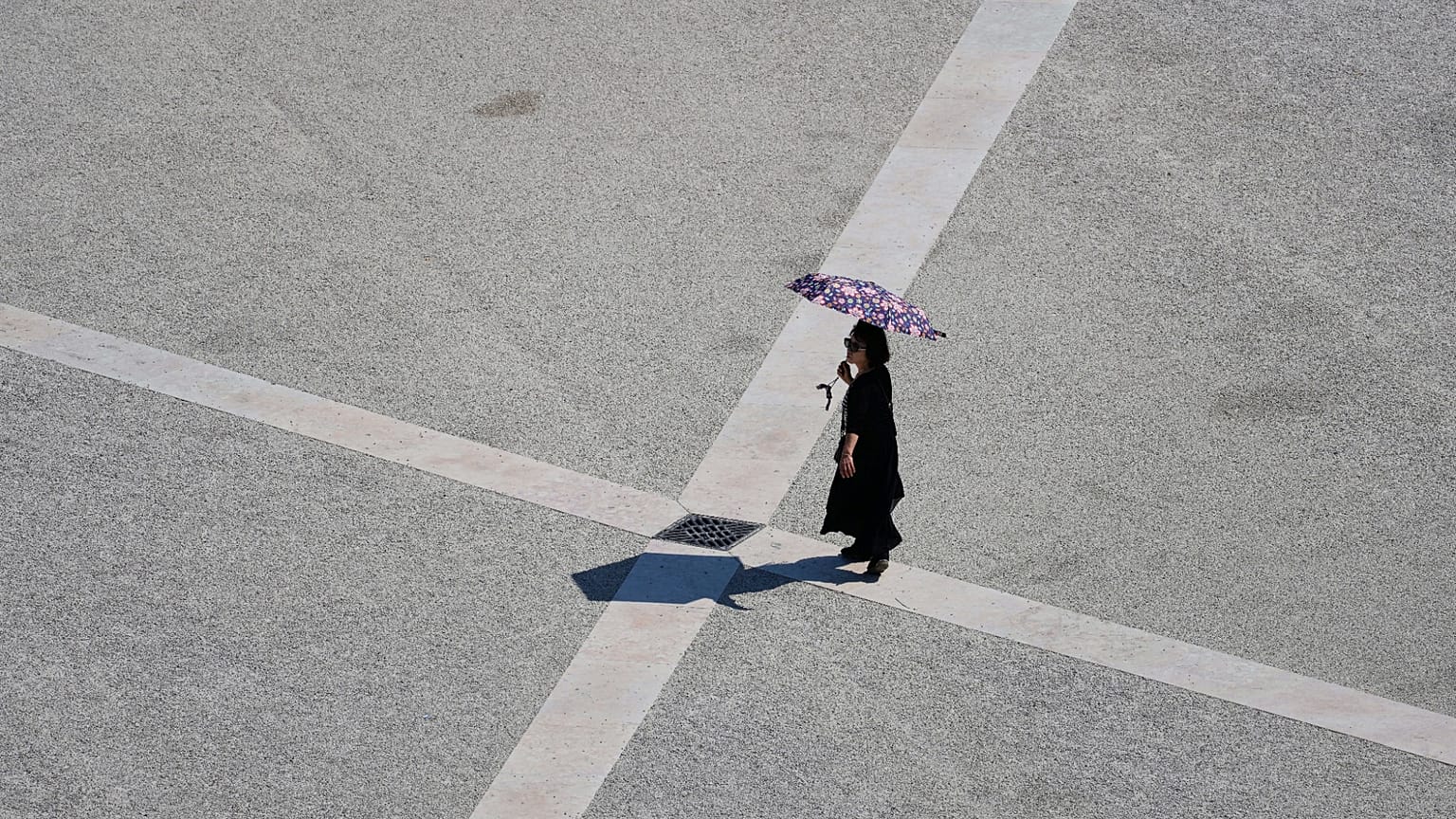
The Portuguese Institute for Sea and Atmosphere forecasts above-average weekend temperatures for the time of year, with rain and thunderstorms, as a tropical air mass carrying Saharan dust approaches the Iberian Peninsula.
Temperatures this weekend could reach 35 degrees on mainland Portugal, a spell of hot weather that IPMA considers unusual for this time of year
Thermometer readings are expected to be between 30 and 35 °C across most of the country, possibly reaching 39 °C in some inland areas of the Tagus Valley. Minimum temperatures will also rise nationwide, hovering around 20 °C.
This weekend, the high temperatures will be accompanied by some cloud and showers along the coast, with the possibility of heavy rain and hail, along with thunderstorms, in inland areas, especially on Saturday afternoon. Because of the humidity, temperatures in those regions may fall slightly. There will also be dust in suspension coming from North Africa, IPMA adds.
According to IPMA, this weekend’s weather conditions are “favourable to the transport of dust from North Africa”. The suspended dust is expected to persist until the end of the day on Saturday.
What is this desert dust and what precautions should you take?
The phenomenon begins in the Sahara Desert in North Africa, when storms with strong winds raise large quantities of sand and dust.
The Meteo Trás os Montes portal, a Facebook page (source in Portuguese) dedicated to providing information on weather phenomena, explains that “the heavier particles end up quickly falling near their source”, that is, in the Sahara Desert. “The finer, lighter particles, however, can rise thousands of metres into the atmosphere and remain suspended for several days.”
After reaching altitudes above 1,500 metres, the lighter dust “enters air currents”, beginning “a long journey” that carries it across the Mediterranean and the Atlantic. “Depending on the weather conditions, these dust masses can travel thousands of kilometres.” Some reach Europe, Spain and Portugal, and others cross to the far side of the Atlantic. When the wind changes direction or loses strength, these particles begin to fall to the surface.
This concentration of desert dust can cause discomfort for some people, such as allergies and other respiratory problems (asthma, bronchitis). It also creates haze, reducing visibility, which can increase risk, especially for drivers.
But it is not all bad. The upside of desert dust is that it is “rich in minerals, especially iron and phosphorus” and, when it falls into the ocean, it becomes an important nutrient for the marine food chain, Meteo Trás os Montes notes. When it reaches land, it “acts as a natural fertiliser”.
Rain: eight northern and central districts under yellow warning
Also according to IPMA, the districts of Bragança, Vila Real, Braga, Viana do Castelo, Aveiro, Porto, Viseu and Guarda will be, this Saturday, under a yellow warning, the least severe on a three-level scale, due to rain and thunderstorms.
The forecast heatwave is expected to intensify over the course of next week, and the public is therefore advised to take specific precautions, such as drinking more water, avoiding alcoholic beverages, seeking cool or air-conditioned places for at least two to three hours a day, avoiding direct exposure to the sun, especially between 11 am and 5 pm, and using sunscreen with a protection factor higher than 30.
No comments:
Post a Comment