Many communities are also frustrated with state-level inaction but still see some opportunities for pushback.
By Dan Ross ,
May 26, 2026

President Donald Trump talks with Ford River Rouge Plant Manager Corey Williams (second from left), and Executive chair of Ford Motor Company Bill Ford Jr. (right) as they tour the Ford River Rouge Complex, on January 13, 2026 in Dearborn, Michigan.
Anna Moneymaker / Getty Images
Rita Robles’s life is ruled by allergies, the worst effects from which can last for months at a time. She uses rescue inhalers, a nebulizer, and a maintenance inhaler — on top of a slew of other medications. Even then, it’s often not enough.
“There are times when I’m outside just walking to the driveway and it’ll feel like something catches in my throat, and it causes me to go into a choking fit,” Robles told Truthout. “It’s miserable.”
Robles lives in a Houston, Texas, neighborhood suffocated by heavy industry — Denver Harbor, the largest petrochemical hub of the U.S. Robles, 56, calls the neighborhood a “disaster.”
She’s just one of millions of Americans, however, living in communities where people’s quality of life is secondary to the hum of big business — communities at the front line of the government’s regulatory rollbacks and budget cuts.
Since Donald Trump came back into office in January 2025, the federal government has either succeeded in, or is attempting to, weaken and roll back many of the country’s key environmental regulations and other broader programs. Things could get worse if the proposed Environmental Protection Agency (EPA) budget is approved, with its 52 percent cut in funding under the latest agency head, former New York Rep. Lee Zeldin.
Related Story
Rita Robles’s life is ruled by allergies, the worst effects from which can last for months at a time. She uses rescue inhalers, a nebulizer, and a maintenance inhaler — on top of a slew of other medications. Even then, it’s often not enough.
“There are times when I’m outside just walking to the driveway and it’ll feel like something catches in my throat, and it causes me to go into a choking fit,” Robles told Truthout. “It’s miserable.”
Robles lives in a Houston, Texas, neighborhood suffocated by heavy industry — Denver Harbor, the largest petrochemical hub of the U.S. Robles, 56, calls the neighborhood a “disaster.”
She’s just one of millions of Americans, however, living in communities where people’s quality of life is secondary to the hum of big business — communities at the front line of the government’s regulatory rollbacks and budget cuts.
Since Donald Trump came back into office in January 2025, the federal government has either succeeded in, or is attempting to, weaken and roll back many of the country’s key environmental regulations and other broader programs. Things could get worse if the proposed Environmental Protection Agency (EPA) budget is approved, with its 52 percent cut in funding under the latest agency head, former New York Rep. Lee Zeldin.
Related Story
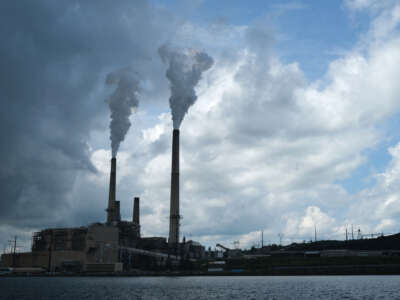
States That Cut Environmental Agencies Face Crisis as Trump Deregulation Unfolds
Budget slashing and staff cuts have made states vulnerable to Trump’s efforts to dismantle the EPA. By Mike Ludwig , Truthout December 11, 2025
Truthout spoke with three residents and community organizers living in Houston, Detroit, and California’s Central Valley. They shared their fears of the long-term ramifications from the federal government’s business-friendly purge of environmental protections, their frustration with state-level inaction, and what they see as openings for community pushback that can, with patience, lead to actionable change.
For people like Robles, the fight against regional polluters is done with one eye on the future.
In the vicinity of her home are concrete batch plants, gas stations, and truck-lined major thoroughfares, while in the near distance are the city’s towering petrochemical plants, phenomenal regional polluters. In 2019, the state classified Denver Harbor a cancer cluster due to the high occurrence of cancer cases in the area. A primary culprit is an old Southern Pacific Railroad site where creosote, a toxic wood preservative, was used liberally for decades. A lot of it leaked into the groundwater, causing a huge toxic plume.
While Denver Harbor’s residents have been let down by state and federal regulators, the current administration’s war on the regulatory state has Robles fearing that life there will be made even harder for younger generations.
“The way things are going, it’s getting really scary,” Robles said. Thinking of her two grandchildren — one 11 months old, the other 5 years old — she said she’s particularly worried about the administration’s attack on climate regulations, exemplified by Trump’s recent revocation of the 2009 endangerment finding.
The landmark Obama-era finding underpins virtually all the climate regulations under the Clean Air Act. Its reversal eliminates greenhouse gas emissions standards for cars and trucks. It could also lead to the rollback of climate-related rules governing other sources like power plants and oil and gas facilities, experts have warned.
“There is no way to reconcile EPA’s decision with the law, the science, and the reality of disasters that are hitting us harder every year,” wrote Earthjustice president Abigail Dillen in a statement immediately after the endangerment finding was revoked. “This is a slap in the face for all of the millions of Americans who are experiencing the devastating costs of extreme heat, wildfires, flooding, and storms.”
“A lot of these companies, they’re repeat offenders. But it’s cheaper for them to pay the fines then to make any changes to their business,” said Robles. “This Earth is a gift and we should take care of it. Instead, we’re destroying the climate.”
Kettleman City, California
Aside from the reversal of the endangerment finding, the EPA has, among many other actions, weakened rules surrounding emissions of smog-forming nitrogen oxide from stationary sources, the interior department has paused several major offshore wind projects, while the U.S. has withdrawn from the Paris Climate Agreement.
At the same time, efforts are underway within the EPA to weaken hundreds of chemical regulations. Meanwhile, the Department of Justice (DOJ) has sued California over its clean car mandate, and the federal government has started its own process of easing fuel economy standards for new vehicles.
Marking the one-year anniversary of Trump’s second term, several reports illustrated how enforcement actions against the worst of the nation’s polluters have dropped off.
Civil lawsuits against polluters fell to a historic low in the first year of Trump’s second term with the DOJ filing only 16 complaints within that 12-month period, according to the Environmental Integrity Project.
In another report from earlier this year, Public Employees for Environmental Responsibility similarly found that the DOJ has slammed the breaks on enforcing Clean Air Act violations among the oil, gas, petrochemical, coal, and motor vehicle sectors. They found that the DOJ had lodged only one consent decree since Trump’s inauguration, compared to 26 in the first year of Trump’s first term, and 22 after Joe Biden’s first year in office.
Key bulwarks against the erosion of federal environmental protections are individual state governments. Most notably, California Gov. Gavin Newsom has positioned himself on the global stage as an antidote to the Trump administration by touting his environmental bona fides. This includes his record in helping to transition the state’s energy grid away from fossil fuels to renewables.
But in many of California’s toxic communities, residents voice deep frustration over a raft of state regulatory actions and bills they see as being overly permissive of industry’s wants, and too unprotective of disadvantaged communities in a way that mirrors the federal government’s current trajectory.
“The state has abandoned us,” said Veronica Aguirre, 55, who lives in Avenal, in the Central Valley. The small city — known for being halfway between the Bay and Los Angeles — is less than 10 miles from the Kettleman Hills Hazardous Waste Facility, which sits in the shadow of Kettleman City proper, where Aguirre’s aunt, cousin and other family members live.
Kettleman City is in one of the most pollution-burdened regions in the entire state, thanks to a confluence of air pollution, groundwater and drinking water threats, and its proximity to hazardous wastes. The nearby Kettleman Hills Hazardous Waste Landfill — one of two such designated landfills in the state — is a contributing factor to the area’s environmental woes thanks to a long, troubled history of enforcement violations (though the landfill management downplays their impact on Kettleman City). State regulators have allowed the landfill to continue operating on a permit that expired in 2013 while a new permit is being negotiated.
According to Aguirre, her family in Kettleman City all suffer serious health issues. Her cousin, she said, lost a kidney from a rare form of cancer. Babies are statistically more likely to be born there with serious congenital disabilities. “It’s a bitter pill to swallow,” said Aguirre of knowing about the risks to her family. Aguirre is a community organizer for the nonprofit organization Greenaction for Health and Environmental Justice, which advocates for frontline communities at contaminated sites up and down the state,
A recent raft of regulatory and legislative actions could weaken current state standards around the management, storage, and disposal of hazardous wastes, experts warn.
In December, for example, the Department of Toxic Substances Control’s (DTSC) oversight board approved the agency’s new hazardous waste management plan, needed, industry interests said, to streamline overly burdensome regulations. But environmental justice groups argue the plan is a deregulatory effort that could open the door to the DTSC ceding some of its important oversight authority.
As Aguirre sees it, unincorporated Kettleman City has been let down by all forms of government, from the feds all the way down to the county level. “They’re partnering with state agencies in supporting these toxic waste companies, and it leaves the communities even more vulnerable than they already are,” she said.
At the same time, some disadvantaged communities see tentative signs for hope.
River Rouge, Detroit
Vicki Dobbins has lived all her life in and around the River Rouge district of Michigan, which sprung up more than a century ago when neighboring Detroit first laid down its roots as the birthplace of the nation’s automotive industry.
Perched on the banks of the Detroit River, a major industrial transportation corridor, River Rouge remains in the thrall of big business, with steel manufacturing plants and oil refineries dominating a concrete metropolis of a skyline. As researchers out of the University of Michigan noted during a 2023 toxic tour of the area, “no matter if you are in a community park, school backyard, or just walking down the street, evidence of heavy industry is impossible to ignore.”
With this industrial backdrop comes pollution — lots of it. Indeed, River Rouge is in one of the most environmentally burdened zip codes in the whole of Michigan, the area surrounded by 42 facilities that routinely emit a hazardous cocktail of pollutants.
“You become paranoid — it becomes a natural, normal thing for you to worry about,” said Dobbins about living in a region that has some of the worst air quality in the state and routinely exceeds federal air quality standards. A constant foul smell pervades Dobbins’s home. “When you get in your car, you roll your windows all the way up. You turn the air on,” she said. “It becomes like a habit.”
Long-term exposures to common air pollutants in the area, like benzene and sulfur dioxide, bring serious health implications. Residents live in an area with higher-than-average cancer risks and cancer rates. Breathing problems are rife, said Dobbins. “I keep my inhaler with me at all times,” she said.
“A young man died about three weeks ago from an asthma attack,” Dobbins added. “How in the world are young people dying in 2026 from an asthma attack? I thought we had all the answers.”
After decades of pushing back against the omnipotent presence of heavy industry, local residents got a major boost earlier this year when the U.S. District Court for the Eastern District of Michigan ordered DTE Energy Company and three of its subsidiaries to pay a $100 million penalty for non-compliance with the federal Clean Air Act at a local coke battery. The lawsuit was initiated by the EPA under the Biden administration.
Their emissions, the court found, were responsible for causing a host of health problems including asthma and heart attacks, strokes, and increased blood pressure, and they increased the likelihood of local residents getting cancer and Alzheimer’s disease, and suffering early deaths.
As part of the court’s determination, the defendants are required to spend $20 million over the course of seven years (with $5 million in the first three years) on local projects to help repair the damage they’ve caused. The air quality improvement projects could include installing HEPA air purifiers in nearby homes and air filtration systems in schools.
Dobbins, a member of the Sierra Club, sees the decision as a vindication for all the work she and others in the local environmental justice movement have put into fighting for a cleaner, healthier community. Their work has involved protests, marches, educational tours, and meetings with regulators and regional polluters.
“I feel really good because someone is finally paying attention,” said Dobbins. “The work we have been doing has not been in vain. As long as we continue to bring awareness to the judges, to the community, to the politicians, one day we will finally win this fight.”
That lawsuit, however, was initiated in 2022 under the previous administration. Experts who watch the current DOJ’s enforcement approach to federal environmental violations, and who are similarly keeping track of the administration’s broader deregulatory sweep, fear the long-term ramifications from these actions won’t be felt fully for a few years.
Dobbins is one of those braced for the long game.
“It takes a long time,” Dobbins said, of the work of community organizing. “I’ve been doing this for 20 years already. We’ve just got this. It’s going to take another 20 years before we get to the next step. I hope not. But it’s a slow process. And we’re fighting huge, huge, huge industry. Huge industry looks at little people and says, ‘we don’t care about you.’”
This article is licensed under Creative Commons (CC BY-NC-ND 4.0), and you are free to share and republish under the terms of the license.
Dan Ross
Dan Ross is a journalist whose work has appeared in Truthout, The Guardian, FairWarning, Newsweek, YES! Magazine, Salon, AlterNet, Vice and a number of other publications. He is based in Los Angeles. Follow him on Twitter: @1danross.
No comments:
Post a Comment