Russia fails again to sell stake in gold miner UGC
Russia has failed for a second time to auction the stake in gold producer Uzhuralzoloto (UGC) that it seized last year, the federal property management agency said on Tuesday, dealing a blow to the government as it seeks to ease budget pressures.

A Russian court ruled last July that a majority stake in UGC, previously owned by businessman Konstantin Strukov, should be seized and transferred to the state, part of a broader pattern of nationalization of Russian corporate assets.
The latest auction follows an attempted sale earlier in May, when no bids were received for Strukov’s assets. The lot, with a starting price of 162.02 billion roubles ($2.2 billion), included a 67.2% stake in UGC.
Budget pressures
This time, the auction was declared invalid because only one bidder submitted a complete application and paid the deposit. A second contender, engineering company Russkie Ugli, failed to pay the deposit and provide the required documents, the agency, Rosimushchestvo, said in a statement.
The agency did not share further details on the bidders, but auction documents seen by Reuters show that the sole bidder was gold miner Pokrovskiy Rudnik. Gold producer Atlas Mining, which owns Pokrovskiy Rudnik, declined to comment.
Rosimushchestvo has not said whether it will hold another auction.
As budget strains deepen, the failed sale is a setback for the finance ministry, which had planned to sell the stake by the end of 2025. It did not reply to a request for comment.
The lack of qualified bidders was despite the sale being structured as a Dutch auction, in which the price is gradually lowered until a bid is placed. This could have seen the stake sell for as little as 50% of the initial asking price.
Another court-confiscated asset, Moscow’s Domodedovo Airport, was sold via Dutch auction for the minimum price of $869 million in January, with only one bidder participating.
(By Anastasia Lyrchikova, Darya Korsunskaya and Alessandra Prentice; Editing by Guy Faulconbridge and Mark Potter)
Ghana to start buying 30% of large gold mines’ output from June
Ghana’s central bank said it plans to increase gold purchases from the West African nation’s large-scale producers to 30% of their output from 20%, starting June 1.
The Bank of Ghana, which has been buying 20% of refined gold from mining firms with cedis for its reserves, has finalized negotiations to lift that to 30% of their doré or unrefined gold, Paul Bleboo, who heads gold management at the regulator, said by phone.
The decision to switch to doré gold will help boost local processing capacity and job creation, he said, adding that the parties have agreed to a 0.6% price discount.
Accra-based Gold Coast Refinery will process the doré gold to refined gold before shipping to the South Africa-based Rand Refinery for London Bullion Market Association certification, Bleboo said.
Africa’s top gold producer in 2022 ordered mining firms, including South Africa’s Gold Fields Ltd., UK-based AngloGold Ashanti Plc and American miner Newmont Corp. to start selling part of their output to the central bank to help boost reserves and support the local currency.
(By Moses Mozart Dzawu)
Ghana commits to renewing Gold Fields’ Tarkwa lease but rules out automatic extension
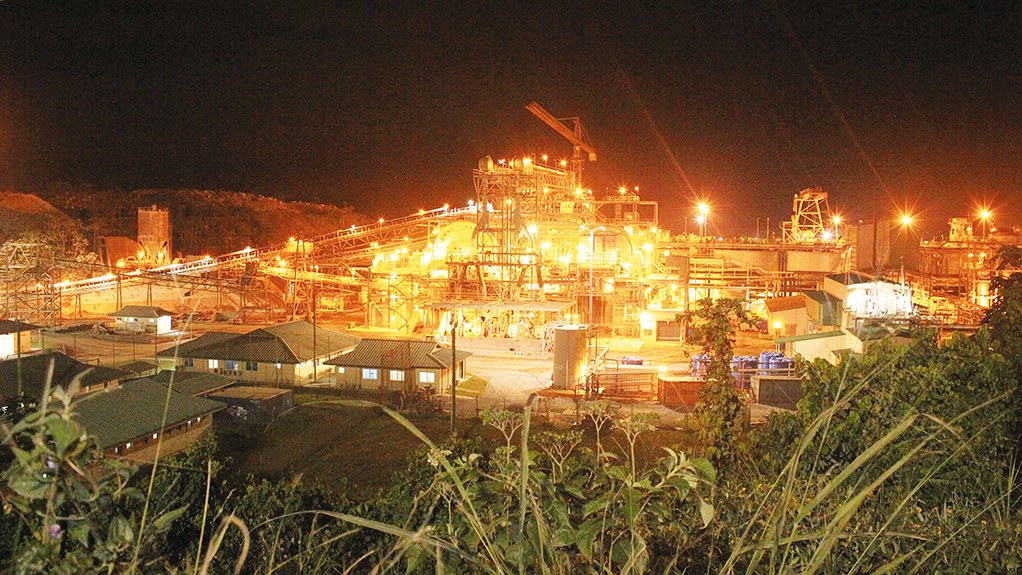
Ghana’s government is committed to renewing the mining lease for Gold Fields’ Tarkwa mine, it said on Monday, adding that it will subject the South African miner to fresh scrutiny of its plans before any renewal is granted.
Isaac Andrews Tandoh, CEO of Ghana’s Minerals Commission, the sector regulator, denied the government was delaying the lease renewal process, saying officials had held meetings with Gold Fields as recently as last Friday.
Tandoh said the company must present its development plans to a technical committee at the Minerals Commission, followed by a ministerial-level presentation, after which a decision on renewal will be made.
“It won’t be business as usual where we just automatically renew the lease,” Tandoh told Reuters.
Lands and Natural Resources Minister Emmanuel Armah Kofi Buah said the government had not adopted a blanket nationalization policy to take advantage of the sector but was seeking partners that would leave behind expertise and empower Ghanaians in the industry.
Some civil society and community groups have called on the government not to renew the Tarkwa lease, arguing that its benefits have not been shared sufficiently with host communities.
In April 2025, the government rejected Gold Fields’ application to renew its lease for the Damang mine and assumed operational control of the asset.
The Ghana Chamber of Mines warned this month that lease revocations and renewal uncertainty risk creating the impression that “security of tenure in Ghana is not guaranteed”, potentially hurting investment.
The lease for Tarkwa — a cornerstone asset for the South African miner that produced about 427,000 ounces of gold in 2025 — expires in 2027.
(By Emmanuel Bruce; Editing by Anait Miridzhanian and David Goodman)
No comments:
Post a Comment