Water, Desertification, and the Rebirth of Territories
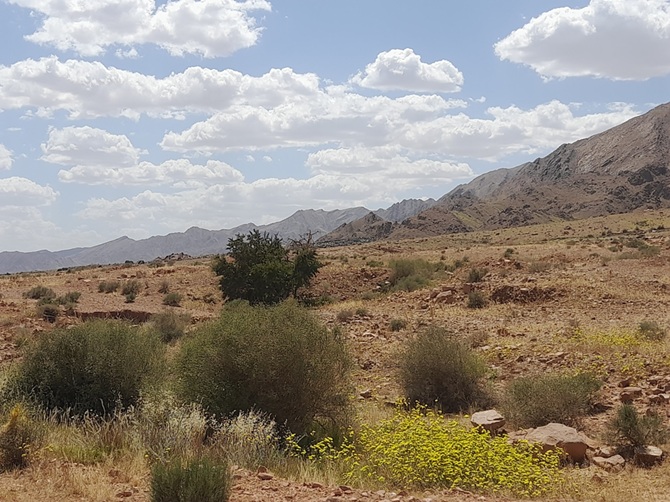
Forgotten Water: How Cities Desertify Their Own Territories
In modern cities, a silent paradox repeats itself: in countries affected by drought, rainwater disappears immediately into the sewers. This logic, which has become commonplace, nevertheless contributes to the gradual desertification of territories.
Concrete covers the soil, wadis are channelized, and urban infrastructures have been designed to evacuate water as quickly as possible instead of allowing it to infiltrate. Even in some Saharan regions, gas stations and public buildings discharge rainwater while groundwater reserves are steadily declining.
The case of mosques is particularly symbolic: in regions where people pray for rain, this water often ends up in drainage systems. This contradiction reveals the gradual loss of our water culture.
Yet Saharan societies had long developed a very different logic. Oases, foggaras, and traditional irrigation systems were based on a simple principle: every drop should be retained where it falls.
Today, this issue goes far beyond ecology. While millions of cubic meters of rainwater are lost, agricultural lands are degrading and food dependency is increasing. Rainwater must once again become a local resource capable of nourishing soils, trees, and territories.
Reconciling Water and the City: Five Principles for a Living Urbanism
Modern cities were designed around concrete and the rapid circulation of water. But in the face of droughts and heatwaves, this model is reaching its limits.
First principle: infiltrate water where it falls through permeable soils, retention basins, and vegetated swales.
Second principle: de-seal urban spaces so that soils can recover their natural absorption capacity.
Third principle: create urban oases with rain gardens, drought-resistant trees, and microforests capable of cooling cities.
Fourth principle: recycle greywater to irrigate green spaces and support urban agriculture.
Fifth principle: build according to the real climate. Glass façades and intensive air conditioning do not correspond to Algerian climatic realities. Local materials, patios, and bioclimatic techniques must regain a central place.
Reconciling water and the city does not mean returning to the past, but building territories that are more resilient, balanced, and sustainable.
From Desert to Resilience: What North Africa Can Teach the World
The desert is often perceived as an empty and hostile space. Yet Saharan regions carry immense ecological intelligence.
Foggaras — underground galleries transporting water over long distances without excessive evaporation — demonstrate remarkable know-how. Oases also functioned as genuine circular economy systems: water was reused, palm trees created protective shade, and crops protected the soil.
This wisdom contrasts sharply with certain contemporary models based on intensive pumping and energy dependence.
Southern regions reminds us of an essential truth: resilience emerges less from abundance than from the ability to live within natural limits.
At a time when droughts are intensifying worldwide, Saharan knowledge is regaining universal relevance. Agroecology, rainwater harvesting, and earthen architecture now appear as pathways toward the future.
The New Battle for Water: Silent Droughts
Modern droughts do not always produce spectacular disasters. They often advance slowly, exhausting soils, reducing agricultural yields, and weakening territories.
In several regions, the signs are already visible: declining groundwater levels, the gradual disappearance of certain plant species, rising urban temperatures, and increasing dependence on food imports.
This crisis reveals the limits of a model centered on extraction rather than regeneration. For decades, urban policies have favored rapid water drainage and soil artificialization.
Yet a territory does not become desertified only because it receives less rainfall, but also because it loses its ability to retain water.
Faced with this reality, solutions do exist: agroecology, rainwater harvesting, soil restoration, and the replanting of trees capable of recreating microclimates.
Tomorrow’s real battle may well be our collective ability to restore the small natural water cycles destroyed by decades of urbanization.
What If Water Became Our First Landscape Designer?
What if we finally built our cities not against water, but with it?
In a context marked by droughts and heatwaves, water could once again become the primary guide for urban planning. Imagining cities designed around water means imagining rooftops collecting rainfall, infiltrating streets, schools transformed into nurseries, and vegetated public spaces.
Each building could become a small ecological reservoir. Desert gas stations could be transformed into oases of freshness and biodiversity.
This vision is not utopian. It draws inspiration from oases, ksour, and ancient forms of knowledge adapted to arid climates.
For a long time, modern urbanism sought to dominate nature. Perhaps it is now necessary to learn how to collaborate with it instead.
Because a civilization that allows its water to escape eventually allows its future to escape as well.
The Long History of Controlling Water and Why It No Longer Works
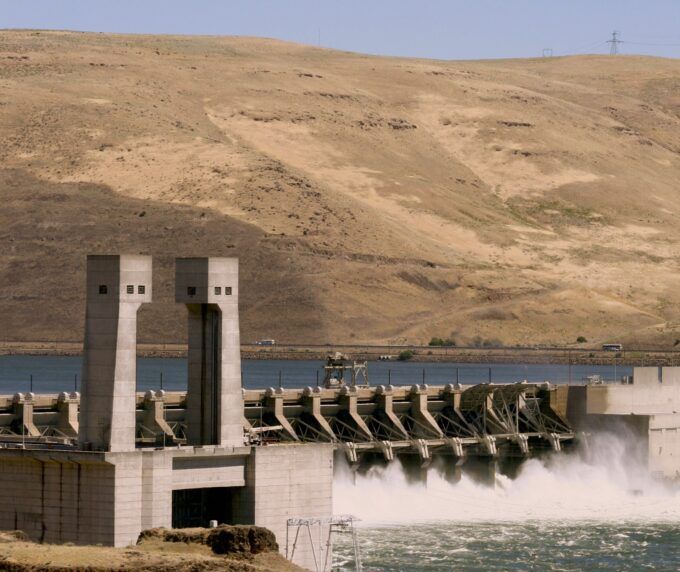
McNary Dam, Columbia River, Washington/Oregon. Photo: Jeffrey St. Clair.
The defining signature of the past 6,000 years of human civilization is the domestication of the hydrosphere—capturing, damming, canalizing, reorienting, propertizing, privatizing, consuming, profiting from, depleting, and poisoning it. From ancient hydraulic civilizations to the hydro-powered superdams, reservoirs, canals, and ports of the 21st century, water has been repurposed for humanity, often at the expense of millions of other species that depend on it.
Harnessing the hydrosphere has shaped societies and the distinctiveness of cultures across history. The design of hydraulic infrastructure has partially fated societies to the entropic costs that led to their demise—and sometimes collapse. Unlike in the past, the entropic consequences of water use during the fossil-fuel-based Industrial Revolution—the water-energy nexus—have eclipsed localities, regions, and continents, propelling Earth into the sixth extinction of life.
Now, the hydrosphere is freeing itself, spasming in ways unimaginable half a century ago. Waters are breaking loose as Earth warms, altering water cycles and producing effects humans can scarcely manage. A conversation is beginning about mobilizing collective efforts to free the waters and allow the hydrosphere to self-evolve. These responses are admirable and imperative, reflecting our learning to let go of infrastructural restraints imposed over centuries.
Roughly 70 percent of Earth’s surface is water, but only 2.5 to 3 percent is fresh water, and only a fraction is readily accessible. A 2021 study found that less than 19 percent of land remains wilderness, as human development has diminished or eliminated ecosystems worldwide. Increasingly, the hydrological cycle is reshaping the planet—deconstructing infrastructure and rewilding landscapes—leaving humanity to adapt to a new nature.
During the industrial era, urban and suburban communities were built over once-vibrant floodplains, which were drained, dammed, and diverted. In Great Britain, 90 percent of wetlands have disappeared, along with much native wildlife, as urban-industrial landscapes expanded. Efforts across the U.K. and elsewhere aim to free rivers, restore floodplains and habitats, and decommission dams, teaching us to adapt to water rather than force water to fit development. These efforts are urgent, as intensifying hydrological cycles threaten rural and urban infrastructure. Citizen scientists and volunteers, working with marine biologists and local governments, are rewilding fish nurseries and salt marshes and supporting projects that absorb carbon, reduce flooding, and restore native species.
While oceans were reduced to property and remain under severe strain, scarce freshwater has also been commodified and controlled in the global marketplace by a handful of corporations. Until the late 20th century, fresh water was largely administered publicly as a common resource. Over the past half-century, it has increasingly been seized by private companies and transformed into a tradable commodity. In practice, private companies often have little incentive to upgrade infrastructure or lower costs. Unlike public systems, market-based utilities must maintain revenue and profit margins even if populations remain stable, leading to the continuous extraction of value, especially in water and sanitation services, where communities have few choices.
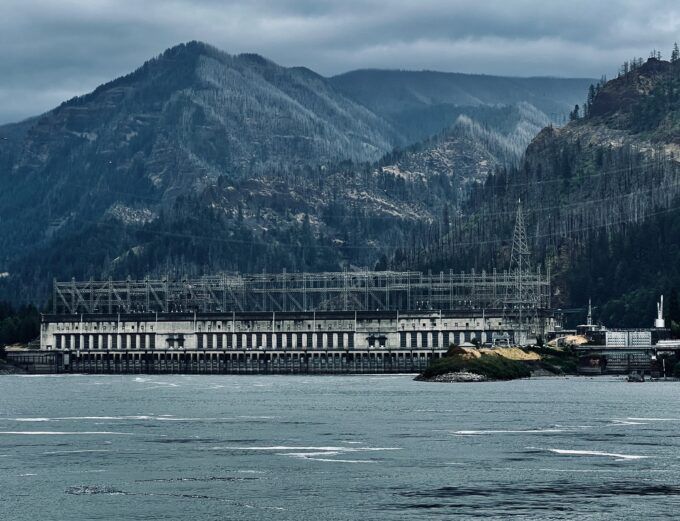
Bonneville Dam, Columbia River. Photo: Jeffrey St. Clair.
Despite evidence of privatization’s shortcomings, ten global companies dominate the water utility market. They profit from government incentives, charge high water prices, and sometimes compromise service quality. In the United States, industry-owned utilities typically charge 59 percent more for water and 63 percent more for sewer service than local government utilities. Privatization can also increase financing costs for water projects by 50–150 percent, while municipalities that resumed public operations achieved average savings of 21 percent across water and sewer services.
A lingering misconception is that a warming climate means we are running out of water. While heavier rainstorms and floods are widely acknowledged, they are often treated separately from droughts. In reality, the planet is not running out of freshwater; a rewilding hydrosphere driven by climate change is altering the seasonal timing, intensity, and duration of precipitation. Global hydraulic civilization remains locked into a water cycle suited to a temperate climate that no longer exists, leaving humanity unable to reliably access water for consumption, industry, or agriculture when and where it is needed.
The long-term solution is to reset humanity’s relationship with the hydrosphere—adapting to the waters rather than attempting to control them. A growing suite of initiatives, including “Slow Waters,” “Sponge Cities,” “Nature-Based Systems,” and “Green Infrastructure,” reflects this shift. These approaches move away from centralized, hyperefficient hydraulic systems designed for Holocene-era predictability and toward adaptive systems responsive to the rewilding hydrosphere of the Anthropocene. Philosophically, they shift the focus from managing water to stewarding it—going with the flow rather than attempting to direct it.
This distributed approach emphasizes hands-on engagement by local populations in their ecosystems, echoing commons governance while leveraging technologies. Movements like “slow water,” inspired by the “slow food” and “slow cities” movements, encourage communities to abandon hyperefficient extraction, commodification, and overconsumption, and instead adapt locally to natural rhythms and cycles.
Erica Gies, a journalist who writes on water issues and climate change and coined the term “slow water,” emphasizes that water in its natural state does not always rush across the land surface but also has “slow stages,” seeping into soil, settling in wetlands, or nestling into groundwater caverns. This, she says, is “where the magic happens,” providing habitat and food for many forms of life above and below ground. “[T]he key to greater resilience… is to find ways to let water be water, to reclaim space for it to interact with the land.”
The problem is that global hydraulic civilization is designed to sequester water quickly: storing it in artificial reservoirs, pumping it through pipes to irrigate crops, generate electricity, and supply homes and businesses, then rapidly recycling wastewater back into the system. Little room is left for natural absorption or ecosystem renewal.
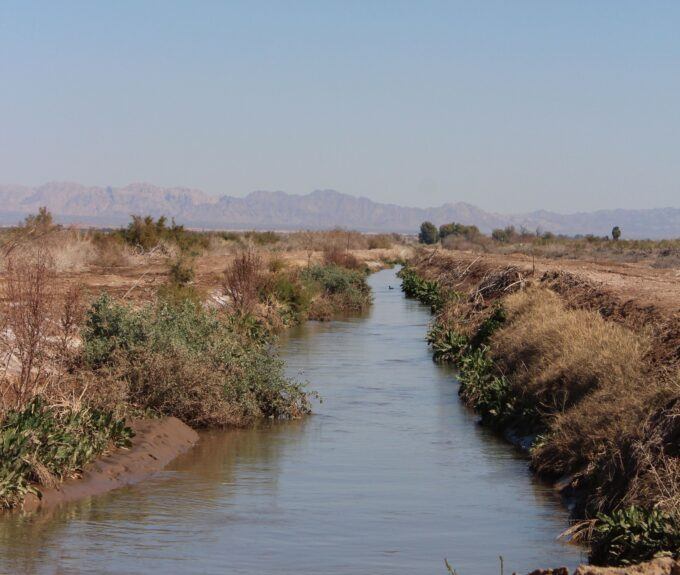
Irrigation ditch, Imperial Valley, California. Photo: Jeffrey St. Clair.
Urban growth has compounded this dynamic. Dense urban and suburban communities are often built atop former wetlands, rivers, and streams, leaving rain with nowhere to go. Water instead floods impermeable asphalt and concrete, preventing infiltration and depriving soils and ecosystems of moisture. In China’s urban sprawl, for example, less than 20 percent of precipitation running off buildings and pavement soaks into the soil, with most diverted into drains and pipes. In Beijing, where pumped groundwater long supplied the population, the water table has been dropping by roughly a meter per year, with largely ignored consequences. Allowing waters to follow their natural flow is essential to humanity’s realignment with the planet.
Across the globe, experiments are underway to reintroduce ecosystem-friendly water management practices, though most remain pilot projects. Engineers, urban planners, and landscape architects are implementing bioswales, rain gardens, and permeable pavements to restore hydrological balance. Bioswales are shallow channels planted with native grasses, shrubs, and flowers, and layered with soil, mulch, and stones to slow rainwater and filter pollutants such as fertilizers, motor oil, and litter. Rain gardens perform a similar function in a bowl-shaped design that “captures, stores, and infiltrates rainwater.” Permeable pavements—made from porous concrete, asphalt, interlocking pavers, or plastic grids—allow rain and melted snow to penetrate underlying soil rather than run off hardened surfaces.
Green rooftop gardens also slow runoff while moderating urban heat. As the Environmental Protection Agency notes, these elevated gardens “provide shade, remove heat from the air, and reduce temperatures of the roof surface.” If widely adopted, green roofs can reduce city-wide ambient temperatures by up to 5 degrees Fahrenheit, allow more water to sink into the soil, and reduce electricity demand.
More integrated strategies, such as “sponge cities,” reintroduce natural water flows into urban areas. Developed by the late Chinese urbanist Kongjian Yu, sponge cities reduce flooding by slowing rainwater through natural landscapes, allowing it to seep into the ground or be stored underground for later use. Rapidly growing cities like Izmir, Turkey, are implementing site-specific models to capture water for dry seasons and reduce flood risk. Urban planners often cite targets such as 30 percent green or permeable surface coverage, as recommended in frameworks like the C40 Urban Nature Accelerator, as a baseline for stormwater absorption and flood mitigation.
As climate change intensifies the water cycle—bringing heavier snowfall, torrential floods, prolonged droughts, heatwaves, and hurricanes—harvesting rainwater has become a priority even in high-tech cities. Traditional cistern systems, from Jordan to Las Vegas, are being adapted and scaled, sometimes integrated with sensors and digital networks, to store and distribute water locally and capture winter rains for dry seasons.
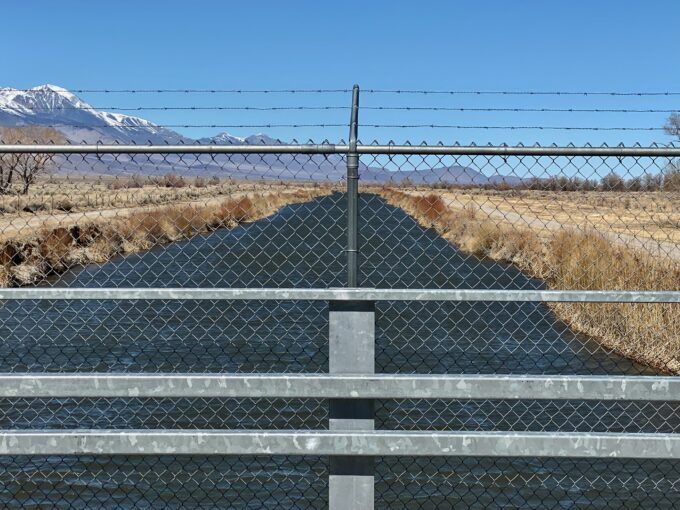
Los Angeles aquaduct, Owens Valley, California. Photo: Jeffrey St. Clair.
Between 2018 and 2020, the United States Agency for International Development Small Projects Assistance program supported Peace Corps volunteers and local communities across nine municipalities in four Mexican states in installing rainwater harvesting systems in 68 homes, 23 schools, and 23 community centers, capturing 1,633,330 liters of water. Local engineers, working with volunteers and neighborhood crews, installed 12,000-liter cisterns in homes and 50,000-liter cisterns in schools. Similar efforts are now being replicated worldwide, as communities increasingly collect seasonal rains to endure drought-prone periods.
Among the more ambitious efforts is the One Million Cisterns for the Sahel, sponsored by the UN Food and Agriculture Organization (FAO). Water harvesting and storage systems are being installed across seven Sahelian countries—Senegal, Gambia, Cabo Verde, the Niger, Burkina Faso, Chad, and Mali. The initiative targets the most vulnerable rural communities in these arid and semi-arid regions, all of which experience massive floods followed by repeated droughts. These increasingly wild gyrations in the water cycle, the FAO notes, “are devastating for the poorest rural households, who struggle with these shocks and see their vulnerability worsen.” The program emphasizes training communities to construct, manage, and maintain cisterns, with particular attention to engaging women through “cash-for-work” activities to ensure equitable stewardship of water resources.
Even highly industrialized nations are adopting water harvesting. States such as Rhode Island, Texas, and Virginia offer tax credits for rainwater harvesting equipment, though restrictions remain on the amounts and uses eligible. Beyond climate adaptation, decentralized water systems also provide resilience against cyberattacks or sabotage of centralized infrastructure. Neighborhood water microgrids can maintain water flow even when main pipelines fail.
A “water internet,” embedded with IoT sensors, is increasingly deployed in reservoirs and pipelines to monitor pressure, equipment wear, leaks, and water quality, enabling predictive maintenance and more efficient management. In the United States alone, nearly 6 billion gallons of treated water are wasted daily due to leaking pipes, metering inaccuracies, and other system failures, according to the American Society of Civil Engineers. Other countries face similar losses. Studies increasingly recommend distributed water microgrids—analogous to decentralized energy systems—that enable local treatment, storage, and reuse.

Glen Canyon Dam, Colorado River, Page, Arizona. Photo: Jeffrey St. Clair.
The Omega Center for Sustainable Living pioneered on-site water purification systems that mimic natural processes. Water is drawn from an aquifer, pumped to cisterns, used in buildings, then treated through eco-machines and aerated lagoons before returning to the aquifer in a closed loop. Modern systems are scaling up in homes, hotels, and factories, using membrane filtration, ultraviolet light, and chlorine to treat gray and blackwater for reuse. Combined with local harvesting of sunlight and wind, decentralized water systems democratize access to a vital resource and could reduce water demand by up to 75 percent.
These distributed initiatives give cities resilience against floods, droughts, and heatwaves, but they also raise questions about whether megacities—built atop vast centralized hydraulic infrastructure—are suited to a rapidly warming planet. Dense urban hydraulic civilizations over the past 6,000 years have shaped the Earth for humans; the challenge now is adapting humans to the planet. These water initiatives are waystations on the path to rethinking our relationship with nature.
At a moment when the human family is despairing about the future, the Age of Resilience offers a new and powerful narrative, which, if widely embraced, could lay the foundation for a radically different future—bringing humanity back into nature’s fold and giving life a second chance to flourish on Earth.
No comments:
Post a Comment