Aid agency: Every fourth Ebola death in Congo is a child
28.05.2026, DPA

Photo: Kitsa Musayi/dpa
At least one in four confirmed Ebola deaths in the Democratic Republic of the Congo is a child, the aid agency Save the Children said on Wednesday.
Four of the 17 Ebola patients whose deaths have so far been confirmed in the central African country were children, a spokesman said in a statement.
The true number is likely to be significantly higher given there have been over 240 deaths in the current wave which are suspected to be due to Ebola. The lack of laboratory capacity in the particularly hard-hit Ituri region means confirming Ebola infections is proving difficult.
"I have responded to several Ebola outbreaks over the years, but this is the fastest spread I have ever seen," said Babou Rukengeza, head of Save the Children's Ebola emergency response in Congo.
Many countries have cut their aid funding and Rukengeza believes fatal consequences are being felt on the ground.
Rukengeza also said children in the region, which is affected by poverty, armed conflicts and malnutrition, are currently exposed to another risk - deaths from malaria are rising.
The first symptoms of the mosquito-borne disease, such as fever, aching limbs and malaise, resemble those of Ebola. But many people are avoiding health centres out of fear of infection.
Maintaining obstetric care in the midst of the Ebola outbreak is also challenging, experts say.
UN Women, which champions gender equality and female rights, recently pointed out that the share of women and girls among those affected in previous Ebola outbreaks had been disproportionately high.

A health worker at an Ebola treatment centre in Beni, Democratic Republic of Congo (DRC), disinfecting a doctor after he had been contact with Ebola patients during an outbreak in 2019. A new outbreak in the DRC is raising international alarm.
UN News
By Vibhu Mishra
The UN World Health Organization (WHO) on Wednesday warned that eastern Democratic Republic of the Congo faces a “catastrophic collision of disease and conflict” as a fast-spreading Ebola outbreak outpaces containment efforts in a region already battered by armed violence, mass displacement and acute hunger.
WHO Director-General Tedros Adhanom Ghebreyesus said the Ebola Bundibugyo virus outbreak in Ituri province was spreading in an environment where insecurity, attacks on health facilities and population movements were making it “nearly impossible” to trace contacts and isolate cases.
“We cannot build community trust or isolate the sick while bombs are falling,” he said.
The Bundibugyo strain of Ebola, first identified in Uganda in 2007, has no approved vaccine or treatment.
DRC has reported nearly 1,000 suspected Ebola cases and more than 220 suspected deaths, according to figures from health agencies and partners, although only one death has been laboratory confirmed. In neighbouring Uganda, health authorities have reported seven confirmed cases linked to the outbreak, including two healthcare workers and one confirmed death.
Rapidly evolving outbreak
WHO warned that the outbreak was continuing to spread geographically, with evidence of ongoing cross-border transmission.
The outbreak is centred in Ituri province but has now spread across 11 health zones, with cases also reported in North Kivu – including in Butembo and Goma – and in South Kivu, according to the UN Children’s Fund (UNICEF).
Health officials say the virus is spreading through family clusters and health facilities, with infections linked to caregiving, family gatherings and unsafe funeral practices.
Conflict undermining response
Efforts to contain the outbreak are unfolding in one of the most volatile regions of eastern DRC, where humanitarian access has long been constrained by conflict involving multiple armed groups, including the Allied Democratic Forces (ADF), CODECO militias and the Rwanda-backed M23 armed group.
A December 2025 report by the UN peacekeeping mission MONUSCO documented persistent violence across Ituri and North Kivu, including attacks on villages, health facilities and displaced communities that killed hundreds of civilians and forced widespread displacement.
Active fighting and restrictions imposed by armed groups also hampered humanitarian operations, limited civilian movement and disrupted access to essential services.
Hunger and disease collide
The violence has compounded an already severe humanitarian crisis. According to the latest analysis by IPC – the UN-backed global food security monitor – nearly 10 million people across Ituri, North Kivu, South Kivu and Tanganyika are facing acute hunger between January and June 2026.
At the national level, an estimated 26.5 million people in DRC are experiencing high levels of acute food insecurity.
“Hunger and disease are old companions,” Tedros said. “People weakened by hunger are far more vulnerable to infections.”
Poor roads, damaged infrastructure
WHO said conflict, poor infrastructure and insecurity were limiting the movement of aid and access to health services.
“In many affected areas, health facilities are either non-functional or operating under severe constraints due to insecurity,” Tedros said. “Poor road conditions further restrict the movement of goods and humanitarian assistance.”
Children are also being heavily affected, not only through infection but through the disruption of health, nutrition and education services, UNICEF warned. It added that children affected by Ebola outbreaks often face the loss of parents and caregivers, while stigma and fear can leave them isolated within their communities.
Building trust
WHO is at the centre of a UN systemwide response, deploying emergency personnel, medical supplies and funding to help contain the outbreak.
The agency is also working with community leaders in Bunia to build trust and counter misinformation. It has developed public information messages and awareness materials adapted to local contexts and translated into local languages for wider reach.
“Community trust is the foundation of effective public health response,” said Julienne Ngoundoung Anoko, a WHO Community Engagement Officer deployed in Bunia. “Without community support, outbreak control measures cannot succeed.”
Calls for ceasefire
Tedros appealed for an immediate ceasefire to allow humanitarian and medical teams safe access to affected communities.
“Stopping this Ebola transmission depends entirely on humanitarian access,” he said.
International Rescue Committee warns Ebola outbreak could become 'deadliest on record'
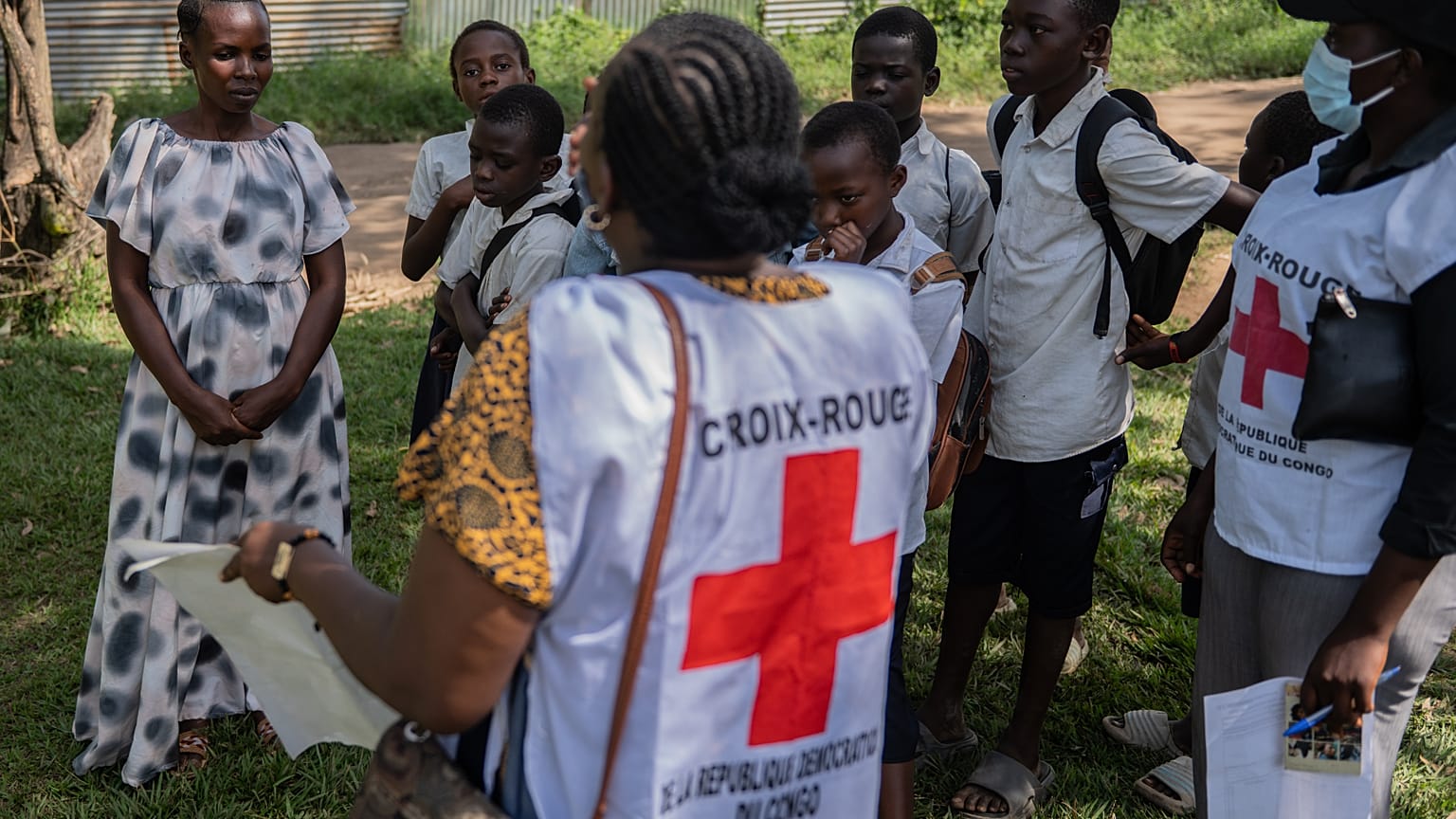
The International Rescue Committee said the outbreak was spreading faster than response efforts in the Democratic Republic of the Congo.
The International Rescue Committee (IRC) has warned that the Ebola outbreak in the Democratic Republic of the Congo could become the "the deadliest outbreak on record" unless urgent international action is taken.
The World Health Organization said earlier this week that there were now more than 900 suspected cases of Ebola and 220 suspected deaths in the DRC. The outbreak has also spread to neighbouring Uganda, where there are seven confirmed cases, including one confirmed death.
The epidemic is being driven by the rare Bundibugyo virus, which has no proven vaccine, making efforts to contain the spread particularly difficult.
In a press release, the IRC, a New York-based humanitarian aid organisation founded in 1933, called for "urgent international funding and coordination" to tackle the outbreak, warning that regional conflict and aid cuts were impacting attempts to control it.
“The warning signs are flashing red,” Bob Kitchen, the IRC's vice president of Emergencies, said.
“Eastern DRC is confronting this outbreak more fragile and less prepared than during the 2018-2020 outbreak that killed more than 2,000 people- and with fewer resources to fight it," he continued. "Increased conflict and cuts to global aid funding have dismantled defenses at exactly the wrong moment. The lesson from every previous outbreak is clear: delays cost lives."
Last week, three volunteers working for the Red Cross in the DRC died from suspected cases of Ebola in Ituri Province, the epicentre of the Ebola outbreak in the country.
The Red Cross said that volunteers Alikana Udumusi Augustin, Sezabo Katanabo and Ajiko Chandiru Viviane were believed to have contracted the Ebola virus while managing dead bodies.
Ebola is a deadly illness first identified in 1976. Symptoms can include fever, weakness, diarrhoea, vomiting, and sometimes bleeding.
No comments:
Post a Comment