After US Airstrikes, Iran Declares Hormuz "Closed" to All Vessel Traffic
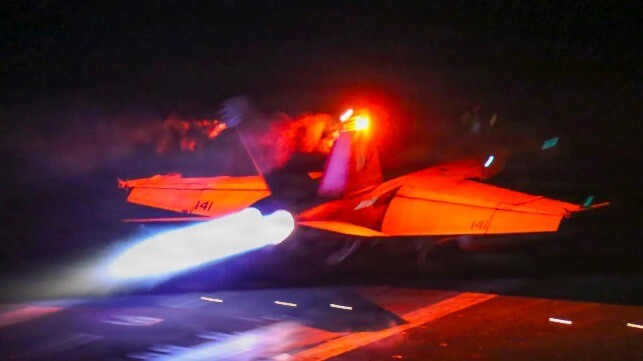
Oil futures ticked up Thursday morning as Iran and the United States traded strikes and counterstrikes, with renewed threats of violence prompting energy traders to consider timing predictions for the reopening of the Strait of Hormuz.
The escalation cycle began Monday when an Iranian drone downed a U.S. Army helicopter in the Strait of Hormuz, forcing the U.S. Navy to launch an inventive and successful rescue operation. Both helicopter pilots survived and were delivered to shore in stable condition.
Following the rescue, the White House ordered "proportionate" counterstrikes targeting Iranian military sites along the perimeter of the strait, including radar installations and air defense sites. (Iran also claims that U.S. fighters hit water storage tanks near the city of Sirik.)
On Wednesday, at the request of President Donald Trump, U.S. forces launched another wave of airstrikes across Iran, hoping to convince the regime in Tehran to agree to U.S. proposals for a long-term ceasefire agreement. U.S. officials assert that no civilian infrastructure was hit. Iran said that it retaliated with ballistic missile counterstrikes targeting U.S. installations in Bahrain, Kuwait and Jordan, including attempted attacks on U.S. 5th Fleet headquarters and Muwaffaq Salti Air Base; the effects (if any) have not been reported, but bystanders on social media recorded extended air defense engagements over these locations.
In response to the renewed exchange of fire, Iran has changed its official view of the Strait of Hormuz's status. Previously, in Iran's view, the waterway was "completely open" under Iranian management via the "Tehran Tollbooth" permission system. Effective Thursday, it is now "closed effective immediately for the passage of all types of vessels, including oil tankers and commercial ships," and any vessel attempting to make the transit will be attacked, reported government-affiliated outlet Tasnim. While the probability of this threat turning into a kinetic strike is uncertain, it suggests an Iranian attempt to clamp down on a steady leak of U.S.-guided merchant vessel traffic, which has been gradually increasing for the past week.
"This week has brought wider attacks and further deterioration where the ceasefire is more like a lesser-fire," commented UN Secretary-General António Guterres. "We should not minimize the risks of lesser fire becoming full fire. All parties must work towards a diplomatic settlement. No more attacks. No more excuses."
Traders Are Shorting Oil As If The Hormuz Crisis Is Over
- Oil traders are increasingly betting on lower prices, with short positions in Brent crude tripling since late March despite the loss of roughly 13 million bpd of supply from the Middle East.
- Physical market fundamentals are tightening rapidly, as global inventories have fallen by about 250 million barrels and key storage hubs like Cushing are approaching critically low levels.
- Analysts warn the market may be underestimating supply risks, with even a reopening of the Strait of Hormuz unlikely to provide immediate relief.
In yet another sign that the paper oil market may be too complacent about the magnitude of the supply disruption in the Middle East, trades have been boosting their short positions in oil futures for most of the past two months.
Since the beginning of April, portfolio managers have been increasingly betting that oil prices would fall, according to the latest available commitment of traders (COT) data from exchanges as of June 2.
Shorts on Brent Crude tripled between the end of March and the beginning of June, per the data compiled by energy analyst John Kemp.
As of June 2, the short positions in Brent Crude had jumped to their highest level since January, when the U.S. captured Venezuelan leader Nicolas Maduro and the market expected increased supply from Venezuela in the coming months.
The surge in short positions and the weeks-long selloff of longs in the past eight weeks suggest traders are betting that supply will be restored soon.
The paper market plays on hopes, expectations, sentiments, and fears, and the sum of all these right now appears to be that the hedge fund and portfolio manager community is reluctant to bet on a summer of actual physical supply shortages.
But the paper market may soon face the reality of crumbling global inventories, including in the United States, where stocks at Cushing, the delivery point for WTI Crude, are just a few weeks away from dropping to minimum operational levels.
Too much noise about the ceasefire, which is being tested almost daily with one strike or a retaliatory hit after another, doesn’t help the paper market that may have become too detached from the magnitude of the supply loss.
Traders react to every signal of ‘imminent deal’ with selloffs, only to start buying oil futures again when Israeli strikes in Lebanon, U.S. ‘self-defense’ strikes on Iran, or Iranian hits at regional infrastructure threaten to unravel the fragile ceasefire.
All the while, paper market participants continue to hope for an imminent resolution and a reopening of the Strait of Hormuz that would flood the market with oil. And that’s been their hope for three and a half months now.
The thing is, even a full reopening of the Strait would not lead to immediate relief for buyers. First, ship owners and operators will need to have guarantees that they wouldn’t be caught off-guard with stranded tankers again. Then, the oil cargoes will need weeks to reach buyers—weeks that the market may not have amid peak summer demand season.
The world has lost about 13 million barrels per day (bpd) of oil supply, the International Energy Agency (IEA) said in its market report for May.
“Mounting supply losses from the Strait of Hormuz are depleting global oil inventories at a record pace,” the IEA said, adding that observed global inventories, including oil on water, were drawn down by 250 million barrels over March and April, or by 4 million bpd.
Sooner rather than later, oil on water volumes and onshore inventories will be depleted, leaving demand destruction the only buffer to cap oil price spikes.
Moreover, the extreme price volatility and the noise about a deal coming any day now are sidelining part of the trader community.
“Participants continue to sit on the sidelines, given the market's fluidity, uncertainty, and headline-driven nature,” ING’s commodities strategists Warren Patterson and Ewa Manthey said in a note on Wednesday.
“This is reflected in the aggregate open interest in ICE Brent, which has continued to trend lower and stands at its lowest level since August 2025.”
Many traders have been shorting oil since April in the hope that the ceasefire and the negotiations would yield a peace deal before the world runs out of buffers to offset most of the supply disruption.
“The buffers and the shock absorbers are being steadily drawn down, and the ability for the market to absorb this imbalance is drastically diminished today versus where we started and over the next few weeks,” Chevron’s CEO Mike Wirth said at the Bernstein 42nd Annual Strategic Decisions Conference at the end of May.
“We're likely to see those pressures flow through more directly to physical prices, and there's more upward pressure that I would expect as we get into June and certainly into July.”
According to the Wednesday note of ING’s strategists, “With no imminent deal in sight and with the global oil market tightening significantly every day, we see upside to prices, particularly if these disruptions linger into the third quarter, a period of seasonally stronger oil demand.”
By Tsvetana Paraskova for Oilprice.com
U.S. Confirms Attack That Left Three Missing from Product Tanker off Oman
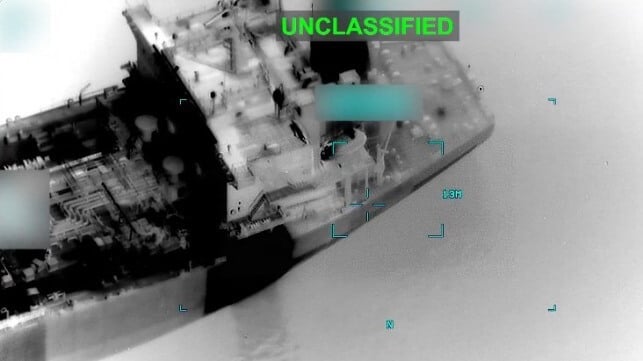
A Palau-flagged product tanker issued a distress call early on Wednesday morning, June 10, in a position approximately 20 nautical miles off Sohar, Oman. U.S. Central Command later issued a statement saying that for the second consecutive day, U.S. forces disabled another vessel that violated the ongoing blockade by attempting to transport oil from Iran.
Centcom said in its statement that a U.S. aircraft fired precision munitions into the tanker’s engine room after the crew repeatedly failed to comply with directions from American forces.
The reports vary, with the major security firms reporting two crewmembers were missing and one was injured. In an unconfirmed statement from a firm claiming to represent the tanker’s managers, they said three seafarers had lost their lives, while India’s Ministry of External Affairs is reporting that three Indian seafarers are missing and that 21 were rescued.
The first attack by U.S. forces likely to have killed civilian seafarers, is drawing wide condemnation. India’s Ministry issued a statement condemning the attack while calling it “deeply worrisome” and emphasizing that targeting of commercial shipping and civilian infrastructure in the region must end, and that free and unimpeded navigation must be restored at the earliest. It writes that India, “reiterates our call for immediate de-escalation of tensions, and the conclusion of ongoing negotiations for a diplomatic solution so that peace and stability can return to the region.“
International Maritime Organization Secretary-General Arsenio Dominguez also issued a statement “expressing deep concern and strong condemnation of the attack.” He said, “All actions affecting international shipping must fully respect international law and the safety of life at sea. The protection of seafarers is a shared responsibility that must remain paramount.”
The product tanker Settebello (47,198 dwt) radioed that a strike had severely damaged the engine room, causing massive fire and smoke onboard. The Oman Navy was assisting with the evacuation of the crew, while Indian authorities said they were monitoring the situation closely.
In the past, the Settebello has been linked to the Iranian oil trade. The purported representatives are asserting the vessel was drifting off the coast of Oman, waiting for further orders and not engaged in any cargo operations. Some reports, however, indicate the vessel was partially laden, while Centcom asserts the tanker was attempting to transport oil from Iran.
The latest strike comes as tensions are running high in the region after a series of attacks and retaliations. The U.S. on Monday struck another false-flag tanker, the Marivex, which it asserted had ignored multiple warnings. U.S. Central Command reported that eight non-compliant vessels had been disabled, while 134 ships that complied had been redirected, and 42 vessels supporting humanitarian aid had been allowed to pass since initiating the blockade on April 13.
Donald Trump angrily said today that Iran would “have to pay” after having already ordered retaliatory strikes after a U.S. helicopter was shot down on Tuesday. Iran responded by launching missiles it said were targeting U.S. bases across the region. Trump also asserted the effectiveness of the U.S. naval blockade, calling it “the most successful blockade in the history of naval warfare.” Trump wrote that “nothing gets through unless we want it to. It is a steel wall! Iran is doing ZERO business.”
The IMO said it has verified 43 attacks on international shipping in and around the Strait of Hormuz since the start of the war. It set the confirmed toll at 11 seafarer fatalities. Dominguez said "This is simply unacceptable."
Trump Say US Conducted Mission to Brings Ships Out of Persian Gulf
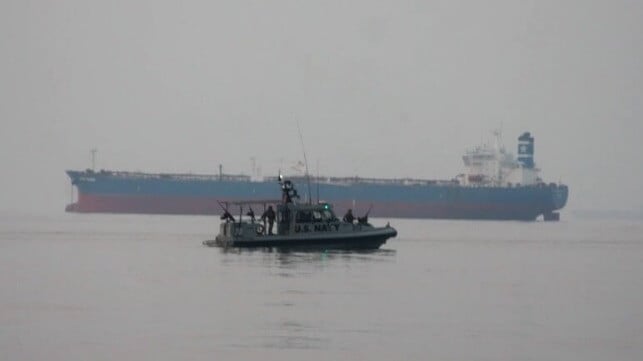
With tensions running high in the region and increased rhetoric coming from both the United States and Iran, it is unclear when the Strait of Hormuz will reopen to normal traffic.
Donald Trump seems to think this may occur within days. Noises from the Iranian negotiating team are also sounding more optimistic. But we have been there before, with no good result; the loss of a U.S. Apache helicopter this week and U.S. counterattacks, once again, have provided reason for further delays. In any case, there are plenty of hardliners who would seek to sabotage any agreement, and others who have critical requirements that might not be addressed if a settlement does not re-establish free and innocent passage, as has existed since the IMO Traffic Separation Scheme was agreed upon in 1968, until Iran began blocking traffic in March this year. The course of events is very difficult to predict with any confidence.
But in recent weeks, it has become clear that ships are already traveling through the Strait, and that exfiltrations are increasing. This is despite the Iranian imposition of restrictions on transits, applied through its Persian Gulf Regulatory Authority (PGRA), and the U.S. blockade on Iranian ships and ports. Ship owners inevitably are being discreet and are not advertising the names of their breakout ships.
Donald Trump announced in a social media posting on Wednesday afternoon, June 10, that he had ordered the U.S. to execute a secret mission to support oil tankers and other commercial ships through the Strait of Hormuz. "Today, I am pleased to announce that this effort has resulted in more than 100 million barrels of oil making its way through the Strait, and into the open market. More than 200 commercial ships have safely traveled through the Strait. This wildly successful effort is because the United States of America controls the Strait of Hormuz — not Iran."
Vessels getting through the Strait are using one of two routes:
The Larak Island route, used by those who are cleared for transit by the PGRA, and who plot a course around Larak Island on the PGRA-approved route. Some of these ships will have paid for the privilege, thereby contravening U.S. sanctions on the PGRA. Others may have been on the cleared list as a consequence of agreements made politically with the Iranians, without having had to pay a fee.
The Oman Coastal route, used by others who leave the Gulf, hugging the Omani Musandam coast to lessen the risk of interdiction, and do so either having liaised with U.S. naval authorities to receive guidance on safe routing, or who take the route independently, trusting their own judgement of the prevailing risk. In both cases, it would be foolhardy to attempt such a transit without advising the Omani naval authorities responsible for controlling traffic in the Omani segment of the Strait, but some are taking this route anyway. About 15 vessels per day are using this route, and more are being encouraged to do so.
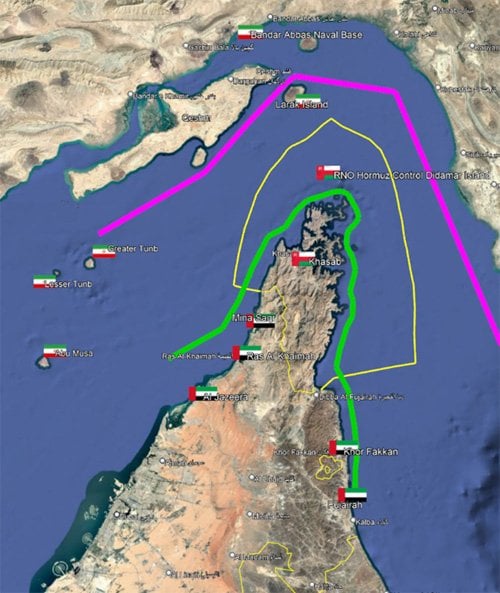
Limit of Omani territorial waters (yellow), the PGSA Larak Island route (pink) and the Omani Coastal route (green) (Google Earth/CJRC)
Whereas the Iranians will attempt to interdict any vessel not complying with their PGRA control regime, U.S. naval authorities are only interested in Iranian ships, those seeking to dock at Iranian ports, or anyone who breaches OFAC sanctions by transacting with the PGRA and handing over any toll fee. Hence, foreign-flagged ships using the Larak Island route may not be contravening the U.S. naval blockade, provided they are neither visiting Iranian ports nor paying the PGRA any money.
So whether using the Larak Island or the Omani Coastal route, ships are getting out, and the numbers are rising.
Lloyds List identified 17 specialist vehicle carrier vessels that became trapped inside the Gulf at the beginning of the war. The first, Marshall Island-flagged Jiuyang Bonanza (IMO 9330616), left using the Larak Island route on April 11, broadcasting on AIS that it had a Chinese crew. Of the remaining 16, two Chinese Anji Cosco ships, An Ji 23 (IMO 9776858) and Anji Phoenix (IMO 9190858), are now in Singapore, and a third, Xiang Jiang Kou (IMO 9985394), is in Brisbane. Hence, all the Chinese vessels carrying SAIC vehicles have now left, using the Larak Island route.
Five Japanese-interest vehicle carriers are still stuck in the Gulf - Antares Leader (IMO 9539169), Capetown Highway (IMO 9565558), Dream Diamond (IMO 9325788), Jana Murni (IMO 9206023, Taurus Leader (IMO 9700550) - while Lotus Leader (IMO 9202883) and Positive Pioneer (IMO 9304514) for some reason are now supposedly loitering in the Gulf of Guinea, and Grand Diamond (IMO 9303223) is in Mundra, India. Of the remaining four vessels on the original Lloyds List, European and Korean interests both have one ship still stuck in the Gulf, and one that has escaped. In total, therefore, of the original 17 ships stuck inside the Gulf, seven remain, and ten have escaped, including all four Chinese-interest ships.
On the LNG tanker front, The Maritime Executive knows of six tankers which have loaded Emirati LNG at Das Island since February 28 and which are now outside the Gulf, with four - Marigold (IMO 9230062), Umm al Ashtan (IMO 9074652), Mraweh (IMO 9074638) and Mubaraz (IMO 9074626) having delivered to terminals in Japan, India and China in the last three weeks. Six tankers similarly have loaded at Qatar’s Ras Lafan LNG terminal, with four – Al Kharaitiyat (IMO 9397327), Mihzem (IMO 9986635), Fuwairit (IMO 9256200), and Al Rayyan (IMO 9086734) delivering to LNG import terminals in Pakistan, and a fifth - Al Daayen (IMO 9325702) – is due in China on July 6.
All these LNG tankers have made passage through the Strait since both the Iranian and U.S. restrictions have been imposed. Chinese vessels and those delivering LNG to Pakistan are likely to have used the Larak Island route, with politically negotiated permission, rather than having paid a fee. On balance, the Emirati LNG shipments are likely to have taken the Oman Coastal route, given relations between Iran and the UAE. The substantial number of Japanese ships still stuck in the Gulf suggests that they were neither willing to brave the Oman Coastal route, nor to pay the PGRA for the privilege of departing.
U.S. naval authorities are likely to have a much longer and more accurate list, with a better understanding of who may have committed breaches. No doubt OFAC will be taking action against anyone known to be on the naughty list. A vessel that appears to have been in breach was the unladen, false-flagged tanker Marivex (IMO 9464156), which was disabled with a shot into the engine room off Masirah on June 8. The Palau-flagged product tanker Settebello (IMO 9162916), which was struck early on June 10 off Sohar, may also have been in breach.
In the meantime, IMO Secretary-General Arsenio Dominguez issued a statement on June 9, urging ship owners to give the highest priority to the safety and lives of seafarers, saying that “they must not be exposed to conditions where the risks are known, significant, and clearly beyond mitigation.” His statement is no doubt prompted by concerns that this is precisely what is happening.
Markets Expect Oil Shortage if Hormuz Stays Shut, Oversupply Once it Opens
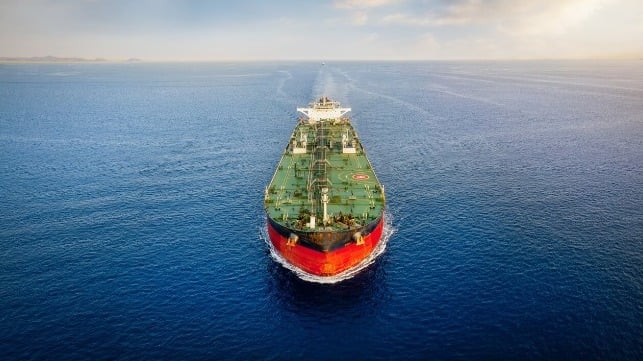
The oil market is telling two distinct stories, and future pricing depends upon which one prevails. In the short run, energy markets are leaning hard on drawdowns, run cuts, refined product inventories and demand destruction in order to keep prices in check. If the situation continues unchanged, falling inventories could drive prices skyward by midsummer. On the other hand, the market faces an oversupply situation as soon as the Strait of Hormuz reopens and a flood of Mideast oil comes back on the market, according to Fitch Ratings - and the financial markets are pricing in this scenario. As ever, the outcome depends upon the timing of a ceasefire deal between the U.S. and Iran, and on how much oil can slip through the blockades in the meantime.
Given the current shutdown in the strait, the inventory picture is not favorable for low pricing. The U.S. Energy Information Administration (EIA) announced Tuesday that OECD oil inventories are on track to reach their lowest level since recordkeeping began in 2023, and will keep dropping until December even in the event of a Hormuz restart.
"Under our assumptions, we expect global oil inventories will fall by an average of 6.3 million b/d in 2Q26 and by 7.6 million b/d in 3Q26," EIA wrote, adding that this will likely drive Brent back up above $100 per barrel over the summer. The high price of crude and expanding government interventions are also driving down demand, and EIA forecasts that the world will consume about 1.1 million barrels per day less than it did in 2025 - a rare decline not seen since the pandemic (and a meaningful contribution to global CO2 emissions reduction).
The real question for market pricing, according to Kpler research director Matt Smith, is when the U.S. will cease exporting crude and refined products abroad. With China's refining sector implementing steep run cuts and ceasing product exports, undersupplied fuel markets have come to the U.S. Gulf Coast to source export cargoes instead. Asian refiners have come looking for crude, too. "The US is putting all these barrels onto the market, but US inventories are getting depleted," said Smith in a recent interview. "When the US stops sending those barrels out, that's when kind of the music stops."
Smith notes that the White House has had excellent results in talking down the price of oil futures with peace-deal announcements, making analysts who previously forecast $110+ crude decide to go quiet for reputational reasons - but on a rational basis, he sees skyrocketing prices as more likely than ever. "I don't know who needs to take up this mantle of calling for $200 oil. I'll pick it up, you know, I'll take an additional hit of being wrong," Smith said.
The most dire forecasts depend upon the strait remaining closed; once it opens, the situation may change fast. According to Fitch Ratings, oil prices will plummet as soon as the strait is cleared because the world will be structurally oversupplied within weeks. "We project the market to return to oversupply from September 2026 due to a lack of material damage to the regional oil infrastructure, rapid recovery in Middle East production, strong non-OPEC supply growth and potential OPEC output increases beyond pre-conflict quotas," predicted Fitch. The ratings agency predicts a full-year average price for Brent of $87 per barrel, below current levels.
If the strait doesn't reopen by July or August, that will be a decisive point, multiple analysts suggest. "The first 100 days of the Hormuz crisis proved oil markets can adapt to even the direst disruption of supply. The next 100 days may tell us how markets respond when they reach the limits of adaptation," commented Karim Fawaz, Director of the Energy Advisory group at S&P Global.
No comments:
Post a Comment