'Children are dying,' Cuba says as US blockade hampers delivery of UN aid
The blockade, coupled with expanded US sanctions that punish companies doing business with the Cuban state, has intensified the worst economic and energy crisis on the island in over a generation.
Cuba's government said on Wednesday that the US oil blockade that has crippled the island is preventing the United Nations from distributing 170 containers of humanitarian aid.
US President Donald Trump has set his sights on ending more than six decades of communist rule in Cuba.
In January, he cut off oil supplies to Washington's arch-foe from its main supplier Venezuela and threatened other countries with sanctions if they came to Cuba's rescue.
Since then, only one oil tanker, from Russia, has made it through.
Cuba's Foreign Minister Bruno Rodriguez said that 170 containers of UN aid worth $6.3 million (€5.4 million) "is not reaching beneficiaries due to the fuel shortage."
Writing on X, he stressed that the blockade was "not only hampering the performance of the Cuban economy" but also affecting the work of international organisations.

The blockade, coupled with expanded US sanctions that punish companies doing business with the Cuban state, has intensified the worst economic and energy crisis on the island in over a generation.
Parts of Havana have been without power for up to 30 hours at a time in recent days, and food, running water and medicine are in increasingly short supply.
Trump claims that Cuba, which lies 150 kilometres off Florida's coast, poses a major threat to US national security and floated the possibility of a "friendly takeover" of the island of 9.6 million people.
On Monday, the UN's High Commissioner for Human Rights Volker Türk called for the US sanctions to be "lifted immediately."
"Children are dying because doctors lack access to essential medical supplies and medicines. This is unacceptable," he said.
Pretext for military action
Recent US sanctions targeting Cuba’s leadership and the indictment of former President Raúl Castro are a “pretext” for the Trump administration to persuade the American people to support a military intervention, Cuba’s top diplomat to the United States said on Tuesday.
Ambassador Lianys Torres Rivera repeated accusations against the Trump administration made by other Cuban officials, including the foreign minister and the president, and complained that the US is targeting Cuban civilians with its decades-old embargo and new blockade of energy shipments to the island.
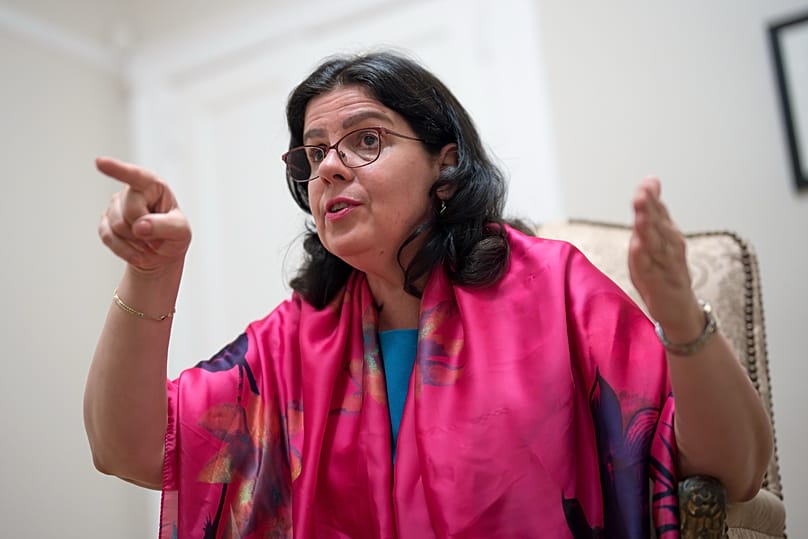
“The sanctions against our leaders, we see as a pretext to make the American people think we are a threat,” she said at Cuba's embassy in Washington.
“We are not a threat to the US and we don’t want confrontation.”
Torres Rivera, who holds the formal title of chargé d’affaires, described the situation as “a war without bombs.”
She said efforts to change Cuba’s government by coercion or force would be met with fierce resistance.
“Raúl is sacred,” she said of the indictment by a federal grand jury last month of Castro.
The 95-year-old former president faces conspiracy and murder charges related to the 1996 downing of two unarmed civilian planes operated by the Miami-based exile group Brothers to the Rescue while he was serving as Cuba’s defence minister.
“Raúl is a sacred symbol of the revolution, and we will defend Raúl — as we will the country — until the end,” Torres Rivera said. “If we are attacked, we are going to respond and we are prepared for that. But we don’t want it.”
Trump, Secretary of State Marco Rubio and other administration officials have repeatedly denied that Cuba’s economic strife is America’s fault and repeatedly cast the blame on the government’s socialist policies.
They have not ruled out military action against the island but have said they are willing to give Cuban authorities time to make reforms.
Earthquake rattles Cuban capital Havana:
AFP reporters
AFP
June 8, 2026

A strong earthquake struck off the coast of western Cuba on Monday, with AFP journalists in Havana reporting 20 seconds of shaking that forced Cubans out of buildings and into the streets.
The US Geological Survey said that the quake was 6.1 magnitude and struck about 62 miles (100 kilometers) off the island’s western tip.
No injuries or significant damage were recorded.
People milled around Havana’s city center, checking their phones after the tremor which according to Cuban authorities was felt “throughout the entire west of the country.”
“At first I just felt dizzy — it didn’t occur to me it was an earthquake, I’d never experienced that before,” Carmel Delgado, a 47‑year‑old economist, told AFP.
“But once we realized what it could be, we got out quickly.”
AFP reporters as far away as Florida also felt the tremble.
The US Tsunami Warning Center ruled out a significant tsunami threat following the quake.
But there was a “very small possibility” of tsunami waves along the coasts located near the epicenter, it said.
Francis Ruiz, a 41-year-old actor, was recording a radio drama in a fifth-floor studio in Havana’s historic center when he felt the tremor.
“We were recording in an office and all of a sudden the table moved and we all looked at each other,” Ruiz told AFP.
“The building shook, and right then chaos broke out, everyone running down the stairs,” he added.

No comments:
Post a Comment