EU countries agree to unblock accession talks with Ukraine and Moldova
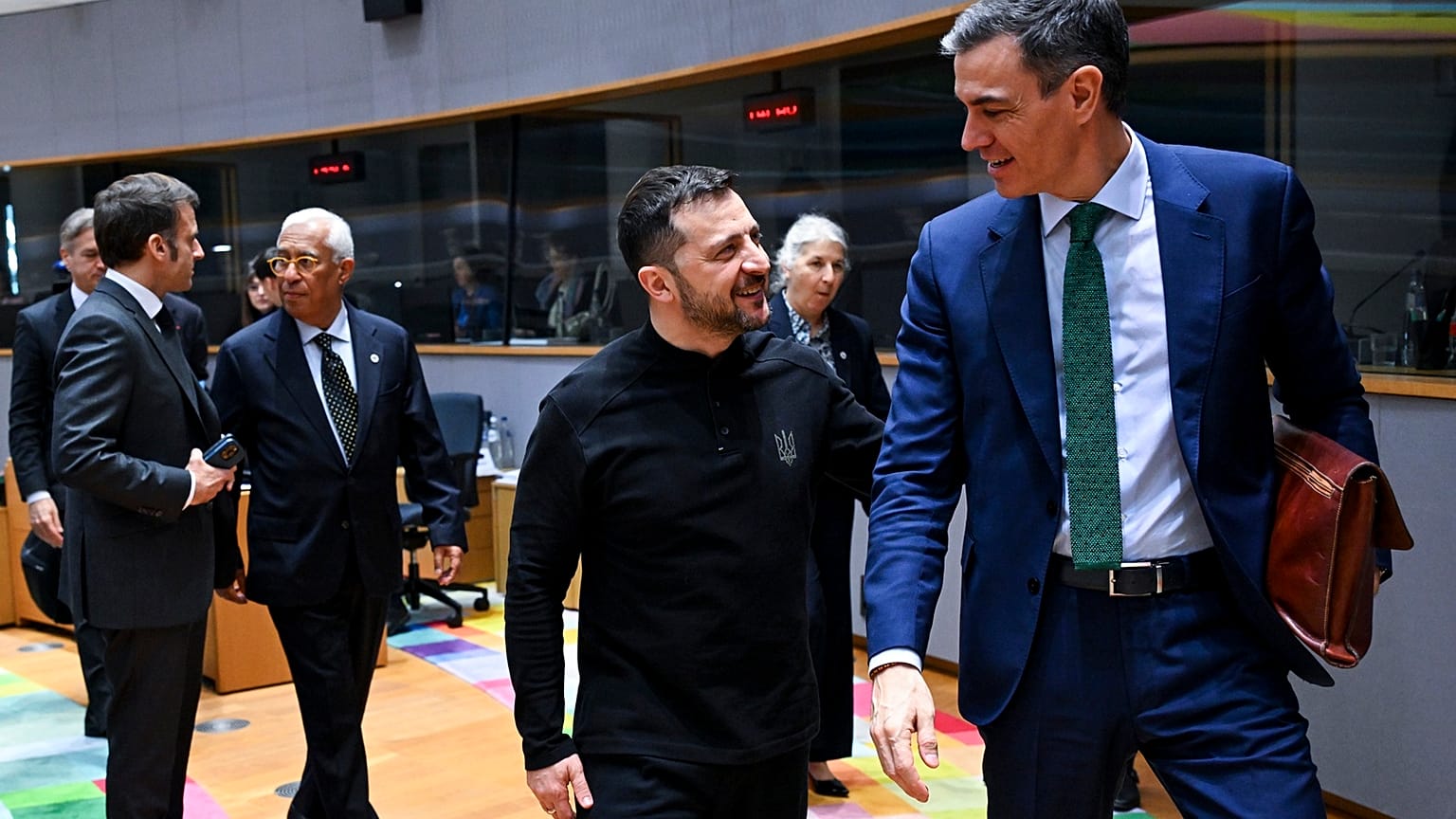
Friday's agreement allows Ukraine and Moldova to formally open the first cluster of accession negotiations, known as "Fundamentals".
The 27 countries of the European Union have reached an agreement to open the first cluster of accession talks with Ukraine and Moldova, building on the momentum created after Hungary lifted its two-year veto last week.
The breakthrough was achieved on Friday evening by ambassadors in Brussels, who endorsed a common position to go ahead with the next phase of negotiations.
The position comes with a rule-of-law roadmap and an action plan on minority rights, the main bone of contention between Budapest and Kyiv. The action plan was amended to reflect the outcome of the consultations between the two sides.
The formal step will take place on Monday 15 June in Luxembourg, where the EU will hold separate intergovernmental conferences with the two candidates.
"This is a recognition of the determination, courage and hard work shown by both countries in advancing reforms, even in the face of immense challenges," European Commission President Ursula von der Leyen and European Council President António Costa said in a joint statement.
"Enlargement is a strategic choice. By bringing our nations closer together, we strengthen peace, security and prosperity across our continent."
Responding to the statement, Ukrainian President Volodymyr Zelenskyy said the decision provided "significant political and moral support" for his people.
"Ukraine is defending itself and, in doing so, all of Europe – the idea that European nations can live united, free, and in peace," Zelenskyy wrote on social media.
"As we have said, Ukraine is doing what is necessary, and it is important that the EU is also keeping its word."
In total, the road to accession consists of six thematic clusters and 33 chapters.
The first cluster, known as "Fundamentals" because it covers the rule of law, human rights and the judiciary, marks the start of the complex process.
Ukraine is keen to open all the clusters this summer to show its war-weary population that the prospect of EU membership is within reach.
The ambitious goal is shared by the European Commission and several member states. Cyprus, the country holding the rotating presidency, aims for an additional cluster before the end of the month.
"The quicker we open the other clusters, the better it is," a senior EU diplomat said.
"Despite the difficult circumstances that Ukraine finds itself in, it's important that the progress on reforms is maintained, because in the end, that's the best guarantee for a smooth and quick accession process."
However, the unlocking of the first cluster does not mean Ukraine's accession will be fast-tracked to compensate for the two years under Hungary's veto.
Member states want to preserve the integrity and credibility of the negotiations, which are supposed to be "merit-based", and avoid experimental ideas like the "associate membership" recently proposed by the German Chancellor.
Friday's decision also raises the question of how long Ukraine and Moldova will remain coupled as candidates.
Any change to EU protection scheme for Ukrainians should be 'gradual', UNHCR deputy chief says
Kelly Clements tells Euronews that any planned changes to EU protections for Ukrainian refugees should be carried out "very gradually", as some EU capitals push for excluding military-age men from the scheme.
Any tweaks to the EU's current protection scheme for those fleeing war in Ukraine should be implemented "very gradually", the UN's Deputy High Commissioner for Refugees Kelly Clements has told Euronews, as EU capitals reportedly mull removing protections for Ukrainian men of conscription age.
"The war has not abated. It has become more intense, with more civilians caught in the middle," Clements explained. "The circumstances that created the conditions for the European Union to issue temporary protection have largely not ended."
It comes as a handful of EU countries, including Poland and Germany, are pushing to exclude men of military age from the temporary protection scheme triggered by Brussels in response to Russia's invasion of Ukraine in 2022.
The scheme, which allows Ukrainians to secure refugee-like protection without applying for asylum, currently provides refuge for 4.37 million Ukrainians across the EU.
EU home affairs ministers last week held an initial discussion around narrowing the scheme, with a proposal to exclude Ukrainian men aged 23 to 60 who are eligible for military service gaining most traction.
Nonetheless, most Ukrainian men aged 23 to 60 are currently barred from leaving the country, with certain exemptions for certain groups such as people with disabilities, those deemed unfit for military service, fathers of three or more children under 18, and individuals providing full-time care for sick relatives.
Ukraine’s formal conscription age begins at 25.
Adult men account for 26.6% of Ukrainian refugees in Europe, although there are no figures showing how many are of military age or how many arrived irregularly.
"I realise it's an active debate," Clements said, "but hopefully, until the war ends, there would be an opportunity to keep those temporary protections in place so that people can support themselves and so that the responsibility doesn't fall unduly on other nations."
"Until then, if there's any sign of (the protection scheme) lifting, it should be done very gradually with other options for those that need to take care of themselves when it's not possible to go back safely or voluntarily."
Last November, German Chancellor Friedrich Merz told Ukrainian President Volodymyr Zelenskyy in a phone call that he needed to curb the number of young Ukrainian men fleeing to Germany, saying that they were "needed there".
The German Interior Minister Alexander Dobrindt has since said that Berlin has noticed an uptick in Ukrainians of "compulsory military age" in Germany in recent months.
Clements told Euronews that the priority should be to "find peace" so that "people don't have to flee".
No comments:
Post a Comment