Geneva (AFP) – There is an 80-percent chance of the warming El Nino phenomenon developing between June and August, increasing the risk of extreme weather events, the World Meteorological Organization said Tuesday.
Issued on: 02/06/2026 - FRANCE24

"Fuelled by unusually warm ocean waters in the tropical Pacific, El Nino conditions are developing and are set to influence global temperature and rainfall patterns," the United Nations' WMO weather and climate agency said.
Forecasts from the WMO global network "indicate a pronounced shift toward El Nino conditions, with probabilities reaching 80 percent for June-August", the Geneva-based organisation said.
El Nino is a natural climate phenomenon that warms surface temperatures in the central and eastern equatorial Pacific Ocean, bringing worldwide changes in winds, pressure and rainfall patterns.
It typically takes place every two to seven years and lasts around nine to 12 months.
 The effects of El Nino © Nicholas SHEARMAN / AFP
Conditions oscillate between El Nino and its opposite La Nina, with neutral conditions in between.
The likelihood of El Nino developing by November is "near or above 90 percent", and most forecast models suggest it will be "at least moderate -- and possibly strong", the WMO said in its quarterly El Nino/La Nina update.
WMO chief Celeste Saulo said the world needed to get ready for an El Nino which could "exacerbate drought and heavy rainfall and increase the risk of heatwaves both on land and in the ocean".
The WMO says that even a moderate El Nino makes some weather and climate extremes more likely.
The last El Nino contributed to making 2023 the second-hottest year on record and 2024 the all-time high at around 1.55C above the 1850-1900 pre-industrial average.
'Urgent climate warning': Guterres
In late April to mid-May, the sea-surface temperature in the central-eastern Equatorial Pacific -- the area used as a monitoring reference -- was approaching El Nino thresholds, the WMO said, with sub-surface temperatures more than 6C above average.
Meanwhile, the Southern Oscillation Index -- the atmospheric component of El Nino -- is also consistent with the phenomenon developing.

The WMO said there was no evidence that climate change increases the frequency or intensity of El Nino events.
However, the agency believes it can amplify the associated effects, because a warmer ocean and atmosphere increase the availability of energy and moisture for extreme weather events, such as heatwaves and heavy rainfall.
"El Nino is arriving on our doorstep," UN chief Antonio Guterres said in a video message.
"The world must treat it as the urgent climate warning it is. El Nino conditions will pour fuel on the fire of a warming world.

"The only effective response is climate action equal to the crisis -- ending the addiction to fossil fuels, accelerating the shift to renewables, protecting the most vulnerable, and delivering early warning systems for all."
Saulo said 128 countries now have multi-hazard early-warning systems in place, with the UN target being universal coverage by the end of 2027.
Temperatures above normal
While El Nino typically peaks between November and February, the resulting spike in temperatures typically comes later down the line.

Next month's forecast is likely to be more accurate as to the onset of El Nino and its strength.
The WMO said that for June to August, forecasts project "a nearly universal dominance of above normal temperatures in nearly all parts of the globe".
This increases the risk of compounding hazards in some regions and accelerating the onset of drought conditions where rainfall is reduced, it said.
Saulo said El Nino would have "cascading impacts", with a warming ocean in the tropics resulting in effects on global trade.
These go from "variability of the climate, into the economy and security of the people. That's why this information is so relevant and so important", she told reporters.
The WMO hopes advance warning will guide preparedness, especially in climate-sensitive sectors like agriculture, water management, energy and health.

Regional climate centres are predicting "below-normal" rainfall during the critical June-September rainy season in the northern Greater Horn of Africa; below-average monsoon rainfall in south Asia; and drier and warmer summer conditions in central America.
During the northern hemisphere summer, warm waters associated with El Nino can fuel hurricanes in the central and eastern Pacific, while hindering their development in the Atlantic Ocean.
© 2026 AFP
El Niño: Almost everywhere will face above average summer temperatures, WMO warns
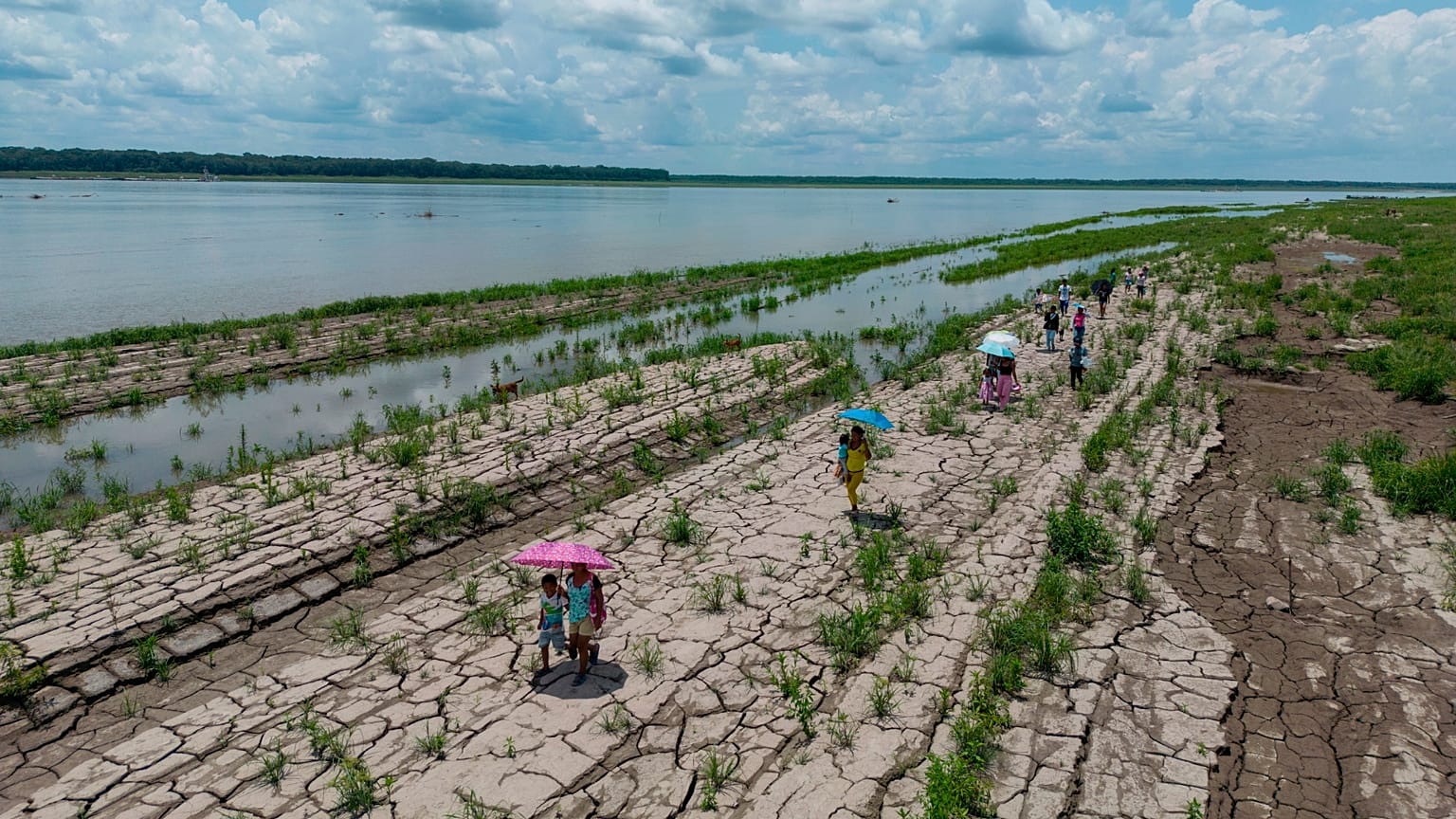
El Niño is a naturally occurring weather phenomenon but its effects are worse because of climate change.
El Niño will hit this summer with 80 per cent certainty, according to the latest forecast by the World Meteorological Organization (WMO) – and Europe should brace for more extreme heat, with some areas at heightened risk of drought and flooding.
Over the past week, parts of Western Europe suffered record-breaking spring temperatures as a powerful heat dome formed. Spells like this are likely to become more intense, longer and more frequent as El Niño takes hold – and scientists warn it could stretch all the way to 2028.
Although the strength of the weather phenomenon is still uncertain, WMO models suggest it will be at least moderate, and possibly strong, with a 90 per cent chance of it continuing until at least November.
“The world must treat it as the urgent climate warning it is. El Niño conditions will pour fuel on the fire of a warming world,” says UN Secretary-General António Guterres.
‘Prepare for hotter than normal temperatures’
Fuelled by unusually warm ocean waters in the tropical Pacific, El Niño is expected to leave virtually nowhere untouched, with above-average temperatures forecast around the globe for June to August.
“We need to prepare for a potentially strong El Niño event – which will exacerbate drought and heavy rainfall and increase the risk of heatwaves both on land and in the ocean,” says WMO Secretary-General Celeste Saulo.
The most recent El Niño, in 2023-24, was one of the five strongest on record and contributed to 2024 becoming the world’s hottest year on record. According to the European State of the Climate 2024 report, published jointly by the Copernicus Climate Change Service and the WMO, Europe experienced dramatic and contrasting conditions that year: while the east faced dry, scorching heat, the west endured heavy rainfall and flooding.
This year, “impacts will hit even harder, travel even farther, and cross borders with devastating speed,” Guterres warns.
The UN has previously cautioned that there is an 86 per cent chance the coming years will smash 2024’s heat record, with climate scientists warning that a “whole range of extreme weather events” are brewing as a strong El Niño collides with accelerating global warming.
While climate change is not thought to increase El Niño’s frequency or intensity, it can amplify its effects. A warmer ocean and atmosphere increases the availability of energy and moisture for extreme weather events such as heatwaves and heavy rainfall.
How long could El Niño last?
Sea-surface temperatures began approaching El Niño thresholds in late April to mid-May this year, according to WMO observations. Subsurface temperatures across the tropical Pacific are running more than 6°C above average, providing a substantial reservoir of heat feeding the surface warming.
The powerful naturally-occurring weather pattern typically forms every two to seven years and lasts around nine to 12 months. It usually reaches its peak intensity between November and February, with impacts on global temperatures often strongest in the second year after development.
Its effects vary depending on intensity, duration, the time of year it develops, and how it interacts with other climate variables.
This year, above-average temperatures are forecast by WMO nearly everywhere in June, July and August. Below-average rainfall is expected across South Asia, the Greater Horn of Africa and Central America, where drier and warmer conditions are anticipated during critical growing and rainy seasons.
“Advance seasonal forecasts and early warnings are vital to save lives and cushion the impact on our economies and our communities,” says Saulo. The time for informed decision-making, planning and preparedness is now, the WMO adds.
Guterres urges action on the human-caused elements of climate extremes, calling for “ending the addiction to fossil fuels and accelerating the shift to renewables”.
Amazon rainforest emits new stress-defense molecules during El Niño drought
New study by the Max Planck Institute for Chemistry shows: The forest chemically adapts to extreme drought – and continues responding long after the stress ends
Max Planck Institute for Chemistry
image:
A 80-meter measurement tower near the ATTO research station in the Brazilian rainforest, 93 miles northeast of Manaus. At a height of 23 meters, directly above the forest canopy, the research team collected air samples every one and a half to three hours.
view moreCredit: Dom Jack, Max Planck Institute for Chemistry
- During the 2023–2024 El Niño – the most severe drought ever recorded in the Amazon basin – tree emissions of sesquiterpenes surged by 122 percent, while isoprene and monoterpenes barely changed.
- The study also detected unexpected emissions of sesquiterpene alcohols in the wet season after the drought, suggesting the forest’s stress-defense metabolism stays active long after the immediate stress has passed.
The Amazon rainforest responded to the most severe drought ever recorded in the basin with an unexpected defense mechanism. Researchers at the Max Planck Institute for Chemistry in Mainz, Germany, found that during and after the intense 2023-2024 El Niño cycle, the most intense drought ever recorded in the region, vegetation significantly changed its chemical emissions to cope with environmental stress. The study was published in Nature Communications Earth & Environment.
Sesquiterpenes act as stress signals and protective compounds
The research team measured the forest’s release of biogenic volatile organic compounds, or BVOCs, which are carbon-based molecules naturally emitted by vegetation. The results were striking. While isoprene and monoterpenoid levels showed little influence from El Niño conditions of drought and heat, emissions of sesquiterpenes increased by 122% over the course of the event. Sesquiterpenes are reactive airborne molecules that trees produce as stress signals and protective substances. A well-known example is caryophyllene, a peppery-smelling compound found in cloves and black pepper.
Even more surprisingly, the study detected unexpected emissions of less volatile sesquiterpene alcohols, including beta-eudesmol, alpha-eudesmol, and gamma-eudesmol, during the wet season after the drought peak. These findings suggest an adaptive response to oxidative stress, revealing how vegetation metabolically adjusts to adverse conditions. Interestingly the change persisted long after the immediate stressor has passed. "Our results show that severe drought shifts the atmosphere toward lower-volatility and more reactive compounds”, explains Joseph Byron, the study’s first author and a researcher at the Max Planck Institute for Chemistry. "This reflects underlying metabolic changes as the rainforest attempts to mitigate damage from abiotic stress." Project leader Jonathan Williams added “between El Nino events, which occur every 2-7 years, the rainforest can revert to the original non-stressed emissions. However, climate models suggest that El Nino events will increase in frequency and intensity in this century, so these emissions may become a permanent feature of the region, altering the overlying atmospheric chemistry”.
Air samples collected directly above the forest canopy
The researchers collected canopy air samples at the Amazon Tall Tower Observatory (ATTO), 150 km northeast of Manaus, Brazil. Using sorbent cartridges, they gathered samples every 1.5 to 3 hours at 23 meters on an 80-meter tower. In the laboratory in Mainz, they later analyzed them offline using gas chromatography and mass spectrometry.
The findings build on earlier work by the same team on chemical indicators of stress in the Amazon rainforest. In their previous research, they identified specific mirror molecules, or enantiomers, that can serve as indicators of stress within the rainforest ecosystem (see related press release: Mirror image molecules reveal drought stress in the Amazon rainforest). The current study expands this understanding by showing which specific reactive volatile compounds are produced directly as part of the forest’s defense response during extreme climate events.
Implications for climate change and rainforest resilience
Understanding these chemical responses is very important, as climate change is predicted to make El Niño events more intense and persistent. The shift toward more reactive compounds could have significant implications for atmospheric chemistry and the overall resilience of the Amazon rainforest.
Background ATTO
ATTO is a German-Brazilian joint project which was launched in 2009. It is managed by the Max Planck Institutes for Biogeochemistry in Jena and for Chemistry in Mainz, as well as by the Brazilian INPA and the Amazon State University (UEA) in Manaus. The project is funded by the German Federal Ministry of Education and Research (BMBF), the Ministério da Ciência, Tecnologia e Inovações (MCTI), the Max Planck Society and the Brazilian organizations including FAPEAM and individual researchers bring funding from other scientific funding agencies.
More on ATTO: https://www.mpic.de/3538403/ATTO
Journal
Communications Earth & Environment
Method of Research
Experimental study
Subject of Research
Not applicable
Article Title
Intense El Niño provokes production of new reactive volatiles as stress defences in Amazon rainforest
No comments:
Post a Comment