FOR PROFIT MEDICINE VS PUBLIC HEALTHCARE
US launches trade probe into Germany over medicine prices

Washington accuses Berlin of keeping the prices it pays for new medicines too low, while the US market pays significantly more for the same products. If the investigation finds Germany's policies are unfair, the United States could impose punitive tariffs.
The United States has launched a trade investigation into Germany's drug pricing policies.
Washington says it wants to examine whether innovative medicines are undervalued in Germany, leaving US patients to shoulder a disproportionate share of pharmaceutical research and development costs.
The announcement was made on Thursday in a statement by US Trade Representative Jamieson Greer, who said the investigation would determine whether Germany's "persistent underpayment for innovative pharmaceutical products by Germany is unreasonable or discriminatory and burdens or restricts US commerce."
The investigation follows months of discussions between Washington and Berlin aimed at resolving the dispute.
The Trump administration argues that Germany's pricing system, which includes negotiated discounts and mandatory rebates, suppresses the prices paid for new medicines. US officials say this leaves American patients bearing a larger share of the costs of developing new drugs.
"I am particularly concerned by reports that Germany is fast-tracking legislation that would further reduce spending on innovative medicines," Greer said.
The move follows a directive issued by President Donald Trump on 12 May 2025, instructing the US Trade Representative to take action against foreign policies that force American patients to pay a disproportionate share of global pharmaceutical research and development costs.
"President Trump has made clear that American patients should not be shouldering a disproportionate share of global pharmaceutical research and development," Greer said.
If the investigation concludes that Germany's policies are unfair, the US could impose tariffs or other trade restrictions under Section 301 of the Trade Act.
The US has requested consultations with Germany, while a public hearing is scheduled for September.
Germany's health reform draws US criticism
For years, the United States has argued that European healthcare systems benefit from lower drug prices, while American consumers bear a larger share of the cost of pharmaceutical innovation.
Washington is particularly critical of the German government's planned healthcare reform.
The reform is intended to help plug a multibillion-euro funding gap in Germany's public health insurance system and includes, among other things, additional savings contributions from the pharmaceutical industry.
At the heart of the initial plans was a dynamic manufacturer rebate linked to trends in drug prices and the revenues of health insurers.
Under the government's latest proposals, the industry is still expected to make a financial contribution to stabilising the health insurance funds. However, instead of a variable mechanism, discussions are now focusing on a fixed surcharge on the existing manufacturer discount.
At the same time, Federal Health Minister Nina Warken (CDU) has proposed exempting companies from additional rebates if they conduct clinical trials in Germany. The aim is to strengthen Germany as a research hub and ensure that patients continue to have rapid access to new therapies.
A vote in the Bundestag on the controversial health reform, originally scheduled for next week, has been postponed. According to parliamentary groups from the CDU/CSU and SPD, a key package of healthcare reforms proposed by Warken is now due to be adopted on 10 July, the last sitting day before the summer recess.
Politics Should Never Decide Who Gets Care
The Office of Management and Budget’s proposed rule putting political appointees in charge of healthcare-funding decisions threatens the patients we serve.
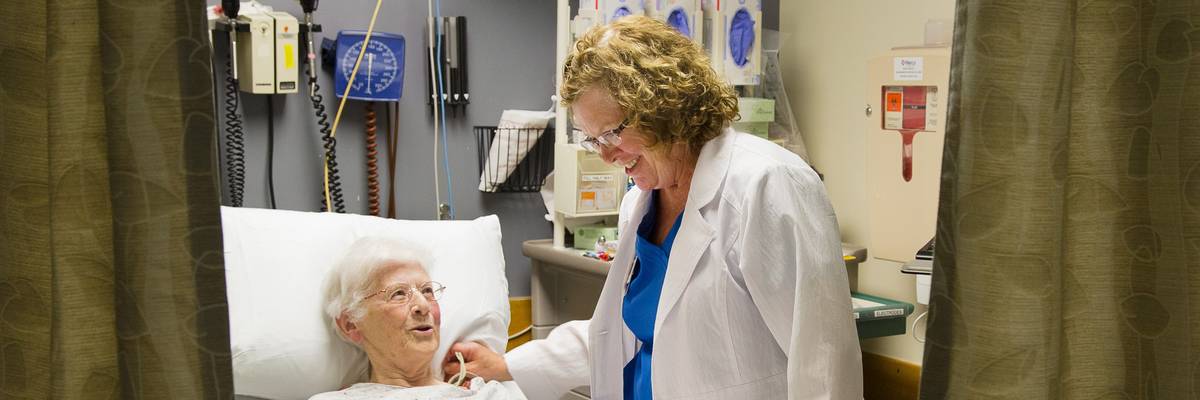
Mercy Hospital ER nurse Katie Johnson treats Sister Margaret Cushman at the State Street emergency room on Wednesday, August 16, 2017.
(Photo by Carl D. Walsh/Portland Portland Press Herald via Getty Images)
Jun 20, 2026
As a nurse educator and a psychiatric-mental health nurse, we have built our careers on evidence-based practice, ethics, and compassion when caring for patients. Politics never entered the picture. Our responsibility has always been to provide care guided by science, professional standards, and the individual needs of our patients, not political ideology or partisan priorities. That is why the Office of Management and Budget’s proposed rule, Docket OMB-2026-0034, which would hand healthcare funding decisions to political appointees, stops us cold.
At first glance, this proposal may sound administrative or technical. In reality, it would fundamentally alter how federally funded healthcare, nursing education, behavioral health programs, and scientific research are approved, monitored, and terminated. Under rule §200.340, any grant can be ended at any point if it no longer aligns with the priorities of the administration. That is not oversight. It is political control.
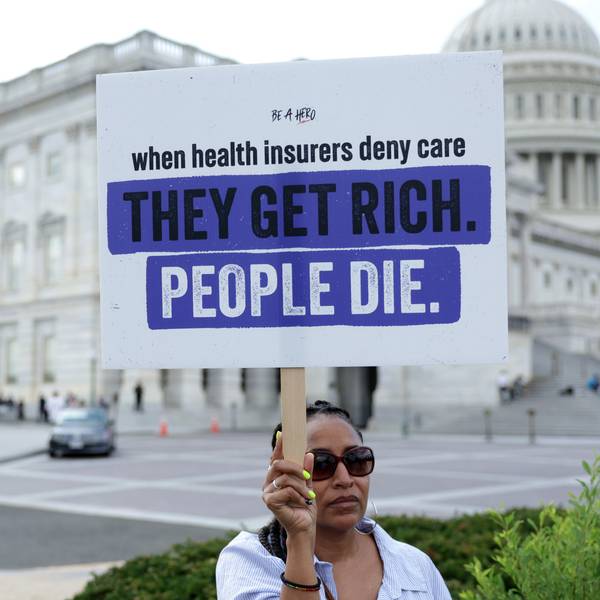
‘Now Is the Time to Organize,’ Says Medicare for All Coalition
For nurses, the consequences would not be abstract. They would be immediate, personal, and dangerous for the patients we care for.
Psychiatric nursing already operates within a fragile system. Across the United States, communities face severe shortages of mental health professionals; long wait times for psychiatric care; rising suicide rates; surging substance use disorders; and escalating mental health crises among children, veterans, and older adults. Nurses are often the last line of support for patients who have nowhere else to go.
Healthcare funding decisions should be based on patient outcomes, workforce needs, public health evidence, and community impact, not whether a program aligns with the political priorities of whichever party holds power.
Every day, we talk with parents who are doing everything they can to find behavioral care for their children, but too often they feel frustrated and alone. Parents often share that they spend months calling providers, sitting on waitlists, and navigating insurance paperwork, all while trying to support their child through daily challenges at school and at home.
Hospitals are faced with the daunting task of finding inpatient services for patients in crisis. Sometimes the search for placement takes hours or even days, resulting in patients, many of them young people and the elderly, sitting in over-crowded emergency departments, waiting for care that may never come.
Many of the programs that train psychiatric nurses, support community mental health services, fund suicide prevention initiatives, and expand rural behavioral healthcare depend on federal grants and cooperative agreements. Under §200.205, the proposed OMB rule places a single political appointee in control over those funding decisions, with the power to override independent scientific and professional review.
This should alarm every American, regardless of political affiliation.
Healthcare funding decisions should be based on patient outcomes, workforce needs, public health evidence, and community impact, not whether a program aligns with the political priorities of whichever party holds power. Mental healthcare especially requires stability, continuity, and trust. When funding becomes politicized, patients inevitably suffer.
We are equally concerned about the chilling effect this rule would have on nursing schools and healthcare education programs. Federal support helps nursing programs prepare students to work in underserved communities, conduct behavioral health research, develop telepsychiatry services, and address disparities in care. Under §200.206 a political appointee could deny funding to any institution deemed “un-American,” a standard so vague it could be applied to programs addressing mental health disparities, harm reduction, or any work that falls outside current political favor.
We encourage nurses, educators, researchers, and the general public to join us and submit public comments on Docket OMB-2026-0034 before July 13, 2026, urging federal officials to reject these policies.
The proposed rule threatens the integrity of evidence-based practice itself. Nursing education is built on teaching students how to evaluate research critically, apply best practices, and advocate for patient-centered care. We cannot tell future nurses to “follow the science” while simultaneously allowing political officials to override scientific peer review and the expertise of those closest to patients.
We know what happens when systems become unstable. We witnessed it during the pandemic. Burnout rises. Staffing worsens. Experienced clinicians leave. Patients wait longer for care. Rural communities lose services first. One of us lived through the 2025 Southern California wildfires. Vulnerable populations suffer most. The mental health system was already stretched thin before the flames arrived.
This OMB proposal risks accelerating those exact outcomes.
Public trust in healthcare depends on the belief that medical and scientific decisions are guided by expertise rather than ideology. Once political influence is written into the structure of healthcare funding, that trust may never be fully restored. Mental health patients already fight stigma, long waits, and shrinking access to care. They should never have to wonder whether a political appointee is shaping the care available to them.
Nurses are educated to protect human dignity, promote health equity, and uphold evidence-based care. Those values do not change depending on which party controls Washington. They are foundational to the nursing profession and guide how nurses advocate for patients, families, and communities every single day.
The OMB proposal is framed as a restructuring of federal financial assistance, but for healthcare professionals on the ground, it represents something much larger: a deliberate shift away from independent expertise and toward political control over healthcare priorities. That does not strengthen nursing, mental healthcare, or public health. It dismantles all three.
We encourage nurses, educators, researchers, and the general public to join us and submit public comments on Docket OMB-2026-0034 before July 13, 2026, urging federal officials to reject these policies. If we allow political ideology to dictate which healthcare programs survive, which research is funded, and which communities receive support, we risk abandoning the very people the healthcare system exists to protect.
Nurses stand at the bedside of patients during their most vulnerable moments, regardless of politics, income, geography, or background. Federal healthcare policy should reflect a similar commitment. The future of mental healthcare, nursing education, and public trust in science depends on preserving independent, evidence-based decision-making free from political interference. Our patients deserve nothing less.
Our work is licensed under Creative Commons (CC BY-NC-ND 3.0). Feel free to republish and share widely.
Teri Mills
Teri Mills, MS, RN emeritus, is a retired adult nurse practitioner, the 2019 Oregon nurse of the year, and a board member and founding member of Grandparents for Vaccines.
Full Bio >
Donna A. Gaffney
Donna A. Gaffney, DNSc, PMHCNS-BC, FAAN, is a nurse, psychotherapist, and author of Courageous Well-Being for Nurses: Strategies for Renewal. Gaffney is also founding member of Grandparents for Vaccines and a leader in Defend Public Health and Nurses for America.
Full Bio >
.jpg)
No comments:
Post a Comment